Discover Cabeceiras de BastoFree independent guide
ViveCabeceirasYOUR GUIDE TO CABECEIRAS
ENEnglish
SearchSaved

Stories of Cabeceiras

Choose a story to start with. You can change the subject or fine tune the search.

171 stories · All themes · Search: forma

The flavours of Cabeceiras

From the garden to the pot, from the oven to the table.

Choose a story · 17
Refojos · family memory published in 2020

Cassians: small shapes, a long journey

Another Cabeceiras candy stored in Alcina's memory.

Includes an activity to try →Explore: A recipe crosses places and generations →View ingredients and preparation →
Read here and view sources

Alcina Teixeira shared these small cakes through Mário Teixeira, residing in Refojos. The publication of the Museum, of 2020, links them to the recipes found in a Portuguese magazine during the years in Mozambique.

The Cassians belong to the same set of memories of lemon cookies and honey cake. The source describes the shape in polka dots, but does not explain the origin of the name.

The report identifies a family trip: Alcina, born in Penafiel, went to Vila de Manica, Mozambique, at the age of fifteen. There he met Alexandre Teixeira of Cavez, who worked on the railways. Alcina had a corn mill and a commercial establishment, and made cakes for family parties. The magazine where he found the recipes connected it to the flavors of Cabeceiras before the family came to live for the municipality. History follows the transmission of recipe; it does not establish who created it.

Source and context

Basto Land Museum — Cassians Cabeceiras, 11/12/2020

Accessed: . Editorial summary; the date of consultation is not the date of the facts.
Oral memory · Pedraça

Chestnuts in the spring?

The kitchen had the work schedule.

Includes an activity to try →Explore: From tree to working day →
Read here and view sources

Chestnuts in April and May? In the memory of Maria da Conceição Gonçalves Mouta, they were dried chestnuts that arrived at the table during the cultivation and sowing of corn. The broth, with beans, cabbage and potatoes, closed the first meal, by nine or nine and a half in the morning, after fried cod with bread.

The testimony was collected by Maria de Fátima Carvalho in February 2011, in Pedraça. Maria da Conceição had learned the preparation with her mother-in-law. The chestnuts were previously dried and aired; the baked potato was crushed and returned to the pot. Conservation, texture and working hours are found in this family memory.

Here there are two calendars: that of the fruit and that of the meal. The dried chestnut kept allowed to bring to the spring table a food associated with the harvest of another season. The memory does not only describe ingredients: it explains how the reserves of the house accompanied the time of tilling and sowing. The time of the “lunch” also surprises those who today use this word for the midday meal.

It is a story with voice and place, not a rule for all the houses of Cabeceiras. When talking about a family recipe, it is worth keeping these differences: who taught it, when it was prepared and what changed between the fireplace and the stove. Thus, a list of ingredients becomes a small history of work, learning and domestic life.

Source and context

Basto Land Museum — testimony of Maria da Conceição Gonçalves Mouta, collected by Maria de Fátima Carvalho in 2011

Accessed: . Editorial summary; the date of consultation is not the date of the facts.
Pedraça · 2011 food memory

Winter fit in a pot

The flour broth took place in January and February.

Includes an activity to try →Explore: Cereals in three forms →View ingredients and preparation →
Read here and view sources

In the January collection of 2011, Maria da Conceição Gonçalves Mouta recalls beans, grelos, pork and cornmeal. It is a cooking memory transmitted by the grandmother of Cavez and registered in Recovos, Pedraça. The flour entered close to the end of the cooking, moved continuously to undo the clumps. This gesture helped to body the broth.

The testimony also notes a change in the utensils: the gas stove and the stainless steel pans had entered the everyday, while the fireplace and the three-legged pot remained present in the conoada. The memory does not describe a kitchen stopped in time. In 2011, the informant said to prepare this broth rarely, distinguishing the custom remembered from the frequency of that moment.

Compare this dish with the cabbages with migas from the same informant: the broth receives cornmeal, while the cabbages receive pieces of bread after runoff. One collection is associated with January and February; the other value the tender cabbages of April and May. The cereal connects the dishes, but the gesture and the season distinguish us.

Getting to know the parish
Source and context

Basto Land Museum — testimony of Maria da Conceição Gonçalves Mouta, collected by Maria de Fátima Carvalho in 2011

Accessed: . Editorial summary; the date of consultation is not the date of the facts.
Moimenta, Cavez · landscape of the vineyard

The vineyard climbs the hillside

Before the wine reaches the table, there is a landscape to discover.

Includes an activity to try →Explore: The vineyard has more than one story →
Read here and view sources

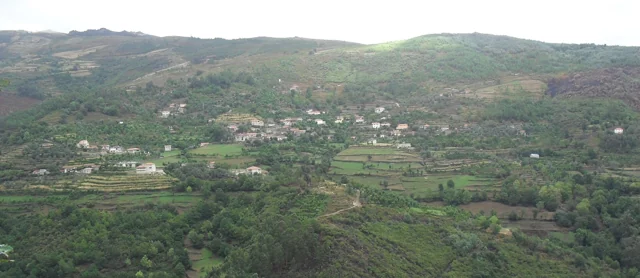
In Moimenta, Cavez, the vineyards occupy terraces on the slopes of a sheltered valley. The municipal description connects this landscape to the production of green wine. Looking at the steps on the ground is another way to know the wine culture. The visits to Thursdays and the tastings depend on the conditions of each space.

The municipal guide presents the terraces as a dominant mark of the slopes and also highlights the Casa do Valle and Casa da Ponte. The vineyard does not appear isolated: it is part of a village with built heritage, agriculture and livestock. This framework helps to look beyond the bottle and recognize the work inscribed on the ground.

The landscape, however, does not reveal alone the variety of each plot. To continue, it compares the names of the grapes described in the other readings of Basto with the utensils used in the harvest. They are different clues to know the wine culture.

Getting to know the parish
Source and context

Municipality — Village Guide of Serra da Cabreira: landscape, work and heritage
Accessed:

Municipality — parish of Cavez and places of Moimenta
Accessed:

Editorial summary; the date of consultation is not the date of the facts.
Faia · agriculture and food memory

At Faia, the fruit also counts

Cherries, wine and olive oil help you discover this agricultural landscape.

Includes an activity to try →Explore: From fruit to containers →
Read here and view sources

The municipal presentation highlights the cherry in agriculture of Faia and associates the parish with the production of wine. The tannaria, linked to wooden containers, adds a artisanal dimension to this agricultural landscape.

In May 1758, the abbot described a greater abundance of wine, fruit and olive oil than cereal. The two sources allow different seasons to approach, but do not tell an exact continuity of cultures: the ancient document speaks of fruit in general, without identifying cherries. Comparing them is a way to discover as much as we know and what remains to be clarified.

Getting to know the parish
Source and context

Council — Faia
Accessed:

Municipality — Parish memories of Faia, 23/05/1758, transcript of José Viriato Chapel (2003)
Accessed:

Editorial summary; the date of consultation is not the date of the facts.
Pedraça · testimony of 2011

At Christmas, he would turn to the fireplace.

A family gesture kept the old pot alive.

Explore: The year also sat at the table →
Read here and view sources

In 2011, Maria da Conceição Gonçalves Mouta already cooked in gas stove and stainless steel pans. However, the whole meal returned to the fireplace and to the three-legged pots.

The collection in Recovos, Pedraça, also notes that it sometimes resumed this way of cooking outside Christmas. The old utensil continued to take place in a kitchen that had changed. It is a family memory, not a custom attributed to all the houses of the municipality.

Getting to know the parish
Source and context

Basto Land Museum — testimony of Maria da Conceição Gonçalves Mouta, collected by Maria de Fátima Carvalho in 2011

Accessed: . Editorial summary; the date of consultation is not the date of the facts.
Pedraça · testimony collected in March 2011

The oven gave a signal.

The batch was also done with attention to what was seen.

Includes an activity to try →
Read here and view sources

In the March collection of 2011 in Recovos, Pedraça, Maria da Conceição described several signs: the mass rested and increased in volume; the whitish interior of the oven indicated enough heat for the batch. It then served the dough in a basin, giving it a rounded shape. The testimony shows a knowledge made of gestures and observation, learned in a kitchen and registered by the Museum. It does not establish a universal rule for all ovens or masses.

There is a sequence between these signals. First, the rest allows us to observe the change of mass; then the oven is prepared and the breads are formed. The record adds attention to the time, volume and color of the inside of the oven. Knowing how to cook included relating these observations, besides knowing the ingredients.

Words in this story: see explanations →
Source and context

Basto Land Museum — testimony of Maria da Conceição Gonçalves Mouta, collected by Maria de Fátima Carvalho in 2011

Accessed: . Editorial summary; the date of consultation is not the date of the facts.
Local gastronomy · publication of 2025

These quails come from the tree

A winter dessert with a name that arouses curiosity.

Explore: From dessert to village trees →View ingredients and preparation →
Read here and view sources

The presentation of Cabeceiras in the Gastronomic Weekends of 2025 identifies quails as a local fruit linked to winter traditions. In the described preparation, they are roasted in the coals until they soften and serve hot, peeled, with red or wine-free green wine. It is a way to discover the fruit through the cooking gestures. The recipe documents a gastronomic proposal; it does not guarantee that it is available daily in restaurants.

Source and context

Porto and North Tourism — Gastronomic Weekends 2025, December, Section Cabeceiras de Basto (p. 3 of the PDF)

Accessed: . Editorial summary; the date of consultation is not the date of the facts.
Highlands of Minho · regional product and head table

Before the roast, there's a creation story

Brava and Serrana are names behind the Goat of the Highlands of Minho.

Read here and view sources

Bravia and Serrana, including their crossings, are the breeds associated with the Goat of the Highlands of the Minho IGP in the form of the PTPT portal. Cabeceiras integrates the described production area. Adult animals take advantage of spontaneous vegetation; goats feed on breast milk. The shepherding can be individual or gather flocks from the village instead. This relationship between mountain, creation and between help precedes the dish. The gastronomic promotion of Cabeceiras March 2016 highlighted this product; this does not certify any goat served today in the municipality.

The description of the know-how in the PTPT portal follows the daily rhythm of the herds. Goats go out to pastures, while the suckling of goats is organized in the morning, before leaving, and in the afternoon, on return. The capril and the hill thus perform different functions in the creation.

The Bravia is associated with the mountains of the Alto Minho and the Northwest of Trás-os-Montes; the Serrana to Serra da Estrela. The product combines these breeds and their crossings in a production area of its own. It is not only an oven recipe: it is also a link between animals, milk, vegetation and shepherd's work.

Words in this story: see explanations →
Source and context

PTT — Highland goat of Minho: breeds and grazing

Municipality — Promotion of the Goat of the Highlands of Minho, March 2016

Accessed: . Editorial summary; the date of consultation is not the date of the facts.

Sub-region Basto · characteristics of Azal

A ripe grape can remain green

In Azal, color doesn't tell the whole story.

Explore: One vineyard, several clues →
Read here and view sources

Azal is a late-maturing white variety, adapted to dry and well-exposed land from the interior of the region of the Vinhos Verdes, including Basto. The technical file describes compact bunches that maintain a greenish even mature tone. Looking only at the color is not enough to decide whether the harvest time has come.

The adult leaf is rounded and thick, with regular teeth and quite pilosity on the lower face. The curl has a lateral branch, described as wing. These clues show why the description of a caste brings together leaves, curls and development phases, rather than being limited to the color of the grapes.

Azal has a long cycle: the fiche distinguishes early bloom from late maturation. One early start phase does not mean that all others also do so. The caste can be used alone or in batch wines with Arinto, Batoca and Loureiro; recognizing a variety in the landscape and knowing the composition of a wine remains different questions.

Words in this story: see explanations →
Source and context

CVRVV — Technical data sheets of the varieties Batoca and Azal

Accessed: . Editorial summary; the date of consultation is not the date of the facts.

Pedraça · 2011 collection

Before the bread, this cake would come in.

The same mass could have another destination.

Explore: One batch, several gestures →View ingredients and preparation →
Read here and view sources

In Pedraça, Maria da Conceição Mouta recalled a cake made with the bread's own dough. She took small sardines or chorizo and entered the oven before the breads.

The collection of 2011, published by the Museum in 2015, links the name of the cake to the organization of the batch. The recipe holds gestures of a traditional oven, to know together with the history of bread.

Source and context

Basto Land Museum — Cake between sardine or chorizo wood (2015)

Accessed: . Editorial summary; the date of consultation is not the date of the facts.

Pedraça · testimony collected in 2011

The bread also made the feast

In the scrambled, dessert is born in the pot.

Includes an activity to try →Explore: Three Ways to Bring Bread to the Feast →View ingredients and preparation →
Read here and view sources

A dessert of bread for Christmas and New Year, with honey, dried fruits and Port.

Fatima Magalhães collected this version in 2011 from Maria da Conceição Gonçalves Mouta, born in Cavez and residing in Pedraça. The Museum published it in 2016.

The preparation sequence gives the bread a leading role: it enters small pieces, after the dried fruit, and thickens the prepared as it moves. The lemon peel and cinnamon stick join the water and honey at the beginning; the cinnamon powder finishes the sweet in the dish.

This version keeps measurements of different natures: liters, a cup and quantities left to the taste of the cooker. The record keeps that difference. The collection does not provide portions or weights for all ingredients, so the recipe was not converted into an invented precision formula.

Source and context

Land Museum of Basto — Scrambled (2016; collection of 2011)

Accessed: . Editorial summary; the date of consultation is not the date of the facts.

Refojos · family memory published in 2020

A recipe that has crossed continents

The lemon cookies came with a family story.

Includes an activity to try →Explore: Three sweets, a family memory →View ingredients and preparation →
Read here and view sources

Alcina Teixeira found recipes of Cabeceiras in a Portuguese magazine during the years in Mozambique. Cookies arrived at the Museum through the son Mário, resident in Refojos, and were published in 2020.

The family also kept the honey cake and the Cassians. Compare these recipes allows you to follow the journey of a knowledge between a magazine, family cuisine and public disclosure.

Source and context

Basto Land Museum — Lemon biscuits Cabeceiras (2020)

Accessed: . Editorial summary; the date of consultation is not the date of the facts.

Refojos · February 2016 collection

Honey finds cinnamon and fennel

A recipe has ingredients and has a voice.

Explore: A memory, lots of sweets →View ingredients and preparation →
Read here and view sources

Alcina Teixeira, residing in Refojos, shared this cake in 2016. I remembered meeting him in a magazine by Maria Odette Cortes Valente, about 1966, when I lived in Mozambique.

Honey, cinnamon and fennel are found in this family memory.

The collection identifies a family practice: Alcina made cakes for parties and sought recipes in magazines. The cake combines honey with sugar and brings olive oil, milk, nuts and spices. The chimney shape belongs to the registered preparation. These details allow us to recognize this version, without presenting it as the only way to make honey cake in Cabeceiras.

Source and context

Basto Land Museum — Honey cake Cabeceiras de Basto (2016)

Accessed: . Editorial summary; the date of consultation is not the date of the facts.

Refojos · kitchen memory collected by the Museum

The hanger was held on Sunday

A recipe of Refojos also holds a weekly habit.

Includes an activity to try →Explore: At the table of who told the recipe →View ingredients and preparation →
Read here and view sources

On Sunday, the cabidela took place in the kitchen described by Isabel Sousa, a natural and resident in Refojos. In the version she shared, the chicken accompanies the rice; onion, garlic, blonde and parsley enter the seasoning, along with white wine, blood and vinegar. The publication also keeps words of preparation, such as the strut and testus.

Conceição Magalhães collected the recipe in 2013, and the Museum published it in October 2014. The indication of Sunday gives the dish a place in the family calendar, but does not establish a rule for the whole municipality. It is the voice of an identified cook, with an occasion and a way of telling what he was doing.

Words in this story: see explanations →
Source and context

Basto Land Museum — The hanger was held on Sunday, publication of 10/10/2014

Accessed: . Editorial summary; the date of consultation is not the date of the facts.

Arco de Baúlhe · kitchen memory collected by the Museum

The pataniscas also went to lunch

Ana Peneda shared a version of Arco de Baúlhe.

Explore: A snack also has context →View ingredients and preparation →
Read here and view sources

In the collection of 2014 made by Conceição Magalhães, Ana Peneda, natural and resident in Arco de Baúlhe, describes cod pataniscas with eggs, wheat flour, parsley and onion. The Museum associates this preparation with meals and records a detail of vocabulary: the sertã was also called tacho. The memory of a recipe holds ingredients, occasions and words.

Words in this story: see explanations →
Source and context

Basto Land Museum — Pataniscas also went to lunch, published in 26/08/2014

Accessed: . Editorial summary; the date of consultation is not the date of the facts.

Refojos · kitchen memory collected by the Museum

A recipe learned at parties

Shroud popes also tell how knowledge circulates.

Includes an activity to try →Explore: The word popes holds differences →View ingredients and preparation →
Read here and view sources

Maria Helena da Mota Lopes da Silva Almeida, resident in Refojos since childhood, told that she had learned these popes in the early 21st century. The master was a cook from Porto who came to Cabeceiras to work in baptisms and marriages. The parties were also places where techniques and recipes were learned.

The version collected in June 2011 combines different meats, cornmeal, cooked pig blood, red wine and cumin. The report situates the preparation in winter until the end of March. The publication, July of that year, documents the transmission of a knowledge and its usual time; it does not indicate a menu available today.

Source and context

Basto Land Museum — A recipe learned at parties, publication of 06/07/2011

Accessed: . Editorial summary; the date of consultation is not the date of the facts.

Read the landscape through the plants

Trees, forests, vineyards and fields reveal different ways of occupying the territory.

Choose a story · 31
Painzela · gardens and skills

Plants shaped by human hands

Camellias and yews are part of the story of these gardens.

Includes an activity to try →Explore: The garden also holds knowledge →
Read here and view sources

Camellias and yews trimmed into geometric or animal shapes: this is the art of topiary. The Portuguese Historic Gardens Association links this tradition to the school of Manuel Joaquim Alves Soares, continued by his son Joaquim. Casa de Piellas, in Painzela, is part of this history. It is private property; check the visiting conditions in its place profile.

The Rota do Tâmega presentation links this school of gardening to support from the sisters Emília Ermelinda and Justina Praxedes Pinto Basto. In the mid-19th century, they are said to have supported Manuel Joaquim Alves Soares’s training in Porto and England. The story of these plant shapes therefore also involves the sharing of knowledge and its transmission between generations.

Looking at topiary means looking both at a plant and at human skill. Geometric shapes organise lines and volumes; animal shapes evoke living creatures. The association identifies examples of this tradition at several estates in Basto, not just Piellas.

Words in this story: see explanations →Getting to know the parish See Fact sheet: Casa de Pielas, jardins e anexos
Source and context

Portuguese Association of Historical Gardens — Route Tâmega

Portuguese Association of Historical Gardens — Casa de Piellas, Painzela

Accessed: . Editorial summary; the date of consultation is not the date of the facts.

Species botany · with a local observation

A fruit with a wing

For ash, shape helps fruit travel.

Includes an activity to try →Explore: Three Ways to Continue the Trip →
Read here and view sources

The ash fruit has a wing and is called a samara. There is another detail to discover: the leaf is divided into several narrow leaflets. Do not confuse each leaflet with a whole leaf.

Fraxinus angustifolia can grow in riverside woods and on slopes. The local photograph documents a tree in Gondiães e Vilar de Cunhas; it does not show a fruit travelling or describe the species’ entire habitat.

The Gulbenkian profile describes leaves with three to eleven leaflets and serrated edges. The name angustifolia refers to this narrow shape. On the fruit, the wing extends beyond the seed-bearing part: fruit and seed are not the same structure. The tree loses its leaves seasonally; branches, leaves and fruits offer different clues throughout the year.

Ash connects this leaf shape with water availability. The Gulbenkian profile mentions tolerance of a range of temperatures but sensitivity to dryness, and a preference for deep soils. It also describes a tall, irregular crown and a dark, deeply cracked trunk. Leaves are not the only helpful feature: bark, crown and surroundings complete the observation, without any single characteristic being enough to identify a tree.

Words in this story: see explanations →
Source and context

University of Évora — BioMontado, chips Fraxinus angustifolia and Hedera hibernica

Portuguese Society of Botany — Flora-On, Fraxinus angustifolia: ecology

Calouste Gulbenkian Foundation — Straits leaves, fruit and habitat

Accessed: . Editorial summary; the date of consultation is not the date of the facts.

Observation in Gondiães e Vilar de Cunhas · botanical context

When ferns fill the landscape

One fern may be a small detail; many together form a fern bed.

Includes an activity to try →Explore: From where to the surface where it grows →
Read here and view sources

Flora-On describes Pteridium aquilinum subsp. aquilinum as a coloniser of burnt areas and abandoned pastures, where it can become dominant. This helps explain how a fern patch forms, but does not prove the history of the photographed ground. The Gondiães e Vilar de Cunhas observation identifies Pteridium aquilinum at species level: the image confirms neither the subspecies nor an earlier fire. Compare the whole hillside with the outline of a single frond.

The University of Évora profile describes a long underground rhizome from which leaves emerge. The greenery at the surface is only part of the plant: a stem extends below ground. Rhizome is not another word for root.

The fronds have a long stalk and a blade with an oval to triangular outline, divided into segments. The upper surface is hairless and the underside hairy. The description gives a usual leaf size of thirty centimetres to one and a half metres, sometimes larger. These are species measurements, not measurements of the photographed plant.

This fern can occur in sun or shade, including in understorey and on acidic ground. A patch alone does not show whether a site experienced fire, agricultural abandonment or another change.

Words in this story: see explanations →
Source and context

Portuguese Society of Botany — Flora-On: Pteridium aquilinum subsp. aquilinum
Accessed:

University of Évora — Biodiversity of Mitra, Pteridium aquilinum
Accessed:

Editorial summary; the date of consultation is not the date of the facts.

Botany · general features, no confirmed local observation

It looks like a leaf, but it is a stem

Butcher’s broom hides a small trick of shape.

Explore: Look at the whole plant →
Read here and view sources

In Ruscus aculeatus, the true leaves are small scales. Gaia Biological Park explains that the flat green structures resembling leaves are stems called cladodes. The ripe fruits are red and inedible. The species prefers shady places with cool, deep soil. This botanical description does not confirm its presence at a location in Cabeceiras; it helps explain a plant’s form without picking or tasting it.

The University of Évora profile adds a surprising detail: greenish flowers appear in the centre of the cladodes. Later these structures support rounded fruits. What looks like a leaf with a berry attached is actually a specialised stem.

The plant stays green throughout the year and has a rhizome from which branched stems develop. The cladodes are stiff and pointed, ending in a spine. The source places fruit ripening between August and March; this is general botanical guidance, not confirmation of fruits at a place or on a visiting date.

Words in this story: see explanations →
Source and context

Gaia Biological Park — Gilbardeira (Ruscus aculeatus)

University of Évora — Biodiversity of Mitra, Ruscus aculeatus

Accessed: . Editorial summary; the date of consultation is not the date of the facts.

Vegetation described for the area

The forest has a history too

Names that belong to the memory of the mountains.

Includes an activity to try →Explore: Read a tree per part →
Read here and view sources

Oaks and chestnuts form part of the mountain vegetation described by the municipality. The same source describes the partial replacement of that vegetation by maritime pine. A wooded hillside therefore also records planting choices and changes in land use. Looking only at the greenery is not enough: notice the species, the patches and the spaces between trees. This municipal description is not a current survey of every wood.

The same tree species can create different working landscapes. The publication Florestas do Alto Minho distinguishes chestnut orchards, managed for fruit, from chestnut coppices, managed for poles. These are uses of the chestnut tree, not two tree species. This regional comparison helps us ask questions about the landscape of Cabeceiras; it does not identify the purpose of any particular local plot.

There is also a forest beneath the canopy. The understorey consists of plants growing under the trees; dead wood can support wood-feeding insects and fungi too. A forest landscape is therefore more than a count of living trunks. Look for different layers — canopy, low vegetation and fallen wood — without assuming that species mentioned for another region occur in that spot.

Words in this story: see explanations →
Source and context

Municipality — landscape and vegetation

High CIM Minho — High Forests Minho, sours and candlesticks (habitat 9260)

Accessed: . Editorial summary; the date of consultation is not the date of the facts.

Agricultural landscape

Olive trees, cork oaks and vines

From the hillsides to cultivated river plains.

Includes an activity to try →
Read here and view sources

The municipal description follows the landscape from the hillsides to the river plains: olive trees and cork oaks appear alongside vines trained up other trees. The source mentions poplars, plane trees and fruit trees, including apple, orange and pear trees. It also describes slopes shaped into terraces and small plains beside rivers adapted for farming. This is a way of observing the relationship between relief, water and cultivation, rather than an up-to-date inventory of every plot.

Source and context

Municipality — landscape and vegetation

Municipality — Tourist sites: agricultural landscape and vegetation

Accessed: . Editorial summary; the date of consultation is not the date of the facts.

Local observation · União das freguesias de Arco de Baúlhe e Vila Nune · general botany

Flowers and fruit on the same branch

The strawberry tree’s seasons overlap.

Includes an activity to try →Explore: Fruits with different stories →
Read here and view sources

The strawberry tree, Arbutus unedo, keeps glossy dark-green leaves throughout the year. Small white bell-shaped flowers appear in autumn. Its fruits take about a year to ripen, so ripe fruit can coincide with the next flowering season.

The Lisbon School of Education’s profile distinguishes two encounters with animals: insects, especially bees, take part in pollination, while birds eating the fruits help transport seeds. These are different roles in the plant’s life cycle.

The leaves offer clues beyond their colour: their edges are toothed, and secondary veins branch from a central vein. The plant ranges from a shrub to a small tree. The Lisbon Polytechnic profile mentions tolerance of dry climates and different soils, showing that its fruiting calendar is not its only interesting feature.

Food uses include fresh fruit, jams and jellies. The same source places the tradition of strawberry-tree fruit drinks in the Algarve and other Mediterranean areas; that information does not make them a documented speciality of Cabeceiras.

The photograph by migr, recorded on 2025-08-29, shows this species in União das freguesias de Arco de Baúlhe e Vila Nune. Open the observation to compare visible details with the botanical description. The record documents that encounter; it does not mean the plant will always be visible in the same place.

Words in this story: see explanations →See the plants photographed in the municipality
Source and context

Lisbon Polytechnic — form Arbutus unedo

iNaturalist — Arbutus unedo, migr observation in 2025-08-29

Accessed: . Editorial summary; the date of consultation is not the date of the facts.

Local observation · Rio Douro · general botany

Not every leaf is equally prickly

Even on a single holly tree, leaves can differ.

Includes an activity to try →Explore: Look at the whole plant →
Read here and view sources

Mentioned for Cabreira by Visit Cabeceiras, Ilex aquifolium has evergreen leaves. The Gulbenkian profile describes spiny edges, sometimes smooth on older branches or plants. Red fruits appear on female plants and are toxic. Observe them without picking or tasting them. According to Gulbenkian, flowering generally takes place from April to June; fruits ripen in late summer and can remain through winter.

The small white flowers are less conspicuous than the fruits. Holly is dioecious: there are male and female plants. This distinction helps explain why not every plant bears red fruit.

It is a slow-growing shrub that can live for more than a century. Gulbenkian describes it in oak woods and scrub, often on shady, damp slopes with slightly acidic soils rich in organic matter. Observing the plant therefore also means looking at its surroundings, as well as its leaf outlines.

The photograph by DVG, recorded on 2026-04-03, shows this species in Rio Douro. Open the observation to compare visible details with the botanical description. The record documents that encounter; it does not mean the plant will always be visible in the same place.

Words in this story: see explanations →
Source and context

Visit Cabeceiras — natural heritage of Serra da Cabreira
Accessed:

Calouste Gulbenkian Foundation — Ilex aquifolium, characteristics and habitat
Accessed:

iNaturalist — Ilex aquifolium, DVG observation in 2026-04-03
Accessed:

Editorial summary; the date of consultation is not the date of the facts.

Local observation · União das freguesias de Gondiães e Vilar de Cunhas · general botany

Carqueja stems work too

Leaves do not do all the photosynthesis.

Includes an activity to try →
Read here and view sources

Carqueja appears in the municipality’s description of mountain vegetation. In the Castelo Branco Polytechnic profile, Pterospartum tridentatum has greatly reduced leaves and winged stems that carry out photosynthesis. Its flowers are yellow and its fruit is a pod. These details invite you to look at branch shapes, beyond flower colour.

The profile describes a woody, rigid shrub that may grow upright or closer to the ground and reach around one metre. Flowers appear in small, tight groups. The flattened pod generally contains two to five seeds. Stem, flower and fruit offer different clues: yellow alone is not enough to recognise the plant.

The same document mentions rural uses such as animal bedding and incorporation into cultivated soil alongside other scrub plants. These are general uses of the species. For a local historical reference, follow the Cavez story: the account of 1758 mentions carqueja and other fuelwood in the landscape of charcoal production, without giving a manufacturing recipe.

The photograph by João Lima, recorded on 2025-07-15, shows this species in União das freguesias de Gondiães e Vilar de Cunhas. Open the observation to compare visible details with the botanical description. The record documents that encounter; it does not mean the plant will always be visible in the same place.

Words in this story: see explanations →
Source and context

Polytechnic Institute of Castelo Branco — Pterospartum tridentatum, characteristics

Municipality — landscape and vegetation

iNaturalist — Genista tridentata, João Lima observation in 2025-07-15

Accessed: . Editorial summary; the date of consultation is not the date of the facts.

Forest landscape · species botany

Needles come in pairs

A small detail to spot on maritime pine.

Includes an activity to try →Explore: A tree inside the forest →
Read here and view sources

The municipality mentions maritime pine in the transformation of the mountain forest landscape. In the University of Évora description, Pinus pinaster has stiff, pointed, evergreen needle leaves. They grow in pairs on a very short shoot and can reach 25 centimetres. A pair of needles is a starting point for noticing more than the tree’s crown.

Male and female reproductive structures occur on the same plant. The male structures form yellowish clusters; the female structures develop into cones with woody scales. Look at the trunk too: the bark is thick, reddish-brown and deeply cracked. These are general features of the species, not a survey of local pine woods.

The environment offers another clue. The University of Évora associates maritime pine with sunny places and acidic, often sandy soils; inland it also mentions schist substrates. It can form pine woods or join mixed forests with other pines and oaks.

When looking at a hillside, distinguish two scales: the tree with its needles and cones, and the plants around it. The botanical description provides context, but appearance alone cannot reveal a stand’s origin or age.

Words in this story: see explanations →
Source and context

University of Évora — Virtual Museum of Biodiversity, Pinus pinaster

Municipality — landscape and vegetation

Accessed: . Editorial summary; the date of consultation is not the date of the facts.

Botany · species recorded in the municipality

A plant does not need flowers

Ferns tell a different story of reproduction.

Includes an activity to try →
Read here and view sources

Ferns reproduce through spores, without flowers. The University of Évora describes the sori and spores of Asplenium onopteris, associated with damp, shady places including cracks in rocks and walls. Its fronds are evergreen. The local observation shows the plant’s appearance; the explanation of reproduction comes from the botanical profile.

A fern leaf is called a frond. For this species, the profile describes evergreen fronds between ten and fifty centimetres long, with a blade cut into successive divisions. The dark stalk that joins the blade to the base can be as long as the blade itself. These are general botanical features, not measurements taken from the local photograph.

Sori are groups of spore-producing structures. In Asplenium onopteris they are described as elongated or linear, with a covering called an indusium. This differs from a flower or fruit: finding no flowers on a fern does not mean it is not reproducing. The available photograph may not show these details either.

Words in this story: see explanations →
Source and context

University of Évora — Asplenium onopteris

Accessed: . Editorial summary; the date of consultation is not the date of the facts.

Cork oak · botany and local landscape

Cork begins on a tree

A cork oak’s bark is one of the first clues.

Explore: A tree, different materials →
Read here and view sources

Quercus suber has thick, elastic, deeply cracked bark: cork. The municipal description includes cork oaks on the hillsides of Cabeceiras. Leaves remain for more than one season; the University of Évora mentions up to three years. Evergreen foliage does not mean that every leaf lasts forever.

The fruits are acorns. The profile describes their cups as having long, velvety scales. Bark, leaves and fruits offer different clues for observing the tree, without removing cork or breaking off branches. The local reference documents the landscape; the botanical description explains general features of the species.

Inside, cork consists of microscopic cells containing gas similar to air. APCOR relates this structure to its lightness, compressibility and ability to regain its shape. Suberin in the cell walls helps impede the passage of liquids and gases. A stopper looks simple, but the material’s behaviour begins at a scale our eyes cannot see.

The association also describes turning used stoppers into granules for new products, such as floor coverings and soles. This is a general example of reuse, not an industrial activity confirmed in Cabeceiras. Compare it with the wooden clogs of Outeiro and the containers of Faia: other stories of tree-derived materials, with different uses and working methods.

Words in this story: see explanations →
Source and context

University of Évora — Quercus suber, botanical description

Municipality — landscape and vegetation

APCOR — Cork, cellular structure, properties and reuse (page consulted in the staging subdomain)

Accessed: . Editorial summary; the date of consultation is not the date of the facts.

General botany · alder

Seeds that travel by water

Alder has a close relationship with rivers.

Explore: The tree, the river and the craft →
Read here and view sources

In the University of Évora profile published under the name Alnus glutinosa, alder seeds have air-containing tissues that aid dispersal by water. The tree tolerates long periods with submerged roots. Woods dominated by alder are known in Portuguese as amiais.

Its connection with water thus extends from growing along banks to the journey of its seeds. There is also a naming change to understand: Flora-On uses Alnus lusitanica for native Portuguese alders, citing a 2017 study. Here each name remains linked to its source; the story does not identify a particular tree in the municipality.

The profile published as Alnus glutinosa describes a deciduous tree, which loses foliage for part of the year. The leaves are alternate with doubly toothed edges; the bark, smooth when young, becomes darker and cracked. These features concern different plant parts and different stages of its life.

That source gives December to February as the flowering period. Male flowers appear in elongated groups called catkins, while female groups have a different shape. Winter can therefore reveal details hidden on a visit when the crown is full of leaves. This calendar belongs to the consulted description and may vary with local conditions; it does not announce flowering for a particular tree in Cabeceiras.

Words in this story: see explanations →
Source and context

University of Évora — Alnus glutinous, breeding and habitat

Portuguese Society of Botany — Flora-On, Alnus: ecology, symbiosis and taxonomic note

Accessed: . Editorial summary; the date of consultation is not the date of the facts.

General botany · birch

A tree with pale bark

Birch catches the eye before you even look at its leaves.

Includes an activity to try →Explore: Discreet flowers, different strategies →
Read here and view sources

The Betula celtiberica profile describes a deciduous tree with a silvery-white trunk and leaves ranging from oval to triangular, with toothed edges. The species is associated with moist environments, including watercourse banks, and needs plenty of light.

The Gulbenkian Garden presentation places flowering in April and May and describes small winged fruits dispersed by wind. Bark, leaves and reproductive structures offer different clues throughout the year. This information concerns the species; it does not confirm its presence in a parish or guarantee the same dates everywhere.

Male and female flowers occur on the same tree but in different structures. Gulbenkian describes male flowers grouped in greenish-yellow catkins and female structures that are upright at first. A flower does not always have large, showy petals: observing a tree may require attention to discreet structures.

The profile also highlights shallow, horizontally spreading roots and the ability to produce shoots from the stump. The visible trunk is only part of the plant; growing from seed and producing new shoots are distinct processes. These are features from the Betula celtiberica profile, without attributing a particular tree to Cabeceiras.

Words in this story: see explanations →
Source and context

Calouste Gulbenkian Foundation — Celtic betula, trunk and leaves

Accessed: . Editorial summary; the date of consultation is not the date of the facts.

Species botany · with a local observation

White flowers, small red fruits

Hawthorn changes its appearance through the reproductive cycle.

Includes an activity to try →Explore: A simple leaf or a set of folioli? →
Read here and view sources

Hawthorn, Crataegus monogyna, is a deciduous shrub or small tree. Its leaves are simple, alternate and lobed; its thorns explain the Portuguese name espinheiro-branco. In the description from the University of Porto’s Natural History and Science Museum, the white flowers have five petals.

The small red fruits are pomes, and the profile mentions one seed per fruit. Leaves, flowers and fruits let us compare different stages of the plant. The local photographic record linked to this story documents one observation, not every phase of the cycle or the species’ distribution across the municipality.

The botanical family offers another comparison: hawthorn and bramble both belong to the rose family, despite their different leaves and fruits. A hawthorn’s simple leaf has a blade divided into lobes; a bramble’s compound leaf is divided into leaflets. Belonging to the same family does not mean having the same shape.

The University of Porto collection associates hawthorn with understorey and scrub on well-drained soils. Its stated distribution extends across Europe, Asia and North Africa. This context is broader than the local record: a photograph in Cabeceiras documents an encounter, while the botanical profile describes the species.

Words in this story: see explanations →
Source and context

University of Porto — living botanical collection, Crataegus monogyna

University of Évora — Rubus ulmifolius, leaves and fruits

Accessed: . Editorial summary; the date of consultation is not the date of the facts.

General botany · getting to know gorse

A shrub with well-defended branches

Spines are part of the gorse’s silhouette.

Includes an activity to try →Explore: From the bush to the seasons and cattle →
Read here and view sources

Common gorse, Ulex europaeus subsp. europaeus, is a strongly spined shrub that can reach two metres. The Barcelos Arboretum profile associates it with heathland, hedges and scrub edges and mentions winter flowering. Scrub landscapes can therefore have flowers outside spring.

The same source records uses as fodder, cattle bedding and fuel. These uses belong to the general plant description; they do not document a specific practice in Cabeceiras. The municipality mentions gorse in the mountain landscape without identifying the species in each place.

The Arboretum describes leaves transformed into spines and branching that may be open or compact. The outward shape becomes more interesting when we ask which plant part each structure comes from. For gorse, the profile mentions modified leaves; in butcher’s broom, what looks like a leaf is a flattened stem. In carqueja, green stems also take part in photosynthesis. Comparing these stories helps us look beyond the silhouette.

Source and context

Arboreto de Barcelos — Ulex europaeus subsp. europaeus

Municipality — landscape and vegetation

Accessed: . Editorial summary; the date of consultation is not the date of the facts.

General botany · bramble

A blackberry is a small cluster

A bramble’s fruit has more detail than it first appears.

Includes an activity to try →Explore: A blueberry, many small fruits →
Read here and view sources

A blackberry consists of numerous small drupes. Rubus ulmifolius has white or pinkish five-petalled flowers and fruits that turn black when ripe. Its leaf is compound too, divided into three to five leaflets, green above and greyish and hairy beneath.

The arching stems form dense bramble patches. The University of Évora associates the plant with woods, hedges, uncultivated ground and watersides, preferring cool, moist soils. This is a general botanical description; it does not identify a particular bramble patch in the municipality.

A compound leaf may look like a small branch. The distinction helps us read the plant: in the bramble described by the University of Évora, three to five leaflets belong to one leaf and are arranged like fingers spreading from a common base. The greyish underside results from dense hairs, called tomentum.

The description also mentions purple, pruinose shoots, with a waxy-looking surface coating. These details differ from the prickles on the stems. The plant also occurs on ground altered by human activity; a bramble patch alone does not show when or why land stopped being cultivated.

Words in this story: see explanations →
Source and context

University of Évora — Rubus ulmifolius, leaves and fruits

Accessed: . Editorial summary; the date of consultation is not the date of the facts.

General botany · ivy

Not all flowers arrive in spring

Ivy brings flowers to autumn too.

Read here and view sources

The Hedera hibernica profile places its small greenish-yellow flowers in September and October. It mentions the importance of flowers and fruits for insects and birds, and the plant’s use as nesting shelter. This shows how one climber can take part in several ecological relationships.

The profile also explains how the plant occupies space. Ivy is woody and perennial; its long, flexible branches have roots that cling to surfaces. With support it climbs trees, rocks or walls; without a vertical surface it can spread over the ground. Climbing and ground cover are thus two growth forms of the same species.

The described leaves may be oval or have three to five lobes. Compare leaf shape with branch position, but do not use a single detail to name the plant. To follow the seasons, record leaves, flowers and fruits separately: keeping leaves all year does not mean flowering every month.

Words in this story: see explanations →
Source and context

University of Évora — BioMontado, chips Fraxinus angustifolia and Hedera hibernica

Accessed: . Editorial summary; the date of consultation is not the date of the facts.

Parque Florestal · 2016 planting and species biology

A tree with fan-shaped leaves

The ginkgo’s leaves have a distinctive shape to look for.

Includes an activity to try →Explore: Two trees, two ways to look →
Read here and view sources

Ginkgo biloba leaves open like fans and may have a central division. Gulbenkian describes them turning golden in autumn before falling. The connection to Cabeceiras has a date: the municipal news item of 18 March 2016 records ginkgo and dawn redwood planting in Parque Florestal. The record tells the story of that planting; it does not confirm the trees’ present condition.

The fan shape also appears in the leaf’s veins. Gulbenkian explains that the division into two lobes, when present, gives rise to the name biloba. Leaves do not all need an identical notch to belong to the same species.

Ginkgo has male and female trees. Female trees produce seeds with a fleshy covering that may resemble a plum, but these are not fruits like those of a plum tree. This story invites us to observe shapes and understand reproduction; the municipal news does not identify the sex of the tree planted in Cabeceiras.

Origin and use are part of the story too. Gulbenkian places ginkgo’s origin in south-eastern China and mentions its planting in Portuguese parks, gardens and streets. It prefers sunny places with available water in well-drained soil. A garden can therefore bring together trees from very different origins: being planted in Cabeceiras does not make a species native to the municipality.

Words in this story: see explanations →
Source and context

Municipality — World Tree Day, 18/03/2016

Calouste Gulbenkian Foundation — Ginkgo

Accessed: . Editorial summary; the date of consultation is not the date of the facts.

Arco de Baúlhe · railway memories

A station that blossomed too

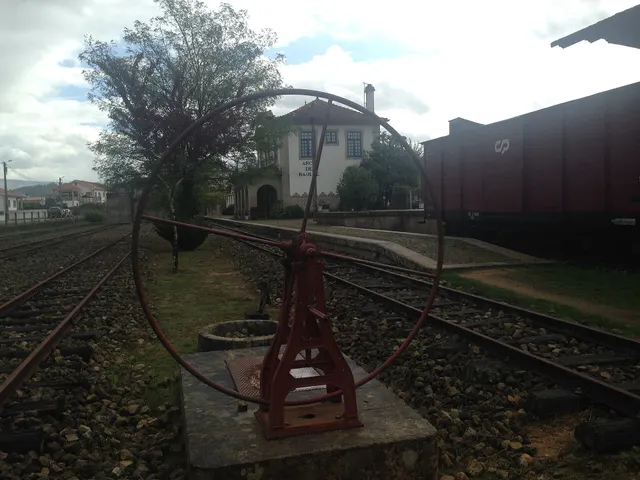
Revolving plate and tracks from the old Arco de Baúlhe station, with buildings and railway equipment at the bottom.
View of the Arco de Baúlhe station and its surroundings. The photograph does not document the distinction of the gardens in 1962.© JP Ribeiroⓘ

Not every memory of the railway is made of metal.

Includes an activity to try →
Read here and view sources

The station also has a memory made of flowers. The museum publication describes its rose gardens and recalls the distinction it received in 1962 as Portugal’s most flower-filled station.

Alongside machines and rails, the garden adds another way to see the place: a station’s landscape includes what grows around it. The award belongs to the history of the site; it is not a current rating of the gardens.

Getting to know the parish See Fact sheet: Núcleo Ferroviário de Arco de Baúlhe
Source and context

Municipality — Land Museum of Basto: a journey through the history of the region, pp. 28–29

Accessed: . Editorial summary; the date of consultation is not the date of the facts.

Forest landscape · maritime pine botany

A pine cone has little homes for seeds

The woody scales hide a detail worth noticing.

Explore: A tree, several clues →
Read here and view sources

In maritime pine, Pinus pinaster, the cone contains two seeds per scale, according to the University of Évora description. The trunk has thick, reddish-brown, deeply cracked bark. After recognising the paired needles, these other shapes deserve attention. The municipality mentions maritime pine in the mountain landscape; these features help explain the species without constituting an inventory of local pine woods.

Different male and female reproductive structures occur on the same tree: the species is monoecious. The profile describes the male structures as yellowish clusters and the female ones as scaly structures that form cones. Looking only at a mature cone therefore leaves part of the cycle undiscovered.

The environment matters too. The University of Évora associates maritime pine with sunny places and acidic, often sandy soils, also mentioning inland occurrences on schist substrates. It can form pine woods or be part of mixed forests. This describes general preferences and occurrence; it does not turn every hillside with these conditions into a pine wood.

Words in this story: see explanations →
Source and context

University of Évora — Virtual Museum of Biodiversity, Pinus pinaster

Municipality — landscape and vegetation

Accessed: . Editorial summary; the date of consultation is not the date of the facts.

Flora · general biology of a species invasive in Portugal

Yellow flowers, contested space

A striking plant can change the vegetation around it.

Explore: A landscape, different ways to grow →
Read here and view sources

Silver wattle, Acacia dealbata, has yellow flowers grouped in small round clusters and finely divided leaves. Native to south-eastern Australia and Tasmania, it is described by the University of Évora as invasive in Portugal. It can form dense stands that hinder native vegetation, particularly after disturbances such as fire. This profile explains the species; it does not locate a population in Cabeceiras or identify all acacias by the same name.

There is more to observe than yellow flowers: the evergreen leaves divide repeatedly into small units, giving the crown a delicate appearance. The profile gives January to April as the flowering period and describes flattened, reddish-brown pods. These are general species features, not a calendar confirmed for a place in the municipality.

The introduction history also helps explain the landscape. The University of Évora mentions ornamental, forestry and soil-stabilisation uses. A plant introduced for one purpose may later spread and alter the space available to other species.

Source and context

University of Évora — Virtual Museum of Biodiversity, Acacia dealbata

Accessed: . Editorial summary; the date of consultation is not the date of the facts.

Flora · general description of Arundo donax

Giant reed continues below ground

Below the stems lies another part of the plant.

Explore: From margins to monitoring →
Read here and view sources

Giant reed, Arundo donax, is a large perennial grass. ICNF describes robust, hollow stems that can reach six metres and a rhizome structure extending underground. Knowing the unseen part helps us look beyond the tall stems of a reed bed. The national distribution in the profile does not confirm a record at any particular place in Cabeceiras.

Flowers occur in large, branched, violet-tinged clusters; the profile gives August to October as the flowering period. Leaves are long, narrow and pointed. The description helps distinguish three plant parts: tall stems, the leaves along them and the flowering structures.

Flowers and viable seeds are not the same thing. ICNF describes fruits that do not produce viable seeds outside the native range. Seeing a flowering reed bed is therefore not enough to establish how it is spreading. The underground structure remains part of the question.

Source and context

ICNF — SIVEEI, Arundo donax; updated record 09/03/2023

Accessed: . Editorial summary; the date of consultation is not the date of the facts.

Gardens · general ecology and seasons

A calendar of flowers

Pollinators need flowers at different times of year.

Includes an activity to try →Explore: A garden, several moments →
Read here and view sources

According to guidance from entomologists Renata Santos and Albano Soares, a green space becomes more valuable to pollinators when it offers flowers at different times, with varied shapes, colours and sizes. Spontaneously growing plants can contribute too. The strawberry tree, which flowers in autumn, is one example mentioned. This is an idea for observing a garden’s cycles, not a guaranteed calendar for every altitude and set of conditions in Cabeceiras.

Source and context

Calouste Gulbenkian Foundation — explanations of entomologists Renata Santos and Albano Soares, 07/06/2022

Accessed: . Editorial summary; the date of consultation is not the date of the facts.

General biology · mosses, without a local species inventory

A small carpet full of life

Mosses invite a closer look.

Includes an activity to try →Explore: Small shapes, big differences →
Read here and view sources

Bryophytes are small plants whose life cycle depends heavily on moisture. Their diversity is not only green: there are different shapes, colours and textures. According to the scientific presentation from Serralves, they contribute to nutrient recycling and can colonise surfaces where other plants cannot yet establish themselves, helping soil form. Learning about this group brings new questions to a walk, without needing to pull up specimens.

Mosses have no true roots. Kew describes rhizoids as small filaments whose main role is anchoring the plant to rock, bark or soil. Absorbent surfaces help take up water and minerals from the surroundings. Contact with moisture is therefore part of how they live.

They do not produce flowers either: they reproduce through spores. Spaces between the small plants help retain water, keeping the soil and nearby surroundings moist. These carpets can also shelter small animals.

This does not mean all mosses need the same conditions. Species are adapted to very different environments, and some survive dry periods in a dormant state. A green patch on a wall is not enough to identify a species or explain its whole life cycle.

Words in this story: see explanations →
Source and context

Serralves / MHNC-UP and CIBIO-INBIO — Briophytes, 20 of November 2016

Royal Botanic Gardens, Kew — 7 interesting things about moss, Ellen McHale, 23/05/2020

Accessed: . Editorial summary; the date of consultation is not the date of the facts.
Local observation · Cavez · general botany

Foxgloves like the woodland edge

Not all woodland plants seek the forest interior.

Includes an activity to try →Explore: Look at the whole plant →
Read here and view sources

Flora-On describes Digitalis purpurea subsp. purpurea at the edges and in clearings of woods and scrub, including some banks and hedges. It prefers cool, shady places. The profile helps explain how light and moisture create different environments even close together. The plant is toxic if swallowed: knowing it does not mean using it as food.

Flora-On distinguishes two subspecies with different ecological descriptions. For subsp. purpurea it mentions a general preference for siliceous substrates. For amandiana it highlights rocky environments and shallow soils, including cliffs, outcrops receiving little sun and banks in abandoned vineyards.

This distinction prevents us from treating all foxgloves as inhabitants of one setting. Finding a flower in a clearing is not enough to assign a subspecies: ecology guides questions but does not replace botanical characteristics. The profile also records possible parasitism by Orobanche amethystea, showing that a plant has relationships with other plants too.

The photograph by João Lima, recorded on 2026-06-15, shows this species in Cavez. Open the observation to compare visible details with the botanical description. The record documents that encounter; it does not mean the plant will always be visible in the same place. The observation identifies Digitalis purpurea without confirming a subspecies.

Words in this story: see explanations →
Source and context

Portuguese Society of Botany, Flora-On — Digitalis purpurea, ecology and toxicity

iNaturalist — Digitalis purpurea, João Lima observation in 2026-06-15

Accessed: . Editorial summary; the date of consultation is not the date of the facts.
General botany · no local occurrence assigned

Rosemary interests bees too

There is more to discover beyond the scent.

Read here and view sources

Flora-On describes rosemary as an early-flowering nectar plant, often planted near apiaries. It prefers exposed, dry, warm places in scrub or open woodland. The profile uses Rosmarinus officinalis and lists Salvia rosmarinus as a synonym. This is general species information: it identifies neither a plant in the Arco garden bed nor the composition of honey produced in Cabeceiras.

Preferring dry places does not confine rosemary to one soil type. Flora-On describes it on sandy, schist or limestone soils, both acidic and basic. The term “edaphically indifferent” refers to this tolerance of different soil conditions; it does not mean light, temperature and water cease to matter.

People are part of this story too. According to the profile, planting near apiaries expanded the species’ distribution in Portugal. Finding a plant does not automatically explain how it arrived: spontaneous occurrence and a presence linked to cultivation are different kinds of information.

Words in this story: see explanations →
Source and context

Flora-On — Rosmarinus officinalis (alecrim), ecology and observations

Accessed: . Editorial summary; the date of consultation is not the date of the facts.
General botany · bay laurel

Bay laurel has more than leaves

A tree familiar from cooking also has flowers.

Explore: What changes a tree? →
Read here and view sources

Bay laurel, Laurus nobilis, keeps foliage throughout the year. The Lisbon School of Education describes small pale-yellow flowers and insect pollination. It is dioecious: male and female flowers occur on different plants. Its leaves are used as a seasoning, but this story is not a guide to identifying plants for consumption. The description is general, with no local observation assigned.

The school’s profile places flowering in Portugal between February and April. The small flowers invite attention to a part of the tree beyond its aromatic leaves. Entomophilous pollination means that insects help transport pollen. This calendar is a general reference, not a prediction for an individual tree in Cabeceiras.

The leaf is simple and has pinnate venation: one main vein forms an axis for lateral veins, in a feather-like pattern. Leaf shape, flowers and reproductive organisation are different clues. A plant can retain its foliage and still change appearance when flowering.

Words in this story: see explanations →
Source and context

Lisbon High School of Education — Laurus nobilis

Accessed: . Editorial summary; the date of consultation is not the date of the facts.
Wetland plants · general botany

A rush tells a story of damp ground

Soft rush finds a place in wet meadows.

Includes an activity to try →Explore: Moisture has several landscapes →
Read here and view sources

Flora-On associates Juncus effusus subsp. effusus with rush beds and meadows on deep, damp soils. Gaia Biological Park describes soft rush’s smooth, shiny stems and recalls the use of its fibres in mat weaving. These are clues to the plant’s ecology and uses, not records of its presence or of craft activity in Cabeceiras.

The flowers deserve attention too: the Biological Park describes branched greenish or whitish clusters and gives May to September as the flowering period. The plant is perennial and survives for several years. Flowering therefore does not require a showy flower. The period given is a reference from the profile, not a forecast for a visit to the municipality.

The Gaia profile gives a height of 50 to 90 centimetres and includes lake and pond margins among the habitats where the rush may occur. This is a size reference, not a height every plant must reach. Shape, size and environment should be recorded separately when describing a specimen.

Words in this story: see explanations →
Source and context

Portuguese Society of Botany — Flora-On: Juncus effususus subsp. effususus

Gaia Biological Park — Junco-efuso

Accessed: . Editorial summary; the date of consultation is not the date of the facts.
Observation · general activity through the seasons

One tree, several visits

Returning to the same place is another way to read the seasons.

Includes an activity to try →Explore: Choose a way to look →
Read here and view sources

The book A Vegetação em Portugal distinguishes leaves that remain functional through the unfavourable season from marcescent leaves, already dry but still hanging in the crown. Observing the same tree at different times helps reveal change. Record what you see before naming the species: green leaves, attached dry leaves, bare branches and new shoots do not all tell the same story.

To compare visits, choose a specific part of the tree: a branch visible from the same spot or the entire crown. Keep the date and record green leaves, attached dry leaves, flowers and fruits separately. If you cannot see something, write “not observed”; that differs from saying it does not exist on the tree.

The ginkgo and dawn redwood stories let you begin comparing on screen: both lose their leaves, but their shapes differ. Ash adds another question: are you looking at a whole leaf or one of its leaflets? Repeated observations and carefully chosen comparisons reveal more than immediately guessing a species name.

Source and context

National Press — Vegetation in Portugal, semi-ducifolia and marcescent leaves

Calouste Gulbenkian Foundation — Ginkgo

Cambridge University Botanic Garden — Metasequoia glyptostroboides, deciduous foliage and layout of leaves

Calouste Gulbenkian Foundation — Straits leaves, fruit and habitat

Accessed: . Editorial summary; the date of consultation is not the date of the facts.

Parque Florestal · 2016 planting and general botany

A conifer that sheds its leaves in autumn

Having cones does not mean keeping leaves all year round.

Includes an activity to try →
Read here and view sources

The municipal news of March 2016 records the planting of a dawn redwood in Parque Florestal alongside a ginkgo. This episode opens a window onto Metasequoia glyptostroboides, the living species of the genus described by Cambridge University Botanic Garden. The report provides no detailed botanical identification and does not confirm the tree’s survival today.

In Cambridge’s description, this conifer sheds its leaves and turns coppery in autumn. Leaves, buds and branches are arranged in opposite pairs. Its bark is fissured and the tree can grow large. These are general features, not measurements of a tree in Cabeceiras.

Compare it with ginkgo: both can change colour and lose foliage, but leaf shape and arrangement differ greatly. A tree’s calendar and a leaf’s pattern tell different parts of its story.

The scientific story has a twist: Cambridge reports that dawn redwood was known only from fossils until 1941, when living trees were found in Sichuan, China. Seed collection and distribution later helped establish it in gardens across several countries. The profile distinguishes its limited wild population from widespread cultivation. A park tree and a population in its native habitat tell different stories.

Words in this story: see explanations →
Source and context

Municipality — World Tree Day, 18/03/2016

Cambridge University Botanic Garden — Metasequoia glyptostroboides, deciduous foliage and layout of leaves

Accessed: . Editorial summary; the date of consultation is not the date of the facts.

A world under the leaves

A first look at the fungi. Continue in the gallery to see the local records already documented.

Choose a story · 20
General knowledge · national guide

Blades, pores and other forms

Not everyone has the same drawing under their hat.

Includes an activity to try →Explore: What shape arouses your curiosity? →
Read here and view sources

The guide distinguishes groups with blades, folds, pores or specks. Naturalis describes white blades in Amanita muscaria and light pores tubes in Gyroporus cyanescens. There are two different ways to organize the surface under the hat. An isolated feature does not allow identifying a mushroom or deciding whether it can be consumed. Not everyone has a foot: some hats grow directly from wood. The guide to Australian botanical gardens also shows shapes of cup and fine coating on wood. When you observe, you can start with three questions: what is the contour, where support grows and what surface can you see without moving?

Words in this story: see explanations →
Source and context

DGADR / ICNF — Mushroom Collector's Guide, June 2013
Accessed:

Naturalis Biodiversity Center — Amanita muscaria
Accessed:

Naturalis Biodiversity Center — Gyroporus cyanescens
Accessed:

Australian National Botanic Gardens / Australian National Herbarium — Types of fungal fruiting bodies, Heino Lepp
Accessed:

Editorial summary; the date of consultation is not the date of the facts.

General biology · example of Laetiporus sulphureus

Shears that grow in a log

The reproductive form can project itself to the side.

Read here and view sources

In Laetiporus sulphureus, Kew describes yellow reproductive structures that are available as shelves on trees. The fungus acts on the dead wood of the interior of larger trunks and branches, contributing to their decomposition. The description explains a form of growth; it does not confirm the presence of this species in Cabeceiras nor allows to recognize other fungi only by color.

Yellow belongs to the structure that is seen outside; the activity of the fungus extends to wood. Kew describes a decomposition that makes it brown and can leave cavities inside. Looking only at the shelves is therefore looking at a part of the process. The presence in a tree does not mean that all its parts are dead: the text refers to dead wood inside trunks and branches. This description does not evaluate the stability of concrete trees.

Source and context

Royal Botanic Gardens, Kew — In pictures: Fungi spotting season at Kew, Grace Brewer, 24/10/2019

Accessed: . Editorial summary; the date of consultation is not the date of the facts.

General knowledge · national guide

The mushroom is just a part

There's a net the eyes don't always find.

Includes an activity to try →Explore: Mushroom, mycelium and spores →
Read here and view sources

The mushroom is a reproductive structure; the body of many fungi is a network of filaments, the mycelium. Each filament is called hypha. The CCRES describes this network to colonize living organic matter or decomposition, from where the fungus gets nutrients.

The fruity body develops from the mycelium and allows to disperse spores. If they find favorable conditions, they can give rise to a new mycelium. The visible mushroom counts only one part of the cycle; not all fungi produce structures with the appearance of a hat.

In the cultivation of some decomposing species, mycelium can develop in inoculated trunks. The same support can produce mushrooms for several years, while there are conditions and nutrients. This general explanation does not identify a species or document an occurrence in Cabeceiras.

The net can also be organized into cords called rhizomorphs. In certain wood fungi, these help to cross intervals between branches or trunks and reach another food. An outer layer protects the interior hyphae during this exploration.

Another strategy is to form sclerotics: compact masses of hyphae with a resistant cover. They allow you to cross unfavorable periods and, when conditions improve, they can originate mycelium or reproductive structures. They are forms of growth and resistance described by the Australian botanical garden, not local records.

Words in this story: see explanations →
Source and context

DGADR / ICNF — Mushroom Collector's Guide, June 2013
Accessed:

Centre for Silvestre Resources Skills — production mushrooms
Accessed:

Silvestrian Resource Competence Centre — General Mycology
Accessed:

Australian National Botanic Gardens / Centre for Australian National Biodiversity Research — The mycelium
Accessed:

Editorial summary; the date of consultation is not the date of the facts.

General ecology · mycorrhizae

Roots have partners

A trade that happens out of sight.

Includes an activity to try →Explore: The partnership between roots and fungi →
Read here and view sources

In mycorrhizae, plant and fungus establish a partnership. The plant provides organic compounds; the mycelium associated with roots helps to obtain water and nutrients.

Oaks, chestnut trees and pine trees can participate in these relationships. A nearby tree gives context to observation, but does not itself reveal the name of a mushroom.

The researcher Susana Gonçalves also distinguishes ectomycorrhizes: in these associations, the fungus involves the ends of the roots. The example helps to realize that there are different forms of relationship between plants and fungi, beyond the visible appearance of mushrooms.

The partnership expands the area from which the plant can obtain resources: the roots connect to the network of the fungus. But the relationship does not always have the same participants. There are fungi able to associate with several plants and others with very specific partners. That is why knowing the trees of a place helps to understand the environment, without replacing the identification of the fungus.

Words in this story: see explanations →See local fungal records
Source and context

Silvestrian Resource Competence Centre — General Mycology
Accessed:

Gulbenkian Garden — ecology of fungi, with Susana Gonçalves (17/04/2023)
Accessed:

Editorial summary; the date of consultation is not the date of the facts.

General ecology · decomposition

A fallen leaf still has its way

On the ground, matter changes hands.

Includes an activity to try →Explore: Three ways to feed a fungus →
Read here and view sources

A fallen leaf can become food for decomposing fungi. These absorb nutrients from dead organic matter and participate in its recycling. Support makes a difference: there are fungi linked to leaves, wood or humus. Decomposition is a relationship with food; the form of a hat alone does not explain this way of life.

Protecting this underground life also goes through the way the soil is treated. In the interview of the Gulbenkian Garden, Susana Gonçalves explains that excessive mobilization and compaction can harm mycelium networks. It is a general orientation of conservation, without evaluating the state of any land of the municipality.

The names also keep clues about the support: foliage grows on the fallen leaves, lignite in the wood and humícolas in decomposing vegetable residues. They are words to describe where they live, not names of species. In the same landscape, different materials offer different possibilities of food; leaving a leaf or branch in the place also preserves part of this context.

Words in this story: see explanations →See local fungal records
Source and context

Silvestrian Resource Competence Centre — General Mycology
Accessed:

Gulbenkian Garden — ecology of fungi, with Susana Gonçalves (17/04/2023)
Accessed:

Editorial summary; the date of consultation is not the date of the facts.

General ecology · wood and biodiversity

A log can be a small house

Decomposing wood is still full of relationships.

Includes an activity to try →Explore: A log opens several stories →
Read here and view sources

A fallen log is still part of the forest life. Fungus decomposes wood, which also sustains other organisms, including insect larvae. The researcher Susana Gonçalves explains that certain tree cavities result from fungal activity and can then serve as an animal shelter. A tree with cavities and a trunk on the ground offer different situations to observe. In green spaces, conserving old trees requires assessing and monitoring the risk of falling. This ecological explanation does not confirm an association between the beetle photographed in Cabeceiras and a specific tree.

But the wood does not always break down in the same way. In white rot, the fungi degrade lignin and cellulose; the wood can become clear, fibrous or spongy. In brown rot, the degradation reaches mainly cellulose and hemicellulose, becoming a brownish residue rich in lignin. The wood can become fragile and fragmented into small blocks. The University of California distinguishes these processes by the effect on the components of the wood.

White and chestnut describe decomposition, not the color of a mushroom hat. Nor are species names. A reproductive structure visible in the trunk shows only part of the story: decomposition can extend up or down and remain hidden. A photograph does not allow to measure this extension or evaluate the stability of the tree.

Words in this story: see explanations →See local fungal records
Source and context

Gulbenkian Garden — ecology of fungi, with Susana Gonçalves (17/04/2023)

University of California — Wood Decay Fungi in Landscape Trees (revised August 2019)

Accessed: . Editorial summary; the date of consultation is not the date of the facts.

General biology · yeasts

Some fungi don't have a hat.

From the forest to fermentation, the kingdom of fungi has many scales.

Explore: From cell to batch →
Read here and view sources

The yeasts are also fungi, but many live as a single cell. The CCRES gives the example of Saccharomyces cerevisiae and its alcoholic fermentation capacity. Mushrooms are only one of the most visible forms of a group that includes microscopic organisms. In bread dough, yeasts consume sugars and produce carbon dioxide. The gas gets stuck in small pockets and helps the dough grow. It is the general explanation of fermentation, without identifying the microorganisms present in traditional yeasts of Cabeceiras. Many yeasts multiply by gemulation or division: they can form a new cell from one bud or separate into two. They don't depend on producing a mushroom.

Words in this story: see explanations →
Source and context

Silvestrian Resource Competence Centre — General Mycology
Accessed:

Institute of Food Science & Technology — Raising agents: biological (fermentation)
Accessed:

American Phytopathological Society — Introduction to Fungi: reproduction and growth
Accessed:

Editorial summary; the date of consultation is not the date of the facts.

Knowledge of nature · General biology

A lichen is a partnership

The world of fungi goes far beyond hats.

Includes an activity to try →Explore: From surface to invisible relationships →
Read here and view sources

In a lichen, a fungus is associated with an algae or cyanobacteria capable of photosynthesis. The photosynthetic partner provides nutrients; the fungus helps protect it from dryness and radiation.

The University of Évora describes crusty, leafy and fruity forms, among others. It is a new way of repairing surfaces and textures without confusing a color with an identification. This reading explains the biology of lichens; it does not constitute an inventory of species confirmed in Cabeceiras.

Reproduction can also transport the partnership: lichen fragments can disperse the two partners together. The fungus spores need to find a photosynthetic partner to form a new lichen.

The shapes may remember a crust, cut leaves or small shrubs. They are words to describe the appearance, with limits that are not always rigid. The lichens are also not moss: these are plants, while the lichens are classified with fungi.

Support also deserves attention: lichens can grow on rocks, shells, soil and artificial surfaces. The University of Évora explains that identification crosses the look with the substrate and habitat; sometimes requires microscopy or other specialized methods. A photograph can record the encounter without solving the name.

Another facet is the study of air. Lichens can accumulate compounds from the atmosphere and are used as bioindicators or biomonitors. The presence of a spot on a wall does not allow, by itself, to classify the air quality of a village. This conclusion requires an appropriate study, as the evaluation of a river combines different observations.

Words in this story: see explanations →
Source and context

University of Évora — Biodiversity of Mitra: Lichens

Australian National Botanic Gardens / Australian National Herbarium — What is a lichen?, Heino Lepp

Accessed: . Editorial summary; the date of consultation is not the date of the facts.

Abadim · photographed record and general biology

The stains of a hat also change

A photograph fixes only one moment of the mushroom.

Explore: From hat to hidden life →
Read here and view sources

Naturalis describes Amanita muscaria with white spots that can disappear and a hat whose red can pass to lighter shades, orange or yellowish. Therefore, the appearance is not always the same. The record photographed in Abadim shows light spots in a red hat; it does not follow the evolution of the same specimen. These details serve to understand the species, not to identify mushrooms for consumption.

The shape also changes: Naturalis describes an initially globoso hat that expands until flat. The blades are white. Color, stains and shape belong to a developing organism, so an image should not be treated as an unchanging mold of the species.

There is also a story under the ground. The source indicates that Amanita muscaria forms ectomycorrizas, associations with tree roots. It refers to environments with broad and coniferous leaf trees, in sandy or peat soils. The record of Abadim documents the mushroom photographed; it does not identify the partner tree nor demonstrates that underground link at that point.

Source and context

Naturalis Biodiversity Center — Amanita muscaria

Accessed: . Editorial summary; the date of consultation is not the date of the facts.

Saint Nicholas · photographed registration and general biology

Blue in mushroom, straw in spores

In a fungus, colors can tell different stories.

Read here and view sources

In Gyroporus cyanescens, Naturalis describes meat that changes to greenish blue when damaged. On the other hand, the color of the spore, the set of spores deposited, is light straw. The local photograph shows a blue zone in a specimen already cut but does not show the spores. It is a comparison between the characteristics of the scientific description; do not cut or taste mushrooms to try to confirm an identification.

Under the hat, the description features tubes and pores of light tones, which can blue when damaged. It is a different organization of the blades described in Amanita muscaria. Compare the two readings helps to distinguish a structure from the color it presents, without manipulating new copies.

Naturalis associates the species to woods with deciduous trees, such as oaks and beech trees, in sandy soils, acids and poor, with little leaf cover. It also indicates the formation of ectomycorrizas. These characteristics describe the general ecology; they are neither an analysis of the soil nor an identification of the tree associated with the registration of St. Nicholas.

Words in this story: see explanations →
Source and context

Naturalis Biodiversity Center — Gyroporus cyanescens

Accessed: . Editorial summary; the date of consultation is not the date of the facts.

General biology · growth of fungi

Why do mushrooms grow in a circle?

On the surface appears the drawing of a hidden growth.

Includes an activity to try →Explore: The circle is just the beginning →
Read here and view sources

Some myceliums expand from a point, searching for nutrients in the outer areas. Mushrooms can appear in this margin of growth and form a ring. The visible circle thus accompanies the expansion of the fungus in the substrate. Not all fungi make these drawings; this general explanation does not confirm a circle observed in the municipality.

The net grows by stretching and branching the hyphae. There are also links between the filaments, which allow the distribution of nutrients through the mycelium. Imagine several paths connected: the ring of mushrooms, when it appears, does not show all this underground design.

Growth does not have to draw a perfect circle. The distribution of nutrients and conditions of the environment influence the direction of expansion. The explanation of Australian botanical gardens describes further development in favorable areas; the circle is a way of understanding the process, not a mandatory mold.

Source and context

Australian National Botanic Gardens / Centre for Australian National Biodiversity Research — The mycelium

Accessed: . Editorial summary; the date of consultation is not the date of the facts.

General biology · feeding of fungi

A meal prepared outside

Fungi don't need a mouth to get food.

Includes an activity to try →Explore: Transform, absorb and distribute →
Read here and view sources

A fungus does not need to ingest a leaf to take advantage of its nutrients. Mycelium releases enzymes to the outside; these decompose organic matter into simpler compounds, which are then absorbed by hyphae.

The web of filaments also grows and branches. The links between hyphae allow to transport nutrients to other areas of the mycelium. Thus, what seems immobile may be exploring new spaces and redistributing resources, without seeing a mushroom on the surface.

The way to grow also accompanies the distribution of food. The presentation of the Australian National Botanical Garden describes greater branching and slower advancement in nutrient-rich zones; where these run out, the hyphae can stretch faster and branch less. The network does not always need to have the same density.

Some fungi form hyphae strings, called rhizomorphs. These can help to cross spaces between food sources, such as two separate pieces of wood. When they reach new wood, the hyphae can branch and occupy it. It is an explanation of growth strategies, not a confirmed description for any filament found on a sidewalk.

Words in this story: see explanations →
Source and context

Australian National Botanic Gardens / Centre for Australian National Biodiversity Research — The mycelium

Accessed: . Editorial summary; the date of consultation is not the date of the facts.

Ecology of fungi · General explanation

There are fungi that live off others

Cooperation and parasitism are different relationships.

Explore: What relationship is this? →
Read here and view sources

The parasitic fungi use resources from living organisms: plants, animals or other fungi. They can cause disease and, in some cases, the death of the host. This explanation of the CCRES helps distinguish ways of life; it does not diagnose trees or animals observed in the municipality.

An example helps to understand the difference between what we see and what happens on the ground. In the British investigation of the Royal Horticultural Society on Armillaria, fungi can feed on roots or buried dead wood. Mushrooms do not always come against the trunk: the link can pass through the roots or cords of mycelium, the rhizomorphs.

The survey brought together 170 suspected cases in British parks and gardens, with photographs in 113. These figures describe the contributions received, not the frequency of the disease in a forest or the situation of Cabeceiras.

Words in this story: see explanations →
Source and context

Silvestrian Resource Competence Centre — General Mycology
Accessed:

Royal Horticultural Society — Honey Fungus Hunt, British survey results and context
Accessed:

Editorial summary; the date of consultation is not the date of the facts.

Fungi · cultivation conditions, general context

More water is not always better

Fungi need certain conditions, not just rain.

Includes an activity to try →Explore: From invisible net to mushroom →
Read here and view sources

When growing saprotrophic mushrooms, moisture in the substrate and air affects development. The Centro de Competências dos Recursos Silvestres explains that dryness can limit mycelium growth and deform mushrooms, while excessive moisture encourages contamination. Temperature, available nutrients and ventilation also matter. This explains cultivation; it does not predict wild mushroom growth or provide guidance on choosing edible species.

It is also important to distinguish two phases: expand the mycelium in the substrate and produce reproductive structures. In the cultivation described by the CCRES, the conditions of temperature and illumination can change from one phase to the other. No photosynthesis does not mean that the light is indifferent: it can influence the shape and coloring of mushrooms.

The substrate is both support and food. Its composition and acidity help explain why one species grows well in a material and another does not. Thus, the same amount of water does not make two substrates equivalent. These factors interact; a rainy afternoon alone does not allow for a fruiting.

Words in this story: see explanations →
Source and context

Centre for Silvestre Resources Skills — production mushrooms

Accessed: . Editorial summary; the date of consultation is not the date of the facts.

General biology of fungi · no local occurrence attributed

A fungus without a hat

The world of fungi also fits under the microscope.

Explore: Three scales to discover →
Read here and view sources

Not all fungi form the mushrooms we recognize. Kew describes microfungals, including molds, which can produce spores directly in the hyphae. Therefore, searching only visible hats leaves out a part of this realm. It is an explanation of biological diversity, without identifying molds in food or plants of the municipality.

Even among fungi with larger reproductive structures, not everything appears above the ground. Kew presents truffles as an example of underground fruitification and explains the role of animals in dispersing their spores. A walk that only looks for hats on the surface shows, therefore, only a part of the diversity.

The mycelium networks also meet each other. The source distinguishes the competition between incompatible fungi from the union between compatible partners. It is another reason not to imagine the soil as a unique and undifferentiated network: there are different organisms and relationships, which a photograph of mushrooms does not reveal.

Source and context

Royal Botanic Gardens, Kew — What in earth? Understanding what fungi really are, Eddie Johnston (07/10/2022)

Accessed: . Editorial summary; the date of consultation is not the date of the facts.

General biology of fungi · no local occurrence attributed

A drop can put spores to travel

Rain also participates in dispersion.

Includes an activity to try →Explore: What gets the spores moving? →
Read here and view sources

In certain rounded fungi, the mature spores remain in a bag with an opening. A drop of rain compresses the air inside and causes a small cloud of spores to come out. The impact starts the release; the wind can continue the transport.

The Australian source also describes other ways of paving the way. In Scleroderma, the resistant outer layer breaks and exposes the spores to water and wind. In Calvatia and Pisolithus, the outer cover disintegrates. The image of a bag compressed by a drop does not therefore explain all the rounded fungi.

Freeing and transporting are two stages. A fungus may depend on an impact for the first and air currents for the second. In other cases, it is the reproductive mechanism itself that launches spores. Comparing these processes helps you realize why there are such different ways. These are general examples, without assigning these genera to Cabeceiras.

Source and context

Australian National Botanic Gardens / Australian National Herbarium — Spore release and dispersal, Heino Lepp

Accessed: . Editorial summary; the date of consultation is not the date of the facts.

General biology · forms of fungi

♪ Corals that don't live in the sea ♪

The drawing of a fungus may remind branches or folds of gelatin.

Includes an activity to try →Explore: Ways to compare →
Read here and view sources

Australian botanical gardens describe fungi with reproductive structures in the form of small clades or branched corals. They usually appear in the soil and, in some cases, in decomposing wood. Others have a gelatinous appearance and grow on wood to decompose. These names describe shapes, not a single species. A visual comparison helps ask questions, but does not replace identification. The source presents examples of general biology without confirming these forms at a site of Cabeceiras.

Historical illustrations also require critical reading. The source shows drawings of corals published by Robert Kaye Greville in the 19th century: they have historical interest, but represent the production of spores according to an interpretation then used and corrected today. A beautiful drawing can preserve an ancient hypothesis, not just a form.

Source and context

Australian National Botanic Gardens / Australian National Herbarium — Coral and jelly fungi, Heino Lepp

Accessed: . Editorial summary; the date of consultation is not the date of the facts.

General biology · example of Cyathus striatus

A nest without birds

What looks like eggs are small structures with spores.

Explore: What does this little nest count? →
Read here and view sources

Kew presents Cyathus striatus as a fungus whose mature reproductive structures resemble tiny nests. The small bodies inside contain spores; raindrops help expel them. The species gets nutrients from decaying matter. It is an example described by Kew, not a confirmed record in Cabeceiras.

Kew's description adds details to the comparison: the structures are funnel-shaped, pilous exterior and grooved interior walls. The small bodies transported by rain are not animal eggs. The nest appearance belongs to reproduction, while the feeding is made from decaying matter, such as vegetable remains of the forest. Form, dispersion and food are three different questions about the same organism.

Source and context

Royal Botanic Gardens, Kew — In pictures: Fungi spotting season at Kew, Grace Brewer, 24/10/2019

Accessed: . Editorial summary; the date of consultation is not the date of the facts.

Abadim · local record and general biology

Looks like a leaf, but it's a partnership.

Among mosses, there's a lichen that deserves a second look.

Includes an activity to try →Explore: Still in the small world →
Read here and view sources

The Pedro Andrade record of 31 January 2025, shows Lobarina scrobiculata in Abadim, according to the crossing of the published point with CAOP2025. Light lobes and surface depressions stand out among green mosses.

The ITALIC portal of the University of Trieste describes a foliaceous stalk and an association with cyanobacteria of the genus Nostoc. The leafy appearance does not make it a plant: this lichen results from an association between partners.

The source describes color differences between the dry and wet stalk. An isolated image does not show this change over time. It is worth comparing visible shapes and reliefs without watering or removing the lichen to try.

The description of ITALIC places the species in ancient caducifoli trees and rocks with mosses, in wet and open forests. It also refers to a reproduction mainly asexual, through sorédios. They are general characteristics of the species; the record of Abadim documents the published photography and location, not a study of all these processes on site.

The wide, rounded lobes contrast with the lichen Lasallia pustulata, also photographed in Abadim. Compare the two helps to realize that having a leafy appearance does not mean having the same shape or the same fixation mode.

Words in this story: see explanations →
Source and context

University of Trieste — ITALIC 8.0, Lobarina scrobiculata

Accessed: . Editorial summary; the date of consultation is not the date of the facts.

Abadim · local record and general biology

A small landscape on the stone

The protrusions of a lichen give relief to the rock.

Includes an activity to try →Explore: Still in the small world →
Read here and view sources

In the photograph of Pedro Andrade, of 31 January 2025, a brown-gray lichen has rounded protrusions over rock. The record is identified as Lasallia pustulata and located in Abadim by crossing the public point with CAOP2025.

The University of Évora describes this species as Saxon, that is, linked to rocks. The stem is umbilicalized: it is attached to the support only by the central zone. The protrusions of the upper face are another detail described by the source.

The photograph allows you to observe the relief, but does not show the fixture point hidden below. Compare what you see with what the description explains is a way to learn without lifting or highlighting the lichen.

The record of Évora describes a single wolf, which can reach ten centimeters, and small structures branched on the margins, the isids. The surface can present a whitish coating, called pruin. Edge, margin and relief are three different observations; no measurements of the photograph should be estimated without a known scale.

Words in this story: see explanations →
Source and context

University of Évora — Biodiversity of Mitra, Lasallia pustulata

Accessed: . Editorial summary; the date of consultation is not the date of the facts.

Crafts and memories

In the hands, at the table and in the community: little stories of how one lives and what one transmits.

Choose a story · 29
Arco de Baúlhe and Refojos · history of trade

When the metal sheet was forming

From the workshop came objects to the house, the countryside and the fair.

Explore: What was the metal for? →
Read here and view sources

João Pacheco, no Arco de Baúlhe, and Luziário Pereira de Magalhães, with their son António, in Refojos, are protagonists in the investigation of the Museum on lattice. The workshop of Luziário and António was in the Beco dos Ofícios; the nearby fair was the main point of sale. Teresa Soeiro relates the decline of craft with the diffusion of aluminum and plastic.

The inventory brings this work closer to everyday gestures: the MTB 241 copper mug served to make coffee, the MTB 240 cantara contained water and the lamps lit. The functions are documented for identified pieces. Knowing the objects helps to understand the workshop, but the collection does not confirm that these craftsmen or establishments continue in activity.

Teresa Soeiro's investigation gave rise to the exhibition The Art of lattice in Cabeceiras de Basto, in the Museum's facilities in Arco de Baúlhe. The work retreated to the artisans who began using white iron, or flander leaf, at the beginning of the Modern Era. The collection of the last professional routes was thus linked to a longer history of materials.

The objects reveal the variety of tasks: lighting a house, transporting wine, watering plants or storing oil for a locomotive. The craft passed through the house, field and transport. Comparing these functions helps to discover metallurgical work in gestures that seem to belong to separate worlds.

Words in this story: see explanations →Getting to know the parish
Source and context

Basto Land Museum — Latoaria, Teresa Soeiro text and inventory of pieces

Accessed: . Editorial summary; the date of consultation is not the date of the facts.

Gondiães · documented transformations in 2012

Broa changed tool

Tradition also incorporates new ways of working.

Includes an activity to try →
Read here and view sources

The record of 2012 contrasts the wood mass to the mechanical crusher then used in Gondiães. It also recalls the passage from the community oven to the House of Martyr.

The ingredients, previously offered by the inhabitants, began to be bought. The transformation of the tools and supply coexisted with the collective preparation of the party.

The help also came from those who lived outside. The Museum collected testimonies from emigrants from Lyon to participate and collaborate. Among the tasks remembered were carrying flour and carrying wood. The move to the mechanical crusher did not eliminate these works: machinery, materials and people remained part of the same preparation.

Words in this story: see explanations →Getting to know the parish
Source and context

Basto Land Museum — Visit to the Feast of Popes, published in 22/01/2012

Accessed: . Editorial summary; the date of consultation is not the date of the facts.

Outeiro · memory of wooden footwear

Carolinas: a name to wear

A board and a resistant strip could form the simplest model.

Read here and view sources

In the study of 2017, Teresa Soeiro describes the carolinas made by the tamanqueiros of Outeiro or by their apprentices. A cut board accompanied the foot and a strip of reused leather, or other resistant material, held it. It was the cheapest model. The same book shows that the names varied: in Penafiel, carolinas designated another type of footwear.

Source and context

Teresa Soeiro — Soqueiros e Tamanqueiros, municipal edition of 2017, p. 96 (viewer page 98)

Accessed: . Editorial summary; the date of consultation is not the date of the facts.

Pedraça · inventoried object 2015

One almude, two colors in memory

The inventory records more than the form of an object.

Includes an activity to try →
Read here and view sources

The Almude L023, associated with the Casa de Passo de Vides, in Pedraça, served to transport and measure wine. The plug of 2015 gives it 28 liters and describes zinc plate painted brown, with paint to peel; the original color was blue. The capacity belongs to this invented piece, not to all almudes. Even a layer of paint helps to tell the life of an object.

The record indicates 55 cm tall and 28 in diameter and identifies Jacqueline Vilela Passos as owner. External measurement, capacity and property are distinct information: joints make the description more useful than the name of the object alone.

The brown painting and the traces of blue also show that a piece may have been transformed throughout use. The inventory does not give the date of repainting. The observation of the ink allows to count a change, but does not reconstruct all the episodes of the almude's life.

Source and context

Basto Land Museum — Latoaria in Cabeceiras de Basto (05/11/2015), L023

Accessed: . Editorial summary; the date of consultation is not the date of the facts.

Lands of Basto · everyday objects

Two funnels, close tasks

A familiar form can hold different uses.

Includes an activity to try →Explore: Transfer, measure and serve →
Read here and view sources

In the inventory of 2016, the L63 funnel appears linked to the transfer of wine; the L18, to the passage of liquids between containers. Both of them are zinc foil. Reading the registered function avoids guessing the use only by form. Compare them to the muffler funnel: a similar object can enter another task.

The L63 is 17 cm tall and 17,7 in diameter; the L18 is smaller, 12,5 cm tall and ten cm in diameter. The inventory associates the first to Álvaro Magalhães, from the place of Devesa, Basto, and the second to Maria da Conceição Magalhães, no Arco de Baúlhe. These are data from registered owners, not indications of who manufactured the parts.

Measures, material and function make the comparison more concrete. A larger diameter does not in itself reveal how many liters passed through the funnel or what work was done in a given house.

Source and context

Basto Land Museum — Latoaria in Cabeceiras de Basto V (18/01/2016), L63, L18 and MSRM88

Accessed: . Editorial summary; the date of consultation is not the date of the facts.

Outeiro · clog materials and tools

Before the punch, a piece of alder

The wood was also chosen.

Includes an activity to try →
Read here and view sources

In the Museum's inventory, a pine tree torus is a raw material for the base of the punches. The hatchet cracked the wood, the rhinestone crushed it and the chisel prepared the edge where the leather was preached. A form used by Manuel Alves Leite connects the objects to the family history of the tamancaria.

The work continued with other tools: the Torquesa pulled the leather onto the stick and the sovela opened holes for the nails. Each object retains a specific gesture. The inventory allows to follow these operations without indicating a currently visitable workshop.

Words in this story: see explanations →Getting to know the parish
Source and context

Land Museum of Basto / Teresa Soeiro — In the country of Tamanco, introduction and inventory T10/T13/T16–T19

Accessed: . Editorial summary; the date of consultation is not the date of the facts.

Vila Nune · communications in 1758

The news had day to come

The post office linked Vila Nune to Porto through two support points.

Includes an activity to try →
Read here and view sources

In the Parochial Memoirs of 1758, the vicar of Vila Nune tells that the residents resorted to the post office of Raposeira, in the couto of Refojos, and Mondim. They arrived from Porto on Monday and left on Thursday. The news had its own paths and days: communicating also required waiting.

The vicar located each of the two points of mail about a league. The indication approximates service and distance: it was not enough to know when news came, it was also necessary to have a place outside the parish. The report does not say who carried the letters between that point and each resident.

When comparing documents there is a difference: Santa Senhorinha also resorted to Raposeira, but his abbot mentions arrival on Tuesday. We keep the two versions. Only these answers do not allow to decide whether the difference is due to the way of describing the service, an error or other circumstance.

Getting to know the parish
Source and context

Municipality — Parish Memoirs of Vila Nune, 23/05/1758

Municipality — Memória de Santa Senhorinha, 23/05/1758, replies 15, 19 and 20; transcription of José Viriato Capela (2003)

Accessed: . Editorial summary; the date of consultation is not the date of the facts.

crafts · Faia, Basto and Refojos

The wood also keeps the wine

Pipes, barrels and barrels tell a business story.

Includes an activity to try →
Read here and view sources

The municipality associates these works to Faia and also refers to tannaria in Basto and Refojos. The container is part of the wine culture as much as the vineyard. In the Ethnographic Court of 24 September 2023, dedicated to the arts and crafts, Faia introduced the oil tankers. The municipal news shows how this knowledge was also chosen to represent the parish at a collective party. The episode does not confirm the existence of a visitable workshop today. The presentation of the parish adds the manual manufacture of footwear to its craft traditions. The wood of wine containers is thus part of a more varied working memory, without identifying today's artisans or workshops here.

To understand how a container is built, it is worth knowing two words of the craft. The Lourinhã Museum identifies the trims and rims as central elements: wooden pieces form the body, while the rims involve them. The description highlights the work of the curvature and thickness of the trims. It is a general explanation of the tannaria, used here to read the objects; it does not document the sequence of manufacture of a workshop of Faia.

When looking at a pipe, look for the vertical lines between pieces and the rims that cross the set. Compare later with the wooden base of a punch: a material can be cluttered to support a foot or worked on several pieces to form a volume. The finished object holds shape, fit and use decisions.

Words in this story: see explanations →Getting to know the parish
Source and context

Municipality — crafts and services of the parishes

Municipality — Arts and Crafts in the Ethnographic Court, news of 25/09/2023

Municipality — presentation of Faia: settlement and traditional activities

Lourinhã Museum — Tanoeiro, elements and work of the plasters; general technical context

Accessed: . Editorial summary; the date of consultation is not the date of the facts.

Heritage · Painzela

One house, two centuries in sight

The building and garden don't count exactly the same time.

Explore: Painzela per layer →
Read here and view sources

The House of Pielas and its garden are not presented as a work of one moment. The municipality attributes to the 18th century the architecture of the house and to the 19th century the garden, whose English influence is indicated as hypothesis.

Separating these layers helps to read the set: a building can receive new spaces and new ways to frame it over time. The reference is patrimonial, without confirming current conditions of visiting private property.

Getting to know the parish See Fact sheet: Casa de Pielas, jardins e anexos
Source and context

Municipality — assets of Painzela

Accessed: . Editorial summary; the date of consultation is not the date of the facts.

Faia · sacred art, 2025

Roots and light give another life to the chapel

In Lady of Amparo, the materials also tell a story.

Includes an activity to try →Explore: Material, memory and transformation →
Read here and view sources

Olive roots shaped the new altar and the ambão of the chapel of Our Lady of Amparo. The news of the Archdiocese of Braga of 6 October 2025 assigns the work to Atelier Amadeus and describes a remodeling centered on the altar. A suspended cross integrates the element called Body of Light.

The parish priest Rui Filipe Marques Araújo explained the symbolism of enlightenment: sets of lights refer to the Trinity, the Evangelists and the Apostles. The publication also highlights the contribution of artists, technicians, workers and community. The intervention shows a heritage that continues to receive new forms and meanings; the account of 2025 does not indicate visiting hours.

The report presents the celebration as a meeting of the Faia with the communities of Arco de Baúlhe e Vila Nune, presided over by José Cordeiro. The choice of roots also receives a religious interpretation: according to the parish priest, the transformation of previously discarded material expresses renewal and redemption. It is the symbolic reading attributed to the responsible in the news, distinct from the description of the materials. To understand the work, we can look at these two layers: how it was made and what meaning it was given.

Getting to know the parish See Fact sheet: Capela da Senhora do Amparo da Faia
Source and context

Archdiocese of Braga — renewal of Lady of Amparo, news of 06/10/2025

Accessed: . Editorial summary; the date of consultation is not the date of the facts.

Outeiro · history of the clog

A craft learned alongside the master

In Outeiro, the art of clogs passed from hand to hand.

Includes an activity to try →Explore: Three supports of the work of the tamanceiro →
Read here and view sources

In the study published in 2017, Teresa Soeiro tells that Manuel Alves Leite, born in Pinhel in 1899, learned from Bernardino José Pereira, Sobreira's tamanqueiro. The knowledge was transmitted to the descendants. This learning history brings the tamancaria closer to families and places, without assuming that the workshop remains open.

The inventory of the Museum allows you to enter the work space. It calls craft to the low table used by Manuel António Teixeira Leite. A bank with a small strain served as support in the finishing of the sticks; a form of wood and leather links production to the generation of Manuel Alves Leite. The objects show different supports of the work, without reconstructing the disposition of a concrete workshop.

The measures help distinguish the supports: table T15 is 82 cm long, 74 wide and 55 high; seat T14, 87 long, 28 wide and 50 high. Despite close lengths, they offer very different surfaces. The inventory connects the seat to the finish of the sticks, supported by a small stem.

Words in this story: see explanations →Getting to know the parish
Source and context

Teresa Soeiro — Soqueiros and Tamanqueiros, municipal edition of 2017, chapter The tamanqueiros of Outeiro, p. 68
Accessed:

Land Museum of Basto / Teresa Soeiro — In the country of Tamanco, introduction and inventory T10/T13/T16–T19
Accessed:

Editorial summary; the date of consultation is not the date of the facts.

Cambezes · Rio Douro · rural memory

The herd was also a village matter

In Cambezes, the inter-help reached the pastures.

Includes an activity to try →
Read here and view sources

The municipal guide presents Cambezes through archaeological remains, legends and a life marked by mutual help. It highlights collaboration in tasks and shepherding instead.

This memory invites you to look at the village beyond the houses: also the relationships between people are part of the heritage. The source does not describe the scale of pastors nor confirms a current calendar.

The turner highlights a way to organize shepherding among inhabitants. To understand how it worked in Cambezes, it would be interesting to know the rules, the participation of houses and changes over time. The guide does not provide these details. The collaboration mentioned is a starting point to collect memory, not a ready scale of tasks.

Compare this story with the water shifts of Levada de Víbora: both speak of collective organization, but only the leva survey describes eleven shifts of twenty-four hours. Transporting this rule to Cambezes' flock would invent a similarity that sources do not demonstrate.

Getting to know the parish
Source and context

Municipality — Village Guide of Serra da Cabreira: landscape, work and heritage

Municipality — Extension of water supply network in Cambezes, Riodouro (place of village)

Accessed: . Editorial summary; the date of consultation is not the date of the facts.

Vilela · Rio Douro

The granite also draws the village

Panoramic view of Vilela, Rio Douro, with houses and agricultural plots on the slopes.
Vilela · architecture and landscape of Rio Douro© Ambcruzⓘ

In Vilela, the walls help to recognize the landscape.

Includes an activity to try →
Read here and view sources

The municipal presentation of the Cavez stream trail highlights the granite masonry in the old streets of Vilela, in Rio Douro. After the levadas and the lameiros, the reading of the territory continues in the houses: the material of the region also participates in the form of the settlement.

The municipal text presents a sequence that unites buildings and agricultural work: levadas, mills and lameiros de regádio precede the description of the streets of the village. Vernacular architecture is here the construction linked to the materials and practices of the place. The granite does not appear only as rock of the landscape; it enters the walls and the visual organization of the settlement.

To explore this relationship, it compares Vilela's photograph with reading on granite grains. A view of the village shows volumes and surfaces; a close look at the rock shows another scale. The municipal description does not date each house nor allows to conclude that all the walls have the same history.

Words in this story: see explanations →Getting to know the parish See Fact sheet: Vilela, Rio Douro See Fact sheet: Trilho da Ribeira de Cavez
Source and context

Municipality — stream of Cavez and agricultural landscape

Accessed: . Editorial summary; the date of consultation is not the date of the facts.

Saint Nicholas · testimony of 1758

By nightfall, cattle would come home

Between the fields and the mountain, there was a daily rhythm.

Includes an activity to try →Explore: Between the field and the hill →
Read here and view sources

In 1758, the parish priest of St. Nicholas described goats on the hills and work animals taken there when there was no pasture in the fields. At night, the cattle returned home.

The daily rhythm linked places with different functions: fields, mount and shelter. It is a memory of rural practices, without confirmation that today they remain the same.

The description separates the goats, raised with greater abundance in the hills, from the cattle used by farmers at work. The latter also sought pasture there in part of the year, when it was missing in the fields. The trip to the hill thus had a relationship with the availability of food and with the function of the animals. The rector does not present a fixed schedule for these movements: what leaves is the link between necessity, landscape and night return.

Getting to know the parish
Source and context

Basto Land Museum — St Nicholas Parish Memories (1758)

Accessed: . Editorial summary; the date of consultation is not the date of the facts.

Land Museum Collection of Basto · Arco de Baúlhe

This mug made coffee

Not all mugs were just for drinking.

Includes an activity to try →Explore: Three objects, three heights →
Read here and view sources

The MTB 241 copper mug was for making coffee. The inventory records 12 cm high and 7,2 in diameter.

The piece belongs to the Basto Land Museum in Arco de Baúlhe. There is no date of manufacture or recipe indicated. Compare the measurements in the scheme: similar heights can hide very different widths.

Source and context

Basto Land Museum — Latoaria, Teresa Soeiro text and inventory of pieces

Accessed: . Editorial summary; the date of consultation is not the date of the facts.

Bucos · testimony collected in 2020

Whoever left also took the memory of the game

Emigration appears in the testimony of the players.

Includes an activity to try →Explore: A tradition goes from hand to hand →
Read here and view sources

Fernando Lima told, in Vila Boa from Bucos, to 23 October 2020, which emigrated after the military service. The match interrupted the practice of the game of the cock, but still liked to watch the cousin and the children of it. Before emigrating, he found other shepherds in the mountains: playing was also a way to live and make the day with the flock less long.

The National Inventory card contains another link to emigration: Custódio Bastos, from Bucos, who left for France, kept his lodon stick as a souvenir. The learning had passed by the father, Manuel Henriques Bastos, and Mestre Calado son.

There are still stories of return. In a testimony collected in October 2020, Fernando Oliveira recalls Ernesto Santos, who worked in Leiria and, after the reform, returned to Bucos and taught new generations. Leaving, keeping a memory and teaching again are different experiences within the same tradition. They are memories collected by the investigation, not an updated portrait of the participants or the trainings.

Source and context

MatrixPCI — Cabeceiras de Basto Stick Game, INPCI_2023_016

Accessed: . Editorial summary; the date of consultation is not the date of the facts.

Cabeceiras de Basto · cooperative history since 1996

Land products also bring people together

A cooperative links flavors to rural work.

Read here and view sources

The Municipality is located in 1996 the foundation of RuralBasto, created in Cabeceiras and extended to the other municipalities of the region. The presentation distinguishes a marketing section, which includes honey, wine, bread, tobacco and other products, and a forest section. The history of flavors also goes through these forms of cooperation. The institutional description does not confirm the current stock, time or conditions of sale.

Source and context

Municipality — AgroFlorestal Development Cooperative of Basto RuralBasto

Accessed: . Editorial summary; the date of consultation is not the date of the facts.

Refojos · flavours described in 1956

New chestnuts and clay mugs

The memory of the party also has flavors.

Includes an activity to try →
Read here and view sources

In the description of 1956 published by the Museum, the food establishments and tents were filled. Regional wine accompanied new lunches or chestnuts, served in glassy white clay mugs. They are details of a chronicle that brings the fair closer to its daily gestures.

The table appears in the middle of a moving fair. The chronicle evokes groups crossing paths, buses and trains, blankets coming from Barroso and the arrival of people in the Alameda do Seco and the Praça da República. Eating and drinking were part of this meeting, alongside the trade, the religious festival and the livestock contest.

There are two dates to be kept: the quoted text came out in the newspaper in 16 September 1956; the Museum re-disclosed it in 26 September 2024. The excerpt has the expressive language of a chronicle, does not present visitor counts or meals sold. By comparing it with the memory of dried nuts in crops, we discover the same fruit in different occasions and forms of conservation.

Source and context

Basto Land Museum — St Michael of other times, 26/09/2024; excerpts from The Journal of Cabeceiras of 16/09/1956 and 08/09/1977

Accessed: . Editorial summary; the date of consultation is not the date of the facts.

Outeiro · festive traditions

Three names in the calendar of devotion

The pilgrimages also help to know Outeiro.

Explore: Places, objects and encounters →
Read here and view sources

The municipal presentation of Outeiro highlights Santa Maria, Senhora da Livração and Senhor do Livramento among its pilgrimages. These names add a community dimension to the parish known by the Câstaria and the Tamancaria. The source describes traditions, but does not provide here a program dated: this reading does not announce the holding of parties or its schedules.

Source and context

Municipality — Parish of Outeiro: pilgrimages and crafts

Accessed: . Editorial summary; the date of consultation is not the date of the facts.

Rural heritage · survey of 2008

The stones of the road to the mill

A little sidewalk thing tells a work story.

Read here and view sources

In Carrazedo, Bucos, the survey of 11 January 2008 recorded about 30 meters of sidewalk by the cruise, giving access to two mills. The granite slabs had different shapes and sizes. These short roads are also part of the rural heritage: they linked the village to the places where the cereals were transformed. The inventory does not confirm the current status or access. The record of Carrazedo presents the village to which this memory belongs; it does not indicate the exact location of the thirty meters of sidewalk.

See Fact sheet: Carrazedo
Source and context

Municipality — sidewalk inventory, Carrazedo, C5 fiche (11/01/2008)

Accessed: . Editorial summary; the date of consultation is not the date of the facts.

Arco de Baúlhe · railway collection

A little tin would help take care of the train.

The railroad also depended on discreet objects.

Includes an activity to try →
Read here and view sources

A locomotive needed maintenance, and the inventory of the museum conserves a clue of this work: the AB 295C rail station, of the Railway Center of Arco de Baúlhe. It was made of zinc plate, stored three liters of oil and was intended for lubrication of parts of the locomotive.

The chart records 34,5 cm in height and 18 in diameter. These measures help imagine the scale of the container next to the large machines. The inventory identifies the function and the object, but not the concrete locomotive in which it was used nor its current exposure.

See Fact sheet: Núcleo Ferroviário de Arco de Baúlhe
Source and context

Basto Land Museum — Latoaria: MTB251 and AB295C inventory

Accessed: . Editorial summary; the date of consultation is not the date of the facts.

Saint Lady and Refojos · mail described in 1758

To receive news, it was necessary to count on Fox

The letters linked parishes before they got further.

Includes an activity to try →Explore: Four Ways to Expect News →
Read here and view sources

In 1758, receiving news in Santa Senhorinha depended on the post office of Raposeira, in Refojos. The memory indicates a quarter of league distance and a connection to Porto: departure on Thursday and arrival on Tuesday.

These two days allow us to imagine a weekly pace of news. They do not allow us to calculate how long a concrete letter took: the text does not describe its entire path. Raposeira also appears in the memories of other parishes, showing how a service connected different communities.

The response of Vila Nune does not coincide on the day of arrival: it mentions Monday for the post office of Raposeira and Mondim. This difference deserves to be visible. Compare sources is also to realize where they do not agree, instead of turning separate accounts into a unique calendar.

Source and context

Municipality — Memória de Santa Senhorinha, 23/05/1758, replies 15, 19 and 20; transcription of José Viriato Capela (2003)

Municipality — Parish Memoirs of Vila Nune, 23/05/1758

Accessed: . Editorial summary; the date of consultation is not the date of the facts.

Cabeceiras de Basto · hydraulic heritage documented in 2011

Before grinding, it was necessary to store water

Dams and puddles were part of the work of the mill.

Explore: Four questions before reaching the flour →
Read here and view sources

The Museum distinguishes the dams, which dam the current, the prey or pools used to store water when the flow is not enough to move the mill. In the study published in 2011, identified dams associated with 360 mills and puddles in 11 cases. These numbers belong to the published survey: they do not indicate how many mills are in operation today.

Not all dams had the same origin. The description includes forms supported by the rocky outcrops themselves and constructions made with stone and earth. The relief and availability of water helped determine the solution: the mill was part of a system adapted to the terrain.

Source and context

Basto Land Museum — Mills of Cabeceiras de Basto: water capture and conduction, 07/07/2011

Accessed: . Editorial summary; the date of consultation is not the date of the facts.

Cabeceiras de Basto · hydraulic heritage documented in 2011

The water also had a built path

A levada isn't always a stone-cut channel.

Includes an activity to try →
Read here and view sources

According to the Museum, the levadas lead the water from the dams or from the puddles to the mills. In Cabeceiras, the study describes both granite channels worked as well as streams on firm terrain or dug in the rock. To perceive a mill, it is important to look at the set: building, capture and conduction of the water. It is an explanation of the documented heritage, not an indication of access to the canals.

The materials also tell what has changed. The article of 2011 mentions reconstructions in cement or fiber cement that altered the original configuration of some levadas. Distinguishing the old form of later interventions helps to read this heritage as a history of adaptations, not as a landscape that stood still in time.

Source and context

Basto Land Museum — Mills of Cabeceiras de Basto: water capture and conduction, 07/07/2011

Accessed: . Editorial summary; the date of consultation is not the date of the facts.

St Nicholas · associative memory and folklore

A memory that also dances

St. Nicholas has an associative history linked to folklore.

Read here and view sources

The municipal directory indicates 2002 as the year of foundation of the Associação Grupo Folclórico de S. Nicolau and places it in Cumieira. The presentation highlights participation in festivals, festivals and pilgrimages as a way to disseminate folklore and ethnography of the peoples of Basto. The dance adds a collective dimension to the memory of the parish, without this reference announcing current performances or essays.

Source and context

Municipality of Cabeceiras de Basto — Associativism: Culture and Entertainment, presentations by the Eagles of Painzela and the Folkloric Group of St. Nicholas

Accessed: . Editorial summary; the date of consultation is not the date of the facts.

Lands of Basto · from fibre to fabric

Yarn is not weaving

Between the fiber and a cloth, there's a small world of tools.

Includes an activity to try →
Read here and view sources

The Basto Land Flax Specs Note distinguishes yarn preparation from fabric construction. In the wiring can enter the spindle and spindle, but the document also refers to the spindle. The wire passes through with the trouble and can then form threads in the folding. To weave, you have to prepare the web and the thread that will cross it. The shuttle, shaped like a small boat, carries the plot between the threads of the web. This description covers the Lands of Basto; it does not identify a specific workshop of Cabeceiras.

Words in this story: see explanations →
Source and context

AMBT / CETRAD–UTAD — Land Linen Specification of Basto, pp. 19–27

Accessed: . Editorial summary; the date of consultation is not the date of the facts.

Holy Lady · objects and memory of devotion

Devotion also fit a candle

Small objects help to get to know the people of other times.

Explore: Objects, words and memory →
Read here and view sources

In the study of Odília Alves Gameiro, the offerings mentioned in the reports of Santa Senhorinha include wax, candles, cirios and candeias. The author interprets its low cost as a sign of a cult accessible to different social groups. The doubling of bells and oral transmission also appear in the dissemination of the narrated miracles. They are elements of the history of devotion, not proof of the supernatural events described.

The study distinguishes the offering that accompanies a request from that which thanks a grace received. The same object could thus participate in different moments of devotion. Its interpretation depends on the context narrated, and not just on the material of which it was made.

Source and context

Odília Alves Gameiro — The nobiliarchic appropriation of a rural cult: the hagiography of Santa Senhorinha of Basto, Archipelago · History, 2001, pp. 561–562 and 571–572

Accessed: . Editorial summary; the date of consultation is not the date of the facts.

Basto Land Museum · inventory published in 2016

Two containers to carry the light

Before lighting up, we had to transport the oil.

Explore: Liquids with different tasks →
Read here and view sources

The inventory published by the Museum in January 2016 presents two oil almotolias, identified as MTB 436 and MTB 226. The function recorded is to transport oil. Both are metal and have the same dimensions indicated: 17,5 cm in height and ten in diameter.

The coincidence of the measures does not transform two pieces into one. Each inventory number allows distinguishing the object and associating it with its record. The Basto Land Museum appears as owner of both; the text does not indicate manufacturer, production date or home where they were used.

It is a way of looking backstage at lighting: besides the lamp, there were containers to carry the fuel. This reading documents historical objects without proposing their current use.

Source and context

Basto Land Museum — Latoaria in Cabeceiras de Basto V, 18/01/2016, MTB 436 and MTB 226

Accessed: . Editorial summary; the date of consultation is not the date of the facts.

Painzela · transformation of mills in the 20th century

When the mill changed energy

In Painzela, the story continued beyond the levada.

Includes an activity to try →
Read here and view sources

The municipal inventory of 2008 describes the Lagar do Senhor Novo, in place of the Church, as successor of the Lagar Velho. Built in 1971, it used electric motorization. It was recovered in 2001 and deactivated shortly thereafter.

The change allows us to compare two ways of moving a mill in the same parish. The survey is historical and does not confirm the operation or current visits.

Source and context

Municipality — Lagares inventory, LA13, survey of 06/05/2008

Accessed: . Editorial summary; the date of consultation is not the date of the facts.

Between rivers and mountains

Water and relief form the municipality. Choose a name and follow the landscape.

Choose a story · 19
Geological complex of Cabeceiras de Basto · dating cited in the study

A story with millions of years

The rock age and landscape shape are not the same question.

Explore: Three questions for the same stone →
Read here and view sources

The work of A. Almeida refers to a dating of the complex of Cabeceiras de Basto by the uranium-chumbo method, using the minerals zircon and monazite. The result cited is a minimum age of 311 ± 1 million years. It is a geological reference to the rock formation studied: it does not date the construction of a wall, nor establishes when a hillside has acquired the form that we see today.

The article integrates the minutes of the V National Congress of Geology, published in 1998. Upon reaching the value, Almeida refers to a work of geochronology with other authors, indicated in the bibliography. This chain of references allows us to understand where the number comes from: it is a result of investigation, not an age estimated by the color or size of the grains.

Reading a landscape forces you to separate time scales. One thing is the age attributed to the rocky complex; another, the transformation of relief; another, the moment when a stone was used in a construction. The three stories can cross on the same wall, but need different evidence.

Source and context

A. Almeida (1998) — Metallurgical specialisation of the peraluminous granites of two micas of the Cabeceiras de Basto complex, IGM 84(1), B-79–B-82; p. 325 of the PDF

Accessed: . Editorial summary; the date of consultation is not the date of the facts.

Geographical framework

The Tâmega draws the limit

A river to understand the south of the municipality.

Includes an activity to try →Explore: From limit to landscape →
Read here and view sources

The Tâmega accompanies much of the south and southeast border of Cabeceiras. To the east, the municipal geographical presentation mentions the Bessa River. The water thus helps to situate the territory, along with the mountains of the north and west.

On the south side, the neighboring municipalities are Celorico and Mondim of Basto; this is Ribeira de Pena. These references allow you to start reading the map before going to the bridges, fields and network of tributaries.

To complete this orientation, it looks to the other sides: Montalegre and Boticas to the north, Vieira from the Minho to the northwest and Fafe to the west. Cabreira and Barroso frame the north; the Serra da Lameira, the west. The administrative limit and the water network are two different ways to read the same territory: it now follows the tributaries to see where the water continues.

Source and context

Municipality — geographical framework

Accessed: . Editorial summary; the date of consultation is not the date of the facts.

Geographical framework

Cabreira, Barroso and Lameira

Three names to guide the look.

Includes an activity to try →Explore: From the mountain to the river, choose the path →
Read here and view sources

The municipal description uses three mountains to frame Cabeceiras: Cabreira and Barroso to the north, Lameira to the west. They are orientation references, not mountains entirely contained in the municipality.

Neighbors help complete the design: Montalegre and Boticas to the north, Vieira from Minho to the northwest and Fafe to the west. Reading the landscape is also to perceive continuities beyond the administrative line. Start with the names and directions; then approach the look of villages and differences of altitude.

Source and context

Municipality — geographical framework

Accessed: . Editorial summary; the date of consultation is not the date of the facts.

Landscape and agriculture

Peio, gold and stream Cavez

Water also organizes the work of the fields.

Read here and view sources

The agricultural landscape is not only explained by the presence of water. The municipal tourist presentation describes two ways of adapting the land: terraces on the slopes and use of small alluvials associated with Tâmega and courses such as Peio, Gold and the brook of Cavez.

On the slopes, the fields accompany constructed steps; next to the rivers, deposit land is used. They are different ways of working the relief. Reading invites to compare the shape of the fields and their relationship with water, without assigning to all the land the same origin or cultivation.

Words in this story: see explanations →
Source and context

Municipality — landscape and vegetation

Accessed: . Editorial summary; the date of consultation is not the date of the facts.

Cavez · landscape described in 1758

A river that moved but did not water

The water nearby was not always accessible water.

Includes an activity to try →
Read here and view sources

In 1758, the Tâmega was described in Cavez as a caudal river throughout the year, with a particularly strong current in winter. It had dams, canals and cereal mills. On the banks, the report pointed out cultivated areas, olive groves and trees that supported vineyards.

Despite this presence in agricultural life, the vicar said that the river did not water the fields of the parish: it ran too deep to allow levadas. It is an important difference between having water nearby and being able to lead it to a portion. The description shows how the relief conditioned the uses of water at that time; it does not characterize the current irrigation.

Getting to know the parish
Source and context

Municipality of Cabeceiras de Basto — Parish memories of 1758: Cavez

Accessed: . Editorial summary; the date of consultation is not the date of the facts.

Saint Nicholas · rivers in 1758

Bridges that winter put to the test

The crossing was part of life by the river.

Includes an activity to try →Explore: Cross, sail or water? →
Read here and view sources

The report of St. Nicholas of 1758 describes three wooden bridges. It says that the winter waters sometimes covered the two highest and even carried some bridges. It is an ancient testimony of the relationship between floods and paths; it does not allow assessing the safety of current crossings. The document names Sendim, Cerdeiró and Ponte do Gado: the crossings helped connect the church to the places of the parish.

The description does not only show the strength of the floods. It refers to a course with many falls of water, difficult to cross the ford and, in some sections, even to follow the banks. The bridges responded to this difficulty of the terrain.

Sendim’s was on the way to the church to this place; Cerdeiró’s served the direction of the Breia. The Bridge of the Cattle was lower than the other two and gave a name to the point where the arms coming from Bucos entered. These details connect the network of roads to the water network, without fixing the position of each structure on the modern map.

Getting to know the parish
Source and context

Basto Land Museum — St Nicholas Parish Memories (1758)

Accessed: . Editorial summary; the date of consultation is not the date of the facts.

Ribeira de Cavez · water and agriculture

From the spring to the fields

A stream helps explain the whole landscape.

Read here and view sources

The brook of Cavez is born on the border of the municipality with Montalegre and ends at Tâmega. Between the mountain and the mouth, the municipal description highlights levadas, mills and irrigation mills: buildings and fields that show different ways to enjoy the water.

On the trail beginning in Vilela, Rio Douro, the narrative goes from the descent to the riverside to the levada and the landscape of the lameiros, then following rural paths and the slope. The return to the village brings another material to the history: the granite masonry of the houses. See the route chart to prepare the walk; this reading explains the landscape, without confirming the conditions of the way on the day of the visit.

Getting to know the parish See Fact sheet: Trilho da Ribeira de Cavez See Fact sheet: Vilela, Rio Douro
Source and context

Municipality — stream of Cavez and agricultural landscape

Accessed: . Editorial summary; the date of consultation is not the date of the facts.

Passos · relief and water

A mountains and a river to locate Passos

Wooded edge and house in the photograph identified by the author as Passos, Cabeceiras de Basto.
Landscape of Passos · slope and house; the river referred to in the text is not identified in the image.© Elisabeth LEITEⓘ

Two names help you read southwest of the municipality.

Includes an activity to try →Explore: From landscape to work →
Read here and view sources

Serra da Orada and the Petimão River help to locate Passos in the southwest of Cabeceiras. The municipal description highlights the rugged relief and agriculture, along with the municipalities of Celorico of Basto and Fafe.

The church of São Sebastião, the cruises and the alminhas add references built to the reading of the landscape. Rio, Serra and patrimony are complementary clues to know this land; they do not make up a pedestrian itinerary here nor confirm accesses.

In the description of Passos, the municipality also refers to the neighborhood of the old parishes of Outeiro, Refojos and Alvite. This proximity scale helps to situate the mountain and river within a shared territory. Administrative boundaries and landscape elements are different ways of reading the same space.

Getting to know the parish See Fact sheet: Passos
Source and context

Municipality — landscape of Alvite e Passos

Accessed: . Editorial summary; the date of consultation is not the date of the facts.

Alvite · testimony of 1758

Store water coming from the hill

Small springs helped water the fields.

Includes an activity to try →
Read here and view sources

In the ratio of 1758, the vicar of Alvite described little abundant springs in the Serra da Orada. The residents retained these waters in prey to benefit the fields facing the spring. Saving water was a way to cope with its scarcity.

The same document classified the parish as drought, especially in the summer, and referred to the absence of mills and mills. Two olive oil mills worked with oxen and other animals; to grind cereals, many residents sought neighboring parishes. The portrait links natural resources, techniques and displacements, without allowing to conclude that the same uses or structures continue today.

Getting to know the parish
Source and context

Basto Land Museum — Parish Memories of 1758: Alvite

Accessed: . Editorial summary; the date of consultation is not the date of the facts.

Landscape and garden · Painzela

The water draws the garden of Piellas

Among the carved bushes, there are other ways to go.

Includes an activity to try →Explore: The garden within the landscape →
Read here and view sources

In Piellas, the water helps to connect garden, forest and fields. The description published by Jardins Magazine places a tank in L next to the wall, close to a passage to the forest of Casa do Boal. Another tank, surrounded by bamboos and buxos, opens for a cultivation field surrounded by forest. The water goes to the stream of Painzela.

The article also describes paths shaded by ramadas and an agricultural courtyard associated with the old production of corn and wine. The farm therefore gathers recreational spaces and work spaces: the garden of carved shrubs is part of a wider landscape.

Try to imagine the fifth in layers: the levels, paths, vegetation and the water system. The description allows to relate these elements, but does not provide a complete map of the hydraulic circuit. Piellas is a private property; the visiting conditions should be consulted on the site's chart.

See Fact sheet: Casa de Pielas, jardins e anexos
Source and context

Jardins Magazine — Gardens of Portugal: Route of the Tâmega, section Casa de Piellas

Accessed: . Editorial summary; the date of consultation is not the date of the facts.

Geology and relief of the municipality

The mountains is also read in stone

Before the roads and houses, there is a landscape of rocks.

Explore: From rock to field, follow the materials →
Read here and view sources

The Municipal Archaeological Charter describes large granite outcrops with erosion marks. The relief descends from the southern periphery of the Cabreira towards the basin of the Tâmega, in a succession of heads. Looking at these forms helps connect the mountain to the valley: the stone is part of the history of the territory, even when it was not worked by anyone.

A rock can change without leaving the place. It is called meteorization to this change: there can be physical fragmentation, chemical transformation of minerals or intervention of living beings. The British Geological Survey gives simple examples: roots that widen cracks, water that freezes and expands in fractures, or rainwater that reacts with minerals. They are general mechanisms; they do not allow to attribute a cause to every block that is in the Cabreira.

When the materials are removed and transported by water, wind or ice, erosion enters the scene. The distinction helps to imagine two steps: the rock changes; part of its materials can then travel. It is not necessary that the two happen at the same rate, nor that a fragment reaches directly into the river.

The reading tour ends in the veigas of the Tâmega, where the municipal source describes deposits of sand and clay. Between the exposed rock and a lowland field there are thus different questions: of what is made the stone, how is changed and where do the transported materials end?

Words in this story: see explanations →
Source and context

Municipality — Archaeological Charter: Orography and geology

British Geological Survey — Weathering: physical, chemical and biological alteration of rocks

Geological Society — Weathering: difference between change and erosion

Accessed: . Editorial summary; the date of consultation is not the date of the facts.

Geology and agriculture · lowlands of the municipality

The river also helps explain the fields

Near Tâmega, the ground holds another story.

Includes an activity to try →Explore: Same territory, three looks →
Read here and view sources

In the lowlands near Tâmega, the Archaeological Charter describes accumulations of sand and clay linked to some of the vegetation with the greatest agricultural potential. The contrast is clear: on the slopes dominate large granite outcrops; by the river, deposited materials help explain another way of cultivating. The same presentation shows a landscape of heads that descend south, with water lines that seek the Tâmega and its tributaries. It is not a soil map of each field, but a key to read the set.

Words in this story: see explanations →
Source and context

Municipality — Archaeological Charter: Orography and geology

Accessed: . Editorial summary; the date of consultation is not the date of the facts.

Mineral resources · geological description of the municipality

There's more to the stone than you can see

Volframite and cassitis enter the geological portrait of Cabeceiras.

Read here and view sources

The Municipal Archaeological Charter refers to a geological environment rich in volframite and cassiterite. The two names add a mineral dimension to the landscape of granites and metasediments: they talk about the composition of the subsoil, beyond the form of the hills.

The volframite contains iron, manganese and tungsten. Virtual Microscope, a project with participation from Open University and the Royal Cornwall Museum, explains its importance as tungsten ore. Cassitis is a tin oxide with a formula SnO2, and is an important commercial source of this metal, according to USGS. They're two different minerals, associated with different metals.

A mineral and the metal you can get from it are not the same thing. Volframite is not a piece of metal tungsten, as cassiterite is not ready to use. The interest of these names is precisely in this connection between the matter found in nature and the materials transformed by people.

The municipal description confirms the local geological reference. International sources help explain the minerals, but their examples of exploitation belong to other territories. None of these explanations identify here a visitable mine, an active farm or a collection site.

Words in this story: see explanations →
Source and context

Municipality — Archaeological Charter: Orography and geology

Open University / Royal Cornwall Museum — Virtual Microscope: Wolframite

USGS — Tin Statistics and Information: cassiterite as a tin source

Accessed: . Editorial summary; the date of consultation is not the date of the facts.

Rio Douro · project announced in April 2025

In the wasteland, the forest finds the water lines

A project of Rio Douro helps to read different functions of the same landscape.

Includes an activity to try →Explore: The slope meets the river →
Read here and view sources

In April 2025, Antar announced the start of an intervention agreed with the local wasteland community of Riodouro, in an area of about 500 hectares of Cabreira partially affected by the fires of 2016 and 2024. The plan presented combined forest production, conservation and recovery of about 40 hectares of riverside vegetation. The proposal helps to realize that managing a hillside also involves water spaces. These figures are objectives announced by the promoter, not a confirmation of completed work or results achieved.

The April news places the beginning of the work in February 2025. For the first phase, it announces about 220 hectares of production species and about 80 hectares of diverse leaves and resins. These areas have different purposes; they are not a balance of plantations carried out.

The relief also enters the project: the promoter describes plateaus, steep slopes and great variation of altitude. The reading of the landscape joins, thus, the form of the land, production spaces and sensitive areas next to the water. There is no complete division here of the 500 hectares that allows to draw all the plots.

Source and context

Antar — announcement of the start of the Riodouro project, 04/04/2025; objectives announced by the promoter

Accessed: . Editorial summary; the date of consultation is not the date of the facts.

Refojos · opening in 2013 and urban transformation

A stream in the history of Casa do Tempo

The renovation of the village centre also passed through the water.

Includes an activity to try →Explore: Memory, buildings and water →
Read here and view sources

The Casa do Tempo opened in 2 August 2013 next to the Monastery of Refojos. In the municipal description, the recovery of old housekeeping houses is part of a broader transformation: connecting the Republic Square to the new areas of the village, creating green spaces and treating the banks of the riverside of Penoutas. The interpretive center thus allows to tell two stories together: the memory of Cabeceiras and the change of its urban landscape.

The Municipality describes the acquisition of part of the returned houses and the negotiations that preceded the intervention. Reutilizing the buildings and transforming their surroundings appear as parts of the same project, rather than separate stories.

The multimedia component of the center was presented as a way to know territory, people, nature, uses and customs. Thus, the stream does not appear only as a scenario: it integrates the history of how that village space gained new functions. To plan a visit, the site's file gathers the practical information available.

See Fact sheet: Casa do Tempo
Source and context

Municipality — Casa do Tempo: opening in 2013 and requalification of the surroundings

Accessed: . Editorial summary; the date of consultation is not the date of the facts.

Faia · municipal description of the settlement

A road helps to read the Faia

Not all villages are organized around a single center.

Includes an activity to try →
Read here and view sources

In the south of the municipality, along the limit with Celorico from Basto, the Faia is described by the municipality through the proximity to Arco de Baúlhe and the distribution of the settlement along the EN206. The road helps to understand an occupation that is not limited to a single center.

The presentation brings accessibility, agriculture, viticulture and crafts such as tannaria and manual manufacture of footwear. To discover the parish, it is worth crossing the houses and paths with these working memories. This reading of the municipal source does not replace current cartography or identifies open workshops.

Source and context

Municipality — presentation of Faia: settlement and traditional activities

Accessed: . Editorial summary; the date of consultation is not the date of the facts.

General geology · reading of granite texture

The small grains tell how the rock cooled

Granite holds minerals that can be distinguished by the eye.

Includes an activity to try →
Read here and view sources

The tutor of Adam Mendes, of the Portuguese Association of Professors of Biology and Geology, relates the granular texture of granite to the slow cooling of magma in depth. Among its characteristic minerals are quartz and feldspates; there may also exist mica. This general explanation helps to look at the stone more carefully, but recognizing colors and grains is not enough to identify the origin of a sample.

If granite has formed in depth, how do we see it in an outcrop? The British Geological Survey relates the exposure of these rocks to the survey of land, erosion and change over millions of years. The history of formation and the history of surface exposure are different stages.

It is also convenient to distinguish rock and mineral. In granite, different minerals appear associated in crystals that fit. Recognizing this combination is different from observing a single isolated mineral. The relative sizes of the crystals and their disposition help to describe the texture; an isolated color does not tell the whole story of the rock.

Source and context

Adam Mendes / APPBG — Characterize basalt, gabro, andesite, diorite, riolite and granite; RTP Teach, 2020

British Geological Survey — Rocks and minerals: rock formation, cooling and exposure

Accessed: . Editorial summary; the date of consultation is not the date of the facts.

Climate of the municipality · characterization in the report of 2025

The landscape has a rhythm of rain and heat

The same place tells different stories throughout the year.

Includes an activity to try →Explore: The same landscape, different questions →
Read here and view sources

The environmental report of 2025 describes colder and rainy winters, with higher rainfall in December and January, and warmer and drier summers. July and August stand out by the heat. It is a characterization of the weather, not a forecast for the next visit. To know a place, compare it in different months: water, leaves and flowers can offer new clues.

The IPMA explains that climate normals use periods of 30 years. They gather monthly and annual values of elements such as temperature and precipitation. An isolated month and a series of decades therefore answer different questions.

When comparing graphs, look for the location and the reference period: averages calculated for different intervals do not have to match. The long series allow you to study variations and trends. The observations you make on a tour help you get to know that day and that place; they do not replace a climate series and alone describe all the altitudes of the municipality.

Words in this story: see explanations →
Source and context

Municipality — Environmental Report, February 2025, pp. 50, 55 and 139

IPMA — Climate normals: periods and reference values

Accessed: . Editorial summary; the date of consultation is not the date of the facts.

Cabeceiras de Basto · windmill architecture studied in 2011

Above, the grinding; below, the movement

A mill is also organized vertically.

Includes an activity to try →Explore: From the water to the building →
Read here and view sources

The study published by the Museum in 2011 describes two levels in the mills of Cabeceiras: above is the mill; below, in the cabouco, the motor mechanism. The form of the building accompanies the operation of the mill. The survey records rectangular plants of varied dimensions, with the exception of a circular plant sour.

The granite dominates the walls, but not all the stone receives the same treatment. The study highlights the points subject to constructive requirements: corners, doors, windows and elements through which the water passes. In the wedges, the stones help to lock the construction; pads and shoulder pads frame the spans. An irregular wall can thus coexist with carefully chosen pieces.

This description belongs to the historical study, not to an inspection of the current buildings. To read the landscape, start with the route of the water and then ask where were the motor force and the work of grinding.

Words in this story: see explanations →
Source and context

Basto Land Museum — Mills Cabeceiras de Basto: construction form, 04/05/2011

Accessed: . Editorial summary; the date of consultation is not the date of the facts.

Time travel

Documents, details and traditions: there is more to discover than a date on a stone.

Choose a story · 32
Documentary memory · 1758

What was a fire?

Old numbers ask for another way to read.

Includes an activity to try →
Read here and view sources

A fire corresponded to a household, not to a person. It is the distinction also explained in the notes of editions of the Parish Memories, as published by the Municipality of Ourém. The explanation of the term is general; the numbers of this story come from the memory of Passos.

The memory of Passos of 1758 counts 71 fireworks and 211 sacramental persons. They are categories of the parish register: they do not equal 71 inhabitants or a total population measured as in the current censuses. The source then places Passos in the term of Celorico of Basto. The same summary dedicates the matrix to St. Sebastian and indicates that the vicar was presented by the Abbot of St. Clement of Basto. Population and religious organization appear, thus side by side in the document.

Words in this story: see explanations →Getting to know the parish
Source and context

Municipality — Parish memories of Passos, 1758
Consultations: ,

Municipality of Ourém — Freixianda Parish Memory (1758), note 4: Fires and households
Accessed:

Editorial summary; the date of consultation is not the date of the facts.

Rio Douro · archaeological interpretation

A castle you read on the ground

In Eiró, the circular shape and moat tell a story.

Includes an activity to try →Explore: The land and documents →
Read here and view sources

The municipal inventory interprets the vestiges as a fortified motorcycle-type residence from the middle of the 13th century. It relates it to the castle referred to in the 1258 Inquisitions. The circular shape rests on a stone and gravel landfill, surrounded by a moat. The municipality highlights the position over the valley of Rio Douro, link between Refojos and the plateau Barrosão. The reading combines ground and document, without reconstructing the missing building for sure.

The document of 1258 adds a social dimension to the form of the land: according to the municipal interpretation, almost all residents of Santo André of Rio Douro had an annual obligation to move to the castle. The reference links fortification to the community organization, although it does not clarify here all the associated tasks.

The inventory compares construction with examples from Brittany. It is a comparison of forms and techniques, not a proof of the origin of its builders. The location in the middle of the hillside helps to understand the relationship between defense and passage through the valley.

Getting to know the parish
Source and context

Municipality — archaeological inventory, interpretations and chronologies

Accessed: . Editorial summary; the date of consultation is not the date of the facts.

Vilar de Cunhas · pastoral heritage

Two walls and a story of wolves

The fire of Uz witnesses ancient forms of defensive hunting.

Read here and view sources

The inventory identifies a V-wall trap in Vilar de Cunhas. The date of construction remains uncertain: it discusses hypotheses between the Modern Era and the 19th century. One detail distinguishes it from other fires: one of the walls rises towards the well. The reading of digits on a slab is also uncertain, between 1668 and 1868. Doubt helps to understand why inventory does not set a single date.

Getting to know the parish
Source and context

Municipality — archaeological inventory, interpretations and chronologies

Accessed: . Editorial summary; the date of consultation is not the date of the facts.

Painzela · origin and route of Baltazar Castro

From Painzela to the direction of monuments

Baltazar Castro took his training to the heritage.

Explore: A Life Between Training and Heritage →
Read here and view sources

Born in Painzela, where he was born in 1 May 1891, Baltazar da Silva Castro studied in Porto and began his career in Public Works in 1919. The University of Porto documents his passage through the services of monuments of the North and the move to Lisbon in 1936, to take over the direction of the Monuments. This connection of Painzela to the history of the restoration accompanies a professional life; it does not attribute to the architect the authorship of the buildings of the parish.

His training brought together engineering, architecture, construction and design. In 1930 he took on the direction of the Northern Monuments. Study trips were also part of the work: the University refers to a trip to Spain in 1934, dedicated to Visigothic architecture, and another to Europe in 1938, centered on military architecture.

Not only did he work in the restoration. With Rogério de Azevedo, he designed the Garagem do Jornal O Comércio do Porto and the expansion and reform of the Faculty of Medicine of the University of Porto. They are works in Porto; the link to Painzela is in its origin, not in the location of these projects.

Source and context

University of Porto — Distinguished Students: Baltazar Castro, newsletter Common House No 232, 09/06/2025

Accessed: . Editorial summary; the date of consultation is not the date of the facts.

Cabeceiras · archaeological interpretation

Warriors who stood on the stone

Estátua do Basto in Refojos, with circular shield, pedestal and municipal identification plate.
Estátua do Basto in Refojos · monument photograph© Joseolgonⓘ

A figure can tell a time change.

Read here and view sources

The Basto and the warrior of Santa Comba are presented in the Archaeological Letter as examples of statues of Galaic warriors. Municipal reading relates these figures to the ritual importance of the warrior function during a period of transformation of communities. The Charter also relates this ritual function to gold torques, whose provenance of the area of Cavez presents as hypothesis. In the same table of change, it refers to open agricultural occupations, such as Abadim, and honorary inscriptions. Romanization does not just appear in monuments: it involves settlement, practices and forms of representation.

See Fact sheet: Estátua do Basto
Source and context

Archaeological Letter of Cabeceiras de Basto — Protohistory and Romanization

Accessed: . Editorial summary; the date of consultation is not the date of the facts.

Documented history · 1514

Two outcasts, seven days

October 1514 left two marks on the territory.

Includes an activity to try →Explore: Abadim: documents and marks in place →
Read here and view sources

Manuel I granted the foral of Cabeceiras in 5 October 1514 and that of Vadym, today Abadim, in 12 October. Seven days separate the documents: the administrative history of the territory goes through more than one place.

But what was the point of reviewing the outsiders? The Tombo Tower exhibition explains the general context: there were complaints about outdated charges, coins and weights and old texts difficult to interpret. Manueline reform sought to review these documents. Local dates of 1514 belong to this broader movement; it does not mean that the settlements began to exist that year.

The work also required registration and preservation. The same exhibition describes the preparation in triplicate: one copy for the chamber, one for the landlord of the rights and another for the Tower of the Tombo. This general explanation helps to understand why an administrative document could have several copies. It does not identify here the whereabouts of each copy of the two local forals.

In 5 October 2024, Casa do Tempo received a tertulia over the 510 years of the foral, with José Viriato Chapel and Porfirio Correia. The municipal news recalls the two documents and their importance for the administrative organization. The celebration is a gateway to history; it does not replace the reading of the forals themselves.

Words in this story: see explanations →
Source and context

Municipality — celebration of fora, published in 07/10/2024

DGLAB / Torre do Tombo and Casa de Bragança Foundation — O Foral Novo: records that tell stories, pp. 2 and 4 PDF

Accessed: . Editorial summary; the date of consultation is not the date of the facts.

Refojos · art and architecture

Two organs, one of them mute

Organ with tubes and golden cut, on carved figures and decorative faces.
View of the organ and the decoration that sustains it, photographed in 2016. The image does not determine which of the two organs is the mute.
Photography: Joseolgon · CC BY-SA 4.0
About this photograph

Date given at source: . Source consulted in 2026-11-07. EXIF orientation, proportional resizing and WebP conversion; no retouching or clipping of the file.

Request removal or correct the photo credit

See more 2 photos and details
Organ tubes at different heights, surrounded by golden cut and light sculptures.
Details of the tubes, cut and sculptures of the organ in 2016.
Photography: Joseolgon · CC BY-SA 4.0
About this photograph

Date given at source: . Source consulted in 2026-11-07. EXIF orientation, proportional resizing and WebP conversion; no retouching or clipping of the file.

Request removal or correct the photo credit

A figure carved with horns, pointed ears and fur-covered legs between golden elements.
Details of a figure carved under the organ in 2016.
Photography: Joseolgon · CC BY-SA 4.0
About this photograph

Date given at source: . Source consulted in 2026-11-07. EXIF orientation, proportional resizing and WebP conversion; no retouching or clipping of the file.

Request removal or correct the photo credit

An invitation to look beyond the facade.

Includes an activity to try →Explore: The pulpits had more than one step. →
Read here and view sources

The municipal description identifies two lateral organs, being a mute. The visual symmetry of the church does not correspond, therefore, to two sound instruments. Next to the entrance appear frowns; later, the wood creates another surprise effect.

The two pulpits are painted brown to imitate marble and partially golden. The fountain places the execution in 1777–1780 and the painting and browning in 1786–1789. Shape, material and finishing count different stages of the same work. This patrimonial description does not confirm the current functioning of the organ.

The choir adds another reading of the wood: the Municipality describes a brown chair, of 1767–1770, organized in two levels and in the shape of U. São 45 seats, with the place of the abbot to the center. The disposition helps imagine a community gathered, instead of looking at each chair separately.

At the top, the circular zimbarium is accompanied by interior and exterior balconies. The description identifies the twelve apostles and, on the top, St. Michael. From furniture to silhouette, they change the scale and the observation point. The photographs of this reading show details of the organ; they do not document all these elements.

Words in this story: see explanations →See Fact sheet: Mosteiro de São Miguel de Refojos
Source and context

Municipality — history and art of Mosteiro de São Miguel de Refojos

Accessed: . Editorial summary; the date of consultation is not the date of the facts.

Arco de Baúlhe · archaeological interpretation

Before the rails, a castro

The Arc also has a much older story.

Includes an activity to try →Explore: How did the settlement change? →
Read here and view sources

During the Romanization, the villages of the region did not all follow the same path. The Archaeological Letter suggests that the small castro of the Arco de Baúlhe had lost inhabitants, while Chacim gained centrality. It also refers to the expansion of the agricultural occupation to lowlands. This reading helps to imagine a changing territory, but does not provide a certain date for the abandonment of the castro of the Arc.

The Charter situates these changes in the process begun in the second half of the first century before Christ. The transformation was not limited to houses: it also changed the relationship between settlements, fields and centers of power. Chacim appears as a place of population concentration and renewal of spaces, while the Arc is presented as a possible example of emptying.

The Mó de Cima materials in Chacim are used to support the agricultural occupation of the lowlands. Later, the text highlights open facilities of the couple type, such as Abadim. Read together, these clues show a change in the organization of the territory; they do not allow to draw a single displacement of inhabitants between two points, nor date all changes in the same year.

Words in this story: see explanations →Getting to know the parish
Source and context

Archaeological Letter of Cabeceiras de Basto — Protohistory and Romanization

Accessed: . Editorial summary; the date of consultation is not the date of the facts.

Abadim · prehistory

The stone also kept drawings

Marmoirals gather ancient tombs and engravings.

Includes an activity to try →
Read here and view sources

In Marmoirais, Abadim, mammoths and granite outcrops with engravings form an archaeological set. The inventory proposes the second or first millennium before Christ, comparing ceramics, engraved motifs and similar sets of the Northwest. Dating results from this interpretation. The name Marmoirais is also related in the source with the tumular memory of the place: the landscape can keep clues in the vestiges and names.

The inventory distinguishes conservation and interpretation: it describes the whole as poorly preserved and admits that the Mamoa 5 can remain intact. It proposes cyst-type funeral structures, without presenting this hypothesis as a confirmed excavation.

The tombs and engravings are different traces, gathered in the same landscape. Reading ceramic materials and comparison with other sets help to propose chronology, but do not automatically reveal the meaning of each recorded motif.

Words in this story: see explanations →Getting to know the parish
Source and context

Municipality — archaeological inventory, interpretations and chronologies

Accessed: . Editorial summary; the date of consultation is not the date of the facts.

Rio Douro · archeology and oral tradition

The village that stayed in memory

The traces of the Old Village of Toninha count for another time.

Includes an activity to try →Explore: Other clues in the territory →
Read here and view sources

In the Old Village of Toninha, the municipal inventory proposes occupation between the 13th and 16th centuries. It compares the constructive remains with other serran settlements, including examples in Lindoso and the abandoned village of Juriz in Montalegre. Already the plague that would have caused the people to leave belongs to the popular tradition. They are different paths to know the place: comparing buildings and collecting memories.

There is a third clue: the Investigations of 1258. The inventory proposes that the village may correspond to one of the ten couples then assigned to Juguelhe. It is a probable identification presented by the author, not an equivalence demonstrated. Comparisons with other places help to formulate this interpretation.

Imagine three cards on the table: the buildings, the document of 1258 and the narrative of the plague. Each opens a different question. What forms are repeated in other villages? What places appear in the document? What explanation conveyed the tradition? The discovery begins by crossing these clues without confusing them.

Getting to know the parish
Source and context

Municipality — Old village of Toninha: proposed chronology, parallels and inquiries of 1258

Accessed: . Editorial summary; the date of consultation is not the date of the facts.

Built heritage · St Nicholas

Three houses, three details

A chapel, a staircase and a portal to read architecture.

Includes an activity to try →
Read here and view sources

Three houses, three details to repair. In Casa da Taipa, the municipal presentation highlights the chapel of Nossa Senhora da Conceição, a quintentist moth. In Casa da Breia, it describes the staircase with volutes on the stone rail, maintaining as uncertain the nineteenth century attribution of the building.

In Casal da Fonte, the highlight goes to the portal with coat of arms and baroque decoration of the late 18th century. Compare chapel, staircase and portal helps to discover different ways to compose a solarenga house. These references do not presuppose access to the interior of the properties.

Words in this story: see explanations →Getting to know the parish See Fact sheet: Casa da Breia See Fact sheet: Casa da Taipa e Capela da Senhora da Conceição
Source and context

Municipality — Cabeceiras de Basto (São Nicolau)

Accessed: . Editorial summary; the date of consultation is not the date of the facts.

Uz · Gondiães e Vilar de Cunhas

Stone on the walls, colme on the roof

At Uz, the materials also tell the story of the mountains.

Includes an activity to try →Explore: From houses to materials →
Read here and view sources

The municipal presentation of the village describes stone houses and some stalk covers. It also recalls the name Casal da Urzeira, associated with the heather of the hills. There are two ways to read the connection between the village and the landscape: in the materials of the houses and in the memory of the name. The same description associates the village with agriculture, animal husbandry and the work of flax and wool. The portrait helps relate houses, fields and crafts. It's an asset presentation, without confirming how many hives remain today.

See Fact sheet: Uz
Source and context

Municipality — Village Guide of Serra da Cabreira: landscape, work and heritage

Accessed: . Editorial summary; the date of consultation is not the date of the facts.

St Nicholas · Archaeological interpretation

The floor also kept reserves

In Cham Lameiras, traces tell more than a story.

Read here and view sources

The municipal inventory interprets part of the set as an area of housing and storage with fossas. It distinguishes it from the funeral monuments and admits possible old agricultural terraces. The proposed dating points to the second or first millennium before Christ: an archaeological reading of different marks on the ground.

The inventory separates several cores. Some correspond to funeral monuments with an elevation of land and a chamber; another is interpreted as housing and storage space. The possible area of agricultural terraces is still a third reading. Gathering everything under a single name does not mean that each brand had the same function.

The chronological proposal is based on ceramics and the comparison with similar sets of the Northwest. It is a way of approaching the remains of a period without giving them an exact year. To explore the set, it begins with three questions: where was it inhabited, where was it kept reserves and where was it buried?

Getting to know the parish
Source and context

Municipality — archaeological inventory, interpretations and chronologies

Accessed: . Editorial summary; the date of consultation is not the date of the facts.

Rio Douro · archaeological interpretation

A village drawn on the hillside

In Monte do Castelo, relief is part of history.

Read here and view sources

The municipal inventory proposes the existence of a small fortified village of the first millennium before Christ. The interpretation is based on the platforms of the land and on the position over an irrigated area. It is not necessary to imagine a medieval castle: here, the word of the toponym accompanies traces of another era.

The small elevation and regular platforms are two clues used in the interpretation. The position allows mastering an irrigated floor extending north. The argument thus combines the form of the land with the relationship between the village and the surrounding area; the toponym alone does not solve dating.

Getting to know the parish
Source and context

Municipality — archaeological inventory, interpretations and chronologies

Accessed: . Editorial summary; the date of consultation is not the date of the facts.

Chacim · interpretation of romanization

Between the mountain and the valley, the settlement changed

Romanization also changed the relationship between the mountain and the fields.

Explore: What clues do this change tell? →
Read here and view sources

Romanization did not have the same effect on all villages. The Archaeological Letter places changes in the second half of the 1st century before Christ: Chacim will have strengthened its centrality, while the small castre of Arco de Baúlhe seems to have lost inhabitants. The text presents an interpretation of traces, not a census of movements.

In Chacim, Mó de Cima’s materials are associated with the occupation and cultivation of nearby lowlands. Later, the description also points to open agricultural establishments, such as the couple identified in Abadim. History is therefore not limited to abandoning the highlands: it involves new centers and different ways of occupying the fields.

The same source relates cultural transformation to sculptures of warriors and honorific inscriptions. They are clues of different natures: one helps to think about social representation, another allows to read signs of Roman practices. When exploring these stories, it is worth asking whenever trace supports each interpretation.

Getting to know the parish
Source and context

Archaeological Letter of Cabeceiras de Basto — Protohistory and Romanization

Municipality — archaeological inventory, interpretations and chronologies

Accessed: . Editorial summary; the date of consultation is not the date of the facts.

Pedraça · Medieval documentation

Pedraça already had another name written

In the 1258 inquiries, it appears as Pedraços.

Includes an activity to try →
Read here and view sources

The municipal presentation recovers this ancient form of the name. It is a small window on medieval documents: the land we know today may appear otherwise written in the sources. The reference allows to situate Pedraça in the registry of 1258, without transforming this date at the beginning of the settlement.

Pedraços and Pedraça are two forms that are worth putting side by side. A written name is also a clue to look for documents: if we search only the current spelling, we can let old references slip away. The municipal presentation provides this variant, but it does not explain here when or why the spelling changed.

The same care applies to the names of the houses. In Casa do Paço, the municipal presentation draws attention to the toponymy. The name can open an investigation; alone, it does not identify a construction date or the function that a building had in all times.

Getting to know the parish
Source and context

Municipality — Pedraça, history and heritage

Accessed: . Editorial summary; the date of consultation is not the date of the facts.

Torinheiras · reading of the territory

Rocks that mark a division

Bull's Marks help you read the boundaries of the territory.

Read here and view sources

In the description of the trail, the Municipality presents these ancient landmarks as testimonies of the division between Cabeceiras de Basto and Montalegre, and between Minho and Trás-os-Montes. They are a concrete way to find in the landscape a border that we usually see only drawn on the map.

Getting to know the parish See Fact sheet: Trilho de Torrinheiras
Source and context

Municipality — Trilho de Torrinheiras, altitude, landmarks and landscape

Accessed: . Editorial summary; the date of consultation is not the date of the facts.

Bucos · testimony of 1758

A chapel shortened the distance

In Casares, getting to church was a practical matter.

Includes an activity to try →
Read here and view sources

In the memory of 22 May 1758, the chapel of Santa Maria, in Casares, served to administer the sacraments to the residents, far from the parish church. The distance helped explain the distribution of places of worship.

The vicar António Alves Teixeira also mentions Santa Ana, in Carrazedo, administered by Manuel Gomes Martins. They are references of the document, without confirmation of access or current status.

The parish church was located in the place of Bucos, which the vicar presented as the most populous of the parish. In addition, he named Vila Boa, Carrazedo and Casares. This set of places helps to understand why a single church did not respond in the same way to the needs of all residents.

The document also distinguishes who administered each chapel: in Casares, the commander; in Carrazedo, Father Manuel Gomes Martins. Place, invocation and administration are three different clues. The function of administering sacraments because of the distance is explained to Casares; it should not be automatically attributed to all the chapels mentioned.

Getting to know the parish
Source and context

Municipality — Parish memories of Bucos (1758)

Accessed: . Editorial summary; the date of consultation is not the date of the facts.

Alvite · testimony of 1758

Six chapels, different responsibilities

The estate also had a care organization.

Includes an activity to try →
Read here and view sources

The memory of Alvite enumerates six chapels in 1758. Saint Antonino belonged to the house and fifth with that name; Good Order was next to the House of Alvimento; the Holy Family, next to the House of the Tower. These three are presented as private.

The others were São Mamede, in Petimão, Santa Catarina, on the homonymous hill, and São Sebastião, in place of the Chão. The text assigns burdens to the customers, but saves St Mamede: there were the convent of Refojos and the abbot of St Clement as midwives. The word factory arises linked to these maintenance responsibilities, not to an industrial installation. These are 1758 bonds, without establishing current property or access.

Words in this story: see explanations →Getting to know the parish See Fact sheet: Casa e Quinta do Alvação See Fact sheet: Casa da Torre de Alvite See Fact sheet: Capela de Santa Catarina de Alvite
Source and context

Basto Land Museum — Parish Memories of 1758: Alvite

Accessed: . Editorial summary; the date of consultation is not the date of the facts.

Heritage of Abadim

A tower to look slowly

Tower of Abadim, with yellow crowning and stone constructions around.
Tower of Abadim · yellow crowning and surrounding constructions.© Joseolgonⓘ

History is also read in windows and corners.

Explore: Read the marks of power and time →
Read here and view sources

The Tower of Abadim has battlements at the top and gargoyles with animal shapes in the corners. António P. Dinis highlights the settery, the broken arch doors and, inside, conversationals next to the windows. It proposes a construction of the sixteenth century, perhaps from the foral period, without setting an exact date.

The memory of 1758 places the tower in the middle of the Village of the Tower and states that it did not suffer ruin in the earthquake of 1755. The same document describes Abadim with ordinary judge and Chamber, in an organization proper to the former Couto. Reading architecture and administration together helps to understand the importance of the building; the interior description does not confirm current access.

The text of António P. Dinis distinguishes the probable place of the medieval manor from the quintentist construction described today. It is not necessarily the same building preserved without change. The designation Casa do Tronco accompanies the hypothesis that here the justice and the chain of trust functioned.

In the memory of 1758, the election of the ordinary judge and of the House was presided over by the donate. The document also refers to the intervention of the Guimarães magistrate in correction or new scope. Thus, the existence of own organs should not be confused with an administration without relations with other authorities.

Words in this story: see explanations →See Fact sheet: Torre de Abadim / Casa do Tronco
Source and context

Basto Land Museum / António P. Dinis — Tower of Abadim, 17/01/2018

Municipality — Parish memories of Abadim, José Antunes, 22/05/1758

Accessed: . Editorial summary; the date of consultation is not the date of the facts.

Heritage of Abadim

A star in the pillory

Details of the Pelourinho de Abadim in granite
Details of Pelourinho de Abadim. The star described in the text is not visible on this face.© Joseolgonⓘ

A small monument holds a history of autonomy.

Read here and view sources

The pillory of Abadim seems simple at first glance: a smooth column of granite, a cubic capite and a pear-shaped shot. But on one side you find a five-pointed star inside a four-lobe frame. The Museum links the monument to the administrative and judicial autonomy of the former Couto, extinguished in 1836. The Museum brings its construction closer to the foral of 1514, but the record of the Cultural Heritage warns that dating is difficult and that the piece can be quite later. The detail of the star invites you to look again at a piece that would easily go unnoticed.

The official record describes four faces on the capital: three undecorated and one with the star. This helps to understand why a photograph from another side may not show the best known reason. The record places the monument next to the portal of the House of Tower of Tronco and documents the classification as Public Interest Property in 1933. The date of protection is not the date of construction.

The foral, the stone age and the patrimonial classification answer different questions. Instead of automatically assigning ‘1514’ to the entire monument, compare the described form, the proposals for dating and the documents that changed its status.

Words in this story: see explanations →See Fact sheet: Pelourinho de Abadim
Source and context

Basto Land Museum / António P. Dinis — Pelourinho de Abadim, 26/01/2018
Accessed:

Cultural heritage — Pelourinho de Abadim, record 341971, historical-artistic note
Accessed:

Editorial summary; the date of consultation is not the date of the facts.

History of Ponte de Cavez

Five arches, more than a while

Ponte de Cavez on the river Tâmega, with stone arches, board and wooded banks.
Partial view of the Ponte de Cavez over the Tâmega.© Joseolgonⓘ

An old bridge didn't stop in history.

Includes an activity to try →Explore: A crossing, several seasons →
Read here and view sources

Three broken central arches and two perfect back, next to the banks: the Ponte de Cavez brings together different shapes and times. The Museum located the medieval construction in the second half of the 13th century, at the service of the road between Braga and Vila Pouca de Aguiar.

The source attributes the round arches to the works of Philip II's reign and mentions a landmark of 1599. In the 19th century, the road between Fafe and Vila Pouca de Aguiar brought the enlargement of the board. Watching the bridge is looking for changes to an ancient crossing.

According to the Museum, the stone bridge replaced a previous wooden, then degraded. The construction is attributed to Frei Lourenço Mendes, Dominican who gathered alms for the work; the museological text mentions testimonial legacies as support of this connection. The crossing thus involves materials, paths and ways to finance a collective work.

Words in this story: see explanations →See Fact sheet: Ponte de Cavez
Source and context

Land Museum of Basto — Ponte de Cavez, 27/02/2022

Municipality of Cabeceiras de Basto — Parish memories of 1758: Cavez

Municipality — conclusion of rehabilitation of Ponte de Cavez, 30/04/2019

Accessed: . Editorial summary; the date of consultation is not the date of the facts.

Local legend · Ponte de Cavez

The voice that had built above

Ponte de Cavez on the river Tâmega, with stone arches, board and wooded banks.
Ponte de Cavez on the Tâmega · the monument to which legend refers.© Joseolgonⓘ

Around the bridge, memory also invented paths.

Includes an activity to try →
Read here and view sources

The legend published by the Museum makes the masons try to build the bridge in Vila Franca and then by the Poço das Laranjeiras. In both places, a supernatural voice sent up the river. Tradition attributed it to Saint Bartholomew.

On the third attempt, the narrative places the work next to the chapel. It is a story about the memory of the place, not documentary proof of the choice of the site or an itinerary to look for the episodes.

In another passage of the tradition collected by the Museum, the food of the builders gains a miraculous explanation: there are sources of water, wine and olive oil and fish appear in the river. The narrative associates the effort of construction to religious protection. Reading it alongside the history of the works allows to know two different ways of telling the same place.

See Fact sheet: Ponte de Cavez See Fact sheet: Capela de São Bartolomeu de Cavez
Source and context

Land Museum of Basto — Ponte de Cavez, 27/02/2022

Accessed: . Editorial summary; the date of consultation is not the date of the facts.

Regional rail link · Celorico bridge Basto

To get to the Arc, the line needed to cross another valley

The history of the Cabeceiras train also passes through the neighboring municipality.

Includes an activity to try →Explore: A bridge ready, an uncompleted connection →
Read here and view sources

Before reaching Cabeceiras, the line had to cross the valley of the river of Veade. The bridge of Matamá is in the Union of the Freguesies of Veade, Gagos and Molares, in Celorico of Basto. According to the Museum, its six granite arches form a structure about 190 meters long and 52 meters high.

The report distinguishes two moments: the opening of the bridge in 5 June 1936, and the entry into railway use in 15 January 1949, with the opening of the Celorico section of Basto–Arco de Baúlhe. Having the bridge built did not immediately mean having trains arriving at the Arc. This regional history helps to realize the time needed to complete the connection.

The report of the Museum attributes the responsibility of the work to engineers Jorge Vieira Bastian and Manuel Gonçalves Costa. The dimension of the structure helps to realize the challenge of taking the railway through the valley; the chronology allows to separate this work from the entry into service of the complete connection.

Source and context

Basto Land Museum / Pedro T. Gonçalves — Matamá Railway Bridge, 28/07/2026

Municipality — Land Museum of Basto: a journey through the history of the region, pp. 28–29

Accessed: . Editorial summary; the date of consultation is not the date of the facts.

Arco de Baúlhe · history of the Municipal Library

In the Arch, the books won home in 2005

A library also holds meetings and discoveries.

Read here and view sources

The Biblioteca Municipal Dr. António Teixeira de Carvalho was inaugurated in 2005, at the Arco de Baúlhe Basic School. The municipal presentation describes two reading rooms and an auditorium, as well as work and meeting spaces. It also recalls activities such as the time of the tale, workshops, literary contests, cinema and exhibitions. The history of the equipment shows how the reading intersects with other forms of cultural participation. To plan a visit, see the site chart.

Source and context

Municipality — Biblioteca Municipal Dr. António Teixeira de Carvalho: opening in 2005

Accessed: . Editorial summary; the date of consultation is not the date of the facts.

Line of Tâmega · object presented by the Museum in June 2024

The last light told a story

A red light signaled that the train was going full.

Includes an activity to try →Explore: Two lights, different tasks →
Read here and view sources

The last vehicle of the train carried important information. The Museum features a red-light taillight, used at night in the last carriage or wagon to indicate that the composition was complete. Its function was to signal, not to illuminate the path ahead of the locomotive.

The registration N.1 AND POST. OF THE BOOK connects the object to the station of Livração, in the line of the Valley of Tâmega. Reading the piece implies joining three clues: the color of the light, the position on the train and the inscription associating it to a place.

This small object shows that the railway history is also made of discrete signs and tasks. The presentation of the Museum, published in June 2024, describes the use and station to which the lighthouse was affected; it does not indicate a date of manufacture for the piece.

Words in this story: see explanations →
Source and context

Land Museum of Basto — Taillight “N.1 AND POSTO. FREEDOM”, 2024-06-28

Accessed: . Editorial summary; the date of consultation is not the date of the facts.

Faia · religious organization in 1758

A church linked to the Grand Prior of Crato

The history of a parish also goes through distant connections.

Read here and view sources

In the reply of 1758, the abbot of the Faia writes that his presentation belonged to the infant D. Pedro, as Grand Prior of Crato. He also refers to the intervention of the provisor of the city of Porto in its collation. These details show that the local religious organization involved authorities beyond Cabeceiras. The account describes the form of provision of the office at that time; it does not mean that the Faia belonged to the municipality of Crato or Porto.

The same answer estimated the income of the benefit in 450 réis. This value belongs to the description of the institution and should not be presented as a current salary or converted directly into a price today. Dealing with the altars and chapels, adds a layer to the history: besides the building and the devotions, there was an organization of positions and incomes.

Getting to know the parish
Source and context

Municipality of Cabeceiras de Basto — Parish memories of Faia, 23/05/1758, replies 8, 20 and 21

Accessed: . Editorial summary; the date of consultation is not the date of the facts.

Alvite · heritage and landscape deployment

A chapel leaning against the stone

In Santa Catarina, the construction finds the penedia.

Includes an activity to try →Explore: One chapel, three scales →
Read here and view sources

The municipal presentation highlights a particularity of the chapel of Santa Catarina de Alvite: it is encrusted in a penedia. The encounter between rock and construction gives a clue to look at the heritage beyond the facade.

The source identifies this relationship with the place, but does not provide here a construction date or a visiting time. The chapel form gathers the available documentary information.

The memory of 1758 already named Santa Catarina in the hill with this name, among six chapels of the parish. The two sources answer different questions: the old document places it in a network of places of worship; the municipal presentation draws attention to the relationship between construction and rock. This presence in the report does not date the external form that the photograph shows.

See Fact sheet: Capela de Santa Catarina de Alvite
Source and context

Municipality — landscape of Alvite e Passos

Basto Land Museum — Parish Memories of 1758: Alvite

Accessed: . Editorial summary; the date of consultation is not the date of the facts.

Cunhas · heritage and legends in the municipal guide

A village between a manor and two legends

In Cunhas, the built heritage finds the oral tradition.

Includes an activity to try →
Read here and view sources

The municipal guide of the villages highlights in Cunhas a nucleus of concentrated old houses and the manor of Teixeiras Pereiras. It is a reference to the architecture of the village, without indication of access to the interior of the building.

The same guide tells two legends: one associates the name of Cunhas to a soldier called Cunha de Pau, linked to the fight against the Moors; another says that Santa Senhorinha had house in the locality. They are narratives of popular memory. The publication does not present them as proven events nor allows to locate a house of the saint.

Source and context

Municipality — Village Guide of Serra da Cabreira: landscape, work and heritage

Accessed: . Editorial summary; the date of consultation is not the date of the facts.

Cavez · settlement and devotion in 1758

Eight places and six chapels

In Cavez, an ancient list draws relations between villages, residents and monasteries.

Includes an activity to try →
Read here and view sources

In 25 of May 1758, the vicar Manuel Pacheco da Cunha numbered eight places: Cavez, Vila Franca, Ponte, Arosa, Rabiçais, Moimenta, Revorça and Parada. He located the church in the middle of the parish and described six chapels. Names help to recognize a hammock; they are not a current list of administrative places.

São Gregório, in Vila Franca, São Mamede, in Arosa, and Santa Maria Magdalena, in Moimenta, were attributed to the abbot of Pombeiro, with its maintenance linked to the Benedictine congregation of Tibães. São Bartolomeu, on the Bridge, had as patron João Correia, of Guimarães. In São Caetano, in Raviceis at the passage of the chapels, and Santa Luzia, in Revorça, the charge was for the residents. The transcription itself uses the variants Rabiçais and Raviceais.

The report also describes five altars in the matrix and a brotherhood of the Souls. The parish appears as a space of worship and collective organization, with distinct responsibilities. The pilgrimage of São Bartolomeu is mentioned for 23 and 24 of August; they are dates of historical testimony, without functioning as current agenda.

The parish links went beyond the chapels. The vicar wrote that Cavez did not have their own mail and resorted to Raposeira, which was located to a league. He also indicated the absence of fair in the parish. They are clues to think where news arrived and where services were concentrated at that time; they do not describe the current offer nor allow automatically to convert the league into a road distance.

Getting to know the parish See Fact sheet: Capela de São Bartolomeu de Cavez See Fact sheet: Igreja de São João de Cavez e cruzeiro
Source and context

Municipality of Cabeceiras de Basto — Parish memories of 1758: Cavez

Accessed: . Editorial summary; the date of consultation is not the date of the facts.

Outeiro · archaeological inventory published in 2026

Three places, several layers of past

Outeiro is also known through archaeology.

Includes an activity to try →
Read here and view sources

The PDM inventory of 2026 brings together three archaeological references in Outeiro: the Medieval Sepulturas da Mata Santa, the Shelter of the Serra da Penouta and Outeiro of Pena.

The Santa Forest appears as a medieval necropolis. Penouta shelter is attributed to Neolithic/Calcolithic; Outeiro of Pena appears as shelter/atalaya, with the indication Prehistory/Media. These are categories and periods of inventory, not three exact dates of construction.

These entries open a longer story than the explanation of the name of the parish. They do not demonstrate continuous occupation between the indicated periods, nor do they establish a link between the graves and the sculpture of Santa Maria. The documentary reference also does not confirm conditions of visit.

Words in this story: see explanations →
Source and context

Diary of the Republic — Notice No 16185/2026/2, PDM Cabeceiras de Basto, archaeological inventory AQL34–AQL36, p. 92 (29/06/2026)

Accessed: . Editorial summary; the date of consultation is not the date of the facts.

Arco de Baúlhe e Vila Nune · municipal heritage description

The Triangle Facing Water

A detail of the Old Bridge helps to find out which side the river comes from.

Read here and view sources

At Ponte Velha de Arco de Baúlhe, a semicircular arch holds the board over the Gold River. The municipal description attributes the construction to the 18th century.

The triangular seak is upstream from where the water comes from. This detail allows you to read the bridge beyond its silhouette. The shape of the arch itself does not prove a Roman origin.

Words in this story: see explanations →See Fact sheet: Ponte Velha de Arco de Baúlhe
Source and context

Municipality — Cultural heritage, bridges of Arco de Baúlhe and Moimenta

Accessed: . Editorial summary; the date of consultation is not the date of the facts.

Life you do not always see

Knowing animals begins by perceiving the territory and respecting the distance.

Choose a story · 23
Species biology · Portuguese context

Roe deer change their coats

Profile hind in a field, with stems, raised ears and reddish brown coat.
Male hind in Dobruja, Romania, in August 2022. Illustration of the species; it is not a record of Cabeceiras.
Photography: Charles J. Sharp · CC BY-SA 4.0
About this photograph

Date given at source: . Source consulted in 2026-11-07. EXIF orientation, proportional resizing and WebP conversion of the current version in Commons; no retouching or additional clipping.

Request removal or correct the photo credit

One coat for summer, another for winter.

Includes an activity to try →Explore: The same world, different rhythms →
Read here and view sources

The roe deer, Capreolus capreolus, changes from a reddish-brown coat in summer to a grey one in winter. It eats plants and also uses open areas and scrub. This species description does not identify a sighting point in the municipality. Roe deer are small deer: the platform’s description gives a weight of up to 30 kg. Males have antlers; the white rump patch is kidney-shaped in males and heart-shaped in females.

Antlers follow a cycle too: the platform describes annual growth and shedding in roe deer and red deer. They are therefore not a feature that stays the same all year. On the head, the mostly black nose and upper lip contrast with the white lower lip.

Activity patterns add another difference. Although mainly active at dusk and at night, the source presents the roe deer as Portugal’s most daytime-active deer. These are species tendencies, not a guaranteed time to see one. Shape, season and behaviour need to be considered together when learning about an animal.

Words in this story: see explanations →
Source and context

Lobo-Iberico platform in Portugal — wolf prey; registration of Cabreira without date indicated

Accessed: . Editorial summary; the date of consultation is not the date of the facts.

Serra da Cabreira · species biology

A tail longer than the body

The gold-striped salamander’s life is closely tied to moisture.

Read here and view sources

The gold-striped salamander, Chioglossa lusitanica, is mentioned by Visit Cabeceiras for Serra da Cabreira. It has a slender body, a tail longer than its body and two golden or orange stripes along its dark back.

According to LPN, vegetation influences how it uses space: in farmland and forests of exotic species it tends to stay closer to streams, while in native woodland it may move farther from water. The bank is therefore part of this amphibian’s story. This is species biology, not a sighting point.

It is endemic to the Iberian Peninsula and is nocturnal. Its front feet have four toes and its hind feet five: details that help us learn about the species without handling it.

Parque Biológico de Gaia describes a terrestrial life beside watercourses, abundant vegetation and high humidity, with a diet of small invertebrates. Being associated with streams does not mean spending its whole life swimming. When reading about eggs and larvae, compare the life stage with the habitat used: the relationship with water changes during development.

Source and context

Visit Cabeceiras — natural heritage of Serra da Cabreira
Accessed:

Gaia Biological Park — Chioglossa lusitanica
Accessed:

Link to Nature Protection — Salamander-lusitan
Accessed:

Editorial summary; the date of consultation is not the date of the facts.

Serra da Cabreira · species life cycle

Before the salamander, a life in water

The stream is also where the transformation begins.

Explore: Growing up and being able to reproduce are different moments →
Read here and view sources

The gold-striped salamander’s life begins in connection with water. LPN describes eggs often attached to the substrate and larvae that remain in quiet water until metamorphosis, in a development period that may last one to two years.

During this stage, they feed on small aquatic animals, including insects, molluscs and crustaceans. Pollution and habitat loss threaten this cycle; water and surrounding vegetation matter together. The story explains the biology of the species mentioned for Cabreira, without locating breeding areas.

Completing metamorphosis is not the same as becoming able to reproduce. LPN places male sexual maturity at around three to four years and female maturity between four and five. Body transformation and reproductive maturity are therefore distinct stages. These ranges describe species biology; they cannot predict the age of an individual seen in a photograph.

Words in this story: see explanations →
Source and context

Link to Nature Protection — Salamander-lusitan
Accessed:

Visit Cabeceiras — natural heritage of Serra da Cabreira
Accessed:

Editorial summary; the date of consultation is not the date of the facts.

Species biology · with a local record

A small bird that dives

The white-throated dipper brings birdwatching into the current.

Includes an activity to try →Explore: The stream is more than water →
Read here and view sources

A compact body, short tail and white breast in adults offer clues to Cinclus cinclus, the white-throated dipper. This bird can dive and is associated with fast-flowing streams, especially in mountains. The gallery includes a local record; the photograph shows the bird in a hand, not the diving behaviour described here. Aves de Portugal describes fast, direct flight and classifies the species as resident: it may remain in breeding areas throughout the year. That general trait does not confirm a continuous presence at the local record’s location.

Underwater, the food it seeks includes small invertebrates. The BTO describes the bird entering the current from rocks or flying low to another perch. The stream is therefore a feeding space, not simply a backdrop where the bird appears.

Age also changes its appearance: juveniles are greyer and more mottled than white-breasted adults. This biological comparison does not assign an age to the photographed bird. A record shows an encounter; understanding what a species does requires bringing together other observations and sources.

Words in this story: see explanations →
Source and context

Birds of Portugal — Watermelon, identification, habits and distribution

British Trust for Ornithology — BirdFacts: Dipper, Cinclus cinclus

Accessed: . Editorial summary; the date of consultation is not the date of the facts.

Species biology · trace recorded in Cavez

At dusk, a bird can seem like an insect

Not every bird is discovered by looking up at the sky.

Includes an activity to try →
Read here and view sources

The European nightjar feeds on insects and becomes active at dusk and during the night. Its continuous song can resemble a cicada’s sound. In Portugal it is a summer visitor, associated mainly with the north and the transition between woodland and open spaces. The Cavez record shows a feather attributed to this species by the iNaturalist community. It is a trace: not a photograph of the whole bird or proof of a nest at that point. Curiosity begins with a feather and continues into the soundscape.

Long wings and a long tail may be visible in silhouette, but low light hides details. The Aves de Portugal profile explains that females lack the white wing patches of males; juveniles lack them too. The absence of a mark alone does not determine age and sex.

The source describes a late arrival, with song easier to detect in May and June. This is a Portuguese pattern, not a sightings calendar for Cavez. The recorded feather cannot tell us when the bird sang, where it nested or how long it stayed in the area.

To understand journeys, researchers need another kind of record. The BTO presents tracking studies that located an important wintering area in grassland and shrub landscapes south of the equatorial forest, mainly in the Democratic Republic of the Congo. This information concerns birds tracked in those studies, not a demonstrated destination for the bird associated with the Cavez feather. A feather documents a trace in one place; tracking connects positions over time to study movements.

Source and context

Poultry of Portugal — Caprimulgus europaeus

British Trust for Ornithology — BirdFacts: Nightjar, Caprimulgus europaeus; follow-up and winter studies

Accessed: . Editorial summary; the date of consultation is not the date of the facts.

Species recorded in the municipality · general ecology

An old trunk still nourishes life

For beetle larvae, decaying wood can be both home and food.

Includes an activity to try →Explore: A photograph, several phases of history →
Read here and view sources

The larvae of Dorcus parallelipipedus live and feed in decaying wood, according to The Wildlife Trusts. The catalogue photograph documents an adult observed in the municipality; it does not show larvae or confirm the tree in which they developed. Connect this story with wood fungi: an ageing trunk can support different forms of life. There is no need to dismantle an animal’s shelter to observe it. In adults, The Wildlife Trusts highlights the broad head, jaws and entirely black wing cases. These are clues to compare with the available photograph, without concluding that every dark beetle belongs to this species.

Source and context

The Wildlife Trusts — Lesser stag beetle, Dorcus parallelipipedus
Consultations: ,

Editorial summary; the date of consultation is not the date of the facts.

Ocellated lizard · general ecology, with a historical reference to Gondiães

Sun in view, shelter nearby

An ocellated lizard needs more than open ground.

Explore: Sun, water and different shapes →
Read here and view sources

The University of Évora profile associates the ocellated lizard with sunny areas that offer shelter: shrubs, stone walls, burrows and other cavities. It also describes the use of farmland and pinewood clearings. This is general ecology for a species with a historical record in Gondiães, not an inventory of animals or shelters currently present in that parish.

Timon lepidus is known in Portuguese as sardão or lagarto-ocelado. The University of Évora’s description highlights blue spots edged in black on the flanks and a robust head. Total length may reach 80 centimetres, including the tail: this does not mean an 80-centimetre body alone. The tail can exceed twice the body length.

Sun and shelter are two parts of the same habitat. A clearing offers exposure, while shrubs, cavities and walls provide refuges. The profile describes that combination, not a preference for any simply open terrain. The Gondiães record connects the species with local natural history; the habitat explanation does not turn every wall in the parish into a confirmed presence site.

Words in this story: see explanations →
Source and context

University of Évora — Virtual Museum of Biodiversity, Timon lepidus; MVBIO / Darío Estradiz López
Accessed:

J. Teixeira et al. — Nuevos datos sobre la distribución de la herpetofauna en Portugal, Boletín AHE 7 (1996), p. 11; PDF sheet 13
Accessed:

Editorial summary; the date of consultation is not the date of the facts.

Amphibians · comparing groups

A tail offers a clue

Compare an adult frog with an adult salamander.

Includes an activity to try →
Read here and view sources

Frogs and toads belong to the anurans: as adults they have no tail, and their hind legs are developed for jumping. In urodeles, such as salamanders and newts, the tail remains in adulthood. Life stage matters in this comparison: a tadpole has a tail. This distinction between groups is not enough to identify a species.

Start by comparing the same life stage. A tadpole and an adult frog are not two different groups; they are developmental forms. Comparing an adult frog with an adult newt, however, reveals the difference between anurans and urodeles. Aquário Vasco da Gama also describes urodele limbs as suited to walking, in contrast with anurans’ developed hind legs.

Source and context

Vasco da Gama Aquarium — Thematic Sheets: Amphibians, 2th cycle, pp. 1–2

Accessed: . Editorial summary; the date of consultation is not the date of the facts.

General biology · bee nesting places

Not all bees look for the same home

Learning about shelters adds another dimension to flowers.

Includes an activity to try →Explore: Flowers, shelters and wood →
Read here and view sources

A flower can provide food, but it does not meet all a bee’s needs. Entomologists Renata Santos and Albano Soares distinguish carpenter bees, which use dead wood for nesting, from mining bees, which need bare soil. A garden’s variety also includes different nesting places.

So-called insect hotels serve only some species, notably certain cavity-nesting bees. They are a supplement, not a universal home. The idea is to recognise connections between flowers, soil and wood, not to search for or open nests. These general examples do not confirm local nests.

Time matters too: different plants can provide flowers at different times. The researchers recommend diversity in flower shapes and flowering periods. When thinking about a garden, it is useful to connect three questions: what provides food, where might there be shelter, and when in the year are those resources available?

Source and context

Calouste Gulbenkian Foundation — explanations of entomologists Renata Santos and Albano Soares, 07/06/2022

Accessed: . Editorial summary; the date of consultation is not the date of the facts.

Soil life · general ecology

Beneath our feet, a world of mixtures

Soil contains water and air too.

Includes an activity to try →Explore: From the ground to the water, follow the connections →
Read here and view sources

The ground is not a solid block: mineral particles and organic matter share space with water, air and organisms. Rock, climate and living things all take part in soil formation.

Looking only at the surface leaves much life undiscovered. This explanation helps explore gardens and woods, but does not replace an analysis of Cabeceiras’s soils.

Life is not evenly distributed. FAO describes areas of intense activity near roots, where plant remains accumulate, and along the walls of earthworm tunnels. The immediate surroundings of a root have a name: the rhizosphere. Thinking about these small zones helps explain why two nearby pieces of soil can offer different conditions to organisms.

Some inhabitants are unlikely to be seen on a walk. Bacteria take part in transforming organic matter; some associate with roots and contribute to nitrogen fixation. Fungi also break down remains and can form relationships with plants. They do not all do the same job: soil brings together overlapping activities, from feeding to the transformation of materials.

A covering of leaves is more than a finishing layer on a woodland floor. It is material that can feed this community. In the interview published by the Gulbenkian, the researchers recommend retaining some leaf litter in green spaces and avoiding frequent deep disturbance of the soil. These are general conservation guidelines, not an assessment or prescription for every plot in the municipality.

Words in this story: see explanations →
Source and context

Calouste Gulbenkian Foundation / Wilder — Cristina Cruz, Teresa Dias and Silvana Munzi (FCUL), 26/03/2024

FAO — What is soil biodiversity?

Accessed: . Editorial summary; the date of consultation is not the date of the facts.

Soil life · general ecology

Tiny animals graze on fungi

Springtails live in a world measured in millimetres.

Includes an activity to try →
Read here and view sources

Some mites and springtails feed on fungi in the soil. This relationship connects small animals with leaf decomposition and nutrient cycling.

Springtails are microarthropods, only a few millimetres long. Many have a forked structure, the furcula, that lets them jump and escape predators. The description helps us imagine hidden soil life; it does not identify species present in Cabeceiras.

Scale helps tell this story. According to FAO, mites and springtails feeding on bacteria and fungi can affect microbial communities in a small area of soil. At the same time, larger animals change the structure in which that life develops. Climate, plants and soil properties complete the setting.

A food web beneath our feet is therefore not an isolated sequence of meals. What one organism eats and the spaces another transforms can influence each other. Following a fallen leaf to fungi and small animals is a way into that web, without assuming that all springtails have exactly the same diet.

Words in this story: see explanations →
Source and context

Calouste Gulbenkian Foundation / Wilder — Cristina Cruz, Teresa Dias and Silvana Munzi (FCUL), 26/03/2024

FAO — What is soil biodiversity?

Accessed: . Editorial summary; the date of consultation is not the date of the facts.

Painzela · local record and general biology

Similar names, different relatives

A swallow is not a small swift.

Includes an activity to try →Explore: How would you like to discover birds? →
Read here and view sources

Swallows and swifts catch insects in flight, but belong to different orders. Swallows are Passeriformes, like blackbirds and tits; swifts are Apodiformes, like hummingbirds. Their similar Portuguese names conceal different family relationships.

Nesting places tell stories too: the Gulbenkian guide describes the house martin’s nests of mud and small grasses beside roofs. Common and pallid swifts use recesses among roof tiles and beside chimneys. These are examples from Portugal, not locations of nests in the municipality.

In Painzela, a photograph by birdlovers records a barn swallow on 8 August 2025. Hirundo rustica builds cup-shaped mud nests and catches small insects in flight, according to the University of Évora. The photograph shows a pause on a wire, not a nest or feeding. It provides a local connection to one species in this family, without making the location a guaranteed place to see it.

Source and context

Calouste Gulbenkian Foundation / Wilder — Essential guide for swallows and swallows, 09/05/2024

University of Évora — Hirundo rustica

Accessed: . Editorial summary; the date of consultation is not the date of the facts.

Cabeceiras de Basto · occurrence mentioned in an environmental study

A bat entered the area’s records too

An environmental reference adds nocturnal life to the portrait of Cabeceiras.

Explore: From registration to questions about the species →
Read here and view sources

The environmental report for the Ribeira de Pena–Vieira do Minho power line, archived by the Portuguese Environment Agency, mentions a greater horseshoe bat, Rhinolophus ferrumequinum, record in a roost associated with Cabeceiras de Basto. This is documentary evidence of the species’ occurrence, not a current population count. The information does not allow a parish to be assigned here or an observation location to be announced.

Source and context

Matos, Fonseca & Associados / REN — EIA da Linha Dupla Ribeira de Pena–Vieira do Minho 1/2, relatório síntese, p.169; arquivo APA

Accessed: . Editorial summary; the date of consultation is not the date of the facts.

Bats · general ecological roles

Small hunters with a role in the landscape

Eating insects connects bats with fields and forests too.

Includes an activity to try →Explore: Eat, orient and rest →
Read here and view sources

Insect-eating bats connect the night with fields and forests. By feeding, they help control insect populations, including species that can affect farming and trees. The ICNF text invites us to discover this ecological role beyond the myths surrounding bats.

Worldwide, there are other diets and relationships: fruit-eating bats can contribute to forest regeneration, while pollen-feeding bats take part in pollination. These global examples do not assign those diets to species recorded in Cabeceiras.

Thinking about food is a way to connect an animal with the landscape. What resources does it seek? What other organisms are involved? Ecological roles are not limited to the number of individuals we can see. In the local story, this explanation accompanies the documentary record of the greater horseshoe bat; it adds no new observation.

Words in this story: see explanations →
Source and context

ICNF — There are bats in the air..., text by Cristina Girão Vieira

Accessed: . Editorial summary; the date of consultation is not the date of the facts.

Reptiles · general biology, without a confirmed local record in this profile

A lizard between sun and moisture

Two lizards on stone, one in the foreground and the other in the back, with green coloring and dark spots.
Water lizards photographed in Candelario, Salamanca, Spain, in 2013. Illustration of the species; it is not a record of Cabeceiras.
Photography: David Perez (DPC) · CC BY3.0
About this photograph

Date given at source: . Source consulted in 2026-11-07. EXIF orientation, proportional resize and WebP conversion; no retouching or new clipping of file obtained in Commons.

Request removal or correct the photo credit

Needing warmth does not mean living far from water.

Includes an activity to try →Explore: Grow and feed by the water →
Read here and view sources

Schreiber’s green lizard, Lacerta schreiberi, is associated with damp habitats, riverside vegetation, walls and brambles. The description published in Ambienta explains that it uses the sun’s warmth for activity but shelters during summer’s hottest hours. Being close to water and choosing somewhere to warm up are parts of the same life.

It feeds mainly on invertebrates, including insects and arachnids. Colour varies too: males’ throats can turn intense blue during the breeding season. These general features do not confirm the species of an animal glimpsed in passing. The consulted source is not a Cabeceiras record.

Age also changes the spaces it seeks. The Charcos com Vida project distinguishes adults needing shelters among rocks and dense scrub from juveniles associated with herbaceous vegetation. A varied bank can offer different refuges rather than acting as a uniform strip.

According to the same profile, reproduction takes place between spring and midsummer. Females lay between six and seventeen eggs, with incubation generally lasting two to three months. These ranges describe the species, not a clutch monitored in the municipality.

The lizard both hunts small invertebrates and provides food for other animals. The source names birds of prey, genets and otters among its predators. This is another connection between bank vegetation, water and the food web.

Words in this story: see explanations →
Source and context

Khris Valero — Lacerta schreiberi, magazine Ambienta, January 2004, pp. 61–62; archive of the Spanish Ministry MAPA

Charcoals with Life — Water Lizard, habitat and life cycle

Accessed: . Editorial summary; the date of consultation is not the date of the facts.

Reptiles · general biology, without a confirmed local record in this profile

No legs, but not a snake

Licran of elongated brown body, bent on the ground between leaves and small plants.
Licensing photographed in Wyhl am Kaiserstuhl, Germany, in 2024. Illustration of the species; it is not a record of Cabeceiras.
Photography: Gzen92 · CC BY-SA 4.0
About this photograph

Date given at source: . Source consulted in 2026-11-07. EXIF orientation, proportional resize and WebP conversion; no retouching or new clipping of file obtained in Commons.

Request removal or correct the photo credit

A slow worm’s silhouette does not tell the whole story.

Includes an activity to try →Explore: Body and Way of Life →
Read here and view sources

The slow worm, Anguis fragilis, is a legless lizard. The Xunta de Galicia’s agricultural biodiversity guide describes it in cool, damp places such as meadows and walls, where it feeds on slugs and insects. Its elongated shape may resemble a small snake, but that similarity does not determine its group.

This explanation helps compare forms and ways of life. The guide concerns Galicia’s agricultural landscape; it does not prove an occurrence in Cabeceiras or allow identification from an unclear photograph alone.

There is more to observe than the absence of legs. The Wildlife Trusts highlights movable eyelids, which let the slow worm blink, and the ability to shed its tail. The female retains eggs inside her body until the young are born. These are general characteristics of Anguis fragilis, without a local record associated with this story.

Its rhythm also changes through the year. The organisation describes a state of winter dormancy called brumation. The source’s calendar concerns the United Kingdom and is not transferred to Cabeceiras. Getting to know the species means distinguishing body shape, behaviour and the information’s geographical context.

Words in this story: see explanations →
Source and context

Xunta de Galicia — Guía for the conservation of biodiversity in Galicia, Anguis fragilis, p. 54

The Wildlife Trusts — Slow worm (Anguis fragilis), general biology; British context

Accessed: . Editorial summary; the date of consultation is not the date of the facts.

Reptiles · general biology, without a confirmed local record in this profile

One snake can have different patterns

Snake with the body wavy to the surface of the water, between blue reflexes and small ripples.
Viperine water snake swimming in Extremadura, Spain, in 2022. Illustration of the species; not a record of Cabeceiras.
Photography: Charles J. Sharp · CC BY-SA 4.0
About this photograph

Date given at source: . Source consulted in 2026-11-07. EXIF orientation, proportional resize and WebP conversion; no retouching or new clipping of file obtained in Commons.

Request removal or correct the photo credit

The viperine snake’s back does not always have the same pattern.

Includes an activity to try →Explore: The same environment, different ways of life →
Read here and view sources

Natrix maura, the viperine snake, can have a zigzag stripe, but also a pattern of two pale lengthwise lines. The Spanish biodiversity inventory also describes variation in body tones. A single pattern does not represent every individual of the species.

The Parque Natural do Litoral Norte profile explains its association with rivers, ponds, streams and other aquatic environments, without excluding movement on land. This is general species context, not an observation in Cabeceiras. The story compares variation and habitat; it is not a key for identifying snakes encountered outdoors.

The Charcos com Vida project describes feeding mainly in water: invertebrates, amphibian larvae and adults, and small fish are on the menu. Water is therefore a feeding space as well as a means of movement. The snake can itself be prey for birds and mammals; being a predator does not remove it from the food web.

It is usually active by day but may remain active at dusk or at night in summer. Behaviour also changes when threatened: the profile mentions widening the head and other defensive signals that contribute to its resemblance to a viper and its common name. This explanation of the name does not allow the species or the safety of an encounter to be decided from head shape.

Words in this story: see explanations →
Source and context

Inventory Español del Patrimonio Natural y la Biodiversidad — Natrix maura, description of the species

Co-management of the Northern Coastal Natural Park — Reptiles and amphibians, record of the viperine water snake

Lived Chargings — Viperine Water Cobra, Feeding and Behaviour

Accessed: . Editorial summary; the date of consultation is not the date of the facts.

Cavez · record from 2016–2017 and general biology

A fish with a network of scales

Dark scale edges create a pattern on the northern Iberian chub.

Includes an activity to try →
Read here and view sources

The Arouca Geopark profile describes Squalius carolitertii with an elongated body, a large rounded head and scales with darker edges that create a net-like pattern. It presents the fish as endemic to Iberia: its natural distribution belongs to the Iberian Peninsula, not just Cabeceiras.

The description mentions mountain and lowland rivers, reminding us that one species can occupy different settings along the river network. These general features help introduce the fish; they are not enough to identify an individual from a distance.

The local connection comes from another source: the northern Iberian chub appears in the Cavez sampling survey from 2016–2017. The report documents that survey without establishing current presence or abundance.

The Geopark profile gives a maximum length of 25 centimetres and a breeding season between April and June. It describes the dorsal fin with a straight outline and the anal fin with a convex one. These are details to compare in a suitable illustration or photograph, not dimensions or dates measured during the Cavez survey. The spindle-shaped body, broader in the middle and tapered at the ends, completes this small exploration of form.

Words in this story: see explanations →
Source and context

Arouca Geopark — Northern scale, Squalius carolitertii: description and biology
Accessed:

Biosphere / Iberdrola, APA file — Monitoring of ichthyofauna 2016–2017, February 2018; pp. 5, 35 and 40, station record 22 on p. 175 PDF
Accessed:

Editorial summary; the date of consultation is not the date of the facts.

Cavez · local record and general biology

A long tail beside the water

The grey wagtail brings curiosity to the riverbank.

Includes an activity to try →Explore: The riverbank has many stories →
Read here and view sources

In David Matos’s photograph, the bird is perched beside water and a rocky surface. The record, dated 12 August 2024, is located in Cavez when its public point is compared with CAOP2025, and is identified as Motacilla cinerea. The long tail and yellow underside are details visible in this image.

The BTO describes a species associated mainly with fast-flowing water, which also uses slower rivers and the edges of lakes and ponds as it searches for aquatic insects. The habitat is more than a backdrop: it can provide food. The local photograph does not show a capture, so it cannot tell us what this bird ate during that encounter.

Compare it with the white-throated dipper: two birds associated with watercourses can find food in very different ways.

Source and context

British Trust for Ornithology — Grey Wagtail

Accessed: . Editorial summary; the date of consultation is not the date of the facts.

Abadim · local record and general biology

Wing markings offer a clue to the chaffinch

Males and females have different colours, but share wing markings.

Includes an activity to try →Explore: Colours, seasons and food →
Read here and view sources

The common chaffinch, Fringilla coelebs, appears in a record by naturpel dated 6 February 2022. Comparing its public point with CAOP2025 places it in Abadim. In the image, look for the contrasting pale wing markings and the shades of the breast, although movement makes the photograph less sharp.

Aves de Portugal describes males with a bluish cap and reddish breast and cheeks. Females have more subdued brown and grey tones, but retain a contrasting wing pattern. The bill is sturdy and conical. Comparing several features is more useful than looking for a single colour.

The species is resident in Portugal and is joined by wintering birds in autumn. There may then be more individuals, although they can behave less conspicuously than in spring. This general description cannot tell us whether the bird photographed in February was born in the region or arrived from elsewhere.

Source and context

Birds of Portugal — Common finch

Accessed: . Editorial summary; the date of consultation is not the date of the facts.

Cavez · local record and general biology

One shell, many patterns

Snails of the same species do not all wear the same pattern.

Includes an activity to try →
Read here and view sources

João Lima photographed this snail on 15 May 2024. The record is identified as Cepaea nemoralis, and comparing its published point with the CAOP2025 boundaries places it in Cavez. In the image, dark bands follow the shell’s whorls among wet leaves.

The Carnegie Museum of Natural History describes a shell that can have bands of different widths or no bands at all. The lip of the opening is usually brown, but not always. The species can also be confused with Cepaea hortensis. Colour, pattern and shape need to be considered together; a photograph that hides the opening leaves some clues out of sight.

Try following the spiral with your eyes. You do not need to move the animal to discover a pattern.

Source and context

Carnegie Museum of Natural History — Cepaea nemoralis

Accessed: . Editorial summary; the date of consultation is not the date of the facts.

Arco de Baúlhe e Vila Nune · local record and general biology

A slug with a leopard pattern

Discreet animals deserve a place in the municipality’s portrait too.

Includes an activity to try →
Read here and view sources

Mauro’s photograph shows a slug with dark markings and extended tentacles on stone. The record, dated 17 September 2021, is identified as Limax maximus. Comparing the published point with CAOP2025 places it in Arco de Baúlhe e Vila Nune.

The Royal Horticultural Society includes this species in its comparison of large patterned slugs, noting its nocturnal behaviour. The local photograph records an encounter; it cannot predict when the animal will appear in the same place again. Its body pattern offers a good question to begin with: where do you see separate spots, and where do they seem to form lines?

Alongside the photograph of the Cavez snail, it offers two different ways to discover land molluscs: the spiral of a shell and the pattern of an elongated body.

Source and context

Royal Horticultural Society — slug research and comparison with Limax maximus

Accessed: . Editorial summary; the date of consultation is not the date of the facts.

Greater horseshoe bat · biology described by a British source

Hunting can begin at rest

A perch can be part of a bat’s strategy.

Includes an activity to try →
Read here and view sources

Finding food does not always require continuous flight. The Bat Conservation Trust describes the greater horseshoe bat setting off from a regular perch to catch passing insects. Larger prey may be taken to a feeding perch. The same profile mentions catching prey in flight and, occasionally, on the ground.

Among the insects eaten, it lists beetles, moths, craneflies and caddisflies. The last group connects this story with insects whose larvae can build shelters in water: the adult form takes part in other food relationships.

The source describes the species in a British context. There is a documentary reference to Rhinolophus ferrumequinum in Cabeceiras, presented in another story; that does not demonstrate that these behaviours have been observed here. The comparison helps separate two questions: where has the animal been mentioned, and how can it live?

Source and context

Bat Conservation Trust — Greater horseshoe bat, behavior and feeding

Accessed: . Editorial summary; the date of consultation is not the date of the facts.

YOUR LOCAL GUIDE

What would you like to discover?

Take a closer look.