Two organs, one of them mute

About this photograph
Date given at source: . Source consulted in 2026-11-07. EXIF orientation, proportional resizing and WebP conversion; no retouching or clipping of the file.
See more 2 photos and details

About this photograph
Date given at source: . Source consulted in 2026-11-07. EXIF orientation, proportional resizing and WebP conversion; no retouching or clipping of the file.

About this photograph
Date given at source: . Source consulted in 2026-11-07. EXIF orientation, proportional resizing and WebP conversion; no retouching or clipping of the file.
An invitation to look beyond the facade.
Explore this story
Your choice is saved only in this browser.
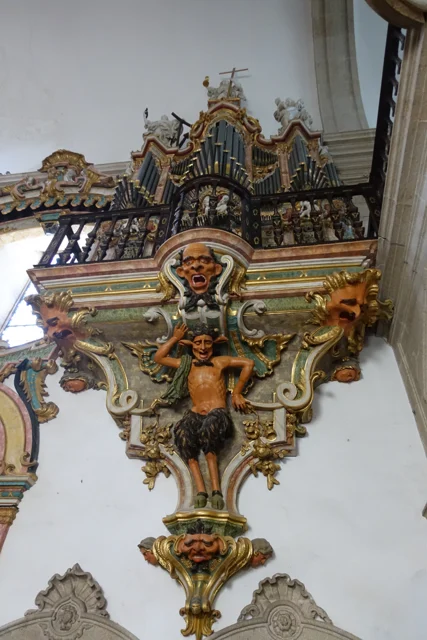
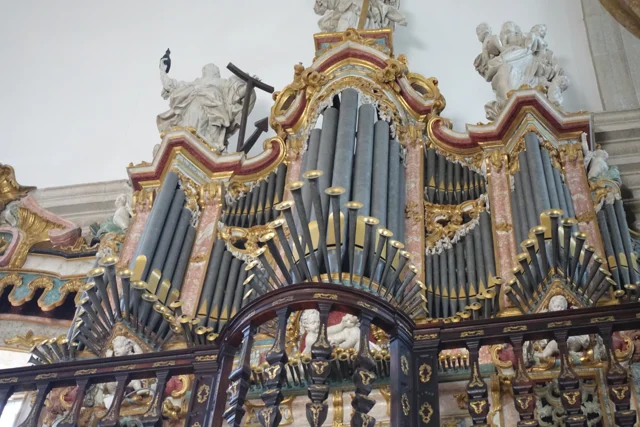
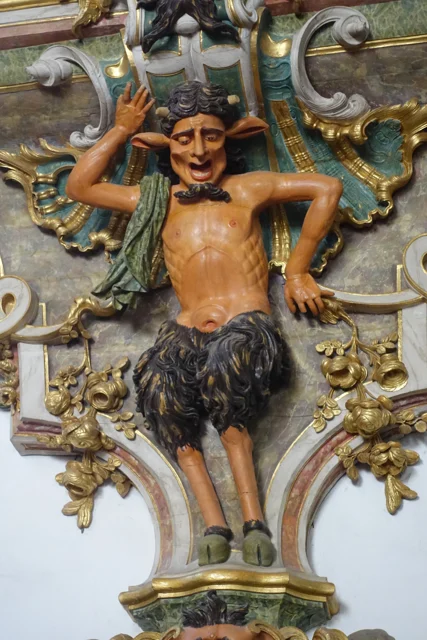
The municipal description identifies two lateral organs, being a mute. The visual symmetry of the church does not correspond, therefore, to two sound instruments. Next to the entrance appear frowns; later, the wood creates another surprise effect.
The two pulpits are painted brown to imitate marble and partially golden. The fountain places the execution in 1777–1780 and the painting and browning in 1786–1789. Shape, material and finishing count different stages of the same work. This patrimonial description does not confirm the current functioning of the organ.
The choir adds another reading of the wood: the Municipality describes a brown chair, of 1767–1770, organized in two levels and in the shape of U. São 45 seats, with the place of the abbot to the center. The disposition helps imagine a community gathered, instead of looking at each chair separately.
At the top, the circular zimbarium is accompanied by interior and exterior balconies. The description identifies the twelve apostles and, on the top, St. Michael. From furniture to silhouette, they change the scale and the observation point. The photographs of this reading show details of the organ; they do not document all these elements.
The pulpits had more than one step.
It opens every moment and discovers what the date represents.
1777–1780 · Brown
The description places the two pulpits in this range.
1786–1789 · Painting and browning
The finish mimics marble and includes golden parts.
Source and context
Municipality — history and art of Mosteiro de São Miguel de Refojos
Accessed: . Editorial summary; the date of consultation is not the date of the facts.