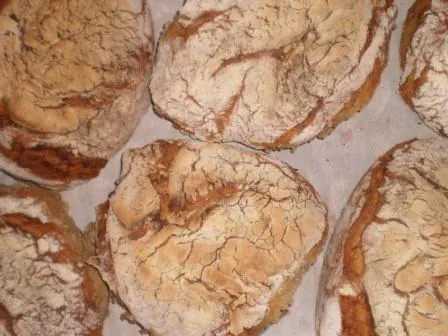
This broa blends rye and wheat
ⓘ
The mixed-grain bread after baking — mixed-grain bread sequence documented by the Museum in Recovos, Pedraça.
Source: Museu das Terras de Basto
Photograph date not stated.
Individual photographer and reuse licence not stated by the source.
ⓘ
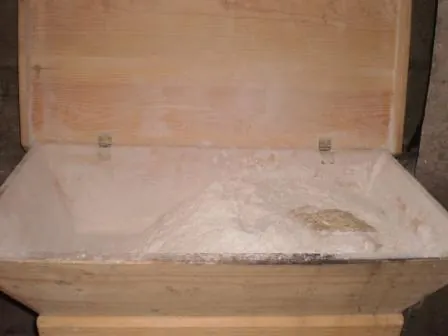
Flour and a portion of dough in the kneading trough — mixed-grain bread sequence documented by the Museum in Recovos, Pedraça.
Source: Museu das Terras de Basto
Photograph date not stated.
Individual photographer and reuse licence not stated by the source.
ⓘ
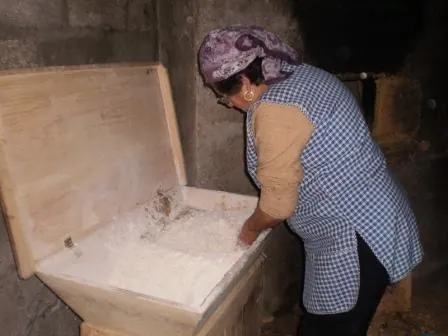
Preparing dough in the kneading trough — mixed-grain bread sequence documented by the Museum in Recovos, Pedraça.
Source: Museu das Terras de Basto
Photograph date not stated.
Individual photographer and reuse licence not stated by the source.
ⓘ
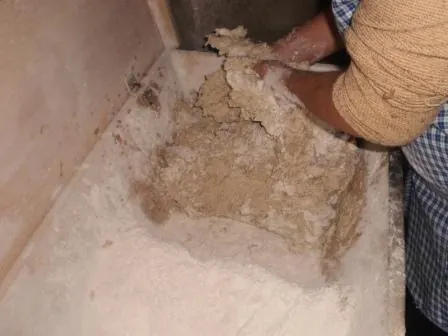
Working the dough by hand — mixed-grain bread sequence documented by the Museum in Recovos, Pedraça.
Source: Museu das Terras de Basto
Photograph date not stated.
Individual photographer and reuse licence not stated by the source.
ⓘ
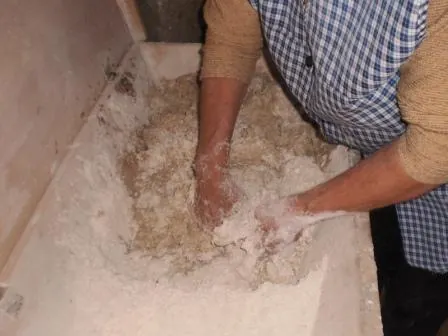
Kneading in the wooden trough — mixed-grain bread sequence documented by the Museum in Recovos, Pedraça.
Source: Museu das Terras de Basto
Photograph date not stated.
Individual photographer and reuse licence not stated by the source.
ⓘ
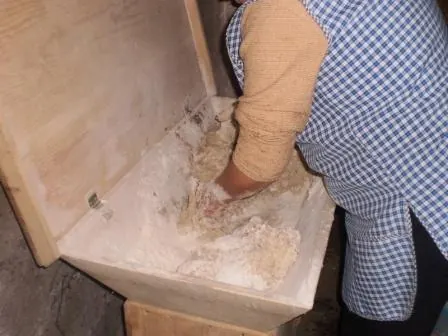
A closer look at dough preparation — mixed-grain bread sequence documented by the Museum in Recovos, Pedraça.
Source: Museu das Terras de Basto
Photograph date not stated.
Individual photographer and reuse licence not stated by the source.
ⓘ
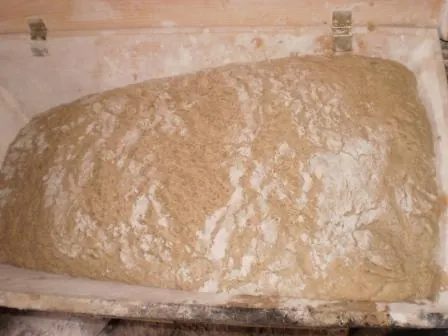
Dough in the trough before baking — mixed-grain bread sequence documented by the Museum in Recovos, Pedraça.
Source: Museu das Terras de Basto
Photograph date not stated.
Individual photographer and reuse licence not stated by the source.
ⓘ
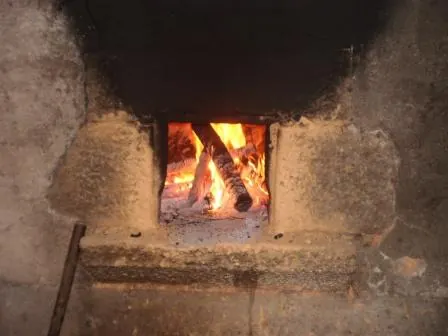
Fire in the wood-fired oven — mixed-grain bread sequence documented by the Museum in Recovos, Pedraça.
Source: Museu das Terras de Basto
Photograph date not stated.
Individual photographer and reuse licence not stated by the source.
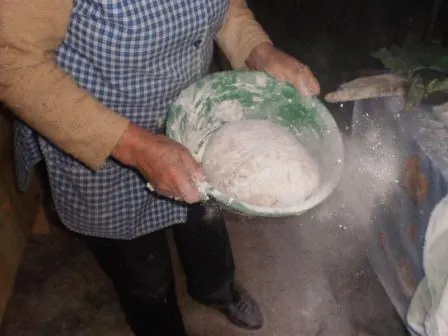
ⓘ
Shaping the loaf in a bowl — mixed-grain bread sequence documented by the Museum in Recovos, Pedraça.
Source: Museu das Terras de Basto
Photograph date not stated.
Individual photographer and reuse licence not stated by the source.
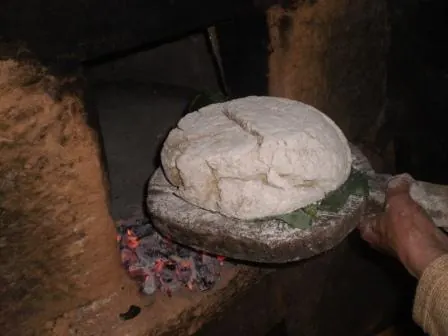
ⓘ
Placing the loaf in the oven with a peel — mixed-grain bread sequence documented by the Museum in Recovos, Pedraça.
Source: Museu das Terras de Basto
Photograph date not stated.
Individual photographer and reuse licence not stated by the source.
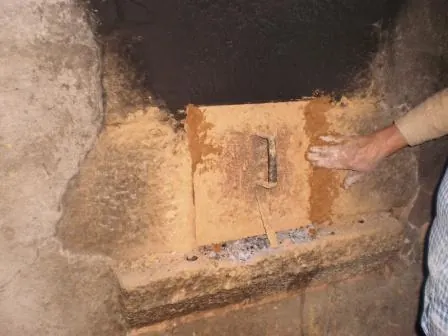
ⓘ
Closing the wood-fired oven — mixed-grain bread sequence documented by the Museum in Recovos, Pedraça.
Source: Museu das Terras de Basto
Photograph date not stated.
Individual photographer and reuse licence not stated by the source.
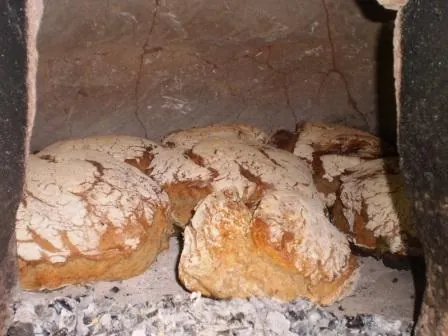
ⓘ
Baked loaves in the oven — mixed-grain bread sequence documented by the Museum in Recovos, Pedraça.
Source: Museu das Terras de Basto
Photograph date not stated.
Individual photographer and reuse licence not stated by the source.
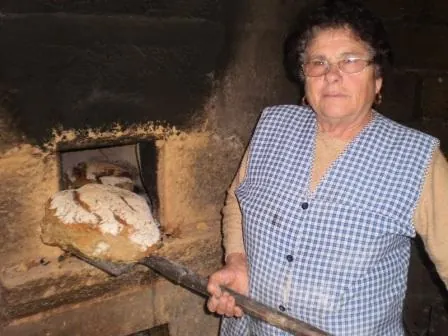
ⓘ
The batch of bread and the work behind it — mixed-grain bread sequence documented by the Museum in Recovos, Pedraça.
Source: Museu das Terras de Basto
Photograph date not stated.
Individual photographer and reuse licence not stated by the source.
Not every memory of broa begins with maize.
Text size
Your choice is saved only in this browser.
In the recipe recorded by the Museu das Terras de Basto in March 2011, Maria da Conceição Gonçalves Mouta, who lived in Recovos, Pedraça, combined light rye, dark rye and wheat. The account distinguishes the maize broa she learned from her grandmother from the mixed-grain broa she began making later. Tradition changes even within one kitchen. In the same account, she says she no longer baked weekly: she made bread for celebrations and when she missed homemade broa. She also prepared it for Santa Marinha and for Christmas and maize-husking events at the Associação D. Nuno Álvares in Pedraça. Bread connected the kitchen with community gatherings.
The rhythm of baking also changed the leavening. When bread was baked frequently, dough was kept from the previous batch; in the preparation described in 2011, she used baker’s yeast prepared the day before. The change in ingredients accompanied a change in the calendar, from weekly bread to bread for gatherings.
Mixed-grain broa — a batch from Recovos
Tick off ingredients as you gather them. Checkmarks last only on this page. Any time shown for the reading journey is reading time, not cooking time.
Go to preparation ↓Ingredients
Method at a glance
Back to ingredients ↑Tick off each step as you finish it. You can untick it; checkmarks last only on this page.
Maria da Conceição Gonçalves Mouta; account recorded by Maria de Fátima Carvalho in March 2011. The source announces eight loaves, gives portions of 1.5 kg and does not explain the difference from the total weight of ingredients. The documented values are retained without recalculating the yield or adapting the recipe to a domestic oven.
Read the original recipe →Explore further: words and activities
Explore this story
The batch continues in other stories
Open an option and choose the story.
What were you saving for next time?
The dough of a batch connected the one-day bread to the next week.
The bread kept the next batch →What was in before the bread?
Compares another preparation associated with the oven and the cooking sequence.
Before the bread, this cake would enter →When bread comes to dessert
In the scrambles collected in Pedraça, the bread is added to the honey and dried fruits.
The bread also made the feast →
Source and context
Museum — Mixed-grain bread, published 12/05/2011; fieldwork in March 2011 in Recovos, Pedraça
Accessed:
Basto Land Museum — food collections, 2010 and 2011
Accessed:
Editorial summary; the date of consultation is not the date of the facts.