A recipe learned at celebrations

ⓘ
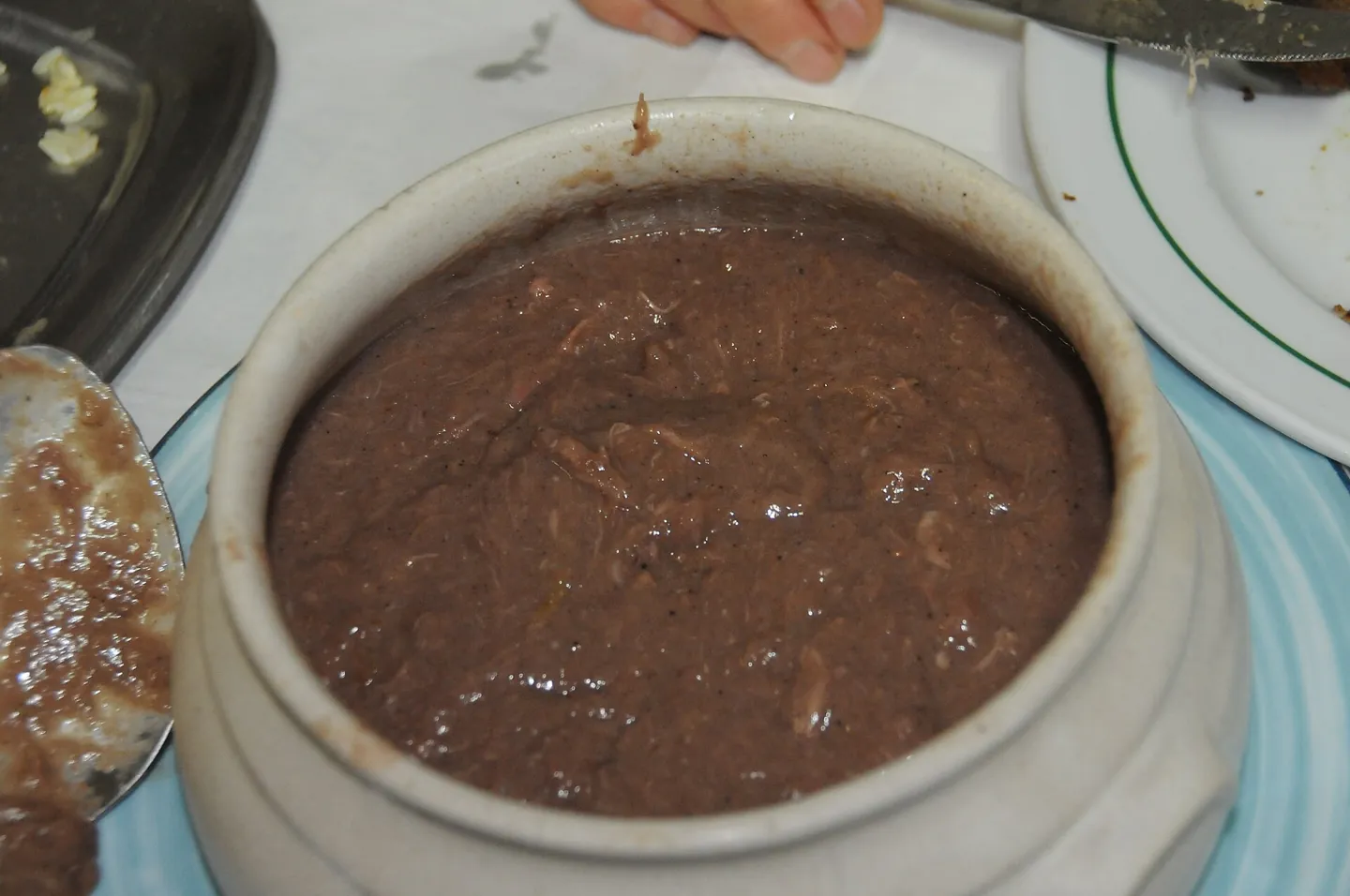
Papas de sarrabulho in a dish. Illustration of the food, not Maria Helena’s recipe.
Photography: Joseolgon · CC BY-SA 4.0
Date given at source: .

Papas de sarrabulho also tell us how knowledge is passed on.
Text size
Your choice is saved only in this browser.
Maria Helena da Mota Lopes da Silva Almeida, who had lived in Refojos since childhood, said she learned to make these papas at the beginning of the twenty-first century. Her teacher was a cook from Porto who came to Cabeceiras to work at baptisms and weddings. Celebrations were also places to learn techniques and recipes.
The version recorded in June 2011 combines different meats, maize flour, cooked pork blood, red wine and cumin. The account places its preparation in winter, up to the end of March. The publication, from July of the same year, documents how knowledge was passed on and the usual season for the dish; it does not describe a menu available today.
The account distinguishes shredding the meats from finely chopping the heart, tongue and liver. Flour, wine and cooked blood form a separate mixture. These details show that a recipe also preserves movements and textures.
To collect a kitchen memory, first ask who taught the recipe and on what occasions it was made. Then ask for a gesture that is difficult to explain in writing. Record the speaker’s words and the conversation date: a family recipe gains context when it preserves the voice passing it on.
Sarrabulho: open Helena’s recipe
Tick off ingredients as you gather them. Checkmarks last only on this page. Any time shown for the reading journey is reading time, not cooking time.
Go to preparation ↓Ingredients
Method at a glance
Back to ingredients ↑Tick off each step as you finish it. You can untick it; checkmarks last only on this page.
Helena Almeida, Refojos, June 2011: five people. Quantities follow the account; several seasonings are left to the cook’s taste.
Read the original recipe →Explore further: words and activities
Explore this story
The word popes holds differences
Open an option and choose the story.
The popes of the feast of Gondiães
Corn flour also appears here, but the collective preparation described is not sarrabulho.
The popes begin before dawn →When corn stays on small grains
Compares the form of the cereal: in the mills, the mill leaves small grains; in these flour enters.
Maize with rice size →Another recipe, another occasion
Elizabeth's memory sits on Sunday, while Helena associates these popes with winter.
The hanger was held on Sunday →
Source and context
Basto Land Museum — A recipe learned at parties, publication of 06/07/2011
Consultations: ,
Editorial summary; the date of consultation is not the date of the facts.