One leaf, two faces
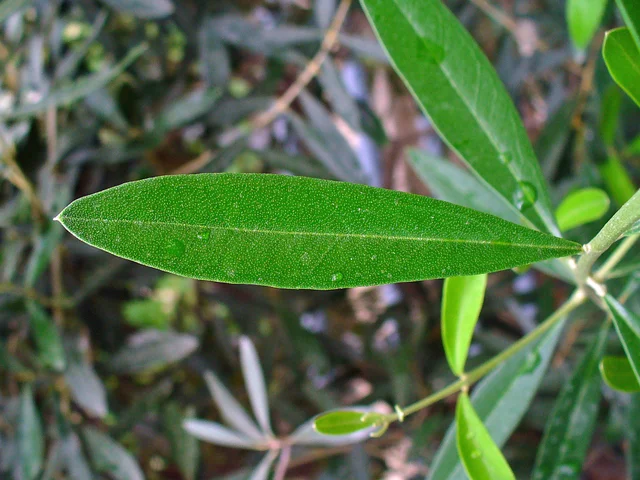

About this photograph
Date given at source: . Source consulted in 2026-11-07. EXIF orientation, proportional resizing and WebP conversion; no retouching or clipping of the file.
The silver side of the olive tree also tells a story.
Explore this story
Your choice is saved only in this browser.
On the half slopes of Cabeceiras, the municipal portrait includes olive trees. The cultivated olive tree has green-gray leaves on top and silver-gray under it, where there are hairs. The small flowers have four white petals joined at the base.
The fruit is olive, an oil-rich drupa. The description of the University of Évora accompanies the change from green to red and dark shades during maturation, but refers to variants that remain green even mature. The color alone does not tell the whole story of the fruit. From tree to olive oil, there is a link that can continue in reading about the Ramil mill.
The record distinguishes the cultivated olive tree from the wild variant, the zambujeiro. In the latter, it describes smaller leaves and fruits and thorny lower branches. The comparison shows why a single characteristic, such as the silvery tone of the leaf, does not solve all the differences.
The olive tree is perennial: it maintains foliage throughout the year. This allows you to return to the same tree at different times and compare leaves, flowers and fruits without expecting all to be present simultaneously.
From leaf to fruit and winepress
Open an option and choose the story.
Another leaf, another behavior throughout the year
A leaf drawn in waves →Water and olive oil production in Ramil
From Petimão to olive oil press →Other mills in local history
When the mill walked with the animals →
Source and context
University of Évora — Virtual Museum of Biodiversity, Olea europaea
Municipality — landscape and vegetation
Accessed: . Editorial summary; the date of consultation is not the date of the facts.