Discover Cabeceiras de BastoFree independent guide
ViveCabeceirasYOUR GUIDE TO CABECEIRAS
ENEnglish
SearchSaved

Plants

Choose a story to start with. You can change the subject or fine tune the search.

58 leituras · Ler a paisagem pelas plantas

Read the landscape through the plants

Trees, forests, vineyards and fields reveal different ways of occupying the territory.

Escolher uma história · 58
Serra da Cabreira · flora and habitat

A carnivorous plant in the mountains

The turtledove is one of Cabreira's little surprises.

Inclui uma atividade para experimentar →Explorar: A humidade liga estas histórias →
Read here and consult sources

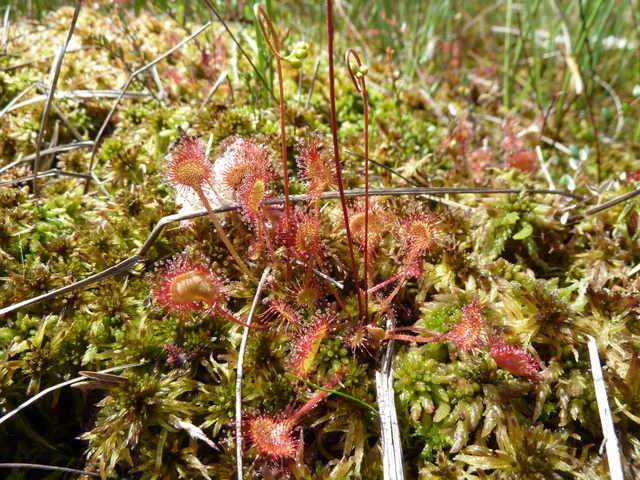
Visit Cabeceiras refers Drosera rotundifolia in the flora of the mountain. Flora-On describes its habitat: drenched meadows, bogs and peat with Sphagnum moss, usually in mountain. The reference is to the Cabreira as a whole; it does not identify a point of observation in this guide.

The review of the North American forest service helps to understand this connection to water: it describes continuously wet situations and soils often acid and poor in nutrients. The plant tolerates poorly prolonged dry periods. This explanation refers to the species in general, not a measurement of soils or water in the Cabreira.

Source and context

Visit Cabeceiras — natural heritage of Serra da Cabreira
Accessed:

Portuguese Botany Society — Flora-On, Drosera rotundifolia
Accessed:

USDA Forest Service — Robin F. Matthews, Drosera rotundifolia, February review, 1994
Accessed:

Editorial summary; the date of consultation is not the date of the facts.
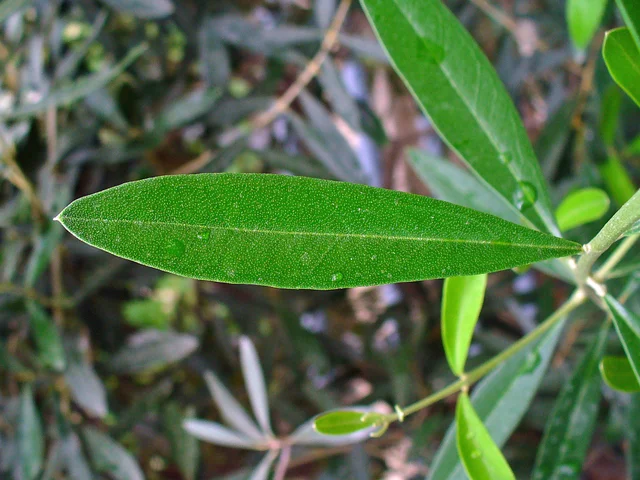
Sliding crops · olive trees

One leaf, two faces

Elongated and green olive leaf, with light central ribbedness and other leaves at the bottom.
Olive leaf photographed in Stutensee, Germany, in 2011. Botanical illustration; it is not a record of Cabeceiras. This frame does not show the two faces of the same leaf.
Photography: H. Zell · CC BY-SA 3.0
About this photograph

Date given at source: . Source consulted in 2026-11-07. EXIF orientation, proportional resizing and WebP conversion; no retouching or clipping of the file.

Request withdrawal or correct authorship

The silver side of the olive tree also tells a story.

Inclui uma atividade para experimentar →Explorar: Da folha ao fruto e ao lagar →
Read here and consult sources

On the half slopes of Cabeceiras, the municipal portrait includes olive trees. The cultivated olive tree has green-gray leaves on top and silver-gray under it, where there are hairs. The small flowers have four white petals joined at the base.

The fruit is olive, an oil-rich drupa. The description of the University of Évora accompanies the change from green to red and dark shades during maturation, but refers to variants that remain green even mature. The color alone does not tell the whole story of the fruit. From tree to olive oil, there is a link that can continue in reading about the Ramil mill.

The record distinguishes the cultivated olive tree from the wild variant, the zambujeiro. In the latter, it describes smaller leaves and fruits and thorny lower branches. The comparison shows why a single characteristic, such as the silvery tone of the leaf, does not solve all the differences.

The olive tree is perennial: it maintains foliage throughout the year. This allows you to return to the same tree at different times and compare leaves, flowers and fruits without expecting all to be present simultaneously.

Palavras desta história: ver explicações →
Source and context

University of Évora — Virtual Museum of Biodiversity, Olea europaea

Municipality — landscape and vegetation

Accessed: . Editorial summary; the date of consultation is not the date of the facts.
Painzela · gardens and knowledge

Plants that take shape

Cameleiras and teixos are also part of the history of the gardens.

Inclui uma atividade para experimentar →Explorar: O jardim também guarda saberes →
Read here and consult sources

Cameleiras e teixos worked on geometric or animal figures: it is the art of the topiaria. The Portuguese Association of Historical Gardens links this tradition to the school of Manuel Joaquim Alves Soares, continued by the son Joaquim. Casa de Piellas, in Painzela, is part of this story. It is a private property; consult the conditions of visit in the form.

The presentation of the Route of Tâmega associates this garden school with the support of the sisters Emilia Ermelinda and Justina Praxedes Pinto Basto. In the mid-19th century, they will have promoted the learning of Manuel Joaquim Alves Soares in Porto and England. The history of plant forms thus includes the circulation of knowledge and transmission between generations.

Looking at a topiary figure is looking at a plant and a human knowledge. Geometric shapes organize lines and volumes; zoomorphs evoke animals. The association places examples of this tradition in several houses of Basto, not only in Piellas.

Palavras desta história: ver explicações →Getting to know the parish See Fact sheet: Casa de Pielas, jardins e anexos
Source and context

Portuguese Association of Historical Gardens — Route Tâmega

Portuguese Association of Historical Gardens — Casa de Piellas, Painzela

Accessed: . Editorial summary; the date of consultation is not the date of the facts.
Vegetation described for the territory

The forest also has a history

Names that are part of the mountain memory.

Inclui uma atividade para experimentar →Explorar: Ler uma árvore por partes →
Read here and consult sources

Carvalhos and chestnut trees are part of the mountain vegetation described by the municipality. The same source counts the partial replacement of this vegetation by pine-bravo. Therefore, a wooded slope also keeps planting choices and changes in land use. Looking only at the green does not arrive: it is worth noticing the species, spots and spaces between trees. This municipal description is not a current survey of each forest.

The publication Forests do Alto Minho distinguishes soutos, oriented to the production of chestnut, candlesticks, for the production of sticks. They are uses of chestnut, not two species of tree. This regional comparison helps to ask questions about the landscape of Cabeceiras; it does not identify the function of a concrete portion of the municipality.

There is still a forest below the canopy. The sub-basket gathers plants that grow under the trees; dead wood can also sustain insects that feed on it and fungi. A forest landscape is not, therefore, limited to the number of living trunks. To observe it, look for different layers — canopy, low vegetation and fallen wood — without concluding that the species cited for another region are present in that area.

Palavras desta história: ver explicações →
Source and context

Municipality — landscape and vegetation

High CIM Minho — High Forests Minho, sours and candlesticks (habitat 9260)

Accessed: . Editorial summary; the date of consultation is not the date of the facts.
Common names used in source

Medroneiro, carqueja and tojo

Between the trees and the fields there is another landscape to discover.

Inclui uma atividade para experimentar →Explorar: Escolhe um detalhe do mato →
Read here and consult sources

Medronheiro, carqueja, tojo and madresilva appear in the municipal description of the serrana vegetation. The source also associates the altitude forests to the grazing of goats, cattle and sheep, distinguishing them from the pastures cultivated below. Thus, the forest is part of a landscape of plants, animals and work. These common names are a starting point to know the vegetation, not an identification of each plant found.

The municipal presentation relates this vegetation with changes of use: refers to the partial replacement of oaks, chestnut trees and forests by pine-bravo. Reading the landscape implies, therefore, also asking for what was planted and what it has become. A green spot can gather stories of grazing, cultivation and forest.

Start by choosing a detail in the following readings: the stem of the carqueja, the thorns of the tojo, the flowering and the fruits of the medronho or the position of the madresilva on the edge of the forest. Each question approaches the look without requiring that you already know how to identify all the plants.

Source and context

Municipality — landscape and vegetation

Accessed: . Editorial summary; the date of consultation is not the date of the facts.
Agricultural landscape

Olives, cork oaks and vineyards

From the half slopes to the cultivated floodplains.

Inclui uma atividade para experimentar →
Read here and consult sources

The municipal description accompanies the landscape of the half slopes to the floodplains: olive trees and cork oaks appear alongside the hanged vine, in which other trees serve as a support. The source mentions poplars, plantains and fruit plants, including apple trees, orange trees and pear trees. It also describes slopes transformed into terraces and small plains near the rivers adapted to agriculture. It is a way of observing the relationship between relief, water and cultivation; not an updated inventory of each plot.

Source and context

Municipality — landscape and vegetation

Municipality — Tourist sites: agricultural landscape and vegetation

Accessed: . Editorial summary; the date of consultation is not the date of the facts.
Environmental history · testimony of 1758

A landscape told in 1758

Urches, carquejas, oaks and animals in the words of the parish priest.

Read here and consult sources

The memory of St Nicholas describes differences between mountains: some covered with heather and carqueja, others with tojo and oaks. It also refers to rabbits, partridges, hares, wolves, boars and foxes. This testimony shows how nature was described in the 18th century; it is not a current inventory of species. The author also compares the land: distinguishes finer grain stones to the north and spring from the big penedos to the west and south.

Getting to know the parish
Source and context

Municipality — Parish memories of St Nicholas, 22/05/1758
Accessed:

Basto Land Museum — St Nicholas Parish Memories, 22 May 1758
Accessed:

Editorial summary; the date of consultation is not the date of the facts.

Local register · Union of parishes of Arco de Baúlhe e Vila Nune · general botany

Flowers and fruits in the same branch

The chickenshit has a calendar that overlaps.

Inclui uma atividade para experimentar →Explorar: Frutos com histórias diferentes →
Read here and consult sources

The medronho, Arbutus unedo, keeps dark green leaves and bright during the year. In autumn, little white bell-shaped flowers appear. The fruits take about a year to mature, so mature medronhos can coincide with the next flowering.

The form of the School of Education of Lisbon distinguishes two encounters with animals: insects, especially bees, participate in pollination; birds that eat the fruits help transport seeds. They are different functions in the plant cycle.

The leaves give other clues besides color: they have serrated margin and secondary ribs distributed from a central rib. The size varies between bush and small tree. The record of the Lisbon Polytechnic refers to tolerance to dry climate and different soils, showing that the fruit calendar is not the only interesting characteristic of the plant.

Food uses include fresh fruit, jams and jams. The same source places the tradition of medronho drinks in the Algarve and other Mediterranean territories; this information does not transform these products into a documented specialty of Cabeceiras.

The photograph of migr, registered in 2025-08-29, shows this species in the Union of parishes of Arco de Baúlhe e Vila Nune. It opens the register to compare the visible details with the botanical description. The observation documents this meeting; it does not indicate that the plant is always visible in the same place.

Palavras desta história: ver explicações →See the plants photographed in the municipality
Source and context

Lisbon Polytechnic — form Arbutus unedo

iNaturalist — Arbutus unedo, migr observation in 2025-08-29

Accessed: . Editorial summary; the date of consultation is not the date of the facts.

Botanic · general characteristics

What's hidden in the hedgehog?

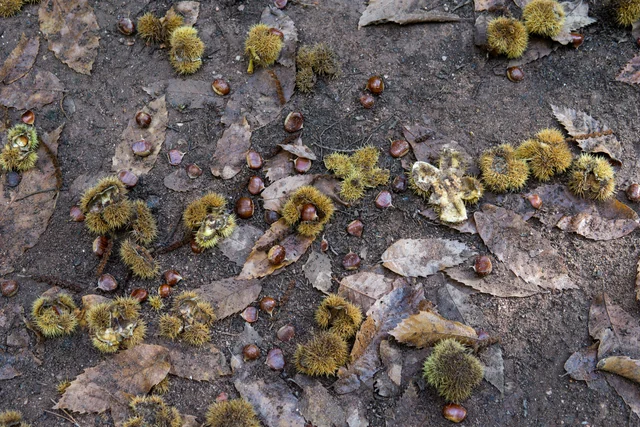
Open urchins and bright chestnuts between fallen leaves.
Chestnuts and hedgehogs on the ground in Guirbaden, Mollkirch, France, in 2020. Botany illustration; not a record of Cabeceiras.
Photography: AudreyMuratet · CC BY-SA 4.0
About this photograph

Date given at source: . Source consulted in 2026-11-07. EXIF orientation, proportional resizing and WebP conversion; no retouching or clipping of the file.

Request withdrawal or correct authorship

The chestnut is the fruit; the hedgehog involves the whole.

Inclui uma atividade para experimentar →Explorar: Do ouriço à semente →
Read here and consult sources

Castanea sativa loses the leaves at the unfavorable time and can reach large size. The form of the Polytechnic Institute of Castelo Branco describes narrow and yellow flowers in long and pendant ears. Later, the chestnuts are grouped within the hedgehog: the chestnut is the fruit, while the hedgehog involves the set.

Notice the layers: the brown and shiny cover belongs to the fruit; inside there is usually a seed, with a yellowish film. The tree also took place in the workshops: the source refers to wood used in carpentry, woodworking, basketry and turnery. They are general characteristics and uses, without assigning a workshop or exemplary to the municipality.

Before the hedgehog there are flowers. UTAD Digital Flora indicates May and June as the flowering season of the species. It is a general botanical reference, not a prediction for a tree of Cabeceiras: to know its rhythm, compare photographs of the same specimen on different dates. A tree without chestnuts on a spring visit does not tell the same story as an open hedgehog in autumn.

The chestnut belongs to the family Fagaceae, the same large botanical family of oaks. Compare the fruits helps to realize that kinship does not mean equal appearance: go back to the reading of the oak and look for what involves the acorn, then return to the scheme of the layers of the chestnut.

Palavras desta história: ver explicações →See the plants photographed in the municipality
Source and context

Polytechnic Institute of Castelo Branco — botanical record of Castanea sativa

UTAD Botanical Garden — Castanea sativa, Flora Digital de Portugal

Accessed: . Editorial summary; the date of consultation is not the date of the facts.

Botanic · general characteristics

A leaf drawn in waves

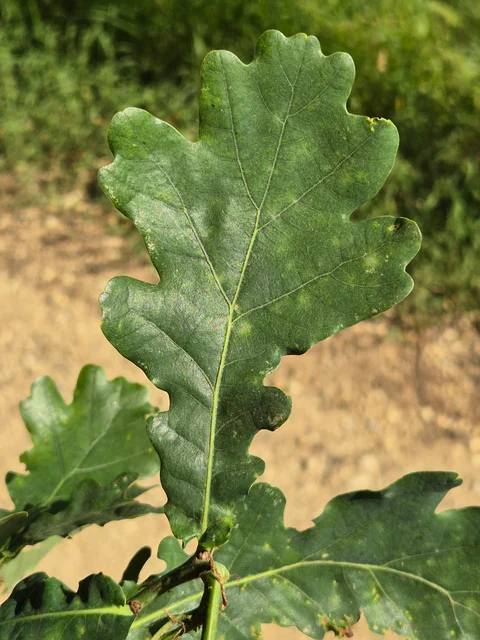
Oak green leaf with margin cut into visible wolves and ribs, still connected to the branch.
Leaf of Quercus robur photographed near Hollenstein, in the forest of Hollabrunn, Austria, in 2025. Illustration of the species; it is not a record of Cabeceiras nor identifies the broteroan subspecies.
Photography: Stefan.lefnaer · CC BY-SA 4.0
About this photograph

Date given at source: . Source consulted in 2026-11-07. EXIF orientation, proportional resizing and WebP conversion; no retouching or clipping of the file.

Request withdrawal or correct authorship

In the oak, notice the contour and the foot of the leaf.

Inclui uma atividade para experimentar →Explorar: A bolota entre a árvore e a história →
Read here and consult sources

The outline of the leaf has broad and unequal lobes: curves that resemble small waves. The description of the University of Évora adds a short petiole, with less than five millimeters, and secondary ribs curves that are not parallel. Instead of just looking at the silhouette, compare contour, ribs and link to the branch.

The fruits appear supported by peduncles and have a dome of brownish scales. The name used by the source is Quercus robur subsp. broteroana. These characteristics help to understand the botanical description; they do not identify the subspecies in the photographs or places of this guide.

The description presents deciduous leaves to marcescents. In the first case, they fall seasonally; in the marcescence, dried leaves may remain trapped for some time. A brown leaf in the branch is therefore not necessarily a living leaf.

The chart associates this oak to humid environments and refers to intolerance to summer drought. The leaf outline describes a structure; moisture and response to drought describe relationships with the environment. They are complementary clues to read the plant and landscape.

Palavras desta história: ver explicações →See the plants photographed in the municipality
Source and context

University of Évora — Quercus robur subsp. broteroana, description by Carlos Vila-Viçosa

Accessed: . Editorial summary; the date of consultation is not the date of the facts.

Local register · Rio Douro · general botany

Not all leaves sting the same way

The holly holds differences even in its branches.

Inclui uma atividade para experimentar →Explorar: Olhar para a planta inteira →
Read here and consult sources

Referred to Cabreira by Visit Cabeceiras, Ilex aquifolium has persistent leaves. Gulbenkian's record describes thorny margins, but sometimes smooth in older branches or individuals. Red fruits appear in female specimens and are toxic. A detail to observe, no spoon or taste. Flowering usually occurs between April and June; fruits ripen at the end of summer and can remain during winter, according to Gulbenkian.

The small white flowers pass more unnoticed than the fruits. The mistletoe is dioic: there are male and female individuals. This separation helps to understand why not all specimens have red fruits.

It is a slow growing shrub, which can exceed a century of life. Gulbenkian describes it in coals and shrubs, often on dark and moist slopes, with soils slightly acidic and rich in organic matter. Watching the plant therefore includes looking at the environment around it, beyond the contour of the leaves.

The photograph of DVG, registered in 2026-04-03, shows this species in Rio Douro. It opens the register to compare the visible details with the botanical description. The observation documents this encounter; it does not indicate that the plant is always visible in the same place.

Palavras desta história: ver explicações →
Source and context

Visit Cabeceiras — natural heritage of Serra da Cabreira
Accessed:

Calouste Gulbenkian Foundation — Ilex aquifolium, characteristics and habitat
Accessed:

iNaturalist — Ilex aquifolium, DVG observation in 2026-04-03
Accessed:

Editorial summary; the date of consultation is not the date of the facts.

Local register · Union of parishes of Gondiães e Vilar de Cunhas · general botany

In the carqueja, the stems also work

Not all photosynthesis is on the leaves.

Inclui uma atividade para experimentar →
Read here and consult sources

The carqueja integrates the municipal description of the serrana vegetation. In the form of the Polytechnic Institute of Castelo Branco, Pterospartum tridentatum presents very small leaves and winged stems that make photosynthesis. The flowers are yellow and the fruit is a pod. These details invite to look at the shape of the branches, beyond the color of the flowers.

The chart describes a woody and rigid shrub, which can be upright or more lying and reach about a meter. The flowers appear in small tight groups. In the fruit, the compressed pod usually holds two to five seeds. Caule, flower and fruit give different clues: yellow color, alone, is not enough to recognize the plant.

The same document mentions rural uses as a bed of animals and incorporation into the crop grounds, along with other forests. They are general uses of the species. To know a local historical reference, follow the reading of Cavez: the memory of 1758 mentions carqueja and other wood in the landscape of coal production, without describing a production recipe.

The photograph of João Lima, registered in 2025-07-15, shows this species in the Union of parishes of Gondiães e Vilar de Cunhas. It opens the register to compare the visible details with the botanical description. The observation documents this meeting; it does not indicate that the plant is always visible in the same place.

Palavras desta história: ver explicações →
Source and context

Polytechnic Institute of Castelo Branco — Pterospartum tridentatum, characteristics

Municipality — landscape and vegetation

iNaturalist — Genista tridentata, João Lima observation in 2025-07-15

Accessed: . Editorial summary; the date of consultation is not the date of the facts.

Forest landscape · botanical of the species

Needles come in pairs

A little detail to observe in the pine-bravo.

Inclui uma atividade para experimentar →Explorar: Uma árvore dentro da floresta →
Read here and consult sources

The municipality refers to the pine-bravo in the transformation of the mountain forest landscape. In the description of the University of Évora, Pinus pinaster has persistent, rigid and pointed leaves, needle-shaped. They grow in pairs on a very short branch and can reach 25 centimeters. A pair of needles allows you to begin to repair the tree beyond your canopy.

In the same plant there are male and female reproductive structures. Males form yellowish sets; females give rise to pine cones with woody scales. Also note the trunk: the bark is thick, red-brown and very split. They are general characteristics of the species, not a survey of the municipality pine forests.

The environment adds another clue. The University of Évora associates the pine-bravo to sunny sites and acidic soils, often sandy; inside it also refers to it on shale substrates. It can form pine forests or integrate mixed forests with other pines and oaks.

When looking at a slope, it distinguishes two scales: the tree, with its needles and pine cones, and the set of plants around it. The botanical description gives context, but does not allow to conclude the origin or age of a settlement only by appearance.

Palavras desta história: ver explicações →
Source and context

University of Évora — Virtual Museum of Biodiversity, Pinus pinaster

Municipality — landscape and vegetation

Accessed: . Editorial summary; the date of consultation is not the date of the facts.

Refojos · monastic landscape

Beyond the church, a cultivated land

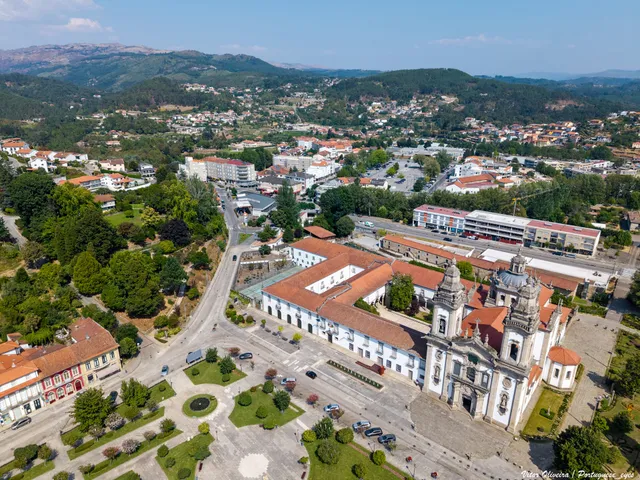
Air view of the Monastery of São Miguel and the Republic Square in Refojos
View of the Monastery of Refojos and the urban surroundings. It is a context image, not a reconstruction of the cultivated fence.© Vitor Oliveira from Torres Vedras, PORTUGALⓘ

Vegetables, orchards and medicinal plants were part of the fence.

Inclui uma atividade para experimentar →Explorar: A cerca continua noutras histórias →
Read here and consult sources

Hortes, orchards, medicinal plants, fields and forests composed the ancient surrounding monastery of Refojos, according to the municipal description of 2021. The botica supplied other Benedictine monasteries, including Tibães. Beyond the church, there was land to cultivate and medicines to prepare. It is a historical portrait of the fence, not an inventory of the current plants.

The same description situates the riverside of Penoutas next to and in the back of the Monastery, next to buildings of agricultural origin however musealized. Water and work buildings help to broaden the look: the history of the set is also told outside the cult space.

The ancient fence is not read today as a single garden intact. The fountain draws attention to scattered traces. Distinguishing what the document describes from what a photograph allows to see is part of the discovery: a view of the square does not reconstitute missing gardens, orchards or medicinal plants.

Palavras desta história: ver explicações →Getting to know the parish See Fact sheet: Mosteiro de São Miguel de Refojos
Source and context

Municipality — historical gardens, news of 21/05/2021

Accessed: . Editorial summary; the date of consultation is not the date of the facts.

Botanic · species registered in the municipality

A plant doesn't need to have flowers

Fetuses tell another story of reproduction.

Inclui uma atividade para experimentar →
Read here and consult sources

The fetuses reproduce by spores, without flowers. The University of Évora describes the serums and spores of Asplenium onopteris, associated with wet and dark sites, including cracks of rocks and walls. Its fronds are persistent. The local record below shows the appearance of the plant; the explanation of reproduction comes from the botanical record.

The leaf of a fetus is called fronde. In this species, the record describes persistent fronds between ten and fifty centimeters and a blade cut into successive divisions. The petiolus, which binds the blade to the base, is dark and can be as long as it is. They are general botanical characteristics, not measured from the local photograph.

Serums gather spore-producing structures. In Asplenium onopteris they are described as elongated or linear, with a covering called indusium. It is a different detail from a flower or fruit: not finding flowers in a fetus does not mean that the plant is without reproduction. The available image may also not show these details.

Palavras desta história: ver explicações →
Source and context

University of Évora — Asplenium onopteris

Accessed: . Editorial summary; the date of consultation is not the date of the facts.

Sobreiro · botany and local landscape

The cork begins in the tree

On the cork oak, the bark is one of the first clues.

Explorar: Uma árvore, diferentes materiais →
Read here and consult sources

Quercus suber has a thick, elastic peel and deeply split: cork. The municipal description includes corks on the half slopes of Cabeceiras. The leaves persist for more than one season; the University of Évora refers up to three years. Persistent foliage does not mean that each leaf lasts forever.

Fruits are acorns. The fiche describes the dome that accompanies them with long and velvety scales. Casca, leaves and fruits offer different clues to observe the tree, without removing cork or pulling branches. The local reference documents the landscape; the botanical description explains general characteristics of the species.

Inside, cork has a structure of microscopic cells with air-like gas. APCOR relates this organization to lightness, compressive capacity and form recovery. The suberin present in the cell walls helps to hinder the passage of liquids and gases. A cork seems simple, but the behavior of the material begins on a scale that the eyes do not reach.

The association also describes the transformation of corks used in granules for new products, such as coatings and soles. It is a general example of reuse, not an industrial activity confirmed in Cabeceiras. Compare with the punches of Outeiro and the containers of Faia: are other stories of materials linked to trees, with different functions and ways of working.

Palavras desta história: ver explicações →
Source and context

University of Évora — Quercus suber, botanical description

Municipality — landscape and vegetation

APCOR — Cork, cellular structure, properties and reuse (page consulted in the staging subdomain)

Accessed: . Editorial summary; the date of consultation is not the date of the facts.

General botany · alder

Seeds that travel through the water

The alder has a close relationship with the rivers.

Explorar: A árvore, o rio e o ofício →
Read here and consult sources

In the form of the University of Évora, published under the name Alnus glutinous, the seeds of the alder have aired tissues that favor dispersion through water. The tree tolerates prolonged periods with submerged roots. The woods in which it dominates are called amial.

The relationship with the water goes, thus, from the installation next to the banks of the journey of the seeds. There is also a change of names to know: Flora-On uses Alnus Lusitanica for Portuguese native aldermen, citing a study of 2017. Each name keeps the link here to its source; the reading does not identify a concrete tree of the municipality.

The form published as Alnus glutinous describes a caducifólia tree: it loses the foliage in a part of the year. The leaves are alternating, with double-bit margin; the peel, smooth as a young man, becomes darker and split. They are characteristics of different parts of the plant and also of different stages of its life.

The flowering indicated in this source runs from December to February. Male flowers appear in elongated groups, the amentos, while the female groups have another form. Winter can thus offer observations that a visit with the canopy full of leaves does not show. This calendar belongs to the description consulted and may vary with the conditions of the place; it does not announce the flowering of a copy of Cabeceiras.

Palavras desta história: ver explicações →
Source and context

University of Évora — Alnus glutinous, breeding and habitat

Portuguese Society of Botany — Flora-On, Alnus: ecology, symbiosis and taxonomic note

Accessed: . Editorial summary; the date of consultation is not the date of the facts.

General botany · birch

A tree of light bark

The birch attracts attention even before we look at the leaves.

Inclui uma atividade para experimentar →Explorar: Flores discretas, estratégias diferentes →
Read here and consult sources

Betula celtiberica's record describes a deciduous tree, silvery white trunk, and elongated to triangular contour leaves, with bite margins. The species is associated with humid environments, including watercourse margins, and needs plenty of light.

The presentation of the Gulbenkian Garden places flowering in April and May and describes small winged fruits scattered by the wind. The bark, leaves and reproductive structures offer different clues throughout the year. It is information about the species; it does not confirm its presence in a parish nor guarantees the same dates in all locations.

The male and female flowers are found in the same tree, but in different structures. Gulbenkian describes the male ones gathered in yellow-green and the female ones initially erect. The word flower does not always mean large and showy petals: observing a tree can require attention to discrete structures.

The chart also highlights shallow roots, with horizontal development, and the ability to burst from the toilet. The visible trunk is only part of the plant; growing by seed and producing new sprouts are distinct processes. They are characteristics of the sheet of Betula celtiberica, without assigning a copy to Cabeceiras.

Palavras desta história: ver explicações →
Source and context

Calouste Gulbenkian Foundation — Celtic betula, trunk and leaves

Accessed: . Editorial summary; the date of consultation is not the date of the facts.

Botanic of the species · with local registration

A fruit with a wing

In the ash, the shape helps travel.

Inclui uma atividade para experimentar →Explorar: Três formas de continuar a viagem →
Read here and consult sources

The fruit of the ash has a wing and receives the name of samara. There is another detail to discover: the leaf is divided into several narrow folioles. Do not confuse each of these parts with an entire leaf.

Fraxinus angustifolia can grow in forests of shores and slopes. The local photograph documents a copy in Gondiães e Vilar de Cunhas; it does not show a fruit in travel or allows to describe its entire habitat.

The Gulbenkian chart describes leaves with three to eleven folioli, of sawed margins. Angustifolia termination refers precisely to this narrow form. In the fruit, the wing prolongs the part where the seeds are: fruit and seed are not the same structure. The tree loses the leaves seasonally; branches, leaves and fruits offer different clues throughout the year.

The ash binds this form of leaf to the availability of water. Gulbenkian plug refers to tolerance to different temperatures, but sensitivity to dryness, and preference for deep soils. It also describes a high and irregular canopy and a dark trunk, deeply cracked. The leaf is not the only part that helps to know the tree: the bark, the canopy and the environment complete the observation, without a single feature sufficient to identify a specimen.

Palavras desta história: ver explicações →
Source and context

University of Évora — BioMontado, chips Fraxinus angustifolia and Hedera hibernica

Portuguese Society of Botany — Flora-On, Fraxinus angustifolia: ecology

Calouste Gulbenkian Foundation — Straits leaves, fruit and habitat

Accessed: . Editorial summary; the date of consultation is not the date of the facts.

Botanic of the species · with local registration

White flowers, small red fruits

The woodwork changes appearance throughout the reproductive cycle.

Inclui uma atividade para experimentar →Explorar: Uma folha simples ou um conjunto de folíolos? →
Read here and consult sources

The pine tree, Crataegus monogyna, is a shrub or small deciduous leaf tree. The leaves are simple, alternating and lobulated; the thorns explain the name white thorn. In the description of the Museum of Natural History and Science of the University of Porto, the white flowers have five petals.

The small red fruits are pomos and the fiche refers to a seed in each fruit. Leaves, flowers and fruits allow comparing different moments of the plant. The local photographic record linked to this history documents an observation, not all phases of the cycle or the distribution of the species by the municipality.

The botanical family also helps to make comparisons: the wood and silva belong to the Rosaceae, although they have different leaves and fruits. In the forest, a simple leaf has limbo cut into wolves; in silva, a composite leaf is divided into folioli. Being in the same family does not mean having the same shape.

The collection of the University of Porto associates the Piliteiro to the sub-basket and the forests in well drained soils. The distribution presented extends through Europe, Asia and North Africa. This framework is broader than the local record: a photograph of Cabeceiras documents a meeting, while the botanical record describes the species.

Palavras desta história: ver explicações →
Source and context

University of Porto — living botanical collection, Crataegus monogyna

University of Évora — Rubus ulmifolius, leaves and fruits

Accessed: . Editorial summary; the date of consultation is not the date of the facts.

General botany · know the tojos

A bush of well defended branches

The thorns are part of the silhouette of the tojo.

Inclui uma atividade para experimentar →Explorar: Do mato às estações e ao gado →
Read here and consult sources

The Tojo-arnal, Ulex europaeus subsp. europaeus, is a bush of strong thorns that can reach two meters. The record of the Arboreto de Barcelos associates it to urzais, hedges and edge of forests and refers flowering in winter. Thus, a landscape of forests can have flowers outside spring.

The same source records uses such as fodder, cattle litter and fuel. These uses belong to the general description of the plant; they do not document a specific practice of Cabeceiras. The municipality mentions tojos in the serran landscape, without determining the species of each place.

The Arboreto describes leaves transformed into thorns and a branch that can be opened or compact. The outer form gains another interest when we ask what part of the plant comes from each structure. In the tojo, the record speaks of transformed leaves; in the galvant, what looks like a leaf is a flattened branch. In the carqueja, green stems also participate in photosynthesis. Compare these stories helps to look beyond the silhouette.

Source and context

Arboreto de Barcelos — Ulex europaeus subsp. europaeus

Municipality — landscape and vegetation

Accessed: . Editorial summary; the date of consultation is not the date of the facts.

General botany · silva

A blueberry is a small set

In silva, the fruit has more details than it seems.

Inclui uma atividade para experimentar →Explorar: Uma amora, muitos pequenos frutos →
Read here and consult sources

A blackberry gathers numerous small drupas. Rubus ulmifolius has flowers of five petals, white or pink, and fruits that become black when mature. The leaf is also composed: it is divided into three to five folioli, green on the top face and grayish and hairy on the bottom.

The arched stems form dense silvados. The University of Évora associates the plant to forests, hedges, wastelands and water banks, preferring fresh and humid soils. It is a general botanical description; it does not identify a concrete silvado in the municipality.

A composite leaf may look like a small branch. The difference helps to read the plant: in the silva described by the University of Évora, the three to five folioles belong to the same leaf and are arranged in a typed way, as fingers that depart from a base. The greyish appearance of the lower face is due to dense pilosity, called tomento.

The description also refers to purple and pruinous shoots, with a surface cover of waxy appearance. They are distinct details of the thorns of the stems. The plant also appears in soils altered by human activity; a silvado, by itself, does not show when or why a land has ceased to be cultivated.

Palavras desta história: ver explicações →
Source and context

University of Évora — Rubus ulmifolius, leaves and fruits

Accessed: . Editorial summary; the date of consultation is not the date of the facts.

General botany · ivy

Not all flowers arrive in the spring

Ivy also puts autumn in bloom.

Read here and consult sources

Hedera hibernica's chart places its small yellow-green flowers in September and October. It refers to the importance of flowers and fruits for insects and birds, as well as the use of the plant as a nesting shelter. It is an example of how a climbing plant can participate in various relationships in the ecosystem.

The fiche also explains how the plant occupies space. The ivy is woody and perennial; the long and flexible branches have roots that cling to the surfaces. With support, it climbs through trees, rocks or walls; without a vertical surface, it can extend through the ground. Trepar and cover the ground are thus two forms of growth of the same species.

The described leaves may be oval or have three to five lobes. Compare the shape of a leaf with the position of the branch, but do not use a single detail to name the plant. To observe the calendar, record separately leaves, flowers and fruits: keeping leaves throughout the year does not mean flowering throughout the months.

Palavras desta história: ver explicações →
Source and context

University of Évora — BioMontado, chips Fraxinus angustifolia and Hedera hibernica

Accessed: . Editorial summary; the date of consultation is not the date of the facts.

Republic Square · memory of gardens in 2011

Spring also passes through the square

Between Camellias and Rododendros, the village changes color.

Read here and consult sources

In April 2011, the Municipality described a witness passage in the Republic Square: the Japoneiras lost the camellias and the Rododendros began to flourish. The news recorded two specimens of pink flower and linked these plants to the classic gardens of the Basto Lands. It is a portrait dated from the square, which invites to notice the flowers beyond the monuments. A March news of the same year counted 33 camellias in the square: 30 plants added in the reformulation joined the three already existing. I was referring to pink, white, shaded flowers. These figures belong to the account of 2011, not to a current count.

Source and context

Municipality — Rododendros give spark to Republic Square, 01/04/2011
Accessed:

Municipality — Camellias in Republic Square, 18/03/2011
Accessed:

Editorial summary; the date of consultation is not the date of the facts.

Forest Park · plantation of 2016 and biology of the species

A tree with fan leaves

Ginkgo has an easy signature to search the leaves.

Inclui uma atividade para experimentar →Explorar: Duas árvores, duas formas de olhar →
Read here and consult sources

The leaves of Ginkgo biloba open in fan and can present a central division. In autumn, they become golden before falling, describes the Gulbenkian. The connection to Cabeceiras has a date: the municipal news of 18 March 2016 records the plantation of ginkgo and metasequoia in the Forest Park. The record tells the history of this plantation; it does not confirm the current state of the specimens.

The fan shape also appears in the leaf ribs. Gulbenkian explains that the division into two lobes, when it exists, is at the origin of the bilobe name. It is not necessary that all leaves have an equal cut to belong to the same species.

Ginkgo has male and female individuals. In female trees, seeds are formed with a fleshy cover that can remember a plum, but are not fruits like a plum tree. The interest of this reading is to observe forms and know the reproduction; the municipal news does not identify the sex of the specimen planted in Cabeceiras.

Origin and use are also part of history. Gulbenkian is located at the origin of ginkgo in southeast China and refers to its planting in Portuguese parks, gardens and ruins. It prefers places with sun and soil with water available, but well drained. A garden can therefore gather trees with very different origins: being planted in Cabeceiras does not make a species originally from the municipality.

Palavras desta história: ver explicações →
Source and context

Municipality — World Tree Day, 18/03/2016

Calouste Gulbenkian Foundation — Ginkgo

Accessed: . Editorial summary; the date of consultation is not the date of the facts.

Village centre · project announced in 2022

The shadow is also part of the village

A park can be thought beyond the walk.

Read here and consult sources

The rehabilitation project of the Forest Urban Park, announced in September 2022, proposed to work about 7 500 square meters in the center of the village. It included autochthonous trees and shrubs and sought to improve microclimatic comfort, regulating light and sun exposure near the buildings. This is the documented intention of the project, not an evaluation of the completed work: a way to perceive the role of trees in urban space.

Source and context

Municipality — Rehabilitation of the Walking Forest Urban Park, 14/09/2022

Accessed: . Editorial summary; the date of consultation is not the date of the facts.

Arco de Baúlhe · Railway memory

A season that also flourished

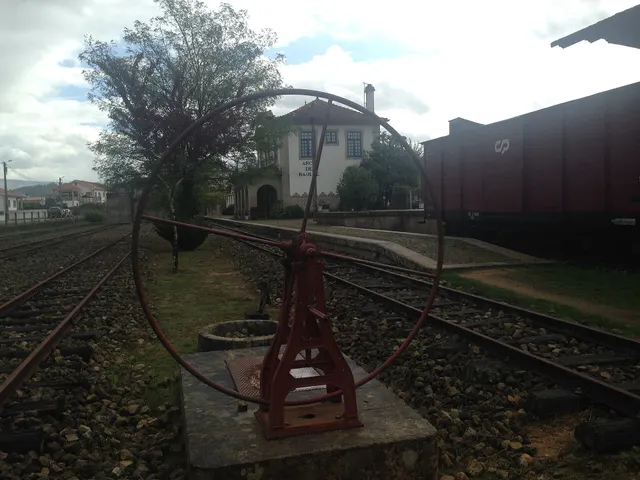
Revolving plate and tracks from the old Arco de Baúlhe station, with buildings and railway equipment at the bottom.
View of the Arco de Baúlhe station and its surroundings. The photograph does not document the distinction of the gardens in 1962.© JP Ribeiroⓘ

Not everything that was kept from the railroad is made of metal.

Inclui uma atividade para experimentar →
Read here and consult sources

The station also has a memory made of flowers. The publication of the museum describes the gardens of roses and recalls the distinction received in 1962 as the most florida season in Portugal.

Next to the machines and rails, the garden adds another way of looking at the place: the landscape of a season includes what grows around it. The prize belongs to the history of space; it is not a current classification of the gardens.

Getting to know the parish See Fact sheet: Núcleo Ferroviário de Arco de Baúlhe
Source and context

Municipality — Land Museum of Basto: a journey through the history of the region, pp. 28–29

Accessed: . Editorial summary; the date of consultation is not the date of the facts.

Registered at Gondiães e Vilar de Cunhas · botanical context

When fetuses occupy the landscape

A fetus can be a detail; many together form a fetal.

Inclui uma atividade para experimentar →Explorar: Da fronde à superfície onde cresce →
Read here and consult sources

Flora-On describes Pteridium aquilinum subsp. aquilinum as a colonizer of burned areas and abandoned pastures, where it can become dominant. This helps to understand how a stain of fetuses forms, but does not prove the history of the photographed terrain. The record of Gondiães e Vilar de Cunhas identifies Pteridium aquilinum at the level of the species: the image does not confirm the subspecies or a previous fire. Compare the set of the hillside with the clipping of a single fron.

The record of the University of Évora describes a long underground rhizome, along which the leaves appear. The green on the surface is only part of the plant: there is a stem that extends under the ground. Rizoma is not synonymous with root.

The frondes have a long petiole and a boundary blade between oval and triangular, divided into segments. The upper face has no hair; the lower has hairiness. The description refers to leaves usually between thirty and one and a half centimeters, and can reach higher dimensions. They are measures of the species, not of the photographed specimen.

This fetus can occur both in the sun and in the shade, including in the sub-basket and on acidic land. The presence of a stain does not demonstrate, alone, whether there was fire, abandonment of agriculture or any other change in that land.

Palavras desta história: ver explicações →
Source and context

Portuguese Society of Botany — Flora-On: Pteridium aquilinum subsp. aquilinum
Accessed:

University of Évora — Biodiversity of Mitra, Pteridium aquilinum
Accessed:

Editorial summary; the date of consultation is not the date of the facts.

Alvite · written memory in 1758

The Orada changed from high to valley

The same mountain could show different landscapes.

Inclui uma atividade para experimentar →Explorar: O que mudava entre o alto e o vale? →
Read here and consult sources

In the account of 1758, the Orada presents a high boulder, with few trees, described as rough and cold. In the faldas, the scenario changes: chestnut trees, oaks, hanged vine, olive oil and cereals enter the description.

The vicar places the residents in the low areas, next to the valley, and not at the top of the mountain. Altitude, settlement and cultivation help to read the set. It is the written portrait of that year, not a survey of the current vegetation.

Source and context

Municipality — Memory of Alvite, 23/05/1758; transcription of José Viriato Chapel (2003)

Accessed: . Editorial summary; the date of consultation is not the date of the facts.

Serra da Cabreira · regional and general botanical reference

It looks dew, but it's a trap.

Rounded leaves of rosemary with reddish hair and bright drops between moss.
Rorela in the natural monument Swamp, near Máchovo jezero, Chéquia, in 2013. Illustration of the species; it is not a register of the Cabreira.
Photography: Stanislav Rada · CC BY-SA 3.0
About this photograph

Date given at source: . Source consulted in 2026-11-07. EXIF orientation, proportional resizing and WebP conversion; no retouching or clipping of the file.

Request withdrawal or correct authorship

On the roll, the leaves also capture food.

Inclui uma atividade para experimentar →
Read here and consult sources

The leaves of Drosera rotundifolia have small glandular hairs with a sticky secretion. When an insect gets stuck, enzymes help to decompose it and the plant absorbs nutrients through the leaves. This strategy can be especially useful in soils very poor in nutrients. The species is referred by Visit Cabeceiras to the Cabreira; the mechanism described by the North American forest service is general biology, not an observation made in the mountains.

The trap is not the flower. The leaves are available on a rosette near the base; the flowers appear on a stem and the fruits are capsules with numerous small seeds. The photograph allows for comparing leaves and stems, but does not show the digestion process. In the description of USDA, the leaf can fold around the prey: a sequence in time that a single image does not show.

Palavras desta história: ver explicações →
Source and context

USDA Forest Service — Robin F. Matthews, Drosera rotundifolia, February review, 1994
Accessed:

Visit Cabeceiras — natural heritage of Serra da Cabreira
Accessed:

Editorial summary; the date of consultation is not the date of the facts.

Forest landscape · pine-bravo botanical

A pine cone has small seed houses

The woody scales hide a detail.

Explorar: Uma árvore, várias pistas →
Read here and consult sources

In the pine-bravo, Pinus pinaster, the pine contains two seeds per scale, according to the description of the University of Évora. The trunk, in turn, has thick bark, red-brown and very split. After recognizing the needles in pairs, it is worth noticing in these other forms. The municipality mentions the pine-bravo in the mountain landscape; these characteristics help to know it without constituting an inventory of the local pine forests.

In the same tree there are different male and female reproductive structures: the species is monoic. The chart describes males as yellowish clusters and females as squamous structures that form cones. Looking only at a mature pine cone leaves, therefore, part of the cycle undiscovered.

The environment also counts. The University of Évora associates pine-bravo with sunny places, with acidic and often sandy soils, also referring to the presence inside on shale substrates. It can form pine forests or integrate mixed forests. This describes preferences and general forms of occurrence; it does not transform all the slopes with these conditions into pine forests.

Palavras desta história: ver explicações →
Source and context

University of Évora — Virtual Museum of Biodiversity, Pinus pinaster

Municipality — landscape and vegetation

Accessed: . Editorial summary; the date of consultation is not the date of the facts.

General botanical · ecology of the oak-alvarinho

The oak also tells a story of water

The landscape of a tree begins in the soil and climate.

Explorar: Água, sombra ou altitude? →
Read here and consult sources

The Quercus robur subsp. broteroana chart of the University of Évora describes preference for very humid environments, tolerance to soil soaking and difficulty in supporting summer drought. This helps to understand why coals do not distribute at random. It is ecological information about the taxon described at the source, without confirming this subspecies in a copy or in a parish of this guide.

The description adds a preference for siliceous land and places the taxon mainly in the north-west of Portugal. There are, therefore, several pieces to join: the water available, the soil type and the climate. Finding a tree next to water does not allow us to conclude that all the trees in the same family need the same conditions.

Compare with the following reading: both belong to the genus Quercus, but the chips do not give them exactly the same preferences. This comparison turns a walk into a question about the landscape: what changes between a wet shore, a sheltered slope and a high exposed?

Source and context

University of Évora — Quercus robur subsp. broteroana, description by Carlos Vila-Viçosa

Accessed: . Editorial summary; the date of consultation is not the date of the facts.

Ecology of the municipality landscape

A landscape needs connections

Among the green spaces, the interval also counts.

Inclui uma atividade para experimentar →Explorar: Escolhe uma parte da paisagem →
Read here and consult sources

An isolated green space does not tell the whole story. The municipal report of 2025 explains that fragmentation reduces and separates habitats, interrupting ecological processes. The ecological structure seeks to link natural, agricultural and forest spaces, including gardens, alleys and waterbanks in the village. It is a proposal for reading and planning the territory, not confirmation that all these links already work.

Palavras desta história: ver explicações →
Source and context

Municipality — Environmental Report of the PDM review, February 2025, p. 55
Accessed:

Municipality — Environmental Report, February 2025, pp. 50, 55 and 139
Accessed:

Editorial summary; the date of consultation is not the date of the facts.

Surreal · general ecology and local environment

The cork oak doesn't climb the whole mountains

The altitude also changes the conditions for a tree.

Read here and consult sources

The University of Évora describes the cork oak as sensitive to the minimum winter temperatures and usually absent in the areas above about a thousand meters. The municipal reference places cork oaks on the half slopes of Cabeceiras. Together, these descriptions help to understand why one should not imagine the same vegetation of the valley at the top of the mountain. The approximate limit is a general feature, not a survey of each local slope.

Cold is just a part of the picture. The chart describes preference for land of light to medium texture, acid reaction or neutral, avoiding limestone soils; it also refers to fresh and sheltered places. It is not enough to look at altitude on a map to predict where a cork oak grows.

The persistent, firm-consistency leaves and cork of the trunk help to observe the tree closely. In the landscape, try to change scale: first look at the tree; then at the position of the slope and the shelter around. The name of the species tells one part of the story, the environment tells another.

Source and context

University of Évora — Quercus suber, botanical description

Municipality — landscape and vegetation

Accessed: . Editorial summary; the date of consultation is not the date of the facts.

Cabeceiras de Basto · 2021 forestry planning

A little stain deserves attention

In the woods, starting with what's small can make sense.

Read here and consult sources

The June 2021 version of the forest plan of Cabeceiras proposes giving priority to isolated specimens and small outbreaks of invaders. Explains that early intervention offers greater possibility of success and can prevent the loss of ecological values. It also highlights spots where other trees still compete for soil and light. It is a strategy proposed in the document, not a balance of interventions performed.

Source and context

PMDFCI of Cabeceiras de Basto2021–2030 — Caderno II, version 06, June 2021, pp. 111–112; public consultation version

Accessed: . Editorial summary; the date of consultation is not the date of the facts.

Cabeceiras de Basto · proposal for monitoring in 2021

Taking care of the forest doesn't end in a day

After the intervention, we have to look again.

Read here and consult sources

The same plan of 2021 proposes annual maintenance in the intervened parcels as long as invasive and annual monitoring persists thereafter. Monitoring helps to understand why an initial intervention does not equal a problem solved. These guidelines document the municipal planning of that version; they do not confirm the execution or replace the technical evaluation of each terrain.

Source and context

PMDFCI of Cabeceiras de Basto2021–2030 — Caderno II, version 06, June 2021, pp. 111–112; public consultation version

Accessed: . Editorial summary; the date of consultation is not the date of the facts.

Flora · General biology of an invasive species in Portugal

Yellow flowers, space disputed

A showy plant can alter the vegetation around it.

Explorar: Uma paisagem, diferentes formas de crescer →
Read here and consult sources

The mimosa, Acacia dealbata, has yellow flowers gathered in small globo groups and very divided leaves. Originally from south-eastern Australia and Tasmania, it is described by the University of Évora as an invader in Portugal. It can form dense settlements that hinder the development of native vegetation, especially after disturbances such as fires. This chart explains the species; it does not locate a population in Cabeceiras nor identify all acacias by the same name.

There is more to observe than yellow: the leaves persist in the tree and are successively divided into small units, giving the cup a delicate appearance. The chart indicates flowering between January and April and fruits in pods, flattened and reddish brown. They are general characteristics of the species, not a confirmed calendar for a place of the municipality.

The history of the introduction also helps to understand the landscape. The University of Évora refers to ornamental, forest and soil fixation uses. A plant introduced with a purpose can then spread and change the available space for other species.

Source and context

University of Évora — Virtual Museum of Biodiversity, Acacia dealbata

Accessed: . Editorial summary; the date of consultation is not the date of the facts.

Flora · general description of Arundo donax

Cane doesn't end where the ground begins

Underneath the stems is another part of the plant.

Explorar: Das margens ao acompanhamento →
Read here and consult sources

The cane, Arundo donax, is a perennial herb of large size. The ICNF describes robust and hollow stems, which can reach six meters, and a rhizomatous structure, which extends under the ground. Knowing the part that is not seen helps to look at a cane beyond the tall stems. The national distribution indicated in the form does not confirm a record in a concrete site of Cabeceiras.

The flowers appear together in large, branched sets, of violet tone; the fiche indicates flowering from August to October. The leaves are long, narrow and end in tip. The description helps to separate three parts of the plant: the tall stems, the leaves accompanying them and the floral structures.

Viable flowers and seeds are not the same. The ICNF describes fruits that, outside the native area, do not produce viable seeds, so seeing a flowering cane is not enough to conclude how it is multiplying. The underground structure remains part of the question.

Source and context

ICNF — SIVEEI, Arundo donax; updated record 09/03/2023

Accessed: . Editorial summary; the date of consultation is not the date of the facts.

Gardens · General ecology and seasons

A flower calendar

For pollinators, it is important to have flowers at different times.

Inclui uma atividade para experimentar →Explorar: Um jardim, vários momentos →
Read here and consult sources

In the orientation of entomologists Renata Santos and Albano Soares, a green space gains interest for pollinators when it offers flowers in various times, with different shapes, colors and sizes. Spontaneous plants can also contribute. Medronho, with autumnal flowering, is one of the examples mentioned. It is an idea to observe the cycles of a garden, not a guaranteed calendar for all altitudes and conditions of Cabeceiras.

Source and context

Calouste Gulbenkian Foundation — explanations of entomologists Renata Santos and Albano Soares, 07/06/2022

Accessed: . Editorial summary; the date of consultation is not the date of the facts.

Urban Park · documented planting in 2022

The fruit also gained place in the park

Quails, Pipo Basto and Verdeal: names to store.

Read here and consult sources

On the World Tree Day of 2022, the House reported the planting of quail trees, Pipo apple of Basto and Verdeal apple in the urban park of the village. The trees were sponsored by associations, in an initiative that also included medronhos, olive trees and lotions. The news brings the public space closer to the names of the fruit and the participation of the community. It records the planting in March of that year; it does not confirm the survival of each tree or authorize the harvest of fruits.

Source and context

Municipality — World Tree Day and plantation in Urban Park, 21/03/2022

Accessed: . Editorial summary; the date of consultation is not the date of the facts.

Surra · landscaping documented in 2016

Three cork oaks give a clue to the name

At the Sobreira Rotunda, the plants also count the place.

Read here and consult sources

In June 2016, the Municipality announced the conclusion of the arrangement of the Sobreira Rotunda, at an entrance to the village. The center received three cork oak trees and granite beds were planted with rosemary. The news related the choice of the cork oak with the possible origin of the name Sobreira. It is an interpretation presented by the source, not a demonstrated etymology. The set documents a landscape choice of 2016, without confirming the current state of each plant.

Source and context

Municipality — Urban arrangement of the Sobreira Rotunda, 22/06/2016

Accessed: . Editorial summary; the date of consultation is not the date of the facts.

Arco de Baúlhe · planting of March 2023

An orange tree by the memory of the tracks

In the museum garden, the community also left roots.

Read here and consult sources

In 21 of March 2023, users of the Living and Leisure Spaces of Arco de Baúlhe and Vila Nune participated in the initiative The plants of our Garden. In the Railway Center, they planted an orange tree in the leisure space and aromatic plants in a flowerbed. The municipal news shows another dimension of the museum: a meeting place and participation. It describes that plantation, without ensuring that all the specimens are preserved today.

See Fact sheet: Núcleo Ferroviário de Arco de Baúlhe
Source and context

Municipality — World Tree and Poetry Day, 21/03/2023

Accessed: . Editorial summary; the date of consultation is not the date of the facts.

General biology · moss, no local inventory of species

A little carpet full of life

Mosses ask for a closer look.

Inclui uma atividade para experimentar →Explorar: Pequenas formas, grandes diferenças →
Read here and consult sources

Briophytes are small plants whose life cycle depends heavily on moisture. Diversity is not only in the green: there are different shapes, colors and textures. According to Serralves' scientific presentation, they contribute to the recycling of nutrients and can colonize surfaces where other plants still cannot settle, helping to form the soil. Knowing this group gives new questions for a walk, without having to start examples.

Mosses do not have true roots. Kew describes rhizoids as small filaments whose main function is to attach the plant to rock, bark or soil. The absorbing surface helps to capture water and minerals from the environment. Therefore, contact with moisture is part of their way of living.

They also do not produce flowers: they reproduce by spores. The spaces between small plants help to retain water, helping to keep the soil and the nearby environment moist. These rugs can also offer shelter to small animals.

This does not mean that all mosses need the same conditions. There are species adapted to very different environments, and some go through dry periods in a dormant state. A green spot on a wall does not allow themselves to identify the species or explain its entire cycle.

Palavras desta história: ver explicações →
Source and context

Serralves / MHNC-UP and CIBIO-INBIO — Briophytes, 20 of November 2016

Royal Botanic Gardens, Kew — 7 interesting things about moss, Ellen McHale, 23/05/2020

Accessed: . Editorial summary; the date of consultation is not the date of the facts.

Local register · Cavez · general botany

The thimble likes the banks of the forest

Not every plant in the woods is looking for its interior.

Inclui uma atividade para experimentar →Explorar: Olhar para a planta inteira →
Read here and consult sources

The Flora-On describes Digitalis purpurea subsp. purpurea on the shores and clearings of woods and shrubs, including some slopes and hedges. It prefers cool and dark places. It helps to understand how light and moisture create different environments even close to each other. The plant is toxic by ingestion: knowing it does not mean using it as food.

Flora-On separates two subspecies with different ecological descriptions. For the purpurea subspecies, it refers to general preference for silicious substrates. For amandiana, it highlights rocky environments and shallow soils, including escarpments, shallow outcrops and slopes of abandoned vineyards.

This difference avoids treating all thimbles as inhabitants of a single scenario. Finding a flower in a clearing is not enough to give it a subspecies: ecology guides questions, but does not replace botanical characteristics. The chart also records the possibility of parasitism by Orobanche amethystea, showing that a plant also participates in relationships with other plants.

The photograph of João Lima, registered in 2026-06-15, shows this species in Cavez. Opens the register to compare the visible details with the botanical description. The observation documents this encounter; does not indicate that the plant is always visible in the same place. The record identifies Digitalis purpurea, without confirming a subspecies.

Palavras desta história: ver explicações →
Source and context

Portuguese Society of Botany, Flora-On — Digitalis purpurea, ecology and toxicity

iNaturalist — Digitalis purpurea, João Lima observation in 2026-06-15

Accessed: . Editorial summary; the date of consultation is not the date of the facts.

Flora · local name and general ecology of the species

Madresilva finds room on the edge

Between the hedge and the woods, there's another environment to discover.

Inclui uma atividade para experimentar →
Read here and consult sources

The madresilva appears in the municipal description of the mountain vegetation. To know a botanical example associated with this name, Flora-On describes Lonicera periclymenum in silvados, hedges near watercourses and edge of woods, with some shade and preference for acid soils. It is a clue about habitats, not an identification of a plant observed in Cabeceiras: the municipal reference by common name does not allow to determine species or subspecies.

The edge is the meeting zone between the forest and the adjacent space. To observe this transition, compare a shaded path with the opening next door: the arrangement of the branches and the light that reaches the ground can be different, even a few steps away.

The chart presents two subspecies and gives them the same habitat description. This detail is useful: knowing the environment in which a plant usually appears helps to look for information, but does not solve an identification by itself. A photograph, popular name and habitat description answer different questions.

Source and context

Portuguese Society of Botany, Flora-On — Lonicera periclymenum, ecology

Municipality — landscape and vegetation

Accessed: . Editorial summary; the date of consultation is not the date of the facts.

General biology · alders and bacteria

The alder has partners in the roots

A tree doesn't live alone, even under the ground.

Read here and consult sources

Flora-On describes an association between alder roots and Frankia alni, a filamentous bacterium capable of fixing nitrogen. It is a different partnership of mycorrhizae involving fungi. Knowing what happens in the soil adds another dimension to the forest of the shores. It is general biology, without confirmation of this association in a local specimen.

The same portal places the alders in woods on the banks of rivers and streams, humid ravines and permanently humid alluvial land. When they dominate the forest, the names amial or ameal appear. The tree we see above the ground thus belongs to a water environment and a network of underground relations.

There is also a history in scientific names. Flora-On’s taxonomic note refers to a study that distinguishes the native alder from Portugal as Alnus lusitanica, although the page presents information under Alnus glutinous. A name change in a source may reflect research; it does not mean that two different trees have been observed in the same place.

Palavras desta história: ver explicações →
Source and context

Portuguese Society of Botany — Flora-On, Alnus: ecology, symbiosis and taxonomic note

Accessed: . Editorial summary; the date of consultation is not the date of the facts.

Arco de Baúlhe · educational project documented in 2016

A bed to learn from the senses

Revolving plate and tracks from the old Arco de Baúlhe station, with buildings and railway equipment at the bottom.
Arco de Baúlhe station and surrounding. This photograph contextualizes the museum; it does not identify the site or plans of the 2016 program.© JP Ribeiroⓘ

The station's memory also passes through the plants.

Read here and consult sources

In an announcement in March 2016, the Museum recalls an aromatic herbs project created in 2013 at the Railway Center of Arco de Baúlhe. For this month, it proposed planting new aromatics and two fruit trees with children from the school center and users of the day center. The site connected the museum to environmental education. The source documents the project and the announced program, without confirming the current composition of the garden.

See Fact sheet: Núcleo Ferroviário de Arco de Baúlhe
Source and context

Basto Land Museum — The smells and aromas of our gardens, announcement of 15/03/2016

Accessed: . Editorial summary; the date of consultation is not the date of the facts.

General botany · no local occurrence assigned

Rosemary also interests bees

There's more to finding out beyond the scent.

Read here and consult sources

Flora-On describes rosemary as a melliferous plant of early flowering, often planted near apiaries. It prefers exposed, dry and hot places, in open shrubs or tree formations. The record uses Rosmarinus officinalis and indicates Salvia rosmarinus as synonym. It is general information of the species: it does not identify a plant of the Arc site or the composition of a honey produced in Cabeceiras.

The preference for dry places does not limit rosemary to a single type of land. Flora-On describes it in sandy, shale or limestone soils, both acidic and basic. The expression “indifferent edaphic” refers precisely to this tolerance to different soil conditions; it does not mean that light, temperature and water stop importing.

The presence of people also enters this story. According to the chart, the planting with apiaries expanded the distribution of the species in Portugal. Finding a plant does not automatically explain how it arrived at the site: spontaneous occurrence and presence linked to cultivation are different information.

Palavras desta história: ver explicações →
Source and context

Flora-On — Rosmarinus officinalis (alecrim), ecology and observations

Accessed: . Editorial summary; the date of consultation is not the date of the facts.

General botany · laurel

The laurel has more than leaves

A well-known tree in the kitchen also gives flowers.

Explorar: O que muda numa árvore? →
Read here and consult sources

The laurel, Laurus nobilis, preserves the foliage throughout the year. Lisbon High School of Education describes small yellow-white flowers and pollination by insects. It is a dioic species: male and female flowers occur in different plants. The leaves are used as condiment, but this reading does not serve to identify plants for consumption. The description is general, without local registration assigned.

The school chart places flowering in Portugal between February and April. Small flowers invite you to pay attention to another part of the tree, besides the aromatic leaf. Entomophilous pollination means precisely that insects participate in the transport of pollen. This calendar is a general reference, not a prediction for a copy of Cabeceiras.

The leaf is simple and has peninervea nervation: a main nerve serves as an axis to lateral ribs, in a drawing similar to a feather. Shape of the leaf, flowers and reproduction organization are different clues. A plant can maintain foliage and still change appearance when flowering.

Palavras desta história: ver explicações →
Source and context

Lisbon High School of Education — Laurus nobilis

Accessed: . Editorial summary; the date of consultation is not the date of the facts.

General botany · how to read the names of willows

A willow, many possibilities

The common name is a beginning, not the end of identification.

Explorar: Um nome, uma planta, uma paisagem →
Read here and consult sources

In Flora-On, Salix is a genus that gathers several species. Among the names listed are Salix atrocinerea, Salix salviifolia and Salix viminalis. Therefore, a reference only to “sallows” does not allow you to choose one of these species. By reading the description of the groves in the Tâmega basin, preserve this distinction: the regional source mentions the group, without identifying each tree here.

There are also different levels within scientific names. In the Flora-On list, Salix salviifolia appears with subspecies: salviifoli and australis. Salix designates the genus; Salix salviifolia, the species; the subsp. indication adds the level of the subspecies. By comparing an old source, a photograph and a botanical record, it keeps the name effectively provided by each one, without completing an identification that was not made.

Palavras desta história: ver explicações →
Source and context

Sociedade Portuguesa de Botânica — Flora-On, genus Salix
Accessed:

Biosphere / Iberdrola, APA file — Monitoring of ichthyofauna 2016–2017, February 2018; pp. 5, 35 and 40, station record 22 on p. 175 PDF
Accessed:

Editorial summary; the date of consultation is not the date of the facts.

Local register · Union of parishes of Gondiães e Vilar de Cunhas · general botany

Blood changes the color of fruits

The shores also have bushes to know.

Inclui uma atividade para experimentar →
Read here and consult sources

The water brine, Frangula alnus, is described by Flora-On in woods and shrubs of the banks, hedges and humid places. The Arouca Geopark plug highlights alternating and deciduous leaves and rounded fruits that go from yellow to red and then black. This change helps to realize that a bush does not always look the same.

The alternating leaves are not born in pairs at the same point in the branch. Dead means they fall at a time of the year: observing in winter can give a different impression of observing with leaves. Besides the margins, Flora-On refers hedges and covered with coals, always in wet conditions. The name “water” does not therefore mean that the bush necessarily lives within the river.

The photograph of João Lima, registered in 2025-07-15, shows this species in the Union of parishes of Gondiães e Vilar de Cunhas. It opens the register to compare the visible details with the botanical description. The observation documents this meeting; it does not indicate that the plant is always visible in the same place.

Source and context

Portuguese Society of Botany — Flora-On, Frangula alnus: names and ecology

Arouca Geopark — Frangula alnus, botanical description

iNaturalist — Frangula alnus, João Lima observation in 2025-07-15

Accessed: . Editorial summary; the date of consultation is not the date of the facts.

Wetlands plants · general botany

A reed tells a story of moisture

The unleavened reed finds its place in damp meadows.

Inclui uma atividade para experimentar →Explorar: A humidade tem várias paisagens →
Read here and consult sources

The Flora-On associates Juncus effususus subsp. effususus to reeds and meadows with deep and humid soils. Gaia Biological Park describes the smooth and glossy stems of the junco-effususus and recalls the use of its fibers in weaving carpets. They are clues of ecology and use of the plant, not a record of presence or craftsmanship in Cabeceiras.

The flowers also deserve attention: the Biological Park describes them in branched sets, greenish or whitish shades, and indicates flowering between May and September. The plant is vivacious, remaining for several years. Thus, it does not need a showy flower to exist flowering. The indicated period is a reference of the fiche, not a forecast for a visit to the municipality.

The Gaia plug indicates a height of 50 to 90 cm and includes margins of lakes and tanks between the environments where the reed may occur. It is a dimension reference, not a mandatory height for each plant. To describe a specimen, shape, size and environment should be recorded separately.

Palavras desta história: ver explicações →
Source and context

Portuguese Society of Botany — Flora-On: Juncus effususus subsp. effususus

Gaia Biological Park — Junco-efuso

Accessed: . Editorial summary; the date of consultation is not the date of the facts.

Wetlands plants · general botany

Some plants prefer water slowly

The long board is connected to wetlands.

Inclui uma atividade para experimentar →Explorar: Três ambientes, diferentes pistas →
Read here and consult sources

Typha latifolia, called the large board in Flora-On, occurs in ditches, ponds, lakes and streams of slow current water. The chart highlights soggy soils for much of the year. To confirm the species, it indicates a characteristic of the flowers: male and female inflorescences are leaning against. This general description does not confirm a population in the municipality nor replaces the identification of a specimen.

Lentic is the term used for standing or slow-moving waters. This clue speaks of the environment; the position of the two flower sets speaks of the plant. Separating the two questions helps to observe better: how is water and what structures can I distinguish? A wet ditch alone does not confirm the species, as an isolated stem does not describe the whole environment.

Flora-On refers to fresh or slightly mineralized waters and preference for substrates rich in bases. It adds that the increase in phosphorus concentration in the water may favor the plant. It is an ecological relationship described for the species; observing a board does not replace the measurement of nutrients nor allows to conclude that there is a discharge.

The comparison with the reed helps to separate environments: the wet meadow and the soaking soil next to slow water are not identical descriptions. The layout of this reading allows you to explore these differences.

Palavras desta história: ver explicações →
Source and context

Portuguese Society of Botany — Flora-On: Typha latifolia

Portuguese Society of Botany — Flora-On: Juncus effususus subsp. effususus

Portuguese Society of Botany — Flora-On, Frangula alnus: names and ecology

Accessed: . Editorial summary; the date of consultation is not the date of the facts.

Botanic · general characteristics, no local record confirmed

Looks like a leaf, but it's a branch

The burrower hides a little trick in shape.

Explorar: Olhar para a planta inteira →
Read here and consult sources

In Ruscus aculeatus, the true leaves are small scales. The flattened green structures that look like leaves are branches called cladodes, as explained by the Parque Biológico de Gaia. The ripe berries are red and inedible. This species prefers shady places with cool, deep soil. This botanical description does not confirm its presence at a location in Cabeceiras; it helps explain a plant’s structure, without picking or tasting it.

The record of the University of Évora adds a surprising detail: greenish flowers appear in the center of the cladodiums. Later, these structures support the globe fruit. What looks like a leaf with a berry stuck is, after all, a specialized branch.

The plant remains green throughout the year and has a rhizome, from which branched stems develop. The cladodiums are rigid, pointed and end in thorn. The source places the ripening of the fruits between August and March; it is a general botanical indication, not the confirmation of fruits in a place or on a visit date.

Palavras desta história: ver explicações →
Source and context

Gaia Biological Park — Gilbardeira (Ruscus aculeatus)

University of Évora — Biodiversity of Mitra, Ruscus aculeatus

Accessed: . Editorial summary; the date of consultation is not the date of the facts.

Local register · Union of parishes of Gondiães e Vilar de Cunhas · general botany

An oak tree can keep dried leaves

Falling in the fall is not the only fate of a leaf.

Inclui uma atividade para experimentar →
Read here and consult sources

The University of Évora describes Quercus pyrenaica, the black oak, with deciduous leaves to marcescents, according to the conditions of the place. In the marcescent plants, the leaves dry and remain in the branches during the unfavorable season. The book The Vegetation in Portugal highlights this behavior in the young plants of the species. It is a general explanation: it does not automatically identify an oak observed in the municipality.

There are other clues in the portrait of this species: new branches and leaves have a hair cover, denser on the lower face of the leaves. Male flowers appear in mints; females may appear isolated or in small groups. The acorn completes this reproductive cycle.

The chart associates the black oak to silicious substrates, including granites and shale, especially in acid soils. It also describes differences in the behavior of the leaves according to the humidity of the place. To know a tree, it is important to add what is observed in the canopy to the environment in which it grows. A dry leaf attached to the branch, alone, does not reveal the identity or health status of the specimen.

The photograph of João Lima, registered in 2025-07-15, shows this species in the Union of parishes of Gondiães e Vilar de Cunhas. It opens the register to compare the visible details with the botanical description. The observation documents this meeting; it does not indicate that the plant is always visible in the same place.

Palavras desta história: ver explicações →
Source and context

University of Évora — Virtual Museum of Biodiversity, Quercus pyrenaica

National Press — Vegetation in Portugal, semi-ducifolia and marcescent leaves

iNaturalist — Quercus pyrenaica, João Lima observation in 2025-07-15

Accessed: . Editorial summary; the date of consultation is not the date of the facts.

Observation · general proposal throughout the seasons

A tree, several visitors

The calendar is also read by returning to the same place.

Inclui uma atividade para experimentar →Explorar: Escolhe uma forma de olhar →
Read here and consult sources

The book The Vegetation in Portugal distinguishes leaves that remain functional during the unfavorable season of marcescent leaves, already dried but still suspended in the canopy. Observing the same tree at different times helps to notice the change. Register what you see before giving a name to the species: green leaves, dried leaves caught, branches without leaves or new sprouts do not all tell the same story.

To compare visits, choose a concrete part of the tree: a visible branch from the same point or the entire canopy. Keep the date and record separately green leaves, dried leaves still attached, flowers and fruits. If you can't see an element, write "I didn't observe"; this is different from stating that it doesn't exist in the tree.

Readings of ginkgo and metasequoia allow you to start the comparison on the screen: both lose the leaves, but the drawing is different. The ash adds another question: are you observing a whole leaf or one of its folioli? Repeat observation and choose well what compares gives more information than trying to immediately guess the name of the species.

Source and context

National Press — Vegetation in Portugal, semi-ducifolia and marcescent leaves

Calouste Gulbenkian Foundation — Ginkgo

Cambridge University Botanic Garden — Metasequoia glyptostroboides, deciduous foliage and layout of leaves

Calouste Gulbenkian Foundation — Straits leaves, fruit and habitat

Accessed: . Editorial summary; the date of consultation is not the date of the facts.

Refojos de Basto · history and mission of educational equipment

A green space can also teach

In Vinha de Mouros, leisure meets environmental education.

Inclui uma atividade para experimentar →Explorar: Escolhe o que queres observar →
Read here and consult sources

The Centro de Educação Ambiental of Vinha de Mouros was inaugurated in 10 August 2001. In the municipal presentation, preserving and valuing the local flora and fauna is part of its mission, together with the educational work with the schools. The space was designed to bring together different public heritage of the municipality.

The same presentation brings together different functions: lunch park, play areas, mini golf, maintenance circuit and support the pedagogical program. Therefore, a visit can start with a pause and continue with questions about the landscape. The practical form distinguishes the equipment and conditions of use; this story does not announce a guided activity marked.

A useful question is to separate what one sees from what one interprets. The park’s photograph shows trees and tables, but it does not identify all plants nor shows that an animal species lives there in freedom. The following readings help to look at leaves, soil and relationships between living beings, without turning examples of general biology into an inventory of Vinha de Mouros.

See Fact sheet: Vinha de Mouros
Source and context

Municipality — Centro de Educação Ambiental of Vinha de Mouros: origin and objectives

Accessed: . Editorial summary; the date of consultation is not the date of the facts.

Forest Park · plantation of 2016 and general botany

A conifer who undresses in the fall

Having cones doesn't mean keeping leaves all year round.

Inclui uma atividade para experimentar →
Read here and consult sources

The municipal news of March 2016 records the planting of a metasequoia in the Forest Park, along with a ginkgo. This episode opens a window to meet Metasequoia glyptostroboides, the living species of the genus described by the Botanical Garden of the University of Cambridge. The news does not provide a detailed botanical identification nor confirms the current survival of the specimen.

In Cambridge's description, this conifer loses the leaves and gets shades covered in autumn. Leaves, buds and branches are available in opposite pairs. The bark is split and the tree can reach large size. These are general characteristics, not measured from a tree of Cabeceiras.

Compare it with ginkgo: both can change color and lose foliage, but the shape and organization of the leaves are very different. The calendar of a tree and the drawing of a leaf tell different parts of its history.

The scientific history has a twist: Cambridge reports that the metasequoia was known only through fossils until 1941, the year it was found alive in Sichuan, China. Then the collection and distribution of seeds contributed to its presence in gardens of various countries. The chart distinguishes the limited wild population from the wide use as a cultivated tree. A specimen in a park and a population in the original environment tell different stories.

Palavras desta história: ver explicações →
Source and context

Municipality — World Tree Day, 18/03/2016

Cambridge University Botanic Garden — Metasequoia glyptostroboides, deciduous foliage and layout of leaves

Accessed: . Editorial summary; the date of consultation is not the date of the facts.

Explore the paths of the mountains
YOUR LOCAL GUIDE

What would you like to discover?

Take a closer look.