
Heritage
ⓘMosteiro de São Miguel de Refojos
The Benedictine monastery at the heart of Refojos and the history of the Terras de Basto.
Refojos de Basto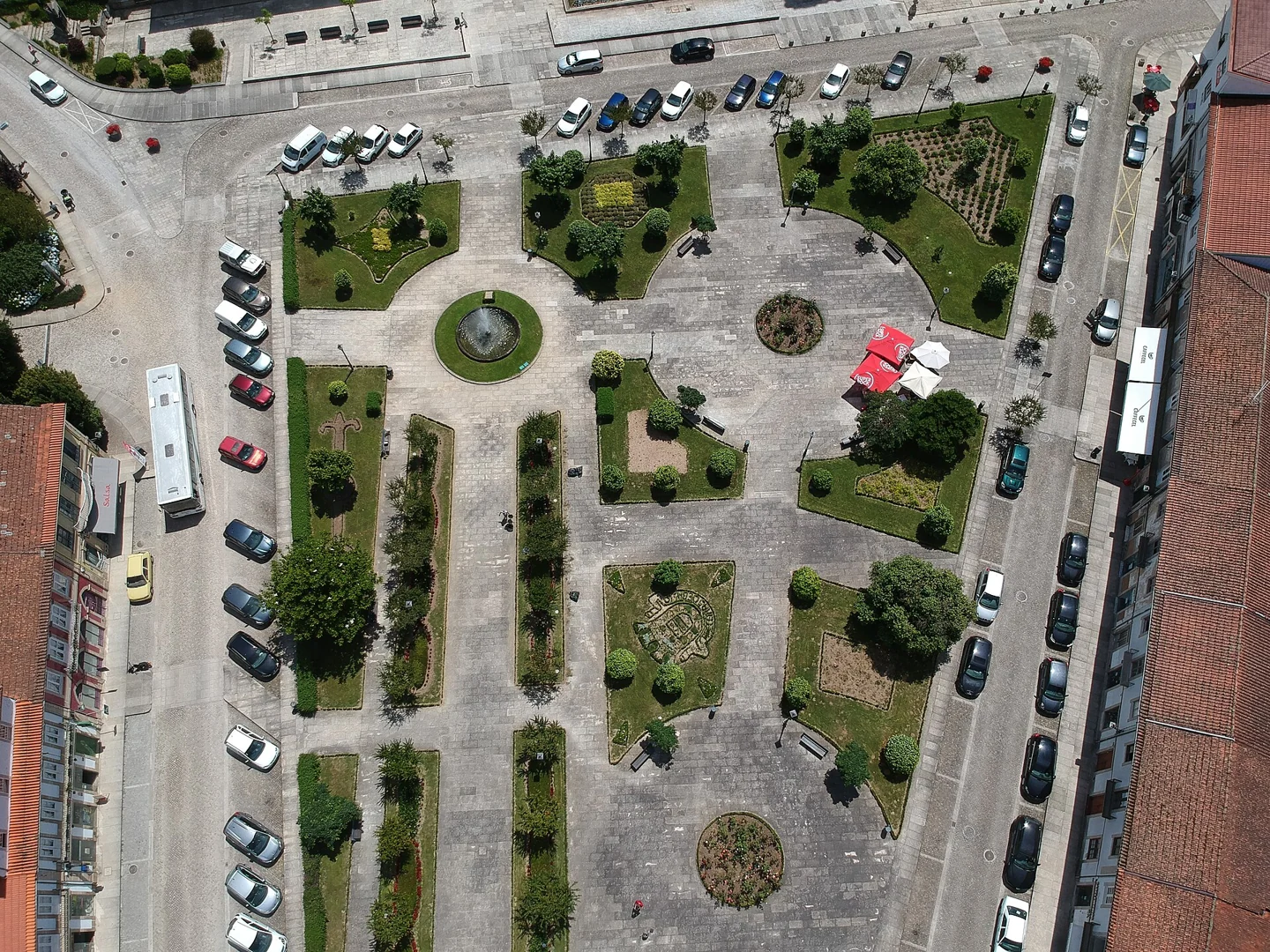
Air view of Praça da República in Refojos, with gardens, paths and ruins around the monastery.
ⓘFrom the monastery to Basto, each stop opens a story in Refojos.
Administrative name: Refojos de Basto
A selection of what is documented in the guide. Confirm visiting conditions in the charts.
Slide to see more places →
The Benedictine monastery at the heart of Refojos and the history of the Terras de Basto.
Refojos de BastoDiscover paintings, sculptures and sacred objects in the sacristy and antechamber of Refojos Monastery.
Refojos de BastoA break beside the Rio de Ouro in Refojos. Discover Poço do Frade and check conditions before planning a visit.
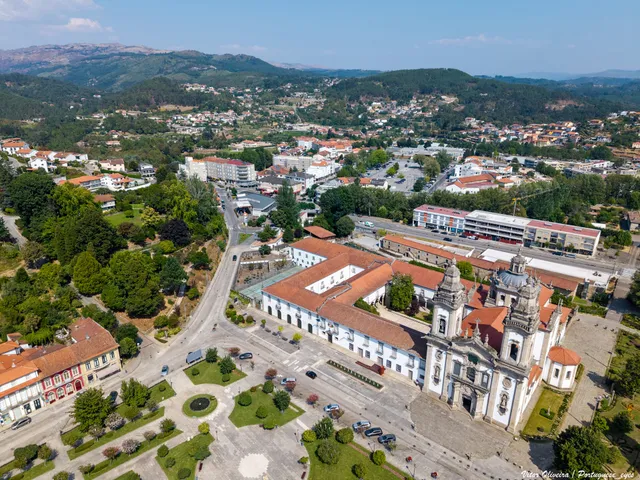
Refojos de BastoIn the town's headquarters, the Monastery of São Miguel and Praça da República give the starting point to know Refojos de Basto.
In the parish relationship of 1758, Refojos is described as lordship of the abbot of the monastery.
The statue of the Basto is a local symbol associated with the legend of Hermígio Romarigues and the defence of the monastery.
Knowledge, landscapes and memories linked to this parish.
Choose from 22 activities here →
2 guides with stories from here → · To follow a story by chapters.
A recipe of Refojos also holds a weekly habit.
The common-buthium seeks food in the landscape sky and also on the ground.
Vegetables, orchards and medicinal plants were part of the fence.
Shroud popes also tell how knowledge circulates.
Dishes, cutlery and napkins also tell stories.
The lemon cookies came with a family story.
A recipe has ingredients and has a voice.
Another Cabeceiras candy stored in Alcina's memory.
In Vinha de Mouros, leisure meets environmental education.
The renovation of the village centre also passed through the water.
The same landscape brings together different uses.
Pipes, barrels and barrels tell a business story.
From the workshop came objects to the house, the countryside and the fair.
A work can also open a discovery.
Devotion also left marks on paper.
The São Miguel fair began months earlier, inside the workshop.
The party also marked the rhythm of the fields.
The trip was part of the meeting.
The memory of the party also has flavors.
School, trade, and work made the living of the place.
The name didn't say the day of the month.
The letters linked parishes before they got further.
From the transport bag to the gallet, the container changes with the task.
Not all stories begin with an exact date.
An invitation to look beyond the facade.
The furniture of the sacristy brings together materials with different functions.
Major altar tokers deserve a long look.
Restoring a painting can reveal more than new colors.
Mercy was born of a local initiative in the 19th century.
A photographer from Refojos left a mark across the Atlantic.
Frei Diogo de Murça links Refojos to the academic life of Coimbra.
Camera and school are also part of the history of the building.
The names chosen in 2020 resemble people connected to Refojos.
A building can change paper in the community.
The Pereiras are also part of sports memory.
The Incredulity of São Tomé belongs to a set of five works.
The heritage also fits into a brass object.
A small piece of gold silver holds a medieval connection to Refojos.
An inscription can also give work to historians.
Objects also go through changes in institutions.
Observations of citizen science with location published in this parish, crossed with the limits CAOP2025. They are not visiting points or independent confirmation in the field.
Colour, geometry and memories of Cabeceiras: 36 works by Mendes Bastos in an exhibition announced until 31 December.
A first live preview of Margarida Vasconcelos’s album at Paços do Concelho.
An evening devoted to books, reading and Benedictine monastic life at Mosteiro de Refojos.
From the Monastery to Basto, each stop opens a history in Refojos. Around the Plaza de la República, the Monastery of São Miguel marks the historic center. The statue of Basto, the pillory, Casa do Barão and Casa do Tempo invite to continue the discovery. The festivals of São Miguel gather fair, devotion and encounter.
In the town's headquarters, the Monastery of São Miguel and Praça da República give the starting point to know Refojos de Basto. The baroque church, the zimbarium, the butcher, the organs and the cloisters hold different phases of their history. The monastic set is documented in the early 12th century, although the exact date of the foundation is unknown.
In the parochial relationship of 1758, Refojos is described as lordship of the abbot of the monastery. The extinction of religious orders in 1834 marked a change in the uses of the whole and the relationship between the old fence and the village. The Paços do Conselho, Casa do Barão and the spaces of cultural interpretation allow to continue the discovery of this urban transformation.
The statue of the Basto is a local symbol associated with the legend of Hermígio Romarigues and the defense of the monastery. The legendary narrative is distinct from the material history of the sculpture. The feasts of São Miguel combine devotion, fair and regional meeting. Refojos was once again a distinct parish in 2025; it should not be confused with the parish of Cabeceiras de Basto, known as São Nicolau.
The relationship of Refojos of 1758 describes the São Miguel fair between 28 and 30 of September, with payment of the places to the monastery and intervention of the abbot and officers. It also identifies the mail in the Raposeira. The document shows commercial, administrative and communication functions close to the monastic core. The calendar of this source should not be used as an announcement of a current edition of the feasts.
The same report situates in Ponte de Pé the confluence of courses coming from Rio Douro and from São Nicolau and mentions irrigation, dams and mills. The center of Refojos was part of a network of places and agricultural land, not only of the monastery's yard. The lattice, Moroccan and tannaria referred to by the municipality add crafts to the reading of the village. The aerial image of the square is a framework of the center, not the totality of the parish.
Refojos de Basto · Rapes · Santa Comba · Republic Square
This list preserves the places referred to in the selected documentation, without constituting a complete census.
Getting to know the history of the municipality
Main source consulted in 04/11/2026.
Publication at that source: Unidentified. Registered documentary verification: 2026-11-04.
Method recorded in that review: Documental review in 04/11/2026 of the municipal pages, historical transcripts and references indicated. Uncollated manuscripts. Archivistic descriptions, studies of oral tradition and dated observations are identified. Visually revised photographs from the Commons file consulted in 03/11/2026; camera position does not equal the survey of the object.
Editorial review: 2026-11-06. The editorial review is neither a visit to the site nor a real-time update. Additional times and sources may have their own consultation dates, indicated in the form.
Did you find any different information? Suggest correction
Casa do Tempo
Follow the theme by the municipality 2 places in this parishNúcleo de Arte Sacra · Casa do Tempo
Follow the theme by the municipality 1 place of this parishZona Fluvial do Poço do Frade
Follow the theme by the municipality