Before the clog, a piece of alder
ⓘ
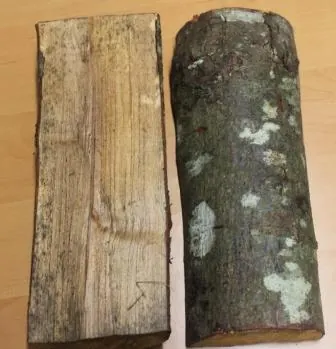
Alder log T13
Source: Museu das Terras de Basto
Photograph date not stated.
Individual photographer and reuse licence not stated by the source.
ⓘ
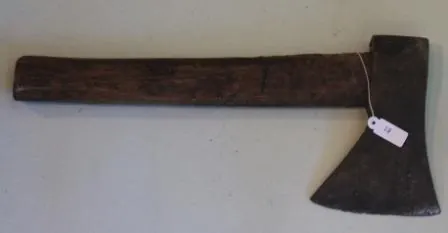
Hatchet T17
Source: Museu das Terras de Basto
Photograph date not stated.
Individual photographer and reuse licence not stated by the source.
ⓘ
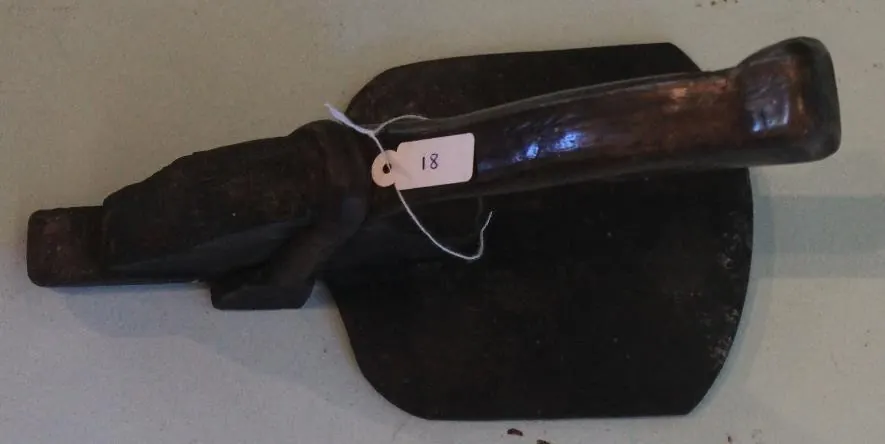
Adze T18
Source: Museu das Terras de Basto
Photograph date not stated.
Individual photographer and reuse licence not stated by the source.
ⓘ
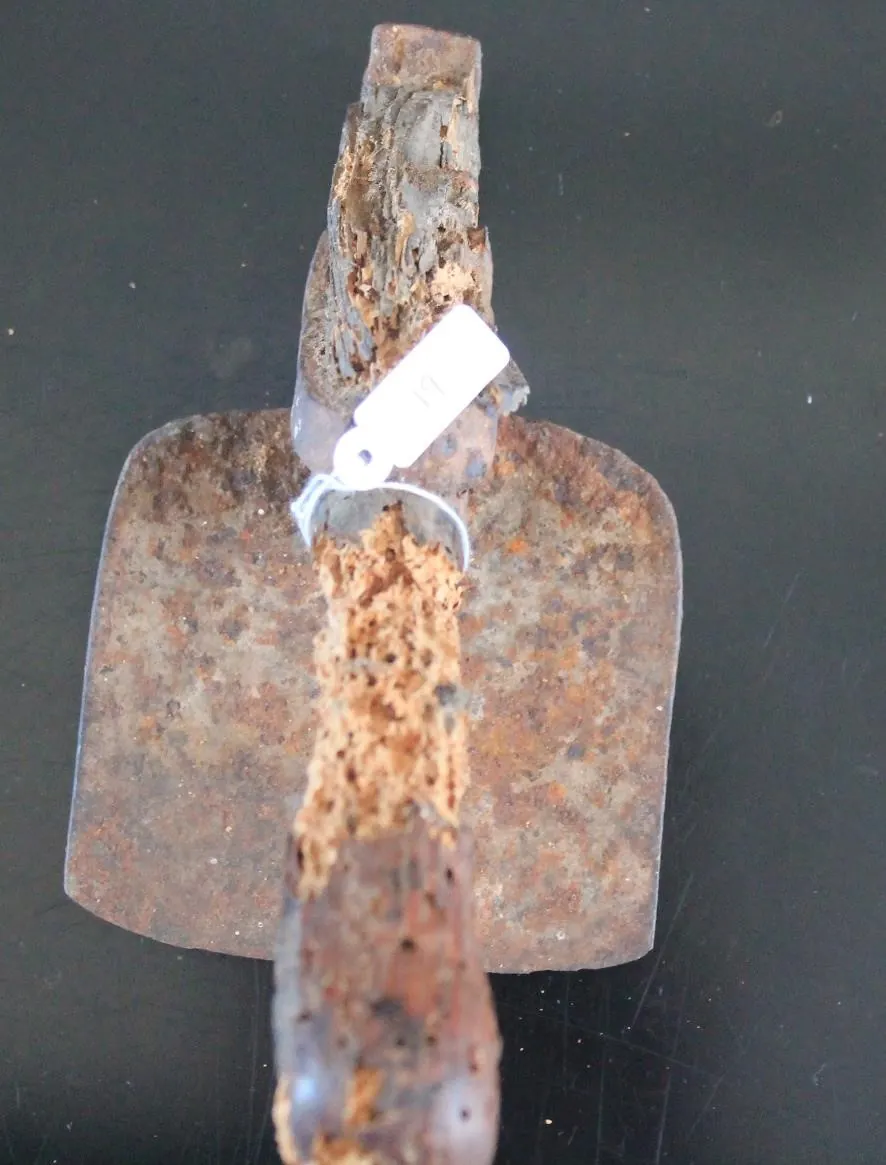
Adze T19
Source: Museu das Terras de Basto
Photograph date not stated.
Individual photographer and reuse licence not stated by the source.
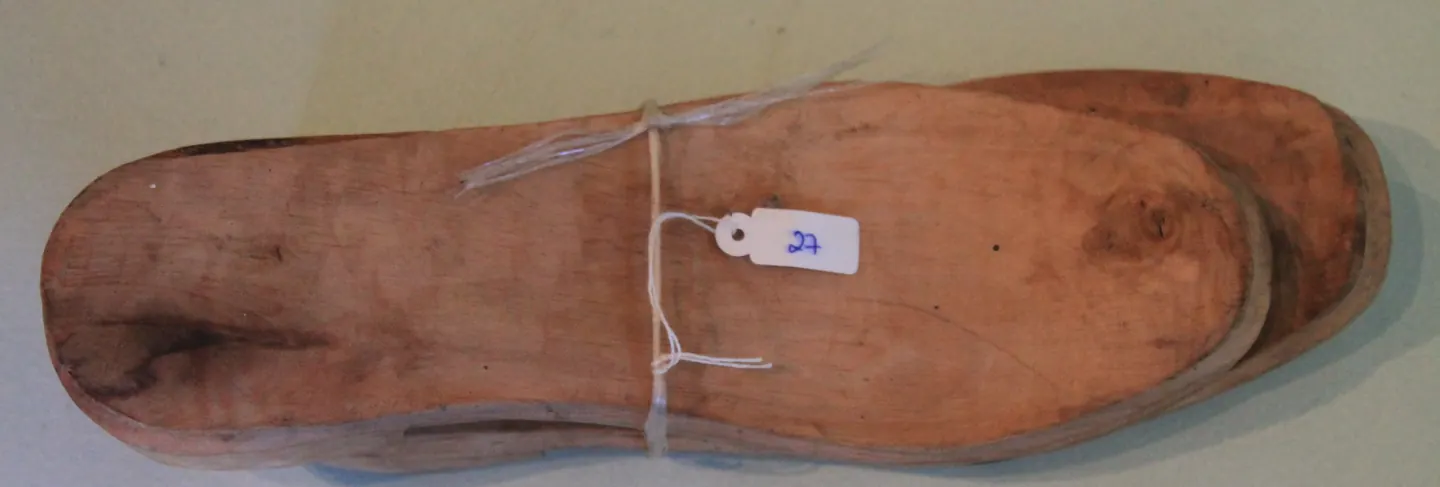
ⓘ
Wooden clog soles T27
Source: Museu das Terras de Basto
Photograph date not stated.
Individual photographer and reuse licence not stated by the source.

ⓘ
Saw T31
Source: Museu das Terras de Basto
Photograph date not stated.
Individual photographer and reuse licence not stated by the source.
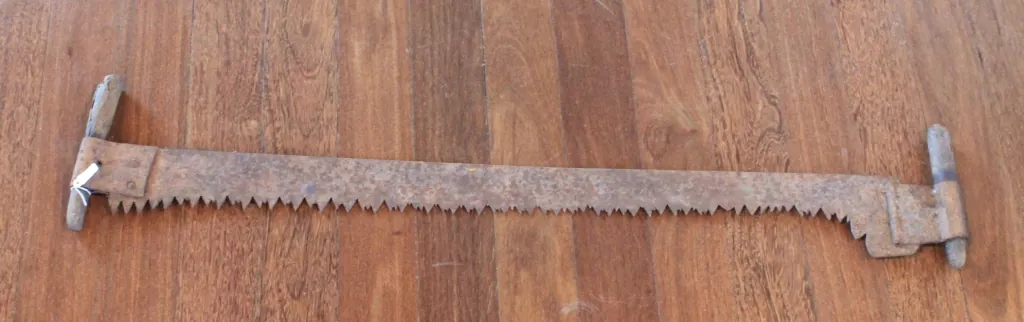
ⓘ
Saw T32
Source: Museu das Terras de Basto
Photograph date not stated.
Individual photographer and reuse licence not stated by the source.
Choosing the wood was part of the work.
Text size
Your choice is saved only in this browser.
In the Museum’s inventory, an alder log from Pinhel is raw material for clog soles. The axe split the wood, the adze shaped it and the chisel prepared the edge where leather was nailed. A last used by Manuel Alves Leite connects the objects with the family history of clog making.
Work continued with other tools: pincers pulled the leather onto the wood and an awl opened holes for nails. Each object preserves a particular gesture. The inventory lets us follow these operations without indicating a workshop currently open to visitors.
Explore further: words and activities
Explore this story
Source and context
Accessed: . Editorial summary; the date of consultation is not the date of the facts.