Discover Cabeceiras de BastoFree independent guide
ViveCabeceirasYOUR GUIDE TO CABECEIRAS
ENEnglish
SearchSaved

Flavors

Choose a story to start with. You can change the subject or fine tune the search.

57 stories · The flavours of Cabeceiras

Choose a recipe · 18

Opens the ingredients and preparation directly. Each recipe preserves its source and the context of who shared it.

Browse the recipe collection →

The flavours of Cabeceiras

From the garden to the pot, from the oven to the table.

Choose a story · 57
Local gastronomic tradition

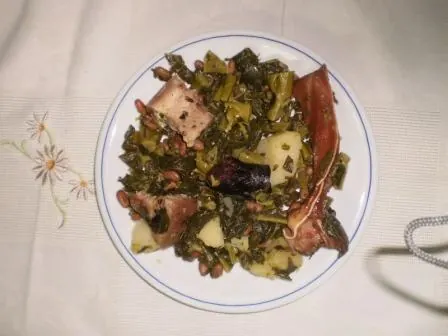
Greens with beans

Greens and beans in the Terras de Basto Museum’s account.
Source: Museu das Terras de Basto
About this photograph

Photograph date not stated. Source consulted on 2026-11-15. EXIF orientation and proportional WebP resizing; no cropping or upscaling.

Individual photographer and reuse licence not stated by the source.

Request removal or correct the photo credit

See 1 more photo and details
Greens and beans in the Terras de Basto Museum’s account.
Source: Museu das Terras de Basto
About this photograph

Photograph date not stated. Source consulted on 2026-11-15. EXIF orientation and proportional WebP resizing; no cropping or upscaling.

Individual photographer and reuse licence not stated by the source.

Request removal or correct the photo credit

A winter dish rooted in rural life.

Explore: A kitchen, different moments →View ingredients and preparation →
Read here and view sources

Cabeceiras chose couves com feijões, greens with beans, for the Referencial Gastronómico do Minho. The description connects couve-galega and yellow beans, also called moleiro, with hearth cooking. For more substantial meals, the cooking liquid from pork and the addition of sausages enriched the dish. The Museum also preserves a family version recorded in February 2010: Maria da Conceição Gonçalves Mouta, born in Cavez and living in Pedraça, had learned the dish from her grandmother. In that preparation, the greens and potatoes used the cooking liquid from the beans and meat; olive oil was added at the table.

Compare this dish with couves com migas: one recipe uses potatoes and assorted meats; the other adds bread at the end. The same voice from Pedraça preserves two ways of bringing greens and beans to the table. Which is closer to your family memories?

Source and context

Gastronomic Reference of Minho — Cabeceiras, pp. 214–215
Accessed:

Basto Land Museum — food collections, 2010 and 2011
Accessed:

Editorial summary; the date of consultation is not the date of the facts.
Abadim · bread heritage

Before the bread, there was a field

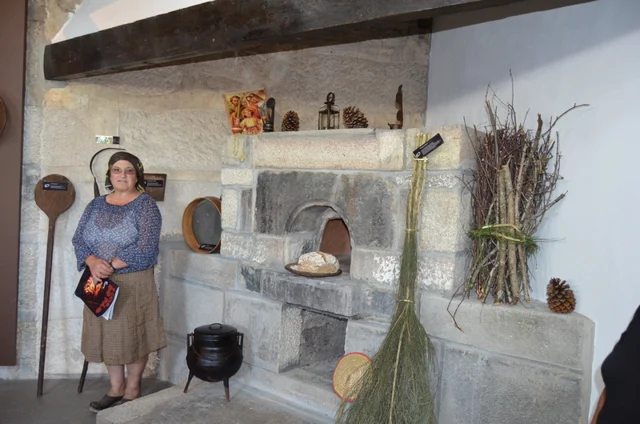
Forno em pedra e utensílios da Casa do Pão, com uma mulher junto da exposição.
Casa do Pão · know the cereal cycleⓘ

At the Casa do Pão, the story begins with grain.

Includes an activity to try →Explore: From field to next batch →
Read here and view sources

A great deal of work comes before broa reaches the table. At the Casa do Pão in Moinhos de Rei, Abadim, utensils and farming tools help retrace bread-making and the production of maize and rye. The municipal presentation connects the objects with baking and tasting the bread. It offers a way to understand the journey from field to grain processing and oven. Check the contacts and visiting arrangements on the place page before planning to attend a demonstration.

Words in this story: see explanations →Getting to know the parish See Fact sheet: Casa do Pão
Source and context

Visit Cabeceiras — Casa do Pão, Moinhos de Rei

Accessed: . Editorial summary; the date of consultation is not the date of the facts.

Sweets · 2019 competition

Beans make it to dessert too

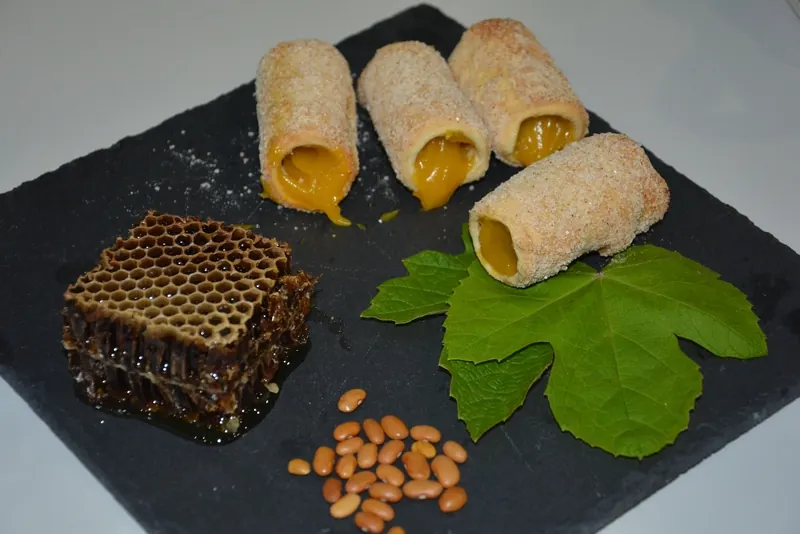
Alice Alves’s Miguelitos, winners of the 2019 Doce Cabeceirense competition.
Source: Municipality of Cabeceiras de Basto
About this photograph

Photograph date not stated. Source consulted on 2026-11-15. EXIF orientation and proportional WebP resizing; no cropping or upscaling.

Individual photographer and reuse licence not stated by the source.

Request removal or correct the photo credit

See 1 more photo and details
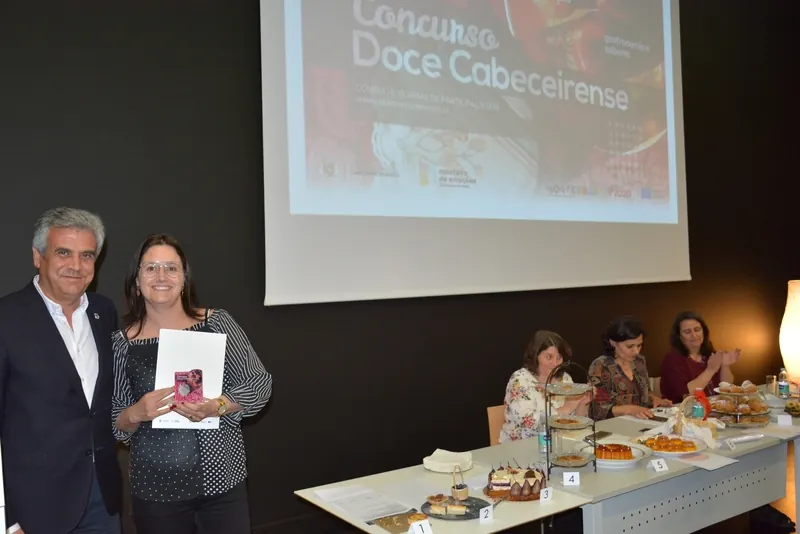
Miguelitos prize presentation at the 2019 Doce Cabeceirense competition.
Source: Municipality of Cabeceiras de Basto
About this photograph

Photograph date not stated. Source consulted on 2026-11-15. EXIF orientation and proportional WebP resizing; no cropping or upscaling.

Individual photographer and reuse licence not stated by the source.

Request removal or correct the photo credit

The story of Miguelitos has a date and a named creator.

Read here and view sources

Alice da Conceição de Magalhães Alves’s Miguelitos won the Concurso Doce Cabeceirense, whose result was announced at the Casa do Tempo on 18 May 2019. The municipal report describes a rolled preparation made with yellow beans, flour and Vinho Verde, filled with eggs and honey. The competition was part of the Mosteiro de Emoções programme. In February 2020, the municipality highlighted them again as the dessert for the Fim de Semana Gastronómico, alongside cozido as the main course. The sweet thus moved from the competition to the promotion of local food; the report does not confirm current availability.

Source and context

Municipality — Miguelitos win the Sweet Head Competition, 20/05/2019
Accessed:

Municipality — Gastronomic Weekend announcement, 07/02/2020
Accessed:

Editorial summary; the date of consultation is not the date of the facts.

Products referred to by the Municipality

Bread, smoked meats and honey

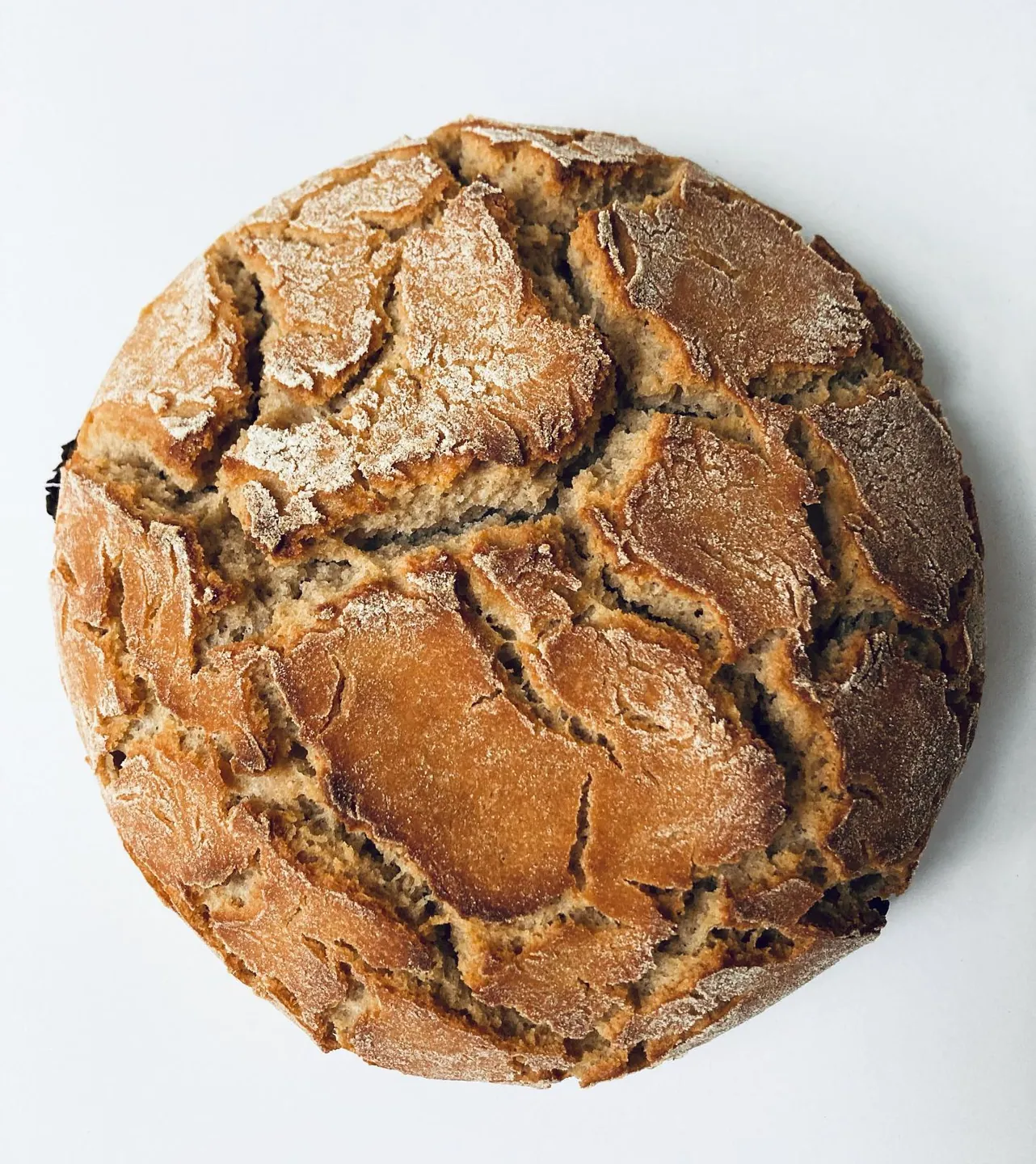
Corn bread crust. Illustrative photograph; not a documented local recipe or batch.
Photography: María Alabau · CC BY-SA 4.0
About this photograph

Date given at source: . Source consulted on 2026-11-15. Orientação EXIF e redimensionamento proporcional WebP; sem recorte.

Request removal or correct the photo credit

See 1 more photo and details
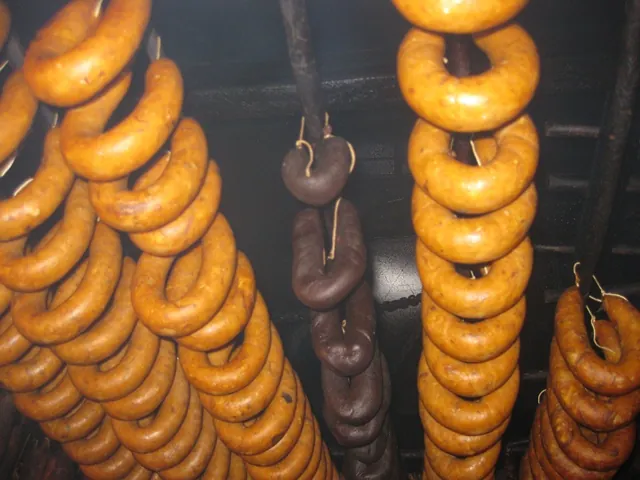
Ana Brás’s cured meats from Bucos, documented in 2012.
Source: Saberes cruzados
About this photograph

Photograph date not stated. Source consulted on 2026-11-15. EXIF orientation and proportional WebP resizing; no cropping or upscaling.

Individual photographer and reuse licence not stated by the source.

Request removal or correct the photo credit

Flavours that invite you to discover what the land produces.

Explore: Pick a flavor and follow your story →
Read here and view sources

The municipal food guide highlights broa, smoked meats, Mel de Basto and the region’s wines. They offer starting points for discovering the relationship between farming, food preservation and the cuisine of Minho. Their inclusion in this selection does not mean every restaurant serves them every day.

Source and context

Municipality — gastronomy

Accessed: . Editorial summary; the date of consultation is not the date of the facts.

Local and regional cuisine

A table with a taste of Minho

Veal, rojões, cod and papas de sarrabulho.

Explore: Before choosing the dish →
Read here and view sources

These specialities appear in the municipal description of local food, alongside the wines of the Vinho Verde region. Cabrito das Terras Altas do Minho and Barrosã and Maronesa beef are also part of this regional repertoire. Ask about the house speciality and what is available that day.

Source and context

Municipality — gastronomy

Accessed: . Editorial summary; the date of consultation is not the date of the facts.

Oral memory · March 2011

The bread kept the next batch alive

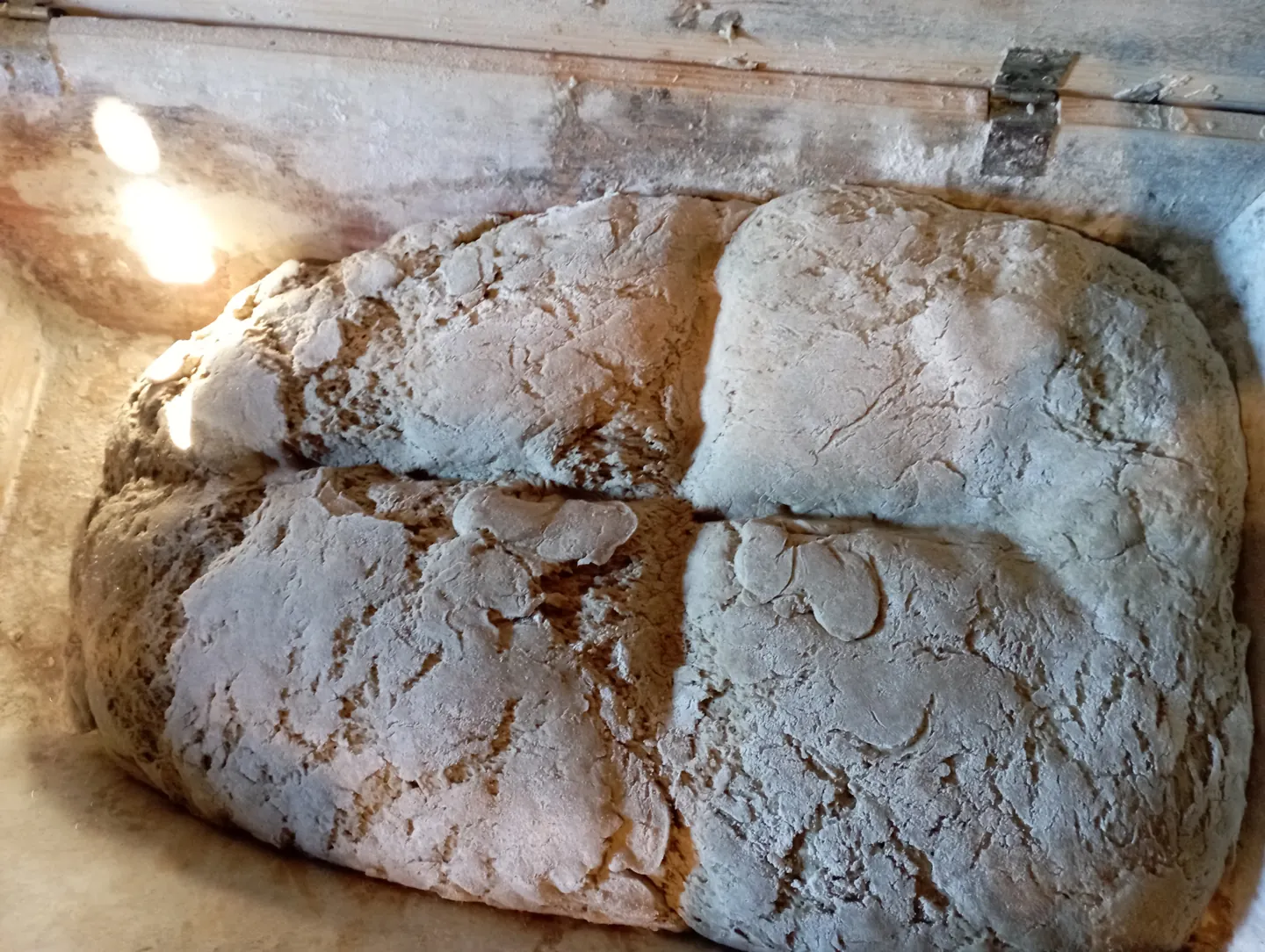
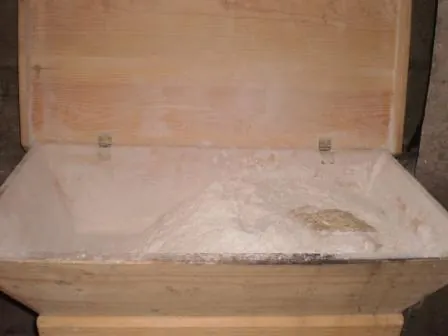
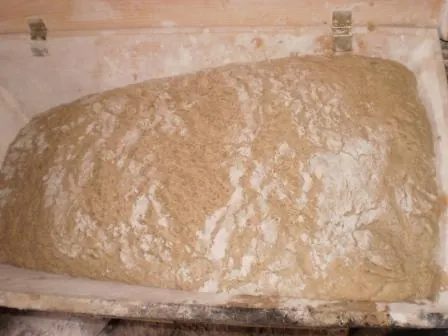
Flour and a portion of dough in the kneading trough — mixed-grain bread sequence documented by the Museum in Recovos, Pedraça.
Source: Museu das Terras de Basto
About this photograph

Photograph date not stated. Source consulted on 2026-11-15. EXIF orientation and proportional WebP resizing; no cropping or upscaling.

Individual photographer and reuse licence not stated by the source.

Request removal or correct the photo credit

See 2 more photos and details
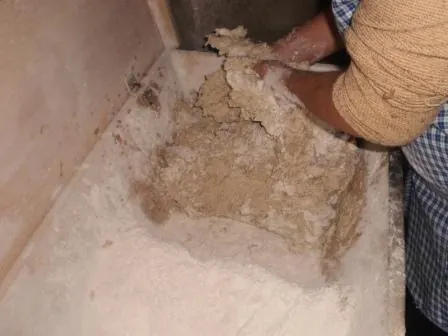
Working the dough by hand — mixed-grain bread sequence documented by the Museum in Recovos, Pedraça.
Source: Museu das Terras de Basto
About this photograph

Photograph date not stated. Source consulted on 2026-11-15. EXIF orientation and proportional WebP resizing; no cropping or upscaling.

Individual photographer and reuse licence not stated by the source.

Request removal or correct the photo credit

Dough in the trough before baking — mixed-grain bread sequence documented by the Museum in Recovos, Pedraça.
Source: Museu das Terras de Basto
About this photograph

Photograph date not stated. Source consulted on 2026-11-15. EXIF orientation and proportional WebP resizing; no cropping or upscaling.

Individual photographer and reuse licence not stated by the source.

Request removal or correct the photo credit

A small piece of dough linked one batch to the next.

Includes an activity to try →Explore: Three ways to look at the same dough →
Read here and view sources

In an account recorded in March 2011, Maria da Conceição remembered bread being baked every eight days. A piece of dough from the previous batch was kept in a bowl with a little salt, inside the wooden kneading trough. On the eve of the next baking day, warm water and flour were added. The account from Recovos, Pedraça, also describes an adaptation: when baking became less frequent, yeast bought from the bakery was used.

This change is part of a family history. Maria da Conceição was born in Cavez and had learned to make maize broa from her grandmother. When she was interviewed, at the age of 69, she also made mixed-grain broa. The account does not present an unchanging tradition: it shows learning, choices and an adapting routine.

The baking calendar extended to the community too. In the 2011 account, batches of bread were associated with annual celebrations, a longing for homemade bread, the feast of Santa Marinha and Christmas and maize-husking events organised by the Associação D. Nuno Álvares in Pedraça. Keeping dough for the following week made sense in a weekly routine; occasional baking created different needs. These are practices remembered in that account, not a current programme of festivities.

The kneading trough, bowl and piece of dough form a small chain between two batches. In this memory, keeping something meant more than storing finished bread: it meant saving the start of the next loaf. A household object reveals its full function when we understand the home’s routine.

Words in this story: see explanations →
Source and context

Museum — Mixed-grain bread, published 12/05/2011; fieldwork in March 2011 in Recovos, Pedraça
Accessed:

Basto Land Museum — food and food: collections of February and March 2011
Accessed:

Editorial summary; the date of consultation is not the date of the facts.

Oral memory · Pedraça

Chestnuts in spring?

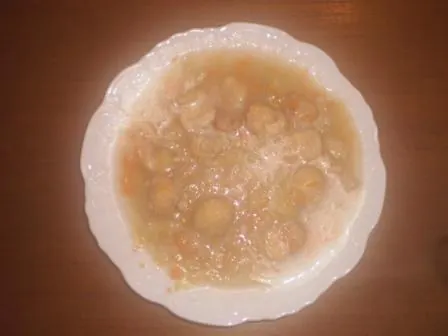
Chestnut soup from the account published by the Terras de Basto Museum in 2011.
Source: Museu das Terras de Basto
About this photograph

Photograph date not stated. Source consulted on 2026-11-15. EXIF orientation and proportional WebP resizing; no cropping or upscaling.

Individual photographer and reuse licence not stated by the source.

Request removal or correct the photo credit

Cooking followed the calendar of work.

Includes an activity to try →Explore: From tree to working day →
Read here and view sources

Chestnuts in April and May? In Maria da Conceição Gonçalves Mouta’s memories, dried chestnuts reached the table during ploughing and maize-sowing time. The soup, with beans, cabbage and potatoes, ended the first meal at around nine or half past nine in the morning, after fried cod with broa.

Maria de Fátima Carvalho recorded the account in Pedraça in February 2011. Maria da Conceição had learned the preparation from her mother-in-law. The chestnuts were dried and aired beforehand; the cooked potato was mashed and returned to the pot. Preservation, texture and working hours meet in this family memory.

Two calendars come together here: that of the fruit and that of the meal. Stored dried chestnuts brought to the spring table a food associated with another season’s harvest. The account describes more than ingredients: it explains how household stores accompanied ploughing and sowing. The timing of “almoço” may also surprise people who now use that Portuguese word for the midday meal.

This is a story with a voice and a place, not a rule for every household in Cabeceiras. When talking about a family recipe, it is worth preserving those differences: who taught it, when it was prepared and what changed between hearth and cooker. In this way, an ingredient list becomes a short story of work, learning and domestic life.

Follow three moments to understand this table: harvesting, storing and eating. They need not happen in the same season. Dried chestnuts connect those moments and explain the surprising title. The dish offers a simple way to discuss food reserves, field work and changing mealtimes.

Source and context

Basto Land Museum — testimony of Maria da Conceição Gonçalves Mouta, collected by Maria de Fátima Carvalho in 2011

Accessed: . Editorial summary; the date of consultation is not the date of the facts.

Oral memory · Cavez and Pedraça

Carnival went into the cooking pot too

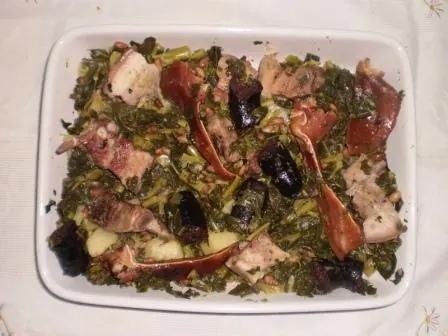
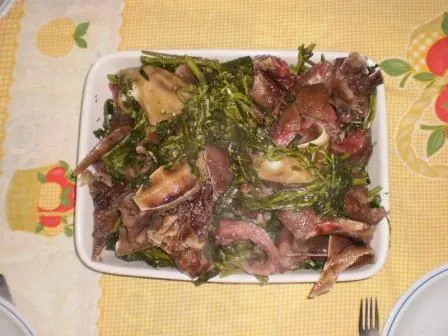
Pork ear with turnip greens: photograph accompanying the recipe recorded by the Museum in 2011.
Source: Museu das Terras de Basto
About this photograph

Photograph date not stated. Source consulted on 2026-11-15. EXIF orientation and proportional WebP resizing; no cropping or upscaling.

Individual photographer and reuse licence not stated by the source.

Request removal or correct the photo credit

See 1 more photo and details
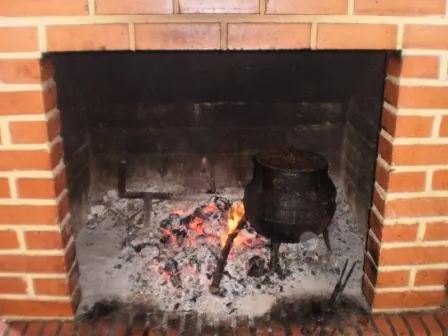
Hearth in the Museum’s March 2011 account of pork ear with turnip greens.
Source: Museu das Terras de Basto
About this photograph

Photograph date not stated. Source consulted on 2026-11-15. EXIF orientation and proportional WebP resizing; no cropping or upscaling.

Individual photographer and reuse licence not stated by the source.

Request removal or correct the photo credit

A recipe learned from a grandmother in Cavez.

Explore: Carnival and the flavors of the family →View ingredients and preparation →
Read here and view sources

Pig’s ear, leafy greens and potatoes made up the Carnival meal Maria da Conceição remembered in February 2011. It is a documented family memory, not a menu available all year round. The potatoes and greens cooked in the meat’s cooking water; the pig’s ear went back into the pot at the end, before serving with olive oil.

The account traces the recipe’s passage between generations: Maria da Conceição was born in Cavez and lived in Recovos, Pedraça; she had learned this dish from her grandmother. In 2011, a gas cooker and stainless-steel pans were already part of her kitchen, while the hearth remained in use on special occasions. The account shows a tradition living alongside changes in cooking equipment.

Cooking water connects meat and accompaniments: in the account, greens and potatoes share the preparation process. Compare this sequence with greens and beans. Rather than seeking one fixed recipe, notice how using the broth links different meals and memories of local cooking.

Source and context

Museum of Lands of Basto — Golden Ear (17/03/2011), Maria da Conceição Gonçalves Mouta; collection of Mary of Fatima Magalhães in February 2011

Accessed: . Editorial summary; the date of consultation is not the date of the facts.

Tastes suggested by municipal tourism

There is always room for dessert

Cavacas in the Cabeceiras presentation in the 2023 gastronomic guide.
Source: Turismo do Porto e Norte de Portugal
About this photograph

Photograph date not stated. Source consulted on 2026-11-15. Extraction of the photograph embedded in the PDF and proportional WebP resizing; no cropping or upscaling.

Individual photographer and reuse licence not stated by the source.

Request removal or correct the photo credit

Three sweet endings to whet your appetite.

Explore: Choose the next flavor →
Read here and view sources

Pão de ló, cavacas and cheese with quince paste appear among Visit Cabeceiras’s food suggestions. They are invitations to discover the local table; the source does not claim they originated exclusively in this municipality.

The municipal tourism service’s three suggestions set out complete meals. Pão de ló follows grilled alheira sausage and roast kid; cavacas come after cured ham with melon and roast veal; cheese with quince paste concludes a suggestion of chouriço and greens with beans. They offer ways to imagine a meal, without reserving a table or guaranteeing that the dishes are available.

For other sweet stories, family accounts lead to lemon biscuits and rabanadas. Part of the pleasure lies in discovering who passed on the recipe, when it was prepared and how the memory was recorded.

Source and context

Visit Cabeceiras — Emotional recipe

Accessed: . Editorial summary; the date of consultation is not the date of the facts.

Rio Douro · agriculture in 1758

From valley to hill, the harvest changed

The landscape helped shape the pantry too.

Includes an activity to try →Explore: Follow the landscape to the pantry →
Read here and view sources

In Rio Douro, the 1758 account distinguishes the crops grown near the rivers from those grown in the hills. It associates the former with milhão, wine, chestnuts and acorns, and the latter with rye. The landscape also helps us understand the pantry.

In describing the riverbanks, the parish priest mentions fields with oaks and vines and, where there were no fields, heather scrub. The same document portrays cold, windy mountains with snow in winter. These are historical descriptions that help connect crops and terrain; they are not a current agricultural or climate survey.

Getting to know the parish
Source and context

Municipality of Cabeceiras de Basto — Parish memories of 1758: Rio Douro

Accessed: . Editorial summary; the date of consultation is not the date of the facts.

Cabeceiras · Vine vocabulary

A partridge’s foot, but in the vineyard

The same grape variety can have different names from place to place.

Includes an activity to try →
Read here and view sources

The Vinho Verde wine commission identifies Pé de Perdiz as a name for Arinto in Cabeceiras de Basto. It also mentions Pedernã in the region and Perdigão in Mondim. Knowing these names helps when listening to vineyard stories: a local name does not, by itself, mean a different grape variety.

The CVRVV profile adds large, compact bunches with small berries. The variety is used both in wines made only from Arinto and in blends of white grape varieties. Traditional name, grape appearance and wine composition are three different ways into the same story.

Source and context

Viticulture Commission of the Green Wine Region — Grape varieties, chart Arinto

Accessed: . Editorial summary; the date of consultation is not the date of the facts.

Pedraça · 2011 food memory

Winter in a cooking pot

Caldo de farinha had its place in January and February.

Includes an activity to try →Explore: Cereals in three forms →View ingredients and preparation →
Read here and view sources

In the account recorded in January 2011, Maria da Conceição Gonçalves Mouta recalls beans, leafy greens, pork and maize flour. This is a cooking memory passed down by her grandmother from Cavez and recorded in Recovos, Pedraça. The flour went in near the end of cooking and was stirred continuously to break up lumps. This helped thicken the soup.

The account also records a change in equipment: a gas cooker and stainless-steel pans had entered daily life, while the hearth and three-legged pot were still used for Christmas Eve. The memory does not describe a kitchen frozen in time. In 2011, the interviewee said she rarely made this soup, distinguishing the custom she remembered from its frequency at that time.

Compare this dish with the same interviewee’s couves com migas: the soup takes maize flour, while the greens receive pieces of broa after being drained. One account is associated with January and February; the other values the tender greens of April and May. Grain links the dishes, but the preparation and season set them apart.

Getting to know the parish
Source and context

Basto Land Museum — testimony of Maria da Conceição Gonçalves Mouta, collected by Maria de Fátima Carvalho in 2011

Accessed: . Editorial summary; the date of consultation is not the date of the facts.

Pedraça · 2011 food memory

Bread joined the greens too

Couves com migas made use of spring’s tender leaves.

Explore: A kitchen throughout the year →View ingredients and preparation →
Read here and view sources

Maria da Conceição added broa, beans and salpicão to the greens. The account recorded in February 2011 associates the dish with April and May. It is a family recollection, distinct from couves com feijões. After draining, the preparation was mixed with broa, garlic and olive oil in a large bowl, the alguidar. The same bowl went to the table.

The dish follows the vegetable garden’s calendar: in Maria da Conceição’s memory, April and May brought young, tender greens. The recipe also preserves techniques — cutting finely, draining and folding together — and a serving vessel, the alguidar. Ingredients, season and utensils tell different parts of the same memory.

The bowl connects preparation and serving. In the account, the ingredients are mixed in that vessel and brought to the table in it. Look for a similar object in a family photograph: who used it, and on what occasion? An object can start a conversation as rich as the recipe.

Getting to know the parish
Source and context

Basto Land Museum — testimony of Maria da Conceição Gonçalves Mouta, collected by Maria de Fátima Carvalho in 2011

Accessed: . Editorial summary; the date of consultation is not the date of the facts.

Moimenta, Cavez · landscape of the vineyard

The vines climb the hillside

Before wine reaches the table, there is a landscape to discover.

Includes an activity to try →Explore: The vineyard has more than one story →
Read here and view sources

In Moimenta, Cavez, vineyards occupy terraces on the slopes of a sheltered valley. The municipal description connects this landscape with Vinho Verde production. Looking at the steps in the terrain is another way to discover wine culture. Visits to estates and tastings depend on each venue’s arrangements.

The municipal guide presents the terraces as a dominant feature of the slopes and also highlights Casa do Valle and Casa da Ponte. The vineyard is not isolated: it belongs to a village with built heritage, farming and livestock. This setting encourages us to look beyond the bottle and recognise the work written into the land.

The landscape alone, however, does not reveal the grape variety in each plot. To explore further, compare the grape names in the other Basto stories with the tools used for harvesting. They offer different clues to wine culture.

Getting to know the parish
Source and context

Municipality — Village Guide of Serra da Cabreira: landscape, work and heritage
Accessed:

Municipality — parish of Cavez and places of Moimenta
Accessed:

Editorial summary; the date of consultation is not the date of the facts.

Vila Nune · feed in 1758

They made wine, but bought bread

A small detail reveals how food reached the table.

Includes an activity to try →Explore: Produce, buy, transform →
Read here and view sources

In 1758, the vicar of Vila Nune named wine as the most abundant product, but said almost all residents bought bread. There was enough olive oil for the population and little surplus of chestnuts. The table therefore depended on purchases as well as harvests.

In the same account, the priest described land in a small valley and on descending hillsides. An abundance of one product did not mean people grew everything they ate. The document allows that comparison, but does not say where bread was bought or how much it cost.

Getting to know the parish
Source and context

Municipality — Parish Memoirs of Vila Nune, 23/05/1758

Accessed: . Editorial summary; the date of consultation is not the date of the facts.

Cabeceiras · regional production area

The landscape reaches the honey too

Heather connects the hills with the flavours on the table.

Includes an activity to try →Explore: From flower to sweet →
Read here and view sources

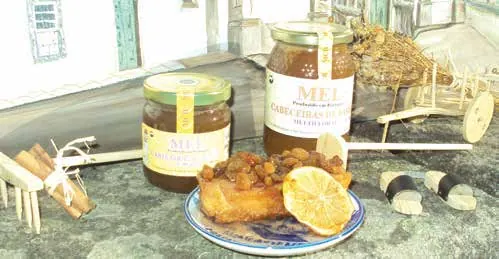
Cabeceiras de Basto lies within the production area of Mel das Terras Altas do Minho DOP described by the PTPT portal. Heather flowers connect mountain vegetation with this dark honey, which can be liquid or crystallised. The story does not end at the hive: the profile describes collection, extraction, settling and packing within the production region. Plants, bees and human work all lie on the path to the jar. The municipality’s inclusion in that area does not mean every honey sold here is certified.

The name also has criteria in the profile consulted. The portal distinguishes the product’s pollen composition and the names “Mel de Urze” and “Mel de Queiró”, associated with more than 35% pollen from the heather family. This information cannot be obtained simply by looking at the jar’s colour.

Presentation can vary: the profile includes centrifuged honey, liquid or crystallised, and honeycomb. For a particular product, read the origin and identification on the label. A landscape photograph or sale at a local market does not, by itself, demonstrate DOP certification.

Words in this story: see explanations →
Source and context

PTPT — Highland honey of Minho: product, know-how and production area

Accessed: . Editorial summary; the date of consultation is not the date of the facts.

Food memory · testimony of 2011

A snack with bread still warm

Sopas de vinho are part of the food memories collected in Cavez and Pedraça.

Read here and view sources

In an account recorded by Maria de Fátima Carvalho in February 2011, Maria da Conceição Gonçalves Mouta remembers a winter snack made with broa, Vinho Verde and sugar. Freshly baked broa was preferred; on other occasions, a slice was warmed over the embers. It is a family memory published by the Museu das Terras de Basto.

The occasion matters as much as the ingredients: the account places the snack in mid-afternoon and associates it with winter. Broa connected the meal with the oven’s rhythm or with making use of the embers. The recipe had been learned from a grandmother in Cavez; the account was recorded with her granddaughter living in Recovos, tracing a family tradition between places.

Source and context

Basto Land Museum — testimony of Maria da Conceição Gonçalves Mouta, collected by Maria de Fátima Carvalho in 2011

Accessed: . Editorial summary; the date of consultation is not the date of the facts.

Faia · agriculture and food memory

In Faia, fruit matters too

Cherries, wine and olive oil help tell the story of this farming landscape.

Includes an activity to try →Explore: From fruit to containers →
Read here and view sources

The municipal presentation highlights cherries in Faia’s farming and associates the parish with wine production. Cooperage, the craft of making wooden vessels, adds another dimension to this agricultural landscape.

In May 1758, the abbot described a greater abundance of wine, fruit and olive oil than of grain. The two sources bring different periods into view, but do not establish an exact continuity of crops: the older document speaks of fruit in general without identifying cherries. Comparing them reveals both what we know and what remains to be clarified.

Getting to know the parish
Source and context

Council — Faia
Accessed:

Municipality — Parish memories of Faia, 23/05/1758, transcript of José Viriato Chapel (2003)
Accessed:

Editorial summary; the date of consultation is not the date of the facts.

Pedraça · testimony of 2011

At Christmas, back to the hearth

A family custom kept the old cooking pot in use.

Explore: The year also sat at the table →
Read here and view sources

By 2011, Maria da Conceição Gonçalves Mouta was already cooking on a gas cooker with stainless-steel pans. At Christmas Eve dinner, however, the whole meal returned to the hearth and three-legged pots.

The account recorded in Recovos, Pedraça, also notes that she sometimes returned to this way of cooking outside Christmas. The old utensil still had a place in a kitchen that had changed. It is a family memory, not a custom attributed to every household in the municipality.

Getting to know the parish
Source and context

Basto Land Museum — testimony of Maria da Conceição Gonçalves Mouta, collected by Maria de Fátima Carvalho in 2011

Accessed: . Editorial summary; the date of consultation is not the date of the facts.

Pedraça · crop memory

Lunch at nine in the morning?

Meal names also preserve the rhythms of another time.

Read here and view sources

During the ploughing work Maria da Conceição remembered, the first meal was called almoço and arrived at around nine or half past nine. Fried cod with broa was served, followed by chestnut soup.

The account associates this rhythm with April and May, when maize was sown and the land ploughed. Meal names also preserve ways of organising work. This is a memory collected from one family, not a general timetable for the municipality.

In this case, the soup was learned from her mother-in-law, who came from Pedraça. The account thus distinguishes different people in the transmission of recipes. The preparation used dried chestnuts, connecting an autumn harvest with spring work in the fields. The remembered meal brought together preserved food, broa and a specific farming task: ploughing and sowing maize.

Getting to know the parish
Source and context

Basto Land Museum — testimony of Maria da Conceição Gonçalves Mouta, collected by Maria de Fátima Carvalho in 2011

Accessed: . Editorial summary; the date of consultation is not the date of the facts.

Gondiães · 2012 account

The papas begin before dawn

Sharing food at the Festa das Papas in Gondiães, 20 January 2026.
Source: Municipality of Cabeceiras de Basto
About this photograph

Date given at source: . Source consulted on 2026-11-15. EXIF orientation and proportional WebP resizing; no cropping or upscaling.

Individual photographer and reuse licence not stated by the source.

Request removal or correct the photo credit

White maize and pork ribs in a festive kitchen.

Includes an activity to try →Explore: A party made by many hands →
Read here and view sources

In Gondiães, preparations for the celebration begin days before the food reaches the table. During its 2012 visit, the Museu das Terras de Basto found the broa already ready while the papas were being made before dawn. First the pork ribs were cooked; then white maize flour went into their cooking water. Large iron pots gave way to glazed earthenware bowls, set out for the blessing and sharing. This is an account of communal preparation in that year, not a recipe with quantities or papas de sarrabulho.

The account also distinguishes different moments of eating: on the morning of the feast there were hot papas for those arriving with a bowl and spoon; at the communal distribution they were served cold, firm enough to cut into slices. The next day, the gathering was for residents and the papas were served hot again. These are moments from the documented visit, not times for a future edition.

Getting to know the parish
Source and context

Basto Land Museum — Visit to the Feast of Popes, published in 22/01/2012

Accessed: . Editorial summary; the date of consultation is not the date of the facts.

Bucos · 1758 account

Three grains in one landscape

The pantry in Bucos did not depend on just one grain.

Includes an activity to try →Explore: From grain to mill →
Read here and view sources

The parish priest’s 1758 account lists milho-alvo, milhão and rye, saying they were produced in similar proportions. It also mentions some wine and few chestnuts. This is the agricultural picture he left in writing, not a description of present-day harvests.

And where was the grain processed? In the same account, António Alves Teixeira describes mills on the parish’s two watercourses and farmers taking grain there. The document links the list of crops to milling, although it gives no recipes or breakdown of how each grain was used for food or other purposes. The date, 22 May 1758, marks the moment of the account: the proportions given are the vicar’s assessment, not a weighing of a harvest.

Getting to know the parish
Source and context

Municipality — Parish memories of Bucos (1758)

Accessed: . Editorial summary; the date of consultation is not the date of the facts.

Regional context · wine sub-region of Basto

Summer helps choose the grapes

In the vineyard, terrain and seasons are part of the story.

Read here and view sources

The wine commission describes Basto as the most inland sub-region of Vinho Verde, sheltered from maritime influence. Cold, rainy winters are followed by hot, dry summers. These conditions favour later-ripening varieties such as Azal, Espadeiro and Rabo-de-Anho. This is a regional account: it does not describe the weather in a particular year or the conditions of every plot in Cabeceiras. It does, however, help us look at a vineyard slope and understand that each crop begins long before the grape harvest.

Source and context

CVRVV — Learn all about the Green Wine Region, sub-region of Basto, PDF sheet 17

Accessed: . Editorial summary; the date of consultation is not the date of the facts.

Wine culture · regional context

This Padeiro grows in the vineyard

A familiar word can also be the name of a grape variety.

Read here and view sources

Padeiro de Basto is one of the names of the red grape variety Padeiro, according to the Comissão de Viticultura da Região dos Vinhos Verdes. The same source includes it among the varieties of the Basto sub-region, alongside others such as Espadeiro and Vinhão. Names hold clues to wine culture, but do not establish that a variety exists in only one place. After Pé de Perdiz, here is another name to discover when talking about vineyards and harvests.

Source and context

CVRVV — Castas: Baker / Baker of Basto and sub-region of Basto

Accessed: . Editorial summary; the date of consultation is not the date of the facts.

Gastronomy in Arco de Baúlhe · 2016 episode

Little potatoes named after a school

A curious name can open up a story at the table.

Read here and view sources

Batatinhas da Escola were among the dishes highlighted at a food promotion dinner held on 17 November 2016 at O Caneiro restaurant in Arco de Baúlhe. The municipal report also mentions oven-roasted octopus and greens with beans. This is a documented episode in the promotion of local flavours; the source neither explains the name’s origin nor confirms the current menu.

The report also reconstructs the end of the meal: Pecado da Avó, cavacas and rosquilhos, followed by liqueurs from Casa de Encosturas and herbal infusions produced in the municipality. Local white and red Vinho Verde accompanied the dishes. Published on 21 November, the account shows how one dinner brought together cooking, producers and promotion of the area. It does not give recipes: a dessert’s name alone does not reveal its ingredients.

Source and context

Municipality — City Hall promotes gastronomy in Premium Dinner, 21/11/2016

Accessed: . Editorial summary; the date of consultation is not the date of the facts.

Alvite · written account from 1758

There was more than maize in the fields

A list of crops opens a window onto the landscape of 1758.

Includes an activity to try →Explore: Follow the cereal, change the source →
Read here and view sources

Milhão appears as the most abundant grain in Alvite’s 1758 account. But the list continues with rye, milho-alvo, painço, wheat and barley. The priest adds beans, vinho de enforcado, olive oil, chestnuts, acorns and fruit.

The list reveals varied farming but gives no quantities for each crop. Compare it with Bucos, where the account describes a different balance between grains. The documents reveal differences without turning priests’ impressions into modern statistics.

The same account places part of the parish on the slopes of Senhora da Orada and another part in flatter land beside a small watercourse. The list of products gains a setting: fields in different positions across the terrain. The text does not, however, connect each crop with a particular plot.

Harvest and meal are also different things. Knowing that people produced grain, beans, wine or olive oil does not reveal the recipe served in a particular house. To reach the kitchen, other sources are needed, such as the family memories and documented preparations on this website.

Source and context

Municipality — Memory of Alvite, 23/05/1758; transcription of José Viriato Chapel (2003)

Accessed: . Editorial summary; the date of consultation is not the date of the facts.

Cabeceiras · regional product framework

Barrosã: a name tied to its origins

The link to the land can be documented too.

Includes an activity to try →
Read here and view sources

Barrosã connects the table with mountain farming. CAPOLIB describes cattle making use of meadows, damp grasslands and common land, with feed that may include grass, hay, straw and maize. It also distinguishes the breed from the certified product: Carne Barrosã depends on production rules and animals entered in the herd book, with traceability through to the consumer. Cabeceiras is part of the area described by the cooperative. Behind the name are breeders, fields and records; simply naming the breed on a menu does not confirm certification of the meat served.

The farming role was not limited to feeding the animals. The cooperative describes a dual-purpose breed used for draught work and meat: it helped work small plots, made use of available natural resources and returned manure to the fields. The animal formed part of a cycle of grazing, cultivation and fertilisation.

The horns are another feature highlighted by CAPOLIB: they project upwards in a shape resembling a lyre. The name refers to the Barroso plateau, but the breed’s history also includes its spread through Minho. Understanding its origins therefore calls for a regional view beyond the borders of one municipality.

Words in this story: see explanations →
Source and context

CAPOLIB — Barrosan breed, historical area and designation of origin

Accessed: . Editorial summary; the date of consultation is not the date of the facts.

Regional gastronomy · history of the organisation of breeders

Behind Maronesa are the people preserving the breed

A regional flavour also tells a story of cooperation.

Explore: What happens before you get to the table? →
Read here and view sources

Maronesa is among the meats named by the municipality in its presentation of Cabeceiras’s food. The LIFE Maronesa project says the breeders’ association was founded in 1988 on the initiative of fourteen breeders. Its duties include managing the herd book and the use of the Carne Maronesa name. This provides context for a regional product without assigning a particular farm, availability or certification to a restaurant in the municipality.

The founding date is 30 September 1988. The collective work includes tasks rarely visible on a menu: identifying animals, maintaining records, agricultural advice and organising livestock competitions. The project page also describes services connected with breeding and transporting animals for the producer group.

These duties help explain the difference between preserving a breed and promoting a dish. The first involves breeders, identified animals and continuity of breeding lines; the second is a culinary use. The two stories may meet at the table, but the work behind them begins long before the kitchen.

Source and context

LIFE Maronese — Maronese Creators Association, history and functions

Municipality — gastronomy

Accessed: . Editorial summary; the date of consultation is not the date of the facts.

Pedraça · testimony collected in March 2011

This broa blends rye and wheat

The mixed-grain bread after baking — mixed-grain bread sequence documented by the Museum in Recovos, Pedraça.
Source: Museu das Terras de Basto
About this photograph

Photograph date not stated. Source consulted on 2026-11-15. EXIF orientation and proportional WebP resizing; no cropping or upscaling.

Individual photographer and reuse licence not stated by the source.

Request removal or correct the photo credit

See 12 more photos and details
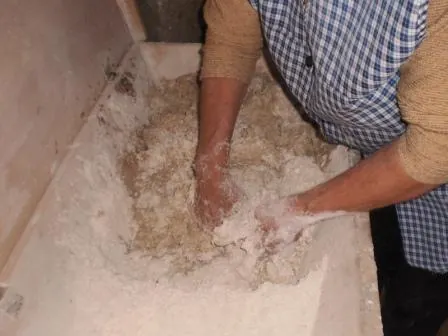
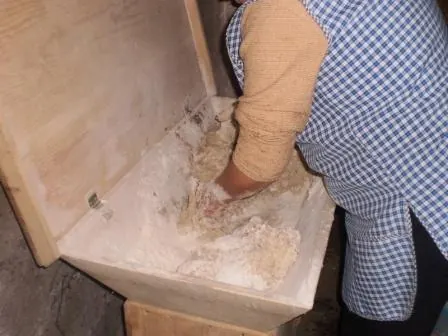
Flour and a portion of dough in the kneading trough — mixed-grain bread sequence documented by the Museum in Recovos, Pedraça.
Source: Museu das Terras de Basto
About this photograph

Photograph date not stated. Source consulted on 2026-11-15. EXIF orientation and proportional WebP resizing; no cropping or upscaling.

Individual photographer and reuse licence not stated by the source.

Request removal or correct the photo credit

Preparing dough in the kneading trough — mixed-grain bread sequence documented by the Museum in Recovos, Pedraça.
Source: Museu das Terras de Basto
About this photograph

Photograph date not stated. Source consulted on 2026-11-15. EXIF orientation and proportional WebP resizing; no cropping or upscaling.

Individual photographer and reuse licence not stated by the source.

Request removal or correct the photo credit

Working the dough by hand — mixed-grain bread sequence documented by the Museum in Recovos, Pedraça.
Source: Museu das Terras de Basto
About this photograph

Photograph date not stated. Source consulted on 2026-11-15. EXIF orientation and proportional WebP resizing; no cropping or upscaling.

Individual photographer and reuse licence not stated by the source.

Request removal or correct the photo credit

Kneading in the wooden trough — mixed-grain bread sequence documented by the Museum in Recovos, Pedraça.
Source: Museu das Terras de Basto
About this photograph

Photograph date not stated. Source consulted on 2026-11-15. EXIF orientation and proportional WebP resizing; no cropping or upscaling.

Individual photographer and reuse licence not stated by the source.

Request removal or correct the photo credit

A closer look at dough preparation — mixed-grain bread sequence documented by the Museum in Recovos, Pedraça.
Source: Museu das Terras de Basto
About this photograph

Photograph date not stated. Source consulted on 2026-11-15. EXIF orientation and proportional WebP resizing; no cropping or upscaling.

Individual photographer and reuse licence not stated by the source.

Request removal or correct the photo credit

Dough in the trough before baking — mixed-grain bread sequence documented by the Museum in Recovos, Pedraça.
Source: Museu das Terras de Basto
About this photograph

Photograph date not stated. Source consulted on 2026-11-15. EXIF orientation and proportional WebP resizing; no cropping or upscaling.

Individual photographer and reuse licence not stated by the source.

Request removal or correct the photo credit

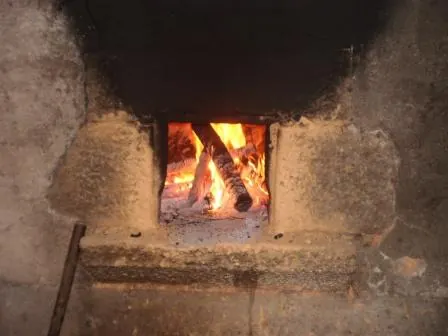
Fire in the wood-fired oven — mixed-grain bread sequence documented by the Museum in Recovos, Pedraça.
Source: Museu das Terras de Basto
About this photograph

Photograph date not stated. Source consulted on 2026-11-15. EXIF orientation and proportional WebP resizing; no cropping or upscaling.

Individual photographer and reuse licence not stated by the source.

Request removal or correct the photo credit

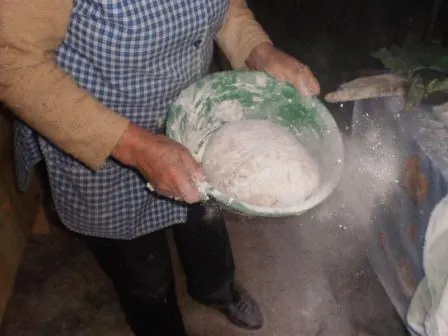
Shaping the loaf in a bowl — mixed-grain bread sequence documented by the Museum in Recovos, Pedraça.
Source: Museu das Terras de Basto
About this photograph

Photograph date not stated. Source consulted on 2026-11-15. EXIF orientation and proportional WebP resizing; no cropping or upscaling.

Individual photographer and reuse licence not stated by the source.

Request removal or correct the photo credit

Placing the loaf in the oven with a peel — mixed-grain bread sequence documented by the Museum in Recovos, Pedraça.
Source: Museu das Terras de Basto
About this photograph

Photograph date not stated. Source consulted on 2026-11-15. EXIF orientation and proportional WebP resizing; no cropping or upscaling.

Individual photographer and reuse licence not stated by the source.

Request removal or correct the photo credit

Closing the wood-fired oven — mixed-grain bread sequence documented by the Museum in Recovos, Pedraça.
Source: Museu das Terras de Basto
About this photograph

Photograph date not stated. Source consulted on 2026-11-15. EXIF orientation and proportional WebP resizing; no cropping or upscaling.

Individual photographer and reuse licence not stated by the source.

Request removal or correct the photo credit

Baked loaves in the oven — mixed-grain bread sequence documented by the Museum in Recovos, Pedraça.
Source: Museu das Terras de Basto
About this photograph

Photograph date not stated. Source consulted on 2026-11-15. EXIF orientation and proportional WebP resizing; no cropping or upscaling.

Individual photographer and reuse licence not stated by the source.

Request removal or correct the photo credit

The batch of bread and the work behind it — mixed-grain bread sequence documented by the Museum in Recovos, Pedraça.
Source: Museu das Terras de Basto
About this photograph

Photograph date not stated. Source consulted on 2026-11-15. EXIF orientation and proportional WebP resizing; no cropping or upscaling.

Individual photographer and reuse licence not stated by the source.

Request removal or correct the photo credit

Not every memory of broa begins with maize.

Explore: The batch continues in other stories →View ingredients and preparation →
Read here and view sources

In the recipe recorded by the Museu das Terras de Basto in March 2011, Maria da Conceição Gonçalves Mouta, who lived in Recovos, Pedraça, combined light rye, dark rye and wheat. The account distinguishes the maize broa she learned from her grandmother from the mixed-grain broa she began making later. Tradition changes even within one kitchen. In the same account, she says she no longer baked weekly: she made bread for celebrations and when she missed homemade broa. She also prepared it for Santa Marinha and for Christmas and maize-husking events at the Associação D. Nuno Álvares in Pedraça. Bread connected the kitchen with community gatherings.

The rhythm of baking also changed the leavening. When bread was baked frequently, dough was kept from the previous batch; in the preparation described in 2011, she used baker’s yeast prepared the day before. The change in ingredients accompanied a change in the calendar, from weekly bread to bread for gatherings.

Source and context

Museum — Mixed-grain bread, published 12/05/2011; fieldwork in March 2011 in Recovos, Pedraça
Accessed:

Basto Land Museum — food collections, 2010 and 2011
Accessed:

Editorial summary; the date of consultation is not the date of the facts.
Pedraça · testimony collected in March 2011

The oven gave a sign

Placing the loaf in the oven with a peel — mixed-grain bread sequence documented by the Museum in Recovos, Pedraça.
Source: Museu das Terras de Basto
About this photograph

Photograph date not stated. Source consulted on 2026-11-15. EXIF orientation and proportional WebP resizing; no cropping or upscaling.

Individual photographer and reuse licence not stated by the source.

Request removal or correct the photo credit

See 4 more photos and details
Fire in the wood-fired oven — mixed-grain bread sequence documented by the Museum in Recovos, Pedraça.
Source: Museu das Terras de Basto
About this photograph

Photograph date not stated. Source consulted on 2026-11-15. EXIF orientation and proportional WebP resizing; no cropping or upscaling.

Individual photographer and reuse licence not stated by the source.

Request removal or correct the photo credit

Closing the wood-fired oven — mixed-grain bread sequence documented by the Museum in Recovos, Pedraça.
Source: Museu das Terras de Basto
About this photograph

Photograph date not stated. Source consulted on 2026-11-15. EXIF orientation and proportional WebP resizing; no cropping or upscaling.

Individual photographer and reuse licence not stated by the source.

Request removal or correct the photo credit

Baked loaves in the oven — mixed-grain bread sequence documented by the Museum in Recovos, Pedraça.
Source: Museu das Terras de Basto
About this photograph

Photograph date not stated. Source consulted on 2026-11-15. EXIF orientation and proportional WebP resizing; no cropping or upscaling.

Individual photographer and reuse licence not stated by the source.

Request removal or correct the photo credit

The batch of bread and the work behind it — mixed-grain bread sequence documented by the Museum in Recovos, Pedraça.
Source: Museu das Terras de Basto
About this photograph

Photograph date not stated. Source consulted on 2026-11-15. EXIF orientation and proportional WebP resizing; no cropping or upscaling.

Individual photographer and reuse licence not stated by the source.

Request removal or correct the photo credit

Baking also meant paying attention to what you could see.

Includes an activity to try →
Read here and view sources

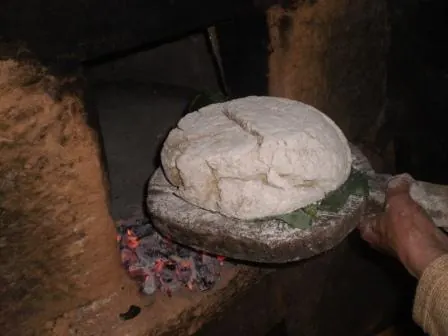
In the account recorded in Recovos, Pedraça, in March 2011, Maria da Conceição described several signs: the dough rested and increased in volume; a whitish appearance inside the oven indicated enough heat for the batch. She then shaped the dough in a basin, giving it a rounded form. The account shows knowledge built from movements and observation, learned in a kitchen and recorded by the Museum. It does not establish a universal rule for all ovens or doughs.

There is a sequence to those signs. First, resting allows the change in the dough to be observed; then the oven is prepared and the loaves shaped. The record brings together attention to time, volume and the colour inside the oven. Knowing how to bake meant connecting these observations as well as knowing the ingredients.

Words in this story: see explanations →
Source and context

Museum — Mixed-grain bread, published 12/05/2011; fieldwork in March 2011 in Recovos, Pedraça

Accessed: . Editorial summary; the date of consultation is not the date of the facts.
Saint Nicholas · agriculture described in 1758

Not all grain was the same

Rye, milho-alvo and milhão appear side by side in the old account.

Includes an activity to try →Explore: What held the table? →
Read here and view sources

In 1758, the parish priest of São Nicolau distinguishes rye, milho-alvo and milhão among the crops. He adds wine, olive oil, chestnuts and other fruits, describing production intended to support the farmers. When discussing fields in the hills, he particularly highlights rye. The variety of words invites us to read past agriculture without reducing all grains to a single crop.

The account places fields in lower areas between the hills separating settlements. Water was part of this arrangement: it mentions mills, weirs and channels serving fields and estates. Farming was not just a matter of choosing a seed; it also depended on terrain and access to water.

For draught animals, farmers used the hills during part of the year because the fields lacked grazing, bringing them in at night. Read together, these passages show fields, hills, animals and water as parts of the same rural life. They are the priest’s observations from 1758, not production quantities or present-day farming rules.

Source and context

Basto Land Museum — St Nicholas Parish Memories (1758)

Accessed: . Editorial summary; the date of consultation is not the date of the facts.
Local gastronomy · publication of 2025

These codornos grow on a tree

Codorno pears harvested in Bucos: the raw fruit, not the roasted preparation.
Source: Saberes cruzados
About this photograph

Photograph date not stated. Source consulted on 2026-11-15. EXIF orientation and proportional WebP resizing; no cropping or upscaling.

Individual photographer and reuse licence not stated by the source.

Request removal or correct the photo credit

See 3 more photos and details
Codorno pear tree in Bucos, winter 2011.
Source: Saberes cruzados
About this photograph

Photograph date not stated. Source consulted on 2026-11-15. EXIF orientation and proportional WebP resizing; no cropping or upscaling.

Individual photographer and reuse licence not stated by the source.

Request removal or correct the photo credit

Codorno pears on the tree in Bucos, winter 2011.
Source: Saberes cruzados
About this photograph

Photograph date not stated. Source consulted on 2026-11-15. EXIF orientation and proportional WebP resizing; no cropping or upscaling.

Individual photographer and reuse licence not stated by the source.

Request removal or correct the photo credit

A codorno pear cut in half, in the Saberes cruzados documentation.
Source: Saberes cruzados
About this photograph

Photograph date not stated. Source consulted on 2026-11-15. EXIF orientation and proportional WebP resizing; no cropping or upscaling.

Individual photographer and reuse licence not stated by the source.

Request removal or correct the photo credit

A winter dessert with a name that sparks curiosity.

Explore: From dessert to village trees →View ingredients and preparation →
Read here and view sources

The presentation of Cabeceiras in the 2025 Fins de Semana Gastronómicos identifies codornos as a local fruit associated with winter traditions. In the preparation described, they are roasted in the embers until soft and served hot and peeled, with red Vinho Verde or without wine. It is a way to discover fruit through cooking techniques. The recipe documents a food selection; it does not guarantee daily availability in restaurants.

Source and context

Porto and North Tourism — Gastronomic Weekends 2025, December, Section Cabeceiras de Basto (p. 3 of the PDF)

Accessed: . Editorial summary; the date of consultation is not the date of the facts.
Local gastronomy · proposal published in 2025

Alongside the steak, the greens matter too

Barrosã beef with rice and turnip greens, in the Cabeceiras presentation in the 2025 gastronomic guide.
Source: Turismo do Porto e Norte de Portugal
About this photograph

Photograph date not stated. Source consulted on 2026-11-15. Extraction of the photograph embedded in the PDF and proportional WebP resizing; no cropping or upscaling.

Individual photographer and reuse licence not stated by the source.

Request removal or correct the photo credit

A side dish connects the vegetable garden to the plate.

Explore: The accompaniment is linked to the land →View ingredients and preparation →
Read here and view sources

In the food selection for Cabeceiras published in 2025, posta barrosã is accompanied by rice with greens. Preparation begins by briefly boiling the greens; garlic and onion browned in olive oil follow, then rice and the final cooking together. Paying attention to the side dish helps us discover a meal beyond the meat. This is the version in that publication, not a single recipe followed in every household.

Source and context

Porto and North Tourism — Gastronomic Weekends 2025, December, Section Cabeceiras de Basto (p. 3 of the PDF)

Accessed: . Editorial summary; the date of consultation is not the date of the facts.
Highlands of Minho · regional product and head table

Before the roast, a story of livestock farming

Roast kid in the Cabeceiras presentation in the 2023 gastronomic guide.
Source: Turismo do Porto e Norte de Portugal
About this photograph

Photograph date not stated. Source consulted on 2026-11-15. Extraction of the photograph embedded in the PDF and proportional WebP resizing; no cropping or upscaling.

Individual photographer and reuse licence not stated by the source.

Request removal or correct the photo credit

Bravia and Serrana are the breeds behind Cabrito das Terras Altas do Minho.

Read here and view sources

Bravia and Serrana, including their crosses, are the breeds associated with Cabrito das Terras Altas do Minho IGP in the PTPT portal’s profile. Cabeceiras lies within the production area described. Adult animals use naturally growing vegetation; the kids feed on their mothers’ milk. Grazing may be organised individually or bring the village’s herds together in a vezeira. This relationship between mountain, livestock and mutual help comes before the dish. Cabeceiras’s food promotion in March 2016 highlighted this product; that does not establish certification for all kid goat meat served in the municipality today.

The PTPT description of local know-how follows the herds’ daily rhythm. The goats go out to pasture, while the kids are nursed in the morning before departure and in the afternoon on return. The goat shelter and the hills therefore have different roles in rearing the animals.

Bravia is associated with the mountains of Alto Minho and north-western Trás-os-Montes; Serrana with Serra da Estrela. The product brings these breeds and their crosses together within its own production area. It is more than an oven recipe: it is also a connection between animals, milk, vegetation and the shepherd’s work.

Words in this story: see explanations →
Source and context

PTT — Highland goat of Minho: breeds and grazing

Municipality — Promotion of the Goat of the Highlands of Minho, March 2016

Accessed: . Editorial summary; the date of consultation is not the date of the facts.
Cavez and Pedraça · transmission of recipe, 2011

Every recipe has someone who passes it on

Cooking connects people, generations and parishes.

Includes an activity to try →Explore: Who brought this recipe? →
Read here and view sources

In the Museum’s accounts, Maria da Conceição Gonçalves Mouta, born in Cavez and living in Recovos, Pedraça, identifies who passed each dish on to her. Couves com migas came from her grandmother in Cavez; chestnut soup from her mother-in-law in Pedraça. Maria de Fátima Carvalho recorded these accounts in February 2011. The names help us understand that these memories belong to a particular family experience.

Source and context

Basto Land Museum — food and food: collections of February and March 2011

Accessed: . Editorial summary; the date of consultation is not the date of the facts.
Sub-region Basto · vine cultivation

Batoca: a grape variety that likes company

A name particularly associated with the Basto sub-region.

Explore: Compare three varieties of Basto →
Read here and view sources

The wine commission describes Batoca as a grape variety grown mainly in Basto. It produces large bunches, but yields are irregular. It usually appears in white blends with Arinto or Azal and is rarely used on its own. A bottle can therefore bring together different varieties. This regional connection does not identify the varieties planted on a particular estate in Cabeceiras.

The profile describes a large, pale leaf with a reddish area where the veins begin. It gives a medium ripening time; Azal, by contrast, ripens late. Sharing a region does not mean sharing a calendar. That is why knowing several varieties makes the vineyard landscape more interesting than a simple patch of green.

Names travel too: the profile records Alvaraça in the Douro, Espadeiro Branco in Lousada and Sedouro or Sá Douro in the south of the region. These are not additional varieties in the blend, but names for Batoca in different places.

Source and context

CVRVV — Technical data sheets of the varieties Batoca and Azal

Accessed: . Editorial summary; the date of consultation is not the date of the facts.
Sub-region Basto · characteristics of Azal

A ripe grape can still be green

With Azal, colour does not tell the whole story.

Explore: One vineyard, several clues →
Read here and view sources

Azal is a late-ripening white grape variety adapted to dry, well-exposed land in the inland Vinho Verde region, including Basto. The technical profile describes compact bunches that retain a greenish colour even when ripe. Colour alone is not enough to decide whether harvest time has arrived.

The mature leaf is rounded and thick, with regular teeth and plenty of hairs on the underside. The bunch has a side branch described as a wing. These clues show why a variety’s description brings together leaves, bunches and stages of development rather than focusing only on grape colour.

Azal has a long growing cycle: the profile distinguishes early flowering from late ripening. One stage starting early does not mean all the others do too. The variety can be used alone or in blends with Arinto, Batoca and Loureiro; recognising a variety in the landscape and knowing a wine’s composition remain different questions.

Words in this story: see explanations →
Source and context

CVRVV — Technical data sheets of the varieties Batoca and Azal

Accessed: . Editorial summary; the date of consultation is not the date of the facts.
Alvite · mill inventory in 2008

From the Petimão to the olive press

A water channel brought power to the Casa do Ramil.

Read here and view sources

The municipal survey of 2 March 2008 describes the olive press at Casa do Ramil in Alvite, supplied by the Levada do Vale do Moinho with water diverted from the Petimão stream. A granite structure called a cubo channelled the water to the rodízio waterwheel. The building had two presses, and the inventory recorded that it had stopped operating in 2005. This account documents the connection between water, buildings and olive processing. It is private property: the historical survey confirms neither public access nor the equipment’s current condition.

Compare it with Covas, in Peio, where the inventory describes a wooden channel. In both cases, follow the connection between the water channel and the mechanism without assuming all olive presses used the same solution.

Source and context

Municipality — inventory of olive oil mills, record L.A.1, withdrawal of 02/03/2008

Accessed: . Editorial summary; the date of consultation is not the date of the facts.
Refojos · painting of 1703, studied in 2011

A table painted more than three centuries ago

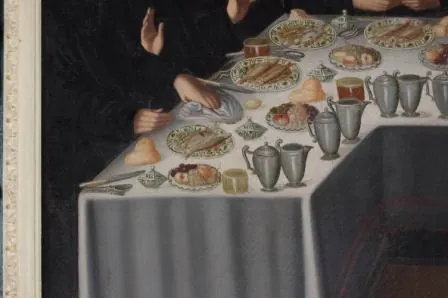
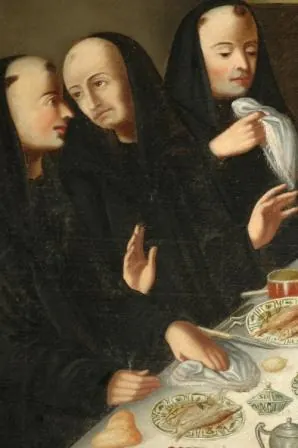
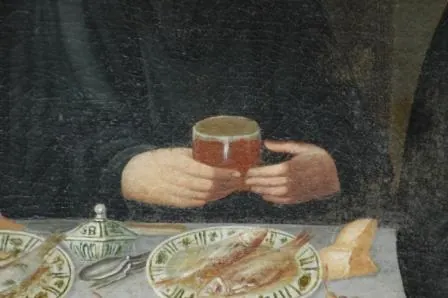
The Supper of Saint Benedict and the Raven, a 1703 painting from Refojos Monastery.
Photography: Miguel Sousa
About this photograph

Photograph date not stated. Source consulted on 2026-11-15. EXIF orientation and proportional WebP resizing; no cropping or upscaling.

Reuse licence not stated by the source.

Request removal or correct the photo credit

See 3 more photos and details
Detail of the table in the 1703 Supper of Saint Benedict and the Raven.
Photography: Miguel Sousa
About this photograph

Photograph date not stated. Source consulted on 2026-11-15. EXIF orientation and proportional WebP resizing; no cropping or upscaling.

Reuse licence not stated by the source.

Request removal or correct the photo credit

Plates, cutlery and napkins tell stories too.

Includes an activity to try →
Read here and view sources

The painting Ceia de S. Bento e o Corvo, dated 1703, is attributed by the Museu das Terras de Basto to Father Manuel Correia de Sousa and comes from Refojos Monastery. In a 2011 article, Isabel Maria Fernandes draws attention to the individual plates, salt cellars, cutlery and napkins depicted. The work opens a window onto the material culture of the table. It is not, however, a record of a particular meal eaten by the monks of Refojos. Its location in the municipal council chamber is the one given in that publication; current display and access have not been confirmed.

Source and context

Land Museum of Basto — Isabel Maria Fernandes, eat in conventual context, 21/02/2011

Accessed: . Editorial summary; the date of consultation is not the date of the facts.
Cabeceiras · 2012 memory and 2015 recipe

Honey sweetens rabanadas too

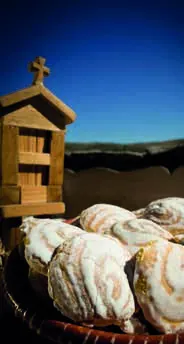
Honey rabanada in the Cabeceiras presentation in the 2014–2015 gastronomic guide.
Source: Turismo do Porto e Norte de Portugal
About this photograph

Photograph date not stated. Source consulted on 2026-11-15. Extraction of the photograph embedded in the PDF and proportional WebP resizing; no cropping or upscaling.

Individual photographer and reuse licence not stated by the source.

Request removal or correct the photo credit

A dessert helps tell the story of how local flavours were promoted.

Includes an activity to try →Explore: A bread, different desserts →View ingredients and preparation →
Read here and view sources

In the food programme of 23–25 March 2012, Cabeceiras presented roast kid as its speciality and rabanadas with honey as a regional sweet. The municipal announcement also links the table to Vinho Verde, meat and honey. This combination shows how food promotion brings products and preparations together. It is the historical programme of that edition, not a current menu or a claim that rabanadas originated exclusively in the municipality.

The 2015 guide adds a preparation with milk and honey. Compare it with Dídia Teixeira’s wine version: the same name can hold different recipes.

Source and context

Municipality — Gastronomic Weekends, 23–25/03/2012

Porto and North Tourism — Gastronomic Weekends 2014/2015, Cabeceiras de Basto, pp. 60–61 (PDF sheet 32), Municipal copy of Mondim Basto

Accessed: . Editorial summary; the date of consultation is not the date of the facts.
Food memory · rituals documented by the Museum

Words went into the bread too

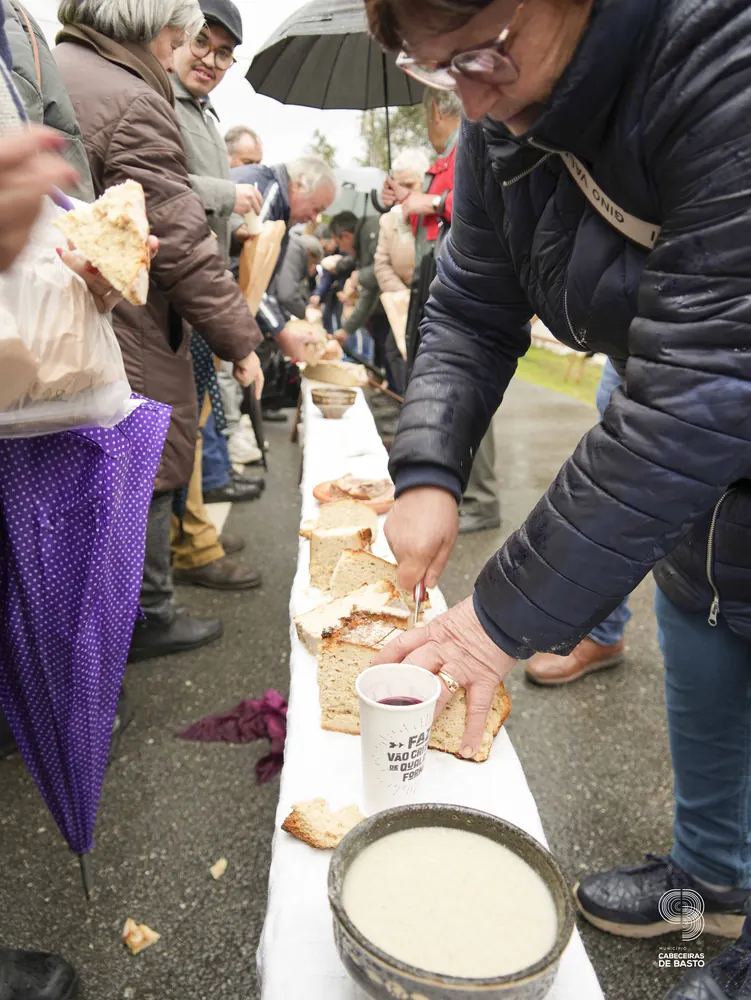
Bread dough in the Terras de Basto Museum’s publication about the bread prayer.
Source: Museu das Terras de Basto
About this photograph

Photograph date not stated. Source consulted on 2026-11-15. EXIF orientation and proportional WebP resizing; no cropping or upscaling.

Individual photographer and reuse licence not stated by the source.

Request removal or correct the photo credit

Kneading, waiting, baking: each moment could have its own ritual.

Read here and view sources

In a record published in January 2024, the Museum describes religious gestures connected with bread: tracing a cross in the dough, praying and covering the kneading trough while the dough rose. There were also words for putting bread into the oven and finishing the baking. Three small taps on the broa were explained as a way to wake it up. These are practices and beliefs presented by the source, not a scientific explanation of baking or a tradition attributed to every family or a particular parish.

The record organises the gestures into three moments: kneaded dough waiting in the trough, loaves entering the oven and bread just taken out. Utensil and word accompany the food’s transformation. Linking this story with the Recovos recipe and the explanation of yeasts offers three perspectives: the maker’s memory, the preparation sequence and the biological process. None replaces the others.

Source and context

Basto Land Museum — Bread Prayer, 24/01/2024

Accessed: . Editorial summary; the date of consultation is not the date of the facts.
Area of Basto · traditional names of grape varieties

A toad’s eye, but in the vineyard

One grape variety can have several names.

Read here and view sources

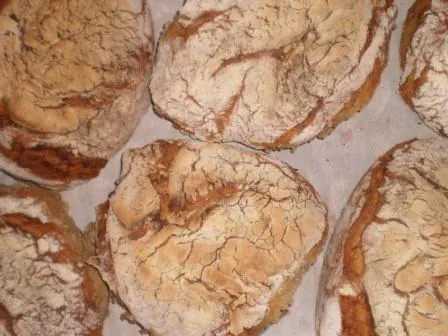
The Comissão de Viticultura da Região dos Vinhos Verdes identifies Bogalhal and Olho-de-sapo as names used in Basto for the red grape variety Borraçal. Other places use different names. This vocabulary brings the vineyard closer to local speech: a name heard in conversation may refer to a variety already known. The reference is regional and does not identify a particular plot or producer in Cabeceiras.

The botanical description gives Borraçal small bunches and berries of unequal size. Compare it with Arinto: it too can have small berries, but its bunches are large. These profiles help us ask questions; one isolated resemblance in a photograph does not identify a grape variety.

Source and context

CVRVV — Vinhos Verdes: Borraçal, Vinhão and regional diversity

Accessed: . Editorial summary; the date of consultation is not the date of the facts.
Green wines · regional diversity

Vinho Verde can be red too

The region’s name is not the colour of the wine.

Explore: Behind the names of the wine →
Read here and view sources

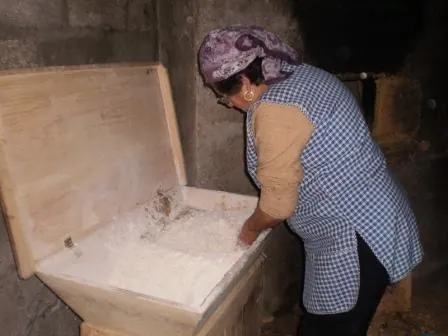
The Vinho Verde region produces white, rosé and red wines. The regional commission highlights Vinhão for its intense colour, sometimes close to violet. The name Vinho Verde therefore does not mean all the wines are white. This is an introduction to regional variety, without assigning characteristics or certification to a particular bottle.

The diversity extends beyond the best-known grapes. CVRVV mentions varieties that have lost ground in vineyards, including Batoca, Amaral and Borraçal, and describes recovery work by researchers and producers. The aims include preserving genetic heritage, diversifying wines and keeping more options available as the climate changes.

A less familiar name can thus open an important story. In Basto, Borraçal is also known as Bogalhal or Olho-de-sapo. These names belong to the same variety, whereas Vinhão is a different one. Distinguishing region, variety and local name helps us read vineyard memories more clearly.

Source and context

CVRVV — Vinhos Verdes: Borraçal, Vinhão and regional diversity

Accessed: . Editorial summary; the date of consultation is not the date of the facts.
Cabeceiras and neighboring municipalities · food memory

Maize the size of rice

Mílheros tell a story of rural food.

Includes an activity to try →Explore: A cereal, different transformations →View ingredients and preparation →
Read here and view sources

The Museum describes mílheros as maize crushed in a mill into small grains. In everyday meals, beans, cabbage shoots or cod bones could be added for flavour. Pork appeared on festive days or in households with more resources. This explains the distinction between “rich” and “poor” mílheros. The 2019 publication places this tradition in Cabeceiras and neighbouring municipalities.

In the Museum’s recipe for mílheros ricos, pork ribs, morcela, salpicão and linguiça accompany the grain. The difference between versions also helps us understand living conditions and occasions for eating them. The same ingredient could sustain a simple meal or form part of a more abundant table.

Words in this story: see explanations →
Source and context

Land Museum of Basto — Millions (2019)

Accessed: . Editorial summary; the date of consultation is not the date of the facts.
Pedraça · 2011 collection

Before the bread, this bolo went in

Bolo entre lenha in photographs accompanying the recipe published by the Museum in 2015.
Source: Museu das Terras de Basto
About this photograph

Photograph date not stated. Source consulted on 2026-11-15. EXIF orientation and proportional WebP resizing; no cropping or upscaling.

Individual photographer and reuse licence not stated by the source.

Request removal or correct the photo credit

See 1 more photo and details
Bolo entre lenha in photographs accompanying the recipe published by the Museum in 2015.
Source: Museu das Terras de Basto
About this photograph

Photograph date not stated. Source consulted on 2026-11-15. EXIF orientation and proportional WebP resizing; no cropping or upscaling.

Individual photographer and reuse licence not stated by the source.

Request removal or correct the photo credit

The same dough could have another destination.

Explore: One batch, several gestures →View ingredients and preparation →
Read here and view sources

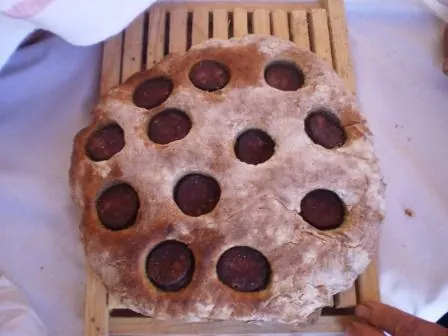
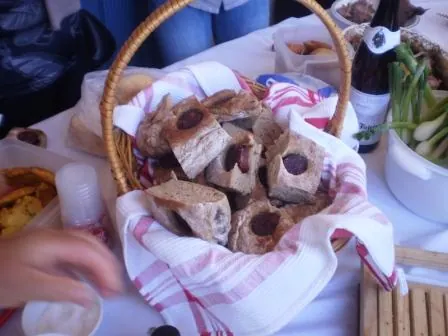
In Pedraça, Maria da Conceição Mouta recalled a bolo made from the broa dough itself. It was topped with small sardines or chouriço and went into the oven before the loaves. More wood then had to be added.

The account recorded in 2011 and published by the Museum in 2015 connects the bolo’s name with the organisation of baking day. The recipe preserves the techniques of a traditional oven, to explore alongside the history of bread.

Source and context

Basto Land Museum — Cake between sardine or chorizo wood (2015)

Accessed: . Editorial summary; the date of consultation is not the date of the facts.
Pedraça · testimony collected in 2011

Bread joined the celebration too

Mexidos: photograph accompanying the recipe recorded in Pedraça and published by the Museum.
Source: Museu das Terras de Basto
About this photograph

Photograph date not stated. Source consulted on 2026-11-15. EXIF orientation and proportional WebP resizing; no cropping or upscaling.

Individual photographer and reuse licence not stated by the source.

Request removal or correct the photo credit

With mexidos, dessert takes shape in the cooking pot.

Includes an activity to try →Explore: Three Ways to Bring Bread to the Feast →View ingredients and preparation →
Read here and view sources

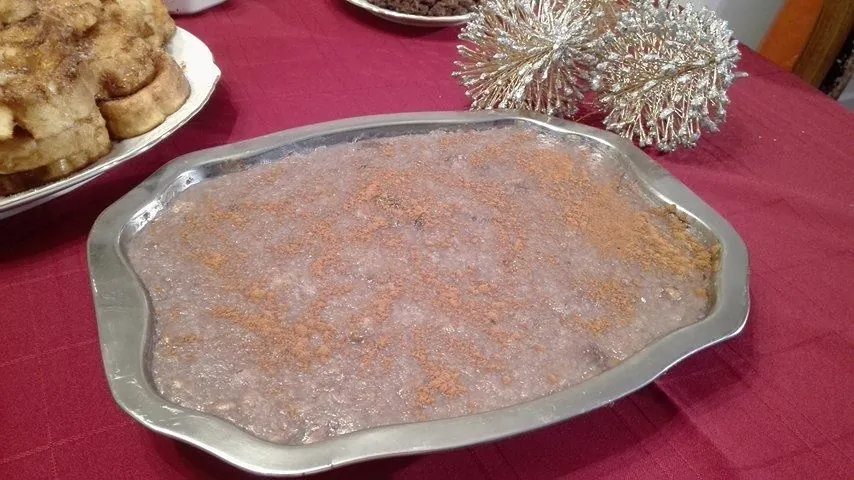
A bread dessert for Christmas and New Year, with honey, nuts, dried fruit and Port wine.

Fátima Magalhães recorded this version in 2011 from Maria da Conceição Gonçalves Mouta, who was born in Cavez and lived in Pedraça. The Museum published it in 2016.

The order of preparation gives bread the leading role: added in small pieces after the nuts and dried fruit, it thickens the mixture as it is stirred. Lemon peel and a cinnamon stick join the water and honey at the beginning; ground cinnamon finishes the dessert on the serving dish.

This version keeps different kinds of measurements: litres, a small glass and quantities left to the cook’s taste. The recipe preserves that distinction. The account gives no serving numbers or weights for every ingredient, so those gaps have been retained instead of guessing precise measurements.

Source and context

Land Museum of Basto — Scrambled (2016; collection of 2011)

Accessed: . Editorial summary; the date of consultation is not the date of the facts.
Refojos · family memory published in 2020

A recipe that crossed continents

The lemon biscuits arrived with a family story.

Includes an activity to try →Explore: Three sweets, a family memory →View ingredients and preparation →
Read here and view sources

Alcina Teixeira found recipes from Cabeceiras in a Portuguese magazine during her years in Mozambique. The biscuits reached the Museum through her son Mário, who lived in Refojos, and were published in 2020.

The family also kept the recipes for honey cake and cassianos. Comparing them lets us follow knowledge on its journey from a magazine to a family kitchen and then to the wider public.

Source and context

Basto Land Museum — Lemon biscuits Cabeceiras (2020)

Accessed: . Editorial summary; the date of consultation is not the date of the facts.
Refojos · February 2016 collection

Honey meets cinnamon and aniseed

Honey cake in the Terras de Basto Museum’s publication.
Source: Museu das Terras de Basto
About this photograph

Photograph date not stated. Source consulted on 2026-11-15. EXIF orientation and proportional WebP resizing; no cropping or upscaling.

Individual photographer and reuse licence not stated by the source.

Request removal or correct the photo credit

A recipe has ingredients, and it also has a voice.

Explore: A memory, lots of sweets →View ingredients and preparation →
Read here and view sources

Alcina Teixeira, who lived in Refojos, shared this cake in 2016. She remembered finding it in a magazine by Maria Odette Cortes Valente around 1966, when she was living in Mozambique.

Honey, cinnamon and aniseed meet in this family memory. The age recalled by the interviewee does not establish a proven date of origin.

The account identifies a family practice: Alcina made cakes for celebrations and looked for recipes in magazines. The cake combines honey with sugar and includes olive oil, milk, walnuts and spices. The ring tin belongs to the preparation as recorded. These details help identify this version without presenting it as the only way of making honey cake in Cabeceiras.

Source and context

Basto Land Museum — Honey cake Cabeceiras de Basto (2016)

Accessed: . Editorial summary; the date of consultation is not the date of the facts.
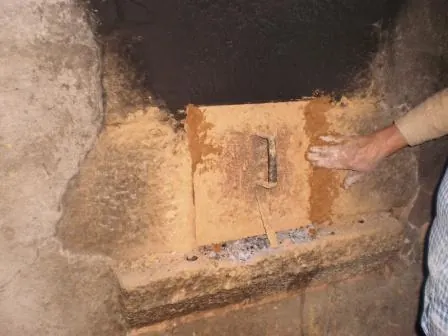
Outeiro · 2013 collection

Red wine reached dessert too

Wine-soaked rabanadas accompanying the recipe published by the Museum in 2014.
Source: Museu das Terras de Basto
About this photograph

Photograph date not stated. Source consulted on 2026-11-15. EXIF orientation and proportional WebP resizing; no cropping or upscaling.

Individual photographer and reuse licence not stated by the source.

Request removal or correct the photo credit

A version of rabanadas preserved in Outeiro.

Explore: The bread also arrives for dessert →View ingredients and preparation →
Read here and view sources

In Dídia Teixeira’s version from Paneladas, the bread is dipped in red Vinho Verde and egg before being fried. Sugar and cinnamon accompany the layers on the serving dish.

Fátima Magalhães recorded the recipe in 2013; the Museum published it in 2014, associating it with Christmas and New Year. This version is identified with the person who shared it, without being presented as the recipe of every household in Outeiro.

Source and context

Basto Land Museum — Wine French toast (2014; 2013)

Accessed: . Editorial summary; the date of consultation is not the date of the facts.
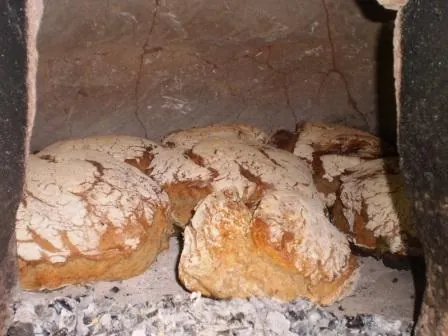
Santa Senhorinha · agricultural production described in 1758

Bread, wine and olive oil in a portrait of the land

The parish account also described what people harvested.

Includes an activity to try →
Read here and view sources

In the 1758 response, the abbot of Santa Senhorinha highlighted bread, wine and olive oil among the most abundant products and praised the variety of fruit. The document connects the table with work in the fields. It does not list grape varieties, grains or fruit varieties here; those details should not be added by assumption.

Draw a small table with three places: bread, wine and olive oil. Beside it, add a field, a vineyard and an olive tree as questions about where food comes from. The document describes production, not a menu or how food was shared among families. That distinction helps us read the past more carefully.

Source and context

Municipality — Memória de Santa Senhorinha, 23/05/1758, replies 15, 19 and 20; transcription of José Viriato Capela (2003)

Accessed: . Editorial summary; the date of consultation is not the date of the facts.
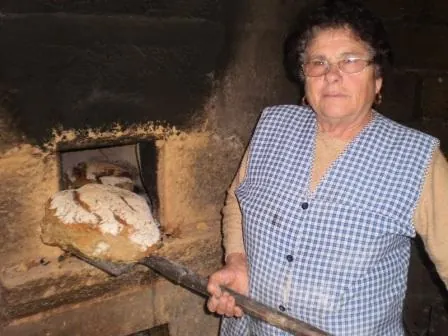
Refojos · kitchen memory collected by the Museum

Sunday was for cabidela

A recipe from Refojos also preserves a weekly custom.

Includes an activity to try →Explore: At the table of who told the recipe →View ingredients and preparation →
Read here and view sources

Sunday was the day for cabidela in the kitchen described by Isabel Sousa, who was born and lived in Refojos. In the version she shared, chicken accompanies rice; onion, garlic, bay and parsley provide seasoning alongside white wine, blood and vinegar. The publication also preserves words used during preparation, such as estrugido and testo.

Conceição Magalhães recorded the recipe in 2013, and the Museum published it in October 2014. The mention of Sunday places the dish in a family calendar, but does not establish a rule for the whole municipality. This is the voice of an identified cook, with an occasion and her own way of describing what she made.

Words in this story: see explanations →
Source and context

Basto Land Museum — The hanger was held on Sunday, publication of 10/10/2014

Accessed: . Editorial summary; the date of consultation is not the date of the facts.
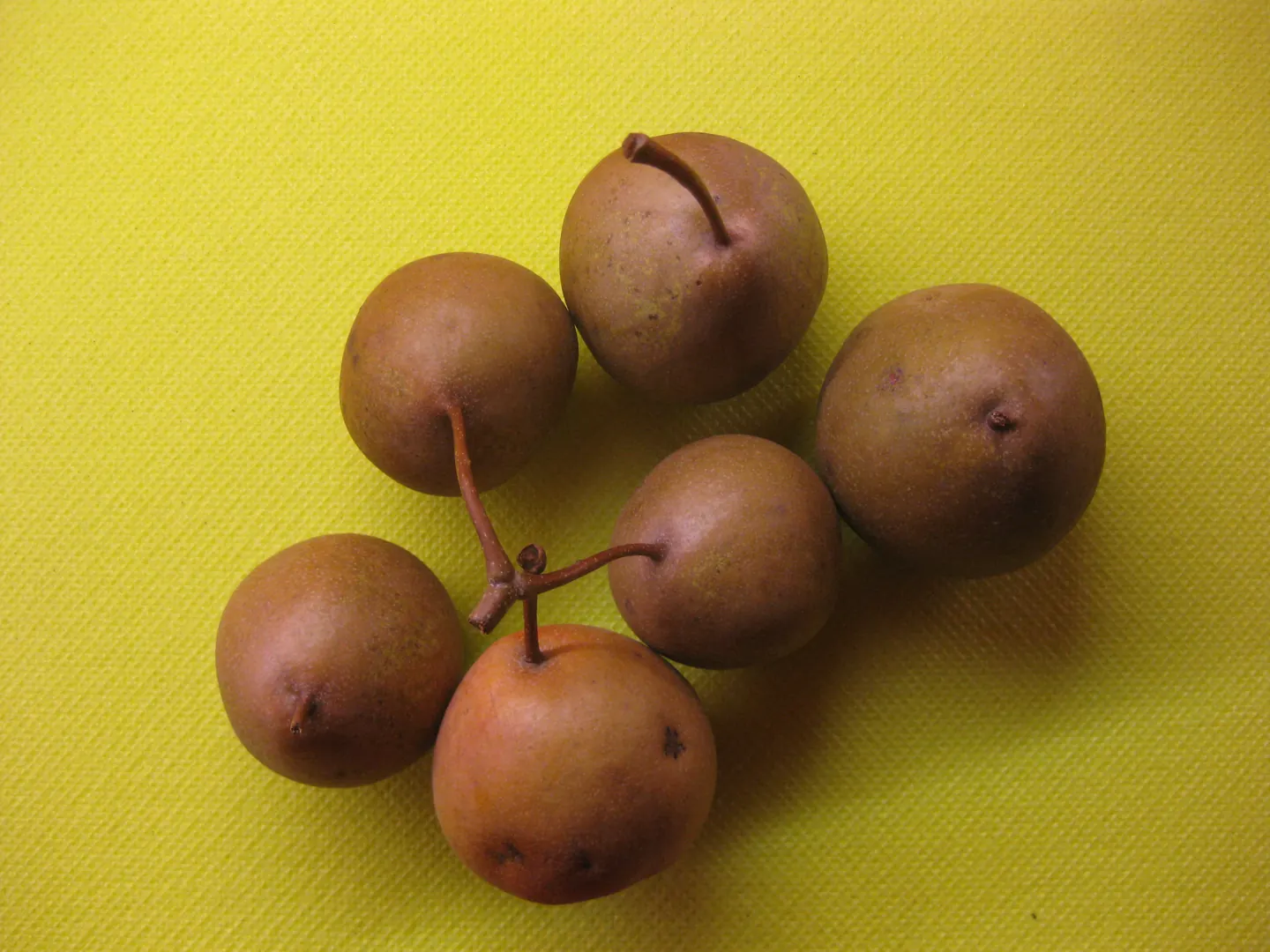
Arco de Baúlhe · kitchen memory collected by the Museum

Pataniscas went along for the snack too

Ana Peneda shared a version from Arco de Baúlhe.

Explore: A snack also has context →View ingredients and preparation →
Read here and view sources

In the account recorded by Conceição Magalhães in 2014, Ana Peneda, who was born and lived in Arco de Baúlhe, describes cod pataniscas with eggs, wheat flour, parsley and onion. The Museum associates this preparation with snacks and also records a detail of vocabulary: the frying pan, sertã, was also called tacho. The memory of a recipe preserves ingredients, occasions and words.

Words in this story: see explanations →
Source and context

Basto Land Museum — Pataniscas also went to lunch, published in 26/08/2014

Accessed: . Editorial summary; the date of consultation is not the date of the facts.
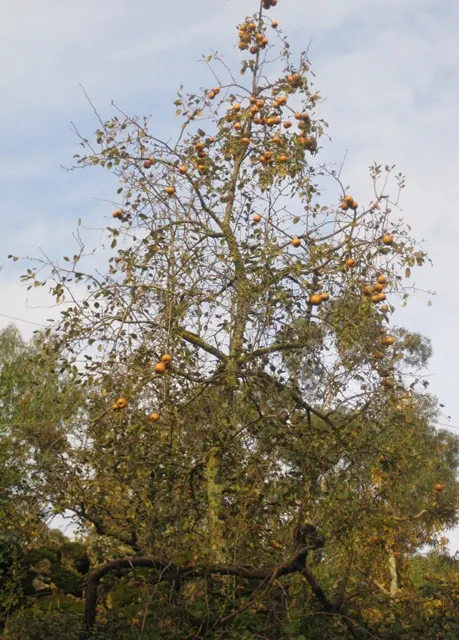
Refojos · kitchen memory collected by the Museum

A recipe learned at celebrations

Papas de sarrabulho in a dish. Illustration of the food, not Maria Helena’s recipe.
Photography: Joseolgon · CC BY-SA 4.0
About this photograph

Date given at source: . Source consulted on 2026-11-15. Orientação EXIF e redimensionamento proporcional WebP; sem recorte.

Request removal or correct the photo credit

See 1 more photo and details
Papas de sarrabulho photographed near Porto. Comparison image, not a meal in Cabeceiras.
Photography: Adriao · CC BY3.0
About this photograph

Date given at source: . Source consulted on 2026-11-15. Orientação EXIF e redimensionamento proporcional WebP; sem recorte.

Request removal or correct the photo credit

Papas de sarrabulho also tell us how knowledge is passed on.

Includes an activity to try →Explore: The word popes holds differences →View ingredients and preparation →
Read here and view sources

Maria Helena da Mota Lopes da Silva Almeida, who had lived in Refojos since childhood, said she learned to make these papas at the beginning of the twenty-first century. Her teacher was a cook from Porto who came to Cabeceiras to work at baptisms and weddings. Celebrations were also places to learn techniques and recipes.

The version recorded in June 2011 combines different meats, maize flour, cooked pork blood, red wine and cumin. The account places its preparation in winter, up to the end of March. The publication, from July of the same year, documents how knowledge was passed on and the usual season for the dish; it does not describe a menu available today.

The account distinguishes shredding the meats from finely chopping the heart, tongue and liver. Flour, wine and cooked blood form a separate mixture. These details show that a recipe also preserves movements and textures.

To collect a kitchen memory, first ask who taught the recipe and on what occasions it was made. Then ask for a gesture that is difficult to explain in writing. Record the speaker’s words and the conversation date: a family recipe gains context when it preserves the voice passing it on.

Source and context

Basto Land Museum — A recipe learned at parties, publication of 06/07/2011
Consultations: ,

Editorial summary; the date of consultation is not the date of the facts.
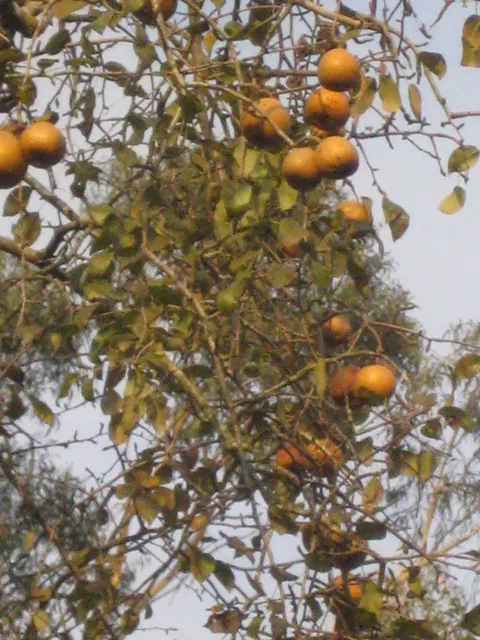
Cavez · tasting in 2013

Cavacas and rosquilhos, made by someone who knows

Sweet transport box L 104
Source: Museu das Terras de Basto
About this photograph

Photograph date not stated. Source consulted on 2026-11-15. EXIF orientation and proportional WebP resizing; no cropping or upscaling.

Individual photographer and reuse licence not stated by the source.

Request removal or correct the photo credit

See 1 more photo and details
Nazaré Oliveira’s sweets from Cavez, documented in May 2012.
Source: Saberes cruzados
About this photograph

Photograph date not stated. Source consulted on 2026-11-15. EXIF orientation and proportional WebP resizing; no cropping or upscaling.

Individual photographer and reuse licence not stated by the source.

Request removal or correct the photo credit

Nazaré Oliveira showed how she made her sweets at a local history gathering.

Includes an activity to try →
Read here and view sources

In May 2013, the Museu das Terras de Basto took participants in the Memórias do Território gathering to discover local heritage and skills. In Arosa, Nazaré Oliveira, a sweet-maker from Cavez, demonstrated how she made her cavacas and rosquilhos, which visitors could taste. The account preserves the name of the person making them and sharing her knowledge. It documents that demonstration; it does not announce a current workshop or shop.

Source and context

Basto Land Museum — Memoirs of the Territory: 3st Local History Meeting, news of 24/05/2013

Accessed: . Editorial summary; the date of consultation is not the date of the facts.
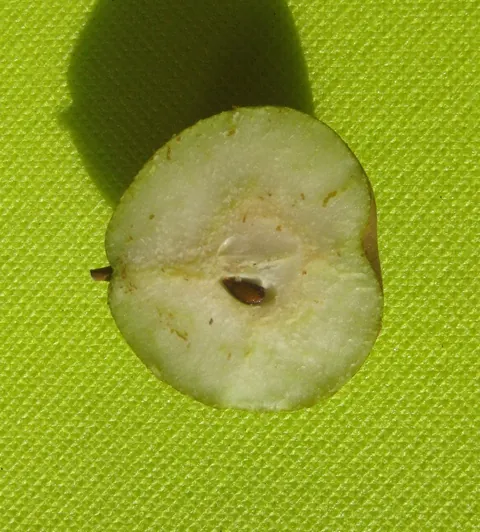
Arosa, Cavez · May meeting 2013

After the dancing, a table of welcome

Hospitality also left its mark on Arosa’s recorded memories.

Read here and view sources

The local history gathering of May 2013 ended at the headquarters of Rancho Folclórico Os Camponeses de Arosa. According to the Museum, both the folk group’s members and the visitors danced. The welcome included homemade broa, cured ham, olives, salted onion and aletria. This episode shows a table connected with sociability beyond recipes: it records a particular occasion without defining a permanent menu.

Source and context

Basto Land Museum — Memoirs of the Territory: 3st Local History Meeting, news of 24/05/2013

Accessed: . Editorial summary; the date of consultation is not the date of the facts.
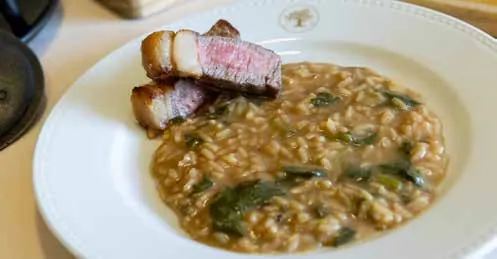
Refojos · family memory published in 2020

Cassianos: small shapes, a long journey

Cassianos from Cabeceiras in the Museum’s December 2020 publication.
Source: Museu das Terras de Basto
About this photograph

Photograph date not stated. Source consulted on 2026-11-15. EXIF orientation and proportional WebP resizing; no cropping or upscaling.

Individual photographer and reuse licence not stated by the source.

Request removal or correct the photo credit

Another sweet from Cabeceiras preserved in Alcina’s memories.

Includes an activity to try →Explore: A recipe crosses places and generations →View ingredients and preparation →
Read here and view sources

Alcina Teixeira shared these small cakes through Mário Teixeira, who lived in Refojos. The Museum’s 2020 publication connects them with recipes she found in a Portuguese magazine during her years in Mozambique.

Cassianos belong to the same collection of memories as the lemon biscuits and honey cake. The source describes their shape as small balls, but does not explain the origin of the name.

The account traces a family journey: Alcina, born in Penafiel, moved to Vila de Manica in Mozambique at fifteen. There she met Alexandre Teixeira from Cavez, who worked on the railways. Alcina ran a maize mill and a shop, and made cakes for family celebrations. The magazine in which she found the recipes connected her with flavours from Cabeceiras before the family moved to the municipality. The story follows the recipe’s transmission; it does not establish who created it.

Source and context

Basto Land Museum — Cassians Cabeceiras, 11/12/2020

Accessed: . Editorial summary; the date of consultation is not the date of the facts.
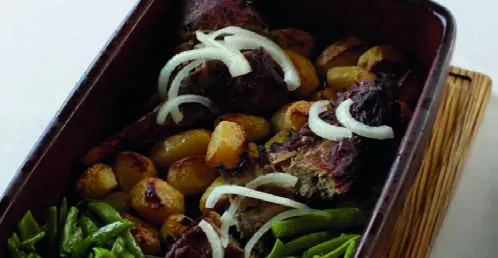
Abadim · agriculture described in 1758

Within one parish, the harvest changed

In 1758, the cold separated two farming landscapes.

Includes an activity to try →
Read here and view sources

In Abadim’s account, José Antunes distinguishes the fields of Aldeia da Torre and Santo António from those of Travassô, Porto d’Olho and Torrinheiras. For the first two places he lists maize, painço and rye, as well as wine, olive oil, chestnuts and oak acorns.

In the three places he describes as colder, he highlights rye and little maize. The document brings climate, terrain and food together: harvests were not the same across the parish. It gives no crop weights and does not allow production per resident to be calculated.

The author also places Torrinheiras on top of the hill and Porto d’Olho and Travassô halfway up the slope. His description helps connect names with positions in the landscape without giving measured elevations. On the hills he mentions heather, carqueja, gorse and some grazing. The agricultural picture therefore includes crops and scrubland: the parish does not appear as one uniform field.

Source and context

Municipality — Parish memories of Abadim, José Antunes, 22/05/1758

Accessed: . Editorial summary; the date of consultation is not the date of the facts.
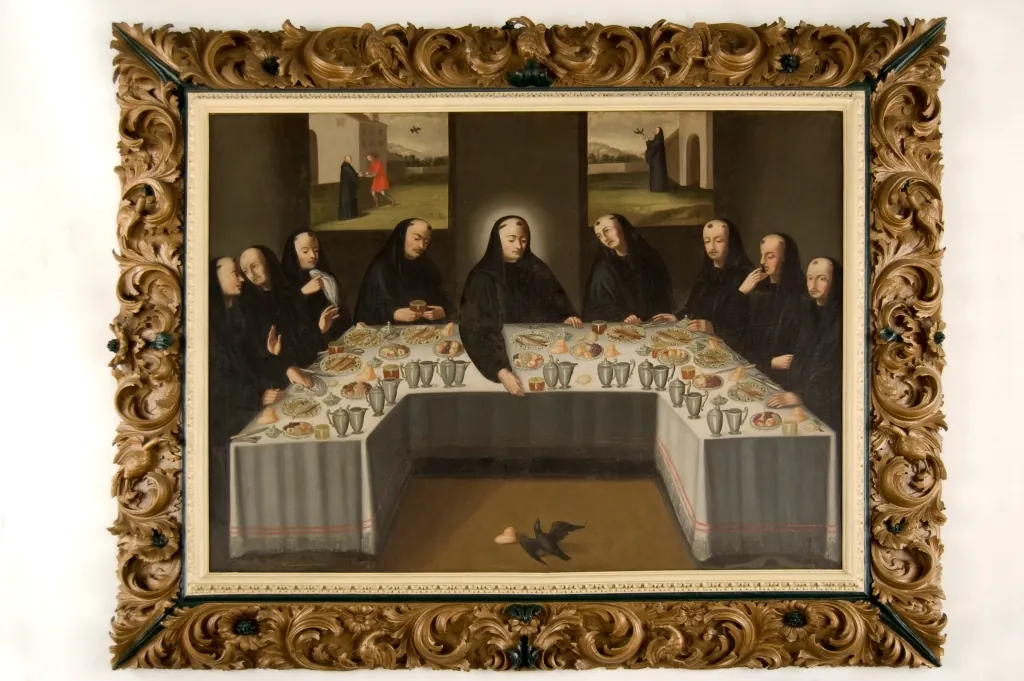
Find where to eat
YOUR LOCAL GUIDE

What would you like to discover?

Take a closer look.