Nature and landscape
Praia Fluvial de Gondiães
A break beside the Gondiães stream, in a leisure area described by the local parish council.
Gondiães e Vilar de Cunhas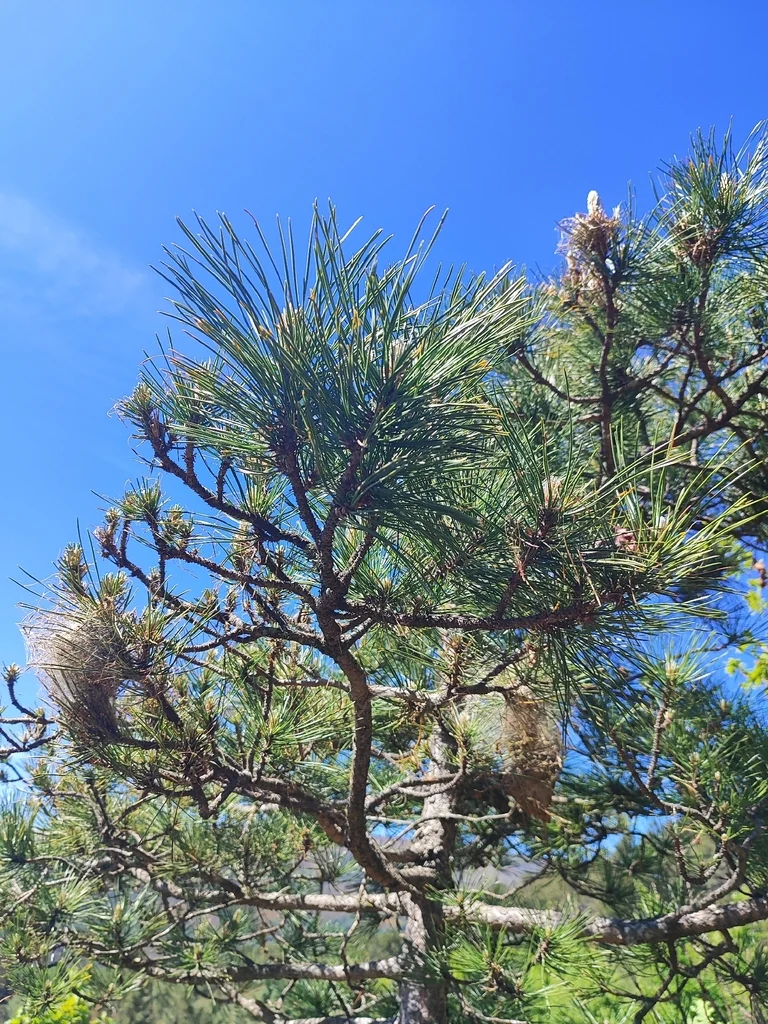
Palms and canopy of a pine (Pinus) photographed in Gondiães e Vilar de Cunhas in 22 April 2026. Register of georeferenced flora; it is not a panoramic of the villages.
ⓘPopes of Saint Sebastian, knowledge of wool and mountain villages: discover Gondiães e Vilar de Cunhas.
Administrative name: Union of parishes of Gondiães e Vilar de Cunhas
A selection of what is documented in the guide. Confirm visiting conditions in the charts.
Slide to see more places →
A break beside the Gondiães stream, in a leisure area described by the local parish council.
Gondiães e Vilar de CunhasThe church referred to in the religious heritage of Gondiães.
Gondiães e Vilar de CunhasOne of the villages of the historical territory of Vilar de Cunhas.
Gondiães e Vilar de CunhasFour names to get to know the northeast serrano of the municipality.
Gondiães and Saman are associated with the Feast of the Popes of St Sebastian.
The transcripts of the Memories of 1758 present Gondiães with matrix of São Martinho and Vilar with matrix of São Lourenço.
Knowledge, landscapes and memories linked to this parish.
Choose from 19 activities here →
4 guides with stories from here → · To follow a story by chapters.
White corn and ribs in a party kitchen.
A line on a table holds an observation of 1994.
Not all photosynthesis is on the leaves.
For a freckle, an open space is not enough.
A fetus can be a detail; many together form a fetal.
The shores also have bushes to know.
Falling in the fall is not the only fate of a leaf.
Houses, slopes and water make up the landscape of the village.
Vila Nune and Gondiães show another part of the geological map.
In Gondiães, water storage and driving was part of the collective work.
Studying the heritage is also taking care of the place.
Underneath it was cooked; above it all waited for the table.
Tradition also incorporates new ways of working.
Small pieces are part of the memory of crafts.
Before the table, there's a history of fields and animals.
At the Feast of Popes, serving is also a ritual.
The fire of Uz witnesses ancient forms of defensive hunting.
At Uz, the materials also tell the story of the mountains.
Names also keep changes in the territory.
In Chouzas, the housing heritage meets that of the harvest.
A short note can also open a window to the story.
In Cunhas, the built heritage finds the oral tradition.
The name of a bridge doesn't tell you everything about its construction.
Observations of citizen science with location published in this parish, crossed with the limits CAOP2025. They are not visiting points or independent confirmation in the field.
Even a tree starts small
See observation Plants · 06/08/2026Ferns tracing the hillside
See observation Plants · 15/07/2025Look at the stems
See observation Plants · 15/07/2025Lobed leaves close to the ground
See observation Plants · 15/07/2025Veins in plain sight
See observationWe don't have any revised events here yet. Go back to the schedule to find out the schedule available.
Popes of São Sebastião, knowledge of wool and mountain villages: discover Gondiães e Vilar de Cunhas. The Feast of Popes of Gondian and Samão is a memory of community sharing. In Vilar, Cunhas and Uz, the granaries and the mountain landscape tell other stories; the Fojo of Uz recalls old practices of wolf capture.
Four names to get to know the northeast serrano of the municipality. Gondiães connects to the Beça River Basin; Vilar, Cunhas and Uz belong to the historical territory of Vilar de Cunhas. Agriculture, forest and pastoral care bring the inhabited nuclei closer to mountain and plateau land.
Gondiães and Saman are associated with the Feast of the Popes of St Sebastian. Food preparation and sharing, including bread and bacon, occupy a central place in the municipal description. It is a Community tradition with its own calendar references; this history does not automatically announce the realization of an edition. Wool socks and lace also belong to the knowledge mentioned in these locations.
The transcripts of the Memories of 1758 present Gondiães with matrix of São Martinho and Vilar with matrix of São Lourenço. The separate reading of the two sources retains identities that the current administrative union does not erase. The Casa de Chouzas and its granaries are other references of rural and manorial architecture. Historical designations of documents must be read in their own time.
The municipal description places the tradition to 20 of January, alternating Gondiães in the even years and Samão in the odd ones. Preparation involves bread, meat, popes, and wine, with blessing and community distribution. A record of the Basto Land Museum of 2012 describes changes in food and meal organization. Tradition has history and transformations; the promise linked to a plague is a narrative of origin, with no medieval date proven in this research.
For Vilar de Cunhas, the municipality highlights the Casa de Chouzas and three granaries, proposing for the set a nineteenth-century chronology. Wool socks appear in the characterization of Gondiães and Vilar de Cunhas, while laces are also mentioned in this latter territory. These references link architecture, crop conservation and textile work. The churches of St Martin and St Lawrence recall the two old parishes gathered in the present union.
Gondiães · Samão · Vilar · Cunhas · Uz
This list preserves the places referred to in the selected documentation, without constituting a complete census.
Getting to know the history of the municipality
Main source consulted in 04/11/2026.
Publication at that source: Unidentified. Registered documentary verification: 2026-11-04.
Method recorded in that review: Documental review in 04/11/2026 of the municipal pages, historical transcripts and references indicated. Unglued manuscripts. Archivistic descriptions, studies of oral tradition and dated observations are identified. Visually revised photographs from the Commons archive consulted in 03/11/2026; camera position does not equal object survey. Photo revised in 04/11/2026: position of capture/cross observation with CAOP2025; subject, author, date and individual license identified. No face-to-face confirmation.
Editorial review: 2026-11-06. The editorial review is neither a visit to the site nor a real-time update. Additional times and sources may have their own consultation dates, indicated in the form.
Did you find any different information? Suggest correction