Leaves, feathers, shells, insects, fungi and encounters beside the water. Photographs and observations shared by people who took a closer look at Cabeceiras.
Search covers species names and general descriptions. The habitats described are not visiting locations.
Sorting by date uses the observation date, not the date the photograph was added to the site.
28 observations · All · The whole municipality
Skip to register · 28
Photography: João Lima
Plants · Cabeceiras de Basto
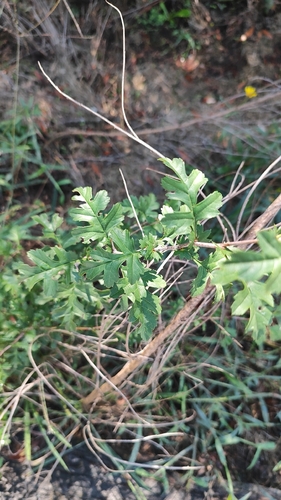
Common hawthorn
Crataegus monogyna
Leaves worth a second look
Notice the lobed edges of the leaves and their arrangement along the branch. The photograph lets you start comparing shapes, without treating one detail as a field identification.
Get to know the species
What it looks like
A deciduous shrub or small tree with thorny branches and lobed leaves.
Habitats
Woodland edges, hedges and vegetation beside watercourses, often in damp places.
A closer look
Its fruit is a pome: botanists use this category for fruits with a particular structure, beyond their shape or colour.
General information about the species; it does not describe the exact conditions of the local observation.
Community identification with degree of research in consultation with . Published point crossed with municipality limits; without independent confirmation in field.
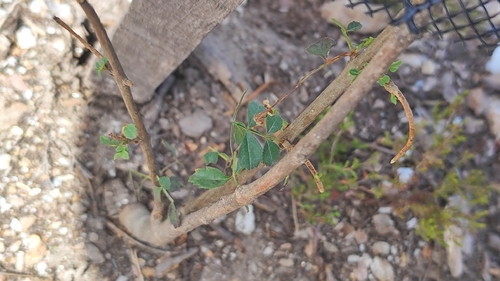
Photo 737780276: João Lima · CC-BY. Image displayed without editing; screen size adjustment.
Community identification with degree of research in consultation with . Published point crossed with municipality limits; without independent confirmation in field.
Photo 714571116: João Lima · CC-BY. Image displayed without editing; screen size adjustment.
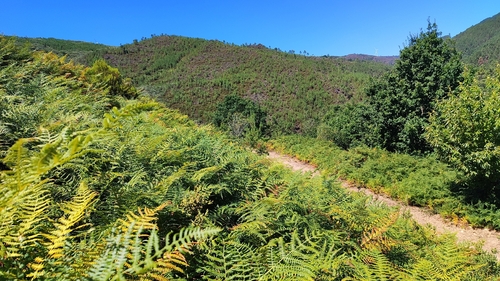
Here the photograph takes a wider view, showing ferns in the landscape. Compare it with the close-up of Asplenium onopteris to discover different shapes in the world of ferns.
Get to know the species
Habitats
The undergrowth of pine and oak woods, gullies and the banks of watercourses, preferably on acidic soils.
In the landscape
It can colonise burnt areas and abandoned pastures, forming patches dominated by bracken.
About the source
The botanical profile consulted describes the subspecies aquilinum. The local record retains identification at species level, without assigning a subspecies.
General information about the species; it does not describe the exact conditions of the local observation.
Community identification with degree of research in consultation with . Published point crossed with municipality limits; without independent confirmation in field.
Photo 714570445: João Lima · CC-BY. Image displayed without editing; screen size adjustment.
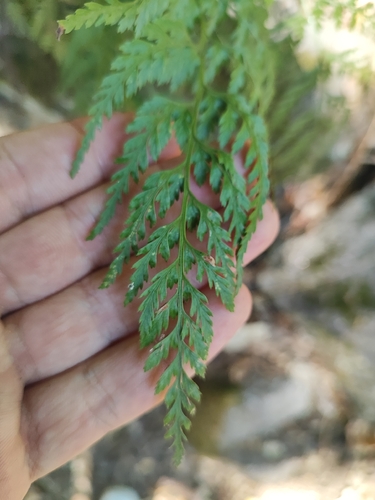
A close-up reveals the finely divided frond. In the source, the community identification is Asplenium onopteris.
Get to know the species
What it looks like
A fern with evergreen, glossy dark-green fronds, finely divided and broadly triangular in shape.
Habitats
Woods, scrub, rock crevices and walls, especially in damp, shady places.
A closer look
On the underside of the fronds are sori, structures involved in producing spores. Ferns reproduce without flowers.
A sense of scale
The fronds can measure 10 to 50 centimetres. The stalk supporting the divided blade is very dark and can be as long as the blade itself, or longer.
Beyond the municipality
The species occurs in the Mediterranean region, parts of western and central Europe, and Macaronesia except Cape Verde. In Portugal, it also occurs in the Azores and Madeira.
General information about the species; it does not describe the exact conditions of the local observation.
Community identification with degree of research in consultation with . Published point crossed with municipality limits; without independent confirmation in field.
Photo 711382963: João Lima · CC-BY. Image displayed without editing; screen size adjustment.
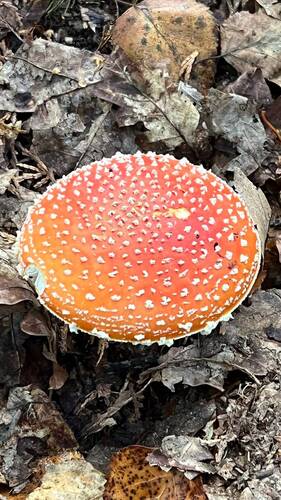
Red and pale patches make this photograph striking. The species name accompanies the record, but the image cannot be used to assess whether a mushroom is safe to eat.
Get to know the species
What it looks like
The cap changes from rounded to more open. It can be bright red, becoming orange, with whitish remnants on its surface.
Habitats
Woodland near broadleaved trees or conifers. The guide describes mycorrhizal associations with trees.
Discover with care
The guide classifies this species as poisonous. Colour and photographs are not enough to identify a specimen or assess whether it is safe to eat.
Under the cap
Naturalis describes white gills and a white to yellowish ring on the stem. The cap can reach 8 to 20 centimetres in diameter. These details add to the description but do not make identification for consumption safe.
General information about the species; it does not describe the exact conditions of the local observation.
Community identification with degree of research in consultation with . Published point crossed with municipality limits; without independent confirmation in field.
Photo 755666065: nsza · CC-BY-NC. Image displayed without editing; screen size adjustment. License limited to non-commercial uses.
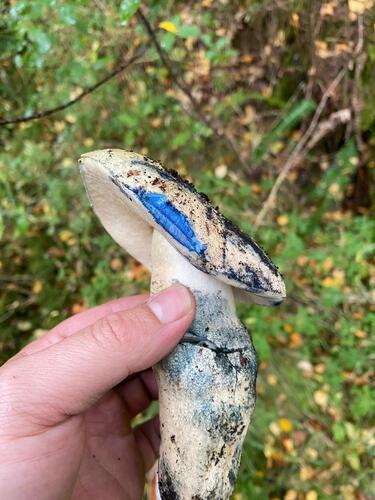
The observer’s image shows an intense blue area in a cut specimen. This is a detail of the original record: do not cut or taste mushrooms to try to reproduce an identification.
Get to know the species
What it looks like
A pale cap with a matt surface. The description notes pores that turn blue when damaged and flesh that changes to blue-green.
Habitats
Deciduous woodland on poor, acidic, sandy soils; the source describes fruiting from summer to autumn.
A closer look
It forms mycorrhizal associations with trees. The colour change is a described characteristic, not proof of identification or food safety.
The pattern of pores
Naturalis describes whitish to pale-yellow tubes and pores beneath a cap about 6 to 12 centimetres across. Unlike gills, pores form small openings: an interesting difference to observe without damaging the specimen.
General information about the species; it does not describe the exact conditions of the local observation.
Community identification with degree of research in consultation with . Published point crossed with municipality limits; without independent confirmation in field.
Photo 573711549: André Ferreira · CC-BY-NC. Image displayed without editing; screen size adjustment. License limited to non-commercial uses.
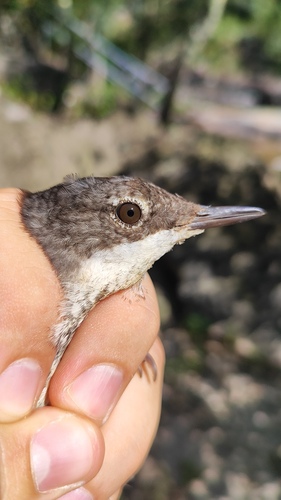
This record shows a bird held in a hand. The close view reveals its bill and plumage; it is not an invitation to capture or handle wild animals.
Get to know the species
What it looks like
A small, compact bird with a short tail. In adults, the white breast contrasts with the mainly brown plumage.
Habitats
Fast-flowing watercourses, particularly in mountainous areas. In Portugal it is a resident species, mostly associated with the highlands of the north and centre.
A closer look
It can dive. Its close relationship with water sets it apart from the small birds usually seen on branches.
General information about the species; it does not describe the exact conditions of the local observation.
Community identification with degree of research in consultation with . Published point crossed with municipality limits; without independent confirmation in field.
Photo 457514606: João Lima · CC-BY-NC. Image displayed without editing; screen size adjustment. License limited to non-commercial uses.
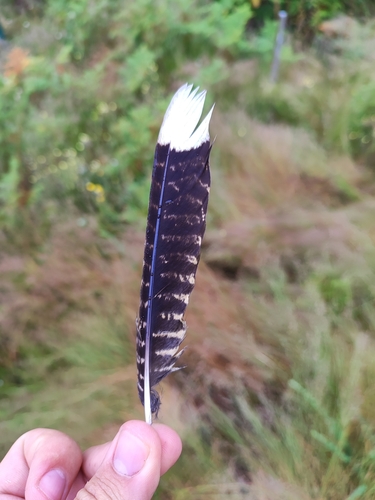
The photograph shows a feather attributed on the platform to Caprimulgus europaeus. It records a trace, not a whole bird or confirmation of a nest.
Get to know the species
What it looks like
A bird with mainly grey plumage, long wings and a long tail. In Portuguese, it is also known as noitibó-cinzento.
Habits
It feeds on insects and is active at dusk and at night. In Portugal it is a summer visitor, mostly in the northern half, in areas between woodland and open ground.
A closer look
Its continuous song can sound like an insect. Listening to the landscape is another way to discover birds, even when they are hard to see.
Differences in plumage
Males have white patches on their wings, absent in females and juveniles. This describes the species; the feather in the photograph alone cannot establish the bird’s sex or age.
Through the year
Aves de Portugal identifies May and June as favourable months for observation and notes that the song is rarely heard before late April. This is a national reference, not a prediction of encounters in Cabeceiras.
General information about the species; it does not describe the exact conditions of the local observation.
Community identification with degree of research in consultation with . Published point crossed with municipality limits; without independent confirmation in field.
Photo 398984237: João Lima · CC-BY-NC. Image displayed without editing; screen size adjustment. License limited to non-commercial uses.
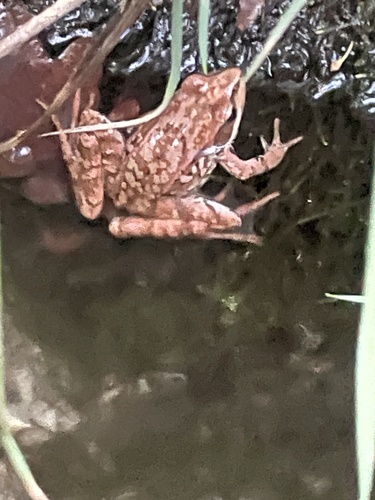
The photograph shows a brown body, markings and nearby water. The record is a starting point for discovering amphibians documented in the municipality.
Get to know the species
What it looks like
A slender frog with a pointed snout, reaching about 5.5 centimetres. Its back is often brown or reddish.
Habitats
It prefers mountain streams with clean water, rocky beds and vegetation along the banks; it can also occur in other damp habitats.
A closer look
It is endemic to the Iberian Peninsula: its natural range is limited to this territory. Breeding takes place in water.
Look at the head
A dark stripe crosses the eye area; below it, a paler line runs towards the mouth. The pupil is horizontal. These details complement the body shape, but identification requires considering all the features together.
Caring for its habitat
The University of Évora highlights damage to riverbanks, water pollution and changes to watercourses among the threats. Preserving riverside vegetation helps protect the habitat this frog depends on.
General information about the species; it does not describe the exact conditions of the local observation.
Community identification with degree of research in consultation with . Published point crossed with municipality limits; without independent confirmation in field.
Photo 674557408: Fedra Santos · CC-BY-NC. Image displayed without editing; screen size adjustment. License limited to non-commercial uses.
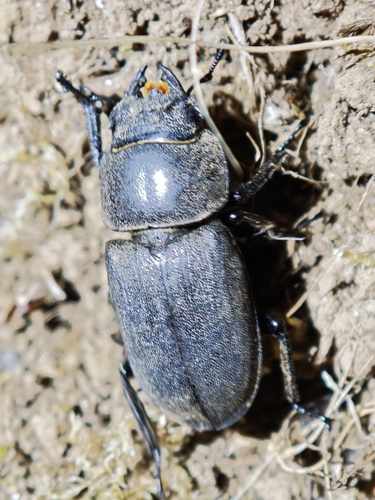
The dark body and jaws stand out in this photograph of Dorcus parallelipipedus. Look at the surface texture: a closer view reveals details that disappear at a distance.
Get to know the species
Small but sturdy
This beetle can reach about three centimetres and has a broad head with prominent jaws.
Wood that supports life
The larvae live and feed in decaying wood. An old trunk can continue to support other forms of life.
Habitats
The profile describes adults in woods, parks and hedges. This is a British reference: the exact habitat of the Cabeceiras record has not been checked in the field.
General information about the species; it does not describe the exact conditions of the local observation.
Community identification with degree of research in consultation with . Published point crossed with municipality limits; without independent confirmation in field.
Photo 702430456: Jakob Fahr · CC-BY-NC. Image displayed without editing; screen size adjustment. License limited to non-commercial uses.
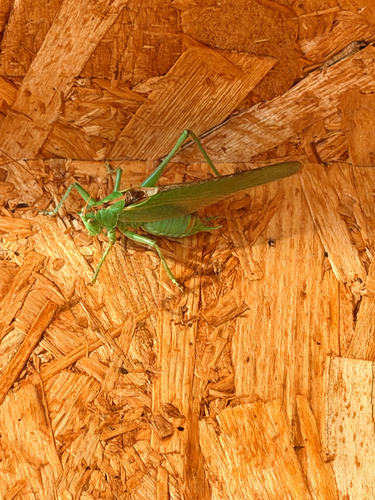
Very long antennae and a green body catch the eye in this record of Tettigonia viridissima. The insect was photographed on wood; the image alone does not represent its natural habitat.
Get to know the species
Listen first
The song of adult males can reveal the insect’s presence before we spot it in the vegetation.
Habitats
It occurs in areas with shrubs and trees, including vegetable gardens, waste ground and urban green spaces.
Growing wings
The nymphs resemble the adults, but their wings are still poorly developed.
General information about the species; it does not describe the exact conditions of the local observation.
Community identification with degree of research in consultation with . Published point crossed with municipality limits; without independent confirmation in field.
Photo 708368414: Joao Teixeira · CC-BY-NC. Image displayed without editing; screen size adjustment. License limited to non-commercial uses.
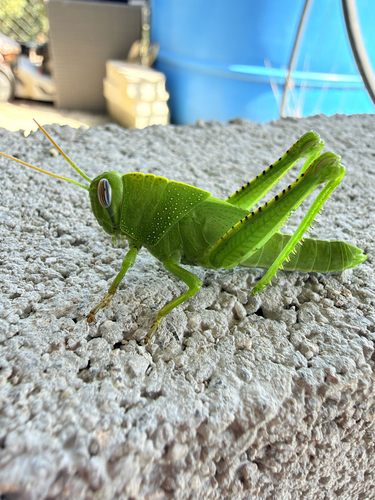
In this photograph attributed to Anacridium aegyptium, notice the stripes on the eyes and the folded hind legs. These are visual clues to observe, not enough to identify every similar insect.
Get to know the species
A wide range
The species occurs in parts of Europe, North Africa and the Middle East.
Habitats
In mainland Portugal it occurs in varied habitats, including orchards, gardens, scrub and open woodland.
Getting through winter
Adults can survive the winter. The Gulbenkian Garden describes them basking on trees and shrubs on bright days; this is an example from Lisbon, not an observation calendar for Cabeceiras.
General information about the species; it does not describe the exact conditions of the local observation.
Community identification with degree of research in consultation with . Published point crossed with municipality limits; without independent confirmation in field.
Photo 730825609: Joao Teixeira · CC-BY-NC. Image displayed without editing; screen size adjustment. License limited to non-commercial uses.
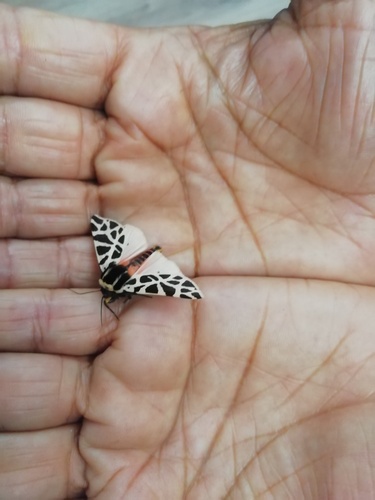
Dark markings on pale wings stand out in this photograph of Cymbalophora pudica. The specimen is on a hand: that is the context of the original record, not a suggestion to catch or handle moths or butterflies.
Get to know the species
Wings spread
The species profile gives a wingspan of 35 to 43 millimetres.
Flight season
The stated flight period runs from August to October. This general reference does not guarantee local encounters in each month.
Connections with plants
Taraxacum and Plantago are the plant genera associated with the species in the Naturdata profile. A small herbaceous plant can also be part of a moth’s story.
A range close to home
Naturdata places its range in the Iberian Peninsula, the Balearic Islands and North Africa. The Cabeceiras record is a documented encounter within this wider area, not a measure of local abundance.
General information about the species; it does not describe the exact conditions of the local observation.
Community identification with degree of research in consultation with . Published point crossed with municipality limits; without independent confirmation in field.
Photo 747863243: magasophie · CC-BY-NC. Image displayed without editing; screen size adjustment. License limited to non-commercial uses.
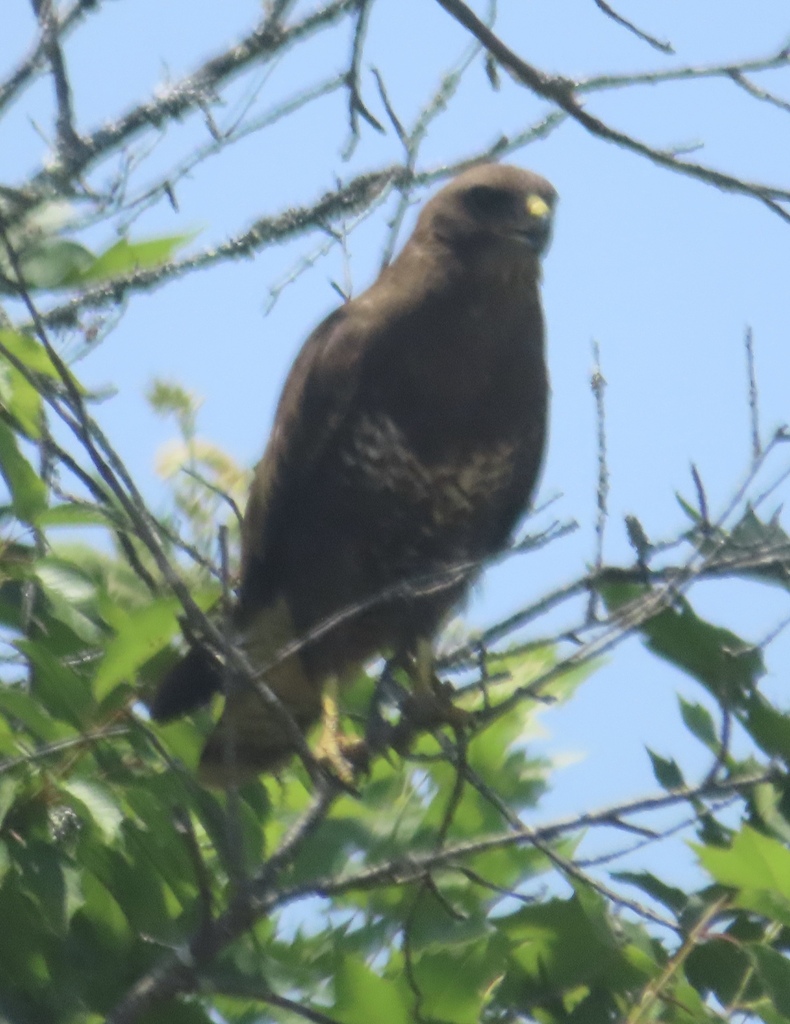
The photograph shows the perched bird, with breast and wings visible among leaves and branches. It does not document a prey capture or establish the bird’s age or sex.
Get to know the species
Variable plumage
The proportion of pale and brown feathers can vary greatly between individuals.
Throughout the year
The University of Évora describes the species as resident in mainland Portugal, joined by wintering birds from northern Europe.
Two names
The Portuguese names bútio-comum and águia-d’asa-redonda both refer to Buteo buteo.
General biology; it does not describe behaviour observed in this photograph.
Community identification with degree of research in consultation with . Published point crossed with municipality limits; without independent confirmation in field.
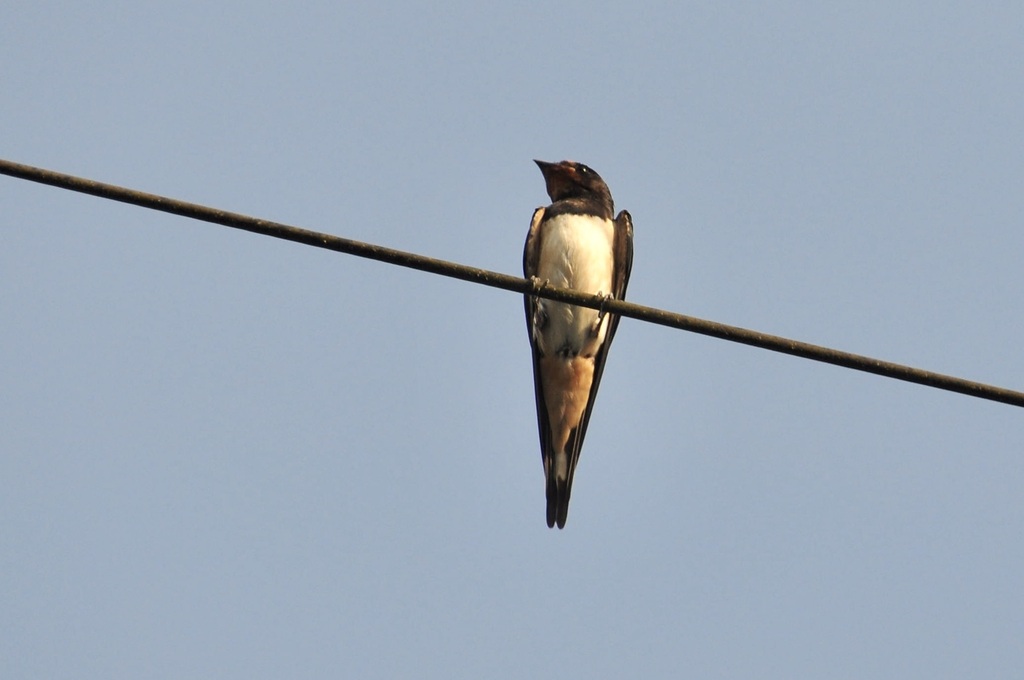
A barn swallow perched on a wire, with a pale belly and wings folded against its body. The image documents this encounter, not a permanent presence or a nesting site.
Get to know the species
Building
Its cup-shaped nest is made of mud, on structures such as buildings and bridges.
Feeding
It catches small insects in flight.
Compare
Juveniles have shorter outer tail feathers than adults.
General biology, separate from what can be seen in the photograph.
Community identification with degree of research in consultation with . Published point crossed with municipality limits; without independent confirmation in field.
Photo 554206544: birdlovers · CC-BY-NC. Image displayed without editing; screen size adjustment. License limited to non-commercial uses.
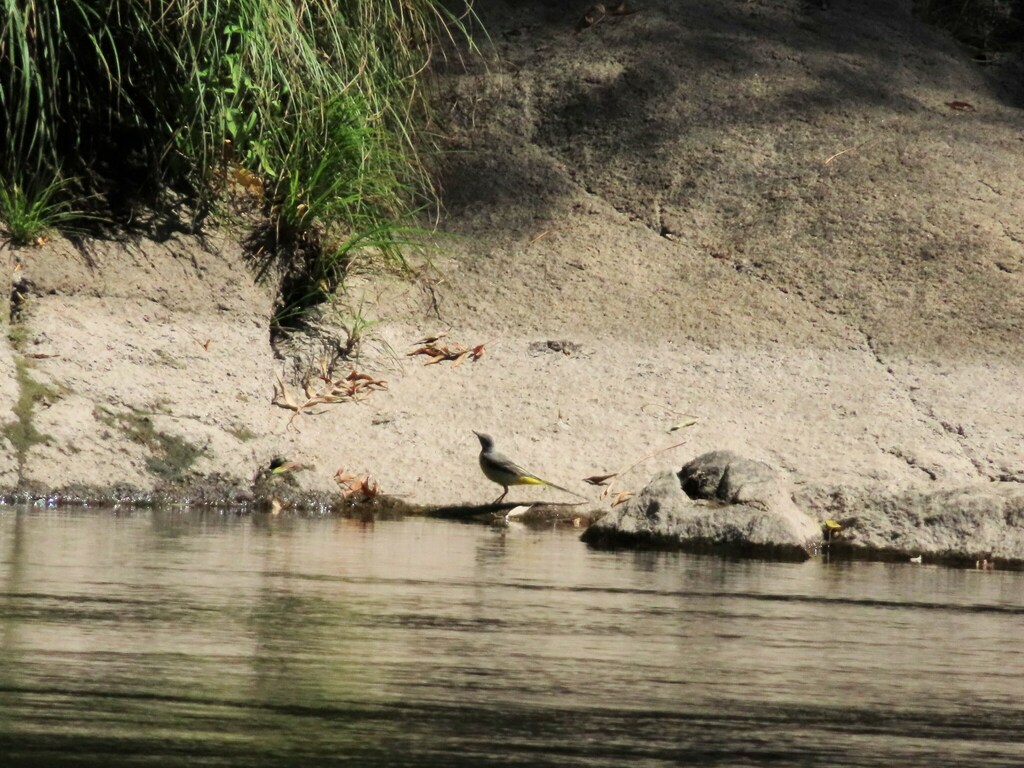
A grey wagtail perched on a rocky bank beside water, with a long tail and yellow underparts. The image documents this encounter, not a permanent presence or a nesting site.
Get to know the species
Habitat
The BTO associates the species with fast-flowing streams, but also with slower waters and the edges of lakes and ponds.
Food
It searches for aquatic insects.
In the photograph
The record shows the bird perched beside water, without documenting it catching food.
General biology, separate from what can be seen in the photograph.
Community identification with degree of research in consultation with . Published point crossed with municipality limits; without independent confirmation in field.
Photo 451918177: David Matos · CC-BY-NC. Image displayed without editing; screen size adjustment. License limited to non-commercial uses.
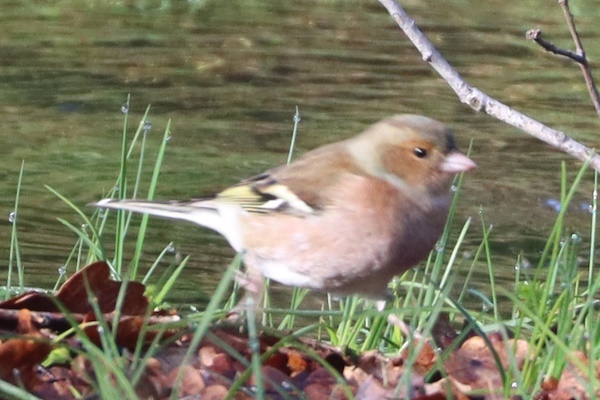
A common chaffinch among grass and fallen leaves, with a pinkish breast and pale wing markings. The image documents this encounter, not a permanent presence or a nesting site.
Get to know the species
Wings
Both males and females have contrasting pale markings on their wings.
Plumage
Males have brighter colours; females have more subdued brown and grey tones.
Seasons
Portugal’s resident population is joined by wintering birds in autumn.
General biology, separate from what can be seen in the photograph.
Community identification with degree of research in consultation with . Published point crossed with municipality limits; without independent confirmation in field.
Photo 361094965: naturpel · CC-BY-NC. Image displayed without editing; screen size adjustment. License limited to non-commercial uses.
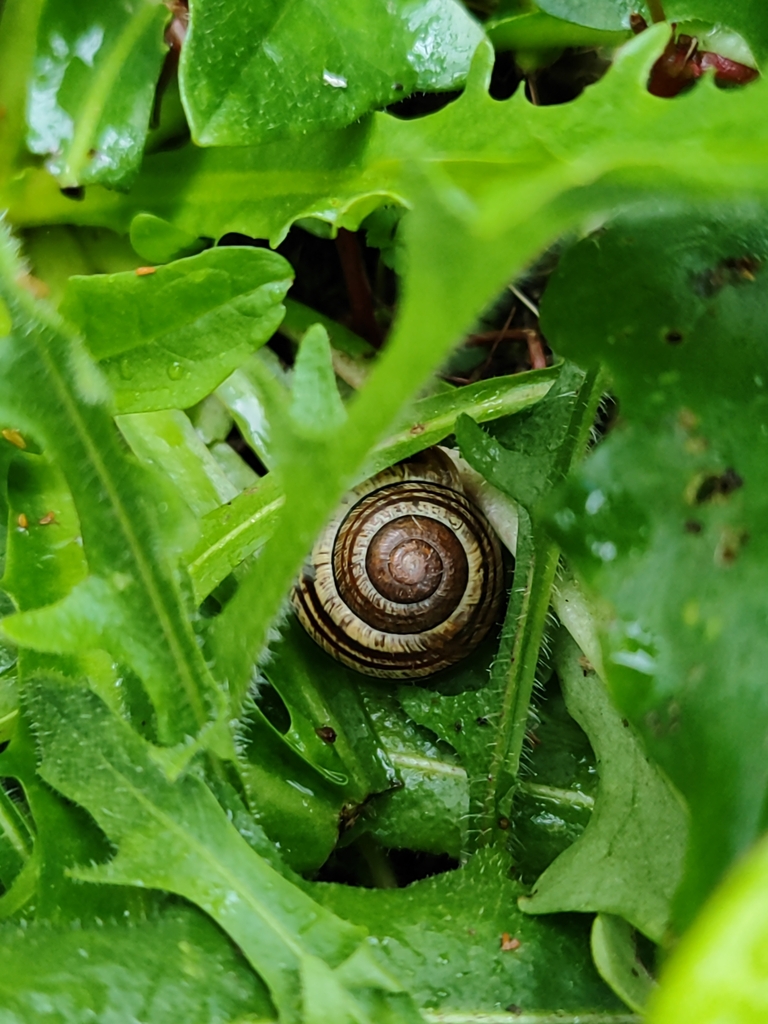
In the photograph, dark bands follow the shell’s spiral among green leaves. The encounter was recorded in Cavez; the image lets you compare patterns without moving the animal.
Get to know the species
Shell
The shell may have dark bands or no bands at all. Colour and pattern vary between individuals.
A detail to notice
The lip of the shell opening is usually brown, but there are exceptions. A single feature does not settle every identification.
General characteristics of the species, not measurements of the local specimen.
Community identification with degree of research in consultation with . Published point crossed with municipality limits; without independent confirmation in field.
Photo 381726699: João Lima · CC-BY-NC. Image displayed without editing; screen size adjustment. License limited to non-commercial uses.
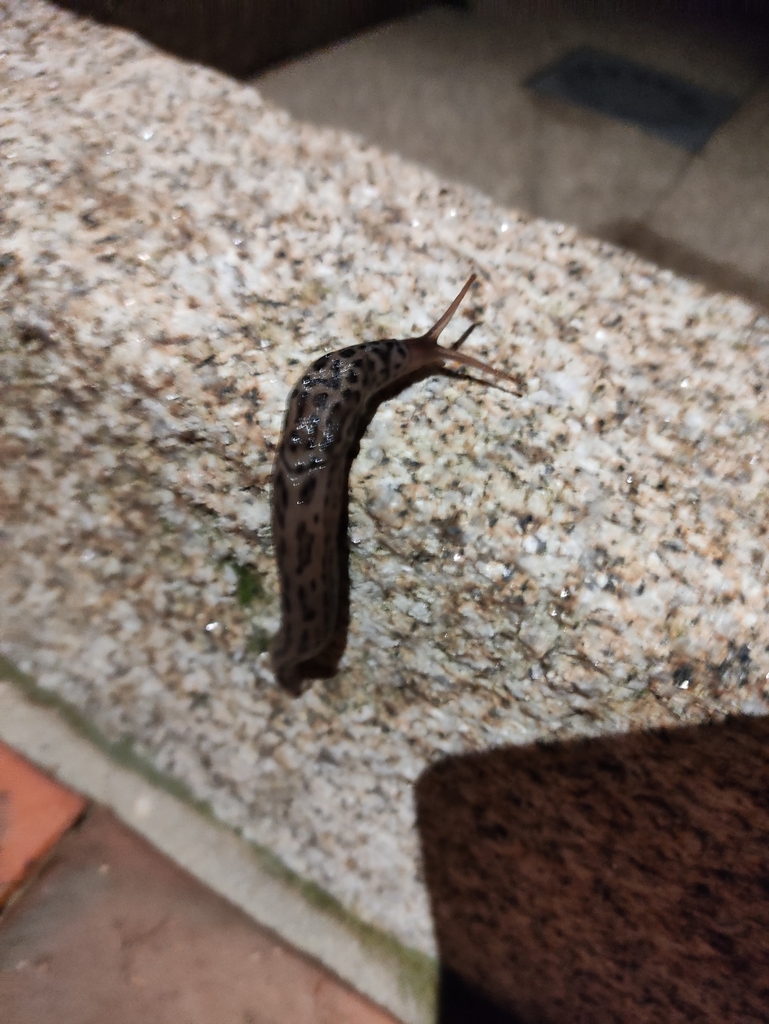
A long-bodied slug with dark spots was photographed on stone. The published point lies in Arco de Baúlhe e Vila Nune. Notice the pattern and the visible tentacles.
Get to know the species
When it moves
The Royal Horticultural Society describes this species as nocturnal.
Compare
The guide includes the leopard slug to help distinguish it from other large, patterned slugs. Recording several details is better than relying on size alone.
General information and visual comparison; it does not specify a time for local observation.
Community identification with degree of research in consultation with . Published point crossed with municipality limits; without independent confirmation in field.
Photo 158019174: Mauro · CC-BY-NC. Image displayed without editing; screen size adjustment. License limited to non-commercial uses.
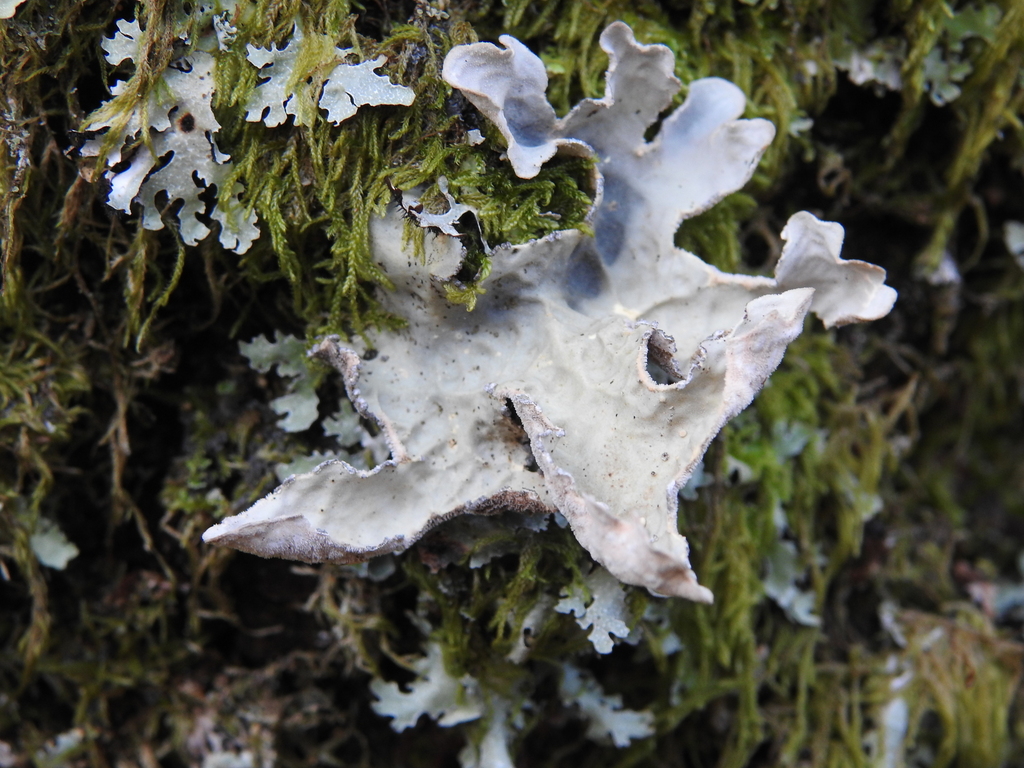
Community identification with degree of research in consultation with . Published point crossed with municipality limits; without independent confirmation in field.
Photo 467221501: Pedro Andrade · CC-BY-NC. Image displayed without editing; screen size adjustment. License limited to non-commercial uses.
A leaf-like lichen appears among mosses. Notice its outline and surface depressions, without confusing the lichen association with the plants around it.
Get to know the species
Shape
A leaf-like thallus with broad lobes and an undulating surface.
Partner
The species description identifies a cyanobacterium of the genus Nostoc as its photosynthetic partner.
General characteristics of the species; the photograph does not show every identifying feature.
Community identification with degree of research in consultation with . Published point crossed with municipality limits; without independent confirmation in field.
Photo 467221320: Pedro Andrade · CC-BY-NC. Image displayed without editing; screen size adjustment. License limited to non-commercial uses.
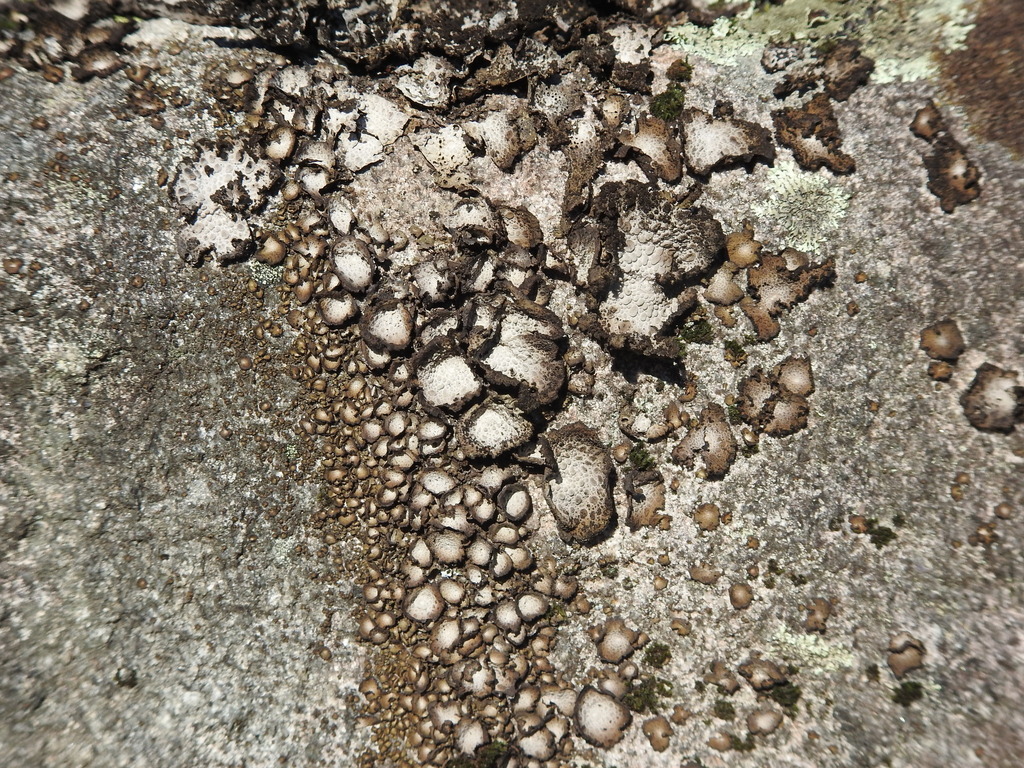
Small bumps stand out on a rock-dwelling lichen. The photograph records textures and outlines; there is no need to detach the thallus to observe its surface.
Get to know the species
Support
A rock-dwelling species: it grows on rocks.
Link
The thallus is umbilicate, attached to its surface at a central point, with bumps on its upper side.
General characteristics of the species; the photograph does not show every identifying feature.
Community identification with degree of research in consultation with . Published point crossed with municipality limits; without independent confirmation in field.
Photo 467218777: Pedro Andrade · CC-BY-NC. Image displayed without editing; screen size adjustment. License limited to non-commercial uses.
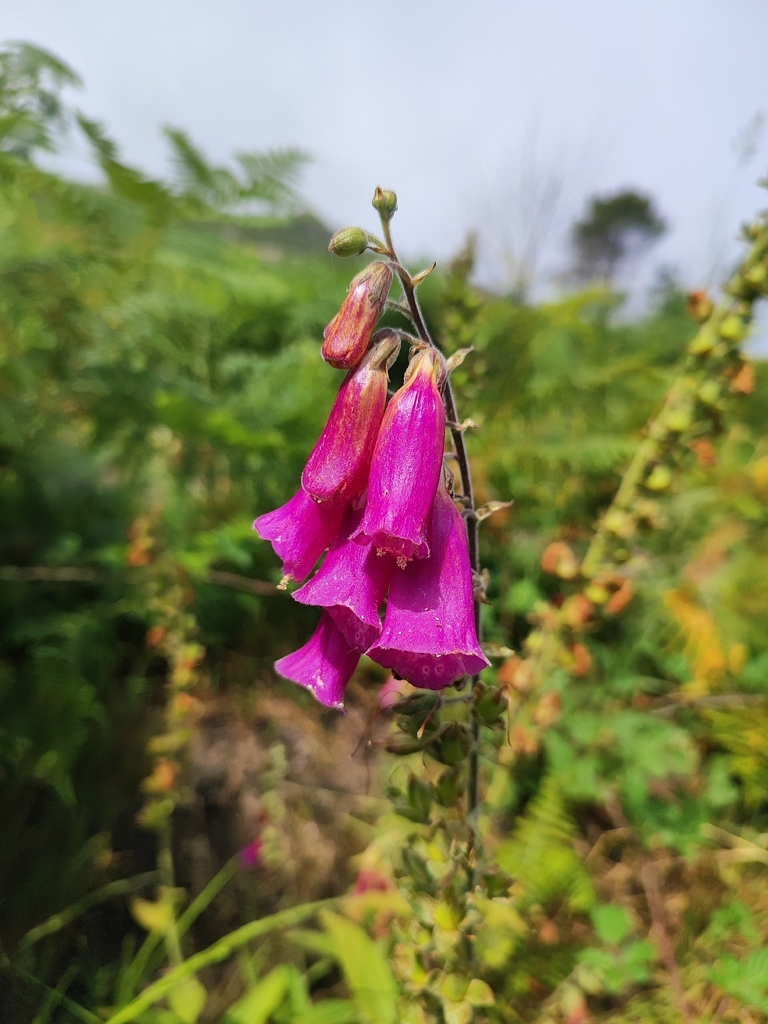
Drooping pink flowers with spots inside, on a foxglove stem. Compare this record with the reading about the species to explore shapes, habitats and changes through the year.
Get to know the species
Habitat
The subspecies purpurea is described on the edges and in clearings of woods and scrub, in cool, shady places.
Observation
The local record identifies the species without confirming a subspecies. The plant is toxic if swallowed.
General characteristics of the species; the photograph does not show every stage of the plant’s life cycle.
Community identification with degree of research in consultation with . Published point crossed with municipality limits; without independent confirmation in field.
Photo 679542314: João Lima · CC-BY. Image displayed without editing; screen size adjustment.
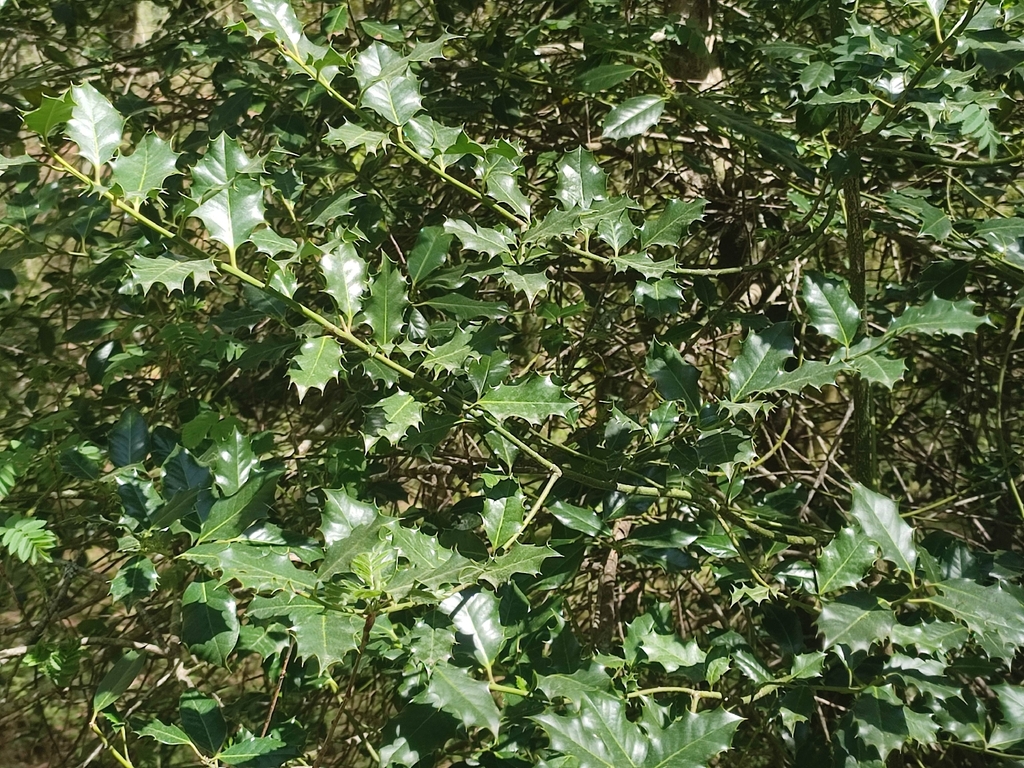
Holly branches with glossy green leaves and spiny edges. Compare this record with the reading about the species to explore shapes, habitats and changes through the year.
Get to know the species
Leaves
Evergreen leaves with spiny edges, which can be smooth on older branches or plants.
Flowers and fruits
There are male and female plants. Red fruits appear on female plants and are toxic.
General characteristics of the species; the photograph does not show every stage of the plant’s life cycle.
Community identification with degree of research in consultation with . Published point crossed with municipality limits; without independent confirmation in field.
Photo 632579366: DVG · CC-BY-NC. Image displayed without editing; screen size adjustment. License limited to non-commercial uses.
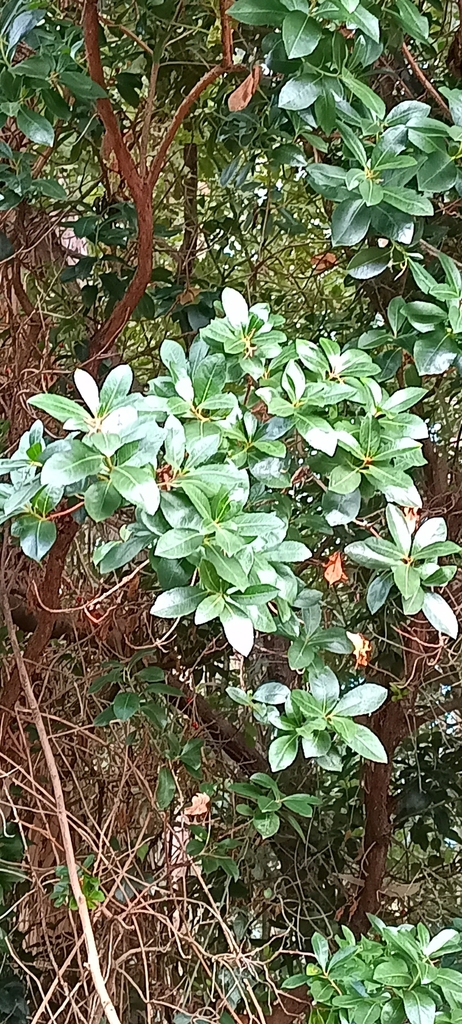
Green strawberry-tree foliage on branches with reddish bark. Compare this record with the reading about the species to explore shapes, habitats and changes through the year.
Get to know the species
Foliage
It retains its glossy, dark-green leaves with toothed edges throughout the year.
Calendar
The fruits take about a year to ripen and may be present at the same time as the next flowering.
General characteristics of the species; the photograph does not show every stage of the plant’s life cycle.
Community identification with degree of research in consultation with . Published point crossed with municipality limits; without independent confirmation in field.
Photo 559583801: migr · CC-BY-NC. Image displayed without editing; screen size adjustment. License limited to non-commercial uses.
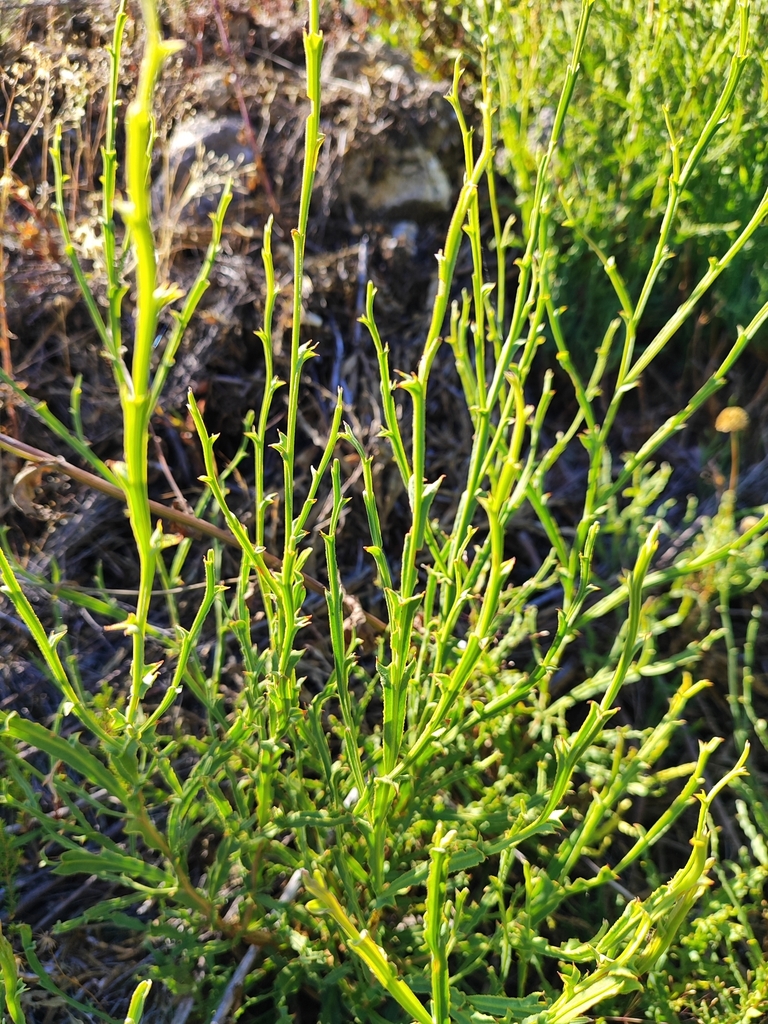
Green carqueja stems with flattened wings along the branches. Compare this record with the reading about the species to explore shapes, habitats and changes through the year.
Get to know the species
Stems
The winged stems carry out photosynthesis; the leaves are very small.
Flowers and fruits
The flowers are yellow and the fruit is a pod. The botanical profile uses the name Pterospartum tridentatum.
General characteristics of the species; the photograph does not show every stage of the plant’s life cycle.
Community identification with degree of research in consultation with . Published point crossed with municipality limits; without independent confirmation in field.
Photo 536945013: João Lima · CC-BY-NC. Image displayed without editing; screen size adjustment. License limited to non-commercial uses.
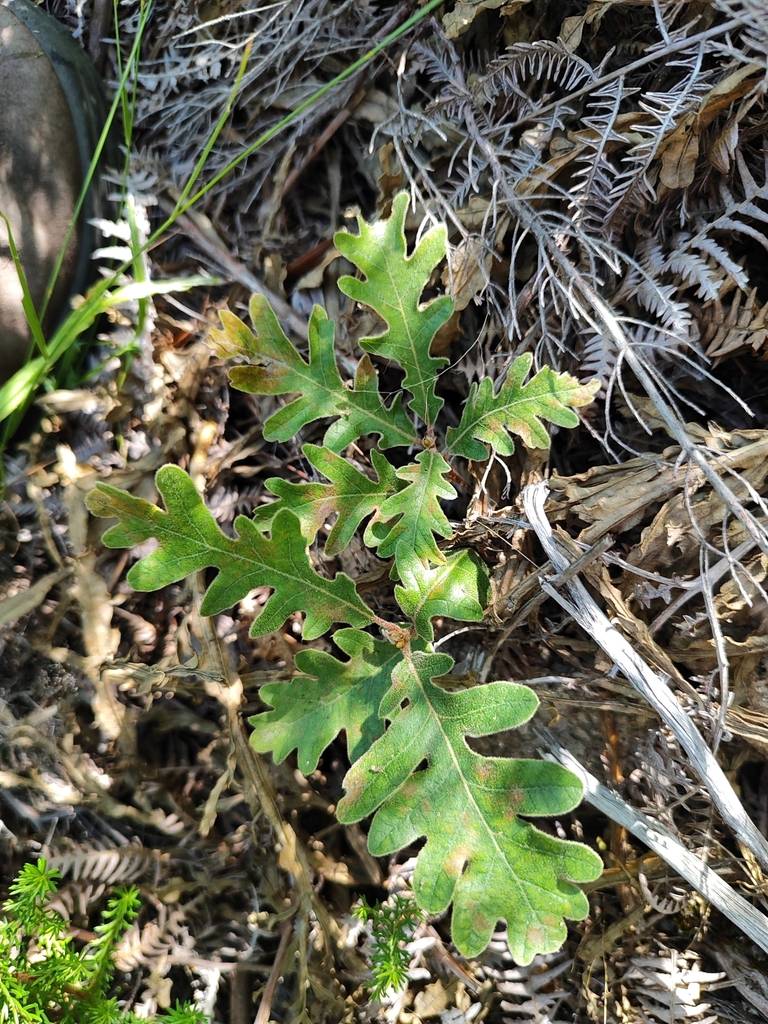
Lobed leaves of a small Pyrenean oak among dry vegetation. Compare this record with the reading about the species to explore shapes, habitats and changes through the year.
Get to know the species
Leaves
Leaves can be deciduous or marcescent: some dry out and remain on the branches during the unfavourable season.
Habitat
The profile associates the species with siliceous substrates, including granite and schist, especially on acidic soils.
General characteristics of the species; the photograph does not show every stage of the plant’s life cycle.
Community identification with degree of research in consultation with . Published point crossed with municipality limits; without independent confirmation in field.
Photo 536947003: João Lima · CC-BY-NC. Image displayed without editing; screen size adjustment. License limited to non-commercial uses.
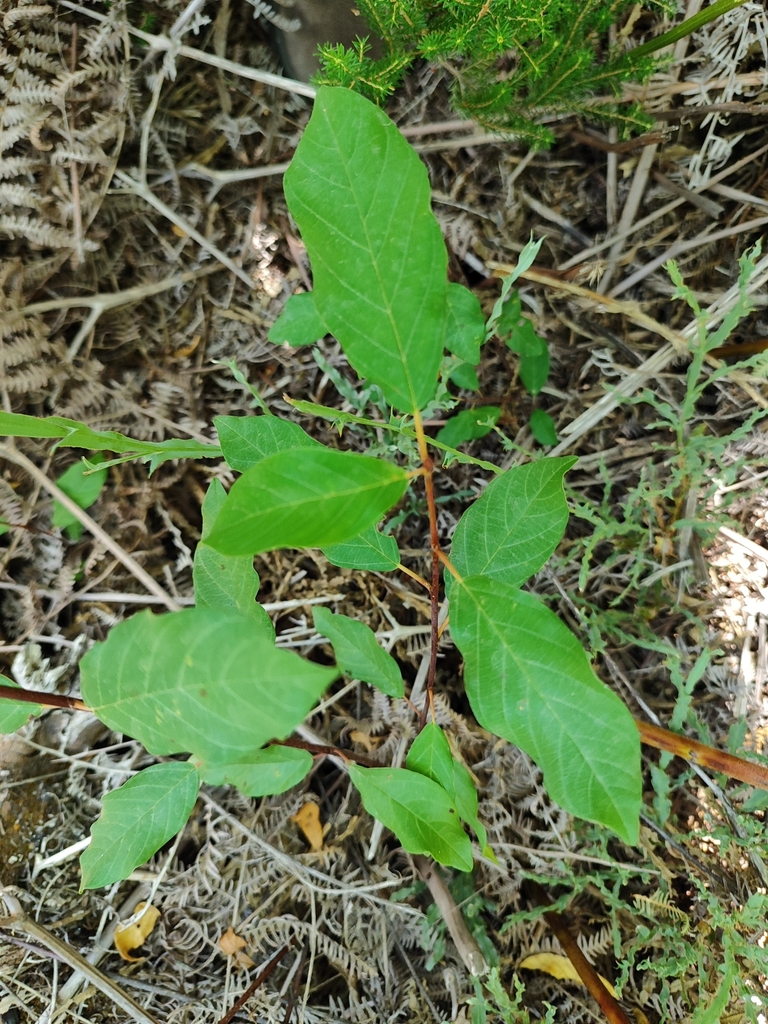
Green alder-buckthorn leaves with visible veins on a slender branch. Compare this record with the reading about the species to explore shapes, habitats and changes through the year.
Get to know the species
Habitat
Woodland and scrub along banks, hedges and damp places, including under the canopy of oak woods.
Name
The Portuguese name sanguinho-de-água does not mean the shrub necessarily grows in the river itself.
General characteristics of the species; the photograph does not show every stage of the plant’s life cycle.
Community identification with degree of research in consultation with . Published point crossed with municipality limits; without independent confirmation in field.
Photo 536946501: João Lima · CC-BY-NC. Image displayed without editing; screen size adjustment. License limited to non-commercial uses.