Before the train, the tiles arrived

The station also reads on the walls.
Explore this story
Your choice is saved only in this browser.
The station panels were executed in 1940 by A. Lopes, at the Sant’Anna Ceramic Factory in Lisbon, according to the publication of the Basto Land Museum. They are prior to the opening of the station in 1949.
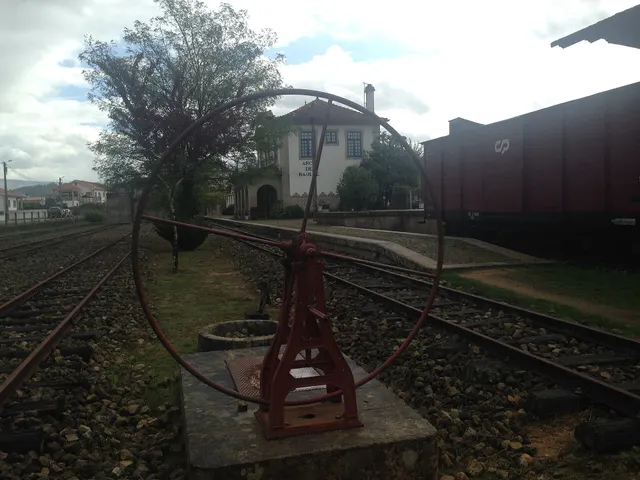
The station was a set of spaces with different functions. The publication identifies the driver's house, the staff building, the loading and unloading dock and the dispatch warehouse. The two stalls started to host permanent exhibitions of railway equipment; the warehouse is described as temporary exhibition space.
Reading the building can begin with these differences: where were they working, where were goods passing and where were they stored? The tiles are part of this built landscape. The description documents the museological organization presented in the publication, without confirming the exhibition or access of each space today.
A station, different spaces
Open an option and choose the story.
The pier: persons and goods
One line took forty years to arrive →Shears: preserved vehicles
A place in the third class →The documentation center: investigating memory
The station also keeps documents →The set: from station to museum
The train stopped, memory stayed →
Source and context
Municipality — Land Museum of Basto: a journey through the history of the region, pp. 28–29
Municipality — Núcleo Ferroviário de Arco de Baúlhe
Accessed: . Editorial summary; the date of consultation is not the date of the facts.