Discover Cabeceiras de BastoFree independent guide
ViveCabeceirasYOUR GUIDE TO CABECEIRAS
ENEnglish
SearchSaved

Stories of Cabeceiras

Choose a story to start with. You can change the subject or fine tune the search.

28 leituras · Todos os temas · Arco de Baúlhe e Vila Nune

The flavours of Cabeceiras

From the garden to the pot, from the oven to the table.

Escolher uma história · 3
Vila Nune · feed in 1758

There was wine, but you bought bread

A small difference reveals how the table was supplied.

Inclui uma atividade para experimentar →Explorar: Produzir, comprar, transformar →
Read here and consult sources

In 1758, the vicar of Vila Nune pointed the wine as the most abundant production, but said that almost all the residents bought bread. Olive oil arrived for the population and there was little chestnut left. The table therefore depended on both the crops and the purchases.

In the same memory, the parish priest described a land situated in a small valley and on the descent of mountains. The abundance of a product did not mean producing everything that was eaten. The document allows making this comparison, but does not say where the bread was bought or how much it cost.

Getting to know the parish
Source and context

Municipality — Parish Memoirs of Vila Nune, 23/05/1758

Accessed: . Editorial summary; the date of consultation is not the date of the facts.
Gastronomy in Arco de Baúlhe · 2016 episode

School name chips

A curious name can also open a story at the table.

Read here and consult sources

The School's Potatoes were among the dishes featured at a dinner of gastronomic promotion held in 17 November 2016, at restaurant O Caneiro, in Arco de Baúlhe. The municipal news brings them the roasted octopus in the oven and the cabbages with beans. It is a documented episode of the dissemination of local flavors; the source does not explain the origin of the name or confirms the current menu.

The news also allows reconstituting the end of the meal: Sinado da Avão, cavacas and rosquilhos, followed by liquors from Casa de Encosturas and infusions produced in the municipality. The dishes were added local green wines, white and red. Published in 21 November, the report shows how a dinner brought together cuisine, producers and promotion of the territory. It does not present the recipes: the name of a dessert, by itself, does not reveal its ingredients.

Source and context

Municipality — City Hall promotes gastronomy in Premium Dinner, 21/11/2016

Accessed: . Editorial summary; the date of consultation is not the date of the facts.

Arco de Baúlhe · kitchen memory collected by the Museum

The pataniscas also went to lunch

Ana Peneda shared a version of Arco de Baúlhe.

Explorar: Uma merenda também tem contexto →Ver ingredientes e preparação →
Read here and consult sources

In the collection of 2014 made by Conceição Magalhães, Ana Peneda, natural and resident in Arco de Baúlhe, describes cod pataniscas with eggs, wheat flour, parsley and onion. The Museum associates this preparation with meals and records a detail of vocabulary: the sertã was also called tacho. The memory of a recipe holds ingredients, occasions and words.

Palavras desta história: ver explicações →
Source and context

Basto Land Museum — Pataniscas also went to lunch, published in 26/08/2014

Accessed: . Editorial summary; the date of consultation is not the date of the facts.

The life you don't always see

Knowing animals begins by perceiving the territory and respecting the distance.

Escolher uma história · 1
Arco de Baúlhe e Vila Nune · local register and general biology

A leopard-shaped slug

The discreet animals also deserve to enter the portrait of the municipality.

Inclui uma atividade para experimentar →
Read here and consult sources

The photograph of Mauro shows a slug with dark spots and tentacles extended over stone. The record of 17 September 2021 is identified as Limax maximus. The crossing of the published point with CAOP2025 is located in Arco de Baúlhe e Vila Nune.

The Royal Horticultural Society includes this species in its comparison of large slugs with patterns, marking night behavior. Local photography records a meeting; it does not allow for predicting when it will appear again in the same place. Body design offers a good question to begin with: where do you see separate spots and where do they appear to form lines?

Next to the photograph of the snail of Cavez, there are two different ways to know the terrestrial molluscs: the spiral of a shell and the pattern of an elongated body.

Source and context

Royal Horticultural Society — slug research and comparison with Limax maximus

Accessed: . Editorial summary; the date of consultation is not the date of the facts.

Read the landscape through the plants

Trees, forests, vineyards and fields reveal different ways of occupying the territory.

Escolher uma história · 4
Local register · Union of parishes of Arco de Baúlhe e Vila Nune · general botany

Flowers and fruits in the same branch

The chickenshit has a calendar that overlaps.

Inclui uma atividade para experimentar →Explorar: Frutos com histórias diferentes →
Read here and consult sources

The medronho, Arbutus unedo, keeps dark green leaves and bright during the year. In autumn, little white bell-shaped flowers appear. The fruits take about a year to mature, so mature medronhos can coincide with the next flowering.

The form of the School of Education of Lisbon distinguishes two encounters with animals: insects, especially bees, participate in pollination; birds that eat the fruits help transport seeds. They are different functions in the plant cycle.

The leaves give other clues besides color: they have serrated margin and secondary ribs distributed from a central rib. The size varies between bush and small tree. The record of the Lisbon Polytechnic refers to tolerance to dry climate and different soils, showing that the fruit calendar is not the only interesting characteristic of the plant.

Food uses include fresh fruit, jams and jams. The same source places the tradition of medronho drinks in the Algarve and other Mediterranean territories; this information does not transform these products into a documented specialty of Cabeceiras.

The photograph of migr, registered in 2025-08-29, shows this species in the Union of parishes of Arco de Baúlhe e Vila Nune. It opens the register to compare the visible details with the botanical description. The observation documents this meeting; it does not indicate that the plant is always visible in the same place.

Palavras desta história: ver explicações →See the plants photographed in the municipality
Source and context

Lisbon Polytechnic — form Arbutus unedo

iNaturalist — Arbutus unedo, migr observation in 2025-08-29

Accessed: . Editorial summary; the date of consultation is not the date of the facts.

Arco de Baúlhe · Railway memory

A season that also flourished

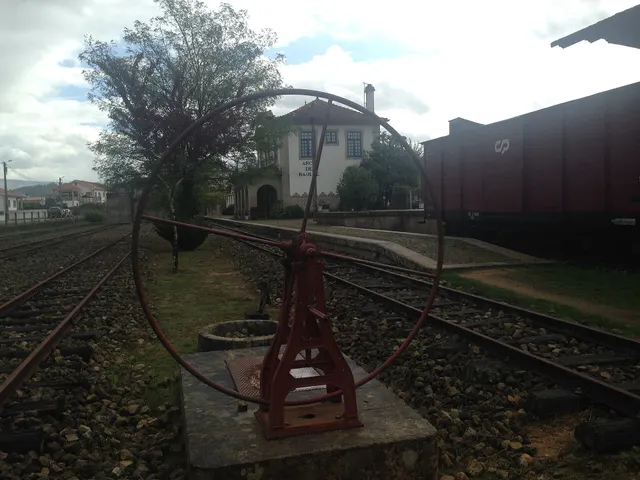
Revolving plate and tracks from the old Arco de Baúlhe station, with buildings and railway equipment at the bottom.
View of the Arco de Baúlhe station and its surroundings. The photograph does not document the distinction of the gardens in 1962.© JP Ribeiroⓘ

Not everything that was kept from the railroad is made of metal.

Inclui uma atividade para experimentar →
Read here and consult sources

The station also has a memory made of flowers. The publication of the museum describes the gardens of roses and recalls the distinction received in 1962 as the most florida season in Portugal.

Next to the machines and rails, the garden adds another way of looking at the place: the landscape of a season includes what grows around it. The prize belongs to the history of space; it is not a current classification of the gardens.

Getting to know the parish See Fact sheet: Núcleo Ferroviário de Arco de Baúlhe
Source and context

Municipality — Land Museum of Basto: a journey through the history of the region, pp. 28–29

Accessed: . Editorial summary; the date of consultation is not the date of the facts.

Arco de Baúlhe · planting of March 2023

An orange tree by the memory of the tracks

In the museum garden, the community also left roots.

Read here and consult sources

In 21 of March 2023, users of the Living and Leisure Spaces of Arco de Baúlhe and Vila Nune participated in the initiative The plants of our Garden. In the Railway Center, they planted an orange tree in the leisure space and aromatic plants in a flowerbed. The municipal news shows another dimension of the museum: a meeting place and participation. It describes that plantation, without ensuring that all the specimens are preserved today.

See Fact sheet: Núcleo Ferroviário de Arco de Baúlhe
Source and context

Municipality — World Tree and Poetry Day, 21/03/2023

Accessed: . Editorial summary; the date of consultation is not the date of the facts.

Arco de Baúlhe · educational project documented in 2016

A bed to learn from the senses

Revolving plate and tracks from the old Arco de Baúlhe station, with buildings and railway equipment at the bottom.
Arco de Baúlhe station and surrounding. This photograph contextualizes the museum; it does not identify the site or plans of the 2016 program.© JP Ribeiroⓘ

The station's memory also passes through the plants.

Read here and consult sources

In an announcement in March 2016, the Museum recalls an aromatic herbs project created in 2013 at the Railway Center of Arco de Baúlhe. For this month, it proposed planting new aromatics and two fruit trees with children from the school center and users of the day center. The site connected the museum to environmental education. The source documents the project and the announced program, without confirming the current composition of the garden.

See Fact sheet: Núcleo Ferroviário de Arco de Baúlhe
Source and context

Basto Land Museum — The smells and aromas of our gardens, announcement of 15/03/2016

Accessed: . Editorial summary; the date of consultation is not the date of the facts.

Between rivers and mountains

Water and relief form the municipality. Choose a name and follow the landscape.

Escolher uma história · 1
Geology of Vila Nune and Gondiães

Not all the stone is granite

Vila Nune and Gondiães show another part of the geological map.

Explorar: A mesma paisagem, processos diferentes →
Read here and consult sources

Among the granites, the Archaeological Charter identifies two cores of Paleozoic metasediments. The Vila Nune extends to the northwest, following the alignment of the Peio; the Gondiães flanks the Beça. These are references to understand the diversity of the subsoil, not visiting points or collection sites. The landscape gains another layer when you look at what it is made of.

To understand the name, it is worth separating two stages. Sediments can accumulate, be buried and consolidate into sedimentary rock. If this rock undergoes metamorphism, it undergoes changes caused by conditions such as high temperature and pressure. It is this sedimentary origin followed by transformation that the term metasediment marks.

Metamorphism does not mean melting: USGS explains that the transformation happens without the rock passing the magma. Minerals can reorganize or give way to others. In some rocks, elongated or flattened minerals are oriented and produce a structure in planes, called foliation. Not all metamorphic rocks present it.

They're tools for interpreting the language of the map. They do not allow each stone of Vila Nune or Gondiães to be assigned a mineral, an exact age or a specific process by appearance only. For this, it is necessary to relate the observation with cartography and geological study.

Palavras desta história: ver explicações →
Source and context

Municipality — Archaeological Charter: Orography and geology

British Geological Survey — Rocks and minerals: rock formation, cooling and exposure

U.S. Geological Survey — What are metamorphic rocks?

Accessed: . Editorial summary; the date of consultation is not the date of the facts.

Crafts and memories

In the hands, at the table and in the community: little stories of how one lives and what one transmits.

Escolher uma história · 5
Vila Nune · communications in 1758

The news had day to come

The post office linked Vila Nune to Porto through two support points.

Inclui uma atividade para experimentar →
Read here and consult sources

In the Parochial Memoirs of 1758, the vicar of Vila Nune tells that the residents resorted to the post office of Raposeira, in the couto of Refojos, and Mondim. They arrived from Porto on Monday and left on Thursday. The news had its own paths and days: communicating also required waiting.

The vicar located each of the two points of mail about a league. The indication approximates service and distance: it was not enough to know when news came, it was also necessary to have a place outside the parish. The report does not say who carried the letters between that point and each resident.

When comparing documents there is a difference: Santa Senhorinha also resorted to Raposeira, but his abbot mentions arrival on Tuesday. We keep the two versions. Only these answers do not allow to decide whether the difference is due to the way of describing the service, an error or other circumstance.

Getting to know the parish
Source and context

Municipality — Parish Memoirs of Vila Nune, 23/05/1758

Municipality — Memória de Santa Senhorinha, 23/05/1758, replies 15, 19 and 20; transcription of José Viriato Capela (2003)

Accessed: . Editorial summary; the date of consultation is not the date of the facts.

Arco de Baúlhe and Refojos · history of trade

When the metal sheet was forming

From the workshop came objects to the house, the countryside and the fair.

Explorar: Para que servia o metal? →
Read here and consult sources

João Pacheco, no Arco de Baúlhe, and Luziário Pereira de Magalhães, with their son António, in Refojos, are protagonists in the investigation of the Museum on lattice. The workshop of Luziário and António was in the Beco dos Ofícios; the nearby fair was the main point of sale. Teresa Soeiro relates the decline of craft with the diffusion of aluminum and plastic.

The inventory brings this work closer to everyday gestures: the MTB 241 copper mug served to make coffee, the MTB 240 cantara contained water and the lamps lit. The functions are documented for identified pieces. Knowing the objects helps to understand the workshop, but the collection does not confirm that these craftsmen or establishments continue in activity.

Teresa Soeiro's investigation gave rise to the exhibition The Art of lattice in Cabeceiras de Basto, in the Museum's facilities in Arco de Baúlhe. The work retreated to the artisans who began using white iron, or flander leaf, at the beginning of the Modern Era. The collection of the last professional routes was thus linked to a longer history of materials.

The objects reveal the variety of tasks: lighting a house, transporting wine, watering plants or storing oil for a locomotive. The craft passed through the house, field and transport. Comparing these functions helps to discover metallurgical work in gestures that seem to belong to separate worlds.

Palavras desta história: ver explicações →Getting to know the parish
Source and context

Basto Land Museum — Latoaria, Teresa Soeiro text and inventory of pieces

Accessed: . Editorial summary; the date of consultation is not the date of the facts.

Land Museum Collection of Basto · Arco de Baúlhe

This mug made coffee

Not all mugs were just for drinking.

Inclui uma atividade para experimentar →Explorar: Três objetos, três alturas →
Read here and consult sources

The MTB 241 copper mug was for making coffee. The inventory records 12 cm high and 7,2 in diameter.

The piece belongs to the Basto Land Museum in Arco de Baúlhe. There is no date of manufacture or recipe indicated. Compare the measurements in the scheme: similar heights can hide very different widths.

Source and context

Basto Land Museum — Latoaria, Teresa Soeiro text and inventory of pieces

Accessed: . Editorial summary; the date of consultation is not the date of the facts.

Arco de Baúlhe · railway collection

A little tin would help take care of the train.

The railroad also depended on discreet objects.

Inclui uma atividade para experimentar →
Read here and consult sources

A locomotive needed maintenance, and the inventory of the museum conserves a clue of this work: the AB 295C rail station, of the Railway Center of Arco de Baúlhe. It was made of zinc plate, stored three liters of oil and was intended for lubrication of parts of the locomotive.

The chart records 34,5 cm in height and 18 in diameter. These measures help imagine the scale of the container next to the large machines. The inventory identifies the function and the object, but not the concrete locomotive in which it was used nor its current exposure.

See Fact sheet: Núcleo Ferroviário de Arco de Baúlhe
Source and context

Basto Land Museum — Latoaria: MTB251 and AB295C inventory

Accessed: . Editorial summary; the date of consultation is not the date of the facts.

Arco de Baúlhe · material culture

A cantar to measure brandy

The same name could accompany different functions and capabilities.

Read here and consult sources

The L19 cantara of the inventory of the Basto Land Museum was a measure of spirits with a capacity of five liters. Made of zinc foil, it is 37 cm tall and 15 in diameter. The record identifies as owner Maria da Conceição Gonçalves de Magalhães, Arco de Baúlhe.

Compare it to the seven-litre cantara used in wine: the name approximates the pieces, but the function and capacity distinguishes them. The numbers belong to these documented objects, not to a universal conversion of the word cantara.

Source and context

Basto Land Museum — Latoaria, Teresa Soeiro text and inventory of pieces

Accessed: . Editorial summary; the date of consultation is not the date of the facts.

Time travel

Documents, details and traditions: there is more to discover than a date on a stone.

Escolher uma história · 14
History of transport · Arco de Baúlhe

One line took forty years to arrive

Revolving plate and tracks from the old Arco de Baúlhe station, with buildings and railway equipment at the bottom.
Former station Arco de Baúlhe · railway heritage© JP Ribeiroⓘ

The Arc was the end point of a trip through Tâmega.

Inclui uma atividade para experimentar →
Read here and consult sources

The journey began at Livração, where the Line of Tâmega connected to the Douro Line, and ended at Arco de Baúlhe. According to the Municipality, the construction of this narrow track line extended from 1908 to 1949, along about 52 kilometers. The arrival at the Arc was the result of a link built in stages.

The station had functions beyond the shipment of passengers: the old warehouse of dispatches, today used for temporary exhibitions, also recalls the circulation of goods. Visiting the railway core allows you to look for these different lives of the same space: transporting people, receiving cargoes and preserving stories.

Getting to know the parish See Fact sheet: Núcleo Ferroviário de Arco de Baúlhe
Source and context

Municipality — Núcleo Ferroviário de Arco de Baúlhe

Accessed: . Editorial summary; the date of consultation is not the date of the facts.

Arco de Baúlhe · archaeological interpretation

Before the rails, a castro

The Arc also has a much older story.

Inclui uma atividade para experimentar →Explorar: Como mudou o povoamento? →
Read here and consult sources

During the Romanization, the villages of the region did not all follow the same path. The Archaeological Letter suggests that the small castro of the Arco de Baúlhe had lost inhabitants, while Chacim gained centrality. It also refers to the expansion of the agricultural occupation to lowlands. This reading helps to imagine a changing territory, but does not provide a certain date for the abandonment of the castro of the Arc.

The Charter situates these changes in the process begun in the second half of the first century before Christ. The transformation was not limited to houses: it also changed the relationship between settlements, fields and centers of power. Chacim appears as a place of population concentration and renewal of spaces, while the Arc is presented as a possible example of emptying.

The Mó de Cima materials in Chacim are used to support the agricultural occupation of the lowlands. Later, the text highlights open facilities of the couple type, such as Abadim. Read together, these clues show a change in the organization of the territory; they do not allow to draw a single displacement of inhabitants between two points, nor date all changes in the same year.

Palavras desta história: ver explicações →Getting to know the parish
Source and context

Archaeological Letter of Cabeceiras de Basto — Protohistory and Romanization

Accessed: . Editorial summary; the date of consultation is not the date of the facts.

Arco de Baúlhe · Railway memory

Before the train, the tiles arrived

Revolving plate and tracks from the old Arco de Baúlhe station, with buildings and railway equipment at the bottom.
Facade of the station of Arco de Baúlhe, with coating and tile panels visible to the background. View of JP Ribeiro; it is not a detail of the panels of 1940.© JP Ribeiroⓘ

The station also reads on the walls.

Inclui uma atividade para experimentar →Explorar: Uma estação, diferentes espaços →
Read here and consult sources

The station panels were executed in 1940 by A. Lopes, at the Sant’Anna Ceramic Factory in Lisbon, according to the publication of the Basto Land Museum. They are prior to the opening of the station in 1949.

The station was a set of spaces with different functions. The publication identifies the driver's house, the staff building, the loading and unloading dock and the dispatch warehouse. The two stalls started to host permanent exhibitions of railway equipment; the warehouse is described as temporary exhibition space.

Reading the building can begin with these differences: where were they working, where were goods passing and where were they stored? The tiles are part of this built landscape. The description documents the museological organization presented in the publication, without confirming the exhibition or access of each space today.

Getting to know the parish See Fact sheet: Núcleo Ferroviário de Arco de Baúlhe
Source and context

Municipality — Land Museum of Basto: a journey through the history of the region, pp. 28–29

Municipality — Núcleo Ferroviário de Arco de Baúlhe

Accessed: . Editorial summary; the date of consultation is not the date of the facts.

Arco de Baúlhe · Railway memory

A gas engine on the rails

The collection counts different ways to get a train moving.

Explorar: Quem e o que viajava nos carris? →
Read here and consult sources

The ME5 motor vehicle carried a petrol engine to the rails. The publication on the museum located its construction in the Santa Apolónia workshops in 1948. In the same collection, it describes a steam locomotive manufactured in Germany in 1908.

The dates are forty years and allow comparing two technologies. They are dates of construction of vehicles, not of arrival at the station. The collection gathers pieces from various origins; being in the museum does not show, by itself, where each one circulated.

The Basto Land Museum identifies the engine as Chevrolet and describes the passenger space: 11 first-class seats, 16 third-class and other 16 standing, as well as sanitary facilities. The 27 seating positions shall not be confused with all available positions.

The National Railway Museum explains that a single motor vehicle sought to reduce the costs of operation in lines of low traffic, bringing together functions that required a composition. The project, directed by the engineer Vasco Viana, took advantage of characteristics of road transport. The same record says that the use of gasoline proved costly and led to temporary or extraordinary uses.

The inventory adds a link to the local history: this ME5 will have circulated in the Line of Tâmega. The formulation is prudent and so remains. It is a specific documentary track, different from deducing the circulation just because the vehicle is in the collection today.

Getting to know the parish See Fact sheet: Núcleo Ferroviário de Arco de Baúlhe
Source and context

Municipality — Land Museum of Basto: a journey through the history of the region, pp. 28–29

Basto Land Museum — Heritage with history: Self-propelled ME5, 22/02/2018

National Railway Museum MEf5, FMNF/ARC/ Inventory000203

Accessed: . Editorial summary; the date of consultation is not the date of the facts.

Arco de Baúlhe · Railway memory

A place in the third class

A carriage opens a window for the journeys of other times.

Read here and consult sources

The Visit Cabeceiras portal highlights a third-class British carriage of 1876 at the Railway Nucleus. The class number and date help to locate the object: it is a 19th-century piece, long before the line arrived at Arco de Baúlhe. The presence in the collection does not mean that it was built for this station.

The municipal publication identifies this piece as Cefv 79 and presents it as the oldest carriage in the collection described there. In the same stall, it refers to a passenger carriage built in Belgium in 1908.

The inventory mark helps distinguish the object; the class refers to its function in passenger transport. The origin of manufacture, service provided and arrival at the museum are separate questions: these sources do not reconstitute all carriage trips.

Getting to know the parish See Fact sheet: Núcleo Ferroviário de Arco de Baúlhe
Source and context

Visit Cabeceiras — Railway core Arco de Baúlhe
Accessed:

Municipality — Land Museum of Basto: a journey through the history of the region, pp. 28–29
Accessed:

Editorial summary; the date of consultation is not the date of the facts.

Arco de Baúlhe · memory of Julius Henriques and tribute of 2013

A botanist named after the school library

In Arco de Baúlhe, science is also on a plaque.

Read here and consult sources

Julio Augusto Henriques was born in 1838 in Arco de Baúlhe and excelled in Botany. In June 2013, the Municipality honored him by naming the library of the Basic School of Arc. The news recalls the departure to Coimbra at the age of sixteen and its dedication to science. Knowing the patron transforms a name at the school door into a link between the homeland, study and collective memory. This is the school library, distinct from the Municipal Library Dr. Antonio Teixeira de Carvalho.

Source and context

Municipality — tribute to botanist Júlio Henriques in the school library of Arco de Baúlhe, news of 17/06/2013

Accessed: . Editorial summary; the date of consultation is not the date of the facts.

Arco de Baúlhe · history of the Municipal Library

In the Arch, the books won home in 2005

A library also holds meetings and discoveries.

Read here and consult sources

The Biblioteca Municipal Dr. António Teixeira de Carvalho was inaugurated in 2005, at the Arco de Baúlhe Basic School. The municipal presentation describes two reading rooms and an auditorium, as well as work and meeting spaces. It also recalls activities such as the time of the tale, workshops, literary contests, cinema and exhibitions. The history of the equipment shows how the reading intersects with other forms of cultural participation. To plan a visit, see the site chart.

Source and context

Municipality — Biblioteca Municipal Dr. António Teixeira de Carvalho: opening in 2005

Accessed: . Editorial summary; the date of consultation is not the date of the facts.

Arco de Baúlhe · documentary memory

The station also keeps documents

Revolving plate and tracks from the old Arco de Baúlhe station, with buildings and railway equipment at the bottom.
Former Arco de Baúlhe station, where the Basto Land Museum is located.© JP Ribeiroⓘ

Behind the exhibits are books, photographs and files.

Explorar: O arquivo dá contexto aos objetos →
Read here and consult sources

The Basto Land Museum opened to the public in 23 May 2004, located at the station of Arco de Baúlhe. Its presentation of the Documentation Center distinguishes two funds: the municipal and the Railway Center, belonging to the National Railway Museum Foundation and kept by the local museum.

Books, journals, photographs, maps and archive documents help to investigate the region. The description recalls the organization of the collection in 2011; it is not a confirmation of current consultation conditions.

In February 2011, the Museum also announced the conference and inventory of railway objects, based on the inventory of CP technicians included in the 2000 protocol.

See Fact sheet: Núcleo Ferroviário de Arco de Baúlhe
Source and context

Basto Land Museum — Documentation Centre, historical description of the collection

Basto Land Museum — Inventory of collections, 17/02/2011

Accessed: . Editorial summary; the date of consultation is not the date of the facts.

Arco de Baúlhe · Railway memory

The mail also traveled by train

The van DE.FV 506 carried more than goods.

Read here and consult sources

Built in Belgium in 1908, the van DE.FV 506 is presented by the Museum as a narrow-track vehicle for goods, parcels and postal mail. It had plate coating, electric lighting and a toilet for the employee, accessible from the outside. The acquisition by the Company of Guimarães Railways appears as hypothesis. The description of the collection, published in 2011, does not confirm the current exhibition of the piece.

The gauge indicated by the Museum is one meter. In comparison with the car, the function changes: ME5 was intended for passengers, while this van gathered cargo, parcels and mail. Traveling on the same network could mean transporting people, news or goods.

See Fact sheet: Núcleo Ferroviário de Arco de Baúlhe
Source and context

Land Museum of Basto — Van DE.FV 506, 17/07/2011

Basto Land Museum — Heritage with history: Self-propelled ME5, 22/02/2018

Accessed: . Editorial summary; the date of consultation is not the date of the facts.

Arco de Baúlhe · Railway memory

The train stopped, the memory stayed

Revolving plate and tracks from the old Arco de Baúlhe station, with buildings and railway equipment at the bottom.
Arco de Baúlhe station and railway equipment. Context photography, not of the closing day.© JP Ribeiroⓘ

The station gained another function after closing the line.

Explorar: Da última viagem à memória preservada →
Read here and consult sources

According to the retrospective of the Museum, the Arc station ceased to operate in January 1990, with the closure of the section between Amarante and Arco de Baúlhe. In 8 January 2000, a protocol between REFER and the Municipality opened the way for the provision of facilities and the museological dynamics. The opening of the Museum, in 23 May 2004, belongs to this new life of space.

The compromise brought responsibilities: the Municipality was responsible for preserving, maintaining and managing the section, in collaboration with the National Railway Museum Foundation. The news of the Museum of April 2025 also reports the municipal decision of February 14 of that year to classify the whole. The change of use involved, therefore, agreements and continued work, in addition to the opening of doors to the public.

See Fact sheet: Núcleo Ferroviário de Arco de Baúlhe
Source and context

Basto Land Museum — Railway Station Arco de Baúlhe classified as Municipal Interest Set, 02/04/2025

Accessed: . Editorial summary; the date of consultation is not the date of the facts.

Arco de Baúlhe e Vila Nune · line memory and path transformation

The line has gained new steps

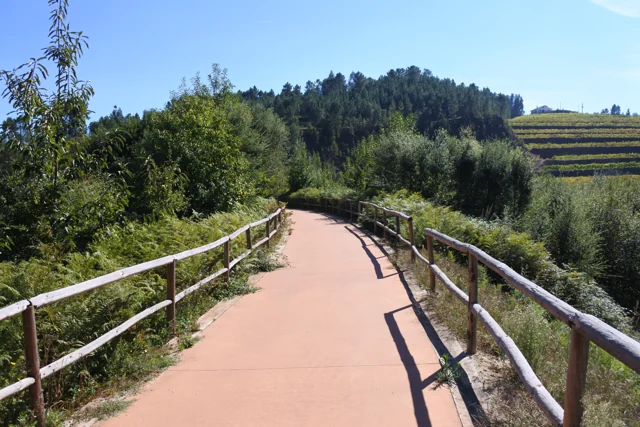
Tâmega Ecopist in Arco de Baúlhe e Vila Nune, with reddish pavement and wooden guards, photographed in October 2016.
The former railway channel converted to Ecopista in Arco de Baúlhe e Vila Nune. Photo by FF Mira, October 6, 2016; does not document the inauguration of 2013 or the current conditions of the entire route.© FF Miraⓘ

The old train path began to receive hikers and bicycles.

Explorar: Três maneiras de guardar a ferrovia →
Read here and consult sources

The Tâmega Line channel retained a connecting function after trains. In 20 of April 2013 was inaugurated the section of the Ecopista in the municipality, between the Railway Center of Arco de Baúlhe and Dead Woman, in Vila Nune. The municipal record indicates 5,4 kilometers in this section, within the most extensive link to Amarante.

The relief of the route holds the railway origin: the municipal description relates the old channel with a maximum inclination of 3%. It is a published feature of the layout, not a current check of each entry or obstacle. To prepare an exit, see the practical form and the on-site indications.

The old station and the villager of Vila Nune tell different parts of this story. The municipality identifies the camper among the heritage of Vila Nune; in the Arc, the station passed the museological core. A path can change its use without losing the references that help to recognize its past.

See Fact sheet: Ecopista do Tâmega — troço de Cabeceiras See Fact sheet: Antigo apeadeiro de Vila Nune
Source and context

Municipality — Ecopist of Tâmega: reuse of channel and inauguration of 2013

Municipality — Arco de Baúlhe e Vila Nune: former tenant

Basto Land Museum — Railway Station Arco de Baúlhe classified as Municipal Interest Set, 02/04/2025

Accessed: . Editorial summary; the date of consultation is not the date of the facts.

Vila Nune · settlement described in 1758

A parish, many small places

Telling neighbors wasn't the same as counting people.

Inclui uma atividade para experimentar →Explorar: Lugares, pessoas e caminhos →
Read here and consult sources

In May 1758, the vicar of Vila Nune registered 55 neighbors and 239 people. He numbered fourteen places, some with only one resident, and marked uninhabited houses in the place of Serra.

These numbers describe different categories of the document. They should not be added or confused with a current census. The small scale of the places helps imagine a scattered settlement, observed from the parish.

The enumeration allows to approach the look: Silva assigns eight neighbors; to Vale and Rossada, five to each. Fojães and Ribeira da Covilhã appear with one resident. The church was in Granja, near the Valley. The religious center was not confused, therefore, with the place called Vila Nune.

The vicar Domingos Leite de Andrade adds that there were unmarried women in poverty between neighbors and people from other parishes. It is the social description of an author and of a time, without allowing the life of each person to be reconstructed. By preserving the terms and date, the document allows different domestic conditions to be observed within the small places.

Source and context

Municipality — Parish Memoirs of Vila Nune, 23/05/1758

Accessed: . Editorial summary; the date of consultation is not the date of the facts.
Vila Nune · historical look to the margin of Atei

The work was on the other side

A memory of Vila Nune also looks at Atei.

Inclui uma atividade para experimentar →
Read here and consult sources

In describing the Tâmega in 1758, the vicar refers mills that worked in the summer, in front of the parish, in the limits of São Pedro de Atei. He also recalls traces of attempts to build levadas and dams in the neighborhoods.

The reference shows how the report crosses the river. The mentioned mills are on the bank of Atei: this reading does not transform them into patrimony located in Cabeceiras or confirms traces visitable today.

Source and context

Municipality — Parish Memoirs of Vila Nune, 23/05/1758

Accessed: . Editorial summary; the date of consultation is not the date of the facts.

Arco de Baúlhe e Vila Nune · municipal heritage description

The Triangle Facing Water

A detail of the Old Bridge helps to find out which side the river comes from.

Read here and consult sources

At Ponte Velha de Arco de Baúlhe, a semicircular arch holds the board over the Gold River. The municipal description attributes the construction to the 18th century.

The triangular seak is upstream from where the water comes from. This detail allows you to read the bridge beyond its silhouette. The shape of the arch itself does not prove a Roman origin.

Palavras desta história: ver explicações →See Fact sheet: Ponte Velha de Arco de Baúlhe
Source and context

Municipality — Cultural heritage, bridges of Arco de Baúlhe and Moimenta

Accessed: . Editorial summary; the date of consultation is not the date of the facts.

YOUR LOCAL GUIDE

What would you like to discover?

Take a closer look.