Warriors preserved in stone
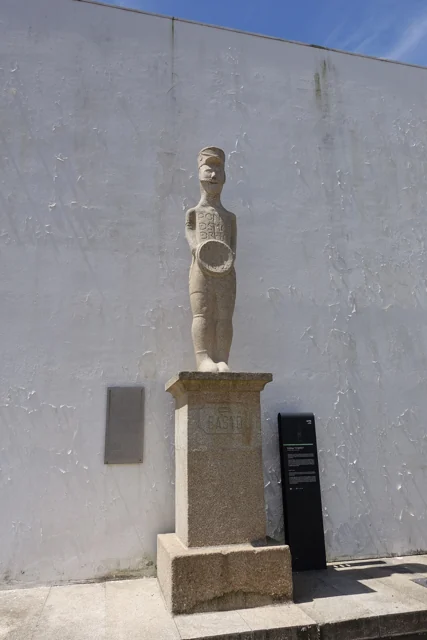

A figure can tell of a changing era.
Text size
Your choice is saved only in this browser.
O Basto and the warrior of Santa Comba are presented in the Archaeological Map as examples of Gallaecian warrior statues. The municipal interpretation connects these figures with the ritual importance of the warrior’s role during a period of community transformation. The Map also connects that ritual function with gold torcs, presenting their origin in the Cavez area as a hypothesis. Within the same picture of change, it mentions open farming settlements such as Abadim and honorific inscriptions. Romanisation appears not only in monuments: it involves settlement, practices and forms of representation.
Explore further: words and activities
Explore this story
Source and context
Archaeological Letter of Cabeceiras de Basto — Protohistory and Romanization
Accessed: . Editorial summary; the date of consultation is not the date of the facts.