Stone preserved drawings too
ⓘ
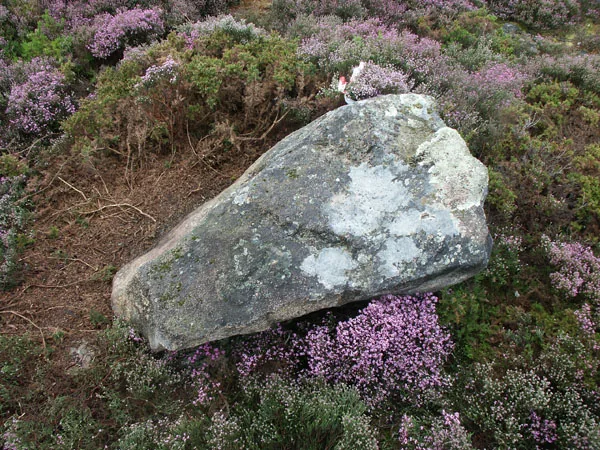
Engraved rock in the Marmoirais complex.
Source: Carta Arqueológica de Cabeceiras de Basto
Photograph date not stated.
Autoria da fotografia e licença de reutilização não identificadas na fonte.
ⓘ
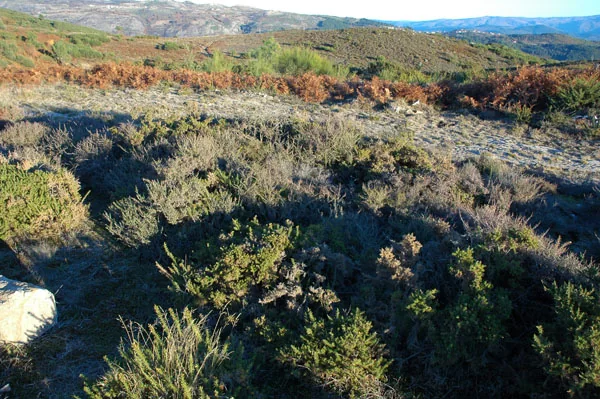
Area of the Marmoirais burial mounds.
Source: Carta Arqueológica de Cabeceiras de Basto
Photograph date not stated.
Autoria da fotografia e licença de reutilização não identificadas na fonte.
ⓘ
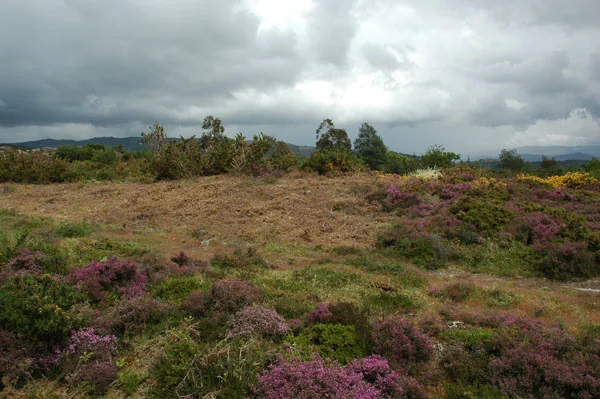
Area of the Marmoirais burial mounds.
Source: Carta Arqueológica de Cabeceiras de Basto
Photograph date not stated.
Autoria da fotografia e licença de reutilização não identificadas na fonte.
Marmoirais brings together ancient tombs and engravings.
Text size
Your choice is saved only in this browser.
At Marmoirais in Abadim, burial mounds and engraved granite outcrops form an archaeological group. The inventory proposes the second or first millennium BC, comparing pottery, engraved motifs and similar groups in the north-west. The dating results from that interpretation. The source also connects the name Marmoirais with the place’s burial memory: a landscape can hold clues in both remains and names.
The inventory distinguishes preservation from interpretation: it describes the group as poorly preserved and allows that Mamoa 5 may remain intact. It proposes cist-type burial structures without presenting that hypothesis as confirmed by excavation.
Tombs and engravings are different remains sharing one landscape. Reading pottery and comparing other groups help suggest a chronology, but do not automatically reveal the meaning of each engraved motif.
Explore further: words and activities
Explore this story
Source and context
Municipality — archaeological inventory, interpretations and chronologies
Accessed:
Carta Arqueológica de Cabeceiras de Basto — 01.08
Accessed:
Carta Arqueológica de Cabeceiras de Basto — 01.09
Accessed:
Editorial summary; the date of consultation is not the date of the facts.