Discover Cabeceiras de BastoFree independent guide
ViveCabeceirasYOUR GUIDE TO CABECEIRAS
ENEnglish
SearchSaved

Stories of Cabeceiras

Choose a story to start with. You can change the subject or fine tune the search.

56 stories · All themes · Search: madeira

A world under the leaves

A first look at the fungi. Continue in the gallery to see the local records already documented.

Choose a story · 11
Abadim · local record and general biology

Small fans, a life in wood

The top and bottom tell different stories.

Includes an activity to try →
Read here and view sources

Pedro Andrade photographed these small white fans in 31 January 2025. The record is identified as Schizophyllum commune and the published point was crossed with CAOP2025, placing it in Abadim. In the image, the structures exit laterally from a branch and have a pilous surface.

The Naturalis guide describes an inferior face with radial folds divided longitudinally. It is an important detail that this photograph from above does not reveal. Community identification belongs to the complete record, which includes other images.

The source describes the fungus as saprophyte, linked to trunks and branches: it obtains food from dead organic matter. Small fans are reproductive structures, not the whole set of life of the fungus in wood.

Words in this story: see explanations →
Source and context

Naturalis — Interactive Guide to Mushrooms and other fungi, Schizophyllum commune

Accessed: . Editorial summary; the date of consultation is not the date of the facts.
General ecology · wood and biodiversity

A log can be a small house

Decomposing wood is still full of relationships.

Includes an activity to try →Explore: A log opens several stories →
Read here and view sources

A fallen log is still part of the forest life. Fungus decomposes wood, which also sustains other organisms, including insect larvae. The researcher Susana Gonçalves explains that certain tree cavities result from fungal activity and can then serve as an animal shelter. A tree with cavities and a trunk on the ground offer different situations to observe. In green spaces, conserving old trees requires assessing and monitoring the risk of falling. This ecological explanation does not confirm an association between the beetle photographed in Cabeceiras and a specific tree.

But the wood does not always break down in the same way. In white rot, the fungi degrade lignin and cellulose; the wood can become clear, fibrous or spongy. In brown rot, the degradation reaches mainly cellulose and hemicellulose, becoming a brownish residue rich in lignin. The wood can become fragile and fragmented into small blocks. The University of California distinguishes these processes by the effect on the components of the wood.

White and chestnut describe decomposition, not the color of a mushroom hat. Nor are species names. A reproductive structure visible in the trunk shows only part of the story: decomposition can extend up or down and remain hidden. A photograph does not allow to measure this extension or evaluate the stability of the tree.

Words in this story: see explanations →See local fungal records
Source and context

Gulbenkian Garden — ecology of fungi, with Susana Gonçalves (17/04/2023)

University of California — Wood Decay Fungi in Landscape Trees (revised August 2019)

Accessed: . Editorial summary; the date of consultation is not the date of the facts.
Fungal habitats · general explanation

From tree bark to meadow floor

Casca, leaves, wood or soil: looking at the support opens a first clue.

Includes an activity to try →Explore: Start with support →
Read here and view sources

A fallen trunk, a layer of leaves and a pasture offer different environments to fungi. CCRES uses words that help describe them: corticultures live in the bark of trees; praticultures develop in the soil of meadows and pastures.

There are other clues in this vocabulary. Lignícolas grow in dead wood, foliage in fallen leaves and humícolas in decomposing plant residues. Coprófilos are associated with animal excrement. They are descriptions of support or environment, not species names.

In an observation, it begins by recording where the visible structure appears: on bark, wood, leaves or soil? It keeps this description separate from the identification. Knowing the place where it grows helps to formulate questions; it is not enough to say what fungus it is, how it feeds in each case or whether it is edible.

Words in this story: see explanations →
Source and context

Silvestrian Resource Competence Centre — General Mycology

Accessed: . Editorial summary; the date of consultation is not the date of the facts.
Gardens and conservation · general ecology

A garden can also accommodate an invisible world

More habitats, more stories to find out.

Includes an activity to try →Explore: From design to ecological relations →
Read here and view sources

A garden does not need to look the same in the whole area. In the interview published by Jardim Gulbenkian, researcher Susana Gonçalves proposes combining small habitats and varied native plants to favor the diversity of fungi. A meadow, a small forest and an embroidery offer different contexts.

Care remains under the feet: keeping the soil covered helps prevent drying and erosion. Branches and dead wood can sustain decomposers and other organisms. Keeping old trees requires, however, evaluation and monitoring of the risk of falling.

This is a proposal to understand ecological relationships, not a survey of Cabeceiras gardens. Try looking at a green space as a set of environments: what is exposed, what is shaded and where is there plant matter on the ground?

Source and context

Gulbenkian Garden — ecology of fungi, with Susana Gonçalves (17/04/2023)

Accessed: . Editorial summary; the date of consultation is not the date of the facts.
General knowledge · national guide

The mushroom is just a part

There's a net the eyes don't always find.

Includes an activity to try →Explore: Mushroom, mycelium and spores →
Read here and view sources

The mushroom is a reproductive structure; the body of many fungi is a network of filaments, the mycelium. Each filament is called hypha. The CCRES describes this network to colonize living organic matter or decomposition, from where the fungus gets nutrients.

The fruity body develops from the mycelium and allows to disperse spores. If they find favorable conditions, they can give rise to a new mycelium. The visible mushroom counts only one part of the cycle; not all fungi produce structures with the appearance of a hat.

In the cultivation of some decomposing species, mycelium can develop in inoculated trunks. The same support can produce mushrooms for several years, while there are conditions and nutrients. This general explanation does not identify a species or document an occurrence in Cabeceiras.

The net can also be organized into cords called rhizomorphs. In certain wood fungi, these help to cross intervals between branches or trunks and reach another food. An outer layer protects the interior hyphae during this exploration.

Another strategy is to form sclerotics: compact masses of hyphae with a resistant cover. They allow you to cross unfavorable periods and, when conditions improve, they can originate mycelium or reproductive structures. They are forms of growth and resistance described by the Australian botanical garden, not local records.

Words in this story: see explanations →
Source and context

DGADR / ICNF — Mushroom Collector's Guide, June 2013
Accessed:

Centre for Silvestre Resources Skills — production mushrooms
Accessed:

Silvestrian Resource Competence Centre — General Mycology
Accessed:

Australian National Botanic Gardens / Centre for Australian National Biodiversity Research — The mycelium
Accessed:

Editorial summary; the date of consultation is not the date of the facts.
General knowledge · national guide

Blades, pores and other forms

Not everyone has the same drawing under their hat.

Includes an activity to try →Explore: What shape arouses your curiosity? →
Read here and view sources

The guide distinguishes groups with blades, folds, pores or specks. Naturalis describes white blades in Amanita muscaria and light pores tubes in Gyroporus cyanescens. There are two different ways to organize the surface under the hat. An isolated feature does not allow identifying a mushroom or deciding whether it can be consumed. Not everyone has a foot: some hats grow directly from wood. The guide to Australian botanical gardens also shows shapes of cup and fine coating on wood. When you observe, you can start with three questions: what is the contour, where support grows and what surface can you see without moving?

Words in this story: see explanations →
Source and context

DGADR / ICNF — Mushroom Collector's Guide, June 2013
Accessed:

Naturalis Biodiversity Center — Amanita muscaria
Accessed:

Naturalis Biodiversity Center — Gyroporus cyanescens
Accessed:

Australian National Botanic Gardens / Australian National Herbarium — Types of fungal fruiting bodies, Heino Lepp
Accessed:

Editorial summary; the date of consultation is not the date of the facts.
General ecology · decomposition

A fallen leaf still has its way

On the ground, matter changes hands.

Includes an activity to try →Explore: Three ways to feed a fungus →
Read here and view sources

A fallen leaf can become food for decomposing fungi. These absorb nutrients from dead organic matter and participate in its recycling. Support makes a difference: there are fungi linked to leaves, wood or humus. Decomposition is a relationship with food; the form of a hat alone does not explain this way of life.

Protecting this underground life also goes through the way the soil is treated. In the interview of the Gulbenkian Garden, Susana Gonçalves explains that excessive mobilization and compaction can harm mycelium networks. It is a general orientation of conservation, without evaluating the state of any land of the municipality.

The names also keep clues about the support: foliage grows on the fallen leaves, lignite in the wood and humícolas in decomposing vegetable residues. They are words to describe where they live, not names of species. In the same landscape, different materials offer different possibilities of food; leaving a leaf or branch in the place also preserves part of this context.

Words in this story: see explanations →See local fungal records
Source and context

Silvestrian Resource Competence Centre — General Mycology
Accessed:

Gulbenkian Garden — ecology of fungi, with Susana Gonçalves (17/04/2023)
Accessed:

Editorial summary; the date of consultation is not the date of the facts.
General biology · feeding of fungi

A meal prepared outside

Fungi don't need a mouth to get food.

Includes an activity to try →Explore: Transform, absorb and distribute →
Read here and view sources

A fungus does not need to ingest a leaf to take advantage of its nutrients. Mycelium releases enzymes to the outside; these decompose organic matter into simpler compounds, which are then absorbed by hyphae.

The web of filaments also grows and branches. The links between hyphae allow to transport nutrients to other areas of the mycelium. Thus, what seems immobile may be exploring new spaces and redistributing resources, without seeing a mushroom on the surface.

The way to grow also accompanies the distribution of food. The presentation of the Australian National Botanical Garden describes greater branching and slower advancement in nutrient-rich zones; where these run out, the hyphae can stretch faster and branch less. The network does not always need to have the same density.

Some fungi form hyphae strings, called rhizomorphs. These can help to cross spaces between food sources, such as two separate pieces of wood. When they reach new wood, the hyphae can branch and occupy it. It is an explanation of growth strategies, not a confirmed description for any filament found on a sidewalk.

Words in this story: see explanations →
Source and context

Australian National Botanic Gardens / Centre for Australian National Biodiversity Research — The mycelium

Accessed: . Editorial summary; the date of consultation is not the date of the facts.

Ecology of fungi · General explanation

There are fungi that live off others

Cooperation and parasitism are different relationships.

Explore: What relationship is this? →
Read here and view sources

The parasitic fungi use resources from living organisms: plants, animals or other fungi. They can cause disease and, in some cases, the death of the host. This explanation of the CCRES helps distinguish ways of life; it does not diagnose trees or animals observed in the municipality.

An example helps to understand the difference between what we see and what happens on the ground. In the British investigation of the Royal Horticultural Society on Armillaria, fungi can feed on roots or buried dead wood. Mushrooms do not always come against the trunk: the link can pass through the roots or cords of mycelium, the rhizomorphs.

The survey brought together 170 suspected cases in British parks and gardens, with photographs in 113. These figures describe the contributions received, not the frequency of the disease in a forest or the situation of Cabeceiras.

Words in this story: see explanations →
Source and context

Silvestrian Resource Competence Centre — General Mycology
Accessed:

Royal Horticultural Society — Honey Fungus Hunt, British survey results and context
Accessed:

Editorial summary; the date of consultation is not the date of the facts.

General biology · forms of fungi

♪ Corals that don't live in the sea ♪

The drawing of a fungus may remind branches or folds of gelatin.

Includes an activity to try →Explore: Ways to compare →
Read here and view sources

Australian botanical gardens describe fungi with reproductive structures in the form of small clades or branched corals. They usually appear in the soil and, in some cases, in decomposing wood. Others have a gelatinous appearance and grow on wood to decompose. These names describe shapes, not a single species. A visual comparison helps ask questions, but does not replace identification. The source presents examples of general biology without confirming these forms at a site of Cabeceiras.

Historical illustrations also require critical reading. The source shows drawings of corals published by Robert Kaye Greville in the 19th century: they have historical interest, but represent the production of spores according to an interpretation then used and corrected today. A beautiful drawing can preserve an ancient hypothesis, not just a form.

Source and context

Australian National Botanic Gardens / Australian National Herbarium — Coral and jelly fungi, Heino Lepp

Accessed: . Editorial summary; the date of consultation is not the date of the facts.

General biology · example of Laetiporus sulphureus

Shears that grow in a log

The reproductive form can project itself to the side.

Read here and view sources

In Laetiporus sulphureus, Kew describes yellow reproductive structures that are available as shelves on trees. The fungus acts on the dead wood of the interior of larger trunks and branches, contributing to their decomposition. The description explains a form of growth; it does not confirm the presence of this species in Cabeceiras nor allows to recognize other fungi only by color.

Yellow belongs to the structure that is seen outside; the activity of the fungus extends to wood. Kew describes a decomposition that makes it brown and can leave cavities inside. Looking only at the shelves is therefore looking at a part of the process. The presence in a tree does not mean that all its parts are dead: the text refers to dead wood inside trunks and branches. This description does not evaluate the stability of concrete trees.

Source and context

Royal Botanic Gardens, Kew — In pictures: Fungi spotting season at Kew, Grace Brewer, 24/10/2019

Accessed: . Editorial summary; the date of consultation is not the date of the facts.

Crafts and memories

In the hands, at the table and in the community: little stories of how one lives and what one transmits.

Choose a story · 16
Bucos · letter described in the inventory

Before the game, there's a woodwork

The stick also holds a crafty knowledge.

Includes an activity to try →
Read here and view sources

The patrimony sheet highlights the clump among the woods indicated for the Pau Game. Cutting and chopping the stick requires own knowledge. The inventory associates this craft to a master of Bucos and alerts to the fragility of its transmission. It is the portrait of the inventory process, not a current counting of artisans.

The distinction between playing and preparing the object is important: the mastery of the practice and the knowledge of working the wood are knowledge linked, but different. Preserving the tradition also involves those who choose and transform the material. The patrimony sheet allows looking at the stick as a result of a craft, as well as an instrument of presentation.

Source and context

MatrixPCI — Cabeceiras de Basto Stick Game, INPCI_2023_016

Accessed: . Editorial summary; the date of consultation is not the date of the facts.

crafts · Faia, Basto and Refojos

The wood also keeps the wine

Pipes, barrels and barrels tell a business story.

Includes an activity to try →
Read here and view sources

The municipality associates these works to Faia and also refers to tannaria in Basto and Refojos. The container is part of the wine culture as much as the vineyard. In the Ethnographic Court of 24 September 2023, dedicated to the arts and crafts, Faia introduced the oil tankers. The municipal news shows how this knowledge was also chosen to represent the parish at a collective party. The episode does not confirm the existence of a visitable workshop today. The presentation of the parish adds the manual manufacture of footwear to its craft traditions. The wood of wine containers is thus part of a more varied working memory, without identifying today's artisans or workshops here.

To understand how a container is built, it is worth knowing two words of the craft. The Lourinhã Museum identifies the trims and rims as central elements: wooden pieces form the body, while the rims involve them. The description highlights the work of the curvature and thickness of the trims. It is a general explanation of the tannaria, used here to read the objects; it does not document the sequence of manufacture of a workshop of Faia.

When looking at a pipe, look for the vertical lines between pieces and the rims that cross the set. Compare later with the wooden base of a punch: a material can be cluttered to support a foot or worked on several pieces to form a volume. The finished object holds shape, fit and use decisions.

Words in this story: see explanations →Getting to know the parish
Source and context

Municipality — crafts and services of the parishes

Municipality — Arts and Crafts in the Ethnographic Court, news of 25/09/2023

Municipality — presentation of Faia: settlement and traditional activities

Lourinhã Museum — Tanoeiro, elements and work of the plasters; general technical context

Accessed: . Editorial summary; the date of consultation is not the date of the facts.

Outeiro · clog materials and tools

Before the punch, a piece of alder

The wood was also chosen.

Includes an activity to try →
Read here and view sources

In the Museum's inventory, a pine tree torus is a raw material for the base of the punches. The hatchet cracked the wood, the rhinestone crushed it and the chisel prepared the edge where the leather was preached. A form used by Manuel Alves Leite connects the objects to the family history of the tamancaria.

The work continued with other tools: the Torquesa pulled the leather onto the stick and the sovela opened holes for the nails. Each object retains a specific gesture. The inventory allows to follow these operations without indicating a currently visitable workshop.

Words in this story: see explanations →Getting to know the parish
Source and context

Land Museum of Basto / Teresa Soeiro — In the country of Tamanco, introduction and inventory T10/T13/T16–T19

Accessed: . Editorial summary; the date of consultation is not the date of the facts.

Faia · tradition referred to by the municipality

At Faia, hands also made shoes

Between the vineyard and the wood, there's another trade to find out.

Explore: Three Ways by Crafts →
Read here and view sources

The municipal presentation of the Faia includes the manual manufacture of footwear among the artisan traditions of the parish, next to the tannaria. It is a clue to look at the local economy beyond the fields: we also worked with our hands to produce everyday objects.

The source does not identify workshops, craftsmen or footwear models. Therefore, this reference does not allow you to choose a current store or claim that it was punches or clogs. This question remains open. Compared to the documented stories of soles and tampons from other parishes helps to realize how much a craft name can hide from materials, techniques and people.

Source and context

Council — Faia

Accessed: . Editorial summary; the date of consultation is not the date of the facts.

Outeiro · memory of wooden footwear

Carolinas: a name to wear

A board and a resistant strip could form the simplest model.

Read here and view sources

In the study of 2017, Teresa Soeiro describes the carolinas made by the tamanqueiros of Outeiro or by their apprentices. A cut board accompanied the foot and a strip of reused leather, or other resistant material, held it. It was the cheapest model. The same book shows that the names varied: in Penafiel, carolinas designated another type of footwear.

Source and context

Teresa Soeiro — Soqueiros e Tamanqueiros, municipal edition of 2017, p. 96 (viewer page 98)

Accessed: . Editorial summary; the date of consultation is not the date of the facts.

crafts · Pedraça and Abadim

From linen to house

Panos and quilts are also heritage.

Read here and view sources

Pedraça and Abadim are referred to by the municipality by the weaving of flax. Fabrics take handmade work into the house and to the memory of families.

On 6 July 2024, the Soutinho field, in Pedraça, received an activity of the Lining Cycle: manual plucked from the Galician linen, ripped and wet. The municipal news records the collaboration of the Junta, ANAP and Cultilinho — Fátima Mota. It is an example of sharing this knowledge, not an announcement of future activities.

Before reaching the loom, the plant passes through several hands and operations. The municipal explanation of the cycle distinguishes the removal of the baghan, the passage through the water, the drying and the work that prepares the fiber. The spade and the seireiro help in this transformation. Only then do the spinning: a cloth begins long before there is a thread.

Words in this story: see explanations →
Source and context

Municipality — crafts and services of the parishes

Municipality — Linen Cycle in Pedraça, news of 08/07/2024

Municipality — Linen Cycle in Pedraça, news of 03/04/2024

Accessed: . Editorial summary; the date of consultation is not the date of the facts.

Outeiro · history of the clog

A craft learned alongside the master

In Outeiro, the art of clogs passed from hand to hand.

Includes an activity to try →Explore: Three supports of the work of the tamanceiro →
Read here and view sources

In the study published in 2017, Teresa Soeiro tells that Manuel Alves Leite, born in Pinhel in 1899, learned from Bernardino José Pereira, Sobreira's tamanqueiro. The knowledge was transmitted to the descendants. This learning history brings the tamancaria closer to families and places, without assuming that the workshop remains open.

The inventory of the Museum allows you to enter the work space. It calls craft to the low table used by Manuel António Teixeira Leite. A bank with a small strain served as support in the finishing of the sticks; a form of wood and leather links production to the generation of Manuel Alves Leite. The objects show different supports of the work, without reconstructing the disposition of a concrete workshop.

The measures help distinguish the supports: table T15 is 82 cm long, 74 wide and 55 high; seat T14, 87 long, 28 wide and 50 high. Despite close lengths, they offer very different surfaces. The inventory connects the seat to the finish of the sticks, supported by a small stem.

Words in this story: see explanations →Getting to know the parish
Source and context

Teresa Soeiro — Soqueiros and Tamanqueiros, municipal edition of 2017, chapter The tamanqueiros of Outeiro, p. 68
Accessed:

Land Museum of Basto / Teresa Soeiro — In the country of Tamanco, introduction and inventory T10/T13/T16–T19
Accessed:

Editorial summary; the date of consultation is not the date of the facts.

Gondiães · documented transformations in 2012

Broa changed tool

Tradition also incorporates new ways of working.

Includes an activity to try →
Read here and view sources

The record of 2012 contrasts the wood mass to the mechanical crusher then used in Gondiães. It also recalls the passage from the community oven to the House of Martyr.

The ingredients, previously offered by the inhabitants, began to be bought. The transformation of the tools and supply coexisted with the collective preparation of the party.

The help also came from those who lived outside. The Museum collected testimonies from emigrants from Lyon to participate and collaborate. Among the tasks remembered were carrying flour and carrying wood. The move to the mechanical crusher did not eliminate these works: machinery, materials and people remained part of the same preparation.

Words in this story: see explanations →Getting to know the parish
Source and context

Basto Land Museum — Visit to the Feast of Popes, published in 22/01/2012

Accessed: . Editorial summary; the date of consultation is not the date of the facts.

Outeiro and Refojos · 2012 initiative

When the images came out of the church

A work can also open a discovery.

Includes an activity to try →Explore: One play, several contexts →
Read here and view sources

A work in the church opened an opportunity to know its sculptures. In October 2012, the Municipality announced the deposit and temporary exhibition of twelve pieces of Outeiro in Núcleo de Arte Sacra, installed in the former sacristy of Refojos. They represented the Virgin and other saints, from medieval to twentieth century. The partnership between parish and municipality thus brought together objects from different times and a concrete need for conservation during the preparation of the works. The news documents that initiative, not a current exhibition.

The reason for the displacement was concrete: the church prepared remodeling and expansion works. According to the news, the parish priest Francisco Marcelino Esteves decided to deposit the images in the museum core. The meeting of the pieces in an exhibition space resulted, therefore, from a temporary guard decision linked to the life of the building of origin.

Among the twelve sculptures, the medieval image of Santa Maria received special prominence. The news describes the wood worn by time and recalls the role of the parishioners who had taken it to the church. The history of the collection involves more than authors and dates: it includes those who found, saved, transferred and made known the pieces.

The October 2012 document also announced the intention of developing similar partnerships with other parishes. This intention helps to know the museum project at that time; it does not demonstrate that all these collaborations took place.

Words in this story: see explanations →See Fact sheet: Núcleo de Arte Sacra See Fact sheet: Igreja de Santa Maria Maior de Outeiro
Source and context

Municipality — Parish of Outeiro exposes acquis No Núcleo de Arte Sacra, 09/10/2012

Accessed: . Editorial summary; the date of consultation is not the date of the facts.

Bucos · communications in 1758

The letters came from somewhere else

Receiving news also implied distance.

Includes an activity to try →
Read here and view sources

Bucos did not have their own mail in 1758: resorted to the Raposeira, three-quarters league. The report also gives distances to Braga and Lisbon, showing how the vicar located the parish in a wider network.

The same memory describes mountains between the places and villages covered by the land. Receiving news implied links beyond the village. Historical distances are not indications of current path.

The vicar also mentions a wooden bridge in Casares, on the road to Braga, and considers that the frequent passage justified a construction of singing. It is a clue about the importance of the paths to the population. It is not, however, proof that the mail would travel through this bridge: the document describes the two subjects without tracing a postal route.

Source and context

Municipality — Parish memories of Bucos (1758)

Accessed: . Editorial summary; the date of consultation is not the date of the facts.

Bucos · testimony collected in 2020

Whoever left also took the memory of the game

Emigration appears in the testimony of the players.

Includes an activity to try →Explore: A tradition goes from hand to hand →
Read here and view sources

Fernando Lima told, in Vila Boa from Bucos, to 23 October 2020, which emigrated after the military service. The match interrupted the practice of the game of the cock, but still liked to watch the cousin and the children of it. Before emigrating, he found other shepherds in the mountains: playing was also a way to live and make the day with the flock less long.

The National Inventory card contains another link to emigration: Custódio Bastos, from Bucos, who left for France, kept his lodon stick as a souvenir. The learning had passed by the father, Manuel Henriques Bastos, and Mestre Calado son.

There are still stories of return. In a testimony collected in October 2020, Fernando Oliveira recalls Ernesto Santos, who worked in Leiria and, after the reform, returned to Bucos and taught new generations. Leaving, keeping a memory and teaching again are different experiences within the same tradition. They are memories collected by the investigation, not an updated portrait of the participants or the trainings.

Source and context

MatrixPCI — Cabeceiras de Basto Stick Game, INPCI_2023_016

Accessed: . Editorial summary; the date of consultation is not the date of the facts.

Outeiro and Refojos · trade in the mid-20th century

Two ox cars full of shoes

The São Miguel fair began months earlier, inside the workshop.

Read here and view sources

Teresa Soeiro reports that, in the middle of the 20th century, the tamanqueiros of Outeiro even took two cars of oxen loaded with punches and cocks to the São Miguel fair in Refojos. They accumulated production for months and kept the merchandise in wooden tents, in candlelight. The fair brought together artisans and dealers: the shoes followed for other customers.

Source and context

Teresa Soeiro — Soqueiros e Tamanqueiros, municipal edition of 2017, p. 96 (viewer page 98)

Accessed: . Editorial summary; the date of consultation is not the date of the facts.

Cavez · Rome account published in 1886

# To Rome with the punches in his hand #

Wearing shoes wasn't always wearing them.

Includes an activity to try →
Read here and view sources

Teresa Soeiro recovers a description of José Augusto Vieira, published in 1886: among the romeiros of St. Bartholomew of Cavez, there were women who carried the shoes in hand. The episode gives a human detail to the journey and recalls habits of saving and convenience. It is a historical testimony, not a description of the current pilgrimage.

In the introduction to the study, Teresa Soeiro relates wooden footwear with rural paths and agricultural work in the Northwest. It refers to reinforcements on the floor with metal parts and, more recently, rubber reused from tires. They are described solutions to resist wear, without identifying the reinforcement used by the pilgrims of the 1886 episode.

The scene of the pilgrimage recalls that having an object does not mean using it throughout the course. Saving it for certain moments was also part of its use. To follow the story before walking, it opens the reading about the alder and the tools of the tamanqueiros: the footwear begins in the choice and transformation of the materials.

Getting to know the parish See Fact sheet: Capela de São Bartolomeu de Cavez
Source and context

Land Museum of Basto / Teresa Soeiro — In the country of Tamanco, introduction and inventory T10/T13/T16–T19

Accessed: . Editorial summary; the date of consultation is not the date of the facts.

Collection of the Basto Land Museum · transportation of olive oil

In this suitcase I traveled olive oil

The name of an object does not always reveal what was inside.

Includes an activity to try →
Read here and view sources

The MTB 341 bag (2/2), inventoried by the Basto Land Museum, was used to transport olive oil. It combines painted zinc plate and wood; the lid includes cork wrapped in litter. The painting is rust-red. Imagine it next to a travel bag: materials, closure and function tell different stories. The inventory does not confirm where the piece is displayed today.

Source and context

Basto Land Museum — Latoaria, inventory of objects

Accessed: . Editorial summary; the date of consultation is not the date of the facts.

Lands of Basto · inventory of clog

Pull, pierce and preach: the gestures of the punch

Each tool solves a small part of the work.

Includes an activity to try →Explore: Enters the history of the workshop →
Read here and view sources

The inventory of the Land Museum of Basto holds tools used by Manuel António Teixeira Leite. The Torquesa pulled the leather to the wooden base; the sovela opened the orifices of the nails; the hammer fixed them. What if a nail was badly placed? The pliers served to remove it. These objects allow reconstructing gestures of work, without transforming the inventory into a currently visitable workshop.

The inventory also preserves the place where these gestures were made. The low working table, called 'work' and registered as T15, was used by Manuel António Teixeira Leite. The T14 bank had a thick board and a small stem where wood was supported for finishing. The workshop was a set of supports and instruments, in addition to the tools that fit in the hand.

A grinding stone, T33, recalls another task: handling the knives. Working the footwear included keeping the tools able to cut. Already the pair of T27 sticks was inventoried in an intermediate phase, with wood worked and ready to receive the leather. The unfinished object helps rebuild the sequence of the manufacture.

Words in this story: see explanations →
Source and context

Land Museum of Basto — In Tamanco Country: table T15, seat T14, tools T20/T22/T24/T25, sticks T27 and stone T33 and Chancas MTB 450

Accessed: . Editorial summary; the date of consultation is not the date of the facts.

Outeiro · footwear uses in the Museum inventory

From fair to work in the country

A couple of cocks could keep up with different moments of life.

Includes an activity to try →Explore: From materials to paths →
Read here and view sources

The pair of women's Chancas MTB 449 was made by José Alves Leite and acquired by the Museum of Lands of Basto. Wood, leather, rubber, tacks and cord make up the piece, measuring 26 cm long and 15,5 high.

The record associates this footwear to the fairs and Sundays. When more spent, it passed to the work of the field: wear could change the occasion of use, without finishing the life of the object. It is a documented description, not a rule for all families.

The collection also includes man's chanccas, MTB 450, also made by José Alves Leite and acquired by the Museum. The record refers to the passage of the most spent footwear to the field. Compare the two pieces allows to accompany documented materials and uses, without reducing all the clogging to a single model.

The MTB 450 pair is 28 cm long, 16 high and 9,5 wide. In MTB 449, the registered width is 7,5 cm. The differences describe these two pieces of the museum, not a table of sizes for all punches or hooks. The inventory number allows to keep each set of measures connected to the right object.

Source and context

Basto Land Museum — In the country of Tamanco, women's Chancas MTB 449

Accessed: . Editorial summary; the date of consultation is not the date of the facts.

Between rivers and mountains

Water and relief form the municipality. Choose a name and follow the landscape.

Choose a story · 10
Abadim · intervention in Peio in 2017

Wood, stone and coconut on the shores of Peio

In Ranha, recovering the river also went by choosing the materials.

Includes an activity to try →Explore: Taking care of the margins in many ways →
Read here and view sources

In Ranha, the margin also tells a history of construction. The intervention inaugurated in 17 June 2017 combined stone, wood, coconut fiber and autochthonous plants. According to the municipal news, sought to stabilize the banks of Peio, recover the riverside vegetation and ecologically rehabilitate the leisure area in Abadim.

The work extended to the support spaces: parking, building and sanitary facilities, bridge and support wall of the road. The intervention in the river was part of a set that articulated the landscape and public use of the place.

The Municipality has framed the project in the compensation and minimization measures associated with the dam of Davões, with financial support from Iberdrola. This link helps to understand the context of the work, in addition to the visible materials. The news documents 2017; it does not prove the current operation of the equipment or the quality of the water for bathing. Consult the practical information in the form of Ranha.

See Fact sheet: Zona de Banhos da Ranha
Source and context

Municipality — inauguration of the renaturalization of Peio margins, news of 20/06/2017

Accessed: . Editorial summary; the date of consultation is not the date of the facts.

Saint Nicholas · rivers in 1758

Bridges that winter put to the test

The crossing was part of life by the river.

Includes an activity to try →Explore: Cross, sail or water? →
Read here and view sources

The report of St. Nicholas of 1758 describes three wooden bridges. It says that the winter waters sometimes covered the two highest and even carried some bridges. It is an ancient testimony of the relationship between floods and paths; it does not allow assessing the safety of current crossings. The document names Sendim, Cerdeiró and Ponte do Gado: the crossings helped connect the church to the places of the parish.

The description does not only show the strength of the floods. It refers to a course with many falls of water, difficult to cross the ford and, in some sections, even to follow the banks. The bridges responded to this difficulty of the terrain.

Sendim’s was on the way to the church to this place; Cerdeiró’s served the direction of the Breia. The Bridge of the Cattle was lower than the other two and gave a name to the point where the arms coming from Bucos entered. These details connect the network of roads to the water network, without fixing the position of each structure on the modern map.

Getting to know the parish
Source and context

Basto Land Museum — St Nicholas Parish Memories (1758)

Accessed: . Editorial summary; the date of consultation is not the date of the facts.

Rio Douro · Parish memories of 1758

Two rivers to count a parish

The report of 1758 organizes Rio Douro between spring and west.

Includes an activity to try →Explore: Water linking villages and works →
Read here and view sources

In the account of 1758, the Vilela River ran the spring and the river from Rio Douro to the west, both from north to south. The parish priest described origins in small sources and the increase in waters with the contributions of the mountains. He said that Vilela entered the Tâmega below the bridge of Cavez and that the other joined the river coming from São Nicolau. They are geographical names and relations of that document, not a current navigation map.

The bridges bring this geography closer to the life of the villages. The document mentions a wooden crossing between Magusteiro and Teixeiras and a stone one between Teixeiras and the church. It also mentions wooden connections of Eiró and Rio Douro to the church, and another stone between Vilela and the church. Water and paths appear, thus, in the same portrait of the parish.

The parish priest describes rivers with rocks, dams and waterfalls, inadequate to navigation, but useful to mills and fields. They were not only lines to separate places: they were part of work and displacements. These references belong to the testimony signed in 22 May 1758; they do not confirm the conservation of structures or the current access to the margins.

There is a clue to imagine the relief: the author describes three parallel mountains, extended from Salto, with the rivers in the lower spaces. The names of the mountains varied according to the places. Instead of looking for a single name for each mountain line, the document invites to relate position, villages and direction of the water.

Words in this story: see explanations →Getting to know the parish
Source and context

Municipality of Cabeceiras de Basto — Parish memories of 1758: Rio Douro

Accessed: . Editorial summary; the date of consultation is not the date of the facts.

Rio Douro · water uses in 1758

In summer, the water took other paths

The levadas linked the flow of rivers to the work of the fields.

Includes an activity to try →Explore: Water connected jobs and places →
Read here and view sources

The memory of 1758 describes the two rivers of Rio Douro running all year round, but arriving at the end of the course with little water in the summer. The vicar linked this decrease to the many levadas that supplied the fields. Dams, waterfalls and mills comprised a landscape of various works.

The crossings also varied: the report mentions wooden bridges between places and the church, as well as stone bridges in Teixeiras and Vilela. The margins were not just production spaces; it was necessary to move from one side to the other. This historical enumeration does not identify surviving structures or current accesses.

The document also explains why boats did not circulate: there were stones, waterfalls and dams, and insufficient flow for navigation. A river could be important for the economy of the parish without being a river transport route.

On the cultivated shores, the report mentions vine oaks; outside the fields, urzeira forests. Thus, the water helped to organize a landscape in which cultivation, vegetation and equipment were found. The answer was signed in 22 May 1758: summer is described as usual behavior, not as a measurement carried out this summer.

Words in this story: see explanations →Getting to know the parish
Source and context

Municipality of Cabeceiras de Basto — Parish memories of 1758: Rio Douro

Municipality — Parish Memoirs of Rio Douro, António Carneiro da Costa, 22/05/1758

Accessed: . Editorial summary; the date of consultation is not the date of the facts.

Bucos · testimony of 1758

Two rivers lost their name

The water connected the mountains, the mills and the fields.

Includes an activity to try →Explore: Follows water of Bucos →
Read here and view sources

The vicar of Bucos described in 1758 two courses that eventually lost their name when entering the river of São Nicolau. One was Porto Souto, coming from the mountains of the Apple; the other, called the river of Millos, had origins referred to in Carrazedo and Figueiró do Monte.

The report combines water and work: cultivated margins, grain mills and water use in agriculture. It also mentions small wooden frames. Reading these elements together helps to imagine the links between fields, crossings and grinding. The names and uses belong to the document of 1758; they do not automatically identify the courses or structures that are on the ground today.

Porto Souto is described running all year, despite the reduced flow, with small falls on the north to south route. The other course had a more serene current. The vicar registers trouts and escalates in both: his attention passes from the movement of water to the fish and from there to the cultivated shores. It is not necessary to imagine a large river to understand the importance of these water lines in the life of the parish.

The text also allows us to compare two crossing scales: the Casares bridge, on a busy road, and pedestrian passages made with a single wooden beam. The author highlights the need to improve the first one. The river is thus linked both to the daily work of farmers and to the circulation out of the parish.

Getting to know the parish
Source and context

Municipality — Parish memories of Bucos (1758)

Accessed: . Editorial summary; the date of consultation is not the date of the facts.

Holy Lady · memory of 1758

The river entered the life of the fields

A cultivated margin also tells history.

Includes an activity to try →Explore: One river, four stories →
Read here and view sources

The memory of 1758 describes the river of Santa Senhorinha running all year round, but with little water in summer. The memory describes cultivated shores, fruit trees and wild grove, linking water to irrigation and rural work.

Vila de Lobos and Cainhos had olive oil mills; the mills are referred to in Vila de Lobos and Sestelo. The same description allows following various uses of the river: to cultivate, grind and transform the olive. It does not confirm which of these equipment survive or operate today.

Unlike the precipitated currents described in São Nicolau, the abbot characterizes this river as quiet and oriented from sunset to spring. He begins his journey in Aboim and lists the passage by Várzea Cova, Passos and St Clemente before arriving in Santa Senhorinha. It is the geography reported in the document, not a current demarcation of the course.

The use of water for the fields is presented as free for residents. The relationship was signed on 23 May 1758. This detail is important: the indication of little water in the summer describes a pattern known to the author, not an observation made in the summer of this year.

Words in this story: see explanations →
Source and context

Municipality — Memória de Santa Senhorinha, 23/05/1758; transcript of José Viriato Chapel (2003)

Accessed: . Editorial summary; the date of consultation is not the date of the facts.

St Nicholas and Painzela · hydrography in the testimony of 1758

Two rivers, a meeting in the Ranha

A document allows following water between parishes.

Explore: Follow water in document →
Read here and view sources

The report of São Nicolau of 1758 places in Ponte da Ranha the encounter of the river that crosses the parish with what comes from Painzela. It then describes the joint current on the way to Tâmega, next to the bridge of Cavez. It is a historical reading of the water network that connects the territory, not a proposal for walking along the banks.

Before this meeting, the parish priest accompanied the river of St. Nicholas from the hill called Víbora. It describes a modest spring that receives other streams and a reinforced flow at the Bridge of the Cattle by two arms coming from Bucos. It refers to water throughout the year and a particularly caudal winter.

The text also follows the direction changes: to the south, then to the spring and again to the south. It is a way of counting the landscape through the movement of the water. Nascents, tributaries and confluence explain different stages; the names used by the author belong to the testimony signed in 22 May 1758.

Note the following encounters: the arms of Bucos first strengthen the current of St. Nicholas; in the Ranha the water coming from Painzela is joined; the common destination is Tâmega. Drawing these junctions helps to distinguish the path of a river from the network of contributions that feeds it.

Words in this story: see explanations →
Source and context

Basto Land Museum — St Nicholas Parish Memories (1758)

Accessed: . Editorial summary; the date of consultation is not the date of the facts.

Ribeira de Penoutas · reported intervention in August 2026

Clearing a stream is also knowing what stays

In the stream of Penoutas, fetuses are part of history.

Includes an activity to try →Explore: Water goes through different stories →
Read here and view sources

In August, 2026, the Municipality described an intervention that removed residues from the bed and the margins and controlled part of the vegetation. But it also highlighted what was preserved: herbaceous plants belonging to the margins and wetlands, including fetuses. This choice shows how the maintenance of a stream can reconcile the flow of water with the vegetation that accompanies it. It is the municipal report of that action, without identifying species of fetuses or measuring their ecological results.

The news separates tasks that may seem the same in a quick observation: taking out garbage, controlling forests and preserving plants from the margins. It also refers to the objective of improving the use of that space by the population. Cleaning, disposal and vegetation are therefore three aspects present in the report.

The municipal appeal to the correct disposal of waste links maintenance to daily life. Looking at a stream allows asking not only how water runs, but also how people take care of the space around them.

Source and context

Municipality — cleaning action in the Penoutas River, 07/08/2026

Accessed: . Editorial summary; the date of consultation is not the date of the facts.

Saint Nicholas and Painzela · testimony of 1758

A bridge for loaded cars

Three springs and a crossing connected two parishes.

Includes an activity to try →Explore: Pass, water and grind →
Read here and view sources

In 1758, the parish priest describes a small river born from three sources in the hills of Lapela and Celeiró. It entered in Painzela by Vilarinho, where a wooden bridge supported loaded cars. The testimony does not identify a visitable crossing today.

The same river also moved mills and provided water to one taken to the fields of Casal. The author recalls two other derivations linked to the Taipa farm, one of them already ruined at the time of the report.

This description combines transport, grinding and watering. A bridge allowed to pass; a levada diverted part of the water to another use. They were not equivalent functions, although they participated in the same work landscape. The reference to a ruined structure also shows that the document records changes and losses, in addition to what was in operation.

Words in this story: see explanations →
Source and context

Basto Land Museum — St Nicholas Parish Memories, 22 May 1758

Accessed: . Editorial summary; the date of consultation is not the date of the facts.

Saint Nicholas · hydraulic heritage inventoryed in 2008

A log led the force of the water

In Quinta de Covas, the history of olive oil intersects with that of energy.

Explore: Water changes work →
Read here and view sources

The inventory of 27 of February 2008 located the mill of Quinta de Covas in Parada, in the parish of Cabeceiras de Basto. The water came from a levada with a weir in Peio. Before arriving to the castor, it passed through a gutter excavated in a trunk: wood was also part of this hydraulic construction.

The building brought together an olive oil mill, a mill and a wine mill. The form associates the decommissioning of the mill and the mill in 1994 to the entry into operation of a hydroelectric power station, which conditioned the available motor force. It is the explanation recorded in that survey, not an independent evaluation of the operation of the plant.

The document describes private heritage and equipment already without the necessary elements for grinding. This story does not indicate public access or current conditions of conservation.

Source and context

Municipality — inventory of olive oil mills, record L.A.5, withdrawal of 27/02/2008

Accessed: . Editorial summary; the date of consultation is not the date of the facts.

Time travel

Documents, details and traditions: there is more to discover than a date on a stone.

Choose a story · 9
Refojos · furniture of the sacristy

Wood inside, glow outside

The furniture of the sacristy brings together materials with different functions.

Includes an activity to try →Explore: Materials, appearance and conservation →
Read here and view sources

The municipal news about the restoration of 2014 describes two arches and two counters with brown structure, jacaranda coating and cut brass decoration. The municipality identifies Agostinho Marques, notchmaker of Braga, as the author of this work of the early 18th century. The contrast between wood and metal is a clue to look at these furniture more closely.

In 2014, the restoration separated materials and tasks: the brass elements were removed for treatment, while the wood received intervention against insects and structural corrections. After cleaning and protecting, the metallic decoration returned to the furniture. The visible brightness results from a set of care, not just adding gold. It is the report of a professional intervention, not a proposal for home treatment.

Getting to know the parish See Fact sheet: Núcleo de Arte Sacra
Source and context

Municipality — Restoration of tokers and furniture, 14/11/2014

Accessed: . Editorial summary; the date of consultation is not the date of the facts.

Holy Lady · memory of 1758

Not all bridges were stone

The wood also united the banks.

Read here and view sources

The memory of 1758 lists three wooden bridges in the parish: Vagalhafos, in Quinta de Vila de Lobos; Santa Senhorinha, near the church; and Olela. Names approach the crossings of the farms, the place of worship and the inhabited places.

The same report mentions singing bridges in São Clemente and São Martinho do Arco de Baúlhe. Wood and stone appear, thus, in a single description of the river. The enumeration does not provide construction dates nor proves the survival of structures.

Words in this story: see explanations →
Source and context

Municipality — Memória de Santa Senhorinha, 23/05/1758; transcript of José Viriato Chapel (2003)

Accessed: . Editorial summary; the date of consultation is not the date of the facts.

Heritage of Outeiro · account published in 2012

A Medieval Image Found On Earth

Wood can keep centuries of memory.

Includes an activity to try →Explore: Three moments, different dates →
Read here and view sources

A municipal report of 2012 highlights a sculpture of Santa Maria belonging to the church of Outeiro, dating from the 13th or 14th century. The Virgin appears crowned, seated on a throne, with the Child on his knees. The account says that the play was found buried in the place known as Mata da Santa and taken by parishioners to church. The news doesn't date the discovery. This story allows to know the path of the image, without confirming where it is currently exposed.

Words in this story: see explanations →See Fact sheet: Igreja de Santa Maria Maior de Outeiro
Source and context

Municipality — Parish of Outeiro exposes acquis No Núcleo de Arte Sacra, 09/10/2012

Accessed: . Editorial summary; the date of consultation is not the date of the facts.

Refojos · medieval origins

A monastery older than certainty

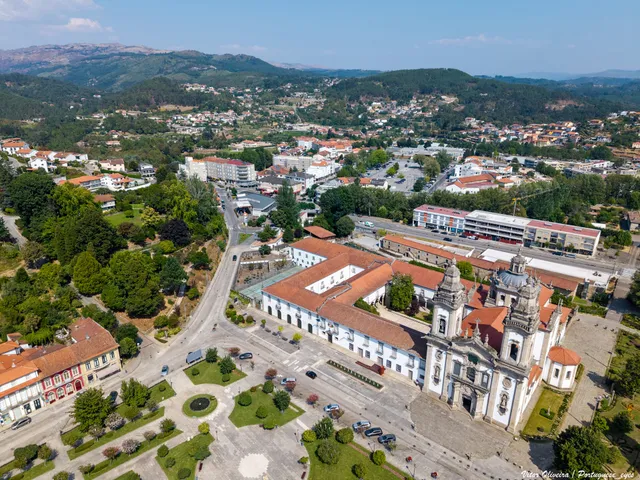
Air view of the Monastery of São Miguel and the Republic Square in Refojos
The Monastery of Refojos and the square, in a current view.© Vitor Oliveira from Torres Vedras, PORTUGALⓘ

Not all stories begin with an exact date.

Explore: A monastery, several stories →
Read here and view sources

The Monastery of Refojos already existed in the early 12th century, but the municipal review does not fix the foundation. It questions the traditional assignments to Hermínio Fafes and Gomes Soeiro.

The source links the medieval patronate to noble families in the region. Separate two questions: when we know the monastery existed and when it was founded. A documented date of existence does not solve the second question by itself.

See Fact sheet: Mosteiro de São Miguel de Refojos
Source and context

Municipality — history and art of Mosteiro de São Miguel de Refojos

Accessed: . Editorial summary; the date of consultation is not the date of the facts.

Refojos · art and architecture

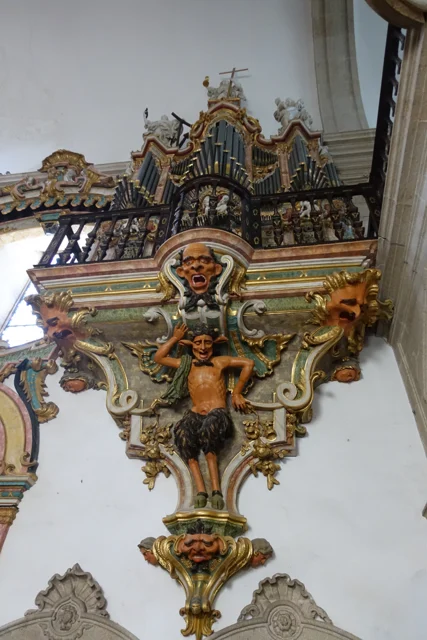
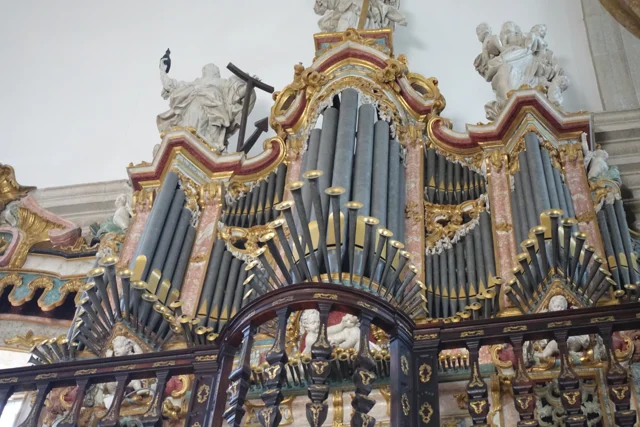
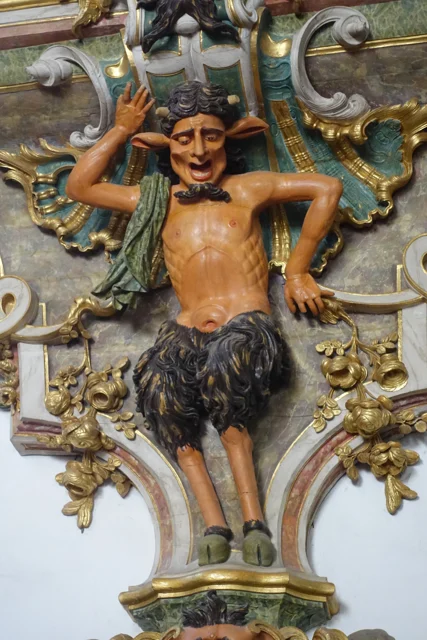
Two organs, one of them mute

Organ with tubes and golden cut, on carved figures and decorative faces.
View of the organ and the decoration that sustains it, photographed in 2016. The image does not determine which of the two organs is the mute.
Photography: Joseolgon · CC BY-SA 4.0
About this photograph

Date given at source: . Source consulted in 2026-11-07. EXIF orientation, proportional resizing and WebP conversion; no retouching or clipping of the file.

Request removal or correct the photo credit

See more 2 photos and details
Organ tubes at different heights, surrounded by golden cut and light sculptures.
Details of the tubes, cut and sculptures of the organ in 2016.
Photography: Joseolgon · CC BY-SA 4.0
About this photograph

Date given at source: . Source consulted in 2026-11-07. EXIF orientation, proportional resizing and WebP conversion; no retouching or clipping of the file.

Request removal or correct the photo credit

A figure carved with horns, pointed ears and fur-covered legs between golden elements.
Details of a figure carved under the organ in 2016.
Photography: Joseolgon · CC BY-SA 4.0
About this photograph

Date given at source: . Source consulted in 2026-11-07. EXIF orientation, proportional resizing and WebP conversion; no retouching or clipping of the file.

Request removal or correct the photo credit

An invitation to look beyond the facade.

Includes an activity to try →Explore: The pulpits had more than one step. →
Read here and view sources

The municipal description identifies two lateral organs, being a mute. The visual symmetry of the church does not correspond, therefore, to two sound instruments. Next to the entrance appear frowns; later, the wood creates another surprise effect.

The two pulpits are painted brown to imitate marble and partially golden. The fountain places the execution in 1777–1780 and the painting and browning in 1786–1789. Shape, material and finishing count different stages of the same work. This patrimonial description does not confirm the current functioning of the organ.

The choir adds another reading of the wood: the Municipality describes a brown chair, of 1767–1770, organized in two levels and in the shape of U. São 45 seats, with the place of the abbot to the center. The disposition helps imagine a community gathered, instead of looking at each chair separately.

At the top, the circular zimbarium is accompanied by interior and exterior balconies. The description identifies the twelve apostles and, on the top, St. Michael. From furniture to silhouette, they change the scale and the observation point. The photographs of this reading show details of the organ; they do not document all these elements.

Words in this story: see explanations →See Fact sheet: Mosteiro de São Miguel de Refojos
Source and context

Municipality — history and art of Mosteiro de São Miguel de Refojos

Accessed: . Editorial summary; the date of consultation is not the date of the facts.

Bucos · transport in 1758

A small bridge, a long way

Married was in the way of a lot of people.

Includes an activity to try →Explore: Paths that served the life of the village →
Read here and view sources

In Casares, a wooden bridge integrated the real road to Braga and communications with Trás-os-Montes, according to the memory of 1758. Before the movement, the vicar defended building it in stone. It was a request, not the confirmation of a work.

The source distinguishes this passage from small walkways made with a wooden beam, for pedestrians. Different paths responded to different uses.

The passage not only served the village. The vicar describes a public road and very frequented, linking Braga to the term of Basto and Trás-os-Montes. The bridge emerges, as a local point of a larger network. The recommendation to replace it by chanting shows the author to assess a need, besides inventing what existed.

In the same rivers, the water moved mills and was used by farmers in the fields. The crossing, grinding and watering appear in the same portrait of the territory. A bridge can be read by what it allows to do: reach another place, maintain a communication or approximate works separated by water.

Words in this story: see explanations →Getting to know the parish
Source and context

Municipality — Parish memories of Bucos (1758)

Accessed: . Editorial summary; the date of consultation is not the date of the facts.

History of Ponte de Cavez

Five arches, more than a while

Ponte de Cavez on the river Tâmega, with stone arches, board and wooded banks.
Partial view of the Ponte de Cavez over the Tâmega.© Joseolgonⓘ

An old bridge didn't stop in history.

Includes an activity to try →Explore: A crossing, several seasons →
Read here and view sources

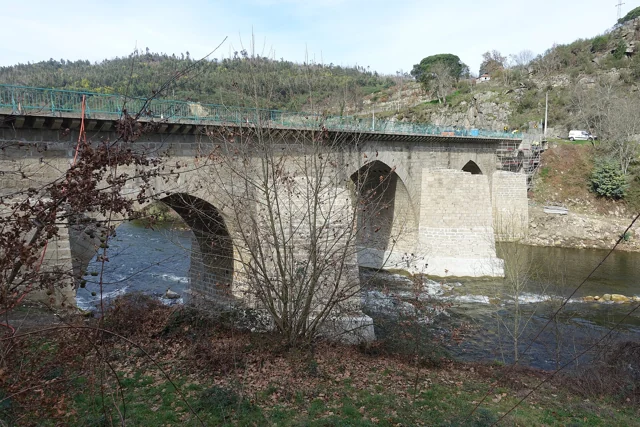
Three broken central arches and two perfect back, next to the banks: the Ponte de Cavez brings together different shapes and times. The Museum located the medieval construction in the second half of the 13th century, at the service of the road between Braga and Vila Pouca de Aguiar.

The source attributes the round arches to the works of Philip II's reign and mentions a landmark of 1599. In the 19th century, the road between Fafe and Vila Pouca de Aguiar brought the enlargement of the board. Watching the bridge is looking for changes to an ancient crossing.

According to the Museum, the stone bridge replaced a previous wooden, then degraded. The construction is attributed to Frei Lourenço Mendes, Dominican who gathered alms for the work; the museological text mentions testimonial legacies as support of this connection. The crossing thus involves materials, paths and ways to finance a collective work.

Words in this story: see explanations →See Fact sheet: Ponte de Cavez
Source and context

Land Museum of Basto — Ponte de Cavez, 27/02/2022

Municipality of Cabeceiras de Basto — Parish memories of 1758: Cavez

Municipality — conclusion of rehabilitation of Ponte de Cavez, 30/04/2019

Accessed: . Editorial summary; the date of consultation is not the date of the facts.

Painzela · patrimonial identification without chronology demonstrated

A bridge, a name and a question

Stone bridge of Painzela on a water line, surrounded by vegetation
Ponte de Painzela, photographed by Tommasoandrea. The image allows observing the arch and the water line; it does not determine the time of construction.© Tommasoandreaⓘ

Calling him Roman doesn't solve your age.

Includes an activity to try →
Read here and view sources

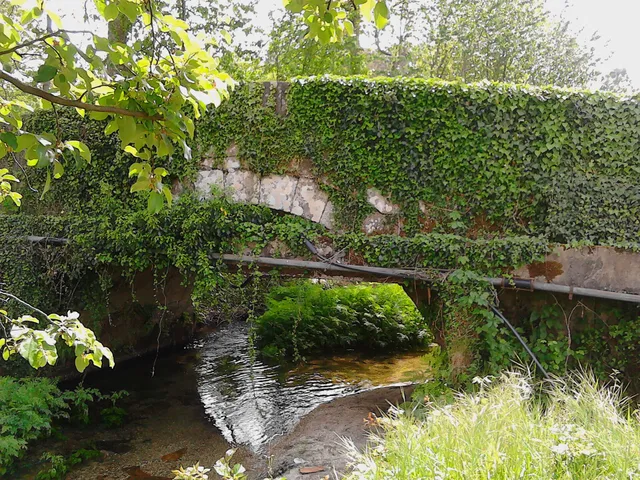
The municipal presentation of Painzela includes a photograph identified as Ponte de Painzela and refers to a Roman Bridge among the heritage of the parish. This designation alone does not demonstrate when the bridge was built. The name allows to find the place; dating would require documentation or study of the construction. It is a good question to lead to a reading of the heritage: what do we know by identification and what we still need to investigate?

See Fact sheet: Ponte de Painzela
Source and context

Municipality — parish presentation of Painzela and bridge identification

Accessed: . Editorial summary; the date of consultation is not the date of the facts.

Gondiães · inventory documented assets without current access verification

Three bridges, three passing stories

The name of a bridge doesn't tell you everything about its construction.

Includes an activity to try →
Read here and view sources

The municipal inventory links the Arame Bridge of Padroselos to the tin exploration. The form Po.27 describes iron, wood and ruin, without filling the date of survey.

The Freixo Bridge, no Torneiro, integrated the path between Cunhas and Torneiro. The record Po.28 records granite and no guards. In Po.29, the Arames Bridge over the Beça appears with a concrete board supported by five pillars. These two chips are 20 March 2008.

There are three different references. The inventory allows to know the memory of the connections, but does not confirm current conditions or propose crossings.

Source and context

Municipality — Inventory of bridges, tokens Po.27–Po.29, PDF pages 28–30; Po.28 and Po.29 raised in 20/03/2008, Po.27 without completed date

Accessed: . Editorial summary; the date of consultation is not the date of the facts.

Life you do not always see

Knowing animals begins by perceiving the territory and respecting the distance.

Choose a story · 3
Species recorded in the municipality · general ecology

An old trunk still nourishes life

For beetle larvae, decaying wood can be both home and food.

Includes an activity to try →Explore: A photograph, several phases of history →
Read here and view sources

The larvae of Dorcus parallelipipedus live and feed on decomposing wood, according to The Wildlife Trusts. The photograph of the catalogue documents an adult observed in the municipality; it shows no larvae or confirms the tree where they developed. Add this story to that of wood fungi: an aging trunk can sustain different life forms. To observe, you don't have to undo your shelter. In the adult, The Wildlife Trusts highlights the wide head, jaws, and wing covers entirely black. They are clues to compare with the available photograph, without concluding that all dark beetles belong to this species.

Source and context

The Wildlife Trusts — Lesser stag beetle, Dorcus parallelipipedus
Consultations: ,

Editorial summary; the date of consultation is not the date of the facts.

General biology · bee nesting places

Not all bees look for the same home

Learning about shelters adds another dimension to flowers.

Includes an activity to try →Explore: Flowers, shelters and wood →
Read here and view sources

A flower can offer food, but it does not solve all the needs of a bee. Renata Santos and Albano Soares entomologists distinguish carpentine bees, who use dead wood to nest, from bees-miners, who need discovered soil. The diversity of shelters is also part of a garden.

The so-called insect hotels serve only part of the species, namely some that nest in cavities. They are a complement, not a universal home. The proposal is to recognize relationships between flowers, soil and wood; not to search or open nests. These general examples do not confirm local nests.

There is also a temporal dimension: different plants can offer flowers at different times. Researchers recommend diversity of forms and periods of flowering. Thus, when thinking of a garden, it is worth relating three questions: what provides food, where there can be shelter and at what time of year these resources are available.

Source and context

Calouste Gulbenkian Foundation — explanations of entomologists Renata Santos and Albano Soares, 07/06/2022

Accessed: . Editorial summary; the date of consultation is not the date of the facts.

Species biology · photograph recorded in the municipality

A song hidden in the greenery

Sometimes an insect is heard before it is seen.

Includes an activity to try →Explore: Sound, light or image? →
Read here and view sources

The great green bush-cricket, Tettigonia viridissima, can go unnoticed among leaves and branches. According to the Gulbenkian profile, adult males reveal themselves by their song, while both males and females tend to hide in dense vegetation. The species occurs in habitats with shrubs and trees, including vegetable gardens and urban green spaces.

Nymphs already resemble adults but have poorly developed wings. Comparing life stages is different from identifying behaviour: the photograph recorded in Cabeceiras shows the insect on wood, without documenting its song. The image’s background is also not enough to describe the whole habitat where it was observed.

Developmental stage also changes what is easiest to observe. The profile suggests looking for nymphs among herbs and shrubs, while adults often remain hidden. Sound and images offer different clues: hearing a song without seeing the animal and photographing an insect without hearing it are not equivalent records. With the local photograph, keep to what the frame allows you to recognise.

Words in this story: see explanations →
Source and context

Calouste Gulbenkian Foundation — Great Green Rocket

Accessed: . Editorial summary; the date of consultation is not the date of the facts.

Read the landscape through the plants

Trees, forests, vineyards and fields reveal different ways of occupying the territory.

Choose a story · 4
Botany · general features

What is hidden inside a chestnut burr?

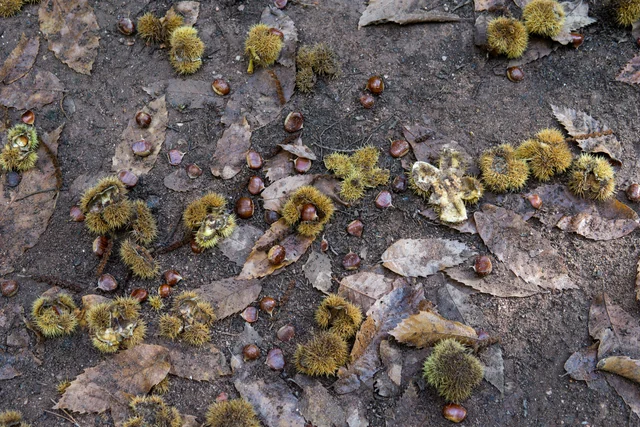
Open chestnut burrs and shiny brown chestnuts among fallen leaves.
Chestnuts and burrs on the ground at Guirbaden, Mollkirch, France, in 2020. Botanical illustration, not an observation from Cabeceiras.
Photography: AudreyMuratet · CC BY-SA 4.0
About this photograph

Date given at source: . Source consulted in 2026-11-07. EXIF orientation, proportional resizing and WebP conversion; no retouching or clipping of the file.

Request removal or correct the photo credit

The chestnut is the fruit; the burr encloses the cluster.

Includes an activity to try →Explore: From hedgehog to seed →
Read here and view sources

Castanea sativa sheds its leaves in the unfavourable season and can grow into a large tree. The Castelo Branco Polytechnic profile describes narrow yellow flowers in long hanging spikes. Later, chestnuts develop together inside a prickly burr: the chestnut is the fruit, while the burr encloses the cluster.

Notice the layers: the shiny brown covering belongs to the fruit; inside there is usually one seed, with a yellowish skin. The tree also had a place in workshops: the source mentions wood used in carpentry, cabinetmaking, basketry and woodturning. These are general characteristics and uses, without attributing a workshop or individual tree to the municipality.

Flowers come before the burr. UTAD’s Digital Flora gives May and June as the species’ flowering period. This is a general botanical reference, not a prediction for a tree in Cabeceiras: compare photographs of the same tree on different dates to learn its rhythm. A tree without chestnuts on a spring visit tells a different story from an open burr in autumn.

Chestnut belongs to the Fagaceae family, the same broad botanical family as oaks. Comparing their fruits shows that kinship does not mean identical appearance: return to the oak story and look for what surrounds the acorn, then revisit the chestnut’s layers.

Words in this story: see explanations →See the plants photographed in the municipality
Source and context

Polytechnic Institute of Castelo Branco — botanical record of Castanea sativa

UTAD Botanical Garden — Castanea sativa, Flora Digital de Portugal

Accessed: . Editorial summary; the date of consultation is not the date of the facts.

Vegetation described for the area

The forest has a history too

Names that belong to the memory of the mountains.

Includes an activity to try →Explore: Read a tree per part →
Read here and view sources

Oaks and chestnuts form part of the mountain vegetation described by the municipality. The same source describes the partial replacement of that vegetation by maritime pine. A wooded hillside therefore also records planting choices and changes in land use. Looking only at the greenery is not enough: notice the species, the patches and the spaces between trees. This municipal description is not a current survey of every wood.

The same tree species can create different working landscapes. The publication Florestas do Alto Minho distinguishes chestnut orchards, managed for fruit, from chestnut coppices, managed for poles. These are uses of the chestnut tree, not two tree species. This regional comparison helps us ask questions about the landscape of Cabeceiras; it does not identify the purpose of any particular local plot.

There is also a forest beneath the canopy. The understorey consists of plants growing under the trees; dead wood can support wood-feeding insects and fungi too. A forest landscape is therefore more than a count of living trunks. Look for different layers — canopy, low vegetation and fallen wood — without assuming that species mentioned for another region occur in that spot.

Words in this story: see explanations →
Source and context

Municipality — landscape and vegetation

High CIM Minho — High Forests Minho, sours and candlesticks (habitat 9260)

Accessed: . Editorial summary; the date of consultation is not the date of the facts.

Cork oak · botany and local landscape

Cork begins on a tree

A cork oak’s bark is one of the first clues.

Explore: A tree, different materials →
Read here and view sources

Quercus suber has thick, elastic, deeply cracked bark: cork. The municipal description includes cork oaks on the hillsides of Cabeceiras. Leaves remain for more than one season; the University of Évora mentions up to three years. Evergreen foliage does not mean that every leaf lasts forever.

The fruits are acorns. The profile describes their cups as having long, velvety scales. Bark, leaves and fruits offer different clues for observing the tree, without removing cork or breaking off branches. The local reference documents the landscape; the botanical description explains general features of the species.

Inside, cork consists of microscopic cells containing gas similar to air. APCOR relates this structure to its lightness, compressibility and ability to regain its shape. Suberin in the cell walls helps impede the passage of liquids and gases. A stopper looks simple, but the material’s behaviour begins at a scale our eyes cannot see.

The association also describes turning used stoppers into granules for new products, such as floor coverings and soles. This is a general example of reuse, not an industrial activity confirmed in Cabeceiras. Compare it with the wooden clogs of Outeiro and the containers of Faia: other stories of tree-derived materials, with different uses and working methods.

Words in this story: see explanations →
Source and context

University of Évora — Quercus suber, botanical description

Municipality — landscape and vegetation

APCOR — Cork, cellular structure, properties and reuse (page consulted in the staging subdomain)

Accessed: . Editorial summary; the date of consultation is not the date of the facts.

General botany · alder

Seeds that travel by water

Alder has a close relationship with rivers.

Explore: The tree, the river and the craft →
Read here and view sources

In the University of Évora profile published under the name Alnus glutinosa, alder seeds have air-containing tissues that aid dispersal by water. The tree tolerates long periods with submerged roots. Woods dominated by alder are known in Portuguese as amiais.

Its connection with water thus extends from growing along banks to the journey of its seeds. There is also a naming change to understand: Flora-On uses Alnus lusitanica for native Portuguese alders, citing a 2017 study. Here each name remains linked to its source; the story does not identify a particular tree in the municipality.

The profile published as Alnus glutinosa describes a deciduous tree, which loses foliage for part of the year. The leaves are alternate with doubly toothed edges; the bark, smooth when young, becomes darker and cracked. These features concern different plant parts and different stages of its life.

That source gives December to February as the flowering period. Male flowers appear in elongated groups called catkins, while female groups have a different shape. Winter can therefore reveal details hidden on a visit when the crown is full of leaves. This calendar belongs to the consulted description and may vary with local conditions; it does not announce flowering for a particular tree in Cabeceiras.

Words in this story: see explanations →
Source and context

University of Évora — Alnus glutinous, breeding and habitat

Portuguese Society of Botany — Flora-On, Alnus: ecology, symbiosis and taxonomic note

Accessed: . Editorial summary; the date of consultation is not the date of the facts.

The flavours of Cabeceiras

From the garden to the pot, from the oven to the table.

Choose a story · 3
Oral memory · March 2011

The bread kept the next batch

A small portion of mass attached one batch to the next.

Includes an activity to try →Explore: Three ways to look at the same dough →
Read here and view sources

In March 2011, Maria da Conceição recalls the bread cooked every eight days. A portion of the previous mass was in a bowl, with a little salt inside the wooden mass. On the eve of the new batch, warm water and flour were added. The testimony of Recovos, Pedraça, also describes an adaptation: when it started cooking less often, the yeast purchased in the bakery was used.

This change has a family history. Maria da Conceição was a native of Cavez and had learned from her grandmother to make cornbread. When she was interviewed, at the age of 69, she also made mix bread. The collection does not present an immobile tradition: it shows learning, choices and a routine that adapts.

The cooking schedule was also extended to the community. In the testimony of 2011, the batches are associated with the festivals of the year, the longing for homemade bread, the feast of Santa Marinha and the Christmas and defoliated initiatives of the Association D. Nuno Álvares, of Pedraça. Saving pasta for the following week made sense in a weekly routine; cooking only from time to time put other needs. These are remembered uses in this collection, not a current party program.

Words in this story: see explanations →
Source and context

Basto Land Museum — testimony of Maria da Conceição Gonçalves Mouta, collected by Maria de Fátima Carvalho in 2011

Accessed: . Editorial summary; the date of consultation is not the date of the facts.

Faia · agriculture and food memory

At Faia, the fruit also counts

Cherries, wine and olive oil help you discover this agricultural landscape.

Includes an activity to try →Explore: From fruit to containers →
Read here and view sources

The municipal presentation highlights the cherry in agriculture of Faia and associates the parish with the production of wine. The tannaria, linked to wooden containers, adds a artisanal dimension to this agricultural landscape.

In May 1758, the abbot described a greater abundance of wine, fruit and olive oil than cereal. The two sources allow different seasons to approach, but do not tell an exact continuity of cultures: the ancient document speaks of fruit in general, without identifying cherries. Comparing them is a way to discover as much as we know and what remains to be clarified.

Getting to know the parish
Source and context

Council — Faia
Accessed:

Municipality — Parish memories of Faia, 23/05/1758, transcript of José Viriato Chapel (2003)
Accessed:

Editorial summary; the date of consultation is not the date of the facts.

Alvite · mill inventory in 2008

From Petimão to olive oil mill

One carried energy to Ramil's house.

Read here and view sources

The municipal survey of 2 of March 2008 describes the mill of Casa do Ramil, in Alvite, fed by Levada do Vale do Moinho, with water removed from the riverside of Petimão. A granite cube led the water to the rotation. The building had two presses and the inventory recorded the deactivation in 2005. This portrait documents the connection between water, construction and transformation of the olive. It is a private property: the historical survey does not confirm public access nor the current state of the equipment.

Compare Covas, in Peio: then the inventory describes a wooden gutter. In both cases, it is important to follow the link between the levada and the mechanism, without imagining that all mills used the same solution.

Source and context

Municipality — inventory of olive oil mills, record L.A.1, withdrawal of 02/03/2008

Accessed: . Editorial summary; the date of consultation is not the date of the facts.

YOUR LOCAL GUIDE

What would you like to discover?

Take a closer look.