Discover Cabeceiras de BastoFree independent guide
ViveCabeceirasYOUR GUIDE TO CABECEIRAS
ENEnglish
SearchSaved

Stories of Cabeceiras

Choose a story to start with. You can change the subject or fine tune the search.

41 stories · All themes · Search: datas

Time travel

Documents, details and traditions: there is more to discover than a date on a stone.

Choose a story · 21
Abadim · architecture and interpretation of registrations

Two dates don't count the whole house

In the House of Ramada, the doors hold clues from different times.

Includes an activity to try →
Read here and view sources

António P. Dinis highlights, in Abadim, the Casa da Ramada, with an armoriated portal, a thorn, a threshing floor and a porch. Refers 1678 in a baker's house and 1828 in the baker's house of another door. From these marks, he proposes an initial structure of six hundred and improvements in the first half of the nineteenth century.

An inscription is a clue, not the birth certificate of all walls. The two dates help to think of a transformed house: housing and work spaces can gather elements from various times. The source does not confirm current conditions of access.

Words in this story: see explanations →Getting to know the parish
Source and context

Basto Land Museum / António P. Dinis — Tower of Abadim, 17/01/2018

Accessed: . Editorial summary; the date of consultation is not the date of the facts.
Painzela · documentary references of 1656 and 1735

A chapel leaves a trail in the archive

The dates of the documents also tell stories.

Includes an activity to try →Explore: Three dates, three questions →
Read here and view sources

The references that accompany the memory of Painzela mention an obligation linked to the chapel of Nossa Senhora da Conceição, of 1656. Another, of 1735, refers to the institution of the chapel of São Gonçalo and an obligation to its factory.

These dates belong to documents. The municipal heritage presentation assigns 1662 to the chapel of São Gonçalo da Casa de Cimo de Vila: they are information of a different nature, which should not be merged into a single construction date. The reading of the sources also involves asking what each record is actually dating.

Words in this story: see explanations →
Source and context

Municipality — Parish memories of Painzela (1758)

Municipality — assets of Painzela

Accessed: . Editorial summary; the date of consultation is not the date of the facts.
Documented history · 1514

Two outcasts, seven days

October 1514 left two marks on the territory.

Includes an activity to try →Explore: Abadim: documents and marks in place →
Read here and view sources

Manuel I granted the foral of Cabeceiras in 5 October 1514 and that of Vadym, today Abadim, in 12 October. Seven days separate the documents: the administrative history of the territory goes through more than one place.

But what was the point of reviewing the outsiders? The Tombo Tower exhibition explains the general context: there were complaints about outdated charges, coins and weights and old texts difficult to interpret. Manueline reform sought to review these documents. Local dates of 1514 belong to this broader movement; it does not mean that the settlements began to exist that year.

The work also required registration and preservation. The same exhibition describes the preparation in triplicate: one copy for the chamber, one for the landlord of the rights and another for the Tower of the Tombo. This general explanation helps to understand why an administrative document could have several copies. It does not identify here the whereabouts of each copy of the two local forals.

In 5 October 2024, Casa do Tempo received a tertulia over the 510 years of the foral, with José Viriato Chapel and Porfirio Correia. The municipal news recalls the two documents and their importance for the administrative organization. The celebration is a gateway to history; it does not replace the reading of the forals themselves.

Words in this story: see explanations →
Source and context

Municipality — celebration of fora, published in 07/10/2024

DGLAB / Torre do Tombo and Casa de Bragança Foundation — O Foral Novo: records that tell stories, pp. 2 and 4 PDF

Accessed: . Editorial summary; the date of consultation is not the date of the facts.
Refojos · art and architecture

Two organs, one of them mute

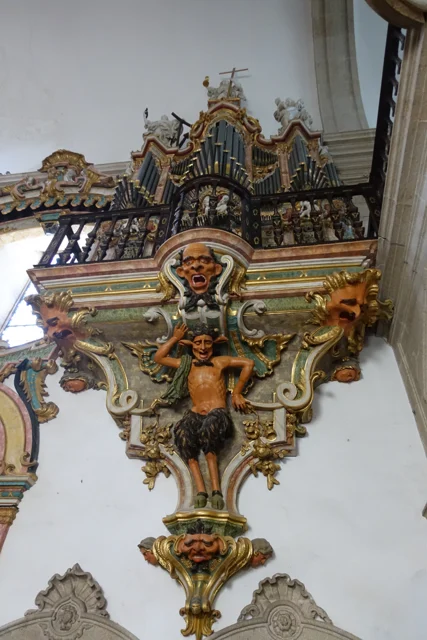
Organ with tubes and golden cut, on carved figures and decorative faces.
View of the organ and the decoration that sustains it, photographed in 2016. The image does not determine which of the two organs is the mute.
Photography: Joseolgon · CC BY-SA 4.0
About this photograph

Date given at source: . Source consulted in 2026-11-07. EXIF orientation, proportional resizing and WebP conversion; no retouching or clipping of the file.

Request removal or correct the photo credit

See more 2 photos and details
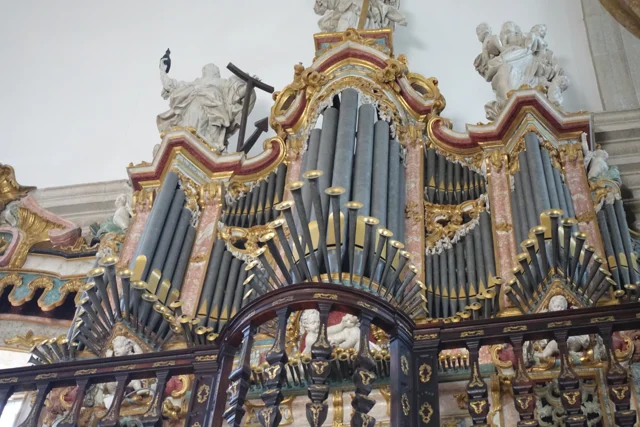
Organ tubes at different heights, surrounded by golden cut and light sculptures.
Details of the tubes, cut and sculptures of the organ in 2016.
Photography: Joseolgon · CC BY-SA 4.0
About this photograph

Date given at source: . Source consulted in 2026-11-07. EXIF orientation, proportional resizing and WebP conversion; no retouching or clipping of the file.

Request removal or correct the photo credit

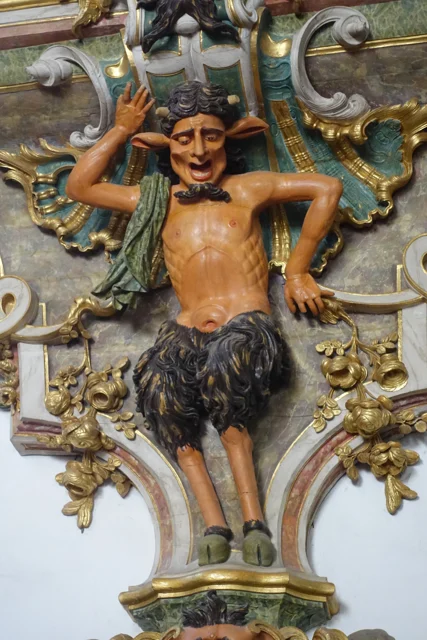
A figure carved with horns, pointed ears and fur-covered legs between golden elements.
Details of a figure carved under the organ in 2016.
Photography: Joseolgon · CC BY-SA 4.0
About this photograph

Date given at source: . Source consulted in 2026-11-07. EXIF orientation, proportional resizing and WebP conversion; no retouching or clipping of the file.

Request removal or correct the photo credit

An invitation to look beyond the facade.

Includes an activity to try →Explore: The pulpits had more than one step. →
Read here and view sources

The municipal description identifies two lateral organs, being a mute. The visual symmetry of the church does not correspond, therefore, to two sound instruments. Next to the entrance appear frowns; later, the wood creates another surprise effect.

The two pulpits are painted brown to imitate marble and partially golden. The fountain places the execution in 1777–1780 and the painting and browning in 1786–1789. Shape, material and finishing count different stages of the same work. This patrimonial description does not confirm the current functioning of the organ.

The choir adds another reading of the wood: the Municipality describes a brown chair, of 1767–1770, organized in two levels and in the shape of U. São 45 seats, with the place of the abbot to the center. The disposition helps imagine a community gathered, instead of looking at each chair separately.

At the top, the circular zimbarium is accompanied by interior and exterior balconies. The description identifies the twelve apostles and, on the top, St. Michael. From furniture to silhouette, they change the scale and the observation point. The photographs of this reading show details of the organ; they do not document all these elements.

Words in this story: see explanations →See Fact sheet: Mosteiro de São Miguel de Refojos
Source and context

Municipality — history and art of Mosteiro de São Miguel de Refojos

Accessed: . Editorial summary; the date of consultation is not the date of the facts.
Documentary memory · 1758

Olela had days of meeting

The story was also made between banks and buyers.

Read here and view sources

In the relationship of Santa Senhorinha of 1758, Olela appears as a place of fairs in December, February and March. The parish priest refers payments for settlement and rights. It is a window on local exchanges of that time, not the calendar of markets today. The text specifies the days: 14 and 15 December, 24 and 25 February and 27 March. The dates belong to the account of 1758.

Getting to know the parish
Source and context

Municipality — Parish memories of Santa Senhorinha, 1758
Accessed:

Municipality — Memória de Santa Senhorinha, 23/05/1758, replies 15, 19 and 20; transcription of José Viriato Capela (2003)
Accessed:

Editorial summary; the date of consultation is not the date of the facts.
Pedraça · Parish memories of 1758

A Pedraça call to Coimbra

In 1758, the parish priest's choice pointed out to the council.

Includes an activity to try →Explore: Read a document, ask questions →
Read here and view sources

The parish memory describes the matrix dedicated to Santa Marinha and states that the rector was presented by the rector of the College of São Jerónimo de Coimbra. This historical link shows how a small parish was part of relations that surpassed the lands of Basto.

The same transcript places Pedraça at the end of Cabeceiras de Basto and in the district of Guimarães. It records 96 fires and 322 souls of communion, in addition to a congruity of 50 thousand réis for the rector. They are categories of the document: fires are not people, and souls of communion do not automatically equal the total inhabitants.

The numbers and connection to Coimbra show two plans of parish life: the community described and the organization that framed his parish priest. The municipal version identifies the transcription of José Viriato Chapel, published in 2003, from the Memórias of 1758.

The municipal page also distinguishes the account from the references that accompany it: it refers to the memory 296 of the volume 42 and lists an obligation to the Santa Bárbara hermitage factory, of 1624, and another linked to the Blessed Sacrament, of 1722. They are archive clues. The existence of these references does not mean that the full text of the two documents is reproduced on the page, nor transforms 1624 on a date of construction of the chapel.

Words in this story: see explanations →Getting to know the parish See Fact sheet: Igreja paroquial de Pedraça See Fact sheet: Santa Bárbara de Pedraça — capela e miradouro
Source and context

Municipality — Parish Memories of Pedraça (1758), transcript of José Viriato Chapel (2003)
Accessed:

Municipality — Parish Memories of Pedraça, 1758; transcription of José Viriato Chapel (2003)
Accessed:

Editorial summary; the date of consultation is not the date of the facts.
Outeiro · landscape and historical interpretation

The relief gives a clue to the name

A gently wavy landscape on the western shore of the municipality.

Includes an activity to try →Explore: Read Outeiro by three paths →
Read here and view sources

On the western bank of the municipality, next to Fafe, Outeiro is described by the Municipality as a softly wavy relief plateau. The presentation relates the name to this landscape and points to the proximity of the headquarters and the fixing of houses along the road.

The municipal page proposes a medieval interpretation of the names of the places and refers to the scarcity of archaeological data. This formulation needs to be dealt with with the inventory of the PDM published in 2026, which identifies three archaeological sites in Outeiro. The name of the parish still does not itself provide a date of foundation.

Words in this story: see explanations →Getting to know the parish
Source and context

Municipality — Outeiro, relief and hydrographic network

Diary of the Republic — Notice No 16185/2026/2, PDM Cabeceiras de Basto, archaeological inventory AQL34–AQL36, p. 92 (29/06/2026)

Accessed: . Editorial summary; the date of consultation is not the date of the facts.
Arco de Baúlhe · railway memories

Before the train, the tiles arrived

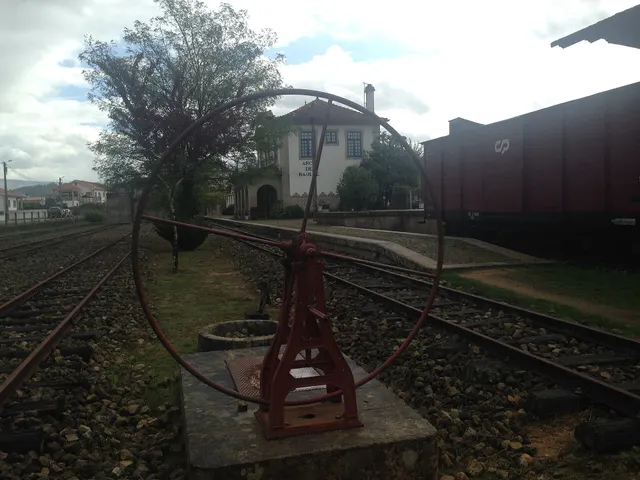
Revolving plate and tracks from the old Arco de Baúlhe station, with buildings and railway equipment at the bottom.
Facade of the station of Arco de Baúlhe, with coating and tile panels visible to the background. View of JP Ribeiro; it is not a detail of the panels of 1940.© JP Ribeiroⓘ

The station also reads on the walls.

Includes an activity to try →Explore: A station, different spaces →
Read here and view sources

The station panels were executed in 1940 by A. Lopes, at the Sant’Anna Ceramic Factory in Lisbon, according to the publication of the Basto Land Museum. They are prior to the opening of the station in 1949.

The station was a set of spaces with different functions. The publication identifies the driver's house, the staff building, the loading and unloading dock and the dispatch warehouse. The two stalls started to host permanent exhibitions of railway equipment; the warehouse is described as temporary exhibition space.

Reading the building can begin with these differences: where were they working, where were goods passing and where were they stored? The tiles are part of this built landscape. The description documents the museological organization presented in the publication, without confirming the exhibition or access of each space today.

Getting to know the parish See Fact sheet: Núcleo Ferroviário de Arco de Baúlhe
Source and context

Municipality — Land Museum of Basto: a journey through the history of the region, pp. 28–29

Municipality — Núcleo Ferroviário de Arco de Baúlhe

Accessed: . Editorial summary; the date of consultation is not the date of the facts.

Arco de Baúlhe · railway memories

A gas engine on the rails

The collection counts different ways to get a train moving.

Explore: Who and what was riding the tracks? →
Read here and view sources

The ME5 motor vehicle carried a petrol engine to the rails. The publication on the museum located its construction in the Santa Apolónia workshops in 1948. In the same collection, it describes a steam locomotive manufactured in Germany in 1908.

The dates are forty years and allow comparing two technologies. They are dates of construction of vehicles, not of arrival at the station. The collection gathers pieces from various origins; being in the museum does not show, by itself, where each one circulated.

The Basto Land Museum identifies the engine as Chevrolet and describes the passenger space: 11 first-class seats, 16 third-class and other 16 standing, as well as sanitary facilities. The 27 seating positions shall not be confused with all available positions.

The National Railway Museum explains that a single motor vehicle sought to reduce the costs of operation in lines of low traffic, bringing together functions that required a composition. The project, directed by the engineer Vasco Viana, took advantage of characteristics of road transport. The same record says that the use of gasoline proved costly and led to temporary or extraordinary uses.

The inventory adds a link to the local history: this ME5 will have circulated in the Line of Tâmega. The formulation is prudent and so remains. It is a specific documentary track, different from deducing the circulation just because the vehicle is in the collection today.

Getting to know the parish See Fact sheet: Núcleo Ferroviário de Arco de Baúlhe
Source and context

Municipality — Land Museum of Basto: a journey through the history of the region, pp. 28–29

Basto Land Museum — Heritage with history: Self-propelled ME5, 22/02/2018

National Railway Museum MEf5, FMNF/ARC/ Inventory000203

Accessed: . Editorial summary; the date of consultation is not the date of the facts.

Heritage of Abadim

A tower to look slowly

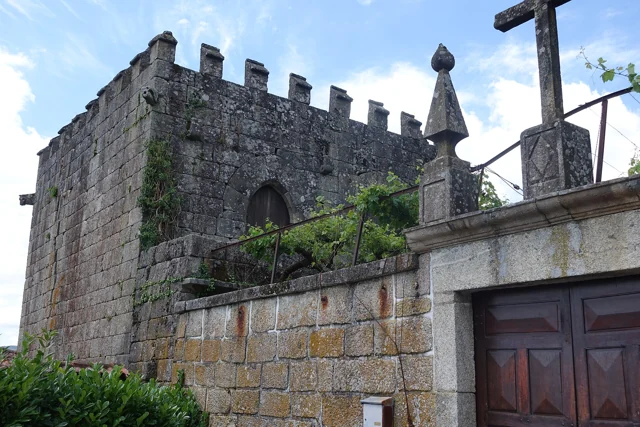
Tower of Abadim, with yellow crowning and stone constructions around.
Tower of Abadim · yellow crowning and surrounding constructions.© Joseolgonⓘ

History is also read in windows and corners.

Explore: Read the marks of power and time →
Read here and view sources

The Tower of Abadim has battlements at the top and gargoyles with animal shapes in the corners. António P. Dinis highlights the settery, the broken arch doors and, inside, conversationals next to the windows. It proposes a construction of the sixteenth century, perhaps from the foral period, without setting an exact date.

The memory of 1758 places the tower in the middle of the Village of the Tower and states that it did not suffer ruin in the earthquake of 1755. The same document describes Abadim with ordinary judge and Chamber, in an organization proper to the former Couto. Reading architecture and administration together helps to understand the importance of the building; the interior description does not confirm current access.

The text of António P. Dinis distinguishes the probable place of the medieval manor from the quintentist construction described today. It is not necessarily the same building preserved without change. The designation Casa do Tronco accompanies the hypothesis that here the justice and the chain of trust functioned.

In the memory of 1758, the election of the ordinary judge and of the House was presided over by the donate. The document also refers to the intervention of the Guimarães magistrate in correction or new scope. Thus, the existence of own organs should not be confused with an administration without relations with other authorities.

Words in this story: see explanations →See Fact sheet: Torre de Abadim / Casa do Tronco
Source and context

Basto Land Museum / António P. Dinis — Tower of Abadim, 17/01/2018

Municipality — Parish memories of Abadim, José Antunes, 22/05/1758

Accessed: . Editorial summary; the date of consultation is not the date of the facts.

History of Ponte de Cavez

Five arches, more than a while

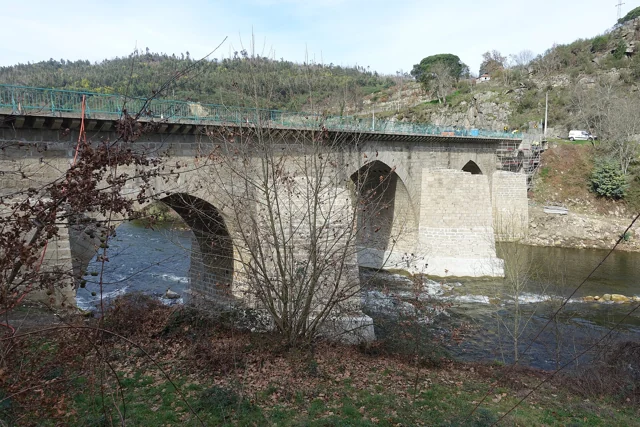
Ponte de Cavez on the river Tâmega, with stone arches, board and wooded banks.
Partial view of the Ponte de Cavez over the Tâmega.© Joseolgonⓘ

An old bridge didn't stop in history.

Includes an activity to try →Explore: A crossing, several seasons →
Read here and view sources

Three broken central arches and two perfect back, next to the banks: the Ponte de Cavez brings together different shapes and times. The Museum located the medieval construction in the second half of the 13th century, at the service of the road between Braga and Vila Pouca de Aguiar.

The source attributes the round arches to the works of Philip II's reign and mentions a landmark of 1599. In the 19th century, the road between Fafe and Vila Pouca de Aguiar brought the enlargement of the board. Watching the bridge is looking for changes to an ancient crossing.

According to the Museum, the stone bridge replaced a previous wooden, then degraded. The construction is attributed to Frei Lourenço Mendes, Dominican who gathered alms for the work; the museological text mentions testimonial legacies as support of this connection. The crossing thus involves materials, paths and ways to finance a collective work.

Words in this story: see explanations →See Fact sheet: Ponte de Cavez
Source and context

Land Museum of Basto — Ponte de Cavez, 27/02/2022

Municipality of Cabeceiras de Basto — Parish memories of 1758: Cavez

Municipality — conclusion of rehabilitation of Ponte de Cavez, 30/04/2019

Accessed: . Editorial summary; the date of consultation is not the date of the facts.

Holy Lady · memory of 1758

Not all bridges were stone

The wood also united the banks.

Read here and view sources

The memory of 1758 lists three wooden bridges in the parish: Vagalhafos, in Quinta de Vila de Lobos; Santa Senhorinha, near the church; and Olela. Names approach the crossings of the farms, the place of worship and the inhabited places.

The same report mentions singing bridges in São Clemente and São Martinho do Arco de Baúlhe. Wood and stone appear, thus, in a single description of the river. The enumeration does not provide construction dates nor proves the survival of structures.

Words in this story: see explanations →
Source and context

Municipality — Memória de Santa Senhorinha, 23/05/1758; transcript of José Viriato Chapel (2003)

Accessed: . Editorial summary; the date of consultation is not the date of the facts.

Heritage of Outeiro · account published in 2012

A Medieval Image Found On Earth

Wood can keep centuries of memory.

Includes an activity to try →Explore: Three moments, different dates →
Read here and view sources

A municipal report of 2012 highlights a sculpture of Santa Maria belonging to the church of Outeiro, dating from the 13th or 14th century. The Virgin appears crowned, seated on a throne, with the Child on his knees. The account says that the play was found buried in the place known as Mata da Santa and taken by parishioners to church. The news doesn't date the discovery. This story allows to know the path of the image, without confirming where it is currently exposed.

Words in this story: see explanations →See Fact sheet: Igreja de Santa Maria Maior de Outeiro
Source and context

Municipality — Parish of Outeiro exposes acquis No Núcleo de Arte Sacra, 09/10/2012

Accessed: . Editorial summary; the date of consultation is not the date of the facts.

Alvite · written account from 1758

The earthquake has reached the account of Alvite

A local memory of a larger event.

Includes an activity to try →
Read here and view sources

In reply to the 1758 survey, the vicar of Alvite recalled the earthquake of 1755. He said there had been no ruins, except for the arms of two crosses of the chapel of the House of the Tower, which would have been twisted north. He added that they were already straight.

The report separates the event from the state observed when it was written. It is a local testimony, not a measurement of the intensity of the earthquake nor a confirmation of visible marks today.

Source and context

Municipality — Memory of Alvite, 23/05/1758; transcription of José Viriato Chapel (2003)

Accessed: . Editorial summary; the date of consultation is not the date of the facts.

Regional rail link · Celorico bridge Basto

To get to the Arc, the line needed to cross another valley

The history of the Cabeceiras train also passes through the neighboring municipality.

Includes an activity to try →Explore: A bridge ready, an uncompleted connection →
Read here and view sources

Before reaching Cabeceiras, the line had to cross the valley of the river of Veade. The bridge of Matamá is in the Union of the Freguesies of Veade, Gagos and Molares, in Celorico of Basto. According to the Museum, its six granite arches form a structure about 190 meters long and 52 meters high.

The report distinguishes two moments: the opening of the bridge in 5 June 1936, and the entry into railway use in 15 January 1949, with the opening of the Celorico section of Basto–Arco de Baúlhe. Having the bridge built did not immediately mean having trains arriving at the Arc. This regional history helps to realize the time needed to complete the connection.

The report of the Museum attributes the responsibility of the work to engineers Jorge Vieira Bastian and Manuel Gonçalves Costa. The dimension of the structure helps to realize the challenge of taking the railway through the valley; the chronology allows to separate this work from the entry into service of the complete connection.

Source and context

Basto Land Museum / Pedro T. Gonçalves — Matamá Railway Bridge, 28/07/2026

Municipality — Land Museum of Basto: a journey through the history of the region, pp. 28–29

Accessed: . Editorial summary; the date of consultation is not the date of the facts.

Refojos · history of assistance since 1877

Care is also part of the story

Mercy was born of a local initiative in the 19th century.

Read here and view sources

The review of Santa Casa places its constitution in September 1877, with the purpose of supporting poor people who needed health care. The first statutes were approved in January 1879. In 1896 opened a hospital, replaced in the years 1950 by the Hospital Professor Julio Henriques. The institution highlights the contribution of the population to this new unit. These dates help follow a history of assistance and cooperation; they do not describe the health services available today.

Source and context

Santa Casa da Misericórdia of Cabeceiras de Basto — historical review of the institution

Accessed: . Editorial summary; the date of consultation is not the date of the facts.

Tâmega · service memory line in 1984

The goods had a marked day

The Tâmega Line also carried goods.

Includes an activity to try →
Read here and view sources

Numa publicação de agosto de 2025, o Museu recorda o serviço de mercadorias que circulava à quarta-feira na Linha do Tâmega, em 1984. Era associado à locomotiva E 165, fabricada pela Henschel & Sohn em 1908. A imagem postal usada pelo Museu foi feita em Celorico de Basto: documenta a linha, não a estação do Arco.

The support is a postcard from the Portuguese Association of Friends of the Iron Paths, dated 1984. There are three times to distinguish: the construction of the machine, the service remembered in the postcard and the publication of the Museum. The document does not describe the load of each trip.

Source and context

Basto Land Museum — The “Modern Market”, 2025-08-27

Accessed: . Editorial summary; the date of consultation is not the date of the facts.

Pedraça · housing

Pedraça is also counted by houses

Beyond the church, there is a housing landscape.

Includes an activity to try →Explore: Houses, persons and work in Pedraça →
Read here and view sources

The history of Pedraça is also read in the houses. The municipal presentation highlights Casa do Paço, Casa de Parada and the houses of the Baron of Basto and Paço de Vila. For Parada, it uses the expression Brazilian taste; for Casa do Paço, it draws attention to the name of the place. They are different clues: one points to architecture, another to the toponymy.

These houses are part of a parish that the Municipality describes as fertile and abundant in water, linked to agriculture and the cultivation of flax. Approaching the housing of the work landscape helps to look at the heritage beyond religious buildings.

The municipal description does not provide construction dates for this set nor identifies those responsible for each work. Nor does the reference to Brazilian taste enough to reconstruct the biography of a owner. The houses are here starting points to know the parish; their inclusion does not presuppose public access.

Words in this story: see explanations →
Source and context

Municipality — parish presentation of Pedraça

Accessed: . Editorial summary; the date of consultation is not the date of the facts.

Refojos and Coimbra · historical route of the chalice

From Refojos to Coimbra, a history in motion

Objects also go through changes in institutions.

Includes an activity to try →
Read here and view sources

According to the study of 1995, the chalice remained in Refojos until the mid-16th century and went to the College of São Bento de Coimbra, in the context of the work of Frei Diogo de Murça. After the extinction of religious orders in 1834, he passed to the Treasure of the Sé de Coimbra. The record of the Machado de Castro Museum documents its current connection to the collection. This journey adds a material history to the relationship between Refojos and Coimbra.

See Fact sheet: Mosteiro de São Miguel de Refojos
Source and context

Portvgalia, new series, volume XVI (1995) — study of medieval goldsmithry, analysis of the cup of Refojos

Museu Nacional de Machado de Castro — Cálice, ficha da coleção no Google Arts & Culture

Accessed: . Editorial summary; the date of consultation is not the date of the facts.

Cavez · settlement and devotion in 1758

Eight places and six chapels

In Cavez, an ancient list draws relations between villages, residents and monasteries.

Includes an activity to try →
Read here and view sources

In 25 of May 1758, the vicar Manuel Pacheco da Cunha numbered eight places: Cavez, Vila Franca, Ponte, Arosa, Rabiçais, Moimenta, Revorça and Parada. He located the church in the middle of the parish and described six chapels. Names help to recognize a hammock; they are not a current list of administrative places.

São Gregório, in Vila Franca, São Mamede, in Arosa, and Santa Maria Magdalena, in Moimenta, were attributed to the abbot of Pombeiro, with its maintenance linked to the Benedictine congregation of Tibães. São Bartolomeu, on the Bridge, had as patron João Correia, of Guimarães. In São Caetano, in Raviceis at the passage of the chapels, and Santa Luzia, in Revorça, the charge was for the residents. The transcription itself uses the variants Rabiçais and Raviceais.

The report also describes five altars in the matrix and a brotherhood of the Souls. The parish appears as a space of worship and collective organization, with distinct responsibilities. The pilgrimage of São Bartolomeu is mentioned for 23 and 24 of August; they are dates of historical testimony, without functioning as current agenda.

The parish links went beyond the chapels. The vicar wrote that Cavez did not have their own mail and resorted to Raposeira, which was located to a league. He also indicated the absence of fair in the parish. They are clues to think where news arrived and where services were concentrated at that time; they do not describe the current offer nor allow automatically to convert the league into a road distance.

Getting to know the parish See Fact sheet: Capela de São Bartolomeu de Cavez See Fact sheet: Igreja de São João de Cavez e cruzeiro
Source and context

Municipality of Cabeceiras de Basto — Parish memories of 1758: Cavez

Accessed: . Editorial summary; the date of consultation is not the date of the facts.

Outeiro · archaeological inventory published in 2026

Three places, several layers of past

Outeiro is also known through archaeology.

Includes an activity to try →
Read here and view sources

The PDM inventory of 2026 brings together three archaeological references in Outeiro: the Medieval Sepulturas da Mata Santa, the Shelter of the Serra da Penouta and Outeiro of Pena.

The Santa Forest appears as a medieval necropolis. Penouta shelter is attributed to Neolithic/Calcolithic; Outeiro of Pena appears as shelter/atalaya, with the indication Prehistory/Media. These are categories and periods of inventory, not three exact dates of construction.

These entries open a longer story than the explanation of the name of the parish. They do not demonstrate continuous occupation between the indicated periods, nor do they establish a link between the graves and the sculpture of Santa Maria. The documentary reference also does not confirm conditions of visit.

Words in this story: see explanations →
Source and context

Diary of the Republic — Notice No 16185/2026/2, PDM Cabeceiras de Basto, archaeological inventory AQL34–AQL36, p. 92 (29/06/2026)

Accessed: . Editorial summary; the date of consultation is not the date of the facts.

The flavours of Cabeceiras

From the garden to the pot, from the oven to the table.

Choose a story · 1
Refojos · family memory published in 2020

Cassians: small shapes, a long journey

Another Cabeceiras candy stored in Alcina's memory.

Includes an activity to try →Explore: A recipe crosses places and generations →View ingredients and preparation →
Read here and view sources

Alcina Teixeira shared these small cakes through Mário Teixeira, residing in Refojos. The publication of the Museum, of 2020, links them to the recipes found in a Portuguese magazine during the years in Mozambique.

The Cassians belong to the same set of memories of lemon cookies and honey cake. The source describes the shape in polka dots, but does not explain the origin of the name.

The report identifies a family trip: Alcina, born in Penafiel, went to Vila de Manica, Mozambique, at the age of fifteen. There he met Alexandre Teixeira of Cavez, who worked on the railways. Alcina had a corn mill and a commercial establishment, and made cakes for family parties. The magazine where he found the recipes connected it to the flavors of Cabeceiras before the family came to live for the municipality. History follows the transmission of recipe; it does not establish who created it.

Source and context

Basto Land Museum — Cassians Cabeceiras, 11/12/2020

Accessed: . Editorial summary; the date of consultation is not the date of the facts.

Life you do not always see

Knowing animals begins by perceiving the territory and respecting the distance.

Choose a story · 4
Serra da Cabreira · species biology

A bird of prey that nests on the ground

Montagu’s harrier is also known in Portuguese as águia-caçadeira.

Read here and view sources

Visit Cabeceiras includes Montagu’s harrier among Cabreira’s fauna. SPEA describes Circus pygargus as a summer visitor that returns to Portugal in spring to breed. It prefers open spaces, hunts mainly insects and nests on the ground among tall vegetation. The reference covers the mountain range; it does not identify nests or sighting points in the municipality.

Its annual cycle connects continents. The LIFE SOS Pygargus project describes wintering in Africa and a return to the Iberian Peninsula in spring to breed, with birds remaining in breeding territories until September. This general calendar does not set precise arrival or departure dates for Cabreira.

Long, narrow wings and a long, narrow tail are part of the portrait presented by LPN. Its mini-guide includes low mountain scrub among the habitats and mentions nests in cereal fields or tall fallow vegetation. The menu is also broader than insects: it may include birds, small mammals and lizards. A bird of prey in open country therefore depends on both prey and suitable vegetation for nesting on the ground.

Words in this story: see explanations →
Source and context

Visit Cabeceiras — natural heritage of Serra da Cabreira
Accessed:

SPEA — Hunting Eagle / Circus pygargus
Accessed:

LPN — Bird guide, Imperial LIFE project: hunting turtle
Accessed:

Palombar / LIFE SOS Pygargus — Identification: migration and breeding period (text consulted in search result)
Accessed:

Editorial summary; the date of consultation is not the date of the facts.

Serra da Cabreira · regional reference and species biology

A newt between water and land

Its skin also changes with its surroundings.

Includes an activity to try →Explore: From egg to change of environment →
Read here and view sources

Bosca’s newt, Lissotriton boscai, has smoother skin during its aquatic phase and rougher skin during its terrestrial phase. For reproduction, it can use ponds, slow-flowing streams and even water tanks. Out of water it finds shelter in damp places among roots, stones and trunks. Its orange belly explains its Portuguese name, tritão-de-ventre-laranja.

It is mentioned among Cabreira’s amphibians by Vieira do Minho’s municipal website, without an associated observation point.

The University of Évora’s description notes four toes on the front feet and five on the hind feet, as well as a laterally flattened tail. These are species features, not a reason to take the animal out of the water. The same source gives a total length of up to nine centimetres, with females generally larger and more robust than males.

The mating season can change its appearance too. The University of Évora describes a small crest on the tail and, in males, a whitish lengthwise stripe, more marked near the tip. Comparing two images therefore means considering sex and season as well as species name. Not every visible difference means different species.

Diet follows the change of habitat. According to the Charcos com Vida project, larvae and aquatic adults catch small water-dwelling invertebrates; on land, adults mainly eat soft-bodied animals such as earthworms and slugs. The female lays eggs individually on aquatic plants or leaves over several days. The diagram below connects these stages without assigning dates to their occurrence in Cabreira.

Source and context

University of Évora — Virtual Museum of Biodiversity, Lissotriton boscai

Vieira Tourism of Minho — fauna of Serra da Cabreira, regional reference

Charcoals with Life / CIIMAR — Orange belly triton, life cycle and feeding

Accessed: . Editorial summary; the date of consultation is not the date of the facts.

Serra da Cabreira · regional reference and species biology

A discreet bird revealed by its song

Listening to a garden warbler can be as rewarding as watching.

Explore: Three clues to meeting a bird →
Read here and view sources

The garden warbler, Sylvia borin, has relatively uniform brown plumage and pale underparts. The British Trust for Ornithology profile highlights a song rich in whistled notes and an association with dense scrub and woodland edges. Vieira do Minho’s tourism website mentions the species for Cabreira. These are clues to its identity and habitat, without identifying nests or guaranteeing sightings in the municipality.

The year is not spent in one setting. The BTO describes wintering south of the Sahara. In the United Kingdom, the species is a summer visitor and becomes harder to detect when it stops singing. This helps explain an important observation distinction: hearing fewer birds does not necessarily mean they have all left. British dates are not an arrival calendar for Cabreira.

For reproduction, the BTO profile gives a typical clutch of four to five eggs, with both male and female incubating, generally for 10–12 days. After hatching, chicks continue developing in the nest. Comparing it with the bullfinch reveals that birds with similarly sized clutches can divide egg care differently.

Words in this story: see explanations →
Source and context

British Trust for Ornithology — BirdFacts: Garden Warbler, Sylvia borin

Vieira Tourism of Minho — fauna of Serra da Cabreira, regional reference

Accessed: . Editorial summary; the date of consultation is not the date of the facts.

Cavez · record from 2016–2017 and general biology

A fish with a network of scales

Dark scale edges create a pattern on the northern Iberian chub.

Includes an activity to try →
Read here and view sources

The Arouca Geopark profile describes Squalius carolitertii with an elongated body, a large rounded head and scales with darker edges that create a net-like pattern. It presents the fish as endemic to Iberia: its natural distribution belongs to the Iberian Peninsula, not just Cabeceiras.

The description mentions mountain and lowland rivers, reminding us that one species can occupy different settings along the river network. These general features help introduce the fish; they are not enough to identify an individual from a distance.

The local connection comes from another source: the northern Iberian chub appears in the Cavez sampling survey from 2016–2017. The report documents that survey without establishing current presence or abundance.

The Geopark profile gives a maximum length of 25 centimetres and a breeding season between April and June. It describes the dorsal fin with a straight outline and the anal fin with a convex one. These are details to compare in a suitable illustration or photograph, not dimensions or dates measured during the Cavez survey. The spindle-shaped body, broader in the middle and tapered at the ends, completes this small exploration of form.

Words in this story: see explanations →
Source and context

Arouca Geopark — Northern scale, Squalius carolitertii: description and biology
Accessed:

Biosphere / Iberdrola, APA file — Monitoring of ichthyofauna 2016–2017, February 2018; pp. 5, 35 and 40, station record 22 on p. 175 PDF
Accessed:

Editorial summary; the date of consultation is not the date of the facts.

Read the landscape through the plants

Trees, forests, vineyards and fields reveal different ways of occupying the territory.

Choose a story · 2
Botany · general features

What is hidden inside a chestnut burr?

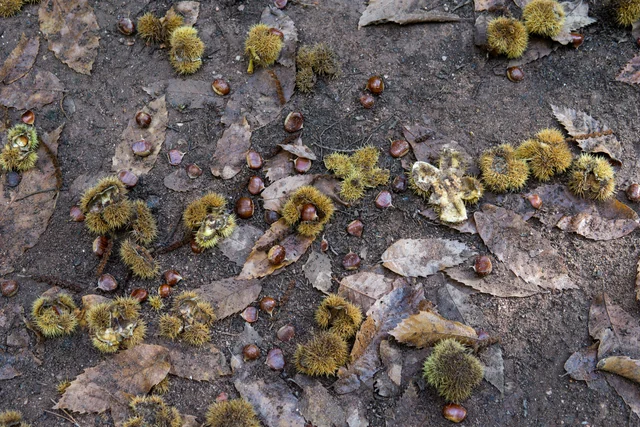
Open chestnut burrs and shiny brown chestnuts among fallen leaves.
Chestnuts and burrs on the ground at Guirbaden, Mollkirch, France, in 2020. Botanical illustration, not an observation from Cabeceiras.
Photography: AudreyMuratet · CC BY-SA 4.0
About this photograph

Date given at source: . Source consulted in 2026-11-07. EXIF orientation, proportional resizing and WebP conversion; no retouching or clipping of the file.

Request removal or correct the photo credit

The chestnut is the fruit; the burr encloses the cluster.

Includes an activity to try →Explore: From hedgehog to seed →
Read here and view sources

Castanea sativa sheds its leaves in the unfavourable season and can grow into a large tree. The Castelo Branco Polytechnic profile describes narrow yellow flowers in long hanging spikes. Later, chestnuts develop together inside a prickly burr: the chestnut is the fruit, while the burr encloses the cluster.

Notice the layers: the shiny brown covering belongs to the fruit; inside there is usually one seed, with a yellowish skin. The tree also had a place in workshops: the source mentions wood used in carpentry, cabinetmaking, basketry and woodturning. These are general characteristics and uses, without attributing a workshop or individual tree to the municipality.

Flowers come before the burr. UTAD’s Digital Flora gives May and June as the species’ flowering period. This is a general botanical reference, not a prediction for a tree in Cabeceiras: compare photographs of the same tree on different dates to learn its rhythm. A tree without chestnuts on a spring visit tells a different story from an open burr in autumn.

Chestnut belongs to the Fagaceae family, the same broad botanical family as oaks. Comparing their fruits shows that kinship does not mean identical appearance: return to the oak story and look for what surrounds the acorn, then revisit the chestnut’s layers.

Words in this story: see explanations →See the plants photographed in the municipality
Source and context

Polytechnic Institute of Castelo Branco — botanical record of Castanea sativa

UTAD Botanical Garden — Castanea sativa, Flora Digital de Portugal

Accessed: . Editorial summary; the date of consultation is not the date of the facts.

General botany · birch

A tree with pale bark

Birch catches the eye before you even look at its leaves.

Includes an activity to try →Explore: Discreet flowers, different strategies →
Read here and view sources

The Betula celtiberica profile describes a deciduous tree with a silvery-white trunk and leaves ranging from oval to triangular, with toothed edges. The species is associated with moist environments, including watercourse banks, and needs plenty of light.

The Gulbenkian Garden presentation places flowering in April and May and describes small winged fruits dispersed by wind. Bark, leaves and reproductive structures offer different clues throughout the year. This information concerns the species; it does not confirm its presence in a parish or guarantee the same dates everywhere.

Male and female flowers occur on the same tree but in different structures. Gulbenkian describes male flowers grouped in greenish-yellow catkins and female structures that are upright at first. A flower does not always have large, showy petals: observing a tree may require attention to discreet structures.

The profile also highlights shallow, horizontally spreading roots and the ability to produce shoots from the stump. The visible trunk is only part of the plant; growing from seed and producing new shoots are distinct processes. These are features from the Betula celtiberica profile, without attributing a particular tree to Cabeceiras.

Words in this story: see explanations →
Source and context

Calouste Gulbenkian Foundation — Celtic betula, trunk and leaves

Accessed: . Editorial summary; the date of consultation is not the date of the facts.

Between rivers and mountains

Water and relief form the municipality. Choose a name and follow the landscape.

Choose a story · 2
Ribeira de Penoutas · reported intervention in August 2026

Clearing a stream is also knowing what stays

In the stream of Penoutas, fetuses are part of history.

Includes an activity to try →Explore: Water goes through different stories →
Read here and view sources

In August, 2026, the Municipality described an intervention that removed residues from the bed and the margins and controlled part of the vegetation. But it also highlighted what was preserved: herbaceous plants belonging to the margins and wetlands, including fetuses. This choice shows how the maintenance of a stream can reconcile the flow of water with the vegetation that accompanies it. It is the municipal report of that action, without identifying species of fetuses or measuring their ecological results.

The news separates tasks that may seem the same in a quick observation: taking out garbage, controlling forests and preserving plants from the margins. It also refers to the objective of improving the use of that space by the population. Cleaning, disposal and vegetation are therefore three aspects present in the report.

The municipal appeal to the correct disposal of waste links maintenance to daily life. Looking at a stream allows asking not only how water runs, but also how people take care of the space around them.

Source and context

Municipality — cleaning action in the Penoutas River, 07/08/2026

Accessed: . Editorial summary; the date of consultation is not the date of the facts.

Geological complex of Cabeceiras de Basto · dating cited in the study

A story with millions of years

The rock age and landscape shape are not the same question.

Explore: Three questions for the same stone →
Read here and view sources

The work of A. Almeida refers to a dating of the complex of Cabeceiras de Basto by the uranium-chumbo method, using the minerals zircon and monazite. The result cited is a minimum age of 311 ± 1 million years. It is a geological reference to the rock formation studied: it does not date the construction of a wall, nor establishes when a hillside has acquired the form that we see today.

The article integrates the minutes of the V National Congress of Geology, published in 1998. Upon reaching the value, Almeida refers to a work of geochronology with other authors, indicated in the bibliography. This chain of references allows us to understand where the number comes from: it is a result of investigation, not an age estimated by the color or size of the grains.

Reading a landscape forces you to separate time scales. One thing is the age attributed to the rocky complex; another, the transformation of relief; another, the moment when a stone was used in a construction. The three stories can cross on the same wall, but need different evidence.

Source and context

A. Almeida (1998) — Metallurgical specialisation of the peraluminous granites of two micas of the Cabeceiras de Basto complex, IGM 84(1), B-79–B-82; p. 325 of the PDF

Accessed: . Editorial summary; the date of consultation is not the date of the facts.

Crafts and memories

In the hands, at the table and in the community: little stories of how one lives and what one transmits.

Choose a story · 11
Associative memory · Outeiro

Outeiro and football

Local memory also passes through sport.

Includes an activity to try →
Read here and view sources

The municipal presentation indicates 1980 as the founding year of the Sports and Cultural Association of Outeiro, links it to football and identifies Pinhel. It is a clue to know the associative life; the directory does not confirm here a calendar of current activities.

In the same directory, the association of São Nicolau also arises founded in 1980, while São Sebastião of Passos appears in 1985. Compare these entries approximates the history of football from neighboring communities. The dates concern each collectivity, not the first game held in each parish.

Pinhel links this reading to another story of Outeiro: it is also the birthplace of Manuel Alves Leite. They are different activities and times in the same territory, which can be known by the trades and sports meetings.

Getting to know the parish
Source and context

Municipality — sports associations
Accessed:

Teresa Soeiro — Soqueiros and Tamanqueiros, municipal edition of 2017, chapter The tamanqueiros of Outeiro, p. 68
Accessed:

Editorial summary; the date of consultation is not the date of the facts.

Heritage · Painzela

One house, two centuries in sight

The building and garden don't count exactly the same time.

Explore: Painzela per layer →
Read here and view sources

The House of Pielas and its garden are not presented as a work of one moment. The municipality attributes to the 18th century the architecture of the house and to the 19th century the garden, whose English influence is indicated as hypothesis.

Separating these layers helps to read the set: a building can receive new spaces and new ways to frame it over time. The reference is patrimonial, without confirming current conditions of visiting private property.

Getting to know the parish See Fact sheet: Casa de Pielas, jardins e anexos
Source and context

Municipality — assets of Painzela

Accessed: . Editorial summary; the date of consultation is not the date of the facts.

Saint Nicholas · traditions and gastronomy

A tradition that crosses Saint Nicholas

The memory of the parish also passes through the procession and the table.

Read here and view sources

In the presentation of São Nicolau, the Municipality highlights the procession of the Passos of the Lord among the feasts and pilgrimages. In gastronomy, points out the roasted veal and the smoker, linking them to the agricultural economy. They are references of the local identity; this presentation does not announce dates of celebrations or current programs.

Getting to know the parish
Source and context

Municipality — Cabeceiras de Basto (São Nicolau)

Accessed: . Editorial summary; the date of consultation is not the date of the facts.

Outeiro and Refojos · 2012 initiative

When the images came out of the church

A work can also open a discovery.

Includes an activity to try →Explore: One play, several contexts →
Read here and view sources

A work in the church opened an opportunity to know its sculptures. In October 2012, the Municipality announced the deposit and temporary exhibition of twelve pieces of Outeiro in Núcleo de Arte Sacra, installed in the former sacristy of Refojos. They represented the Virgin and other saints, from medieval to twentieth century. The partnership between parish and municipality thus brought together objects from different times and a concrete need for conservation during the preparation of the works. The news documents that initiative, not a current exhibition.

The reason for the displacement was concrete: the church prepared remodeling and expansion works. According to the news, the parish priest Francisco Marcelino Esteves decided to deposit the images in the museum core. The meeting of the pieces in an exhibition space resulted, therefore, from a temporary guard decision linked to the life of the building of origin.

Among the twelve sculptures, the medieval image of Santa Maria received special prominence. The news describes the wood worn by time and recalls the role of the parishioners who had taken it to the church. The history of the collection involves more than authors and dates: it includes those who found, saved, transferred and made known the pieces.

The October 2012 document also announced the intention of developing similar partnerships with other parishes. This intention helps to know the museum project at that time; it does not demonstrate that all these collaborations took place.

Words in this story: see explanations →See Fact sheet: Núcleo de Arte Sacra See Fact sheet: Igreja de Santa Maria Maior de Outeiro
Source and context

Municipality — Parish of Outeiro exposes acquis No Núcleo de Arte Sacra, 09/10/2012

Accessed: . Editorial summary; the date of consultation is not the date of the facts.

Refojos · devotional memory of unknown date

A little pagela kept a collective concern

Devotion also left marks on paper.

Includes an activity to try →Explore: The paper, the place and who left →
Read here and view sources

A small devotional image can keep concerns of an entire community. The Land Museum of Basto released a pagela prepared for the feast of São Miguel of Refojos with this message: «S. Miguel protect and defend the soldiers, migrants and people of Cabeceiras.»

The reference to soldiers and emigrants allows to read the object also from the absence: prayer includes those who were far away, along with the population of Cabeceiras. It is a proposal to read the message, without assigning to the piece a war or a vague migration that the source does not identify.

There are two dates that we should not confuse. The Museum published the play in 24 September 2026; declared not having been able to identify the date of the pagela itself. The object belongs to the memory of the party, but the year it was produced remains open.

Source and context

Basto Land Museum — Pagela de S. Miguel Archangel, 24/09/2026

Accessed: . Editorial summary; the date of consultation is not the date of the facts.

Casa da Lã and Women of Bucos · knowledge sharing, 2024–2026

The wool of Bucos also travels by the hands of those who teach

Preserving a trade includes showing it to other people.

Includes an activity to try →Explore: Meetings that share knowledge →
Read here and view sources

In 10 October 2026, the women of Bucos participated in the Wool Cycle in Santo Tirso, representing Casa da Lã. The news from the Museum describes demonstrations of fiber preparation, spinning and weaving. It is a documented episode of the transmission of this knowledge outside the municipality, not an announcement of a future activity.

The sharing had already passed through Casa da Lã in 14 March 2024: the Women of Bucos received the Women of Atelier Pontinhos, from the Interpretative Center of Mines of Borralha, at a meeting dedicated to this work.

In 6 June 2026, Casa da Lã received the Day of Sweating. The news published two days later describes demonstrations guided by Women of Bucos, with public participation and collaboration from the Board of Freguesia. It is another documented example of learning between generations, not a date of future activity.

The transmission also approached Bucos of Rio Douro. In the report of 21 October 2024 on the workshop From Wool to Yarn and Feltro, in Landra, the Municipality records the participation of women of Bucos. They showed tasks like washing, squabbling, carding and spinning. The initiative integrated the Saber a Terra project, which articulated learning, artistic creation and relationship with local ecosystems. The news announced another session for the following weekend; this forecast is not treated here as proof of realization.

See Fact sheet: Casa da Lã
Source and context

Basto Land Museum — Women of Bucos promote ancestral wool art in Santo Tirso, 2026-10-14

Museum of Lands of Basto — “The wool that unites us” brought together women from Bucos and the Mines of the Rubber Casa da Lã, 2024-03-19

Basto Land Museum — shear day Bucos, 2026-06-08

Municipality — From Wool to Yarn and Feltro, Landra in Riodouro, 21/10/2024

Accessed: . Editorial summary; the date of consultation is not the date of the facts.

Refojos · journalistic report of 1977

São Miguel in the harvest calendar

The party also marked the rhythm of the fields.

Explore: Three dates, two testimonies and one publication →
Read here and view sources

In a text of 1977 recovered by the Museum, São Miguel appears linked to the harvest of beans and corn on the driest slopes. The harvest completed this cycle. It is a memory in which agricultural work helps explain the time of the feast.

The relationship between corn, beans and harvest places the celebration at the end of an agricultural cycle, as the chronicler described it. It is a way to read the calendar through the works, and not just the festive days.

The two years of the newspapers should be separated: the portrait of the arrival and table belongs to 1956; the reference to the harvests comes from 1977. The Museum gathered these testimonies in 2024. The digital publication date does not make the memories a description of the current feast.

Source and context

Basto Land Museum — St Michael of other times, 26/09/2024; excerpts from The Journal of Cabeceiras of 16/09/1956 and 08/09/1977

Basto Land Museum — archive, page 4: Saint Michael of old, publication of 26/09/2024

Accessed: . Editorial summary; the date of consultation is not the date of the facts.

Refojos · flavours described in 1956

New chestnuts and clay mugs

The memory of the party also has flavors.

Includes an activity to try →
Read here and view sources

In the description of 1956 published by the Museum, the food establishments and tents were filled. Regional wine accompanied new lunches or chestnuts, served in glassy white clay mugs. They are details of a chronicle that brings the fair closer to its daily gestures.

The table appears in the middle of a moving fair. The chronicle evokes groups crossing paths, buses and trains, blankets coming from Barroso and the arrival of people in the Alameda do Seco and the Praça da República. Eating and drinking were part of this meeting, alongside the trade, the religious festival and the livestock contest.

There are two dates to be kept: the quoted text came out in the newspaper in 16 September 1956; the Museum re-disclosed it in 26 September 2024. The excerpt has the expressive language of a chronicle, does not present visitor counts or meals sold. By comparing it with the memory of dried nuts in crops, we discover the same fruit in different occasions and forms of conservation.

Source and context

Basto Land Museum — St Michael of other times, 26/09/2024; excerpts from The Journal of Cabeceiras of 16/09/1956 and 08/09/1977

Accessed: . Editorial summary; the date of consultation is not the date of the facts.

Pereiras, Refojos · memory of the decade 1960

A street also guards trades

School, trade, and work made the living of the place.

Includes an activity to try →
Read here and view sources

The Museum recalls that, in the decade of 1960, the Pereiras had primary school, tailoring, blacksmith and cereal store. These examples show a place where to learn, buy and work crossed paths. They are memories of activities of that time, not a list of services that are still open.

The memory gains another dimension when we join it at the fairs of the place. The Museum's article describes, for the first half of the 20th century, the Fair of the Thirty and the Fair of the Onions, also known as the Fair of Saint Antonino. Trade was not limited to shops: it included periodic meetings, especially cattle.

The same place also brought together the old chain and football field opened in 1925. By linking these stories, the street is no longer just an alignment of buildings: learning, work, administration and leisure appear. References belong to different moments; they are not a photograph of everything working on the same day.

Source and context

Basto Land Museum — The place of the Pereiras of Refojos de Basto, 28/07/2024

Accessed: . Editorial summary; the date of consultation is not the date of the facts.

Cabeceiras · 1939 announcements

The bread was also announced in verse

A newspaper holds flavors and ways to sell.

Includes an activity to try →
Read here and view sources

In December 2023, the Museum recovered ads from four municipality bakeries published in O Jornal de Cabeceiras, in 1939. The holiday offering included cockets for French toast, regueifas, pikes, spears, biscuits and cake-king. The ads ended with a court. In addition to the products, there is a clue about the language of commerce: the bread arrived to the reader with verses. It is a window for the offer of that time, not a catalogue of current bakeries.

The set mentioned by the Museum also includes bijous, vianas, Spanish bread and coado bread. The diversity of names opens a research trail: which ones were familiar to each generation? The announcement shows what was wanted to be sold, but does not reveal how much was bought or what reached all the houses.

The Museum news is 2023; the ads are 1939. Separating these two dates helps to read a recovered memory: a recent publication can give access to a much older document.

Source and context

Land Museum of Basto — At Christmastime. Our bakeries for 84 years, 2023-12-22

Basto Land Museum — archive, text from 22/12/2023 on advertisements of 1939

Accessed: . Editorial summary; the date of consultation is not the date of the facts.

Faia · witness on municipality fairs in 1758

The year was also counted by the fairs

The Abbot of Faia left a calendar that went beyond the parish.

Includes an activity to try →
Read here and view sources

In the response of 1758, the abbot of the Faia mentions the São Miguel fair, started on September 28 and lasting three days. He also mentions São Tiago, 21 and 22 of July, and a monthly fair on the day 2, at the head of the municipality.

Olela appears on several occasions throughout the year, including Santa Catarina, December and São Matias in February. It is important to keep the origin of the description: this is the calendar counted by the abbot of Faia, not a list of fairs all held in the parish. The dates belong to 1758 and are not advertisements of the current agenda.

Source and context

Municipality — Parish Memoirs of Faia, João de Lima Lobo de Noronha, 23/05/1758

Accessed: . Editorial summary; the date of consultation is not the date of the facts.

YOUR LOCAL GUIDE

What would you like to discover?

Take a closer look.