
Heritage
ⓘIgreja de Santa Senhorinha
Basto’s church and a religious devotion passed down through generations.
Basto (Santa Senhorinha)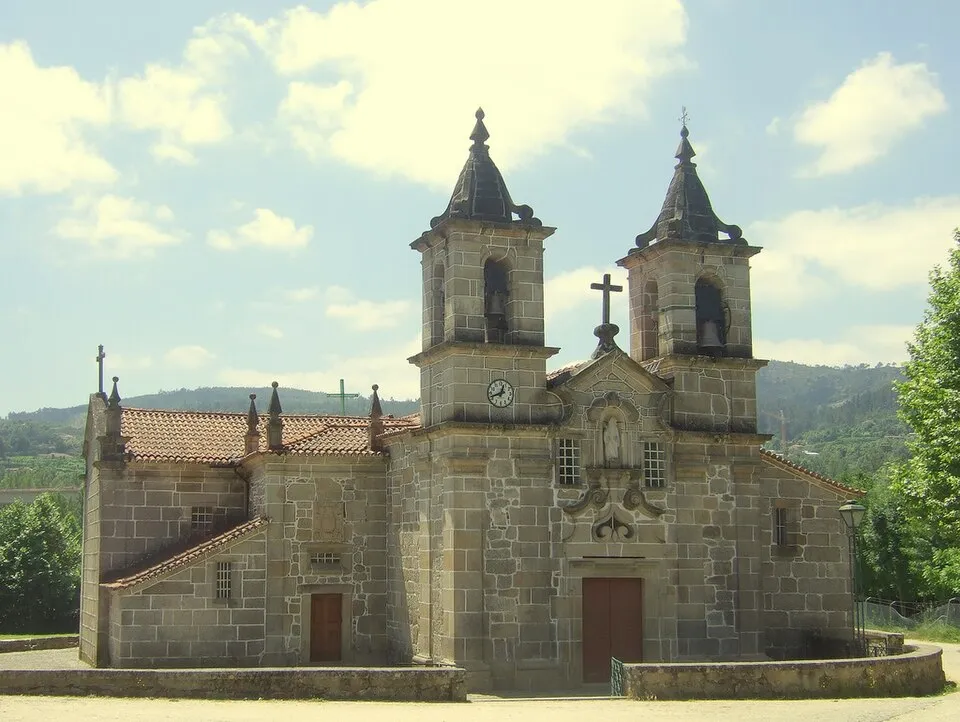
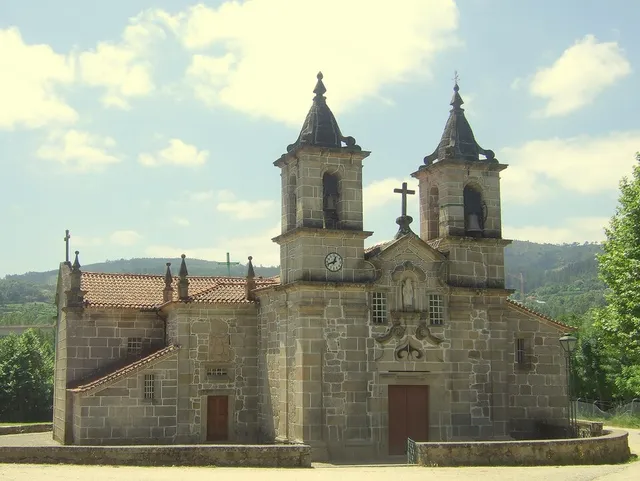
Facade of the church of Santa Senhorinha of Basto, with two bell towers and staircase.
ⓘA church known as the See of Basto and stories of Saint Lady: start here.
Administrative name: Basto
A selection of what is documented in the guide. Confirm visiting conditions in the charts.
Slide to see more places →
Basto’s church and a religious devotion passed down through generations.
Basto (Santa Senhorinha)Calvary or Lady of the O: two names for a chapel of Olela in Basto.
Basto (Santa Senhorinha)One of the houses included in the built heritage of Basto.
Basto (Santa Senhorinha)In Santa Senhorinha, the church has a religious memory that earned it the popular name of Sé of Basto.
The houses of Paço, Castelo, Mozes and Vila Garcia are mentioned in the municipal presentation as already rolled in 1726.
The Santa Senhorinha relationship describes a parish between hills and valleys, integrated into the municipality of Cabeceiras de Basto.
Knowledge, landscapes and memories linked to this parish.
Choose from 9 activities here →
1 guide with stories from here → · To follow a story by chapters.
The parochial memory also spoke of what was being harvested.
The names of the fish were also written in local history.
A cultivated margin also tells history.
Two pitchers, two documented capabilities.
The lamps tell another story about the house.
The kitchen needed tools with very own functions.
In the Vessada de Baixo, the week organized the irrigation.
The letters linked parishes before they got further.
Small objects help to get to know the people of other times.
The story was also made between banks and buyers.
A celebration also gathered the territory.
A little scene that went through centuries of devotion.
The wood also united the banks.
Before the screens, you looked at the panels.
The texts also have their own time travel.
The names also express the importance of a place.
In 1758, the parish also counted for its seats.
In the accounts of Santa Senhorinha, food reveals concerns of the rural world.
We don't have any revised events here yet. Go back to the schedule to find out the schedule available.
A church known as the See of Basto and stories of Saint Lady: start here. Devotion to the saint and the narratives of his miracles are part of religious memory and local tradition. Quintas, manors and Olela chapels add other clues to discover Basto.
In Santa Senhorinha, the church has a religious memory that earned it the popular name of Sé of Basto. The name expresses the prestige and antiquity attributed to the temple; it does not prove that it was the seat of a diocese. Here, Basto is the name of the parish, also known as Santa Senhorinha, and not of the entire region of the Lands of Basto.
The houses of Paço, Castelo, Mozes and Vila Garcia are mentioned in the municipal presentation as already rolled in 1726. The Oven and Carcavelos also integrate this landscape of houses and farms. In Olela, the Chapel of Calvary is also known as Senhora do Ó. Agriculture and the presence of economic activities in Olela show different uses of the same territory.
The relationship of Santa Senhorinha describes a parish between hills and valleys, integrated in the municipality of Cabeceiras de Basto. It is a portrait produced in the religious and administrative context of the eighteenth century. The cult of the saint and the narratives of miracles belong to the history of devotion and religious tradition; they are presented with this framework, without transforming beliefs into events demonstrated.
The parochial relationship of 1758 presents the church as a center of ceremonies with participation of the House and neighboring parishes. It describes the procession of the Body of God, music and sermons, and distinguishes spaces linked to the Third Order of San Francisco. These testimonies show the collective dimension of the sanctuary. The popular designation Sé of Basto expresses its local prestige, without establishing the existence of an episcopal seat.
The same report lists fairs in Olela and marks olive oil mills in the farms of Vila de Lobos and Cainhos, as well as mills. The water served the irrigation and processing of crops. Manor houses and chapels coexist, therefore, with a less monumental work heritage. The calendars described in 1758 are historical; they do not confirm the current realization of these fairs nor the operation of the old mills.
Olela · Bigeyes · Carcases
This list preserves the places referred to in the selected documentation, without constituting a complete census.
Getting to know the history of the municipality
Main source consulted in 04/11/2026.
Publication at that source: Unidentified. Registered documentary verification: 2026-11-04.
Method recorded in that review: Documental review in 04/11/2026 of the municipal pages, historical transcripts and references indicated. Uncollated manuscripts. Archivistic descriptions, studies of oral tradition and dated observations are identified. Visually revised photographs from the Commons file consulted in 03/11/2026; camera position does not equal the survey of the object.
Editorial review: 2026-11-06. The editorial review is neither a visit to the site nor a real-time update. Additional times and sources may have their own consultation dates, indicated in the form.
Did you find any different information? Suggest correction