Discover Cabeceiras de BastoFree independent guide
ViveCabeceirasYOUR GUIDE TO CABECEIRAS
ENEnglish
SearchSaved

Stories of Cabeceiras

Choose a story to start with. You can change the subject or fine tune the search.

18 leituras · Todos os temas · Basto (Santa Senhorinha)

The flavours of Cabeceiras

From the garden to the pot, from the oven to the table.

Escolher uma história · 1
Santa Senhorinha · agricultural production described in 1758

Bread, wine and oil filled the portrait of the earth

The parochial memory also spoke of what was being harvested.

Inclui uma atividade para experimentar →
Read here and consult sources

In the response of 1758, the abbot of Santa Senhorinha highlighted bread, wine and olive oil among the most abundant productions and praised the variety of fruits. The document allows to bring the table closer to the work of the fields. It does not list here the varieties, cereals or fruit varieties: this detail should not be added by assumption.

Source and context

Municipality — Memória de Santa Senhorinha, 23/05/1758, replies 15, 19 and 20; transcription of José Viriato Capela (2003)

Accessed: . Editorial summary; the date of consultation is not the date of the facts.
The life you don't always see

Knowing animals begins by perceiving the territory and respecting the distance.

Escolher uma história · 1
Saint Lady · fauna mentioned in 1758

Trouts, scallops and berries in river memory

The names of the fish were also written in local history.

Read here and consult sources

In the memory of Santa Senhorinha of 1758, the abbot mentions trouts, echelons and bogas in the river he describes. The text combines observation of water and appreciation of fish as food. These common names are a historical clue: they do not accurately identify all species or prove their current presence. The old reference to fishing also does not define today's rules.

Source and context

Municipality — Memória de Santa Senhorinha, 23/05/1758; transcript of José Viriato Chapel (2003)

Accessed: . Editorial summary; the date of consultation is not the date of the facts.

Between rivers and mountains

Water and relief form the municipality. Choose a name and follow the landscape.

Escolher uma história · 1
Holy Lady · memory of 1758

The river entered the life of the fields

A cultivated margin also tells history.

Inclui uma atividade para experimentar →Explorar: Um rio, quatro histórias →
Read here and consult sources

The memory of 1758 describes the river of Santa Senhorinha running all year round, but with little water in summer. The memory describes cultivated shores, fruit trees and wild grove, linking water to irrigation and rural work.

Vila de Lobos and Cainhos had olive oil mills; the mills are referred to in Vila de Lobos and Sestelo. The same description allows following various uses of the river: to cultivate, grind and transform the olive. It does not confirm which of these equipment survive or operate today.

Unlike the precipitated currents described in São Nicolau, the abbot characterizes this river as quiet and oriented from sunset to spring. He begins his journey in Aboim and lists the passage by Várzea Cova, Passos and St Clemente before arriving in Santa Senhorinha. It is the geography reported in the document, not a current demarcation of the course.

The use of water for the fields is presented as free for residents. The relationship was signed on 23 May 1758. This detail is important: the indication of little water in the summer describes a pattern known to the author, not an observation made in the summer of this year.

Palavras desta história: ver explicações →
Source and context

Municipality — Memória de Santa Senhorinha, 23/05/1758; transcript of José Viriato Chapel (2003)

Accessed: . Editorial summary; the date of consultation is not the date of the facts.

Crafts and memories

In the hands, at the table and in the community: little stories of how one lives and what one transmits.

Escolher uma história · 6
Pedraça and Basto · material culture

Carry and measure in the same container

Two pitchers, two documented capabilities.

Inclui uma atividade para experimentar →Explorar: O nome não diz a capacidade toda →
Read here and consult sources

The inventory of the Museum distinguishes two pieces of zinc foil: the cantaro L 16, Pedraça, 12, and the cantara L 62, Devesa, Basto, with seven. Both measured and transported wine.

The capabilities belong to these objects, not to a universal measure. Comparing them shows why the name of a container is not enough to know how much it takes.

The dimensions add a surprise: the 12 liter cantaro is 46 cm high and 16,7 in diameter; the seven-litre cantara is lower, with 34,5 cm, but it is 23,3 in diameter. A larger width does not in itself mean more capacity.

The inventory associates the first piece to Fátima Magalhães, from Pedraça, and the second to Álvaro Magalhães, from Devesa. They are registered owners, not an attribution of authorship. These names help connect the objects to the people who kept them.

Getting to know the parish
Source and context

Basto Land Museum — Latoaria, Teresa Soeiro text and inventory of pieces

Accessed: . Editorial summary; the date of consultation is not the date of the facts.

Cavez and Basto · material culture

The light fit into a small piece

The lamps tell another story about the house.

Inclui uma atividade para experimentar →
Read here and consult sources

Two candeias of the House of the Bridge, in Cavez, appear in the inventory with heights of 46 and 17 centimeters. The lamp of hanging oil L 53, of the Devesa, Basto, is of flandre leaf and measures 27 centimeters.

The common function was to illuminate, but the pieces did not all have the same size or configuration. The record allows you to compare them without assuming how they were placed in each house.

Getting to know the parish
Source and context

Basto Land Museum — Latoaria, Teresa Soeiro text and inventory of pieces

Accessed: . Editorial summary; the date of consultation is not the date of the facts.

Material memory · Basto (Santa Senhorinha)

A funnel also made dark circles

The kitchen needed tools with very own functions.

Inclui uma atividade para experimentar →
Read here and consult sources

The zinc foil funnel L 65 was used to make bales. The inventory connects it to Devesa, Basto, and records 6,1 cm high and 12 in diameter.

In the same collection there are funnels intended to transfer wine. The word funnel gathers objects with different functions; this form does not document a recipe or confirms current exposure.

Source and context

Basto Land Museum — Latoaria, Teresa Soeiro text and inventory of pieces

Accessed: . Editorial summary; the date of consultation is not the date of the facts.

Rural heritage · survey of 2008

The water had a calendar.

In the Vessada de Baixo, the week organized the irrigation.

Read here and consult sources

In Santa Senhorinha, the inventory of 2008 registered three consorts in Levada da Vessada de Baixo, fed by Ribeira de Petimão. Casa da Cerca had water from Monday to Wednesday night; Casa do Prado, from then until Sunday. A third consort used it one day for fortnight. It is a historical portrait of the sharing, not a current time.

The third user appears identified by the Minas Lavora. The chart describes an open channel in the field, used all year round. Reading the weekly distribution helps to realize that sharing water also required organizing the time.

Source and context

Municipality — inventory of levadas, record L5, Vessada de Baixo (11/04/2008)

Accessed: . Editorial summary; the date of consultation is not the date of the facts.

Saint Lady and Refojos · mail described in 1758

To receive news, it was necessary to count on Fox

The letters linked parishes before they got further.

Inclui uma atividade para experimentar →Explorar: Quatro maneiras de esperar notícias →
Read here and consult sources

In 1758, receiving news in Santa Senhorinha depended on the post office of Raposeira, in Refojos. The memory indicates a quarter of league distance and a connection to Porto: departure on Thursday and arrival on Tuesday.

These two days allow us to imagine a weekly pace of news. They do not allow us to calculate how long a concrete letter took: the text does not describe its entire path. Raposeira also appears in the memories of other parishes, showing how a service connected different communities.

The response of Vila Nune does not coincide on the day of arrival: it mentions Monday for the post office of Raposeira and Mondim. This difference deserves to be visible. Compare sources is also to realize where they do not agree, instead of turning separate accounts into a unique calendar.

Source and context

Municipality — Memória de Santa Senhorinha, 23/05/1758, replies 15, 19 and 20; transcription of José Viriato Capela (2003)

Municipality — Parish Memoirs of Vila Nune, 23/05/1758

Accessed: . Editorial summary; the date of consultation is not the date of the facts.

Holy Lady · objects and memory of devotion

Devotion also fit a candle

Small objects help to get to know the people of other times.

Explorar: Objetos, palavras e memória →
Read here and consult sources

In the study of Odília Alves Gameiro, the offerings mentioned in the reports of Santa Senhorinha include wax, candles, cirios and candeias. The author interprets its low cost as a sign of a cult accessible to different social groups. The doubling of bells and oral transmission also appear in the dissemination of the narrated miracles. They are elements of the history of devotion, not proof of the supernatural events described.

The study distinguishes the offering that accompanies a request from that which thanks a grace received. The same object could thus participate in different moments of devotion. Its interpretation depends on the context narrated, and not just on the material of which it was made.

Source and context

Odília Alves Gameiro — The nobiliarchic appropriation of a rural cult: the hagiography of Santa Senhorinha of Basto, Archipelago · History, 2001, pp. 561–562 and 571–572

Accessed: . Editorial summary; the date of consultation is not the date of the facts.

Time travel

Documents, details and traditions: there is more to discover than a date on a stone.

Escolher uma história · 9
Documentary memory · 1758

Olela had days of meeting

The story was also made between banks and buyers.

Read here and consult sources

In the relationship of Santa Senhorinha of 1758, Olela appears as a place of fairs in December, February and March. The parish priest refers payments for settlement and rights. It is a window on local exchanges of that time, not the calendar of markets today. The text specifies the days: 14 and 15 December, 24 and 25 February and 27 March. The dates belong to the account of 1758.

Getting to know the parish
Source and context

Municipality — Parish memories of Santa Senhorinha, 1758
Accessed:

Municipality — Memória de Santa Senhorinha, 23/05/1758, replies 15, 19 and 20; transcription of José Viriato Capela (2003)
Accessed:

Editorial summary; the date of consultation is not the date of the facts.

Saint Lady · celebrations at 1758

When the parishes met

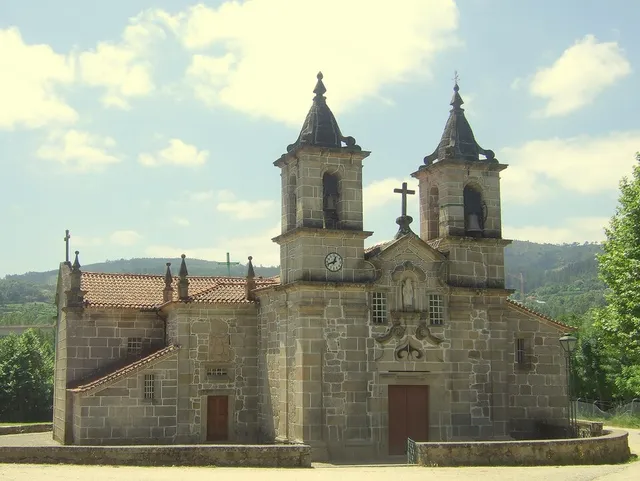
Facade of Igreja de Santa Senhorinha of Basto, with its two towers
Igreja de Santa Senhorinha · heritage context of the parish, not a record of the 1758 celebration© Bocacheteⓘ

A celebration also gathered the territory.

Explorar: O que fazia uma comunidade encontrar-se? →
Read here and consult sources

In 1758, the procession of the Body of God gathered in Santa Senhorinha the Chamber and representatives of the nearby parishes, with crosses and ecclesiastics. The memory mentions expenses with wax and sermon: behind the celebration there was preparation, objects and work.

The Abbot also describes separately the triduum of the forty hours, with music and sermons for three days. Distinguishing the two references helps to realize the religious calendar of that time. The document is a testimony of 1758, not the agenda of the current feasts.

Palavras desta história: ver explicações →Getting to know the parish
Source and context

Municipality — Parish Memoirs of Santa Senhorinha (1758)

Accessed: . Editorial summary; the date of consultation is not the date of the facts.

Religious Tradition · Holy Lady

The story of frogs who shut up

Facade of Igreja de Santa Senhorinha of Basto, with its two towers
Igreja de Santa Senhorinha · place of worship, not representation of the episode© Bocacheteⓘ

A little scene that went through centuries of devotion.

Read here and consult sources

In the religious narrative studied by Odília Alves Gameiro, the coax of the frogs disturbed the nuns when they were preparing for a craft. Little lady would have stopped the noise. The municipality includes this episode among the miracles attributed to the saint. It is a history of devotional tradition, told to know the imaginary linked to their worship, without presenting it as an event demonstrated.

Getting to know the parish
Source and context

Odília Alves Gameiro — The nobiliary appropriation of a rural cult, pp. 563–564

Municipality — Basto (Santa Senhorinha)

Accessed: . Editorial summary; the date of consultation is not the date of the facts.

Holy Lady · memory of 1758

Not all bridges were stone

The wood also united the banks.

Read here and consult sources

The memory of 1758 lists three wooden bridges in the parish: Vagalhafos, in Quinta de Vila de Lobos; Santa Senhorinha, near the church; and Olela. Names approach the crossings of the farms, the place of worship and the inhabited places.

The same report mentions singing bridges in São Clemente and São Martinho do Arco de Baúlhe. Wood and stone appear, thus, in a single description of the river. The enumeration does not provide construction dates nor proves the survival of structures.

Palavras desta história: ver explicações →
Source and context

Municipality — Memória de Santa Senhorinha, 23/05/1758; transcript of José Viriato Chapel (2003)

Accessed: . Editorial summary; the date of consultation is not the date of the facts.

Holy Lady · memory of 1758

A Church Counted in Images

Before the screens, you looked at the panels.

Inclui uma atividade para experimentar →
Read here and consult sources

In the memory of 1758, the church of Santa Senhorinha had two ships with programs of different images. One presented panels on the Creation of the World; the third Franciscan showed saints of this order.

The abbot also described a vaulted chapel, closed with iron railings. Painting, spaces and architectural elements composed a written portrait of the interior. The source allows to study this description, without ensuring that the pieces or layout are preserved today.

The description continues by the tombs, which the Abbot presents decorated with painting and golden letters, and by a particular chapel dedicated to Our Lady of the Pilar. The interior appears as a set of spaces, images and inscriptions, each with its function in the account.

This allows a layer reading: first the organization of the ships, then the painted themes and, finally, the elements that marked memory and devotion. It is not necessary to imagine a single undifferentiated hall; the document itself distinguishes various environments.

Palavras desta história: ver explicações →See Fact sheet: Igreja de Santa Senhorinha
Source and context

Municipality — Memória de Santa Senhorinha, 23/05/1758; transcript of José Viriato Chapel (2003)

Accessed: . Editorial summary; the date of consultation is not the date of the facts.

Holy Lady · transmission of religious accounts

A story that came in copies

The texts also have their own time travel.

Explorar: Três maneiras de conhecer Santa Senhorinha →
Read here and consult sources

Odília Alves Gameiro studies three texts on the life and miracles of Santa Senhorinha, preserved in copies of the 16th century: two in Latin and one in Portuguese. The similarities between them suggest, according to the researcher, a medieval original. Reading these versions allows you to study the construction of memory and worship. The time of a copy is not necessarily the time of the story that tells.

The two Latin testimonies studied come from Coimbra: one from the College of Grace and another from Santa Cruz. This provenance helps to realize that the memory of a saint linked to Basto circulated beyond the place of worship. Each copy is also an object with a history of conservation and transmission.

There are three times to be separated: that of the life narrated, that of the composition of the account and that of the copy that came to us. The investigation situates Little Lady in the second half of the 10th century, but does not transform the five hundredth-century texts into testimonies written by those who knew her. The similarities and differences between versions are precisely part of the historical work.

The study also reads the reports in the context of a rural community: crops, food and trips appear among the concerns represented. Hagiography allows to know this imaginary and the values that the text seeks to transmit, besides counting wonders.

Palavras desta história: ver explicações →
Source and context

Odília Alves Gameiro — The nobiliarchic appropriation of a rural cult: the hagiography of Santa Senhorinha of Basto, Archipelago · History, 2001, pp. 561–562 and 571–572

Accessed: . Editorial summary; the date of consultation is not the date of the facts.

Holy Lady · church and manor houses

A “Sé” and houses with memory

Facade of Igreja de Santa Senhorinha of Basto, with its two towers
Igreja de Santa Senhorinha, popularly known as the Sé of Basto.© Bocacheteⓘ

The names also express the importance of a place.

Read here and consult sources

The municipal presentation records the popular designation Sé of Basto for the church of Santa Senhorinha, associating it with the idea of antiquity. In the manor houses, it highlights buildings from the 17th and 18th centuries, some with coats and chapels. Paço, Castelo, Mozes and Vila Garcia were already mentioned in 1726. This reference helps to read the heritage of the parish, without assuming that the houses are visitable or that all the old elements are preserved today.

The municipal portrait does not end in the four houses mentioned in 1726. It includes Carcavelos, Cainhos, Casa do Oven, Eirões and Olela, extending the look to several places. In religious architecture, mentions the chapel of Calvary, also called Senhora do Ó, in Olela, and that of Santo António. They are references to know the diversity of the heritage, without assigning to all buildings the same date.

The Sé designation of Basto belongs to the popular use described by the Municipality. In this reading, it acts as a clue to the importance attributed to the church; it has not been converted into an affirmation of cathedral status. Compare this name with the memory of the painted panels allows you to look at the building through words of different times and purposes.

Palavras desta história: ver explicações →See Fact sheet: Igreja de Santa Senhorinha See Fact sheet: Casa de Carcavelos See Fact sheet: Casa e Quinta do Forno See Fact sheet: Capela do Calvário / Senhora do Ó
Source and context

Municipality — Basto (Santa Senhorinha): designation of church and manor houses

Accessed: . Editorial summary; the date of consultation is not the date of the facts.

Santa Senhorinha · landscape described in 1758

A valley full of names

In 1758, the parish also counted for its seats.

Inclui uma atividade para experimentar →
Read here and consult sources

The parish report places Santa Senhorinha in a valley between the Gatiras and the Ladario. It lists places such as Rendufe, Soutelo, Outeiro Seco, Olela, Devesa and Vila Garcia, among many others. The church is described outside the village, in the middle of a field. This portrait allows you to imagine a community distributed across several cores, but retains the names and perspective of the document of 1758, without functioning as a current map.

The author also lists villages that were seen, distinguishing the position in the valley of the look from the Ladário. Visibility was part of the way of presenting the territory. A place could be described by what surrounded it and by what could be seen from a higher point, beyond its limits and names.

Source and context

Municipality — Parish Memories of Santa Senhorinha (1758), replies 4 and 6; transcription of José Viriato Chapel (2003)

Accessed: . Editorial summary; the date of consultation is not the date of the facts.

Santa Senhorinha · historical reading of hagiography

Bread also tells a story of devotion

In the accounts of Santa Senhorinha, food reveals concerns of the rural world.

Inclui uma atividade para experimentar →
Read here and consult sources

Odília Alves Gameiro identifies in the narratives wheat fields and vineyards, fear of losing crops in a storm and episodes of insufficient food for the community. The author relates the reference to white bread with the social position of the nuns.

Reading these passages allows you to know the themes and values of religious texts: sustenance, dependence on natural cycles and social differences. It is not equivalent to proving the miracles narrated or reconstructing a menu. To compare with another type of source, follow the crops described by the abbot in 1758.

Source and context

Odília Alves Gameiro — The nobiliary appropriation of a rural cult, 2001, pp. 562–563

Accessed: . Editorial summary; the date of consultation is not the date of the facts.

YOUR LOCAL GUIDE

What would you like to discover?

Take a closer look.