Discover Cabeceiras de BastoFree independent guide
ViveCabeceirasYOUR GUIDE TO CABECEIRAS
ENEnglish
SearchSaved

Stories of Cabeceiras

Choose a story to start with. You can change the subject or fine tune the search.

97 stories · All themes · Search: plantas

A world under the leaves

A first look at the fungi. Continue in the gallery to see the local records already documented.

Choose a story · 9
General biology of fungi · no local occurrence attributed

Look deeper.

The difference starts in the cells.

Explore: From what is done to how you live →
Read here and view sources

The fungi belong to a kingdom of their own. Unlike plants, they have no chlorophyll to perform photosynthesis: they get food from the environment. Their cellular walls contain chitin, a material also present in the outer skeleton of insects. This comparison, explained by Kew's botanical gardens, helps to understand why a mushroom is not a small plant.

The comparison continues in energy reserves: plants store starch, while fungi store glycogen. They also differ in cell wall materials: cellulose in plants, chitin in most fungi. They are not characteristics that confirm themselves by observing a hat on the way.

How does food come then? Many fungi release enzymes that decompose organic matter outside and absorb the products of this transformation. That is why a decomposing trunk, a fallen leaf and a living root open different questions about the feeding and relationships of each fungus.

Source and context

Royal Botanic Gardens, Kew — What in earth? Understanding what fungi really are, Eddie Johnston (07/10/2022)

Accessed: . Editorial summary; the date of consultation is not the date of the facts.
General biology · no local occurrence assigned

The plant also has life inside

A healthy leaf can harbor invisible fungi.

Explore: A plant, different relationships →
Read here and view sources

Not all fungi live in sight. Endophytes inhabit the interior of living and healthy plants; they are distinguished from epiphytes that grow on the surface. Edinburgh Botanical Garden studies these communities, including those living in conifer needles.

Being inside the plant does not always mean playing the same role. Some relationships are beneficial, others can be harmful and many remain poorly understood. Certain fungi are associated only with certain hosts.

The relationship can also change over time. Some endophites decompose tissues after they die. Others can cause disease, especially when the plant is under stress. The word endophius describes where they live at this stage, not a promise of permanent protection.

It is a story that cannot be solved by looking at a leaf: researchers combine laboratory isolation and genetic material analysis. This general explanation does not identify the fungi of a tree of Cabeceiras.

Source and context

Royal Botanic Garden Edinburgh — Fungal Endophytes

Accessed: . Editorial summary; the date of consultation is not the date of the facts.
General ecology · mycorrhizae

Roots have partners

A trade that happens out of sight.

Includes an activity to try →Explore: The partnership between roots and fungi →
Read here and view sources

In mycorrhizae, plant and fungus establish a partnership. The plant provides organic compounds; the mycelium associated with roots helps to obtain water and nutrients.

Oaks, chestnut trees and pine trees can participate in these relationships. A nearby tree gives context to observation, but does not itself reveal the name of a mushroom.

The researcher Susana Gonçalves also distinguishes ectomycorrhizes: in these associations, the fungus involves the ends of the roots. The example helps to realize that there are different forms of relationship between plants and fungi, beyond the visible appearance of mushrooms.

The partnership expands the area from which the plant can obtain resources: the roots connect to the network of the fungus. But the relationship does not always have the same participants. There are fungi able to associate with several plants and others with very specific partners. That is why knowing the trees of a place helps to understand the environment, without replacing the identification of the fungus.

Words in this story: see explanations →See local fungal records
Source and context

Silvestrian Resource Competence Centre — General Mycology
Accessed:

Gulbenkian Garden — ecology of fungi, with Susana Gonçalves (17/04/2023)
Accessed:

Editorial summary; the date of consultation is not the date of the facts.
Knowledge of nature · General biology

A lichen is a partnership

The world of fungi goes far beyond hats.

Includes an activity to try →Explore: From surface to invisible relationships →
Read here and view sources

In a lichen, a fungus is associated with an algae or cyanobacteria capable of photosynthesis. The photosynthetic partner provides nutrients; the fungus helps protect it from dryness and radiation.

The University of Évora describes crusty, leafy and fruity forms, among others. It is a new way of repairing surfaces and textures without confusing a color with an identification. This reading explains the biology of lichens; it does not constitute an inventory of species confirmed in Cabeceiras.

Reproduction can also transport the partnership: lichen fragments can disperse the two partners together. The fungus spores need to find a photosynthetic partner to form a new lichen.

The shapes may remember a crust, cut leaves or small shrubs. They are words to describe the appearance, with limits that are not always rigid. The lichens are also not moss: these are plants, while the lichens are classified with fungi.

Support also deserves attention: lichens can grow on rocks, shells, soil and artificial surfaces. The University of Évora explains that identification crosses the look with the substrate and habitat; sometimes requires microscopy or other specialized methods. A photograph can record the encounter without solving the name.

Another facet is the study of air. Lichens can accumulate compounds from the atmosphere and are used as bioindicators or biomonitors. The presence of a spot on a wall does not allow, by itself, to classify the air quality of a village. This conclusion requires an appropriate study, as the evaluation of a river combines different observations.

Words in this story: see explanations →
Source and context

University of Évora — Biodiversity of Mitra: Lichens

Australian National Botanic Gardens / Australian National Herbarium — What is a lichen?, Heino Lepp

Accessed: . Editorial summary; the date of consultation is not the date of the facts.
Ecology of fungi · General explanation

There are fungi that live off others

Cooperation and parasitism are different relationships.

Explore: What relationship is this? →
Read here and view sources

The parasitic fungi use resources from living organisms: plants, animals or other fungi. They can cause disease and, in some cases, the death of the host. This explanation of the CCRES helps distinguish ways of life; it does not diagnose trees or animals observed in the municipality.

An example helps to understand the difference between what we see and what happens on the ground. In the British investigation of the Royal Horticultural Society on Armillaria, fungi can feed on roots or buried dead wood. Mushrooms do not always come against the trunk: the link can pass through the roots or cords of mycelium, the rhizomorphs.

The survey brought together 170 suspected cases in British parks and gardens, with photographs in 113. These figures describe the contributions received, not the frequency of the disease in a forest or the situation of Cabeceiras.

Words in this story: see explanations →
Source and context

Silvestrian Resource Competence Centre — General Mycology
Accessed:

Royal Horticultural Society — Honey Fungus Hunt, British survey results and context
Accessed:

Editorial summary; the date of consultation is not the date of the facts.
Micorrizas · general ecology

Not all roots are partners

Some associations are more specific.

Includes an activity to try →Explore: From root to landscape →
Read here and view sources

Partnerships are not all the same: some fungi are associated with different plants, while others depend on a plant species.

Therefore, observing vegetation helps to ask questions about what is happening under the ground. It does not confirm, however, what is the association present at that point.

The partnership can involve trees, shrubs or herbaceous plants. The plant provides organic compounds and the association between roots and mycelium expands the exploitation of water and nutrients. The plant partner is part of the ecology of the fungus, not only of the scenario around the mushroom.

Imagine two different questions: “What plants are there in this forest?” and “What plant is this fungus associated with?”. The first can guide observation; answering the second requires knowing the association. Even in a forest with various types of tree, the visual proximity of a mushroom to a trunk does not automatically identify the underground partner.

Source and context

Silvestrian Resource Competence Centre — General Mycology

Accessed: . Editorial summary; the date of consultation is not the date of the facts.
General biology of fungi · no local occurrence attributed

A fungus without a hat

The world of fungi also fits under the microscope.

Explore: Three scales to discover →
Read here and view sources

Not all fungi form the mushrooms we recognize. Kew describes microfungals, including molds, which can produce spores directly in the hyphae. Therefore, searching only visible hats leaves out a part of this realm. It is an explanation of biological diversity, without identifying molds in food or plants of the municipality.

Even among fungi with larger reproductive structures, not everything appears above the ground. Kew presents truffles as an example of underground fruitification and explains the role of animals in dispersing their spores. A walk that only looks for hats on the surface shows, therefore, only a part of the diversity.

The mycelium networks also meet each other. The source distinguishes the competition between incompatible fungi from the union between compatible partners. It is another reason not to imagine the soil as a unique and undifferentiated network: there are different organisms and relationships, which a photograph of mushrooms does not reveal.

Source and context

Royal Botanic Gardens, Kew — What in earth? Understanding what fungi really are, Eddie Johnston (07/10/2022)

Accessed: . Editorial summary; the date of consultation is not the date of the facts.
Abadim · local record and general biology

Looks like a leaf, but it's a partnership.

Among mosses, there's a lichen that deserves a second look.

Includes an activity to try →Explore: Still in the small world →
Read here and view sources

The Pedro Andrade record of 31 January 2025, shows Lobarina scrobiculata in Abadim, according to the crossing of the published point with CAOP2025. Light lobes and surface depressions stand out among green mosses.

The ITALIC portal of the University of Trieste describes a foliaceous stalk and an association with cyanobacteria of the genus Nostoc. The leafy appearance does not make it a plant: this lichen results from an association between partners.

The source describes color differences between the dry and wet stalk. An isolated image does not show this change over time. It is worth comparing visible shapes and reliefs without watering or removing the lichen to try.

The description of ITALIC places the species in ancient caducifoli trees and rocks with mosses, in wet and open forests. It also refers to a reproduction mainly asexual, through sorédios. They are general characteristics of the species; the record of Abadim documents the published photography and location, not a study of all these processes on site.

The wide, rounded lobes contrast with the lichen Lasallia pustulata, also photographed in Abadim. Compare the two helps to realize that having a leafy appearance does not mean having the same shape or the same fixation mode.

Words in this story: see explanations →
Source and context

University of Trieste — ITALIC 8.0, Lobarina scrobiculata

Accessed: . Editorial summary; the date of consultation is not the date of the facts.
Gardens and conservation · general ecology

A garden can also accommodate an invisible world

More habitats, more stories to find out.

Includes an activity to try →Explore: From design to ecological relations →
Read here and view sources

A garden does not need to look the same in the whole area. In the interview published by Jardim Gulbenkian, researcher Susana Gonçalves proposes combining small habitats and varied native plants to favor the diversity of fungi. A meadow, a small forest and an embroidery offer different contexts.

Care remains under the feet: keeping the soil covered helps prevent drying and erosion. Branches and dead wood can sustain decomposers and other organisms. Keeping old trees requires, however, evaluation and monitoring of the risk of falling.

This is a proposal to understand ecological relationships, not a survey of Cabeceiras gardens. Try looking at a green space as a set of environments: what is exposed, what is shaded and where is there plant matter on the ground?

Source and context

Gulbenkian Garden — ecology of fungi, with Susana Gonçalves (17/04/2023)

Accessed: . Editorial summary; the date of consultation is not the date of the facts.

Life you do not always see

Knowing animals begins by perceiving the territory and respecting the distance.

Choose a story · 15
Species biology · photograph recorded in the municipality

Wing patterns tell a story of plants

A closer look at wings leads to the small world of grasses and herbs.

Includes an activity to try →Explore: Wings, plants and observation →
Read here and view sources

A photograph of Cymbalophora pudica offers a close look at its wing pattern. The Naturdata profile gives a wingspan of 35 to 43 millimetres: the distance between the tips of the open wings, not body length. This measurement comes from the species profile; it was not calculated from the local photograph.

The same source associates the species with the plant genera Taraxacum and Plantago, gives a flight period from August to October, and describes a distribution across the Iberian Peninsula, the Balearic Islands and North Africa. These details place the individual in a wider context.

The municipality’s photographic record, made in October, shows a particular encounter. It does not demonstrate the individual’s relationship with those plants or measure abundance or flight season in Cabeceiras. The image and profile answer different questions: one documents an encounter; the other brings together general species characteristics.

Words in this story: see explanations →
Source and context

Naturdata — Cymbalophora pudica

Accessed: . Editorial summary; the date of consultation is not the date of the facts.

General biology · aquatic insects, without a local species inventory

Tiny shelters beneath the water

Some larvae use sand and plant fragments.

Includes an activity to try →
Read here and view sources

Caddisfly larvae live in water; many build shelters from sand or plant fragments. They form part of river and stream food webs, providing food for fish, birds and amphibians. The Tagis guide highlights their usefulness as ecological indicators. Finding one individual, however, does not certify water quality on its own.

The submerged shelter is only part of the story. The adult has hairy wings and slender antennae, and holds its wings like a small roof over its body when resting. It may resemble a butterfly or moth, but those have scales on their wings. Adult caddisflies usually fly around dusk and live near freshwater bodies.

There is no single menu for all larvae either: depending on the group, they may eat algae, plants, organic remains or other invertebrates. They are consumers and, at the same time, food for other animals. A food web describes these relationships better than a line assigning just one food to each species.

Words in this story: see explanations →
Source and context

Tagis — Insects in Order, Odonata, dragonflies, dragonflies and friganiums (pp. 39–43 and 74)

Accessed: . Editorial summary; the date of consultation is not the date of the facts.

Interpretation centre

A first encounter at Moinhos de Rei

Learn about Cabreira before heading into the countryside.

Explore: From interpretation to discovery →
Read here and view sources

The Núcleo Interpretativo de Vida Selvagem opened on 31 August 2013 in Abadim. The municipal presentation explains its connection with the fauna and flora of Serra da Cabreira and with raising awareness of the forest. Consult the place profile to prepare your visit.

The building has a history too: the municipal presentation places the centre in a small annex previously used by the Social Services. Its new role brought learning about animals and plants together with an appreciation of the forest and local customs.

It is a starting point for asking questions about the landscape: how are scrub, trees and animals connected? The following stories let you continue exploring at home. Learning about a species or habitat does not guarantee a sighting during a visit.

See Fact sheet: Núcleo Interpretativo de Vida Selvagem
Source and context

Municipality — Núcleo Interpretativo de Vida Selvagem

Accessed: . Editorial summary; the date of consultation is not the date of the facts.

Species biology · Portuguese context

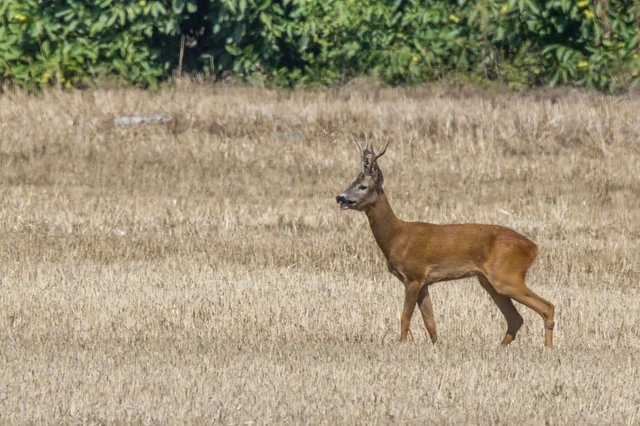
Roe deer change their coats

Profile hind in a field, with stems, raised ears and reddish brown coat.
Male hind in Dobruja, Romania, in August 2022. Illustration of the species; it is not a record of Cabeceiras.
Photography: Charles J. Sharp · CC BY-SA 4.0
About this photograph

Date given at source: . Source consulted in 2026-11-07. EXIF orientation, proportional resizing and WebP conversion of the current version in Commons; no retouching or additional clipping.

Request removal or correct the photo credit

One coat for summer, another for winter.

Includes an activity to try →Explore: The same world, different rhythms →
Read here and view sources

The roe deer, Capreolus capreolus, changes from a reddish-brown coat in summer to a grey one in winter. It eats plants and also uses open areas and scrub. This species description does not identify a sighting point in the municipality. Roe deer are small deer: the platform’s description gives a weight of up to 30 kg. Males have antlers; the white rump patch is kidney-shaped in males and heart-shaped in females.

Antlers follow a cycle too: the platform describes annual growth and shedding in roe deer and red deer. They are therefore not a feature that stays the same all year. On the head, the mostly black nose and upper lip contrast with the white lower lip.

Activity patterns add another difference. Although mainly active at dusk and at night, the source presents the roe deer as Portugal’s most daytime-active deer. These are species tendencies, not a guaranteed time to see one. Shape, season and behaviour need to be considered together when learning about an animal.

Words in this story: see explanations →
Source and context

Lobo-Iberico platform in Portugal — wolf prey; registration of Cabreira without date indicated

Accessed: . Editorial summary; the date of consultation is not the date of the facts.

Ecology · general context for observation

From flower to flower, a shared task

Pollination involves far more than honeybees.

Includes an activity to try →Explore: Choose what you want to follow →
Read here and view sources

When visiting flowers, insects can carry pollen between plants. Bees, beetles and wasps take part, explain entomologists Renata Santos and Albano Soares. Many bees live alone, without a hive. This general explanation helps us look more closely at flowers; species present in Cabeceiras need local records.

Pollen exchange between individuals contributes to plants’ genetic diversity. The explanation published by the Gulbenkian links pollinators with both wild plants and food crops, including apple trees, almond trees and strawberry plants.

Flowers also attract less familiar visitors: hoverflies, butterflies, moths and some beetles. Watching who arrives, how long they stay and where they go next is one way to begin. Recording a visit alone, however, does not demonstrate that the insect transferred pollen.

Source and context

Calouste Gulbenkian Foundation — explanations of entomologists Renata Santos and Albano Soares, 07/06/2022

Accessed: . Editorial summary; the date of consultation is not the date of the facts.

Species biology · photograph recorded in the municipality

A grasshopper makes it through winter

The name Egyptian grasshopper does not confine the species to one country.

Includes an activity to try →
Read here and view sources

The name Egyptian grasshopper does not confine Anacridium aegyptium to one country. The Gulbenkian profile describes its distribution across parts of Europe, North Africa and the Middle East, and its presence in mainland Portugal in orchards, gardens, scrub and open woodland.

At the Gulbenkian Garden in Lisbon, adults are described as surviving the winter and basking on trees and shrubs on bright days. This observation helps explain the species, but cannot automatically be transferred to Cabeceiras. The local photographic record was made in September: it shows an encounter on that date, not winter behaviour in the municipality.

The Lisbon garden’s description mentions observation sites including rosemary hedges, strawberry trees, olive trees and other evergreen trees. Vegetation enters the story as part of the habitat adults use. These references do not tell you where to look for the grasshopper in Cabeceiras; they help explain why a profile can bring together an insect, a season and plants. When comparing the September photograph with the winter account, always record date and place separately.

Source and context

Calouste Gulbenkian Foundation — Anacridium aegyptium

Accessed: . Editorial summary; the date of consultation is not the date of the facts.

Serra da Cabreira · regional reference and species biology

A newt between water and land

Its skin also changes with its surroundings.

Includes an activity to try →Explore: From egg to change of environment →
Read here and view sources

Bosca’s newt, Lissotriton boscai, has smoother skin during its aquatic phase and rougher skin during its terrestrial phase. For reproduction, it can use ponds, slow-flowing streams and even water tanks. Out of water it finds shelter in damp places among roots, stones and trunks. Its orange belly explains its Portuguese name, tritão-de-ventre-laranja.

It is mentioned among Cabreira’s amphibians by Vieira do Minho’s municipal website, without an associated observation point.

The University of Évora’s description notes four toes on the front feet and five on the hind feet, as well as a laterally flattened tail. These are species features, not a reason to take the animal out of the water. The same source gives a total length of up to nine centimetres, with females generally larger and more robust than males.

The mating season can change its appearance too. The University of Évora describes a small crest on the tail and, in males, a whitish lengthwise stripe, more marked near the tip. Comparing two images therefore means considering sex and season as well as species name. Not every visible difference means different species.

Diet follows the change of habitat. According to the Charcos com Vida project, larvae and aquatic adults catch small water-dwelling invertebrates; on land, adults mainly eat soft-bodied animals such as earthworms and slugs. The female lays eggs individually on aquatic plants or leaves over several days. The diagram below connects these stages without assigning dates to their occurrence in Cabreira.

Source and context

University of Évora — Virtual Museum of Biodiversity, Lissotriton boscai

Vieira Tourism of Minho — fauna of Serra da Cabreira, regional reference

Charcoals with Life / CIIMAR — Orange belly triton, life cycle and feeding

Accessed: . Editorial summary; the date of consultation is not the date of the facts.

Pollinators · general biology

Small loads on tiny legs

Pollen can travel in plain sight.

Includes an activity to try →Explore: From flower to next discovery →
Read here and view sources

In honeybees and bumblebees, pollen can accumulate on a part of the hind legs adapted for carrying it. Other bees use groups of hairs on their legs or beneath their abdomen. The entomologists interviewed by the Gulbenkian explain that some grains are left along the way during flower visits. Carrying food for offspring is thus connected with pollination. This is a general explanation, not the identification of an insect observed in the municipality. The load’s colour also varies: the specialists mention yellow, red or blue pollen, depending on its plant of origin.

The scopa is the group of hairs that works like a carrying brush. The source also mentions groups that transport pollen in part of the digestive tract and others that use other bees’ nests. Not every relationship between a bee and pollen therefore appears as a visible load on the legs. What we see during a flower visit is only part of the story.

Words in this story: see explanations →
Source and context

Calouste Gulbenkian Foundation — explanations of entomologists Renata Santos and Albano Soares, 07/06/2022

Accessed: . Editorial summary; the date of consultation is not the date of the facts.

General biology · bee nesting places

Not all bees look for the same home

Learning about shelters adds another dimension to flowers.

Includes an activity to try →Explore: Flowers, shelters and wood →
Read here and view sources

A flower can provide food, but it does not meet all a bee’s needs. Entomologists Renata Santos and Albano Soares distinguish carpenter bees, which use dead wood for nesting, from mining bees, which need bare soil. A garden’s variety also includes different nesting places.

So-called insect hotels serve only some species, notably certain cavity-nesting bees. They are a supplement, not a universal home. The idea is to recognise connections between flowers, soil and wood, not to search for or open nests. These general examples do not confirm local nests.

Time matters too: different plants can provide flowers at different times. The researchers recommend diversity in flower shapes and flowering periods. When thinking about a garden, it is useful to connect three questions: what provides food, where might there be shelter, and when in the year are those resources available?

Source and context

Calouste Gulbenkian Foundation — explanations of entomologists Renata Santos and Albano Soares, 07/06/2022

Accessed: . Editorial summary; the date of consultation is not the date of the facts.

Soil life · general ecology

Beneath our feet, a world of mixtures

Soil contains water and air too.

Includes an activity to try →Explore: From the ground to the water, follow the connections →
Read here and view sources

The ground is not a solid block: mineral particles and organic matter share space with water, air and organisms. Rock, climate and living things all take part in soil formation.

Looking only at the surface leaves much life undiscovered. This explanation helps explore gardens and woods, but does not replace an analysis of Cabeceiras’s soils.

Life is not evenly distributed. FAO describes areas of intense activity near roots, where plant remains accumulate, and along the walls of earthworm tunnels. The immediate surroundings of a root have a name: the rhizosphere. Thinking about these small zones helps explain why two nearby pieces of soil can offer different conditions to organisms.

Some inhabitants are unlikely to be seen on a walk. Bacteria take part in transforming organic matter; some associate with roots and contribute to nitrogen fixation. Fungi also break down remains and can form relationships with plants. They do not all do the same job: soil brings together overlapping activities, from feeding to the transformation of materials.

A covering of leaves is more than a finishing layer on a woodland floor. It is material that can feed this community. In the interview published by the Gulbenkian, the researchers recommend retaining some leaf litter in green spaces and avoiding frequent deep disturbance of the soil. These are general conservation guidelines, not an assessment or prescription for every plot in the municipality.

Words in this story: see explanations →
Source and context

Calouste Gulbenkian Foundation / Wilder — Cristina Cruz, Teresa Dias and Silvana Munzi (FCUL), 26/03/2024

FAO — What is soil biodiversity?

Accessed: . Editorial summary; the date of consultation is not the date of the facts.

Soil life · general ecology

Tiny animals graze on fungi

Springtails live in a world measured in millimetres.

Includes an activity to try →
Read here and view sources

Some mites and springtails feed on fungi in the soil. This relationship connects small animals with leaf decomposition and nutrient cycling.

Springtails are microarthropods, only a few millimetres long. Many have a forked structure, the furcula, that lets them jump and escape predators. The description helps us imagine hidden soil life; it does not identify species present in Cabeceiras.

Scale helps tell this story. According to FAO, mites and springtails feeding on bacteria and fungi can affect microbial communities in a small area of soil. At the same time, larger animals change the structure in which that life develops. Climate, plants and soil properties complete the setting.

A food web beneath our feet is therefore not an isolated sequence of meals. What one organism eats and the spaces another transforms can influence each other. Following a fallen leaf to fungi and small animals is a way into that web, without assuming that all springtails have exactly the same diet.

Words in this story: see explanations →
Source and context

Calouste Gulbenkian Foundation / Wilder — Cristina Cruz, Teresa Dias and Silvana Munzi (FCUL), 26/03/2024

FAO — What is soil biodiversity?

Accessed: . Editorial summary; the date of consultation is not the date of the facts.

General ecology · how a river is studied

River life tells a story too

Looking at water clarity is not enough.

Includes an activity to try →Explore: Read the river through different lanes →
Read here and view sources

Studying a river involves knowing which organisms live in it and how abundant they are. The Portuguese Environment Agency includes benthic invertebrates among the elements used in biological assessment, alongside other groups such as fish and plants.

Assessment also considers chemical, physical-chemical and hydromorphological aspects. Observations, sampling and analysis need to be combined: clear water or a single animal is not enough to classify a river. This explanation does not assign a current status to Cabeceiras’s watercourses.

Words in this story: see explanations →
Source and context

APA — Rivers and albufeiras: benthic invertebrates and biological evaluation

APA — Environmental State Report: Water status assessment

Accessed: . Editorial summary; the date of consultation is not the date of the facts.

Reptiles · general biology, without a confirmed local record in this profile

A lizard between sun and moisture

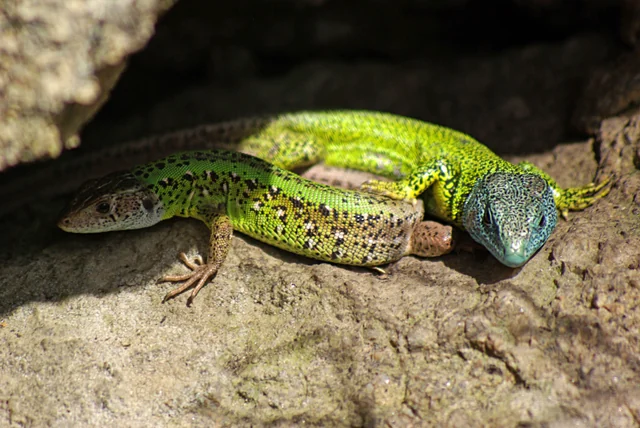
Two lizards on stone, one in the foreground and the other in the back, with green coloring and dark spots.
Water lizards photographed in Candelario, Salamanca, Spain, in 2013. Illustration of the species; it is not a record of Cabeceiras.
Photography: David Perez (DPC) · CC BY3.0
About this photograph

Date given at source: . Source consulted in 2026-11-07. EXIF orientation, proportional resize and WebP conversion; no retouching or new clipping of file obtained in Commons.

Request removal or correct the photo credit

Needing warmth does not mean living far from water.

Includes an activity to try →Explore: Grow and feed by the water →
Read here and view sources

Schreiber’s green lizard, Lacerta schreiberi, is associated with damp habitats, riverside vegetation, walls and brambles. The description published in Ambienta explains that it uses the sun’s warmth for activity but shelters during summer’s hottest hours. Being close to water and choosing somewhere to warm up are parts of the same life.

It feeds mainly on invertebrates, including insects and arachnids. Colour varies too: males’ throats can turn intense blue during the breeding season. These general features do not confirm the species of an animal glimpsed in passing. The consulted source is not a Cabeceiras record.

Age also changes the spaces it seeks. The Charcos com Vida project distinguishes adults needing shelters among rocks and dense scrub from juveniles associated with herbaceous vegetation. A varied bank can offer different refuges rather than acting as a uniform strip.

According to the same profile, reproduction takes place between spring and midsummer. Females lay between six and seventeen eggs, with incubation generally lasting two to three months. These ranges describe the species, not a clutch monitored in the municipality.

The lizard both hunts small invertebrates and provides food for other animals. The source names birds of prey, genets and otters among its predators. This is another connection between bank vegetation, water and the food web.

Words in this story: see explanations →
Source and context

Khris Valero — Lacerta schreiberi, magazine Ambienta, January 2004, pp. 61–62; archive of the Spanish Ministry MAPA

Charcoals with Life — Water Lizard, habitat and life cycle

Accessed: . Editorial summary; the date of consultation is not the date of the facts.

Birds · general biology in Portugal

An acrobat among the leaves

The blue tit even searches for food upside down.

Read here and view sources

A blue cap and wings, white cheeks and a dark line beside the eyes help identify Cyanistes caeruleus. Its yellowish breast adds to the contrast. But watch how it moves too: the University of Évora describes this small bird hopping along branches and hanging upside down as it feeds.

Among the leaves, it searches for insects and spiders. In autumn and winter, fruits and seeds may also form part of its diet. Its food is therefore not a fixed list for every season: what it finds in the landscape changes.

The blue tit is resident and occurs across mainland Portugal. The Gulbenkian profile describes a range of wooded habitats, from woods and riverside trees to orchards, hedges and gardens. A garden and a wooded riverbank offer different settings in which to learn about this bird. These sources explain the species in Portugal; they do not document an encounter in a parish of Cabeceiras.

Words in this story: see explanations →
Source and context

University of Évora — Biodiversity of Mitra: Cyanistes caeruleus

Calouste Gulbenkian Foundation / João E. Rabaça — Blue Chapim

Accessed: . Editorial summary; the date of consultation is not the date of the facts.

Bucos · local record and general biology

A red breast, a changing menu

In winter, fruits also feature in the robin’s diet.

Read here and view sources

Erithacus rubecula owes part of its scientific name to its breast patch: rubecula evokes a reddish colour. João E. Rabaça’s description for the Gulbenkian presents a bird frequently found in wooded areas of Portugal, including parks and gardens, particularly in winter. It is a good starting point for looking at a familiar bird with a fresh question: what is it searching for to eat?

For much of the year, it feeds mainly on insects. In winter, fruits and berries become more important in its diet. This change connects the bird with plants and seasons: getting to know an animal also means discovering the food the landscape offers throughout the year.

Resident and migrant are not always opposing labels for an entire species. In the British example described by the BTO, resident robins share their winter surroundings with visitors from northern and eastern Europe. This example helps explain different movements within one species; it does not identify the origin of a robin observed in Cabeceiras.

There is a documented encounter in the municipality: Pedro Mendes published a robin observation dated 3 October 2021. Comparing its public location with CAOP2025 places it in Bucos, and the community identification was research grade when consulted on 7 November 2026. The record confirms that encounter, not the bird’s migratory origin. All rights to the photograph are reserved; it can be viewed at the source.

Words in this story: see explanations →
Source and context

Calouste Gulbenkian Foundation / João E. Rabaça — Red-necked pisco

British Trust for Ornithology — BirdFacts: Robin, Erithacus rubecula

iNaturalist — pisco observed by Pedro Mendes in03/10/2021, Bucos; photograph with all rights reserved

Accessed: . Editorial summary; the date of consultation is not the date of the facts.

Read the landscape through the plants

Trees, forests, vineyards and fields reveal different ways of occupying the territory.

Choose a story · 58
Serra da Cabreira · flora and habitat

A carnivorous plant in the mountains

Sundew is one of Cabreira’s small surprises.

Includes an activity to try →Explore: Moisture connects these stories →
Read here and view sources

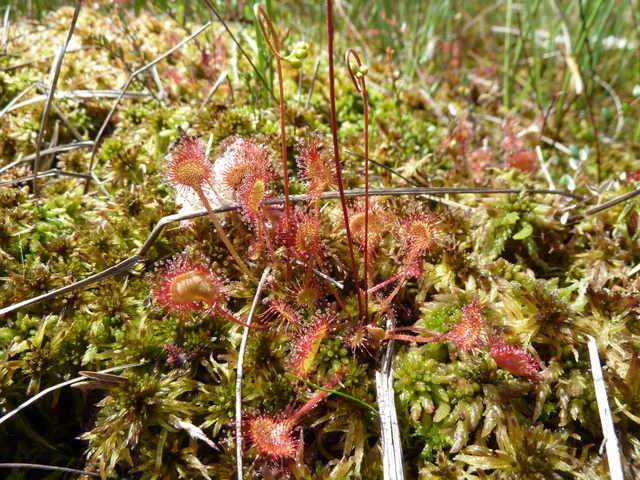
Visit Cabeceiras includes Drosera rotundifolia in the mountain flora. Flora-On describes its habitat as waterlogged meadows, marshes and peat bogs with Sphagnum mosses, generally in mountain areas. The reference concerns Cabreira as a whole; it does not identify an observation point in this guide.

A review by the US Forest Service helps explain this connection with water: it describes continuously moist conditions and soils that are often acidic and poor in nutrients. The plant tolerates prolonged dry spells poorly. This explanation concerns the species in general, rather than measurements of soil or water in Cabreira.

Source and context

Visit Cabeceiras — natural heritage of Serra da Cabreira
Accessed:

Portuguese Botany Society — Flora-On, Drosera rotundifolia
Accessed:

USDA Forest Service — Robin F. Matthews, Drosera rotundifolia, February review, 1994
Accessed:

Editorial summary; the date of consultation is not the date of the facts.

Painzela · gardens and skills

Plants shaped by human hands

Camellias and yews are part of the story of these gardens.

Includes an activity to try →Explore: The garden also holds knowledge →
Read here and view sources

Camellias and yews trimmed into geometric or animal shapes: this is the art of topiary. The Portuguese Historic Gardens Association links this tradition to the school of Manuel Joaquim Alves Soares, continued by his son Joaquim. Casa de Piellas, in Painzela, is part of this history. It is private property; check the visiting conditions in its place profile.

The Rota do Tâmega presentation links this school of gardening to support from the sisters Emília Ermelinda and Justina Praxedes Pinto Basto. In the mid-19th century, they are said to have supported Manuel Joaquim Alves Soares’s training in Porto and England. The story of these plant shapes therefore also involves the sharing of knowledge and its transmission between generations.

Looking at topiary means looking both at a plant and at human skill. Geometric shapes organise lines and volumes; animal shapes evoke living creatures. The association identifies examples of this tradition at several estates in Basto, not just Piellas.

Words in this story: see explanations →Getting to know the parish See Fact sheet: Casa de Pielas, jardins e anexos
Source and context

Portuguese Association of Historical Gardens — Route Tâmega

Portuguese Association of Historical Gardens — Casa de Piellas, Painzela

Accessed: . Editorial summary; the date of consultation is not the date of the facts.

Botany · species recorded in the municipality

A plant does not need flowers

Ferns tell a different story of reproduction.

Includes an activity to try →
Read here and view sources

Ferns reproduce through spores, without flowers. The University of Évora describes the sori and spores of Asplenium onopteris, associated with damp, shady places including cracks in rocks and walls. Its fronds are evergreen. The local observation shows the plant’s appearance; the explanation of reproduction comes from the botanical profile.

A fern leaf is called a frond. For this species, the profile describes evergreen fronds between ten and fifty centimetres long, with a blade cut into successive divisions. The dark stalk that joins the blade to the base can be as long as the blade itself. These are general botanical features, not measurements taken from the local photograph.

Sori are groups of spore-producing structures. In Asplenium onopteris they are described as elongated or linear, with a covering called an indusium. This differs from a flower or fruit: finding no flowers on a fern does not mean it is not reproducing. The available photograph may not show these details either.

Words in this story: see explanations →
Source and context

University of Évora — Asplenium onopteris

Accessed: . Editorial summary; the date of consultation is not the date of the facts.

Wetland plants · general botany

Some plants prefer slow-moving water

Broadleaf cattail is associated with waterlogged ground.

Includes an activity to try →Explore: Three environments, different clues →
Read here and view sources

Typha latifolia, called tábua-larga in Flora-On, occurs in ditches, ponds, lakes and slow-flowing watercourses. The profile highlights soils waterlogged for much of the year. It gives a floral feature for confirming the species: the male and female inflorescences touch. This general description confirms neither a population in the municipality nor an identification of a particular plant.

Lentic is the term for still or slow-moving water. That clue concerns the environment; the positions of the two flower clusters concern the plant. Separating the questions improves observation: what is the water like, and which structures can I distinguish? A damp ditch alone does not confirm the species, just as an isolated stem does not describe the whole environment.

Flora-On mentions fresh or slightly mineralised water and a preference for base-rich substrates. It adds that higher phosphorus concentrations in water can favour the plant. This is an ecological relationship described for the species; seeing a cattail cannot replace nutrient measurements or prove that a discharge has occurred.

Comparison with rush helps distinguish habitats: a damp meadow and waterlogged ground beside slow water are not identical descriptions. The diagram in this story offers a way to explore those differences.

Words in this story: see explanations →
Source and context

Portuguese Society of Botany — Flora-On: Typha latifolia

Portuguese Society of Botany — Flora-On: Juncus effususus subsp. effususus

Portuguese Society of Botany — Flora-On, Frangula alnus: names and ecology

Accessed: . Editorial summary; the date of consultation is not the date of the facts.

Local observation · Cavez · general botany

Foxgloves like the woodland edge

Not all woodland plants seek the forest interior.

Includes an activity to try →Explore: Look at the whole plant →
Read here and view sources

Flora-On describes Digitalis purpurea subsp. purpurea at the edges and in clearings of woods and scrub, including some banks and hedges. It prefers cool, shady places. The profile helps explain how light and moisture create different environments even close together. The plant is toxic if swallowed: knowing it does not mean using it as food.

Flora-On distinguishes two subspecies with different ecological descriptions. For subsp. purpurea it mentions a general preference for siliceous substrates. For amandiana it highlights rocky environments and shallow soils, including cliffs, outcrops receiving little sun and banks in abandoned vineyards.

This distinction prevents us from treating all foxgloves as inhabitants of one setting. Finding a flower in a clearing is not enough to assign a subspecies: ecology guides questions but does not replace botanical characteristics. The profile also records possible parasitism by Orobanche amethystea, showing that a plant has relationships with other plants too.

The photograph by João Lima, recorded on 2026-06-15, shows this species in Cavez. Open the observation to compare visible details with the botanical description. The record documents that encounter; it does not mean the plant will always be visible in the same place. The observation identifies Digitalis purpurea without confirming a subspecies.

Words in this story: see explanations →
Source and context

Portuguese Society of Botany, Flora-On — Digitalis purpurea, ecology and toxicity

iNaturalist — Digitalis purpurea, João Lima observation in 2026-06-15

Accessed: . Editorial summary; the date of consultation is not the date of the facts.

Refojos · monastic landscape

Beyond the church, cultivated land

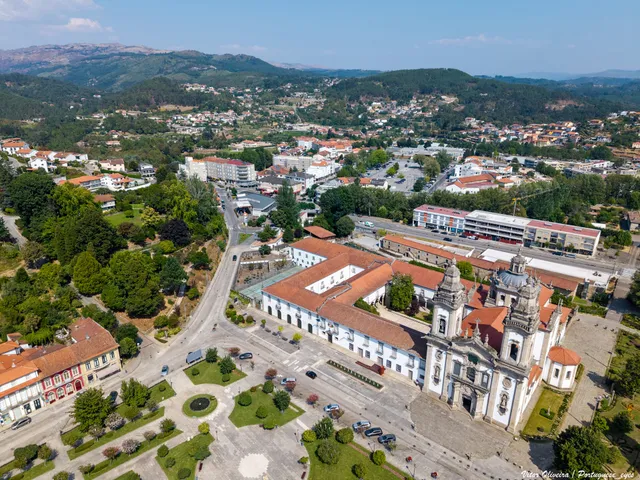
Air view of the Monastery of São Miguel and the Republic Square in Refojos
View of the Monastery of Refojos and the urban surroundings. It is a context image, not a reconstruction of the cultivated fence.© Vitor Oliveira from Torres Vedras, PORTUGALⓘ

Vegetable gardens, orchards and medicinal plants formed part of the monastery grounds.

Includes an activity to try →Explore: The fence continues in other stories →
Read here and view sources

According to the municipal description of 2021, vegetable gardens, orchards, medicinal plants, fields and woods made up the former grounds of Refojos Monastery. Its pharmacy supplied other Benedictine monasteries, including Tibães. Beyond the church, there was land to cultivate and medicine to prepare. This is a historical portrait of the grounds, not an inventory of today’s plants.

The same description places the Penoutas stream beside and behind the monastery, near former agricultural buildings now adapted as museum spaces. Water and working buildings broaden the view: the story of the complex extends beyond worship.

The former grounds can no longer be read as one intact garden. The source draws attention to scattered traces. Distinguishing what the document describes from what a photograph shows is part of the discovery: a view of the square does not reconstruct vanished vegetable gardens, orchards or medicinal plants.

Words in this story: see explanations →Getting to know the parish See Fact sheet: Mosteiro de São Miguel de Refojos
Source and context

Municipality — historical gardens, news of 21/05/2021

Accessed: . Editorial summary; the date of consultation is not the date of the facts.

Flora · general biology of a species invasive in Portugal

Yellow flowers, contested space

A striking plant can change the vegetation around it.

Explore: A landscape, different ways to grow →
Read here and view sources

Silver wattle, Acacia dealbata, has yellow flowers grouped in small round clusters and finely divided leaves. Native to south-eastern Australia and Tasmania, it is described by the University of Évora as invasive in Portugal. It can form dense stands that hinder native vegetation, particularly after disturbances such as fire. This profile explains the species; it does not locate a population in Cabeceiras or identify all acacias by the same name.

There is more to observe than yellow flowers: the evergreen leaves divide repeatedly into small units, giving the crown a delicate appearance. The profile gives January to April as the flowering period and describes flattened, reddish-brown pods. These are general species features, not a calendar confirmed for a place in the municipality.

The introduction history also helps explain the landscape. The University of Évora mentions ornamental, forestry and soil-stabilisation uses. A plant introduced for one purpose may later spread and alter the space available to other species.

Source and context

University of Évora — Virtual Museum of Biodiversity, Acacia dealbata

Accessed: . Editorial summary; the date of consultation is not the date of the facts.

Flora · general description of Arundo donax

Giant reed continues below ground

Below the stems lies another part of the plant.

Explore: From margins to monitoring →
Read here and view sources

Giant reed, Arundo donax, is a large perennial grass. ICNF describes robust, hollow stems that can reach six metres and a rhizome structure extending underground. Knowing the unseen part helps us look beyond the tall stems of a reed bed. The national distribution in the profile does not confirm a record at any particular place in Cabeceiras.

Flowers occur in large, branched, violet-tinged clusters; the profile gives August to October as the flowering period. Leaves are long, narrow and pointed. The description helps distinguish three plant parts: tall stems, the leaves along them and the flowering structures.

Flowers and viable seeds are not the same thing. ICNF describes fruits that do not produce viable seeds outside the native range. Seeing a flowering reed bed is therefore not enough to establish how it is spreading. The underground structure remains part of the question.

Source and context

ICNF — SIVEEI, Arundo donax; updated record 09/03/2023

Accessed: . Editorial summary; the date of consultation is not the date of the facts.

Sobreira · landscaping documented in 2016

Three cork oaks offer a clue to the name

At Rotunda da Sobreira, plants help tell the story of the place.

Read here and view sources

In June 2016, the municipality announced completion of landscaping at Rotunda da Sobreira, at an entrance to the town. Three cork oaks were planted in the centre and rosemary in the granite beds. The report linked the choice of cork oak to the possible origin of the name Sobreira. This is the source’s interpretation, not a demonstrated etymology. The account documents a landscaping choice in 2016 without confirming each plant’s current condition.

Source and context

Municipality — Urban arrangement of the Sobreira Rotunda, 22/06/2016

Accessed: . Editorial summary; the date of consultation is not the date of the facts.

Arco de Baúlhe · educational project documented in 2016

A garden bed for learning through the senses

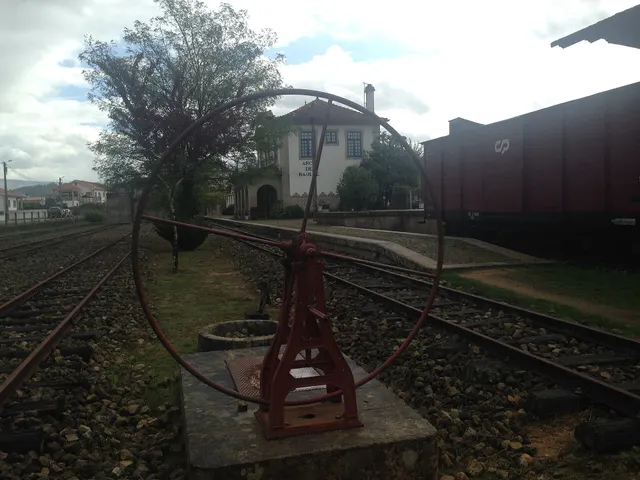
Revolving plate and tracks from the old Arco de Baúlhe station, with buildings and railway equipment at the bottom.
Arco de Baúlhe station and surrounding. This photograph contextualizes the museum; it does not identify the site or plans of the 2016 program.© JP Ribeiroⓘ

Plants are part of the station’s memory too.

Read here and view sources

In a March 2016 announcement, the museum recalled an aromatic-herb project created in 2013 at the Arco de Baúlhe railway museum. For that month it proposed planting new aromatic plants and two fruit trees with children from the school centre and users of the day centre. The garden bed connected the museum with environmental education. The source documents the project and announced programme, without confirming the garden’s current composition.

See Fact sheet: Núcleo Ferroviário de Arco de Baúlhe
Source and context

Basto Land Museum — The smells and aromas of our gardens, announcement of 15/03/2016

Accessed: . Editorial summary; the date of consultation is not the date of the facts.

Hillside crops · olive botany

One leaf, two sides

An elongated green olive leaf with a pale central vein and other leaves behind it.
An olive leaf photographed in Stutensee, Germany, in 2011. Botanical illustration, not an observation from Cabeceiras. This view does not show both sides of the same leaf.
Photography: H. Zell · CC BY-SA 3.0
About this photograph

Date given at source: . Source consulted in 2026-11-07. EXIF orientation, proportional resizing and WebP conversion; no retouching or clipping of the file.

Request removal or correct the photo credit

The olive tree’s silvery side also tells a story.

Includes an activity to try →Explore: From leaf to fruit and winepress →
Read here and view sources

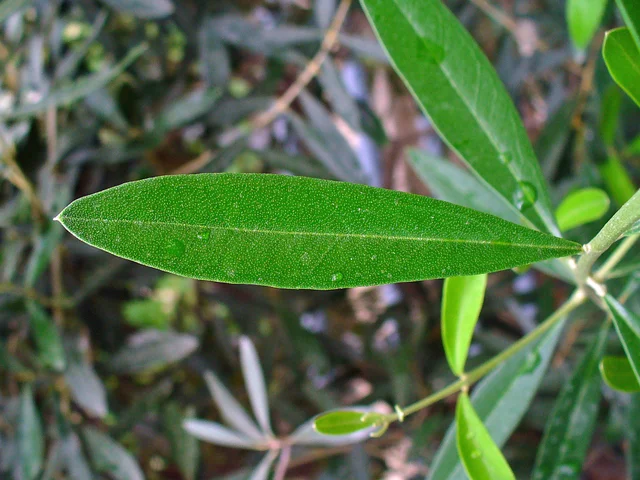
The municipality’s landscape description includes olive trees on the hillsides of Cabeceiras. The cultivated olive has leaves that are grey-green above and silvery-grey beneath, where hairs grow. Its small flowers have four white petals joined at the base.

The fruit is the olive, an oil-rich drupe. The University of Évora’s description follows the change from green to reddish and dark shades during ripening, but also mentions forms that remain green when ripe. Colour alone does not tell the fruit’s whole story. The connection from tree to olive oil continues in the story of the Ramil oil mill.

The profile distinguishes the cultivated olive from its wild form, known in Portuguese as zambujeiro. The latter is described as having smaller leaves and fruits and thorny lower branches. This comparison shows why a single feature, such as the silvery underside of a leaf, does not explain every difference.

The olive is evergreen: it retains foliage throughout the year. You can therefore return to the same tree in different seasons and compare leaves, flowers and fruits, without expecting to find them all at once.

Words in this story: see explanations →
Source and context

University of Évora — Virtual Museum of Biodiversity, Olea europaea

Municipality — landscape and vegetation

Accessed: . Editorial summary; the date of consultation is not the date of the facts.

Vegetation described for the area

The forest has a history too

Names that belong to the memory of the mountains.

Includes an activity to try →Explore: Read a tree per part →
Read here and view sources

Oaks and chestnuts form part of the mountain vegetation described by the municipality. The same source describes the partial replacement of that vegetation by maritime pine. A wooded hillside therefore also records planting choices and changes in land use. Looking only at the greenery is not enough: notice the species, the patches and the spaces between trees. This municipal description is not a current survey of every wood.

The same tree species can create different working landscapes. The publication Florestas do Alto Minho distinguishes chestnut orchards, managed for fruit, from chestnut coppices, managed for poles. These are uses of the chestnut tree, not two tree species. This regional comparison helps us ask questions about the landscape of Cabeceiras; it does not identify the purpose of any particular local plot.

There is also a forest beneath the canopy. The understorey consists of plants growing under the trees; dead wood can support wood-feeding insects and fungi too. A forest landscape is therefore more than a count of living trunks. Look for different layers — canopy, low vegetation and fallen wood — without assuming that species mentioned for another region occur in that spot.

Words in this story: see explanations →
Source and context

Municipality — landscape and vegetation

High CIM Minho — High Forests Minho, sours and candlesticks (habitat 9260)

Accessed: . Editorial summary; the date of consultation is not the date of the facts.

Common names used in the source

Strawberry tree, carqueja and gorse

Between the trees and fields, another landscape awaits.

Includes an activity to try →Explore: Pick a detail of the bush →
Read here and view sources

Strawberry tree, carqueja, gorse and honeysuckle appear in the municipality’s description of mountain vegetation. The source also links upland scrub to grazing goats, cattle and sheep, distinguishing it from cultivated pasture lower down. Scrub is therefore part of a landscape of plants, animals and work. These common names are starting points for learning about vegetation, not identifications of every plant you encounter.

The municipal account relates this vegetation to changing land use: it mentions the partial replacement of oaks, chestnuts and scrub by maritime pine. Reading the landscape therefore also means asking what was planted and what changed. One green patch may hold stories of grazing, cultivation and forestry.

Start by choosing a detail in the next stories: a carqueja stem, gorse spines, the strawberry tree’s flowers and fruits, or honeysuckle’s place at the woodland edge. Each question brings you closer without requiring you to identify every plant already.

Source and context

Municipality — landscape and vegetation

Accessed: . Editorial summary; the date of consultation is not the date of the facts.

Agricultural landscape

Olive trees, cork oaks and vines

From the hillsides to cultivated river plains.

Includes an activity to try →
Read here and view sources

The municipal description follows the landscape from the hillsides to the river plains: olive trees and cork oaks appear alongside vines trained up other trees. The source mentions poplars, plane trees and fruit trees, including apple, orange and pear trees. It also describes slopes shaped into terraces and small plains beside rivers adapted for farming. This is a way of observing the relationship between relief, water and cultivation, rather than an up-to-date inventory of every plot.

Source and context

Municipality — landscape and vegetation

Municipality — Tourist sites: agricultural landscape and vegetation

Accessed: . Editorial summary; the date of consultation is not the date of the facts.

Environmental history · account from 1758

A landscape described in 1758

Heathers, carqueja, oaks and animals in the parish priest’s words.

Read here and view sources

The account from São Nicolau describes differences between hills: some covered in heather and carqueja, others in gorse and oaks. It also mentions rabbits, partridges, hares, wolves, wild boar and foxes. This testimony shows how nature was described in the 18th century; it is not a current species inventory. The author also compares the terrain, distinguishing finer-grained stones to the north and east from large boulders to the west and south.

Getting to know the parish
Source and context

Municipality — Parish memories of St Nicholas, 22/05/1758
Accessed:

Basto Land Museum — St Nicholas Parish Memories, 22 May 1758
Accessed:

Editorial summary; the date of consultation is not the date of the facts.

Local observation · União das freguesias de Arco de Baúlhe e Vila Nune · general botany

Flowers and fruit on the same branch

The strawberry tree’s seasons overlap.

Includes an activity to try →Explore: Fruits with different stories →
Read here and view sources

The strawberry tree, Arbutus unedo, keeps glossy dark-green leaves throughout the year. Small white bell-shaped flowers appear in autumn. Its fruits take about a year to ripen, so ripe fruit can coincide with the next flowering season.

The Lisbon School of Education’s profile distinguishes two encounters with animals: insects, especially bees, take part in pollination, while birds eating the fruits help transport seeds. These are different roles in the plant’s life cycle.

The leaves offer clues beyond their colour: their edges are toothed, and secondary veins branch from a central vein. The plant ranges from a shrub to a small tree. The Lisbon Polytechnic profile mentions tolerance of dry climates and different soils, showing that its fruiting calendar is not its only interesting feature.

Food uses include fresh fruit, jams and jellies. The same source places the tradition of strawberry-tree fruit drinks in the Algarve and other Mediterranean areas; that information does not make them a documented speciality of Cabeceiras.

The photograph by migr, recorded on 2025-08-29, shows this species in União das freguesias de Arco de Baúlhe e Vila Nune. Open the observation to compare visible details with the botanical description. The record documents that encounter; it does not mean the plant will always be visible in the same place.

Words in this story: see explanations →See the plants photographed in the municipality
Source and context

Lisbon Polytechnic — form Arbutus unedo

iNaturalist — Arbutus unedo, migr observation in 2025-08-29

Accessed: . Editorial summary; the date of consultation is not the date of the facts.

Botany · general features

What is hidden inside a chestnut burr?

Open chestnut burrs and shiny brown chestnuts among fallen leaves.
Chestnuts and burrs on the ground at Guirbaden, Mollkirch, France, in 2020. Botanical illustration, not an observation from Cabeceiras.
Photography: AudreyMuratet · CC BY-SA 4.0
About this photograph

Date given at source: . Source consulted in 2026-11-07. EXIF orientation, proportional resizing and WebP conversion; no retouching or clipping of the file.

Request removal or correct the photo credit

The chestnut is the fruit; the burr encloses the cluster.

Includes an activity to try →Explore: From hedgehog to seed →
Read here and view sources

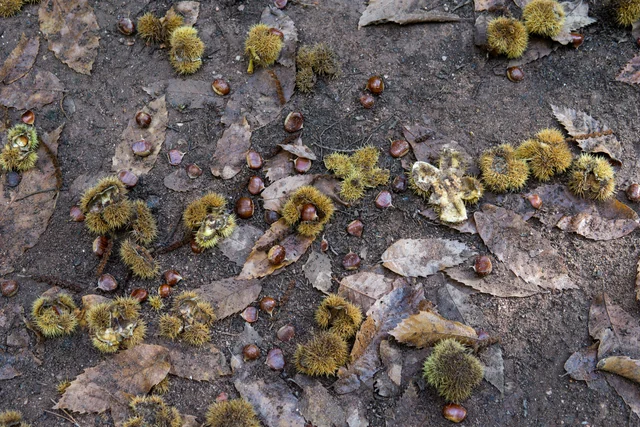
Castanea sativa sheds its leaves in the unfavourable season and can grow into a large tree. The Castelo Branco Polytechnic profile describes narrow yellow flowers in long hanging spikes. Later, chestnuts develop together inside a prickly burr: the chestnut is the fruit, while the burr encloses the cluster.

Notice the layers: the shiny brown covering belongs to the fruit; inside there is usually one seed, with a yellowish skin. The tree also had a place in workshops: the source mentions wood used in carpentry, cabinetmaking, basketry and woodturning. These are general characteristics and uses, without attributing a workshop or individual tree to the municipality.

Flowers come before the burr. UTAD’s Digital Flora gives May and June as the species’ flowering period. This is a general botanical reference, not a prediction for a tree in Cabeceiras: compare photographs of the same tree on different dates to learn its rhythm. A tree without chestnuts on a spring visit tells a different story from an open burr in autumn.

Chestnut belongs to the Fagaceae family, the same broad botanical family as oaks. Comparing their fruits shows that kinship does not mean identical appearance: return to the oak story and look for what surrounds the acorn, then revisit the chestnut’s layers.

Words in this story: see explanations →See the plants photographed in the municipality
Source and context

Polytechnic Institute of Castelo Branco — botanical record of Castanea sativa

UTAD Botanical Garden — Castanea sativa, Flora Digital de Portugal

Accessed: . Editorial summary; the date of consultation is not the date of the facts.

Botany · general features

A leaf with a wavy outline

A green oak leaf with lobed edges and visible veins, still attached to the branch.
A Quercus robur leaf photographed near Hollenstein in the Hollabrunn forest, Austria, in 2025. Species illustration; not an observation from Cabeceiras and not an identification of subsp. broteroana.
Photography: Stefan.lefnaer · CC BY-SA 4.0
About this photograph

Date given at source: . Source consulted in 2026-11-07. EXIF orientation, proportional resizing and WebP conversion; no retouching or clipping of the file.

Request removal or correct the photo credit

Look at the leaf’s outline and stalk on a pedunculate oak.

Includes an activity to try →Explore: The acorn between the tree and the story →
Read here and view sources

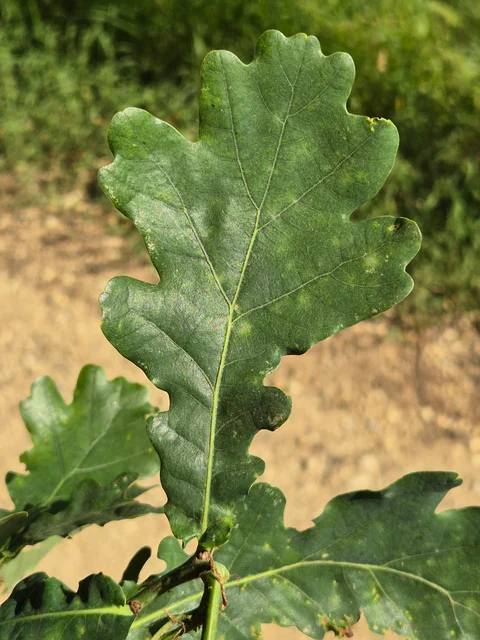
The leaf’s outline has broad, uneven lobes: curves resembling small waves. The University of Évora description adds a short leaf stalk, less than five millimetres long, and curved secondary veins that are not parallel. Rather than looking only at the silhouette, compare the outline, veins and attachment to the branch.

The fruits are carried on stalks and have a cup of brownish scales. The source uses the name Quercus robur subsp. broteroana. These features help explain the botanical description; they do not identify the subspecies in this guide’s photographs or places.

The description presents leaves as deciduous to marcescent. Deciduous leaves fall seasonally; marcescent leaves can remain attached for a while after drying out. A brown leaf on a branch is therefore not necessarily alive.

The profile associates this oak with moist environments and mentions intolerance of summer drought. A leaf’s outline describes a structure; humidity and the response to drought describe relationships with the environment. They are complementary clues for reading a plant and its landscape.

Words in this story: see explanations →See the plants photographed in the municipality
Source and context

University of Évora — Quercus robur subsp. broteroana, description by Carlos Vila-Viçosa

Accessed: . Editorial summary; the date of consultation is not the date of the facts.

Local observation · Rio Douro · general botany

Not every leaf is equally prickly

Even on a single holly tree, leaves can differ.

Includes an activity to try →Explore: Look at the whole plant →
Read here and view sources

Mentioned for Cabreira by Visit Cabeceiras, Ilex aquifolium has evergreen leaves. The Gulbenkian profile describes spiny edges, sometimes smooth on older branches or plants. Red fruits appear on female plants and are toxic. Observe them without picking or tasting them. According to Gulbenkian, flowering generally takes place from April to June; fruits ripen in late summer and can remain through winter.

The small white flowers are less conspicuous than the fruits. Holly is dioecious: there are male and female plants. This distinction helps explain why not every plant bears red fruit.

It is a slow-growing shrub that can live for more than a century. Gulbenkian describes it in oak woods and scrub, often on shady, damp slopes with slightly acidic soils rich in organic matter. Observing the plant therefore also means looking at its surroundings, as well as its leaf outlines.

The photograph by DVG, recorded on 2026-04-03, shows this species in Rio Douro. Open the observation to compare visible details with the botanical description. The record documents that encounter; it does not mean the plant will always be visible in the same place.

Words in this story: see explanations →
Source and context

Visit Cabeceiras — natural heritage of Serra da Cabreira
Accessed:

Calouste Gulbenkian Foundation — Ilex aquifolium, characteristics and habitat
Accessed:

iNaturalist — Ilex aquifolium, DVG observation in 2026-04-03
Accessed:

Editorial summary; the date of consultation is not the date of the facts.

Local observation · União das freguesias de Gondiães e Vilar de Cunhas · general botany

Carqueja stems work too

Leaves do not do all the photosynthesis.

Includes an activity to try →
Read here and view sources

Carqueja appears in the municipality’s description of mountain vegetation. In the Castelo Branco Polytechnic profile, Pterospartum tridentatum has greatly reduced leaves and winged stems that carry out photosynthesis. Its flowers are yellow and its fruit is a pod. These details invite you to look at branch shapes, beyond flower colour.

The profile describes a woody, rigid shrub that may grow upright or closer to the ground and reach around one metre. Flowers appear in small, tight groups. The flattened pod generally contains two to five seeds. Stem, flower and fruit offer different clues: yellow alone is not enough to recognise the plant.

The same document mentions rural uses such as animal bedding and incorporation into cultivated soil alongside other scrub plants. These are general uses of the species. For a local historical reference, follow the Cavez story: the account of 1758 mentions carqueja and other fuelwood in the landscape of charcoal production, without giving a manufacturing recipe.

The photograph by João Lima, recorded on 2025-07-15, shows this species in União das freguesias de Gondiães e Vilar de Cunhas. Open the observation to compare visible details with the botanical description. The record documents that encounter; it does not mean the plant will always be visible in the same place.

Words in this story: see explanations →
Source and context

Polytechnic Institute of Castelo Branco — Pterospartum tridentatum, characteristics

Municipality — landscape and vegetation

iNaturalist — Genista tridentata, João Lima observation in 2025-07-15

Accessed: . Editorial summary; the date of consultation is not the date of the facts.

Forest landscape · species botany

Needles come in pairs

A small detail to spot on maritime pine.

Includes an activity to try →Explore: A tree inside the forest →
Read here and view sources

The municipality mentions maritime pine in the transformation of the mountain forest landscape. In the University of Évora description, Pinus pinaster has stiff, pointed, evergreen needle leaves. They grow in pairs on a very short shoot and can reach 25 centimetres. A pair of needles is a starting point for noticing more than the tree’s crown.

Male and female reproductive structures occur on the same plant. The male structures form yellowish clusters; the female structures develop into cones with woody scales. Look at the trunk too: the bark is thick, reddish-brown and deeply cracked. These are general features of the species, not a survey of local pine woods.

The environment offers another clue. The University of Évora associates maritime pine with sunny places and acidic, often sandy soils; inland it also mentions schist substrates. It can form pine woods or join mixed forests with other pines and oaks.

When looking at a hillside, distinguish two scales: the tree with its needles and cones, and the plants around it. The botanical description provides context, but appearance alone cannot reveal a stand’s origin or age.

Words in this story: see explanations →
Source and context

University of Évora — Virtual Museum of Biodiversity, Pinus pinaster

Municipality — landscape and vegetation

Accessed: . Editorial summary; the date of consultation is not the date of the facts.

Cork oak · botany and local landscape

Cork begins on a tree

A cork oak’s bark is one of the first clues.

Explore: A tree, different materials →
Read here and view sources

Quercus suber has thick, elastic, deeply cracked bark: cork. The municipal description includes cork oaks on the hillsides of Cabeceiras. Leaves remain for more than one season; the University of Évora mentions up to three years. Evergreen foliage does not mean that every leaf lasts forever.

The fruits are acorns. The profile describes their cups as having long, velvety scales. Bark, leaves and fruits offer different clues for observing the tree, without removing cork or breaking off branches. The local reference documents the landscape; the botanical description explains general features of the species.

Inside, cork consists of microscopic cells containing gas similar to air. APCOR relates this structure to its lightness, compressibility and ability to regain its shape. Suberin in the cell walls helps impede the passage of liquids and gases. A stopper looks simple, but the material’s behaviour begins at a scale our eyes cannot see.

The association also describes turning used stoppers into granules for new products, such as floor coverings and soles. This is a general example of reuse, not an industrial activity confirmed in Cabeceiras. Compare it with the wooden clogs of Outeiro and the containers of Faia: other stories of tree-derived materials, with different uses and working methods.

Words in this story: see explanations →
Source and context

University of Évora — Quercus suber, botanical description

Municipality — landscape and vegetation

APCOR — Cork, cellular structure, properties and reuse (page consulted in the staging subdomain)

Accessed: . Editorial summary; the date of consultation is not the date of the facts.

General botany · alder

Seeds that travel by water

Alder has a close relationship with rivers.

Explore: The tree, the river and the craft →
Read here and view sources

In the University of Évora profile published under the name Alnus glutinosa, alder seeds have air-containing tissues that aid dispersal by water. The tree tolerates long periods with submerged roots. Woods dominated by alder are known in Portuguese as amiais.

Its connection with water thus extends from growing along banks to the journey of its seeds. There is also a naming change to understand: Flora-On uses Alnus lusitanica for native Portuguese alders, citing a 2017 study. Here each name remains linked to its source; the story does not identify a particular tree in the municipality.

The profile published as Alnus glutinosa describes a deciduous tree, which loses foliage for part of the year. The leaves are alternate with doubly toothed edges; the bark, smooth when young, becomes darker and cracked. These features concern different plant parts and different stages of its life.

That source gives December to February as the flowering period. Male flowers appear in elongated groups called catkins, while female groups have a different shape. Winter can therefore reveal details hidden on a visit when the crown is full of leaves. This calendar belongs to the consulted description and may vary with local conditions; it does not announce flowering for a particular tree in Cabeceiras.

Words in this story: see explanations →
Source and context

University of Évora — Alnus glutinous, breeding and habitat

Portuguese Society of Botany — Flora-On, Alnus: ecology, symbiosis and taxonomic note

Accessed: . Editorial summary; the date of consultation is not the date of the facts.

General botany · birch

A tree with pale bark

Birch catches the eye before you even look at its leaves.

Includes an activity to try →Explore: Discreet flowers, different strategies →
Read here and view sources

The Betula celtiberica profile describes a deciduous tree with a silvery-white trunk and leaves ranging from oval to triangular, with toothed edges. The species is associated with moist environments, including watercourse banks, and needs plenty of light.

The Gulbenkian Garden presentation places flowering in April and May and describes small winged fruits dispersed by wind. Bark, leaves and reproductive structures offer different clues throughout the year. This information concerns the species; it does not confirm its presence in a parish or guarantee the same dates everywhere.

Male and female flowers occur on the same tree but in different structures. Gulbenkian describes male flowers grouped in greenish-yellow catkins and female structures that are upright at first. A flower does not always have large, showy petals: observing a tree may require attention to discreet structures.

The profile also highlights shallow, horizontally spreading roots and the ability to produce shoots from the stump. The visible trunk is only part of the plant; growing from seed and producing new shoots are distinct processes. These are features from the Betula celtiberica profile, without attributing a particular tree to Cabeceiras.

Words in this story: see explanations →
Source and context

Calouste Gulbenkian Foundation — Celtic betula, trunk and leaves

Accessed: . Editorial summary; the date of consultation is not the date of the facts.

Species botany · with a local observation

A fruit with a wing

For ash, shape helps fruit travel.

Includes an activity to try →Explore: Three Ways to Continue the Trip →
Read here and view sources

The ash fruit has a wing and is called a samara. There is another detail to discover: the leaf is divided into several narrow leaflets. Do not confuse each leaflet with a whole leaf.

Fraxinus angustifolia can grow in riverside woods and on slopes. The local photograph documents a tree in Gondiães e Vilar de Cunhas; it does not show a fruit travelling or describe the species’ entire habitat.

The Gulbenkian profile describes leaves with three to eleven leaflets and serrated edges. The name angustifolia refers to this narrow shape. On the fruit, the wing extends beyond the seed-bearing part: fruit and seed are not the same structure. The tree loses its leaves seasonally; branches, leaves and fruits offer different clues throughout the year.

Ash connects this leaf shape with water availability. The Gulbenkian profile mentions tolerance of a range of temperatures but sensitivity to dryness, and a preference for deep soils. It also describes a tall, irregular crown and a dark, deeply cracked trunk. Leaves are not the only helpful feature: bark, crown and surroundings complete the observation, without any single characteristic being enough to identify a tree.

Words in this story: see explanations →
Source and context

University of Évora — BioMontado, chips Fraxinus angustifolia and Hedera hibernica

Portuguese Society of Botany — Flora-On, Fraxinus angustifolia: ecology

Calouste Gulbenkian Foundation — Straits leaves, fruit and habitat

Accessed: . Editorial summary; the date of consultation is not the date of the facts.

Species botany · with a local observation

White flowers, small red fruits

Hawthorn changes its appearance through the reproductive cycle.

Includes an activity to try →Explore: A simple leaf or a set of folioli? →
Read here and view sources

Hawthorn, Crataegus monogyna, is a deciduous shrub or small tree. Its leaves are simple, alternate and lobed; its thorns explain the Portuguese name espinheiro-branco. In the description from the University of Porto’s Natural History and Science Museum, the white flowers have five petals.

The small red fruits are pomes, and the profile mentions one seed per fruit. Leaves, flowers and fruits let us compare different stages of the plant. The local photographic record linked to this story documents one observation, not every phase of the cycle or the species’ distribution across the municipality.

The botanical family offers another comparison: hawthorn and bramble both belong to the rose family, despite their different leaves and fruits. A hawthorn’s simple leaf has a blade divided into lobes; a bramble’s compound leaf is divided into leaflets. Belonging to the same family does not mean having the same shape.

The University of Porto collection associates hawthorn with understorey and scrub on well-drained soils. Its stated distribution extends across Europe, Asia and North Africa. This context is broader than the local record: a photograph in Cabeceiras documents an encounter, while the botanical profile describes the species.

Words in this story: see explanations →
Source and context

University of Porto — living botanical collection, Crataegus monogyna

University of Évora — Rubus ulmifolius, leaves and fruits

Accessed: . Editorial summary; the date of consultation is not the date of the facts.

General botany · getting to know gorse

A shrub with well-defended branches

Spines are part of the gorse’s silhouette.

Includes an activity to try →Explore: From the bush to the seasons and cattle →
Read here and view sources

Common gorse, Ulex europaeus subsp. europaeus, is a strongly spined shrub that can reach two metres. The Barcelos Arboretum profile associates it with heathland, hedges and scrub edges and mentions winter flowering. Scrub landscapes can therefore have flowers outside spring.

The same source records uses as fodder, cattle bedding and fuel. These uses belong to the general plant description; they do not document a specific practice in Cabeceiras. The municipality mentions gorse in the mountain landscape without identifying the species in each place.

The Arboretum describes leaves transformed into spines and branching that may be open or compact. The outward shape becomes more interesting when we ask which plant part each structure comes from. For gorse, the profile mentions modified leaves; in butcher’s broom, what looks like a leaf is a flattened stem. In carqueja, green stems also take part in photosynthesis. Comparing these stories helps us look beyond the silhouette.

Source and context

Arboreto de Barcelos — Ulex europaeus subsp. europaeus

Municipality — landscape and vegetation

Accessed: . Editorial summary; the date of consultation is not the date of the facts.

General botany · bramble

A blackberry is a small cluster

A bramble’s fruit has more detail than it first appears.

Includes an activity to try →Explore: A blueberry, many small fruits →
Read here and view sources

A blackberry consists of numerous small drupes. Rubus ulmifolius has white or pinkish five-petalled flowers and fruits that turn black when ripe. Its leaf is compound too, divided into three to five leaflets, green above and greyish and hairy beneath.

The arching stems form dense bramble patches. The University of Évora associates the plant with woods, hedges, uncultivated ground and watersides, preferring cool, moist soils. This is a general botanical description; it does not identify a particular bramble patch in the municipality.

A compound leaf may look like a small branch. The distinction helps us read the plant: in the bramble described by the University of Évora, three to five leaflets belong to one leaf and are arranged like fingers spreading from a common base. The greyish underside results from dense hairs, called tomentum.

The description also mentions purple, pruinose shoots, with a waxy-looking surface coating. These details differ from the prickles on the stems. The plant also occurs on ground altered by human activity; a bramble patch alone does not show when or why land stopped being cultivated.

Words in this story: see explanations →
Source and context

University of Évora — Rubus ulmifolius, leaves and fruits

Accessed: . Editorial summary; the date of consultation is not the date of the facts.

General botany · ivy

Not all flowers arrive in spring

Ivy brings flowers to autumn too.

Read here and view sources

The Hedera hibernica profile places its small greenish-yellow flowers in September and October. It mentions the importance of flowers and fruits for insects and birds, and the plant’s use as nesting shelter. This shows how one climber can take part in several ecological relationships.

The profile also explains how the plant occupies space. Ivy is woody and perennial; its long, flexible branches have roots that cling to surfaces. With support it climbs trees, rocks or walls; without a vertical surface it can spread over the ground. Climbing and ground cover are thus two growth forms of the same species.

The described leaves may be oval or have three to five lobes. Compare leaf shape with branch position, but do not use a single detail to name the plant. To follow the seasons, record leaves, flowers and fruits separately: keeping leaves all year does not mean flowering every month.

Words in this story: see explanations →
Source and context

University of Évora — BioMontado, chips Fraxinus angustifolia and Hedera hibernica

Accessed: . Editorial summary; the date of consultation is not the date of the facts.

Praça da República · garden memories from 2011

Spring comes to the square too

Camellias and rhododendrons change the town’s colours.

Read here and view sources

In April 2011, the municipality described a seasonal handover in Praça da República: the camellias were losing their flowers as the rhododendrons began to bloom. The news item recorded two pink-flowered plants and linked them to the traditional gardens of Terras de Basto. This dated portrait of the square invites us to notice flowers as well as monuments. A March report from the same year counted 33 camellia plants in the square: 30 added during the redesign joined the three already there. It mentioned pink, white and variegated flowers. These figures belong to the 2011 account, not a current count.

Source and context

Municipality — Rododendros give spark to Republic Square, 01/04/2011
Accessed:

Municipality — Camellias in Republic Square, 18/03/2011
Accessed:

Editorial summary; the date of consultation is not the date of the facts.

Parque Florestal · 2016 planting and species biology

A tree with fan-shaped leaves

The ginkgo’s leaves have a distinctive shape to look for.

Includes an activity to try →Explore: Two trees, two ways to look →
Read here and view sources

Ginkgo biloba leaves open like fans and may have a central division. Gulbenkian describes them turning golden in autumn before falling. The connection to Cabeceiras has a date: the municipal news item of 18 March 2016 records ginkgo and dawn redwood planting in Parque Florestal. The record tells the story of that planting; it does not confirm the trees’ present condition.

The fan shape also appears in the leaf’s veins. Gulbenkian explains that the division into two lobes, when present, gives rise to the name biloba. Leaves do not all need an identical notch to belong to the same species.

Ginkgo has male and female trees. Female trees produce seeds with a fleshy covering that may resemble a plum, but these are not fruits like those of a plum tree. This story invites us to observe shapes and understand reproduction; the municipal news does not identify the sex of the tree planted in Cabeceiras.

Origin and use are part of the story too. Gulbenkian places ginkgo’s origin in south-eastern China and mentions its planting in Portuguese parks, gardens and streets. It prefers sunny places with available water in well-drained soil. A garden can therefore bring together trees from very different origins: being planted in Cabeceiras does not make a species native to the municipality.

Words in this story: see explanations →
Source and context

Municipality — World Tree Day, 18/03/2016

Calouste Gulbenkian Foundation — Ginkgo

Accessed: . Editorial summary; the date of consultation is not the date of the facts.

Town centre · project announced in 2022

Shade is part of the town too

A park can offer more than a place for a walk.

Read here and view sources

The Parque Urbano Florestal rehabilitation project announced in September 2022 proposed work on around 7,500 square metres in the town centre. It included native trees and shrubs and aimed to improve microclimatic comfort by regulating light and sun exposure near buildings. This is the project’s documented intention, not an assessment of completed works: a way to understand the role of trees in urban space.

Source and context

Municipality — Rehabilitation of the Walking Forest Urban Park, 14/09/2022

Accessed: . Editorial summary; the date of consultation is not the date of the facts.

Arco de Baúlhe · railway memories

A station that blossomed too

Revolving plate and tracks from the old Arco de Baúlhe station, with buildings and railway equipment at the bottom.
View of the Arco de Baúlhe station and its surroundings. The photograph does not document the distinction of the gardens in 1962.© JP Ribeiroⓘ

Not every memory of the railway is made of metal.

Includes an activity to try →
Read here and view sources

The station also has a memory made of flowers. The museum publication describes its rose gardens and recalls the distinction it received in 1962 as Portugal’s most flower-filled station.

Alongside machines and rails, the garden adds another way to see the place: a station’s landscape includes what grows around it. The award belongs to the history of the site; it is not a current rating of the gardens.

Getting to know the parish See Fact sheet: Núcleo Ferroviário de Arco de Baúlhe
Source and context

Municipality — Land Museum of Basto: a journey through the history of the region, pp. 28–29

Accessed: . Editorial summary; the date of consultation is not the date of the facts.

Observation in Gondiães e Vilar de Cunhas · botanical context

When ferns fill the landscape

One fern may be a small detail; many together form a fern bed.

Includes an activity to try →Explore: From where to the surface where it grows →
Read here and view sources

Flora-On describes Pteridium aquilinum subsp. aquilinum as a coloniser of burnt areas and abandoned pastures, where it can become dominant. This helps explain how a fern patch forms, but does not prove the history of the photographed ground. The Gondiães e Vilar de Cunhas observation identifies Pteridium aquilinum at species level: the image confirms neither the subspecies nor an earlier fire. Compare the whole hillside with the outline of a single frond.

The University of Évora profile describes a long underground rhizome from which leaves emerge. The greenery at the surface is only part of the plant: a stem extends below ground. Rhizome is not another word for root.

The fronds have a long stalk and a blade with an oval to triangular outline, divided into segments. The upper surface is hairless and the underside hairy. The description gives a usual leaf size of thirty centimetres to one and a half metres, sometimes larger. These are species measurements, not measurements of the photographed plant.

This fern can occur in sun or shade, including in understorey and on acidic ground. A patch alone does not show whether a site experienced fire, agricultural abandonment or another change.

Words in this story: see explanations →
Source and context

Portuguese Society of Botany — Flora-On: Pteridium aquilinum subsp. aquilinum
Accessed:

University of Évora — Biodiversity of Mitra, Pteridium aquilinum
Accessed:

Editorial summary; the date of consultation is not the date of the facts.

Alvite · written account from 1758

Orada changed from summit to valley

The same mountain could reveal different landscapes.

Includes an activity to try →Explore: What changed between the high and the valley? →
Read here and view sources

In the account of 1758, Orada has a stony summit with few trees, described as harsh and cold. On its lower slopes, the scene changes: chestnuts, oaks, vines trained up trees, olive oil and cereals enter the description.

The vicar places residents in the lower areas near the valley, not on the mountain top. Altitude, settlement and cultivation help us read the whole picture. This is the written portrait of that year, not a survey of today’s vegetation.

Source and context

Municipality — Memory of Alvite, 23/05/1758; transcription of José Viriato Chapel (2003)

Accessed: . Editorial summary; the date of consultation is not the date of the facts.

Serra da Cabreira · regional reference and general botany

It looks like dew, but it is a trap

Rounded sundew leaves with reddish hairs and shining droplets among mosses.
Sundew in the Swamp natural monument near Máchovo jezero, Czechia, in 2013. Species illustration, not an observation from Cabreira.
Photography: Stanislav Rada · CC BY-SA 3.0
About this photograph

Date given at source: . Source consulted in 2026-11-07. EXIF orientation, proportional resizing and WebP conversion; no retouching or clipping of the file.

Request removal or correct the photo credit

Sundew leaves also catch food.

Includes an activity to try →
Read here and view sources

Drosera rotundifolia leaves have small glandular hairs with a sticky secretion. When an insect becomes trapped, enzymes help break it down and the plant absorbs nutrients through its leaves. This strategy can be particularly useful in nutrient-poor soils. Visit Cabeceiras mentions the species for Cabreira; the mechanism described by the US Forest Service is general biology, not an observation made in these mountains.

The trap is not the flower. Leaves form a rosette near the base; flowers grow on a stalk and fruits are capsules containing many tiny seeds. The photograph lets us compare leaves and stalks, but does not show digestion. In the USDA description, the leaf can bend around its prey: a sequence over time that one image cannot demonstrate.

Words in this story: see explanations →
Source and context

USDA Forest Service — Robin F. Matthews, Drosera rotundifolia, February review, 1994
Accessed:

Visit Cabeceiras — natural heritage of Serra da Cabreira
Accessed:

Editorial summary; the date of consultation is not the date of the facts.

Forest landscape · maritime pine botany

A pine cone has little homes for seeds

The woody scales hide a detail worth noticing.

Explore: A tree, several clues →
Read here and view sources

In maritime pine, Pinus pinaster, the cone contains two seeds per scale, according to the University of Évora description. The trunk has thick, reddish-brown, deeply cracked bark. After recognising the paired needles, these other shapes deserve attention. The municipality mentions maritime pine in the mountain landscape; these features help explain the species without constituting an inventory of local pine woods.

Different male and female reproductive structures occur on the same tree: the species is monoecious. The profile describes the male structures as yellowish clusters and the female ones as scaly structures that form cones. Looking only at a mature cone therefore leaves part of the cycle undiscovered.

The environment matters too. The University of Évora associates maritime pine with sunny places and acidic, often sandy soils, also mentioning inland occurrences on schist substrates. It can form pine woods or be part of mixed forests. This describes general preferences and occurrence; it does not turn every hillside with these conditions into a pine wood.

Words in this story: see explanations →
Source and context

University of Évora — Virtual Museum of Biodiversity, Pinus pinaster

Municipality — landscape and vegetation

Accessed: . Editorial summary; the date of consultation is not the date of the facts.

General botany · pedunculate oak ecology

An oak also tells a story of water

A tree’s landscape begins with soil and climate.

Explore: Water, shadow or altitude? →
Read here and view sources

The University of Évora profile for Quercus robur subsp. broteroana describes a preference for very moist environments, tolerance of waterlogged soils and difficulty with summer drought. This helps explain why oak woods are not distributed at random. It is ecological information about the taxon described in the source, without confirming that subspecies in a particular tree or parish in this guide.

The description adds a preference for siliceous ground and places the taxon mainly in north-western Portugal. Several pieces therefore fit together: available water, soil type and climate. Finding a tree beside water does not mean that all trees in the same family need the same conditions.

Compare it with the cork oak in the next story: both belong to Quercus, but their profiles do not assign exactly the same preferences. This comparison turns a walk into a question about the landscape: what changes between a damp bank, a sheltered slope and an exposed summit?

Source and context

University of Évora — Quercus robur subsp. broteroana, description by Carlos Vila-Viçosa

Accessed: . Editorial summary; the date of consultation is not the date of the facts.

Landscape ecology of the municipality

A landscape needs connections

The gaps between green spaces matter too.

Includes an activity to try →Explore: Choose a part of the landscape →
Read here and view sources

An isolated green space does not tell the whole story. The municipal report of 2025 explains that fragmentation reduces and separates habitats, interrupting ecological processes. The ecological network aims to connect natural, agricultural and forest spaces, including gardens, tree-lined avenues and watersides in town. This is a proposal for understanding and planning the territory, not confirmation that all those connections already function.

Words in this story: see explanations →
Source and context

Municipality — Environmental Report of the PDM review, February 2025, p. 55
Accessed:

Municipality — Environmental Report, February 2025, pp. 50, 55 and 139
Accessed:

Editorial summary; the date of consultation is not the date of the facts.

Cork oak · general ecology and local context

Cork oaks do not grow all the way up the mountain

Altitude also changes the conditions a tree faces.

Read here and view sources

The University of Évora describes cork oak as sensitive to winter minimum temperatures and generally absent above roughly one thousand metres. The municipal reference places cork oaks on the hillsides of Cabeceiras. Together these descriptions help explain why we should not imagine identical vegetation from valley to summit. The approximate limit is a general characteristic, not a survey of each local slope.

Cold is only part of the picture. The profile describes a preference for light- to medium-textured soils with an acidic or neutral reaction, avoiding limestone soils; it also mentions cool, sheltered places. Altitude on a map is therefore not enough to predict where a cork oak grows.

Its firm, evergreen leaves and cork-covered trunk help us observe the tree closely. Try changing scale in the landscape: first notice the tree, then the hillside’s position and shelter around it. The species name tells part of the story; the environment tells another.

Source and context

University of Évora — Quercus suber, botanical description

Municipality — landscape and vegetation

Accessed: . Editorial summary; the date of consultation is not the date of the facts.

Cabeceiras de Basto · 2021 forestry planning

A small patch deserves attention

In a forest, starting with small patches can make sense.

Read here and view sources

The June 2021 version of the Cabeceiras forestry plan proposes prioritising isolated invasive plants and small patches. It explains that early intervention offers a better chance of success and can prevent the loss of ecological value. It also highlights patches where other trees still compete for soil and light. This is a strategy proposed in the document, not a report on completed interventions.

Source and context

PMDFCI of Cabeceiras de Basto2021–2030 — Caderno II, version 06, June 2021, pp. 111–112; public consultation version

Accessed: . Editorial summary; the date of consultation is not the date of the facts.

Cabeceiras de Basto · monitoring proposed in 2021

Caring for a forest takes more than a day

After taking action, it is time to look again.

Read here and view sources

The same 2021 plan proposes annual maintenance on treated plots while invasive plants remain, followed by annual monitoring. This follow-up explains why an initial intervention does not mean a problem is solved. These guidelines document municipal planning in that version; they do not confirm implementation or replace a technical assessment of each site.

Source and context

PMDFCI of Cabeceiras de Basto2021–2030 — Caderno II, version 06, June 2021, pp. 111–112; public consultation version

Accessed: . Editorial summary; the date of consultation is not the date of the facts.

Gardens · general ecology and seasons

A calendar of flowers

Pollinators need flowers at different times of year.

Includes an activity to try →Explore: A garden, several moments →
Read here and view sources

According to guidance from entomologists Renata Santos and Albano Soares, a green space becomes more valuable to pollinators when it offers flowers at different times, with varied shapes, colours and sizes. Spontaneously growing plants can contribute too. The strawberry tree, which flowers in autumn, is one example mentioned. This is an idea for observing a garden’s cycles, not a guaranteed calendar for every altitude and set of conditions in Cabeceiras.

Source and context

Calouste Gulbenkian Foundation — explanations of entomologists Renata Santos and Albano Soares, 07/06/2022

Accessed: . Editorial summary; the date of consultation is not the date of the facts.

Parque Urbano · planting documented in 2022

Fruit trees found a place in the park

Codornos, Pipo de Basto and Verdeal: names to remember.

Read here and view sources

On World Tree Day in 2022, the council reported planting fruit trees identified as Codornos, Pipo de Basto apple and Verdeal apple in the town’s Parque Urbano. Local associations sponsored the trees in an initiative that also included strawberry trees, olives and nettle trees. The report connects public space with fruit names and community participation. It records planting in March of that year; it does not confirm every tree’s survival or authorise picking fruit.

Source and context

Municipality — World Tree Day and plantation in Urban Park, 21/03/2022

Accessed: . Editorial summary; the date of consultation is not the date of the facts.

Arco de Baúlhe · March 2023 planting

An orange tree beside railway memories

In the museum garden, the community has put down roots too.

Read here and view sources

On 21 March 2023, users of the Espaços de Convívio e Lazer in Arco de Baúlhe and Vila Nune joined the initiative As plantas do nosso Jardim. At the railway museum they planted an orange tree in the leisure area and aromatic plants in a bed. The municipal report reveals another side of the museum: a place for meeting and participation. It describes that planting, without guaranteeing that all the plants survive today.

See Fact sheet: Núcleo Ferroviário de Arco de Baúlhe
Source and context

Municipality — World Tree and Poetry Day, 21/03/2023

Accessed: . Editorial summary; the date of consultation is not the date of the facts.

General biology · mosses, without a local species inventory

A small carpet full of life

Mosses invite a closer look.

Includes an activity to try →Explore: Small shapes, big differences →
Read here and view sources

Bryophytes are small plants whose life cycle depends heavily on moisture. Their diversity is not only green: there are different shapes, colours and textures. According to the scientific presentation from Serralves, they contribute to nutrient recycling and can colonise surfaces where other plants cannot yet establish themselves, helping soil form. Learning about this group brings new questions to a walk, without needing to pull up specimens.

Mosses have no true roots. Kew describes rhizoids as small filaments whose main role is anchoring the plant to rock, bark or soil. Absorbent surfaces help take up water and minerals from the surroundings. Contact with moisture is therefore part of how they live.

They do not produce flowers either: they reproduce through spores. Spaces between the small plants help retain water, keeping the soil and nearby surroundings moist. These carpets can also shelter small animals.

This does not mean all mosses need the same conditions. Species are adapted to very different environments, and some survive dry periods in a dormant state. A green patch on a wall is not enough to identify a species or explain its whole life cycle.

Words in this story: see explanations →
Source and context

Serralves / MHNC-UP and CIBIO-INBIO — Briophytes, 20 of November 2016

Royal Botanic Gardens, Kew — 7 interesting things about moss, Ellen McHale, 23/05/2020

Accessed: . Editorial summary; the date of consultation is not the date of the facts.

Flora · name mentioned locally and general species ecology

Honeysuckle finds room at the edge

Between hedge and woodland, another habitat awaits.

Includes an activity to try →
Read here and view sources

Honeysuckle appears in the municipality’s description of mountain vegetation. As one botanical example associated with that name, Flora-On describes Lonicera periclymenum in brambles, hedges beside watercourses and woodland edges, with some shade and a preference for acidic soils. This is a habitat clue, not an identification of a plant observed in Cabeceiras: the municipal reference by common name cannot determine a species or subspecies.

The woodland edge is where the wood meets the neighbouring space. To observe this transition, compare a shaded stretch of path with the opening beside it: branch arrangement and light reaching the ground can differ within a few steps.

The profile presents two subspecies with the same habitat description. This is a useful detail: knowing the environment in which a plant usually occurs helps us find information, but does not settle identification on its own. A photograph, a common name and a habitat description answer different questions.

Source and context

Portuguese Society of Botany, Flora-On — Lonicera periclymenum, ecology

Municipality — landscape and vegetation

Accessed: . Editorial summary; the date of consultation is not the date of the facts.

General biology · alders and bacteria

Alder has partners in its roots

A tree does not live alone, even underground.

Read here and view sources

Flora-On describes an association between alder roots and Frankia alni, a filamentous bacterium able to fix nitrogen. This partnership differs from mycorrhizas, which involve fungi. Learning what happens in the soil adds another dimension to riverside woods. This is general biology, without confirmation of the association in a particular local tree.

The same portal places alders in woods along rivers and streams, damp ravines and permanently moist alluvial ground. Woods dominated by these trees are known in Portuguese as amial or ameal. The tree above ground therefore belongs both to a watery environment and to a network of underground relationships.

Scientific names have a history too. Flora-On’s taxonomic note points to a study distinguishing Portugal’s native alder as Alnus lusitanica, although the page presents information under Alnus glutinosa. A name change in a source can reflect research; it does not mean two different trees were observed in the same place.

Words in this story: see explanations →
Source and context

Portuguese Society of Botany — Flora-On, Alnus: ecology, symbiosis and taxonomic note

Accessed: . Editorial summary; the date of consultation is not the date of the facts.

General botany · no local occurrence assigned

Rosemary interests bees too

There is more to discover beyond the scent.

Read here and view sources

Flora-On describes rosemary as an early-flowering nectar plant, often planted near apiaries. It prefers exposed, dry, warm places in scrub or open woodland. The profile uses Rosmarinus officinalis and lists Salvia rosmarinus as a synonym. This is general species information: it identifies neither a plant in the Arco garden bed nor the composition of honey produced in Cabeceiras.

Preferring dry places does not confine rosemary to one soil type. Flora-On describes it on sandy, schist or limestone soils, both acidic and basic. The term “edaphically indifferent” refers to this tolerance of different soil conditions; it does not mean light, temperature and water cease to matter.

People are part of this story too. According to the profile, planting near apiaries expanded the species’ distribution in Portugal. Finding a plant does not automatically explain how it arrived: spontaneous occurrence and a presence linked to cultivation are different kinds of information.

Words in this story: see explanations →
Source and context

Flora-On — Rosmarinus officinalis (alecrim), ecology and observations

Accessed: . Editorial summary; the date of consultation is not the date of the facts.

General botany · bay laurel

Bay laurel has more than leaves

A tree familiar from cooking also has flowers.

Explore: What changes a tree? →
Read here and view sources

Bay laurel, Laurus nobilis, keeps foliage throughout the year. The Lisbon School of Education describes small pale-yellow flowers and insect pollination. It is dioecious: male and female flowers occur on different plants. Its leaves are used as a seasoning, but this story is not a guide to identifying plants for consumption. The description is general, with no local observation assigned.

The school’s profile places flowering in Portugal between February and April. The small flowers invite attention to a part of the tree beyond its aromatic leaves. Entomophilous pollination means that insects help transport pollen. This calendar is a general reference, not a prediction for an individual tree in Cabeceiras.

The leaf is simple and has pinnate venation: one main vein forms an axis for lateral veins, in a feather-like pattern. Leaf shape, flowers and reproductive organisation are different clues. A plant can retain its foliage and still change appearance when flowering.

Words in this story: see explanations →
Source and context

Lisbon High School of Education — Laurus nobilis

Accessed: . Editorial summary; the date of consultation is not the date of the facts.

General botany · understanding willow names

One willow, many possibilities

A common name is a starting point, not the end of identification.

Explore: A name, a plant, a landscape →
Read here and view sources

In Flora-On, Salix is a genus containing several species. Listed names include Salix atrocinerea, Salix salviifolia and Salix viminalis. A reference simply to “willows” therefore cannot select one of these species. Keep this distinction when reading the description of woods in the Tâmega basin: the regional source mentions the group without identifying each tree here.

Scientific names also have different levels. In Flora-On’s list, Salix salviifolia appears with the subspecies salviifolia and australis. Salix names the genus; Salix salviifolia names the species; subsp. adds the subspecies level. When comparing an old source, a photograph and a botanical profile, retain the name each actually provides rather than completing an identification that was never made.

Words in this story: see explanations →
Source and context

Sociedade Portuguesa de Botânica — Flora-On, genus Salix
Accessed:

Biosphere / Iberdrola, APA file — Monitoring of ichthyofauna 2016–2017, February 2018; pp. 5, 35 and 40, station record 22 on p. 175 PDF
Accessed:

Editorial summary; the date of consultation is not the date of the facts.

Local observation · União das freguesias de Gondiães e Vilar de Cunhas · general botany

Buckthorn fruits change colour

Riverbanks have shrubs worth getting to know too.

Includes an activity to try →
Read here and view sources

Flora-On describes alder buckthorn, Frangula alnus, in riverside woods and scrub, hedges and damp places. The Arouca Geopark profile highlights alternate, deciduous leaves and rounded fruits that turn from yellow to red and then black. This change shows that a shrub does not always look the same.

Alternate leaves do not grow in pairs at the same point on a branch. Deciduous means they fall during part of the year: observing in winter may give a different impression from seeing the plant in leaf. Alongside watersides, Flora-On mentions hedges and oak woodland cover, always in moist conditions. The Portuguese name “de-água” therefore does not mean the shrub necessarily lives in the river.

The photograph by João Lima, recorded on 2025-07-15, shows this species in União das freguesias de Gondiães e Vilar de Cunhas. Open the observation to compare visible details with the botanical description. The record documents that encounter; it does not mean the plant will always be visible in the same place.

Source and context

Portuguese Society of Botany — Flora-On, Frangula alnus: names and ecology

Arouca Geopark — Frangula alnus, botanical description

iNaturalist — Frangula alnus, João Lima observation in 2025-07-15

Accessed: . Editorial summary; the date of consultation is not the date of the facts.

Wetland plants · general botany

A rush tells a story of damp ground

Soft rush finds a place in wet meadows.

Includes an activity to try →Explore: Moisture has several landscapes →
Read here and view sources

Flora-On associates Juncus effusus subsp. effusus with rush beds and meadows on deep, damp soils. Gaia Biological Park describes soft rush’s smooth, shiny stems and recalls the use of its fibres in mat weaving. These are clues to the plant’s ecology and uses, not records of its presence or of craft activity in Cabeceiras.

The flowers deserve attention too: the Biological Park describes branched greenish or whitish clusters and gives May to September as the flowering period. The plant is perennial and survives for several years. Flowering therefore does not require a showy flower. The period given is a reference from the profile, not a forecast for a visit to the municipality.

The Gaia profile gives a height of 50 to 90 centimetres and includes lake and pond margins among the habitats where the rush may occur. This is a size reference, not a height every plant must reach. Shape, size and environment should be recorded separately when describing a specimen.

Words in this story: see explanations →
Source and context

Portuguese Society of Botany — Flora-On: Juncus effususus subsp. effususus

Gaia Biological Park — Junco-efuso

Accessed: . Editorial summary; the date of consultation is not the date of the facts.

Botany · general features, no confirmed local observation

It looks like a leaf, but it is a stem

Butcher’s broom hides a small trick of shape.

Explore: Look at the whole plant →
Read here and view sources

In Ruscus aculeatus, the true leaves are small scales. Gaia Biological Park explains that the flat green structures resembling leaves are stems called cladodes. The ripe fruits are red and inedible. The species prefers shady places with cool, deep soil. This botanical description does not confirm its presence at a location in Cabeceiras; it helps explain a plant’s form without picking or tasting it.

The University of Évora profile adds a surprising detail: greenish flowers appear in the centre of the cladodes. Later these structures support rounded fruits. What looks like a leaf with a berry attached is actually a specialised stem.

The plant stays green throughout the year and has a rhizome from which branched stems develop. The cladodes are stiff and pointed, ending in a spine. The source places fruit ripening between August and March; this is general botanical guidance, not confirmation of fruits at a place or on a visiting date.

Words in this story: see explanations →
Source and context

Gaia Biological Park — Gilbardeira (Ruscus aculeatus)

University of Évora — Biodiversity of Mitra, Ruscus aculeatus

Accessed: . Editorial summary; the date of consultation is not the date of the facts.

Local observation · União das freguesias de Gondiães e Vilar de Cunhas · general botany

An oak can keep its dry leaves

Falling in autumn is not a leaf’s only possible fate.

Includes an activity to try →
Read here and view sources

The University of Évora describes Quercus pyrenaica, Pyrenean oak, as having deciduous to marcescent leaves depending on local conditions. On marcescent plants, leaves dry and remain on the branches through the unfavourable season. The book A Vegetação em Portugal highlights this behaviour in young plants of the species. This is a general explanation: it does not automatically identify an oak observed in the municipality.

Other clues complete the portrait: young branches and leaves have a covering of hairs, denser on the underside of leaves. Male flowers appear in catkins; female flowers may occur alone or in small groups. The acorn completes that reproductive cycle.

The profile associates Pyrenean oak with siliceous substrates, including granite and schist, mainly on acidic soils. It also describes differences in leaf behaviour with local moisture conditions. Understanding a tree therefore means combining observations of its crown with its growing environment. One dry leaf attached to a branch reveals neither the tree’s identity nor its state of health on its own.

The photograph by João Lima, recorded on 2025-07-15, shows this species in União das freguesias de Gondiães e Vilar de Cunhas. Open the observation to compare visible details with the botanical description. The record documents that encounter; it does not mean the plant will always be visible in the same place.

Words in this story: see explanations →
Source and context

University of Évora — Virtual Museum of Biodiversity, Quercus pyrenaica

National Press — Vegetation in Portugal, semi-ducifolia and marcescent leaves

iNaturalist — Quercus pyrenaica, João Lima observation in 2025-07-15

Accessed: . Editorial summary; the date of consultation is not the date of the facts.

Observation · general activity through the seasons

One tree, several visits

Returning to the same place is another way to read the seasons.

Includes an activity to try →Explore: Choose a way to look →
Read here and view sources

The book A Vegetação em Portugal distinguishes leaves that remain functional through the unfavourable season from marcescent leaves, already dry but still hanging in the crown. Observing the same tree at different times helps reveal change. Record what you see before naming the species: green leaves, attached dry leaves, bare branches and new shoots do not all tell the same story.

To compare visits, choose a specific part of the tree: a branch visible from the same spot or the entire crown. Keep the date and record green leaves, attached dry leaves, flowers and fruits separately. If you cannot see something, write “not observed”; that differs from saying it does not exist on the tree.

The ginkgo and dawn redwood stories let you begin comparing on screen: both lose their leaves, but their shapes differ. Ash adds another question: are you looking at a whole leaf or one of its leaflets? Repeated observations and carefully chosen comparisons reveal more than immediately guessing a species name.

Source and context

National Press — Vegetation in Portugal, semi-ducifolia and marcescent leaves

Calouste Gulbenkian Foundation — Ginkgo

Cambridge University Botanic Garden — Metasequoia glyptostroboides, deciduous foliage and layout of leaves

Calouste Gulbenkian Foundation — Straits leaves, fruit and habitat

Accessed: . Editorial summary; the date of consultation is not the date of the facts.

Refojos de Basto · history and mission of an educational centre

A green space can teach us too

At Vinha de Mouros, leisure meets environmental education.

Includes an activity to try →Explore: Choose what you want to observe →
Read here and view sources

The Vinha de Mouros Environmental Education Centre opened on 10 August 2001. In the municipal presentation, conserving and promoting local flora and fauna is part of its mission, alongside educational work with schools. The space was designed to bring different audiences closer to the municipality’s natural heritage.

The same presentation brings together different functions: picnic areas, play spaces, minigolf, a fitness circuit and support for the educational programme. A visit can therefore begin with a break and continue with questions about the landscape. The practical profile distinguishes facilities and conditions of use; this story does not announce a scheduled guided activity.

A useful question separates what we see from what we infer. A photograph of the park shows trees and tables, but does not identify every plant or demonstrate that an animal species lives freely there. The following stories help us look at leaves, soil and relationships between living things, without turning examples of general biology into an inventory of Vinha de Mouros.

See Fact sheet: Vinha de Mouros
Source and context

Municipality — Centro de Educação Ambiental of Vinha de Mouros: origin and objectives

Accessed: . Editorial summary; the date of consultation is not the date of the facts.

Parque Florestal · 2016 planting and general botany

A conifer that sheds its leaves in autumn

Having cones does not mean keeping leaves all year round.

Includes an activity to try →
Read here and view sources

The municipal news of March 2016 records the planting of a dawn redwood in Parque Florestal alongside a ginkgo. This episode opens a window onto Metasequoia glyptostroboides, the living species of the genus described by Cambridge University Botanic Garden. The report provides no detailed botanical identification and does not confirm the tree’s survival today.

In Cambridge’s description, this conifer sheds its leaves and turns coppery in autumn. Leaves, buds and branches are arranged in opposite pairs. Its bark is fissured and the tree can grow large. These are general features, not measurements of a tree in Cabeceiras.

Compare it with ginkgo: both can change colour and lose foliage, but leaf shape and arrangement differ greatly. A tree’s calendar and a leaf’s pattern tell different parts of its story.

The scientific story has a twist: Cambridge reports that dawn redwood was known only from fossils until 1941, when living trees were found in Sichuan, China. Seed collection and distribution later helped establish it in gardens across several countries. The profile distinguishes its limited wild population from widespread cultivation. A park tree and a population in its native habitat tell different stories.

Words in this story: see explanations →
Source and context

Municipality — World Tree Day, 18/03/2016

Cambridge University Botanic Garden — Metasequoia glyptostroboides, deciduous foliage and layout of leaves

Accessed: . Editorial summary; the date of consultation is not the date of the facts.

Crafts and memories

In the hands, at the table and in the community: little stories of how one lives and what one transmits.

Choose a story · 6
Collection of the Basto Land Museum · everyday utensils

A blue sprinkler counts work

Taking care of plants also left objects in memory.

Read here and view sources

The MTB 441 sprinkler is made of zinc plate, is painted in blue and measures 57 cm long. The Basto Land Museum records its function: watering plants. The piece helps connect the history of the canopy to the work with the vegetation, but the plug does not identify the garden or field where it was used.

The inventory also registers 40 cm high and 24 deep. They are external dimensions, not a capacity in liters. The blue color belongs to the description of this concrete piece; it does not define the appearance of all sprinklers made by the canners.

In the same collection, other containers carry liquids for different purposes. The sprinkler allows you to start a comparison: what changes when the destination of the water is a plant, when you measure wine or when you store oil for a machine?

Source and context

Basto Land Museum — Latoaria, inventory of objects

Accessed: . Editorial summary; the date of consultation is not the date of the facts.

crafts · Pedraça and Abadim

From linen to house

Panos and quilts are also heritage.

Read here and view sources

Pedraça and Abadim are referred to by the municipality by the weaving of flax. Fabrics take handmade work into the house and to the memory of families.

On 6 July 2024, the Soutinho field, in Pedraça, received an activity of the Lining Cycle: manual plucked from the Galician linen, ripped and wet. The municipal news records the collaboration of the Junta, ANAP and Cultilinho — Fátima Mota. It is an example of sharing this knowledge, not an announcement of future activities.

Before reaching the loom, the plant passes through several hands and operations. The municipal explanation of the cycle distinguishes the removal of the baghan, the passage through the water, the drying and the work that prepares the fiber. The spade and the seireiro help in this transformation. Only then do the spinning: a cloth begins long before there is a thread.

Words in this story: see explanations →
Source and context

Municipality — crafts and services of the parishes

Municipality — Linen Cycle in Pedraça, news of 08/07/2024

Municipality — Linen Cycle in Pedraça, news of 03/04/2024

Accessed: . Editorial summary; the date of consultation is not the date of the facts.

Arco de Baúlhe and Refojos · history of trade

When the metal sheet was forming

From the workshop came objects to the house, the countryside and the fair.

Explore: What was the metal for? →
Read here and view sources

João Pacheco, no Arco de Baúlhe, and Luziário Pereira de Magalhães, with their son António, in Refojos, are protagonists in the investigation of the Museum on lattice. The workshop of Luziário and António was in the Beco dos Ofícios; the nearby fair was the main point of sale. Teresa Soeiro relates the decline of craft with the diffusion of aluminum and plastic.

The inventory brings this work closer to everyday gestures: the MTB 241 copper mug served to make coffee, the MTB 240 cantara contained water and the lamps lit. The functions are documented for identified pieces. Knowing the objects helps to understand the workshop, but the collection does not confirm that these craftsmen or establishments continue in activity.

Teresa Soeiro's investigation gave rise to the exhibition The Art of lattice in Cabeceiras de Basto, in the Museum's facilities in Arco de Baúlhe. The work retreated to the artisans who began using white iron, or flander leaf, at the beginning of the Modern Era. The collection of the last professional routes was thus linked to a longer history of materials.

The objects reveal the variety of tasks: lighting a house, transporting wine, watering plants or storing oil for a locomotive. The craft passed through the house, field and transport. Comparing these functions helps to discover metallurgical work in gestures that seem to belong to separate worlds.

Words in this story: see explanations →Getting to know the parish
Source and context

Basto Land Museum — Latoaria, Teresa Soeiro text and inventory of pieces

Accessed: . Editorial summary; the date of consultation is not the date of the facts.

Cavez · rural economy in 1758

The mountains also gave coal

In Cavez, the memory of 1758 connects forests to fuel.

Includes an activity to try →Explore: The landscape had several jobs →
Read here and view sources

The parish priest of Cavez refers to carqueja, heather and other wood in the mountains and marks the abundant production of coal. In the same portrait, he describes corn, rye and green wine, of which was made brandy. Fields and woods entered into different works and products.

The memory allows to link vegetation to an economic activity, but does not explain how coal trees were built, where they stayed or who worked there. It also does not allow to calculate production. Separate what the text tells of these open questions makes the portrait more faithful: abundance is the appreciation of the author of 1758.

Getting to know the parish
Source and context

Municipality of Cabeceiras de Basto — Parish memories of 1758: Cavez

Accessed: . Editorial summary; the date of consultation is not the date of the facts.

Land Museum Collection of Basto

A “gum” for the harvest

The name of a play may be a little surprise.

Includes an activity to try →
Read here and view sources

The MTB 437 “tumour” of the Basto Land Museum served to cut grape clusters. It is zinc foil and measures 4,5 cm high. The inventory documents the utensil, without explaining how it was used or attributed to it a village of origin.

The registered diameter is 2,7 centimeters: a small piece, with a very specific task. Name, function and dimensions give different clues. ‘Unha’ is the inventory name; cutting curls is the documented use.

The chart links the work of the vineyard to the craft of transforming metal. By going to the stories of the grape varieties and wine containers, we changed the scale: from a small tool to the plant, the harvest and the circulation of the product.

Source and context

Basto Land Museum — Latoaria, Teresa Soeiro text and inventory of pieces

Accessed: . Editorial summary; the date of consultation is not the date of the facts.

Pedraça · memory of learning flax

A bowl of seeds, a knowledge that continues

Learning from someone else is also part of the heritage.

Includes an activity to try →Explore: Follow the thread to another object →
Read here and view sources

A bowl of seeds can be the beginning of an activity. In the catalogue Inexhaustible Land, Teresa Soeiro tells that Fátima Mota, from Pedraça, learned from the weaver Amelia Alves de Moura. After participating in a pullout, received from it flaxseed. He took it to the father, farmer, who sowed it; the seed harvest allowed to increase the cultivated area the following year. Thus obtained raw material to trust and weave autonomously.

This story brings together three contributions: the teaching of the weaver, the father's agricultural work and the practice of Fatima Mota. The fabric begins long before the loom, in the connection between cultivation and learning.

The same catalogue shows the flax grown and woven by Fátima Mota applied to experimental footwear. Tradition thus enters another conversation: how to use an old material and knowledge in a new object? The reference documents this experience; it is not a catalogue of products currently on sale.

Source and context

Museum of the Footwear — Inexhaustible Land, pp. 42–43 (PDF pp. 44–45)

Accessed: . Editorial summary; the date of consultation is not the date of the facts.

The flavours of Cabeceiras

From the garden to the pot, from the oven to the table.

Choose a story · 3
Cabeceiras · regional production area

The landscape also reaches the honey

The heather connects the hills to the test at the table.

Includes an activity to try →Explore: From flower to sweet →
Read here and view sources

Cabeceiras de Basto integrates the production area of Mel das Terras Altas of the Minho DOP described by the PTPT portal. The flowers of the heathers bind the serran vegetation to this dark honey, which can present fluid or crystallized. The story does not end in the hive: the chart describes the collection, extraction, decantation and packaging in the production region. There are therefore plants, bees and human labor on the way to the bottle. The inclusion of the municipality in this area does not mean that any honey sold here is certified.

The name also has criteria in the reference form.The portal distinguishes the polynic composition of the product and the name ‘Mel de Urze’ or ‘Mel de Queiró’, associated with a presence of more than 35% ericaceous pollen.This information is not obtained only by looking at the color of the bottle.

The presentation may vary: the form includes centrifuged, liquid or crystallized honey, and honey in honeycombs. To know a concrete product, it is worth reading the origin and identification on the label. A photograph of the landscape or the sale in a local market does not show the DOP certification alone.

Words in this story: see explanations →
Source and context

PTPT — Highland honey of Minho: product, know-how and production area

Accessed: . Editorial summary; the date of consultation is not the date of the facts.

Local gastronomy · publication of 2025

These quails come from the tree

A winter dessert with a name that arouses curiosity.

Explore: From dessert to village trees →View ingredients and preparation →
Read here and view sources

The presentation of Cabeceiras in the Gastronomic Weekends of 2025 identifies quails as a local fruit linked to winter traditions. In the described preparation, they are roasted in the coals until they soften and serve hot, peeled, with red or wine-free green wine. It is a way to discover the fruit through the cooking gestures. The recipe documents a gastronomic proposal; it does not guarantee that it is available daily in restaurants.

Source and context

Porto and North Tourism — Gastronomic Weekends 2025, December, Section Cabeceiras de Basto (p. 3 of the PDF)

Accessed: . Editorial summary; the date of consultation is not the date of the facts.

Sub-region Basto · characteristics of Azal

A ripe grape can remain green

In Azal, color doesn't tell the whole story.

Explore: One vineyard, several clues →
Read here and view sources

Azal is a late-maturing white variety, adapted to dry and well-exposed land from the interior of the region of the Vinhos Verdes, including Basto. The technical file describes compact bunches that maintain a greenish even mature tone. Looking only at the color is not enough to decide whether the harvest time has come.

The adult leaf is rounded and thick, with regular teeth and quite pilosity on the lower face. The curl has a lateral branch, described as wing. These clues show why the description of a caste brings together leaves, curls and development phases, rather than being limited to the color of the grapes.

Azal has a long cycle: the fiche distinguishes early bloom from late maturation. One early start phase does not mean that all others also do so. The caste can be used alone or in batch wines with Arinto, Batoca and Loureiro; recognizing a variety in the landscape and knowing the composition of a wine remains different questions.

Words in this story: see explanations →
Source and context

CVRVV — Technical data sheets of the varieties Batoca and Azal

Accessed: . Editorial summary; the date of consultation is not the date of the facts.

Between rivers and mountains

Water and relief form the municipality. Choose a name and follow the landscape.

Choose a story · 4
Landscape and garden · Painzela

The water draws the garden of Piellas

Among the carved bushes, there are other ways to go.

Includes an activity to try →Explore: The garden within the landscape →
Read here and view sources

In Piellas, the water helps to connect garden, forest and fields. The description published by Jardins Magazine places a tank in L next to the wall, close to a passage to the forest of Casa do Boal. Another tank, surrounded by bamboos and buxos, opens for a cultivation field surrounded by forest. The water goes to the stream of Painzela.

The article also describes paths shaded by ramadas and an agricultural courtyard associated with the old production of corn and wine. The farm therefore gathers recreational spaces and work spaces: the garden of carved shrubs is part of a wider landscape.

Try to imagine the fifth in layers: the levels, paths, vegetation and the water system. The description allows to relate these elements, but does not provide a complete map of the hydraulic circuit. Piellas is a private property; the visiting conditions should be consulted on the site's chart.

See Fact sheet: Casa de Pielas, jardins e anexos
Source and context

Jardins Magazine — Gardens of Portugal: Route of the Tâmega, section Casa de Piellas

Accessed: . Editorial summary; the date of consultation is not the date of the facts.

Abadim · intervention in Peio in 2017

Wood, stone and coconut on the shores of Peio

In Ranha, recovering the river also went by choosing the materials.

Includes an activity to try →Explore: Taking care of the margins in many ways →
Read here and view sources

In Ranha, the margin also tells a history of construction. The intervention inaugurated in 17 June 2017 combined stone, wood, coconut fiber and autochthonous plants. According to the municipal news, sought to stabilize the banks of Peio, recover the riverside vegetation and ecologically rehabilitate the leisure area in Abadim.

The work extended to the support spaces: parking, building and sanitary facilities, bridge and support wall of the road. The intervention in the river was part of a set that articulated the landscape and public use of the place.

The Municipality has framed the project in the compensation and minimization measures associated with the dam of Davões, with financial support from Iberdrola. This link helps to understand the context of the work, in addition to the visible materials. The news documents 2017; it does not prove the current operation of the equipment or the quality of the water for bathing. Consult the practical information in the form of Ranha.

See Fact sheet: Zona de Banhos da Ranha
Source and context

Municipality — inauguration of the renaturalization of Peio margins, news of 20/06/2017

Accessed: . Editorial summary; the date of consultation is not the date of the facts.

Ribeira de Penoutas · reported intervention in August 2026

Clearing a stream is also knowing what stays

In the stream of Penoutas, fetuses are part of history.

Includes an activity to try →Explore: Water goes through different stories →
Read here and view sources

In August, 2026, the Municipality described an intervention that removed residues from the bed and the margins and controlled part of the vegetation. But it also highlighted what was preserved: herbaceous plants belonging to the margins and wetlands, including fetuses. This choice shows how the maintenance of a stream can reconcile the flow of water with the vegetation that accompanies it. It is the municipal report of that action, without identifying species of fetuses or measuring their ecological results.

The news separates tasks that may seem the same in a quick observation: taking out garbage, controlling forests and preserving plants from the margins. It also refers to the objective of improving the use of that space by the population. Cleaning, disposal and vegetation are therefore three aspects present in the report.

The municipal appeal to the correct disposal of waste links maintenance to daily life. Looking at a stream allows asking not only how water runs, but also how people take care of the space around them.

Source and context

Municipality — cleaning action in the Penoutas River, 07/08/2026

Accessed: . Editorial summary; the date of consultation is not the date of the facts.

Cabeceiras de Basto · windmill architecture studied in 2011

Above, the grinding; below, the movement

A mill is also organized vertically.

Includes an activity to try →Explore: From the water to the building →
Read here and view sources

The study published by the Museum in 2011 describes two levels in the mills of Cabeceiras: above is the mill; below, in the cabouco, the motor mechanism. The form of the building accompanies the operation of the mill. The survey records rectangular plants of varied dimensions, with the exception of a circular plant sour.

The granite dominates the walls, but not all the stone receives the same treatment. The study highlights the points subject to constructive requirements: corners, doors, windows and elements through which the water passes. In the wedges, the stones help to lock the construction; pads and shoulder pads frame the spans. An irregular wall can thus coexist with carefully chosen pieces.

This description belongs to the historical study, not to an inspection of the current buildings. To read the landscape, start with the route of the water and then ask where were the motor force and the work of grinding.

Words in this story: see explanations →
Source and context

Basto Land Museum — Mills Cabeceiras de Basto: construction form, 04/05/2011

Accessed: . Editorial summary; the date of consultation is not the date of the facts.

Time travel

Documents, details and traditions: there is more to discover than a date on a stone.

Choose a story · 2
Arco de Baúlhe · railway memories

Before the train, the tiles arrived

Revolving plate and tracks from the old Arco de Baúlhe station, with buildings and railway equipment at the bottom.
Facade of the station of Arco de Baúlhe, with coating and tile panels visible to the background. View of JP Ribeiro; it is not a detail of the panels of 1940.© JP Ribeiroⓘ

The station also reads on the walls.

Includes an activity to try →Explore: A station, different spaces →
Read here and view sources

The station panels were executed in 1940 by A. Lopes, at the Sant’Anna Ceramic Factory in Lisbon, according to the publication of the Basto Land Museum. They are prior to the opening of the station in 1949.

The station was a set of spaces with different functions. The publication identifies the driver's house, the staff building, the loading and unloading dock and the dispatch warehouse. The two stalls started to host permanent exhibitions of railway equipment; the warehouse is described as temporary exhibition space.

Reading the building can begin with these differences: where were they working, where were goods passing and where were they stored? The tiles are part of this built landscape. The description documents the museological organization presented in the publication, without confirming the exhibition or access of each space today.

Getting to know the parish See Fact sheet: Núcleo Ferroviário de Arco de Baúlhe
Source and context

Municipality — Land Museum of Basto: a journey through the history of the region, pp. 28–29

Municipality — Núcleo Ferroviário de Arco de Baúlhe

Accessed: . Editorial summary; the date of consultation is not the date of the facts.

Alvite · church described in 1758

Three altars in one body

The church also fits in a portrait made of words.

Includes an activity to try →Explore: From church to places of worship →
Read here and view sources

In 1758, the vicar described the church of Alvite with three altars: the principal, associated with St Pedro, and those of the Name of God and the Lady of the Rosary. He referred to a single body, choir, main chapel and sacristy. It is the provision registered at that time, without confirmation that it remains the same.

The document situates the church in Cacheina, surrounded by residents. It distinguishes the main altar of the two collaterals and mentions a brotherhood associated with the brotherhood of the Blessed Sacrament. The portrait of the building thus includes a community: places of worship, people and religious organization appear in the same response.

A list of spaces is not enough to reconstruct a plant. We can recognize functions and names, but the exact position of each dependency would require other sources. It is a good occasion to compare what a text describes with what an external photograph can show.

Words in this story: see explanations →
Source and context

Municipality — Alvite Parish Memories, 1758; transcription of José Viriato Chapel (2003)

Accessed: . Editorial summary; the date of consultation is not the date of the facts.

YOUR LOCAL GUIDE

What would you like to discover?

Take a closer look.