Discover Cabeceiras de BastoFree independent guide
ViveCabeceirasYOUR GUIDE TO CABECEIRAS
ENEnglish
SearchSaved

Stories of Cabeceiras

Choose a story to start with. You can change the subject or fine tune the search.

32 stories · All themes · Search: cerca

Read the landscape through the plants

Trees, forests, vineyards and fields reveal different ways of occupying the territory.

Choose a story · 5
Refojos · monastic landscape

Beyond the church, cultivated land
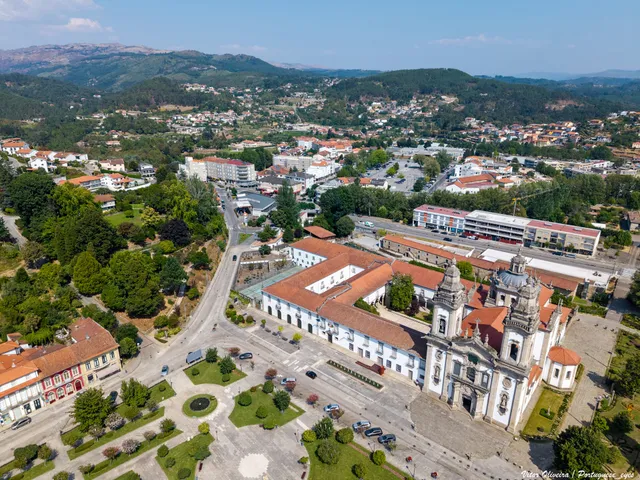
Air view of the Monastery of São Miguel and the Republic Square in Refojos
View of the Monastery of Refojos and the urban surroundings. It is a context image, not a reconstruction of the cultivated fence.© Vitor Oliveira from Torres Vedras, PORTUGALⓘ

Vegetable gardens, orchards and medicinal plants formed part of the monastery grounds.

Includes an activity to try →Explore: The fence continues in other stories →
Read here and view sources

According to the municipal description of 2021, vegetable gardens, orchards, medicinal plants, fields and woods made up the former grounds of Refojos Monastery. Its pharmacy supplied other Benedictine monasteries, including Tibães. Beyond the church, there was land to cultivate and medicine to prepare. This is a historical portrait of the grounds, not an inventory of today’s plants.

The same description places the Penoutas stream beside and behind the monastery, near former agricultural buildings now adapted as museum spaces. Water and working buildings broaden the view: the story of the complex extends beyond worship.

The former grounds can no longer be read as one intact garden. The source draws attention to scattered traces. Distinguishing what the document describes from what a photograph shows is part of the discovery: a view of the square does not reconstruct vanished vegetable gardens, orchards or medicinal plants.

Words in this story: see explanations →Getting to know the parish See Fact sheet: Mosteiro de São Miguel de Refojos
Source and context

Municipality — historical gardens, news of 21/05/2021

Accessed: . Editorial summary; the date of consultation is not the date of the facts.
Local observation · União das freguesias de Arco de Baúlhe e Vila Nune · general botany

Flowers and fruit on the same branch

The strawberry tree’s seasons overlap.

Includes an activity to try →Explore: Fruits with different stories →
Read here and view sources

The strawberry tree, Arbutus unedo, keeps glossy dark-green leaves throughout the year. Small white bell-shaped flowers appear in autumn. Its fruits take about a year to ripen, so ripe fruit can coincide with the next flowering season.

The Lisbon School of Education’s profile distinguishes two encounters with animals: insects, especially bees, take part in pollination, while birds eating the fruits help transport seeds. These are different roles in the plant’s life cycle.

The leaves offer clues beyond their colour: their edges are toothed, and secondary veins branch from a central vein. The plant ranges from a shrub to a small tree. The Lisbon Polytechnic profile mentions tolerance of dry climates and different soils, showing that its fruiting calendar is not its only interesting feature.

Food uses include fresh fruit, jams and jellies. The same source places the tradition of strawberry-tree fruit drinks in the Algarve and other Mediterranean areas; that information does not make them a documented speciality of Cabeceiras.

The photograph by migr, recorded on 2025-08-29, shows this species in União das freguesias de Arco de Baúlhe e Vila Nune. Open the observation to compare visible details with the botanical description. The record documents that encounter; it does not mean the plant will always be visible in the same place.

Words in this story: see explanations →See the plants photographed in the municipality
Source and context

Lisbon Polytechnic — form Arbutus unedo

iNaturalist — Arbutus unedo, migr observation in 2025-08-29

Accessed: . Editorial summary; the date of consultation is not the date of the facts.
Local observation · União das freguesias de Gondiães e Vilar de Cunhas · general botany

Carqueja stems work too

Leaves do not do all the photosynthesis.

Includes an activity to try →
Read here and view sources

Carqueja appears in the municipality’s description of mountain vegetation. In the Castelo Branco Polytechnic profile, Pterospartum tridentatum has greatly reduced leaves and winged stems that carry out photosynthesis. Its flowers are yellow and its fruit is a pod. These details invite you to look at branch shapes, beyond flower colour.

The profile describes a woody, rigid shrub that may grow upright or closer to the ground and reach around one metre. Flowers appear in small, tight groups. The flattened pod generally contains two to five seeds. Stem, flower and fruit offer different clues: yellow alone is not enough to recognise the plant.

The same document mentions rural uses such as animal bedding and incorporation into cultivated soil alongside other scrub plants. These are general uses of the species. For a local historical reference, follow the Cavez story: the account of 1758 mentions carqueja and other fuelwood in the landscape of charcoal production, without giving a manufacturing recipe.

The photograph by João Lima, recorded on 2025-07-15, shows this species in União das freguesias de Gondiães e Vilar de Cunhas. Open the observation to compare visible details with the botanical description. The record documents that encounter; it does not mean the plant will always be visible in the same place.

Words in this story: see explanations →
Source and context

Polytechnic Institute of Castelo Branco — Pterospartum tridentatum, characteristics

Municipality — landscape and vegetation

iNaturalist — Genista tridentata, João Lima observation in 2025-07-15

Accessed: . Editorial summary; the date of consultation is not the date of the facts.

Town centre · project announced in 2022

Shade is part of the town too

A park can offer more than a place for a walk.

Read here and view sources

The Parque Urbano Florestal rehabilitation project announced in September 2022 proposed work on around 7,500 square metres in the town centre. It included native trees and shrubs and aimed to improve microclimatic comfort by regulating light and sun exposure near buildings. This is the project’s documented intention, not an assessment of completed works: a way to understand the role of trees in urban space.

Source and context

Municipality — Rehabilitation of the Walking Forest Urban Park, 14/09/2022

Accessed: . Editorial summary; the date of consultation is not the date of the facts.

Cork oak · general ecology and local context

Cork oaks do not grow all the way up the mountain

Altitude also changes the conditions a tree faces.

Read here and view sources

The University of Évora describes cork oak as sensitive to winter minimum temperatures and generally absent above roughly one thousand metres. The municipal reference places cork oaks on the hillsides of Cabeceiras. Together these descriptions help explain why we should not imagine identical vegetation from valley to summit. The approximate limit is a general characteristic, not a survey of each local slope.

Cold is only part of the picture. The profile describes a preference for light- to medium-textured soils with an acidic or neutral reaction, avoiding limestone soils; it also mentions cool, sheltered places. Altitude on a map is therefore not enough to predict where a cork oak grows.

Its firm, evergreen leaves and cork-covered trunk help us observe the tree closely. Try changing scale in the landscape: first notice the tree, then the hillside’s position and shelter around it. The species name tells part of the story; the environment tells another.

Source and context

University of Évora — Quercus suber, botanical description

Municipality — landscape and vegetation

Accessed: . Editorial summary; the date of consultation is not the date of the facts.

The flavours of Cabeceiras

From the garden to the pot, from the oven to the table.

Choose a story · 10
Local gastronomic tradition

Greens with beans

A winter dish rooted in rural life.

Explore: A kitchen, different moments →View ingredients and preparation →
Read here and view sources

Cabeceiras chose couves com feijões, greens with beans, for the Referencial Gastronómico do Minho. The description connects couve-galega and yellow beans, also called moleiro, with hearth cooking. For more substantial meals, the cooking liquid from pork and the addition of sausages enriched the dish. The Museum also preserves a family version recorded in February 2010: Maria da Conceição Gonçalves Mouta, born in Cavez and living in Pedraça, had learned the dish from her grandmother. In that preparation, the greens and potatoes used the cooking liquid from the beans and meat; olive oil was added at the table.

Source and context

Gastronomic Reference of Minho — Cabeceiras, pp. 214–215
Accessed:

Basto Land Museum — food collections, 2010 and 2011
Accessed:

Editorial summary; the date of consultation is not the date of the facts.

Oral memory · Cavez and Pedraça

Carnival went into the cooking pot too

A recipe learned from a grandmother in Cavez.

Explore: Carnival and the flavors of the family →View ingredients and preparation →
Read here and view sources

Pig’s ear, leafy greens and potatoes made up the Carnival meal Maria da Conceição remembered in February 2011. It is a documented family memory, not a menu available all year round. The potatoes and greens cooked in the meat’s cooking water; the pig’s ear went back into the pot at the end, before serving with olive oil.

The account traces the recipe’s passage between generations: Maria da Conceição was born in Cavez and lived in Recovos, Pedraça; she had learned this dish from her grandmother. In 2011, a gas cooker and stainless-steel pans were already part of her kitchen, while the hearth remained in use on special occasions. The account shows a tradition living alongside changes in cooking equipment.

Source and context

Museum of Lands of Basto — Golden Ear (17/03/2011), Maria da Conceição Gonçalves Mouta; collection of Mary of Fatima Magalhães in February 2011

Accessed: . Editorial summary; the date of consultation is not the date of the facts.

Pedraça · 2011 food memory

Winter in a cooking pot

Caldo de farinha had its place in January and February.

Includes an activity to try →Explore: Cereals in three forms →View ingredients and preparation →
Read here and view sources

In the account recorded in January 2011, Maria da Conceição Gonçalves Mouta recalls beans, leafy greens, pork and maize flour. This is a cooking memory passed down by her grandmother from Cavez and recorded in Recovos, Pedraça. The flour went in near the end of cooking and was stirred continuously to break up lumps. This helped thicken the soup.

The account also records a change in equipment: a gas cooker and stainless-steel pans had entered daily life, while the hearth and three-legged pot were still used for Christmas Eve. The memory does not describe a kitchen frozen in time. In 2011, the interviewee said she rarely made this soup, distinguishing the custom she remembered from its frequency at that time.

Compare this dish with the same interviewee’s couves com migas: the soup takes maize flour, while the greens receive pieces of broa after being drained. One account is associated with January and February; the other values the tender greens of April and May. Grain links the dishes, but the preparation and season set them apart.

Getting to know the parish
Source and context

Basto Land Museum — testimony of Maria da Conceição Gonçalves Mouta, collected by Maria de Fátima Carvalho in 2011

Accessed: . Editorial summary; the date of consultation is not the date of the facts.

Pedraça · 2011 food memory

Bread joined the greens too

Couves com migas made use of spring’s tender leaves.

Explore: A kitchen throughout the year →View ingredients and preparation →
Read here and view sources

Maria da Conceição added broa, beans and salpicão to the greens. The account recorded in February 2011 associates the dish with April and May. It is a family recollection, distinct from couves com feijões. After draining, the preparation was mixed with broa, garlic and olive oil in a large bowl, the alguidar. The same bowl went to the table.

The dish follows the vegetable garden’s calendar: in Maria da Conceição’s memory, April and May brought young, tender greens. The recipe also preserves techniques — cutting finely, draining and folding together — and a serving vessel, the alguidar. Ingredients, season and utensils tell different parts of the same memory.

Getting to know the parish
Source and context

Basto Land Museum — testimony of Maria da Conceição Gonçalves Mouta, collected by Maria de Fátima Carvalho in 2011

Accessed: . Editorial summary; the date of consultation is not the date of the facts.

Pedraça · testimony collected in March 2011

This broa blends rye and wheat

Not every memory of broa begins with maize.

Explore: The batch continues in other stories →View ingredients and preparation →
Read here and view sources

In the recipe recorded by the Museu das Terras de Basto in March 2011, Maria da Conceição Gonçalves Mouta, who lived in Recovos, Pedraça, combined light rye, dark rye and wheat. The account distinguishes the maize broa she learned from her grandmother from the mixed-grain broa she began making later. Tradition changes even within one kitchen. In the same account, she says she no longer baked weekly: she made bread for celebrations and when she missed homemade broa. She also prepared it for Santa Marinha and for Christmas and maize-husking events at the Associação D. Nuno Álvares in Pedraça. Bread connected the kitchen with community gatherings.

The rhythm of baking also changed the leavening. When bread was baked frequently, dough was kept from the previous batch; in the preparation described in 2011, she used baker’s yeast prepared the day before. The change in ingredients accompanied a change in the calendar, from weekly bread to bread for gatherings.

Source and context

Basto Land Museum — testimony of Maria da Conceição Gonçalves Mouta, collected by Maria de Fátima Carvalho in 2011

Accessed: . Editorial summary; the date of consultation is not the date of the facts.

Cabeceiras · gastronomic promotion of March 2012

Honey sweetens rabanadas too

A dessert helps tell the story of how local flavours were promoted.

Includes an activity to try →Explore: A bread, different desserts →View ingredients and preparation →
Read here and view sources

In the food programme of 23–25 March 2012, Cabeceiras presented roast kid as its speciality and rabanadas with honey as a regional sweet. The municipal announcement also links the table to Vinho Verde, meat and honey. This combination shows how food promotion brings products and preparations together. It is the historical programme of that edition, not a current menu or a claim that rabanadas originated exclusively in the municipality.

The 2015 guide adds a preparation with milk and honey. Compare it with Dídia Teixeira’s wine version: the same name can hold different recipes.

Source and context

Municipality — Gastronomic Weekends, 23–25/03/2012

Porto and North Tourism — Gastronomic Weekends 2014/2015, Cabeceiras de Basto, pp. 60–61 (PDF sheet 32), Municipal copy of Mondim Basto

Accessed: . Editorial summary; the date of consultation is not the date of the facts.

Pedraça · 2011 collection

Before the bread, this bolo went in

The same dough could have another destination.

Explore: One batch, several gestures →View ingredients and preparation →
Read here and view sources

In Pedraça, Maria da Conceição Mouta recalled a bolo made from the broa dough itself. It was topped with small sardines or chouriço and went into the oven before the loaves. More wood then had to be added.

The account recorded in 2011 and published by the Museum in 2015 connects the bolo’s name with the organisation of baking day. The recipe preserves the techniques of a traditional oven, to explore alongside the history of bread.

Source and context

Basto Land Museum — Cake between sardine or chorizo wood (2015)

Accessed: . Editorial summary; the date of consultation is not the date of the facts.

Pedraça · testimony collected in 2011

Bread joined the celebration too

With mexidos, dessert takes shape in the cooking pot.

Includes an activity to try →Explore: Three Ways to Bring Bread to the Feast →View ingredients and preparation →
Read here and view sources

A bread dessert for Christmas and New Year, with honey, nuts, dried fruit and Port wine.

Fátima Magalhães recorded this version in 2011 from Maria da Conceição Gonçalves Mouta, who was born in Cavez and lived in Pedraça. The Museum published it in 2016.

The order of preparation gives bread the leading role: added in small pieces after the nuts and dried fruit, it thickens the mixture as it is stirred. Lemon peel and a cinnamon stick join the water and honey at the beginning; ground cinnamon finishes the dessert on the serving dish.

This version keeps different kinds of measurements: litres, a small glass and quantities left to the cook’s taste. The recipe preserves that distinction. The account gives no serving numbers or weights for every ingredient, so those gaps have been retained instead of guessing precise measurements.

Source and context

Land Museum of Basto — Scrambled (2016; collection of 2011)

Accessed: . Editorial summary; the date of consultation is not the date of the facts.

Refojos · family memory published in 2020

A recipe that crossed continents

The lemon biscuits arrived with a family story.

Includes an activity to try →Explore: Three sweets, a family memory →View ingredients and preparation →
Read here and view sources

Alcina Teixeira found recipes from Cabeceiras in a Portuguese magazine during her years in Mozambique. The biscuits reached the Museum through her son Mário, who lived in Refojos, and were published in 2020.

The family also kept the recipes for honey cake and cassianos. Comparing them lets us follow knowledge on its journey from a magazine to a family kitchen and then to the wider public.

Source and context

Basto Land Museum — Lemon biscuits Cabeceiras (2020)

Accessed: . Editorial summary; the date of consultation is not the date of the facts.

Outeiro · 2013 collection

Red wine reached dessert too

A version of rabanadas preserved in Outeiro.

Explore: The bread also arrives for dessert →View ingredients and preparation →
Read here and view sources

In Dídia Teixeira’s version from Paneladas, the bread is dipped in red Vinho Verde and egg before being fried. Sugar and cinnamon accompany the layers on the serving dish.

Fátima Magalhães recorded the recipe in 2013; the Museum published it in 2014, associating it with Christmas and New Year. This version is identified with the person who shared it, without being presented as the recipe of every household in Outeiro.

Source and context

Basto Land Museum — Wine French toast (2014; 2013)

Accessed: . Editorial summary; the date of consultation is not the date of the facts.

Life you do not always see

Knowing animals begins by perceiving the territory and respecting the distance.

Choose a story · 4
Species biology · record in Rio Douro

A small frog with a strong connection to water

Some lives depend on the bank as much as the stream.

Includes an activity to try →Explore: One photograph opens other questions →
Read here and view sources

The Iberian frog naturally lives in the Iberian Peninsula: that is what it means to be endemic to this territory. With a slender body and pointed snout, it can reach about 5.5 centimetres. Reproduction takes place in water, and the species prefers mountain streams with vegetation along the banks and rocky beds.

The photograph recorded in Rio Douro opens a window onto this discreet life. On its own, it does not demonstrate water quality: pollution and changes to riverside habitats are among the threats described by the University of Évora.

The description also highlights a dark stripe crossing the eye area, with a narrower pale stripe beneath. These are details to appreciate in a photograph without handling the animal.

Source and context

University of Évora — Virtual Museum of Biodiversity

Accessed: . Editorial summary; the date of consultation is not the date of the facts.

Serra da Cabreira · regional reference and species biology

Some newts spend another winter in water

In the cold of higher ground, development can take longer.

Read here and view sources

In the palmate newt, Lissotriton helveticus, mating takes place in pond water. Parque Biológico de Gaia explains that in higher, colder areas, larvae may spend the winter in water before completing metamorphosis the following year. It feeds on small invertebrates. The municipal description of Cabreira mentions this species; the cycle described here is general biology, not reproduction observed in a local pond.

Two stages need to be distinguished. The Parque Biológico profile gives about fifteen days to a month between egg-laying and hatching; metamorphosis follows later. Hatching means leaving the egg, not completing larval development. The possibility of spending another winter in water shows why one calendar does not fit every set of conditions.

Words in this story: see explanations →
Source and context

Gaia Biological Park — Spanked Triton, Lissotriton helveticus

Vieira Tourism of Minho — fauna of Serra da Cabreira, regional reference

Accessed: . Editorial summary; the date of consultation is not the date of the facts.

Cavez · record from 2016–2017 and general biology

A fish can migrate without going to sea

The common barbel makes its journey within the river.

Explore: The same river, different ways of living →
Read here and view sources

Fluviário de Mora describes the breeding migration of the Iberian barbel, Luciobarbus bocagei, to shallow, well-oxygenated water over sand, gravel or pebbles. It is a freshwater journey. The fish feeds on small bottom-dwelling animals, plant matter and detritus. Barbel were recorded in Cavez during the 2016–2017 survey; the behaviour described is general biology, not a migration observed at that point.

The journey does not contradict its preference for slower currents and moderate temperatures. The place used for living and feeding can differ from the one chosen for reproduction. The Fluviário profile places breeding between May and June as a general description of the species.

The barbel is omnivorous: besides bottom-dwelling invertebrates and plant matter, it may occasionally eat small fish. The same source notes that it can reach about one metre. This is a possible size for the species, not a measurement of the Cavez specimens.

Words in this story: see explanations →
Source and context

Mora Fluviary — Barbo-common, biology of the species
Accessed:

Biosphere / Iberdrola, APA file — Monitoring of ichthyofauna 2016–2017, February 2018; pp. 5, 35 and 40, station record 22 on p. 175 PDF
Accessed:

Editorial summary; the date of consultation is not the date of the facts.

Cavez · record from 2016–2017 and general biology

A small fish, many tiny prey

The gudgeon links river life with invertebrates.

Read here and view sources

Parque Biológico de Gaia describes Gobio lozanoi as a freshwater river fish that eats small invertebrates and usually measures about 12 centimetres. That is a typical size given in the profile, not the size of every individual or a measurement taken in Cabeceiras.

In the Cavez survey from 2016–2017, the gudgeon is among the six species recorded. Bringing that evidence together with its diet description invites a question about the river: which small animals sustain the fish? The profile does not identify the prey eaten at that point or demonstrate a relationship with every insect presented on this website.

Source and context

Gaia Biological Park — Gobio, Gobio lozanoi: habitat, food and size
Accessed:

Biosphere / Iberdrola, APA file — Monitoring of ichthyofauna 2016–2017, February 2018; pp. 5, 35 and 40, station record 22 on p. 175 PDF
Accessed:

Editorial summary; the date of consultation is not the date of the facts.

Between rivers and mountains

Water and relief form the municipality. Choose a name and follow the landscape.

Choose a story · 3
Toasters · Abadim

A village above a thousand metres

In Torrinheiras, the landscape begins at altitude.

Includes an activity to try →
Read here and view sources

The municipality presents Torrinheiras, in Abadim, as its highest settlement, at around 1020 metres. The trail climbs into the hills and reaches 1159 metres. These are two distinct altitude references: the village and a point on the route, not the walk’s cumulative ascent.

The panorama description names Gerês, Alvão, Marão and Barroso. Lower down, it mentions the Busteliberne stream, Porto d’Olho and, on the return, meadows and grazing Barrosã and Maronesa cattle. The mountains therefore tell a story of distances and views, but also of water, villages and work. Visibility and trail conditions need to be assessed when visiting.

Getting to know the parish See Fact sheet: Trilho de Torrinheiras
Source and context

Municipality — Trilho de Torrinheiras, altitude, landmarks and landscape

Accessed: . Editorial summary; the date of consultation is not the date of the facts.

Rio Douro · project announced in April 2025

On the common lands, woodland meets waterways

A Rio Douro project reveals different roles within one landscape.

Includes an activity to try →Explore: The slope meets the river →
Read here and view sources

In April 2025, Antarr announced the start of work agreed with the Comunidade Local dos Baldios de Riodouro, covering around 500 hectares of Cabreira partly affected by the 2016 and 2024 fires. The plan combined forestry production, conservation and the restoration of about 40 hectares of riverside vegetation. It shows that managing a hillside also involves areas beside water. These figures are the promoter’s announced targets, not confirmation of completed work or achieved results.

The April announcement places the start of work in February 2025. For the first phase, it announces around 220 hectares of production species and approximately 80 hectares of varied broadleaved trees and conifers. These areas have different purposes; they are not a record of completed planting.

Relief also enters the project: the promoter describes plateaux, steep slopes and large variations in altitude. Reading the landscape therefore brings together landform, production areas and sensitive zones beside water. There is no complete breakdown of the 500 hectares here from which to draw every plot.

Source and context

Antar — announcement of the start of the Riodouro project, 04/04/2025; objectives announced by the promoter

Accessed: . Editorial summary; the date of consultation is not the date of the facts.

Gondiães · 2008 municipal inventory

Four pools and a shared irrigation channel

In Gondiães, storing and directing water was collective work.

Includes an activity to try →Explore: Store, drive and distribute →
Read here and view sources

Four pools supplied a shared structure. The municipal record of 20 March 2008 describes the Rego das Poças, also called Levada da Vizinhança, in Gondiães: around two kilometres of channel for irrigation and milling, serving the Tarroeiro mill.

The Poças do Lugar lay at Olheiros. Three were close together and the fourth further away. Up to the village entrance, the channel followed natural ground; within the settlement it became a stone trough. Storing and directing water therefore required different elements and materials.

The inventory identifies collective ownership and operation by the channel’s joint users, or consortes. It records seasonal water turns but leaves the construction period undetermined. The survey date is not the structure’s age. Its recorded use and condition belong to the picture of 2008, without confirming today’s situation or access.

Words in this story: see explanations →
Source and context

Municipality — inventory of levadas, fiche L29: Rego das Poças, withdrawal of 20/03/2008

Accessed: . Editorial summary; the date of consultation is not the date of the facts.

Crafts and memories

In the hands, at the table and in the community: little stories of how one lives and what one transmits.

Choose a story · 5
Vila Nune · communications in 1758

The news had day to come

The post office linked Vila Nune to Porto through two support points.

Includes an activity to try →
Read here and view sources

In the Parochial Memoirs of 1758, the vicar of Vila Nune tells that the residents resorted to the post office of Raposeira, in the couto of Refojos, and Mondim. They arrived from Porto on Monday and left on Thursday. The news had its own paths and days: communicating also required waiting.

The vicar located each of the two points of mail about a league. The indication approximates service and distance: it was not enough to know when news came, it was also necessary to have a place outside the parish. The report does not say who carried the letters between that point and each resident.

When comparing documents there is a difference: Santa Senhorinha also resorted to Raposeira, but his abbot mentions arrival on Tuesday. We keep the two versions. Only these answers do not allow to decide whether the difference is due to the way of describing the service, an error or other circumstance.

Getting to know the parish
Source and context

Municipality — Parish Memoirs of Vila Nune, 23/05/1758

Municipality — Memória de Santa Senhorinha, 23/05/1758, replies 15, 19 and 20; transcription of José Viriato Capela (2003)

Accessed: . Editorial summary; the date of consultation is not the date of the facts.

Rural heritage · survey of 2008

The water had a calendar.

In the Vessada de Baixo, the week organized the irrigation.

Read here and view sources

In Santa Senhorinha, the inventory of 2008 registered three consorts in Levada da Vessada de Baixo, fed by Ribeira de Petimão. Casa da Cerca had water from Monday to Wednesday night; Casa do Prado, from then until Sunday. A third consort used it one day for fortnight. It is a historical portrait of the sharing, not a current time.

The third user appears identified by the Minas Lavora. The chart describes an open channel in the field, used all year round. Reading the weekly distribution helps to realize that sharing water also required organizing the time.

Source and context

Municipality — inventory of levadas, record L5, Vessada de Baixo (11/04/2008)

Accessed: . Editorial summary; the date of consultation is not the date of the facts.

Rural heritage · survey of 2008

The stones of the road to the mill

A little sidewalk thing tells a work story.

Read here and view sources

In Carrazedo, Bucos, the survey of 11 January 2008 recorded about 30 meters of sidewalk by the cruise, giving access to two mills. The granite slabs had different shapes and sizes. These short roads are also part of the rural heritage: they linked the village to the places where the cereals were transformed. The inventory does not confirm the current status or access. The record of Carrazedo presents the village to which this memory belongs; it does not indicate the exact location of the thirty meters of sidewalk.

See Fact sheet: Carrazedo
Source and context

Municipality — sidewalk inventory, Carrazedo, C5 fiche (11/01/2008)

Accessed: . Editorial summary; the date of consultation is not the date of the facts.

São Nicolau · Celeirô do Monte, reuse reported in 2016

The school brought the village back together

In Celeirô do Monte, a school building gained a new use.

Includes an activity to try →
Read here and view sources

A municipal report of January 2016 reports that the former primary school of Celeirô do Monte, after about eight years closed, again served the population in 2015. Provided to the Junta for community activities, received improvements in the floor and entrance. At the end of that year, the village met there to receive 2016. History shows a reuse of the building; it does not confirm its current operation or access.

Source and context

Municipality — Mayor visited parish of Cabeceiras de Basto: former Primary School of Celeirô do Monte, 11/01/2016

Accessed: . Editorial summary; the date of consultation is not the date of the facts.

Alvite e Passos · irrigation documented in 2008

The water has changed its way

A lance can disappear in sight and remain in memory.

Includes an activity to try →
Read here and view sources

The municipal record of Poça do Monte, raised in 14 April 2008, describes a transformation into Alvite: the canal in natural land was channeled by the consorts in 2001. It was about a kilometer and used water from the source of Ribeiro Furado.

The record identifies seven consorts and refers to a steep slope in the initial part. This story helps distinguish the old open channel from pipe conduction. The document does not allow to conclude how the network is today nor presents a path to walk.

Source and context

Municipality — inventory of levadas, L2, survey of 14/04/2008

Accessed: . Editorial summary; the date of consultation is not the date of the facts.

Time travel

Documents, details and traditions: there is more to discover than a date on a stone.

Choose a story · 5
History of transport · Arco de Baúlhe

One line took forty years to arrive

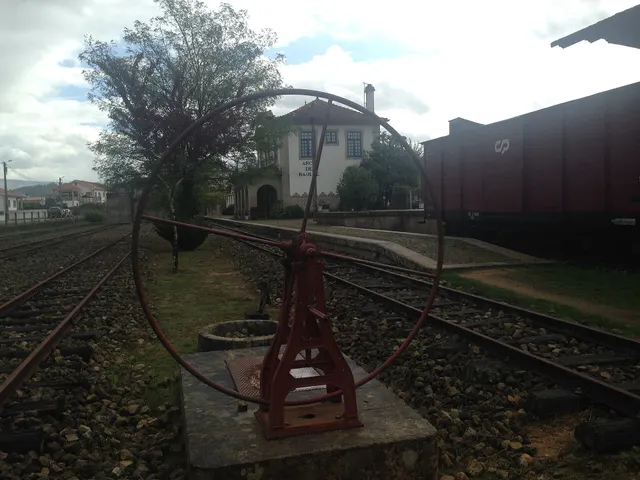
Revolving plate and tracks from the old Arco de Baúlhe station, with buildings and railway equipment at the bottom.
Former station Arco de Baúlhe · railway heritage© JP Ribeiroⓘ

The Arc was the end point of a trip through Tâmega.

Includes an activity to try →
Read here and view sources

The journey began at Livração, where the Line of Tâmega connected to the Douro Line, and ended at Arco de Baúlhe. According to the Municipality, the construction of this narrow track line extended from 1908 to 1949, along about 52 kilometers. The arrival at the Arc was the result of a link built in stages.

The station had functions beyond the shipment of passengers: the old warehouse of dispatches, today used for temporary exhibitions, also recalls the circulation of goods. Visiting the railway core allows you to look for these different lives of the same space: transporting people, receiving cargoes and preserving stories.

Getting to know the parish See Fact sheet: Núcleo Ferroviário de Arco de Baúlhe
Source and context

Municipality — Núcleo Ferroviário de Arco de Baúlhe

Accessed: . Editorial summary; the date of consultation is not the date of the facts.

Regional rail link · Celorico bridge Basto

To get to the Arc, the line needed to cross another valley

The history of the Cabeceiras train also passes through the neighboring municipality.

Includes an activity to try →Explore: A bridge ready, an uncompleted connection →
Read here and view sources

Before reaching Cabeceiras, the line had to cross the valley of the river of Veade. The bridge of Matamá is in the Union of the Freguesies of Veade, Gagos and Molares, in Celorico of Basto. According to the Museum, its six granite arches form a structure about 190 meters long and 52 meters high.

The report distinguishes two moments: the opening of the bridge in 5 June 1936, and the entry into railway use in 15 January 1949, with the opening of the Celorico section of Basto–Arco de Baúlhe. Having the bridge built did not immediately mean having trains arriving at the Arc. This regional history helps to realize the time needed to complete the connection.

The report of the Museum attributes the responsibility of the work to engineers Jorge Vieira Bastian and Manuel Gonçalves Costa. The dimension of the structure helps to realize the challenge of taking the railway through the valley; the chronology allows to separate this work from the entry into service of the complete connection.

Source and context

Basto Land Museum / Pedro T. Gonçalves — Matamá Railway Bridge, 28/07/2026

Municipality — Land Museum of Basto: a journey through the history of the region, pp. 28–29

Accessed: . Editorial summary; the date of consultation is not the date of the facts.

Rio Douro · hypothesis of relationship between archaeological sites

Tombs and village: an uninvestigated connection

At Portela de Asnela, the landscape leaves a question.

Explore: Compare traces, distinguish hypotheses →
Read here and view sources

The municipal inventory describes mamoas in Portela de Asnela, in Rio Douro, and proposes a relationship with the village of Castelo, in Formigueiro, about a kilometer north. Proximity supports a hypothesis; it does not in itself prove that the two sets were used by the same community.

The fiche identifies structures of the anther and cyst type within the funerary assembly. It proposes a dating in the second or first millennium before Christ, supported by ceramic materials and in comparison with similar sets of the Northwest mountains.

There are therefore two distinct questions: when will these monuments have been built and what connection could they have had with the nearby village? A proposal for chronology does not automatically solve the second. The inventory presents this connection as a hypothesis, preserving space for future research.

Words in this story: see explanations →
Source and context

Municipality — archaeological inventory, interpretations and chronologies

Accessed: . Editorial summary; the date of consultation is not the date of the facts.

Faia · restoration documented in 2022

A year of works, a church reopened

The heritage is also a recent care.

Explore: The church at different times →
Read here and view sources

The church of São Tiago of Faia reopened in 14 August 2022, after about a year closed for works. The news of the Archdiocese of Braga records the recovery of paintings, images and three altars, besides the placement of stained glass with episodes of the life and mission of the patron. It is a recent intervention, different from the portrait of five altars left in 1758: they are sources of distinct times, not a directly comparable count of surviving pieces.

The news also tells who made the intervention possible. Pastor Rui Filipe Marques Araújo attributed the realization of the works to the involvement of the community; the ceremony brought together associative representatives, workers and benefactors. Archbishop José Cordeiro presided. Behind the paintings and the recovered or placed stained glass is thus a history of participation.

Reopening does not necessarily mean that all works were completed: the same news records an appeal to continue the completion of the restoration. The August date marks the celebration and return of space to religious use, without allowing the end of each intervention to be established.

See Fact sheet: Igreja de São Tiago da Faia
Source and context

Archdiocese of Braga — restoration and reopening of the matrix of Faia, 01/09/2022

Accessed: . Editorial summary; the date of consultation is not the date of the facts.

Cavez · history of the bridge of Moimenta; current conditions not verified

Two seasons on the same bridge

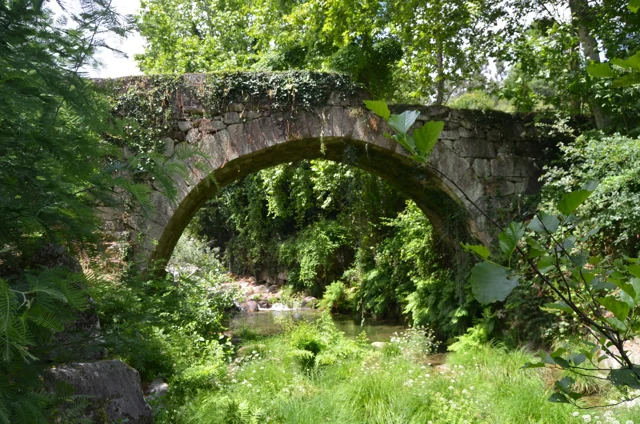
Ponte antiga de Moimenta in Cavez: stone arch over the river, surrounded by vegetation, photographed in June 2020.
Moimenta Bridge, photographed by Pedro at 11 June 2020. A crossing record other than Ponte de Cavez over Tâmega.© Pedroⓘ

In Moimenta, the ancient stone coexists with an intervention of 1990.

Read here and view sources

An ancient bridge can continue to change. The municipality attributes medieval origin to the bridge of Moimenta in Cavez, and describes a single round arch.

In 1990, the passage was extended about one meter: it received a concrete structure on the downstream side and the guards were changed. The photograph allows to begin to observe the crossing; the date of the intervention comes from the documentary description.

Words in this story: see explanations →See Fact sheet: Ponte antiga de Moimenta
Source and context

Municipality — Cultural heritage, bridges of Arco de Baúlhe and Moimenta

Accessed: . Editorial summary; the date of consultation is not the date of the facts.

YOUR LOCAL GUIDE

What would you like to discover?

Take a closer look.