Discover Cabeceiras de BastoFree independent guide
ViveCabeceirasYOUR GUIDE TO CABECEIRAS
ENEnglish
SearchSaved

Story

Choose a story to start with. You can change the subject or fine tune the search.

40 stories · Time travel · Search: 1758

Time travel

Documents, details and traditions: there is more to discover than a date on a stone.

Choose a story · 40
Painzela · reading a 1758 document

How did you count a parish?

In 1758, the portrait of Painzela used fireworks and sacramental souls.

Includes an activity to try →Explore: A document opens other questions →
Read here and view sources

The municipal transcription of the Parish Memories records 137 fires and 439 sacramental souls in Painzela. The formulation itself distinguishes domestic units from a religious category of people. Therefore, the 439 should not be presented as a modern census of all inhabitants. The document also allows to know the language used to describe the community.

The same passage identifies Saint Andrew as a dedication of the matrix and connects the presentation of the vicar to the abbot of Santa Senhorinha. The small text therefore gathers population, church and ecclesiastical organization. Instead of reading it as a statistical table, we can ask what the author chose to record about the community.

There is also a layer between the old document and the screen: the municipality informs that the transcript updates the spelling and the score from the edition of José Viriato Chapel, published in 2003. This indication helps to distinguish the date of the testimony, 1758, from the date of the edition used to disseminate it. The references to the chapels appear separately, in the documentary note.

Getting to know the parish
Source and context

Municipality — Parish memories of Painzela (1758)

Accessed: . Editorial summary; the date of consultation is not the date of the facts.
Faia · settlement described in 1758

A parish told by sixteen places

In 1758, the Faia appears as a network of small places.

Includes an activity to try →Explore: A parish distributed by places →
Read here and view sources

In memory of 23 May 1758, the abbot João de Lima Lobo de Noronha enumerates sixteen places. The enumeration includes Covilhã, Augueiros, Presas, Nogueira, Candedo, Ribeiro, Outeiro, Porcarice, Faia, Togais, Souto, Ribeira, Tuesdays, Breia, Casa Nova and Joio. Situa the church out of place and describes the parish on a northern slope.

The list helps to think of a territory distributed by small cores, and not just around the matrix. Names belong to historical transcription; they are not a current administrative list or allow to draw the boundaries of each place by themselves.

The same testimony presents two counts: 99 neighbors and 418 people. The document separates them; they should not add or read “neighbours” as another total of inhabitants. It also distinguishes scales: when speaking of the municipality, the abbot refers to eighteen parishes, but declares not knowing the number of its neighbors. Knowing what the author did not tell is as useful as knowing the numbers he left.

Ribeiro and Ribeira appear as different entries. Outeiro is here in the list of places of Faia: the coincidence with the name of another parish does not authorize to shift this reference on the map. The complete list allows to compare names, while chapels help to perceive some relations between places and houses.

Source and context

Municipality — Memory of Faia, 23/05/1758; transcript of José Viriato Chapel (2003)

Accessed: . Editorial summary; the date of consultation is not the date of the facts.

Saint Nicholas · interior described in 1758

Five altars, many stories

The memory of 1758 lets you look inside the church.

Includes an activity to try →
Read here and view sources

The Rector Domingos Camel de Sousa described five altars in the church of St. Nicholas. On the main altar, he placed St. Nicholas and St. Brás on opposite sides and Christ Crucified to the center, in a golden tribune.

The remaining altars were dedicated to the Lady of the Rosary, to the Lord of the Passos, to Saint Sebastian and to the Souls of Purgatory. It is a portrait written in 1758, not a confirmation of the current disposition.

See Fact sheet: Igreja de São Nicolau de Cabeceiras
Source and context

Basto Land Museum — St Nicholas Parish Memories (1758)

Accessed: . Editorial summary; the date of consultation is not the date of the facts.

Alvite · Couto organisation in 1758

One land, two skills

In 1758, not all issues were decided by the same power.

Includes an activity to try →Explore: The territory seen by different rules →
Read here and view sources

The account of St. Pedro of Alvite distinguishes the civil subjects, linked to the Abbot and the convent of Refojos, from the criminals, attributed to the municipality judge of Cabeceiras. The Couto thus had an organization that is not limited to a line on the map. It's a historical description, no correspondence with the current administration. There is an important territorial distinction: the answer places Petimão in the term of Celorico of Basto. The skills of the Couto are described for other places, avoiding reading the entire parish as a single jurisdiction.

Getting to know the parish
Source and context

Basto Land Museum — Parish Memories of 1758: Alvite

Municipality — Alvite Parish Memories, 1758; transcription of José Viriato Chapel (2003)

Accessed: . Editorial summary; the date of consultation is not the date of the facts.

Pedraça · Parish memories of 1758

A Pedraça call to Coimbra

In 1758, the parish priest's choice pointed out to the council.

Includes an activity to try →Explore: Read a document, ask questions →
Read here and view sources

The parish memory describes the matrix dedicated to Santa Marinha and states that the rector was presented by the rector of the College of São Jerónimo de Coimbra. This historical link shows how a small parish was part of relations that surpassed the lands of Basto.

The same transcript places Pedraça at the end of Cabeceiras de Basto and in the district of Guimarães. It records 96 fires and 322 souls of communion, in addition to a congruity of 50 thousand réis for the rector. They are categories of the document: fires are not people, and souls of communion do not automatically equal the total inhabitants.

The numbers and connection to Coimbra show two plans of parish life: the community described and the organization that framed his parish priest. The municipal version identifies the transcription of José Viriato Chapel, published in 2003, from the Memórias of 1758.

The municipal page also distinguishes the account from the references that accompany it: it refers to the memory 296 of the volume 42 and lists an obligation to the Santa Bárbara hermitage factory, of 1624, and another linked to the Blessed Sacrament, of 1722. They are archive clues. The existence of these references does not mean that the full text of the two documents is reproduced on the page, nor transforms 1624 on a date of construction of the chapel.

Words in this story: see explanations →Getting to know the parish See Fact sheet: Igreja paroquial de Pedraça See Fact sheet: Santa Bárbara de Pedraça — capela e miradouro
Source and context

Municipality — Parish Memories of Pedraça (1758), transcript of José Viriato Chapel (2003)
Accessed:

Municipality — Parish Memories of Pedraça, 1758; transcription of José Viriato Chapel (2003)
Accessed:

Editorial summary; the date of consultation is not the date of the facts.

Faia · Parish memories of 1758

Chapels between the hill and the houses

The account of 1758 draws a small religious geography of Faia.

Read here and view sources

In 1758, the abbot of Faia placed Our Lady of Amparo on a hill and associated her with the captain-in-chief Manuel Baltasar de Abreu de Lima. Saint Anthony of Covilhã was presented as a chapel of the village itself, out of place. Santo António da Ribeira appeared next to the house of Leandro Machado, and Nossa Senhora da Piedade next to the house of Francisco de Moura Coimbra. The account adds that these chapels had no right pilgrimages. More than enumerating buildings, it distinguishes relationships between devotion, families and community. It is a portrait of that year, without indicating property, parties or current access conditions.

Getting to know the parish See Fact sheet: Capela da Senhora do Amparo da Faia
Source and context

Municipality — Parish Memoirs of Faia, 23/05/1758, replies 13 and 14; transcript of José Viriato Chapel (2003)

Accessed: . Editorial summary; the date of consultation is not the date of the facts.

Cavez · Parish memories of 1758

A bridge that deserved praise

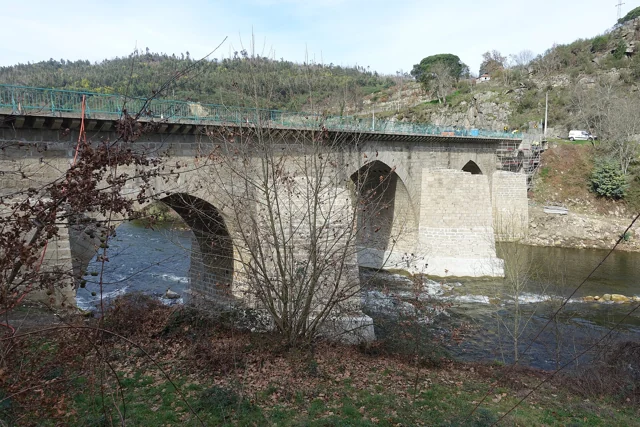
Ponte de Cavez on the river Tâmega, with stone arches, board and wooded banks.
Ponte de Cavez · crossing Tâmega© Joseolgonⓘ

In 1758, the Cavez Grand Bridge impressed the parish priest.

Explore: Two shores, several stories →
Read here and view sources

In the parochial memory, the crossing of the Tâmega appears described as a great stone bridge, well worked. The author even considers it the best of that river. The praise belongs to the look of those who wrote: it reveals the importance it attributed to the construction, without functioning as a technical comparison between bridges.

In the same memory, the Tâmega appears as a strong current, especially in winter. The document distinguishes the crossing from the use of water: it describes mills and explains that the river was too deep to water the fields in that stretch. The bridge can be read in this set of relations between margins, displacements and work.

Notice the difference between observing a construction and evaluating it. The existence of the bridge is information; considering it the best is an appreciation. The two say something about the past, but answer different questions.

Getting to know the parish See Fact sheet: Ponte de Cavez
Source and context

Municipality of Cabeceiras de Basto — Parish memories of 1758: Cavez

Accessed: . Editorial summary; the date of consultation is not the date of the facts.

Santa Senhorinha · landscape described in 1758

A valley full of names

In 1758, the parish also counted for its seats.

Includes an activity to try →
Read here and view sources

The parish report places Santa Senhorinha in a valley between the Gatiras and the Ladario. It lists places such as Rendufe, Soutelo, Outeiro Seco, Olela, Devesa and Vila Garcia, among many others. The church is described outside the village, in the middle of a field. This portrait allows you to imagine a community distributed across several cores, but retains the names and perspective of the document of 1758, without functioning as a current map.

The author also lists villages that were seen, distinguishing the position in the valley of the look from the Ladário. Visibility was part of the way of presenting the territory. A place could be described by what surrounded it and by what could be seen from a higher point, beyond its limits and names.

Source and context

Municipality — Parish Memories of Santa Senhorinha (1758), replies 4 and 6; transcription of José Viriato Chapel (2003)

Accessed: . Editorial summary; the date of consultation is not the date of the facts.

Bucos · testimony of 1758

A chapel shortened the distance

In Casares, getting to church was a practical matter.

Includes an activity to try →
Read here and view sources

In the memory of 22 May 1758, the chapel of Santa Maria, in Casares, served to administer the sacraments to the residents, far from the parish church. The distance helped explain the distribution of places of worship.

The vicar António Alves Teixeira also mentions Santa Ana, in Carrazedo, administered by Manuel Gomes Martins. They are references of the document, without confirmation of access or current status.

The parish church was located in the place of Bucos, which the vicar presented as the most populous of the parish. In addition, he named Vila Boa, Carrazedo and Casares. This set of places helps to understand why a single church did not respond in the same way to the needs of all residents.

The document also distinguishes who administered each chapel: in Casares, the commander; in Carrazedo, Father Manuel Gomes Martins. Place, invocation and administration are three different clues. The function of administering sacraments because of the distance is explained to Casares; it should not be automatically attributed to all the chapels mentioned.

Getting to know the parish
Source and context

Municipality — Parish memories of Bucos (1758)

Accessed: . Editorial summary; the date of consultation is not the date of the facts.

Faia · parochial memory 1758

At Faia, the abbot recorded no ruins

The same event left different accounts in the parishes.

Read here and view sources

In the memory signed in 23 May 1758, the Abbot of Faia declared that there was no ruin caused by the earthquake. It is a counterpoint to the testimony of Alvite, who described damage to the crosses of a chapel. The absence of ruins in the account does not demonstrate that the earthquake was not felt: it shows what was recorded in that answer. Reading the two documents brings the general history of local experiences closer.

It is useful to notice who writes and when: the answer is from João de Lima Lobo de Noronha, abbot of Faia, and arises in a set of questions that also covers places, crops, fairs and mail. The earthquake is one of the subjects of this local portrait. The signature of 1758 dates the testimony, not the event that he recalls.

Source and context

Municipality — transcription of the Parish Memories of Faia, 23/05/1758

Accessed: . Editorial summary; the date of consultation is not the date of the facts.

Faia · religious organization in 1758

A church linked to the Grand Prior of Crato

The history of a parish also goes through distant connections.

Read here and view sources

In the reply of 1758, the abbot of the Faia writes that his presentation belonged to the infant D. Pedro, as Grand Prior of Crato. He also refers to the intervention of the provisor of the city of Porto in its collation. These details show that the local religious organization involved authorities beyond Cabeceiras. The account describes the form of provision of the office at that time; it does not mean that the Faia belonged to the municipality of Crato or Porto.

The same answer estimated the income of the benefit in 450 réis. This value belongs to the description of the institution and should not be presented as a current salary or converted directly into a price today. Dealing with the altars and chapels, adds a layer to the history: besides the building and the devotions, there was an organization of positions and incomes.

Getting to know the parish
Source and context

Municipality of Cabeceiras de Basto — Parish memories of Faia, 23/05/1758, replies 8, 20 and 21

Accessed: . Editorial summary; the date of consultation is not the date of the facts.

Alvite · church described in 1758

Three altars in one body

The church also fits in a portrait made of words.

Includes an activity to try →Explore: From church to places of worship →
Read here and view sources

In 1758, the vicar described the church of Alvite with three altars: the principal, associated with St Pedro, and those of the Name of God and the Lady of the Rosary. He referred to a single body, choir, main chapel and sacristy. It is the provision registered at that time, without confirmation that it remains the same.

The document situates the church in Cacheina, surrounded by residents. It distinguishes the main altar of the two collaterals and mentions a brotherhood associated with the brotherhood of the Blessed Sacrament. The portrait of the building thus includes a community: places of worship, people and religious organization appear in the same response.

A list of spaces is not enough to reconstruct a plant. We can recognize functions and names, but the exact position of each dependency would require other sources. It is a good occasion to compare what a text describes with what an external photograph can show.

Words in this story: see explanations →
Source and context

Municipality — Alvite Parish Memories, 1758; transcription of José Viriato Chapel (2003)

Accessed: . Editorial summary; the date of consultation is not the date of the facts.

Cabeceiras de Basto · reading of the Parish Memories

Three questions to the past: land, mountains and river

The Parish Memories were born from an inquiry.

Includes an activity to try →
Read here and view sources

In 1758, an inquiry to the parish priests sought to gather information about the Portuguese parishes. According to the presentation of the Museum of Lands of Basto, it was organized in three major themes: land, mountains and river. By disseminating the texts in 2011, the Museum explained that it had updated the language to make them more accessible to students. Reading a transcript is therefore also to know the work of who made the document readable to other readers.

Source and context

Basto Land Museum — Presentation of Parish Memories, 08/02/2011

Accessed: . Editorial summary; the date of consultation is not the date of the facts.

Gondiães e Vilar de Cunhas · banknotes published on 1758

Two old portraits, two ways to count

A short note can also open a window to the story.

Includes an activity to try →
Read here and view sources

The municipal transcription of 1758 presents Gondiães with 55 fireworks and 269 souls of communion, together with the matrix dedicated to Saint Martin. Vilar mentions 41 neighbors and 141 sacramental souls, with the church dedicated to St. Lawrence. Both places are located at the end of Cabeceiras de Basto, in the district of Guimarães.

It is important to keep the words of the source: fires or neighbors and souls are not the same category. These numbers should not be added as if they all counted people, nor presented sacrament souls as a modern census of the total population. The text of Gondiães gives the information to Lima; the reference should accompany the reading of these numbers.

Source and context

Municipality — Parish Memoirs of Gondiães (1758), transcript published from José Viriato Chapel (2003)

Municipality — Parish Memoirs of Vilar de Cunhas (1758), reference to José Viriato Chapel (2003)

Accessed: . Editorial summary; the date of consultation is not the date of the facts.

Vila Nune · settlement described in 1758

A parish, many small places

Telling neighbors wasn't the same as counting people.

Includes an activity to try →Explore: Places, people and paths →
Read here and view sources

In May 1758, the vicar of Vila Nune registered 55 neighbors and 239 people. He numbered fourteen places, some with only one resident, and marked uninhabited houses in the place of Serra.

These numbers describe different categories of the document. They should not be added or confused with a current census. The small scale of the places helps imagine a scattered settlement, observed from the parish.

The enumeration allows to approach the look: Silva assigns eight neighbors; to Vale and Rossada, five to each. Fojães and Ribeira da Covilhã appear with one resident. The church was in Granja, near the Valley. The religious center was not confused, therefore, with the place called Vila Nune.

The vicar Domingos Leite de Andrade adds that there were unmarried women in poverty between neighbors and people from other parishes. It is the social description of an author and of a time, without allowing the life of each person to be reconstructed. By preserving the terms and date, the document allows different domestic conditions to be observed within the small places.

Source and context

Municipality — Parish Memoirs of Vila Nune, 23/05/1758

Accessed: . Editorial summary; the date of consultation is not the date of the facts.

Vila Nune · historical look to the margin of Atei

The work was on the other side

A memory of Vila Nune also looks at Atei.

Includes an activity to try →
Read here and view sources

In describing the Tâmega in 1758, the vicar refers mills that worked in the summer, in front of the parish, in the limits of São Pedro de Atei. He also recalls traces of attempts to build levadas and dams in the neighborhoods.

The reference shows how the report crosses the river. The mentioned mills are on the bank of Atei: this reading does not transform them into patrimony located in Cabeceiras or confirms traces visitable today.

Source and context

Municipality — Parish Memoirs of Vila Nune, 23/05/1758

Accessed: . Editorial summary; the date of consultation is not the date of the facts.

Documentary memory · 1758

What was a fire?

Old numbers ask for another way to read.

Includes an activity to try →
Read here and view sources

A fire corresponded to a household, not to a person. It is the distinction also explained in the notes of editions of the Parish Memories, as published by the Municipality of Ourém. The explanation of the term is general; the numbers of this story come from the memory of Passos.

The memory of Passos of 1758 counts 71 fireworks and 211 sacramental persons. They are categories of the parish register: they do not equal 71 inhabitants or a total population measured as in the current censuses. The source then places Passos in the term of Celorico of Basto. The same summary dedicates the matrix to St. Sebastian and indicates that the vicar was presented by the Abbot of St. Clement of Basto. Population and religious organization appear, thus side by side in the document.

Words in this story: see explanations →Getting to know the parish
Source and context

Municipality — Parish memories of Passos, 1758
Consultations: ,

Municipality of Ourém — Freixianda Parish Memory (1758), note 4: Fires and households
Accessed:

Editorial summary; the date of consultation is not the date of the facts.

Documentary memory · 1758

Olela had days of meeting

The story was also made between banks and buyers.

Read here and view sources

In the relationship of Santa Senhorinha of 1758, Olela appears as a place of fairs in December, February and March. The parish priest refers payments for settlement and rights. It is a window on local exchanges of that time, not the calendar of markets today. The text specifies the days: 14 and 15 December, 24 and 25 February and 27 March. The dates belong to the account of 1758.

Getting to know the parish
Source and context

Municipality — Parish memories of Santa Senhorinha, 1758
Accessed:

Municipality — Memória de Santa Senhorinha, 23/05/1758, replies 15, 19 and 20; transcription of José Viriato Capela (2003)
Accessed:

Editorial summary; the date of consultation is not the date of the facts.

Bucos · transport in 1758

A small bridge, a long way

Married was in the way of a lot of people.

Includes an activity to try →Explore: Paths that served the life of the village →
Read here and view sources

In Casares, a wooden bridge integrated the real road to Braga and communications with Trás-os-Montes, according to the memory of 1758. Before the movement, the vicar defended building it in stone. It was a request, not the confirmation of a work.

The source distinguishes this passage from small walkways made with a wooden beam, for pedestrians. Different paths responded to different uses.

The passage not only served the village. The vicar describes a public road and very frequented, linking Braga to the term of Basto and Trás-os-Montes. The bridge emerges, as a local point of a larger network. The recommendation to replace it by chanting shows the author to assess a need, besides inventing what existed.

In the same rivers, the water moved mills and was used by farmers in the fields. The crossing, grinding and watering appear in the same portrait of the territory. A bridge can be read by what it allows to do: reach another place, maintain a communication or approximate works separated by water.

Words in this story: see explanations →Getting to know the parish
Source and context

Municipality — Parish memories of Bucos (1758)

Accessed: . Editorial summary; the date of consultation is not the date of the facts.

Saint Lady · celebrations at 1758

When the parishes met

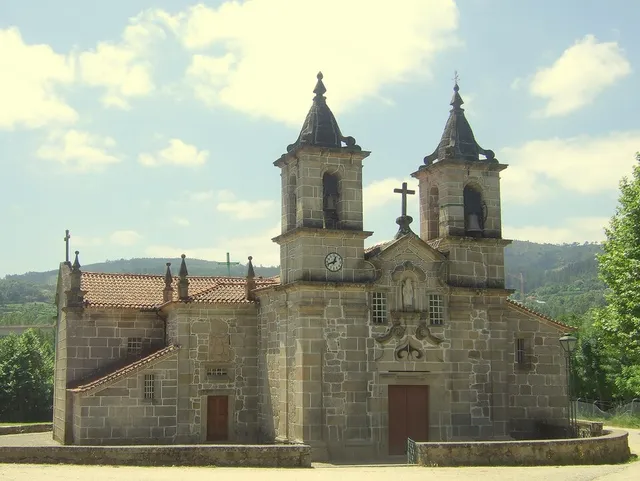
Facade of Igreja de Santa Senhorinha of Basto, with its two towers
Igreja de Santa Senhorinha · heritage context of the parish, not a record of the 1758 celebration© Bocacheteⓘ

A celebration also gathered the territory.

Explore: What made a community meet? →
Read here and view sources

In 1758, the procession of the Body of God gathered in Santa Senhorinha the Chamber and representatives of the nearby parishes, with crosses and ecclesiastics. The memory mentions expenses with wax and sermon: behind the celebration there was preparation, objects and work.

The Abbot also describes separately the triduum of the forty hours, with music and sermons for three days. Distinguishing the two references helps to realize the religious calendar of that time. The document is a testimony of 1758, not the agenda of the current feasts.

Words in this story: see explanations →Getting to know the parish
Source and context

Municipality — Parish Memoirs of Santa Senhorinha (1758)

Accessed: . Editorial summary; the date of consultation is not the date of the facts.

Painzela · parish organization in 1758

Painzela was not isolated

A small register reveals a connection between parishes.

Read here and view sources

The news of Painzela published in the Parish Memories identifies Saint Andrew as a dedication of the matrix and attributes to the Abbot of Santa Senhorinha of Basto the presentation of the parish priest. The register shows an institutional link between two parishes.

The vicar assigns a congruity of 100.000 réis. The value documents the remuneration then indicated; it does not allow a direct comparison with current wages. The municipal transcript updates the spelling and score from the edition of José Viriato Chapel, published in 2003.

Getting to know the parish See Fact sheet: Igreja de Santo André de Painzela
Source and context

Municipality — Parish memories of Painzela (1758)

Accessed: . Editorial summary; the date of consultation is not the date of the facts.
Alvite · testimony of 1758

Six chapels, different responsibilities

The estate also had a care organization.

Includes an activity to try →
Read here and view sources

The memory of Alvite enumerates six chapels in 1758. Saint Antonino belonged to the house and fifth with that name; Good Order was next to the House of Alvimento; the Holy Family, next to the House of the Tower. These three are presented as private.

The others were São Mamede, in Petimão, Santa Catarina, on the homonymous hill, and São Sebastião, in place of the Chão. The text assigns burdens to the customers, but saves St Mamede: there were the convent of Refojos and the abbot of St Clement as midwives. The word factory arises linked to these maintenance responsibilities, not to an industrial installation. These are 1758 bonds, without establishing current property or access.

Words in this story: see explanations →Getting to know the parish See Fact sheet: Casa e Quinta do Alvação See Fact sheet: Casa da Torre de Alvite See Fact sheet: Capela de Santa Catarina de Alvite
Source and context

Basto Land Museum — Parish Memories of 1758: Alvite

Accessed: . Editorial summary; the date of consultation is not the date of the facts.
Gondiães e Vilar de Cunhas · memory and landscape

Before Vilar, Vila Seca

Names also keep changes in the territory.

Explore: Three villages, various ways to know →
Read here and view sources

Vila Seca is the former designation of Vilar de Cunhas remembered by the Municipality. The presentation gathers three villages: Vilar, Cunhas and Uz.

It also distinguishes plateau and mountain areas, associated with agriculture and pastoral care. A parish name can therefore cover different settlements and landscapes. The source does not date the change of designation.

The municipal presentation places this territory near Montalegre and Ribeira de Pena. This position helps to understand a landscape that continues beyond the administrative limit: the villages belong to the municipality, but the valleys and relations between places invite also to look at the neighboring territories.

Getting to know the parish
Source and context

Municipality — Gondiães e Vilar de Cunhas, landscape, heritage and crafts

Accessed: . Editorial summary; the date of consultation is not the date of the facts.
Saint Nicholas · testimony of 1758

When the chapel shortened the path

The distance from the church also shaped the villages.

Includes an activity to try →Explore: Three Ways to Approach Places →
Read here and view sources

The memory of 1758 explains the function of three chapels: Saint Bartholomew, in Celeiró do Monte; Our Lady of Lapa, in Lapela; and Saint Anne, in Busteliberne. They served to administer sacraments to the residents who lived far from the matrix. A small building responded to a daily difficulty.

The dean Domingos Camel de Sousa describes high hills between the places and refers three settlements away half league from the church, in rough terrain. The distance was not only a line on the map: relief was part of the difficulty. The church was to spring, in a place with six neighbors, counting the house of the rector himself.

The three chapels were kept at the expense of the commendator, according to the report. But they were not the only ones: the text lists eleven chapels beyond the matrix, with different administrations and functions. In the Outeiro of Santo António, for example, it marks pilgrimages of neighboring parishes in the feasts of Santo António and Santa Luzia. The set reveals both the cult close to the residents and meetings that attracted people from outside.

Words in this story: see explanations →Getting to know the parish See Fact sheet: Busteliberne See Fact sheet: Igreja de São Nicolau de Cabeceiras
Source and context

Basto Land Museum — St Nicholas Parish Memories (1758)

Accessed: . Editorial summary; the date of consultation is not the date of the facts.

Heritage of Abadim

A tower to look slowly

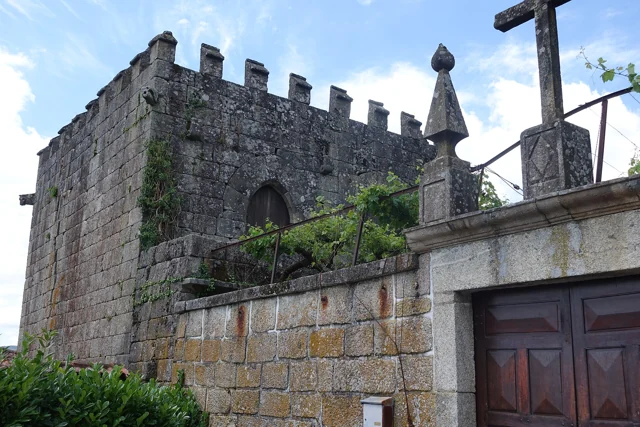
Tower of Abadim, with yellow crowning and stone constructions around.
Tower of Abadim · yellow crowning and surrounding constructions.© Joseolgonⓘ

History is also read in windows and corners.

Explore: Read the marks of power and time →
Read here and view sources

The Tower of Abadim has battlements at the top and gargoyles with animal shapes in the corners. António P. Dinis highlights the settery, the broken arch doors and, inside, conversationals next to the windows. It proposes a construction of the sixteenth century, perhaps from the foral period, without setting an exact date.

The memory of 1758 places the tower in the middle of the Village of the Tower and states that it did not suffer ruin in the earthquake of 1755. The same document describes Abadim with ordinary judge and Chamber, in an organization proper to the former Couto. Reading architecture and administration together helps to understand the importance of the building; the interior description does not confirm current access.

The text of António P. Dinis distinguishes the probable place of the medieval manor from the quintentist construction described today. It is not necessarily the same building preserved without change. The designation Casa do Tronco accompanies the hypothesis that here the justice and the chain of trust functioned.

In the memory of 1758, the election of the ordinary judge and of the House was presided over by the donate. The document also refers to the intervention of the Guimarães magistrate in correction or new scope. Thus, the existence of own organs should not be confused with an administration without relations with other authorities.

Words in this story: see explanations →See Fact sheet: Torre de Abadim / Casa do Tronco
Source and context

Basto Land Museum / António P. Dinis — Tower of Abadim, 17/01/2018

Municipality — Parish memories of Abadim, José Antunes, 22/05/1758

Accessed: . Editorial summary; the date of consultation is not the date of the facts.

History of Ponte de Cavez

Five arches, more than a while

Ponte de Cavez on the river Tâmega, with stone arches, board and wooded banks.
Partial view of the Ponte de Cavez over the Tâmega.© Joseolgonⓘ

An old bridge didn't stop in history.

Includes an activity to try →Explore: A crossing, several seasons →
Read here and view sources

Three broken central arches and two perfect back, next to the banks: the Ponte de Cavez brings together different shapes and times. The Museum located the medieval construction in the second half of the 13th century, at the service of the road between Braga and Vila Pouca de Aguiar.

The source attributes the round arches to the works of Philip II's reign and mentions a landmark of 1599. In the 19th century, the road between Fafe and Vila Pouca de Aguiar brought the enlargement of the board. Watching the bridge is looking for changes to an ancient crossing.

According to the Museum, the stone bridge replaced a previous wooden, then degraded. The construction is attributed to Frei Lourenço Mendes, Dominican who gathered alms for the work; the museological text mentions testimonial legacies as support of this connection. The crossing thus involves materials, paths and ways to finance a collective work.

Words in this story: see explanations →See Fact sheet: Ponte de Cavez
Source and context

Land Museum of Basto — Ponte de Cavez, 27/02/2022

Municipality of Cabeceiras de Basto — Parish memories of 1758: Cavez

Municipality — conclusion of rehabilitation of Ponte de Cavez, 30/04/2019

Accessed: . Editorial summary; the date of consultation is not the date of the facts.

Holy Lady · memory of 1758

Not all bridges were stone

The wood also united the banks.

Read here and view sources

The memory of 1758 lists three wooden bridges in the parish: Vagalhafos, in Quinta de Vila de Lobos; Santa Senhorinha, near the church; and Olela. Names approach the crossings of the farms, the place of worship and the inhabited places.

The same report mentions singing bridges in São Clemente and São Martinho do Arco de Baúlhe. Wood and stone appear, thus, in a single description of the river. The enumeration does not provide construction dates nor proves the survival of structures.

Words in this story: see explanations →
Source and context

Municipality — Memória de Santa Senhorinha, 23/05/1758; transcript of José Viriato Chapel (2003)

Accessed: . Editorial summary; the date of consultation is not the date of the facts.

Holy Lady · memory of 1758

A Church Counted in Images

Before the screens, you looked at the panels.

Includes an activity to try →
Read here and view sources

In the memory of 1758, the church of Santa Senhorinha had two ships with programs of different images. One presented panels on the Creation of the World; the third Franciscan showed saints of this order.

The abbot also described a vaulted chapel, closed with iron railings. Painting, spaces and architectural elements composed a written portrait of the interior. The source allows to study this description, without ensuring that the pieces or layout are preserved today.

The description continues by the tombs, which the Abbot presents decorated with painting and golden letters, and by a particular chapel dedicated to Our Lady of the Pilar. The interior appears as a set of spaces, images and inscriptions, each with its function in the account.

This allows a layer reading: first the organization of the ships, then the painted themes and, finally, the elements that marked memory and devotion. It is not necessary to imagine a single undifferentiated hall; the document itself distinguishes various environments.

Words in this story: see explanations →See Fact sheet: Igreja de Santa Senhorinha
Source and context

Municipality — Memória de Santa Senhorinha, 23/05/1758; transcript of José Viriato Chapel (2003)

Accessed: . Editorial summary; the date of consultation is not the date of the facts.

Faia · memory 1758

Five altars to read a church

Devotions also organized space.

Read here and view sources

The Abbot of Faia recorded five altars in 1758, mentioning the Name of God, Saint Anthony and Our Lady, with the invocation of the Rosary and its brotherhood. The document shows different devotions gathered in the same church.

The restoration reported in 2022 belongs to another time. The two descriptions have different objectives and times: it is not enough to compare numbers to determine which pieces remained or disappeared. The church record allows to continue the discovery of the building, keeping separate historical memory and visit information.

The enumeration distinguishes the larger altar from the four collaterals. The reference to the brotherhood of the Rosary adds people to space: the church appears not only as a set of pieces, but also linked to a devotional organization. However, the text does not describe the composition of this brotherhood or its activities in detail.

See Fact sheet: Igreja de São Tiago da Faia
Source and context

Municipality — Memory of Faia, 23/05/1758; transcript of José Viriato Chapel (2003)

Archdiocese of Braga — restoration and reopening of the matrix of Faia, 01/09/2022

Accessed: . Editorial summary; the date of consultation is not the date of the facts.

Bucos · assets described in 1758

Gold and red in church

The document also kept the colors.

Includes an activity to try →
Read here and view sources

In the church of St John of Bucos described in 1758, the main altar combined golden reliefs and vermilion backgrounds. The account places St John the Baptist and St Dominic on opposite sides and the sacrary in the center of the altarpiece. He also mentions altars with Our Lady of the Rosary, Saints Pedro and Saint Anthony. This written portrait allows you to imagine the organization and colors of the ancient interior, without confirming that the pieces or disposition are preserved today.

Words in this story: see explanations →See Fact sheet: Igreja de São João de Bucos
Source and context

Municipality — Parish memories of Bucos (1758)

Accessed: . Editorial summary; the date of consultation is not the date of the facts.

Alvite · written account from 1758

The earthquake has reached the account of Alvite

A local memory of a larger event.

Includes an activity to try →
Read here and view sources

In reply to the 1758 survey, the vicar of Alvite recalled the earthquake of 1755. He said there had been no ruins, except for the arms of two crosses of the chapel of the House of the Tower, which would have been twisted north. He added that they were already straight.

The report separates the event from the state observed when it was written. It is a local testimony, not a measurement of the intensity of the earthquake nor a confirmation of visible marks today.

Source and context

Municipality — Memory of Alvite, 23/05/1758; transcription of José Viriato Chapel (2003)

Accessed: . Editorial summary; the date of consultation is not the date of the facts.

Faia · communications in 1758

The letters had days of arrival

Before instant messages, the week was also organized in the mail.

Read here and view sources

In the reply of 1758, the abbot of Faia notes that the mail arrived on Tuesday and left on Thursday. A brief information reveals the pace of communications in a rural community. The document does not identify here the building where the letters were received; these days belong to the old account, not to the current postal services. The abbot placed Braga at eight leagues and Lisbon at sixty. The recorded distances, without conversion to current kilometers, add scale waiting for the news.

The answer is inserted in a questionnaire that also asked for distances, fairs and aspects of local life. In the same memory, the abbot distinguishes the São Miguel fair from the Olela fairs and the monthly fair in the head of the municipality. Mail and fair are two examples of rhythms that help to perceive a community; the text does not say that the letters were delivered in these markets.

Source and context

Municipality — Memory of Faia, 23/05/1758; transcript of José Viriato Chapel (2003)

Accessed: . Editorial summary; the date of consultation is not the date of the facts.

Passos · administrative change in the 19th century

Passos changed municipality

The borders of the map also have history.

Explore: The same place, another administrative link →
Read here and view sources

In 1758, the parochial memory was Passos in the term Celoric of Basto. The history published by the Câmara de Celorico explains the change: in the administrative reforms of the decades of 1830 and 1840, Passos passed to Cabeceiras. The source frames the process in this period, without indicating a specific year for this transfer. Compare the two reports helps to understand why ancient documents of the same land may refer to different counties.

The change does not appear isolated in Celorico's account: the same reorganization took other parishes to Amarante, Felgueiras and Mondim. Passos should therefore be read in the context of the liberal reforms of the nineteenth century. Changing the municipality is changing the administrative link; it does not imply that the houses have changed places. When searching for a family or property, the time of the document matters as much as the name of the land.

Getting to know the parish
Source and context

Celorico City Council of Basto — History, administrative changes in the decades of 1830 and 1840
Accessed:

Municipality — Parish memories of Passos, 1758
Accessed:

Editorial summary; the date of consultation is not the date of the facts.

Faia · restoration documented in 2022

A year of works, a church reopened

The heritage is also a recent care.

Explore: The church at different times →
Read here and view sources

The church of São Tiago of Faia reopened in 14 August 2022, after about a year closed for works. The news of the Archdiocese of Braga records the recovery of paintings, images and three altars, besides the placement of stained glass with episodes of the life and mission of the patron. It is a recent intervention, different from the portrait of five altars left in 1758: they are sources of distinct times, not a directly comparable count of surviving pieces.

The news also tells who made the intervention possible. Pastor Rui Filipe Marques Araújo attributed the realization of the works to the involvement of the community; the ceremony brought together associative representatives, workers and benefactors. Archbishop José Cordeiro presided. Behind the paintings and the recovered or placed stained glass is thus a history of participation.

Reopening does not necessarily mean that all works were completed: the same news records an appeal to continue the completion of the restoration. The August date marks the celebration and return of space to religious use, without allowing the end of each intervention to be established.

See Fact sheet: Igreja de São Tiago da Faia
Source and context

Archdiocese of Braga — restoration and reopening of the matrix of Faia, 01/09/2022

Accessed: . Editorial summary; the date of consultation is not the date of the facts.

Holy Lady · transmission of religious accounts

A story that came in copies

The texts also have their own time travel.

Explore: Three ways to get to know Saint Lady →
Read here and view sources

Odília Alves Gameiro studies three texts on the life and miracles of Santa Senhorinha, preserved in copies of the 16th century: two in Latin and one in Portuguese. The similarities between them suggest, according to the researcher, a medieval original. Reading these versions allows you to study the construction of memory and worship. The time of a copy is not necessarily the time of the story that tells.

The two Latin testimonies studied come from Coimbra: one from the College of Grace and another from Santa Cruz. This provenance helps to realize that the memory of a saint linked to Basto circulated beyond the place of worship. Each copy is also an object with a history of conservation and transmission.

There are three times to be separated: that of the life narrated, that of the composition of the account and that of the copy that came to us. The investigation situates Little Lady in the second half of the 10th century, but does not transform the five hundredth-century texts into testimonies written by those who knew her. The similarities and differences between versions are precisely part of the historical work.

The study also reads the reports in the context of a rural community: crops, food and trips appear among the concerns represented. Hagiography allows to know this imaginary and the values that the text seeks to transmit, besides counting wonders.

Words in this story: see explanations →
Source and context

Odília Alves Gameiro — The nobiliarchic appropriation of a rural cult: the hagiography of Santa Senhorinha of Basto, Archipelago · History, 2001, pp. 561–562 and 571–572

Accessed: . Editorial summary; the date of consultation is not the date of the facts.

Painzela · patrimonial identification without chronology demonstrated

A bridge, a name and a question

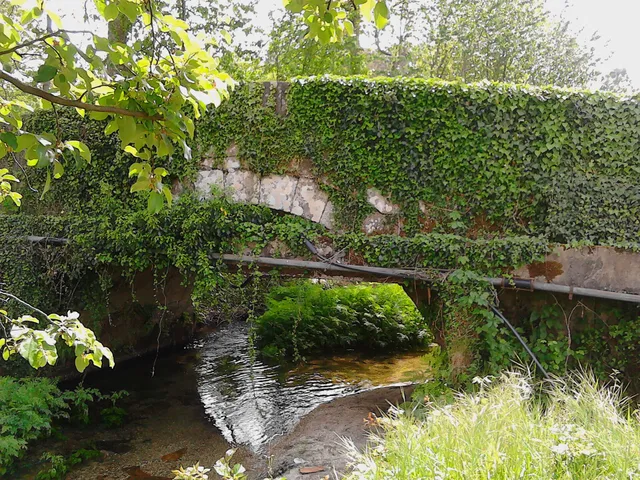
Stone bridge of Painzela on a water line, surrounded by vegetation
Ponte de Painzela, photographed by Tommasoandrea. The image allows observing the arch and the water line; it does not determine the time of construction.© Tommasoandreaⓘ

Calling him Roman doesn't solve your age.

Includes an activity to try →
Read here and view sources

The municipal presentation of Painzela includes a photograph identified as Ponte de Painzela and refers to a Roman Bridge among the heritage of the parish. This designation alone does not demonstrate when the bridge was built. The name allows to find the place; dating would require documentation or study of the construction. It is a good question to lead to a reading of the heritage: what do we know by identification and what we still need to investigate?

See Fact sheet: Ponte de Painzela
Source and context

Municipality — parish presentation of Painzela and bridge identification

Accessed: . Editorial summary; the date of consultation is not the date of the facts.

Alvite · heritage and landscape deployment

A chapel leaning against the stone

In Santa Catarina, the construction finds the penedia.

Includes an activity to try →Explore: One chapel, three scales →
Read here and view sources

The municipal presentation highlights a particularity of the chapel of Santa Catarina de Alvite: it is encrusted in a penedia. The encounter between rock and construction gives a clue to look at the heritage beyond the facade.

The source identifies this relationship with the place, but does not provide here a construction date or a visiting time. The chapel form gathers the available documentary information.

The memory of 1758 already named Santa Catarina in the hill with this name, among six chapels of the parish. The two sources answer different questions: the old document places it in a network of places of worship; the municipal presentation draws attention to the relationship between construction and rock. This presence in the report does not date the external form that the photograph shows.

See Fact sheet: Capela de Santa Catarina de Alvite
Source and context

Municipality — landscape of Alvite e Passos

Basto Land Museum — Parish Memories of 1758: Alvite

Accessed: . Editorial summary; the date of consultation is not the date of the facts.

Rio Douro · places and hermits described in 1758

Fifteen places, a network of chapels

The distance from the church also shaped the lives of the villages.

Includes an activity to try →
Read here and view sources

In the memory of Rio Douro of 1758, the vicar lists fifteen places and places the church outside the village. He also refers to fifteen hermits, explaining their relationship with religious assistance to people living far from the home.

St. Stephen stayed outside Eiró; other invocations accompanied names of villages, such as Santa Ana in Toninha, São Gonçalo in Vilela and São Frutuoso in Leiradas. The document also distinguishes religious responsibilities from Refojos, private and residents. It is a historical network of places, devotions and care, without confirming the conservation or current access to each building.

Source and context

Municipality — Parish Memoirs of Rio Douro, António Carneiro da Costa, 22/05/1758

Accessed: . Editorial summary; the date of consultation is not the date of the facts.

Cavez · settlement and devotion in 1758

Eight places and six chapels

In Cavez, an ancient list draws relations between villages, residents and monasteries.

Includes an activity to try →
Read here and view sources

In 25 of May 1758, the vicar Manuel Pacheco da Cunha numbered eight places: Cavez, Vila Franca, Ponte, Arosa, Rabiçais, Moimenta, Revorça and Parada. He located the church in the middle of the parish and described six chapels. Names help to recognize a hammock; they are not a current list of administrative places.

São Gregório, in Vila Franca, São Mamede, in Arosa, and Santa Maria Magdalena, in Moimenta, were attributed to the abbot of Pombeiro, with its maintenance linked to the Benedictine congregation of Tibães. São Bartolomeu, on the Bridge, had as patron João Correia, of Guimarães. In São Caetano, in Raviceis at the passage of the chapels, and Santa Luzia, in Revorça, the charge was for the residents. The transcription itself uses the variants Rabiçais and Raviceais.

The report also describes five altars in the matrix and a brotherhood of the Souls. The parish appears as a space of worship and collective organization, with distinct responsibilities. The pilgrimage of São Bartolomeu is mentioned for 23 and 24 of August; they are dates of historical testimony, without functioning as current agenda.

The parish links went beyond the chapels. The vicar wrote that Cavez did not have their own mail and resorted to Raposeira, which was located to a league. He also indicated the absence of fair in the parish. They are clues to think where news arrived and where services were concentrated at that time; they do not describe the current offer nor allow automatically to convert the league into a road distance.

Getting to know the parish See Fact sheet: Capela de São Bartolomeu de Cavez See Fact sheet: Igreja de São João de Cavez e cruzeiro
Source and context

Municipality of Cabeceiras de Basto — Parish memories of 1758: Cavez

Accessed: . Editorial summary; the date of consultation is not the date of the facts.

Santa Senhorinha · historical reading of hagiography

Bread also tells a story of devotion

In the accounts of Santa Senhorinha, food reveals concerns of the rural world.

Includes an activity to try →
Read here and view sources

Odília Alves Gameiro identifies in the narratives wheat fields and vineyards, fear of losing crops in a storm and episodes of insufficient food for the community. The author relates the reference to white bread with the social position of the nuns.

Reading these passages allows you to know the themes and values of religious texts: sustenance, dependence on natural cycles and social differences. It is not equivalent to proving the miracles narrated or reconstructing a menu. To compare with another type of source, follow the crops described by the abbot in 1758.

Source and context

Odília Alves Gameiro — The nobiliary appropriation of a rural cult, 2001, pp. 562–563

Accessed: . Editorial summary; the date of consultation is not the date of the facts.

YOUR LOCAL GUIDE

What would you like to discover?

Take a closer look.