Discover Cabeceiras de BastoFree independent guide
ViveCabeceirasYOUR GUIDE TO CABECEIRAS
ENEnglish
SearchSaved

Flavors

Choose a story to start with. You can change the subject or fine tune the search.

19 stories · The flavours of Cabeceiras · Search: pedra

The flavours of Cabeceiras

From the garden to the pot, from the oven to the table.

Choose a story · 19
Food memory · testimony of 2011

A snack with bread still warm

Sopas de vinho are part of the food memories collected in Cavez and Pedraça.

Read here and view sources

In an account recorded by Maria de Fátima Carvalho in February 2011, Maria da Conceição Gonçalves Mouta remembers a winter snack made with broa, Vinho Verde and sugar. Freshly baked broa was preferred; on other occasions, a slice was warmed over the embers. It is a family memory published by the Museu das Terras de Basto.

The occasion matters as much as the ingredients: the account places the snack in mid-afternoon and associates it with winter. Broa connected the meal with the oven’s rhythm or with making use of the embers. The recipe had been learned from a grandmother in Cavez; the account was recorded with her granddaughter living in Recovos, tracing a family tradition between places.

Source and context

Basto Land Museum — testimony of Maria da Conceição Gonçalves Mouta, collected by Maria de Fátima Carvalho in 2011

Accessed: . Editorial summary; the date of consultation is not the date of the facts.
Local gastronomic tradition

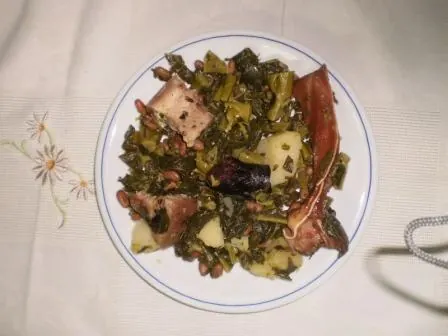
Greens with beans

Greens and beans in the Terras de Basto Museum’s account.
Source: Museu das Terras de Basto
Credits and options

View source

Photograph date not stated.

Individual photographer and reuse licence not stated by the source.

Request removal or correct the photo credit

See 1 more photo and details
Greens and beans in the Terras de Basto Museum’s account.
Source: Museu das Terras de Basto
Credits and options

View source

Photograph date not stated.

Individual photographer and reuse licence not stated by the source.

Request removal or correct the photo credit

A winter dish rooted in rural life.

Explore: A kitchen, different moments →View ingredients and preparation →
Read here and view sources

Cabeceiras chose couves com feijões, greens with beans, for the Referencial Gastronómico do Minho. The description connects couve-galega and yellow beans, also called moleiro, with hearth cooking. For more substantial meals, the cooking liquid from pork and the addition of sausages enriched the dish. The Museum also preserves a family version recorded in February 2010: Maria da Conceição Gonçalves Mouta, born in Cavez and living in Pedraça, had learned the dish from her grandmother. In that preparation, the greens and potatoes used the cooking liquid from the beans and meat; olive oil was added at the table.

Compare this dish with couves com migas: one recipe uses potatoes and assorted meats; the other adds bread at the end. The same voice from Pedraça preserves two ways of bringing greens and beans to the table. Which is closer to your family memories?

Source and context

Gastronomic Reference of Minho — Cabeceiras, pp. 214–215
Accessed:

Basto Land Museum — food collections, 2010 and 2011
Accessed:

Editorial summary; the date of consultation is not the date of the facts.
Abadim · bread heritage

Before the bread, there was a field

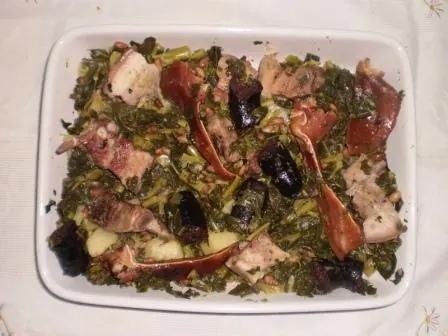
Forno em pedra e utensílios da Casa do Pão, com uma mulher junto da exposição.
Casa do Pão · know the cereal cycleⓘ

At the Casa do Pão, the story begins with grain.

Includes an activity to try →Explore: From field to next batch →
Read here and view sources

A great deal of work comes before broa reaches the table. At the Casa do Pão in Moinhos de Rei, Abadim, utensils and farming tools help retrace bread-making and the production of maize and rye. The municipal presentation connects the objects with baking and tasting the bread. It offers a way to understand the journey from field to grain processing and oven. Check the contacts and visiting arrangements on the place page before planning to attend a demonstration.

Words in this story: see explanations →Getting to know the parish See Fact sheet: Casa do Pão
Source and context

Visit Cabeceiras — Casa do Pão, Moinhos de Rei

Accessed: . Editorial summary; the date of consultation is not the date of the facts.
Oral memory · March 2011

The bread kept the next batch alive

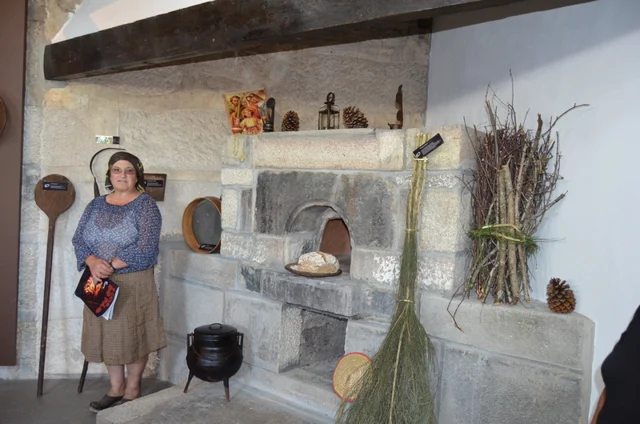
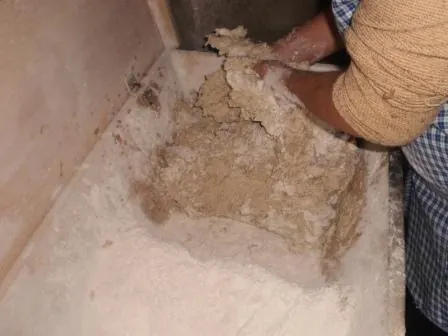
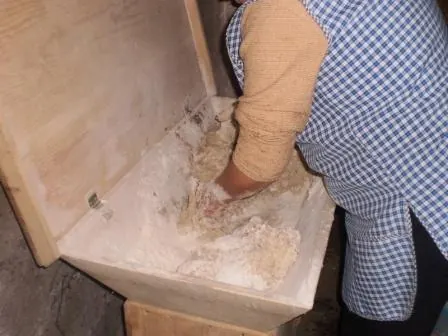
Flour and a portion of dough in the kneading trough — mixed-grain bread sequence documented by the Museum in Recovos, Pedraça.
Source: Museu das Terras de Basto
Credits and options

View source

Photograph date not stated.

Individual photographer and reuse licence not stated by the source.

Request removal or correct the photo credit

See 2 more photos and details
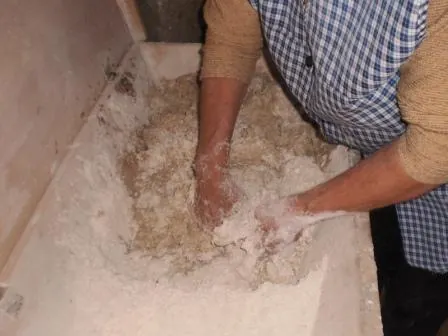
Working the dough by hand — mixed-grain bread sequence documented by the Museum in Recovos, Pedraça.
Source: Museu das Terras de Basto
Credits and options

View source

Photograph date not stated.

Individual photographer and reuse licence not stated by the source.

Request removal or correct the photo credit

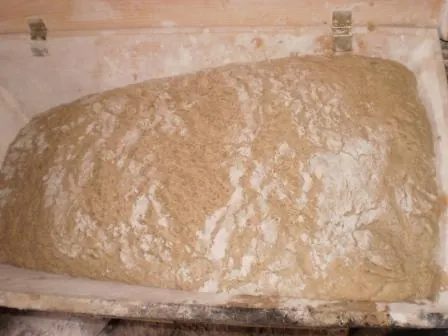
Dough in the trough before baking — mixed-grain bread sequence documented by the Museum in Recovos, Pedraça.
Source: Museu das Terras de Basto
Credits and options

View source

Photograph date not stated.

Individual photographer and reuse licence not stated by the source.

Request removal or correct the photo credit

A small piece of dough linked one batch to the next.

Includes an activity to try →Explore: Three ways to look at the same dough →
Read here and view sources

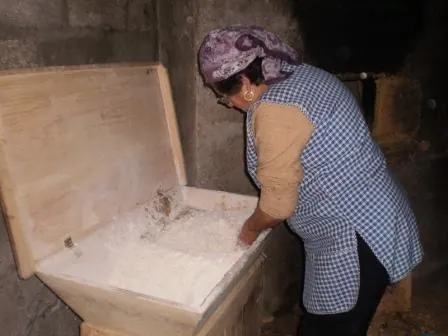
In an account recorded in March 2011, Maria da Conceição remembered bread being baked every eight days. A piece of dough from the previous batch was kept in a bowl with a little salt, inside the wooden kneading trough. On the eve of the next baking day, warm water and flour were added. The account from Recovos, Pedraça, also describes an adaptation: when baking became less frequent, yeast bought from the bakery was used.

This change is part of a family history. Maria da Conceição was born in Cavez and had learned to make maize broa from her grandmother. When she was interviewed, at the age of 69, she also made mixed-grain broa. The account does not present an unchanging tradition: it shows learning, choices and an adapting routine.

The baking calendar extended to the community too. In the 2011 account, batches of bread were associated with annual celebrations, a longing for homemade bread, the feast of Santa Marinha and Christmas and maize-husking events organised by the Associação D. Nuno Álvares in Pedraça. Keeping dough for the following week made sense in a weekly routine; occasional baking created different needs. These are practices remembered in that account, not a current programme of festivities.

The kneading trough, bowl and piece of dough form a small chain between two batches. In this memory, keeping something meant more than storing finished bread: it meant saving the start of the next loaf. A household object reveals its full function when we understand the home’s routine.

Words in this story: see explanations →
Source and context

Museum — Mixed-grain bread, published 12/05/2011; fieldwork in March 2011 in Recovos, Pedraça
Accessed:

Basto Land Museum — food and food: collections of February and March 2011
Accessed:

Editorial summary; the date of consultation is not the date of the facts.
Oral memory · Pedraça

Chestnuts in spring?

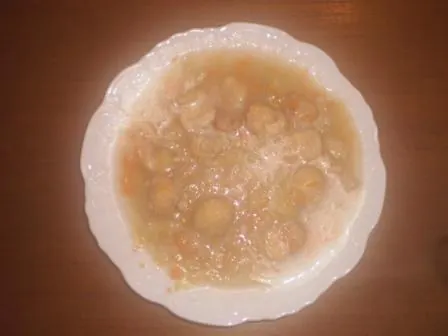
Chestnut soup from the account published by the Terras de Basto Museum in 2011.
Source: Museu das Terras de Basto
Credits and options

View source

Photograph date not stated.

Individual photographer and reuse licence not stated by the source.

Request removal or correct the photo credit

Cooking followed the calendar of work.

Includes an activity to try →Explore: From tree to working day →
Read here and view sources

Chestnuts in April and May? In Maria da Conceição Gonçalves Mouta’s memories, dried chestnuts reached the table during ploughing and maize-sowing time. The soup, with beans, cabbage and potatoes, ended the first meal at around nine or half past nine in the morning, after fried cod with broa.

Maria de Fátima Carvalho recorded the account in Pedraça in February 2011. Maria da Conceição had learned the preparation from her mother-in-law. The chestnuts were dried and aired beforehand; the cooked potato was mashed and returned to the pot. Preservation, texture and working hours meet in this family memory.

Two calendars come together here: that of the fruit and that of the meal. Stored dried chestnuts brought to the spring table a food associated with another season’s harvest. The account describes more than ingredients: it explains how household stores accompanied ploughing and sowing. The timing of “almoço” may also surprise people who now use that Portuguese word for the midday meal.

This is a story with a voice and a place, not a rule for every household in Cabeceiras. When talking about a family recipe, it is worth preserving those differences: who taught it, when it was prepared and what changed between hearth and cooker. In this way, an ingredient list becomes a short story of work, learning and domestic life.

Follow three moments to understand this table: harvesting, storing and eating. They need not happen in the same season. Dried chestnuts connect those moments and explain the surprising title. The dish offers a simple way to discuss food reserves, field work and changing mealtimes.

Source and context

Basto Land Museum — testimony of Maria da Conceição Gonçalves Mouta, collected by Maria de Fátima Carvalho in 2011

Accessed: . Editorial summary; the date of consultation is not the date of the facts.
Oral memory · Cavez and Pedraça

Carnival went into the cooking pot too

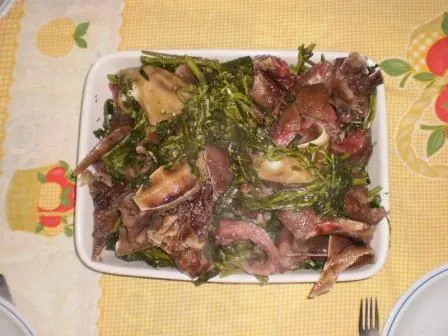
Pork ear with turnip greens: photograph accompanying the recipe recorded by the Museum in 2011.
Source: Museu das Terras de Basto
Credits and options

View source

Photograph date not stated.

Individual photographer and reuse licence not stated by the source.

Request removal or correct the photo credit

See 1 more photo and details
Hearth in the Museum’s March 2011 account of pork ear with turnip greens.
Source: Museu das Terras de Basto
Credits and options

View source

Photograph date not stated.

Individual photographer and reuse licence not stated by the source.

Request removal or correct the photo credit

A recipe learned from a grandmother in Cavez.

Explore: Carnival and the flavors of the family →View ingredients and preparation →
Read here and view sources

Pig’s ear, leafy greens and potatoes made up the Carnival meal Maria da Conceição remembered in February 2011. It is a documented family memory, not a menu available all year round. The potatoes and greens cooked in the meat’s cooking water; the pig’s ear went back into the pot at the end, before serving with olive oil.

The account traces the recipe’s passage between generations: Maria da Conceição was born in Cavez and lived in Recovos, Pedraça; she had learned this dish from her grandmother. In 2011, a gas cooker and stainless-steel pans were already part of her kitchen, while the hearth remained in use on special occasions. The account shows a tradition living alongside changes in cooking equipment.

Cooking water connects meat and accompaniments: in the account, greens and potatoes share the preparation process. Compare this sequence with greens and beans. Rather than seeking one fixed recipe, notice how using the broth links different meals and memories of local cooking.

Source and context

Museum of Lands of Basto — Golden Ear (17/03/2011), Maria da Conceição Gonçalves Mouta; collection of Mary of Fatima Magalhães in February 2011

Accessed: . Editorial summary; the date of consultation is not the date of the facts.
Rio Douro · agriculture in 1758

From valley to hill, the harvest changed

The landscape helped shape the pantry too.

Includes an activity to try →Explore: Follow the landscape to the pantry →
Read here and view sources

In Rio Douro, the 1758 account distinguishes the crops grown near the rivers from those grown in the hills. It associates the former with milhão, wine, chestnuts and acorns, and the latter with rye. The landscape also helps us understand the pantry.

In describing the riverbanks, the parish priest mentions fields with oaks and vines and, where there were no fields, heather scrub. The same document portrays cold, windy mountains with snow in winter. These are historical descriptions that help connect crops and terrain; they are not a current agricultural or climate survey.

Getting to know the parish
Source and context

Municipality of Cabeceiras de Basto — Parish memories of 1758: Rio Douro

Accessed: . Editorial summary; the date of consultation is not the date of the facts.
Pedraça · 2011 food memory

Winter in a cooking pot

Caldo de farinha had its place in January and February.

Includes an activity to try →Explore: Cereals in three forms →View ingredients and preparation →
Read here and view sources

In the account recorded in January 2011, Maria da Conceição Gonçalves Mouta recalls beans, leafy greens, pork and maize flour. This is a cooking memory passed down by her grandmother from Cavez and recorded in Recovos, Pedraça. The flour went in near the end of cooking and was stirred continuously to break up lumps. This helped thicken the soup.

The account also records a change in equipment: a gas cooker and stainless-steel pans had entered daily life, while the hearth and three-legged pot were still used for Christmas Eve. The memory does not describe a kitchen frozen in time. In 2011, the interviewee said she rarely made this soup, distinguishing the custom she remembered from its frequency at that time.

Compare this dish with the same interviewee’s couves com migas: the soup takes maize flour, while the greens receive pieces of broa after being drained. One account is associated with January and February; the other values the tender greens of April and May. Grain links the dishes, but the preparation and season set them apart.

Getting to know the parish
Source and context

Basto Land Museum — testimony of Maria da Conceição Gonçalves Mouta, collected by Maria de Fátima Carvalho in 2011

Accessed: . Editorial summary; the date of consultation is not the date of the facts.
Pedraça · 2011 food memory

Bread joined the greens too

Couves com migas made use of spring’s tender leaves.

Explore: A kitchen throughout the year →View ingredients and preparation →
Read here and view sources

Maria da Conceição added broa, beans and salpicão to the greens. The account recorded in February 2011 associates the dish with April and May. It is a family recollection, distinct from couves com feijões. After draining, the preparation was mixed with broa, garlic and olive oil in a large bowl, the alguidar. The same bowl went to the table.

The dish follows the vegetable garden’s calendar: in Maria da Conceição’s memory, April and May brought young, tender greens. The recipe also preserves techniques — cutting finely, draining and folding together — and a serving vessel, the alguidar. Ingredients, season and utensils tell different parts of the same memory.

The bowl connects preparation and serving. In the account, the ingredients are mixed in that vessel and brought to the table in it. Look for a similar object in a family photograph: who used it, and on what occasion? An object can start a conversation as rich as the recipe.

Getting to know the parish
Source and context

Basto Land Museum — testimony of Maria da Conceição Gonçalves Mouta, collected by Maria de Fátima Carvalho in 2011

Accessed: . Editorial summary; the date of consultation is not the date of the facts.
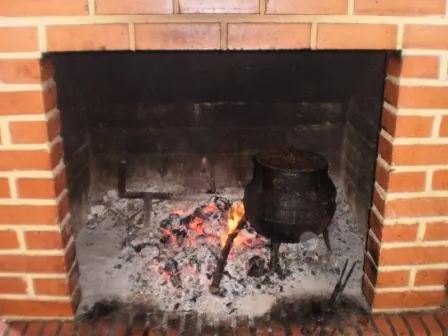
Pedraça · testimony of 2011

At Christmas, back to the hearth

A family custom kept the old cooking pot in use.

Explore: The year also sat at the table →
Read here and view sources

By 2011, Maria da Conceição Gonçalves Mouta was already cooking on a gas cooker with stainless-steel pans. At Christmas Eve dinner, however, the whole meal returned to the hearth and three-legged pots.

The account recorded in Recovos, Pedraça, also notes that she sometimes returned to this way of cooking outside Christmas. The old utensil still had a place in a kitchen that had changed. It is a family memory, not a custom attributed to every household in the municipality.

Getting to know the parish
Source and context

Basto Land Museum — testimony of Maria da Conceição Gonçalves Mouta, collected by Maria de Fátima Carvalho in 2011

Accessed: . Editorial summary; the date of consultation is not the date of the facts.
Pedraça · crop memory

Lunch at nine in the morning?

Meal names also preserve the rhythms of another time.

Read here and view sources

During the ploughing work Maria da Conceição remembered, the first meal was called almoço and arrived at around nine or half past nine. Fried cod with broa was served, followed by chestnut soup.

The account associates this rhythm with April and May, when maize was sown and the land ploughed. Meal names also preserve ways of organising work. This is a memory collected from one family, not a general timetable for the municipality.

In this case, the soup was learned from her mother-in-law, who came from Pedraça. The account thus distinguishes different people in the transmission of recipes. The preparation used dried chestnuts, connecting an autumn harvest with spring work in the fields. The remembered meal brought together preserved food, broa and a specific farming task: ploughing and sowing maize.

Getting to know the parish
Source and context

Basto Land Museum — testimony of Maria da Conceição Gonçalves Mouta, collected by Maria de Fátima Carvalho in 2011

Accessed: . Editorial summary; the date of consultation is not the date of the facts.
Pedraça · testimony collected in March 2011

This broa blends rye and wheat

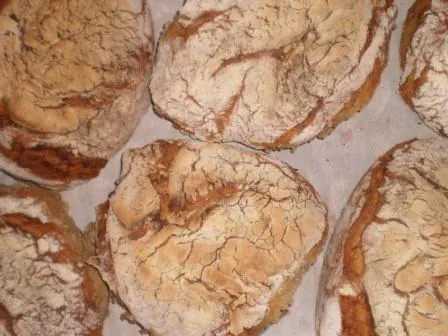
The mixed-grain bread after baking — mixed-grain bread sequence documented by the Museum in Recovos, Pedraça.
Source: Museu das Terras de Basto
Credits and options

View source

Photograph date not stated.

Individual photographer and reuse licence not stated by the source.

Request removal or correct the photo credit

See 12 more photos and details
Flour and a portion of dough in the kneading trough — mixed-grain bread sequence documented by the Museum in Recovos, Pedraça.
Source: Museu das Terras de Basto
Credits and options

View source

Photograph date not stated.

Individual photographer and reuse licence not stated by the source.

Request removal or correct the photo credit

Preparing dough in the kneading trough — mixed-grain bread sequence documented by the Museum in Recovos, Pedraça.
Source: Museu das Terras de Basto
Credits and options

View source

Photograph date not stated.

Individual photographer and reuse licence not stated by the source.

Request removal or correct the photo credit

Working the dough by hand — mixed-grain bread sequence documented by the Museum in Recovos, Pedraça.
Source: Museu das Terras de Basto
Credits and options

View source

Photograph date not stated.

Individual photographer and reuse licence not stated by the source.

Request removal or correct the photo credit

Kneading in the wooden trough — mixed-grain bread sequence documented by the Museum in Recovos, Pedraça.
Source: Museu das Terras de Basto
Credits and options

View source

Photograph date not stated.

Individual photographer and reuse licence not stated by the source.

Request removal or correct the photo credit

A closer look at dough preparation — mixed-grain bread sequence documented by the Museum in Recovos, Pedraça.
Source: Museu das Terras de Basto
Credits and options

View source

Photograph date not stated.

Individual photographer and reuse licence not stated by the source.

Request removal or correct the photo credit

Dough in the trough before baking — mixed-grain bread sequence documented by the Museum in Recovos, Pedraça.
Source: Museu das Terras de Basto
Credits and options

View source

Photograph date not stated.

Individual photographer and reuse licence not stated by the source.

Request removal or correct the photo credit

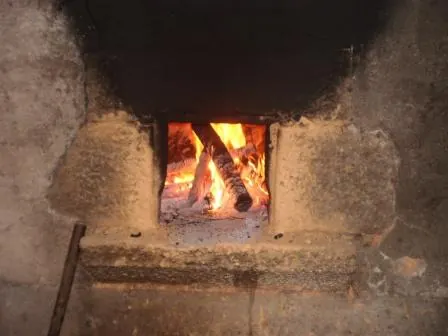
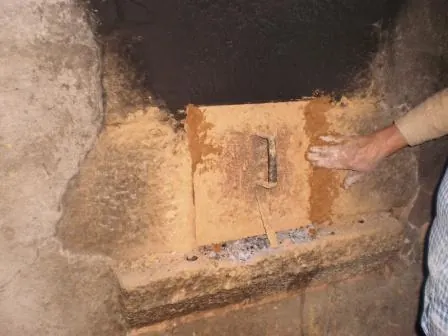
Fire in the wood-fired oven — mixed-grain bread sequence documented by the Museum in Recovos, Pedraça.
Source: Museu das Terras de Basto
Credits and options

View source

Photograph date not stated.

Individual photographer and reuse licence not stated by the source.

Request removal or correct the photo credit

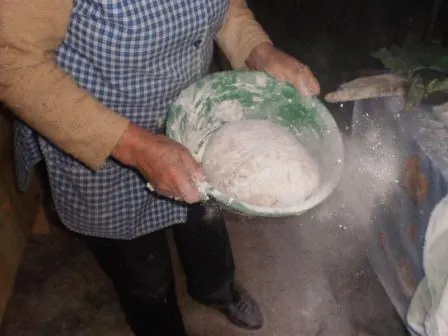
Shaping the loaf in a bowl — mixed-grain bread sequence documented by the Museum in Recovos, Pedraça.
Source: Museu das Terras de Basto
Credits and options

View source

Photograph date not stated.

Individual photographer and reuse licence not stated by the source.

Request removal or correct the photo credit

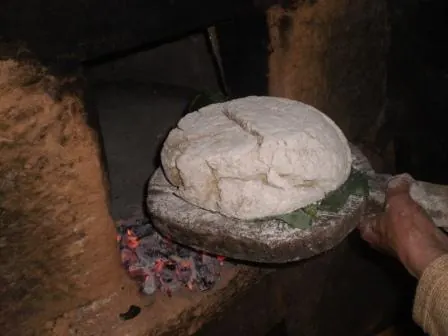
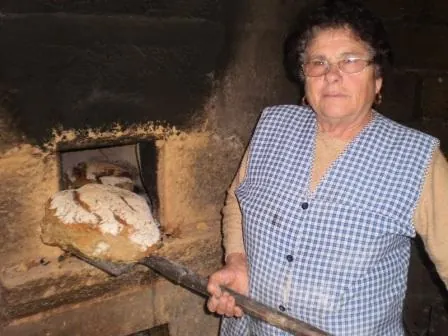
Placing the loaf in the oven with a peel — mixed-grain bread sequence documented by the Museum in Recovos, Pedraça.
Source: Museu das Terras de Basto
Credits and options

View source

Photograph date not stated.

Individual photographer and reuse licence not stated by the source.

Request removal or correct the photo credit

Closing the wood-fired oven — mixed-grain bread sequence documented by the Museum in Recovos, Pedraça.
Source: Museu das Terras de Basto
Credits and options

View source

Photograph date not stated.

Individual photographer and reuse licence not stated by the source.

Request removal or correct the photo credit

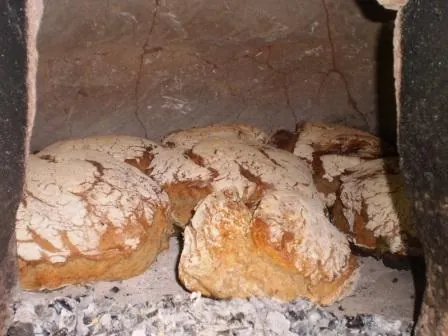
Baked loaves in the oven — mixed-grain bread sequence documented by the Museum in Recovos, Pedraça.
Source: Museu das Terras de Basto
Credits and options

View source

Photograph date not stated.

Individual photographer and reuse licence not stated by the source.

Request removal or correct the photo credit

The batch of bread and the work behind it — mixed-grain bread sequence documented by the Museum in Recovos, Pedraça.
Source: Museu das Terras de Basto
Credits and options

View source

Photograph date not stated.

Individual photographer and reuse licence not stated by the source.

Request removal or correct the photo credit

Not every memory of broa begins with maize.

Explore: The batch continues in other stories →View ingredients and preparation →
Read here and view sources

In the recipe recorded by the Museu das Terras de Basto in March 2011, Maria da Conceição Gonçalves Mouta, who lived in Recovos, Pedraça, combined light rye, dark rye and wheat. The account distinguishes the maize broa she learned from her grandmother from the mixed-grain broa she began making later. Tradition changes even within one kitchen. In the same account, she says she no longer baked weekly: she made bread for celebrations and when she missed homemade broa. She also prepared it for Santa Marinha and for Christmas and maize-husking events at the Associação D. Nuno Álvares in Pedraça. Bread connected the kitchen with community gatherings.

The rhythm of baking also changed the leavening. When bread was baked frequently, dough was kept from the previous batch; in the preparation described in 2011, she used baker’s yeast prepared the day before. The change in ingredients accompanied a change in the calendar, from weekly bread to bread for gatherings.

Source and context

Museum — Mixed-grain bread, published 12/05/2011; fieldwork in March 2011 in Recovos, Pedraça
Accessed:

Basto Land Museum — food collections, 2010 and 2011
Accessed:

Editorial summary; the date of consultation is not the date of the facts.
Pedraça · testimony collected in March 2011

The oven gave a sign

Placing the loaf in the oven with a peel — mixed-grain bread sequence documented by the Museum in Recovos, Pedraça.
Source: Museu das Terras de Basto
Credits and options

View source

Photograph date not stated.

Individual photographer and reuse licence not stated by the source.

Request removal or correct the photo credit

See 4 more photos and details
Fire in the wood-fired oven — mixed-grain bread sequence documented by the Museum in Recovos, Pedraça.
Source: Museu das Terras de Basto
Credits and options

View source

Photograph date not stated.

Individual photographer and reuse licence not stated by the source.

Request removal or correct the photo credit

Closing the wood-fired oven — mixed-grain bread sequence documented by the Museum in Recovos, Pedraça.
Source: Museu das Terras de Basto
Credits and options

View source

Photograph date not stated.

Individual photographer and reuse licence not stated by the source.

Request removal or correct the photo credit

Baked loaves in the oven — mixed-grain bread sequence documented by the Museum in Recovos, Pedraça.
Source: Museu das Terras de Basto
Credits and options

View source

Photograph date not stated.

Individual photographer and reuse licence not stated by the source.

Request removal or correct the photo credit

The batch of bread and the work behind it — mixed-grain bread sequence documented by the Museum in Recovos, Pedraça.
Source: Museu das Terras de Basto
Credits and options

View source

Photograph date not stated.

Individual photographer and reuse licence not stated by the source.

Request removal or correct the photo credit

Baking also meant paying attention to what you could see.

Includes an activity to try →
Read here and view sources

In the account recorded in Recovos, Pedraça, in March 2011, Maria da Conceição described several signs: the dough rested and increased in volume; a whitish appearance inside the oven indicated enough heat for the batch. She then shaped the dough in a basin, giving it a rounded form. The account shows knowledge built from movements and observation, learned in a kitchen and recorded by the Museum. It does not establish a universal rule for all ovens or doughs.

There is a sequence to those signs. First, resting allows the change in the dough to be observed; then the oven is prepared and the loaves shaped. The record brings together attention to time, volume and the colour inside the oven. Knowing how to bake meant connecting these observations as well as knowing the ingredients.

Words in this story: see explanations →
Source and context

Museum — Mixed-grain bread, published 12/05/2011; fieldwork in March 2011 in Recovos, Pedraça

Accessed: . Editorial summary; the date of consultation is not the date of the facts.
Cavez and Pedraça · transmission of recipe, 2011

Every recipe has someone who passes it on

Cooking connects people, generations and parishes.

Includes an activity to try →Explore: Who brought this recipe? →
Read here and view sources

In the Museum’s accounts, Maria da Conceição Gonçalves Mouta, born in Cavez and living in Recovos, Pedraça, identifies who passed each dish on to her. Couves com migas came from her grandmother in Cavez; chestnut soup from her mother-in-law in Pedraça. Maria de Fátima Carvalho recorded these accounts in February 2011. The names help us understand that these memories belong to a particular family experience.

Source and context

Basto Land Museum — food and food: collections of February and March 2011

Accessed: . Editorial summary; the date of consultation is not the date of the facts.
Cabeceiras and neighboring municipalities · food memory

Maize the size of rice

Mílheros tell a story of rural food.

Includes an activity to try →Explore: A cereal, different transformations →View ingredients and preparation →
Read here and view sources

The Museum describes mílheros as maize crushed in a mill into small grains. In everyday meals, beans, cabbage shoots or cod bones could be added for flavour. Pork appeared on festive days or in households with more resources. This explains the distinction between “rich” and “poor” mílheros. The 2019 publication places this tradition in Cabeceiras and neighbouring municipalities.

In the Museum’s recipe for mílheros ricos, pork ribs, morcela, salpicão and linguiça accompany the grain. The difference between versions also helps us understand living conditions and occasions for eating them. The same ingredient could sustain a simple meal or form part of a more abundant table.

Words in this story: see explanations →
Source and context

Land Museum of Basto — Millions (2019)

Accessed: . Editorial summary; the date of consultation is not the date of the facts.
Pedraça · 2011 collection

Before the bread, this bolo went in

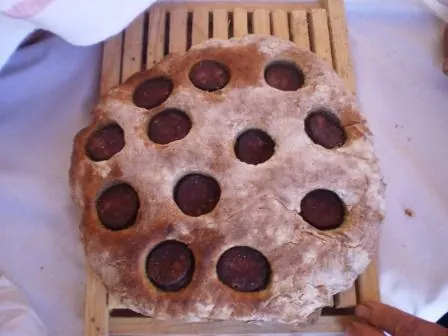
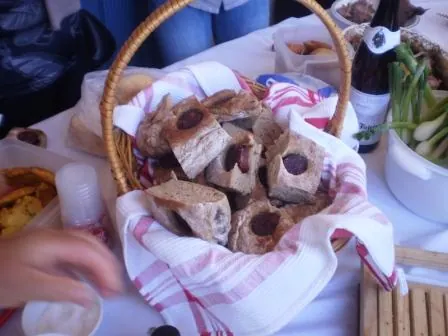
Bolo entre lenha in photographs accompanying the recipe published by the Museum in 2015.
Source: Museu das Terras de Basto
Credits and options

View source

Photograph date not stated.

Individual photographer and reuse licence not stated by the source.

Request removal or correct the photo credit

See 1 more photo and details
Bolo entre lenha in photographs accompanying the recipe published by the Museum in 2015.
Source: Museu das Terras de Basto
Credits and options

View source

Photograph date not stated.

Individual photographer and reuse licence not stated by the source.

Request removal or correct the photo credit

The same dough could have another destination.

Explore: One batch, several gestures →View ingredients and preparation →
Read here and view sources

In Pedraça, Maria da Conceição Mouta recalled a bolo made from the broa dough itself. It was topped with small sardines or chouriço and went into the oven before the loaves. More wood then had to be added.

The account recorded in 2011 and published by the Museum in 2015 connects the bolo’s name with the organisation of baking day. The recipe preserves the techniques of a traditional oven, to explore alongside the history of bread.

Source and context

Basto Land Museum — Cake between sardine or chorizo wood (2015)

Accessed: . Editorial summary; the date of consultation is not the date of the facts.
Pedraça · testimony collected in 2011

Bread joined the celebration too

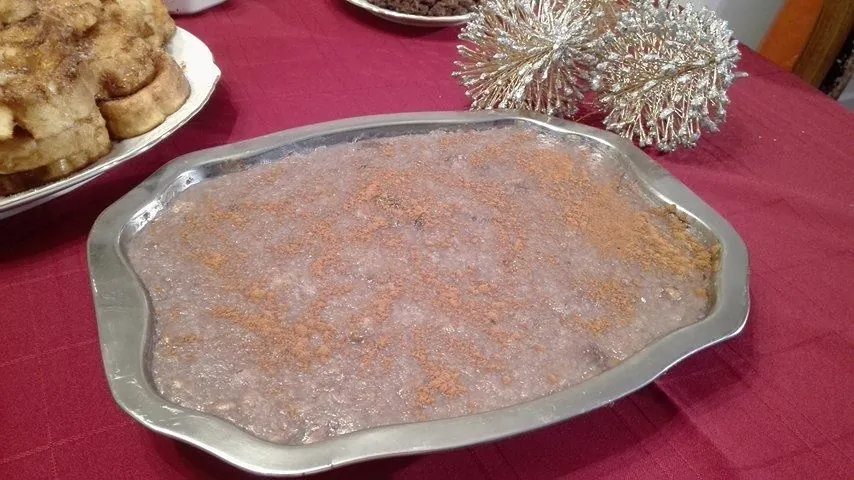
Mexidos: photograph accompanying the recipe recorded in Pedraça and published by the Museum.
Source: Museu das Terras de Basto
Credits and options

View source

Photograph date not stated.

Individual photographer and reuse licence not stated by the source.

Request removal or correct the photo credit

With mexidos, dessert takes shape in the cooking pot.

Includes an activity to try →Explore: Three Ways to Bring Bread to the Feast →View ingredients and preparation →
Read here and view sources

A bread dessert for Christmas and New Year, with honey, nuts, dried fruit and Port wine.

Fátima Magalhães recorded this version in 2011 from Maria da Conceição Gonçalves Mouta, who was born in Cavez and lived in Pedraça. The Museum published it in 2016.

The order of preparation gives bread the leading role: added in small pieces after the nuts and dried fruit, it thickens the mixture as it is stirred. Lemon peel and a cinnamon stick join the water and honey at the beginning; ground cinnamon finishes the dessert on the serving dish.

This version keeps different kinds of measurements: litres, a small glass and quantities left to the cook’s taste. The recipe preserves that distinction. The account gives no serving numbers or weights for every ingredient, so those gaps have been retained instead of guessing precise measurements.

Source and context

Land Museum of Basto — Scrambled (2016; collection of 2011)

Accessed: . Editorial summary; the date of consultation is not the date of the facts.
Outeiro · 2013 collection

Red wine reached dessert too

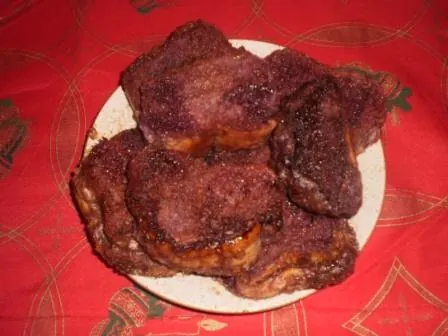
Wine-soaked rabanadas accompanying the recipe published by the Museum in 2014.
Source: Museu das Terras de Basto
Credits and options

View source

Photograph date not stated.

Individual photographer and reuse licence not stated by the source.

Request removal or correct the photo credit

A version of rabanadas preserved in Outeiro.

Explore: The bread also arrives for dessert →View ingredients and preparation →
Read here and view sources

In Dídia Teixeira’s version from Paneladas, the bread is dipped in red Vinho Verde and egg before being fried. Sugar and cinnamon accompany the layers on the serving dish.

Fátima Magalhães recorded the recipe in 2013; the Museum published it in 2014, associating it with Christmas and New Year. This version is identified with the person who shared it, without being presented as the recipe of every household in Outeiro.

Source and context

Basto Land Museum — Wine French toast (2014; 2013)

Accessed: . Editorial summary; the date of consultation is not the date of the facts.
Refojos · kitchen memory collected by the Museum

Sunday was for cabidela

A recipe from Refojos also preserves a weekly custom.

Includes an activity to try →Explore: At the table of who told the recipe →View ingredients and preparation →
Read here and view sources

Sunday was the day for cabidela in the kitchen described by Isabel Sousa, who was born and lived in Refojos. In the version she shared, chicken accompanies rice; onion, garlic, bay and parsley provide seasoning alongside white wine, blood and vinegar. The publication also preserves words used during preparation, such as estrugido and testo.

Conceição Magalhães recorded the recipe in 2013, and the Museum published it in October 2014. The mention of Sunday places the dish in a family calendar, but does not establish a rule for the whole municipality. This is the voice of an identified cook, with an occasion and her own way of describing what she made.

Words in this story: see explanations →
Source and context

Basto Land Museum — The hanger was held on Sunday, publication of 10/10/2014

Accessed: . Editorial summary; the date of consultation is not the date of the facts.
YOUR LOCAL GUIDE

What would you like to discover?

Take a closer look.