Discover Cabeceiras de BastoFree independent guide
ViveCabeceirasYOUR GUIDE TO CABECEIRAS
ENEnglish
SearchSaved

Stories of Cabeceiras

Choose a story to start with. You can change the subject or fine tune the search.

46 stories · All themes · Search: fora

A world under the leaves

A first look at the fungi. Continue in the gallery to see the local records already documented.

Choose a story · 8
General biology · feeding of fungi

A meal prepared outside

Fungi don't need a mouth to get food.

Includes an activity to try →Explore: Transform, absorb and distribute →
Read here and view sources

A fungus does not need to ingest a leaf to take advantage of its nutrients. Mycelium releases enzymes to the outside; these decompose organic matter into simpler compounds, which are then absorbed by hyphae.

The web of filaments also grows and branches. The links between hyphae allow to transport nutrients to other areas of the mycelium. Thus, what seems immobile may be exploring new spaces and redistributing resources, without seeing a mushroom on the surface.

The way to grow also accompanies the distribution of food. The presentation of the Australian National Botanical Garden describes greater branching and slower advancement in nutrient-rich zones; where these run out, the hyphae can stretch faster and branch less. The network does not always need to have the same density.

Some fungi form hyphae strings, called rhizomorphs. These can help to cross spaces between food sources, such as two separate pieces of wood. When they reach new wood, the hyphae can branch and occupy it. It is an explanation of growth strategies, not a confirmed description for any filament found on a sidewalk.

Words in this story: see explanations →
Source and context

Australian National Botanic Gardens / Centre for Australian National Biodiversity Research — The mycelium

Accessed: . Editorial summary; the date of consultation is not the date of the facts.
General ecology · mycorrhizae

Roots have partners

A trade that happens out of sight.

Includes an activity to try →Explore: The partnership between roots and fungi →
Read here and view sources

In mycorrhizae, plant and fungus establish a partnership. The plant provides organic compounds; the mycelium associated with roots helps to obtain water and nutrients.

Oaks, chestnut trees and pine trees can participate in these relationships. A nearby tree gives context to observation, but does not itself reveal the name of a mushroom.

The researcher Susana Gonçalves also distinguishes ectomycorrhizes: in these associations, the fungus involves the ends of the roots. The example helps to realize that there are different forms of relationship between plants and fungi, beyond the visible appearance of mushrooms.

The partnership expands the area from which the plant can obtain resources: the roots connect to the network of the fungus. But the relationship does not always have the same participants. There are fungi able to associate with several plants and others with very specific partners. That is why knowing the trees of a place helps to understand the environment, without replacing the identification of the fungus.

Words in this story: see explanations →See local fungal records
Source and context

Silvestrian Resource Competence Centre — General Mycology
Accessed:

Gulbenkian Garden — ecology of fungi, with Susana Gonçalves (17/04/2023)
Accessed:

Editorial summary; the date of consultation is not the date of the facts.
General knowledge · national guide

Blades, pores and other forms

Not everyone has the same drawing under their hat.

Includes an activity to try →Explore: What shape arouses your curiosity? →
Read here and view sources

The guide distinguishes groups with blades, folds, pores or specks. Naturalis describes white blades in Amanita muscaria and light pores tubes in Gyroporus cyanescens. There are two different ways to organize the surface under the hat. An isolated feature does not allow identifying a mushroom or deciding whether it can be consumed. Not everyone has a foot: some hats grow directly from wood. The guide to Australian botanical gardens also shows shapes of cup and fine coating on wood. When you observe, you can start with three questions: what is the contour, where support grows and what surface can you see without moving?

Words in this story: see explanations →
Source and context

DGADR / ICNF — Mushroom Collector's Guide, June 2013
Accessed:

Naturalis Biodiversity Center — Amanita muscaria
Accessed:

Naturalis Biodiversity Center — Gyroporus cyanescens
Accessed:

Australian National Botanic Gardens / Australian National Herbarium — Types of fungal fruiting bodies, Heino Lepp
Accessed:

Editorial summary; the date of consultation is not the date of the facts.
General ecology · wood and biodiversity

A log can be a small house

Decomposing wood is still full of relationships.

Includes an activity to try →Explore: A log opens several stories →
Read here and view sources

A fallen log is still part of the forest life. Fungus decomposes wood, which also sustains other organisms, including insect larvae. The researcher Susana Gonçalves explains that certain tree cavities result from fungal activity and can then serve as an animal shelter. A tree with cavities and a trunk on the ground offer different situations to observe. In green spaces, conserving old trees requires assessing and monitoring the risk of falling. This ecological explanation does not confirm an association between the beetle photographed in Cabeceiras and a specific tree.

But the wood does not always break down in the same way. In white rot, the fungi degrade lignin and cellulose; the wood can become clear, fibrous or spongy. In brown rot, the degradation reaches mainly cellulose and hemicellulose, becoming a brownish residue rich in lignin. The wood can become fragile and fragmented into small blocks. The University of California distinguishes these processes by the effect on the components of the wood.

White and chestnut describe decomposition, not the color of a mushroom hat. Nor are species names. A reproductive structure visible in the trunk shows only part of the story: decomposition can extend up or down and remain hidden. A photograph does not allow to measure this extension or evaluate the stability of the tree.

Words in this story: see explanations →See local fungal records
Source and context

Gulbenkian Garden — ecology of fungi, with Susana Gonçalves (17/04/2023)

University of California — Wood Decay Fungi in Landscape Trees (revised August 2019)

Accessed: . Editorial summary; the date of consultation is not the date of the facts.
General biology · reproduction

A journey hardly anyone sees

A mushroom can release thousands of spores.

Includes an activity to try →Explore: The exit and journey of spores →
Read here and view sources

The structure we see on the surface helps the fungus reproduce and disperse its spores. When they find favorable conditions, they can give rise to a new mycelium. Thus, the appearance of a mushroom is a time of a larger cycle, which remains out of our eyes. The wind and animals can carry spores. There are also fungi capable of generating independent networks from fragments of your mycelium: not all reproduction depends on spores. A spore is not a miniature seed: the American Phytopathological Society explains that it does not contain an embryo, although it has reserves to germinate.

Words in this story: see explanations →
Source and context

Silvestrian Resource Competence Centre — General Mycology
Accessed:

Royal Botanic Gardens, Kew — Mycelium: Exploring the hidden dimension of fungi, Eddie Johnston and Grace Brewer
Accessed:

American Phytopathological Society — Introduction to Fungi: reproduction and growth
Accessed:

Australian National Botanic Gardens / Australian National Herbarium — Spore release and dispersal, Heino Lepp
Accessed:

Editorial summary; the date of consultation is not the date of the facts.
General biology of fungi · no local occurrence attributed

A fungus without a hat

The world of fungi also fits under the microscope.

Explore: Three scales to discover →
Read here and view sources

Not all fungi form the mushrooms we recognize. Kew describes microfungals, including molds, which can produce spores directly in the hyphae. Therefore, searching only visible hats leaves out a part of this realm. It is an explanation of biological diversity, without identifying molds in food or plants of the municipality.

Even among fungi with larger reproductive structures, not everything appears above the ground. Kew presents truffles as an example of underground fruitification and explains the role of animals in dispersing their spores. A walk that only looks for hats on the surface shows, therefore, only a part of the diversity.

The mycelium networks also meet each other. The source distinguishes the competition between incompatible fungi from the union between compatible partners. It is another reason not to imagine the soil as a unique and undifferentiated network: there are different organisms and relationships, which a photograph of mushrooms does not reveal.

Source and context

Royal Botanic Gardens, Kew — What in earth? Understanding what fungi really are, Eddie Johnston (07/10/2022)

Accessed: . Editorial summary; the date of consultation is not the date of the facts.
General biology of fungi · no local occurrence attributed

Insect hitchhiking spores

Not the whole trip starts with the wind.

Includes an activity to try →
Read here and view sources

Some fungi have the spores in a sticky outer layer with intense smell. The odor attracts flies that can transport them elsewhere. The Australian source also describes colors that, in some cases, resemble meat and attract insects associated with it.

They are examples of dispersion, not a characteristic of all fungi or flies. They do not identify the species photographed in the municipality.

Freeing and transporting are not necessarily the same step. In passive dispersion, the fungus depends on another agent to remove spores from the reproductive structure. In the example of flies, the sticky layer gathers spores and the insect participates in transport. In other fungi, a drop can trigger release and the wind continue the journey.

Therefore, a single arrow with the word “wind” would leave part of the story out. Compare the beginning of the journey, the agent who transports and the place where the spore arrives. The arrival also does not guarantee that a new mycelium is formed: they are different stages of the cycle.

Source and context

Australian National Botanic Gardens / Australian National Herbarium — Spore release and dispersal, Heino Lepp
Accessed:

Silvestrian Resource Competence Centre — General Mycology
Accessed:

Editorial summary; the date of consultation is not the date of the facts.

General biology · example of Laetiporus sulphureus

Shears that grow in a log

The reproductive form can project itself to the side.

Read here and view sources

In Laetiporus sulphureus, Kew describes yellow reproductive structures that are available as shelves on trees. The fungus acts on the dead wood of the interior of larger trunks and branches, contributing to their decomposition. The description explains a form of growth; it does not confirm the presence of this species in Cabeceiras nor allows to recognize other fungi only by color.

Yellow belongs to the structure that is seen outside; the activity of the fungus extends to wood. Kew describes a decomposition that makes it brown and can leave cavities inside. Looking only at the shelves is therefore looking at a part of the process. The presence in a tree does not mean that all its parts are dead: the text refers to dead wood inside trunks and branches. This description does not evaluate the stability of concrete trees.

Source and context

Royal Botanic Gardens, Kew — In pictures: Fungi spotting season at Kew, Grace Brewer, 24/10/2019

Accessed: . Editorial summary; the date of consultation is not the date of the facts.

Time travel

Documents, details and traditions: there is more to discover than a date on a stone.

Choose a story · 15
Documented history · 1514

Two outcasts, seven days

October 1514 left two marks on the territory.

Includes an activity to try →Explore: Abadim: documents and marks in place →
Read here and view sources

Manuel I granted the foral of Cabeceiras in 5 October 1514 and that of Vadym, today Abadim, in 12 October. Seven days separate the documents: the administrative history of the territory goes through more than one place.

But what was the point of reviewing the outsiders? The Tombo Tower exhibition explains the general context: there were complaints about outdated charges, coins and weights and old texts difficult to interpret. Manueline reform sought to review these documents. Local dates of 1514 belong to this broader movement; it does not mean that the settlements began to exist that year.

The work also required registration and preservation. The same exhibition describes the preparation in triplicate: one copy for the chamber, one for the landlord of the rights and another for the Tower of the Tombo. This general explanation helps to understand why an administrative document could have several copies. It does not identify here the whereabouts of each copy of the two local forals.

In 5 October 2024, Casa do Tempo received a tertulia over the 510 years of the foral, with José Viriato Chapel and Porfirio Correia. The municipal news recalls the two documents and their importance for the administrative organization. The celebration is a gateway to history; it does not replace the reading of the forals themselves.

Words in this story: see explanations →
Source and context

Municipality — celebration of fora, published in 07/10/2024

DGLAB / Torre do Tombo and Casa de Bragança Foundation — O Foral Novo: records that tell stories, pp. 2 and 4 PDF

Accessed: . Editorial summary; the date of consultation is not the date of the facts.

Refojos · furniture of the sacristy

Wood inside, glow outside

The furniture of the sacristy brings together materials with different functions.

Includes an activity to try →Explore: Materials, appearance and conservation →
Read here and view sources

The municipal news about the restoration of 2014 describes two arches and two counters with brown structure, jacaranda coating and cut brass decoration. The municipality identifies Agostinho Marques, notchmaker of Braga, as the author of this work of the early 18th century. The contrast between wood and metal is a clue to look at these furniture more closely.

In 2014, the restoration separated materials and tasks: the brass elements were removed for treatment, while the wood received intervention against insects and structural corrections. After cleaning and protecting, the metallic decoration returned to the furniture. The visible brightness results from a set of care, not just adding gold. It is the report of a professional intervention, not a proposal for home treatment.

Getting to know the parish See Fact sheet: Núcleo de Arte Sacra
Source and context

Municipality — Restoration of tokers and furniture, 14/11/2014

Accessed: . Editorial summary; the date of consultation is not the date of the facts.

Pedraça · Parish memories of 1758

A Pedraça call to Coimbra

In 1758, the parish priest's choice pointed out to the council.

Includes an activity to try →Explore: Read a document, ask questions →
Read here and view sources

The parish memory describes the matrix dedicated to Santa Marinha and states that the rector was presented by the rector of the College of São Jerónimo de Coimbra. This historical link shows how a small parish was part of relations that surpassed the lands of Basto.

The same transcript places Pedraça at the end of Cabeceiras de Basto and in the district of Guimarães. It records 96 fires and 322 souls of communion, in addition to a congruity of 50 thousand réis for the rector. They are categories of the document: fires are not people, and souls of communion do not automatically equal the total inhabitants.

The numbers and connection to Coimbra show two plans of parish life: the community described and the organization that framed his parish priest. The municipal version identifies the transcription of José Viriato Chapel, published in 2003, from the Memórias of 1758.

The municipal page also distinguishes the account from the references that accompany it: it refers to the memory 296 of the volume 42 and lists an obligation to the Santa Bárbara hermitage factory, of 1624, and another linked to the Blessed Sacrament, of 1722. They are archive clues. The existence of these references does not mean that the full text of the two documents is reproduced on the page, nor transforms 1624 on a date of construction of the chapel.

Words in this story: see explanations →Getting to know the parish See Fact sheet: Igreja paroquial de Pedraça See Fact sheet: Santa Bárbara de Pedraça — capela e miradouro
Source and context

Municipality — Parish Memories of Pedraça (1758), transcript of José Viriato Chapel (2003)
Accessed:

Municipality — Parish Memories of Pedraça, 1758; transcription of José Viriato Chapel (2003)
Accessed:

Editorial summary; the date of consultation is not the date of the facts.

Heritage of Abadim

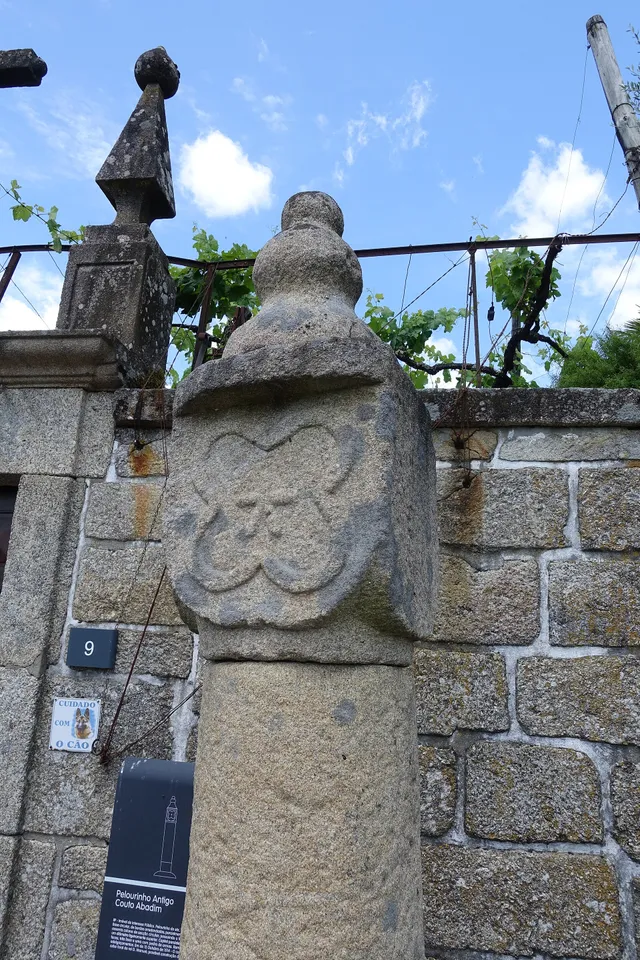
A star in the pillory

Details of the Pelourinho de Abadim in granite
Details of Pelourinho de Abadim. The star described in the text is not visible on this face.© Joseolgonⓘ

A small monument holds a history of autonomy.

Read here and view sources

The pillory of Abadim seems simple at first glance: a smooth column of granite, a cubic capite and a pear-shaped shot. But on one side you find a five-pointed star inside a four-lobe frame. The Museum links the monument to the administrative and judicial autonomy of the former Couto, extinguished in 1836. The Museum brings its construction closer to the foral of 1514, but the record of the Cultural Heritage warns that dating is difficult and that the piece can be quite later. The detail of the star invites you to look again at a piece that would easily go unnoticed.

The official record describes four faces on the capital: three undecorated and one with the star. This helps to understand why a photograph from another side may not show the best known reason. The record places the monument next to the portal of the House of Tower of Tronco and documents the classification as Public Interest Property in 1933. The date of protection is not the date of construction.

The foral, the stone age and the patrimonial classification answer different questions. Instead of automatically assigning ‘1514’ to the entire monument, compare the described form, the proposals for dating and the documents that changed its status.

Words in this story: see explanations →See Fact sheet: Pelourinho de Abadim
Source and context

Basto Land Museum / António P. Dinis — Pelourinho de Abadim, 26/01/2018
Accessed:

Cultural heritage — Pelourinho de Abadim, record 341971, historical-artistic note
Accessed:

Editorial summary; the date of consultation is not the date of the facts.

Faia · Parish memories of 1758

Chapels between the hill and the houses

The account of 1758 draws a small religious geography of Faia.

Read here and view sources

In 1758, the abbot of Faia placed Our Lady of Amparo on a hill and associated her with the captain-in-chief Manuel Baltasar de Abreu de Lima. Saint Anthony of Covilhã was presented as a chapel of the village itself, out of place. Santo António da Ribeira appeared next to the house of Leandro Machado, and Nossa Senhora da Piedade next to the house of Francisco de Moura Coimbra. The account adds that these chapels had no right pilgrimages. More than enumerating buildings, it distinguishes relationships between devotion, families and community. It is a portrait of that year, without indicating property, parties or current access conditions.

Getting to know the parish See Fact sheet: Capela da Senhora do Amparo da Faia
Source and context

Municipality — Parish Memoirs of Faia, 23/05/1758, replies 13 and 14; transcript of José Viriato Chapel (2003)

Accessed: . Editorial summary; the date of consultation is not the date of the facts.

Saint Nicholas · testimony of 1758

When the chapel shortened the path

The distance from the church also shaped the villages.

Includes an activity to try →Explore: Three Ways to Approach Places →
Read here and view sources

The memory of 1758 explains the function of three chapels: Saint Bartholomew, in Celeiró do Monte; Our Lady of Lapa, in Lapela; and Saint Anne, in Busteliberne. They served to administer sacraments to the residents who lived far from the matrix. A small building responded to a daily difficulty.

The dean Domingos Camel de Sousa describes high hills between the places and refers three settlements away half league from the church, in rough terrain. The distance was not only a line on the map: relief was part of the difficulty. The church was to spring, in a place with six neighbors, counting the house of the rector himself.

The three chapels were kept at the expense of the commendator, according to the report. But they were not the only ones: the text lists eleven chapels beyond the matrix, with different administrations and functions. In the Outeiro of Santo António, for example, it marks pilgrimages of neighboring parishes in the feasts of Santo António and Santa Luzia. The set reveals both the cult close to the residents and meetings that attracted people from outside.

Words in this story: see explanations →Getting to know the parish See Fact sheet: Busteliberne See Fact sheet: Igreja de São Nicolau de Cabeceiras
Source and context

Basto Land Museum — St Nicholas Parish Memories (1758)

Accessed: . Editorial summary; the date of consultation is not the date of the facts.

Arco de Baúlhe · railway memories

Before the train, the tiles arrived

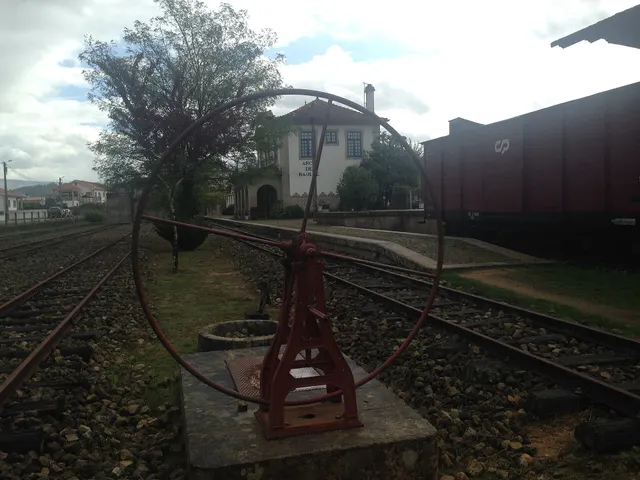
Revolving plate and tracks from the old Arco de Baúlhe station, with buildings and railway equipment at the bottom.
Facade of the station of Arco de Baúlhe, with coating and tile panels visible to the background. View of JP Ribeiro; it is not a detail of the panels of 1940.© JP Ribeiroⓘ

The station also reads on the walls.

Includes an activity to try →Explore: A station, different spaces →
Read here and view sources

The station panels were executed in 1940 by A. Lopes, at the Sant’Anna Ceramic Factory in Lisbon, according to the publication of the Basto Land Museum. They are prior to the opening of the station in 1949.

The station was a set of spaces with different functions. The publication identifies the driver's house, the staff building, the loading and unloading dock and the dispatch warehouse. The two stalls started to host permanent exhibitions of railway equipment; the warehouse is described as temporary exhibition space.

Reading the building can begin with these differences: where were they working, where were goods passing and where were they stored? The tiles are part of this built landscape. The description documents the museological organization presented in the publication, without confirming the exhibition or access of each space today.

Getting to know the parish See Fact sheet: Núcleo Ferroviário de Arco de Baúlhe
Source and context

Municipality — Land Museum of Basto: a journey through the history of the region, pp. 28–29

Municipality — Núcleo Ferroviário de Arco de Baúlhe

Accessed: . Editorial summary; the date of consultation is not the date of the facts.

Heritage of Abadim

A tower to look slowly

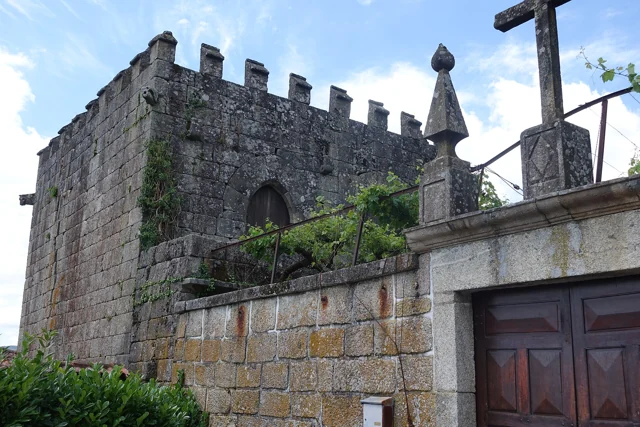
Tower of Abadim, with yellow crowning and stone constructions around.
Tower of Abadim · yellow crowning and surrounding constructions.© Joseolgonⓘ

History is also read in windows and corners.

Explore: Read the marks of power and time →
Read here and view sources

The Tower of Abadim has battlements at the top and gargoyles with animal shapes in the corners. António P. Dinis highlights the settery, the broken arch doors and, inside, conversationals next to the windows. It proposes a construction of the sixteenth century, perhaps from the foral period, without setting an exact date.

The memory of 1758 places the tower in the middle of the Village of the Tower and states that it did not suffer ruin in the earthquake of 1755. The same document describes Abadim with ordinary judge and Chamber, in an organization proper to the former Couto. Reading architecture and administration together helps to understand the importance of the building; the interior description does not confirm current access.

The text of António P. Dinis distinguishes the probable place of the medieval manor from the quintentist construction described today. It is not necessarily the same building preserved without change. The designation Casa do Tronco accompanies the hypothesis that here the justice and the chain of trust functioned.

In the memory of 1758, the election of the ordinary judge and of the House was presided over by the donate. The document also refers to the intervention of the Guimarães magistrate in correction or new scope. Thus, the existence of own organs should not be confused with an administration without relations with other authorities.

Words in this story: see explanations →See Fact sheet: Torre de Abadim / Casa do Tronco
Source and context

Basto Land Museum / António P. Dinis — Tower of Abadim, 17/01/2018

Municipality — Parish memories of Abadim, José Antunes, 22/05/1758

Accessed: . Editorial summary; the date of consultation is not the date of the facts.

Faia · settlement described in 1758

A parish told by sixteen places

In 1758, the Faia appears as a network of small places.

Includes an activity to try →Explore: A parish distributed by places →
Read here and view sources

In memory of 23 May 1758, the abbot João de Lima Lobo de Noronha enumerates sixteen places. The enumeration includes Covilhã, Augueiros, Presas, Nogueira, Candedo, Ribeiro, Outeiro, Porcarice, Faia, Togais, Souto, Ribeira, Tuesdays, Breia, Casa Nova and Joio. Situa the church out of place and describes the parish on a northern slope.

The list helps to think of a territory distributed by small cores, and not just around the matrix. Names belong to historical transcription; they are not a current administrative list or allow to draw the boundaries of each place by themselves.

The same testimony presents two counts: 99 neighbors and 418 people. The document separates them; they should not add or read “neighbours” as another total of inhabitants. It also distinguishes scales: when speaking of the municipality, the abbot refers to eighteen parishes, but declares not knowing the number of its neighbors. Knowing what the author did not tell is as useful as knowing the numbers he left.

Ribeiro and Ribeira appear as different entries. Outeiro is here in the list of places of Faia: the coincidence with the name of another parish does not authorize to shift this reference on the map. The complete list allows to compare names, while chapels help to perceive some relations between places and houses.

Source and context

Municipality — Memory of Faia, 23/05/1758; transcript of José Viriato Chapel (2003)

Accessed: . Editorial summary; the date of consultation is not the date of the facts.

Refojos · history of assistance since 1877

Care is also part of the story

Mercy was born of a local initiative in the 19th century.

Read here and view sources

The review of Santa Casa places its constitution in September 1877, with the purpose of supporting poor people who needed health care. The first statutes were approved in January 1879. In 1896 opened a hospital, replaced in the years 1950 by the Hospital Professor Julio Henriques. The institution highlights the contribution of the population to this new unit. These dates help follow a history of assistance and cooperation; they do not describe the health services available today.

Source and context

Santa Casa da Misericórdia of Cabeceiras de Basto — historical review of the institution

Accessed: . Editorial summary; the date of consultation is not the date of the facts.

Refojos · 19th and 20th century transformations

After the monks, other lives

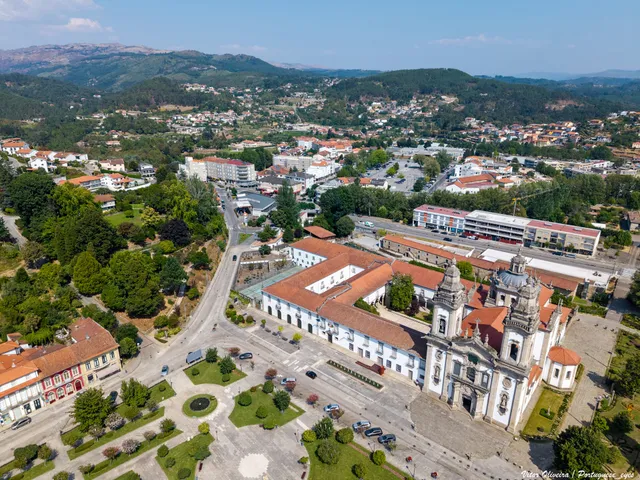
Air view of the Monastery of São Miguel and the Republic Square in Refojos
Current view of the Monastery of Refojos and the square; it is not an image of the nineteenth-century uses.© Vitor Oliveira from Torres Vedras, PORTUGALⓘ

Camera and school are also part of the history of the building.

Explore: The building changed its life by stages →
Read here and view sources

The extinction of religious orders, in 1834, changed the fate of the set of Refojos, keeping the church in the religious function. According to the municipal proposal of patrimonial candidacy, João António Fernandes Basto acquired the Monastery in public haste between 1838 and 1842. In the nineteenth century, the assembly also welcomed municipal services; in 1944, another part received a college with boarding school. Looking at the whole is also to discover how ancient buildings were adapted to administration and teaching.

The document places around 1855 the installation of the city services in the part of the cloisters. For the school area, it registers a new change of ownership in 1959, for the Conciliar Seminary of Braga. The group therefore did not have a single destination after 1834: different parts followed their own stories. The heritage proposal is here a historical source; it does not demonstrate a UNESCO classification nor confirms the current uses of each space.

Words in this story: see explanations →See Fact sheet: Mosteiro de São Miguel de Refojos
Source and context

Municipality — proposal for a heritage registration of the Monastery, pp. 9 and 11; later uses in p. 11 (candidature document, not a UNESCO classification)

Basto Land Museum — The place of the Pereiras of Refojos de Basto, 28/07/2024

Accessed: . Editorial summary; the date of consultation is not the date of the facts.

Refojos · provenance of a piece preserved in Coimbra

A cup full of characters

A small piece of gold silver holds a medieval connection to Refojos.

Read here and view sources

The Machado de Castro National Museum identifies this 12th century chalice as an offer by D. Gueda Mendes to Mosteiro de São Miguel de Refojos. The decoration invites to look at parts: in the cup are Christ and the Apostles, under round arches; at the base appear the symbols of the four evangelists. The form indicates unknown authorship and locates the piece in Coimbra. Knowing its provenance allows discovering heritage linked to Cabeceiras which is outside the municipality.

See Fact sheet: Mosteiro de São Miguel de Refojos
Source and context

Museu Nacional de Machado de Castro — Cálice, ficha da coleção no Google Arts & Culture

Accessed: . Editorial summary; the date of consultation is not the date of the facts.

Santa Senhorinha · landscape described in 1758

A valley full of names

In 1758, the parish also counted for its seats.

Includes an activity to try →
Read here and view sources

The parish report places Santa Senhorinha in a valley between the Gatiras and the Ladario. It lists places such as Rendufe, Soutelo, Outeiro Seco, Olela, Devesa and Vila Garcia, among many others. The church is described outside the village, in the middle of a field. This portrait allows you to imagine a community distributed across several cores, but retains the names and perspective of the document of 1758, without functioning as a current map.

The author also lists villages that were seen, distinguishing the position in the valley of the look from the Ladário. Visibility was part of the way of presenting the territory. A place could be described by what surrounded it and by what could be seen from a higher point, beyond its limits and names.

Source and context

Municipality — Parish Memories of Santa Senhorinha (1758), replies 4 and 6; transcription of José Viriato Chapel (2003)

Accessed: . Editorial summary; the date of consultation is not the date of the facts.

Rio Douro · places and hermits described in 1758

Fifteen places, a network of chapels

The distance from the church also shaped the lives of the villages.

Includes an activity to try →
Read here and view sources

In the memory of Rio Douro of 1758, the vicar lists fifteen places and places the church outside the village. He also refers to fifteen hermits, explaining their relationship with religious assistance to people living far from the home.

St. Stephen stayed outside Eiró; other invocations accompanied names of villages, such as Santa Ana in Toninha, São Gonçalo in Vilela and São Frutuoso in Leiradas. The document also distinguishes religious responsibilities from Refojos, private and residents. It is a historical network of places, devotions and care, without confirming the conservation or current access to each building.

Source and context

Municipality — Parish Memoirs of Rio Douro, António Carneiro da Costa, 22/05/1758

Accessed: . Editorial summary; the date of consultation is not the date of the facts.

Cavez · history of the bridge of Moimenta; current conditions not verified

Two seasons on the same bridge

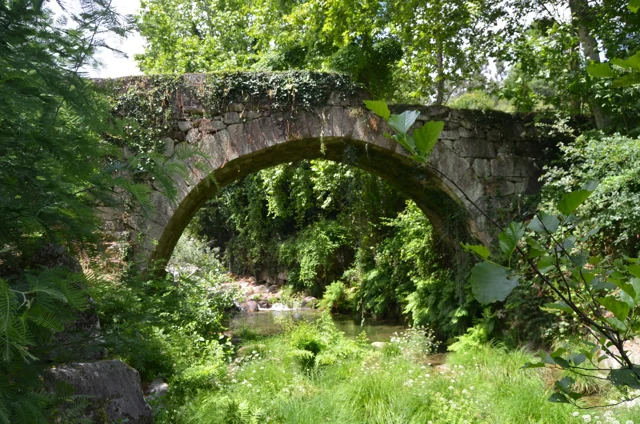
Ponte antiga de Moimenta in Cavez: stone arch over the river, surrounded by vegetation, photographed in June 2020.
Moimenta Bridge, photographed by Pedro at 11 June 2020. A crossing record other than Ponte de Cavez over Tâmega.© Pedroⓘ

In Moimenta, the ancient stone coexists with an intervention of 1990.

Read here and view sources

An ancient bridge can continue to change. The municipality attributes medieval origin to the bridge of Moimenta in Cavez, and describes a single round arch.

In 1990, the passage was extended about one meter: it received a concrete structure on the downstream side and the guards were changed. The photograph allows to begin to observe the crossing; the date of the intervention comes from the documentary description.

Words in this story: see explanations →See Fact sheet: Ponte antiga de Moimenta
Source and context

Municipality — Cultural heritage, bridges of Arco de Baúlhe and Moimenta

Accessed: . Editorial summary; the date of consultation is not the date of the facts.

Life you do not always see

Knowing animals begins by perceiving the territory and respecting the distance.

Choose a story · 9
Cavez · record from 2016–2017 and general biology

A fish’s menu can include insects

Feeding connects life in and out of the water.

Includes an activity to try →Explore: Who feeds on what? →
Read here and view sources

The chart of the ICNF describes the embroidery, complex Squalius alburnoids, as a consumer mainly of insect larvae. In summer and early autumn, it refers to higher consumption of terrestrial insects. It is a small link between the river and its margins. The embroidery appears in the study of Cavez of 2016–2017 under the name Iberocypris alburnoides; the local study did not analyze this seasonal change in feeding.

The same chart describes the use of rivers and streams with diverse characteristics, including small and shallow courses with emerging aquatic vegetation. The habitat is not only water: shelters, vegetation and alternation of zones with different current speeds enter history.

Therefore, a margin totally devoid of vegetation changes more than the view. The chart associates the loss of riverside vegetation with the reduction of shade, shelter and feeding sites. These general ecological relationships help to interpret the river; they are not a current evaluation of a section of Cavez. The local record of 2016–2017 and the biological explanation answer different questions: where the fish was documented and how it relates to the environment.

Source and context

ICNF — embroidery, ecology and riverside vegetation, pp. 2–3 (bibliography up to 2005)
Accessed:

Biosphere / Iberdrola, APA file — Monitoring of ichthyofauna 2016–2017, February 2018; pp. 5, 35 and 40, station record 22 on p. 175 PDF
Accessed:

Editorial summary; the date of consultation is not the date of the facts.

Badger · general biology

A home beneath the ground

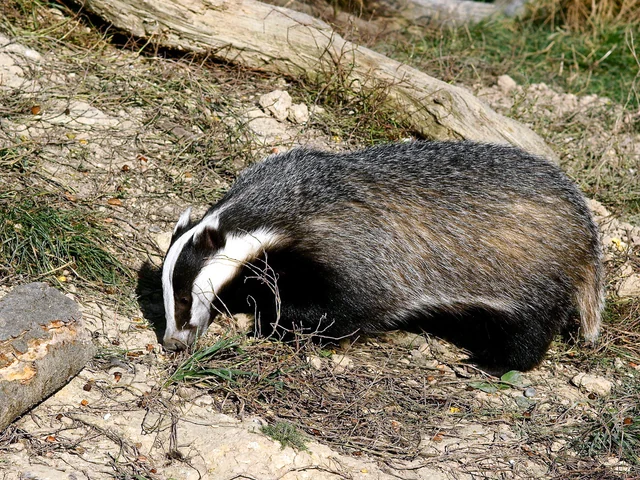
Badger with gray body and head with light and dark bands, next to the ground.
Badger at the British Wildlife Centre in Newchapel, Surrey, UK, in 2011. Animal in fauna park; not a record of Cabeceiras.
Photography: Peter Trimming · CC BY 2.0
About this photograph

Date given at source: . Source consulted in 2026-11-07. EXIF orientation, proportional resizing and WebP conversion of the current version in Commons; no retouching or additional clipping.

Request removal or correct the photo credit

Badgers spend much of their lives out of our sight.

Includes an activity to try →Explore: For the thorns and life in the water →
Read here and view sources

The badger (Meles meles) has mainly nocturnal activity and shelters in extensive underground burrows. The two dark bands on the white head are a striking visual clue; the short legs have strong claws. The Virtual Museum of Biodiversity describes its presence in forests, forests and agricultural landscapes with vegetation. This chart explains the species in mainland Portugal; it does not document an observation in Cabeceiras de Basto. The claws are long and not retractable: they do not collect like those of the cats. The tail is short and clear, another contrast with the fox's long tail. These details help compare descriptions without searching or disturbing burrows.

Source and context

University of Évora — Virtual Museum of Biodiversity: Meles meles

Accessed: . Editorial summary; the date of consultation is not the date of the facts.

Species recorded in the municipality · general ecology

An old trunk still nourishes life

For beetle larvae, decaying wood can be both home and food.

Includes an activity to try →Explore: A photograph, several phases of history →
Read here and view sources

The larvae of Dorcus parallelipipedus live and feed on decomposing wood, according to The Wildlife Trusts. The photograph of the catalogue documents an adult observed in the municipality; it shows no larvae or confirms the tree where they developed. Add this story to that of wood fungi: an aging trunk can sustain different life forms. To observe, you don't have to undo your shelter. In the adult, The Wildlife Trusts highlights the wide head, jaws, and wing covers entirely black. They are clues to compare with the available photograph, without concluding that all dark beetles belong to this species.

Source and context

The Wildlife Trusts — Lesser stag beetle, Dorcus parallelipipedus
Consultations: ,

Editorial summary; the date of consultation is not the date of the facts.

Bucos · an account from 1758

Animals in an old portrait

An account of the mountains written in 1758.

Includes an activity to try →
Read here and view sources

The vicar of Bucos mentions partridges, rabbits, wolves, foxes and wild boars, which he describes as sparsely plentiful. He points out carqueja, heather and tojo on the hills. It is the landscape that recorded at that time, not a current inventory nor a promise to spot these animals.

The memory also mentions goats as the most abundant cattle and some large cattle. Thus, the same document gathers farm animals and fauna that the vicar describes as hunting. Separating the two groups helps to read the rural life of the period.

The expression of little abundance is an appreciation of the author, without method of counting presented. It does not allow directly to compare 1758 with a census of current fauna. The interest of the report is also in what you choose to observe: animals, forests, terrain and uses of the mountains appear together.

Source and context

Municipality — Parish memories of Bucos (1758)

Accessed: . Editorial summary; the date of consultation is not the date of the facts.

Serra da Cabreira · regional reference and species biology

A newt between water and land

Its skin also changes with its surroundings.

Includes an activity to try →Explore: From egg to change of environment →
Read here and view sources

The orange triton, Lissotriton boscai, has smoother skin in the aquatic phase and more rough in the terrestrial phase. To reproduce it can use ponds, streams of little current and even tanks. Out of water finds refuge in moist places, between roots, stones and trunks. The orange belly helps explain the name.

It is mentioned among the amphibians of the Cabreira by the municipal portal of Vieira do Minho, without an associated observation point.

The description of the University of Évora refers to four fingers on the front legs and five on the back, besides a flattened tail laterally. They are characteristics of the species, not a reason to remove it from the water. The same source indicates a total length up to nine centimeters and females usually larger and more robust than males.

Also the mating season can change the look. The University of Évora describes a small crest on the tail and, in males, a whitish longitudinal strip, more marked next to the end. Compare two images therefore requires attention to sex and the phase of the year, besides the name of the species. Not all visible differences mean animals of different species.

Food follows the change of environment. According to the Charcos with Life project, larvae and aquatic adults capture small invertebrates from the water; on land, adults eat mostly soft-body animals, such as worms and slugs. The female lays eggs individually on aquatic plants or leaves, over several days. The scheme below connects these phases without assigning them dates of occurrence in the Cabreira.

Source and context

University of Évora — Virtual Museum of Biodiversity, Lissotriton boscai

Vieira Tourism of Minho — fauna of Serra da Cabreira, regional reference

Charcoals with Life / CIIMAR — Orange belly triton, life cycle and feeding

Accessed: . Editorial summary; the date of consultation is not the date of the facts.

Serra da Cabreira · regional reference and species biology

Bright colours, a quiet whistle

There is more to a bullfinch than its plumage.

Read here and view sources

The Pyrrhula pyrrhula male combines pink breast and black twig; the female has more discrete tones. The British Trust for Ornithology describes a soft call, in an isolated whistle, and the consumption of fruit tree shoots in the spring. Vieira municipal portal of Minho includes the gift-fafe among the Cabreira birds. This reference covers the mountains, without confirming an occurrence in a parish or route of this guide.

Reproduction has different stages. In the nesting and nesting data gathered by the BTO, the typical posture has four to five eggs and incubation, ensured by the female, usually lasts 14–16 days. After hatching another phase begins: the development of the cubs until they leave the nest. The published intervals are not a calendar for the Cabreira.

The chart also allows distinguishing a typical value from the observed extremes. A posture outside the most usual number does not automatically belong to another species. To read nature, it is important to know what was measured, in which population and with what variation.

Words in this story: see explanations →
Source and context

British Trust for Ornithology — BirdFacts: Bullfinch, Pyrrhula pyrrhula

Vieira Tourism of Minho — fauna of Serra da Cabreira, regional reference

Accessed: . Editorial summary; the date of consultation is not the date of the facts.

Reptiles · general biology, without a confirmed local record in this profile

One snake can have different patterns

Snake with the body wavy to the surface of the water, between blue reflexes and small ripples.
Viperine water snake swimming in Extremadura, Spain, in 2022. Illustration of the species; not a record of Cabeceiras.
Photography: Charles J. Sharp · CC BY-SA 4.0
About this photograph

Date given at source: . Source consulted in 2026-11-07. EXIF orientation, proportional resize and WebP conversion; no retouching or new clipping of file obtained in Commons.

Request removal or correct the photo credit

The viperine snake’s back does not always have the same pattern.

Includes an activity to try →Explore: The same environment, different ways of life →
Read here and view sources

Natrix maura may present a zigzag stripe, but also a pattern of two clear longitudinal lines. The Spanish biodiversity inventory still describes variation in body tones. A single design does not summarize all individuals of the species.

The chart of the Northern Coastal Natural Park explains the connection to rivers, ponds, streams and other aquatic environments, without excluding displacements on land. It is a general context about the species: it is not an observation in Cabeceiras. Reading compares variation and habitat; it is not a key to identifying snakes found in the field.

The Charcos com Vida project describes a feed mainly in water: invertebrates, larvae and adults of amphibians and small fish enter the menu. The aquatic environment is, thus, a feeding space, besides displacement. The same snake can be preyed on birds and mammals; taking the place of predator does not remove it from the food network.

It is usually daytime, but in summer it can maintain activity at dusk or during the night. Behavior also changes before a threat: the record refers to the expansion of the head and other defensive signs that contribute to the similarity with a viper and to the common name. This explanation of the name does not allow to decide the species or safety of a meeting by the shape of the head.

Words in this story: see explanations →
Source and context

Inventory Español del Patrimonio Natural y la Biodiversidad — Natrix maura, description of the species

Co-management of the Northern Coastal Natural Park — Reptiles and amphibians, record of the viperine water snake

Lived Chargings — Viperine Water Cobra, Feeding and Behaviour

Accessed: . Editorial summary; the date of consultation is not the date of the facts.

Refojos de Basto · local record and general biology

A bird of prey with a varied menu

The common buzzard searches for food from the sky and on the ground.

Includes an activity to try →Explore: From perch to landscape →
Read here and view sources

Ecovore’s photograph shows Buteo buteo perched among branches in a record dated 1 July 2025. Comparing the published location with CAOP2025 places it in the parish of Refojos de Basto. The image lets us observe a perched bird; it does not show a hunt.

Also known in Portuguese as águia-d’asa-redonda, this bird of prey can vary greatly in the amount of white and brown in its plumage. The University of Évora describes a species resident in mainland Portugal, joined by wintering birds from northern Europe. Colour alone does not settle every identification.

The BTO describes a diet that makes use of available prey: rabbits and small mammals, but also birds, amphibians, large insects and earthworms. Searching for food can bring the buzzard down to the ground. Compare it with Montagu’s harrier: two birds of prey can share some foods without having the same way of life.

Source and context

University of Évora — Buteo buteo: plumage and distribution

British Trust for Ornithology — BirdFacts: Buzzard

Accessed: . Editorial summary; the date of consultation is not the date of the facts.

Cavez · local record and general biology

One shell, many patterns

Snails of the same species do not all wear the same pattern.

Includes an activity to try →
Read here and view sources

João Lima photographed this snail on 15 May 2024. The record is identified as Cepaea nemoralis, and comparing its published point with the CAOP2025 boundaries places it in Cavez. In the image, dark bands follow the shell’s whorls among wet leaves.

The Carnegie Museum of Natural History describes a shell that can have bands of different widths or no bands at all. The lip of the opening is usually brown, but not always. The species can also be confused with Cepaea hortensis. Colour, pattern and shape need to be considered together; a photograph that hides the opening leaves some clues out of sight.

Try following the spiral with your eyes. You do not need to move the animal to discover a pattern.

Source and context

Carnegie Museum of Natural History — Cepaea nemoralis

Accessed: . Editorial summary; the date of consultation is not the date of the facts.

The flavours of Cabeceiras

From the garden to the pot, from the oven to the table.

Choose a story · 2
Pedraça · testimony of 2011

At Christmas, he would turn to the fireplace.

A family gesture kept the old pot alive.

Explore: The year also sat at the table →
Read here and view sources

In 2011, Maria da Conceição Gonçalves Mouta already cooked in gas stove and stainless steel pans. However, the whole meal returned to the fireplace and to the three-legged pots.

The collection in Recovos, Pedraça, also notes that it sometimes resumed this way of cooking outside Christmas. The old utensil continued to take place in a kitchen that had changed. It is a family memory, not a custom attributed to all the houses of the municipality.

Getting to know the parish
Source and context

Basto Land Museum — testimony of Maria da Conceição Gonçalves Mouta, collected by Maria de Fátima Carvalho in 2011

Accessed: . Editorial summary; the date of consultation is not the date of the facts.

Refojos · family memory published in 2020

A recipe that has crossed continents

The lemon cookies came with a family story.

Includes an activity to try →Explore: Three sweets, a family memory →View ingredients and preparation →
Read here and view sources

Alcina Teixeira found recipes of Cabeceiras in a Portuguese magazine during the years in Mozambique. Cookies arrived at the Museum through the son Mário, resident in Refojos, and were published in 2020.

The family also kept the honey cake and the Cassians. Compare these recipes allows you to follow the journey of a knowledge between a magazine, family cuisine and public disclosure.

Source and context

Basto Land Museum — Lemon biscuits Cabeceiras (2020)

Accessed: . Editorial summary; the date of consultation is not the date of the facts.

Read the landscape through the plants

Trees, forests, vineyards and fields reveal different ways of occupying the territory.

Choose a story · 5
Refojos · monastic landscape

Beyond the church, cultivated land

Air view of the Monastery of São Miguel and the Republic Square in Refojos
View of the Monastery of Refojos and the urban surroundings. It is a context image, not a reconstruction of the cultivated fence.© Vitor Oliveira from Torres Vedras, PORTUGALⓘ

Vegetable gardens, orchards and medicinal plants formed part of the monastery grounds.

Includes an activity to try →Explore: The fence continues in other stories →
Read here and view sources

According to the municipal description of 2021, vegetable gardens, orchards, medicinal plants, fields and woods made up the former grounds of Refojos Monastery. Its pharmacy supplied other Benedictine monasteries, including Tibães. Beyond the church, there was land to cultivate and medicine to prepare. This is a historical portrait of the grounds, not an inventory of today’s plants.

The same description places the Penoutas stream beside and behind the monastery, near former agricultural buildings now adapted as museum spaces. Water and working buildings broaden the view: the story of the complex extends beyond worship.

The former grounds can no longer be read as one intact garden. The source draws attention to scattered traces. Distinguishing what the document describes from what a photograph shows is part of the discovery: a view of the square does not reconstruct vanished vegetable gardens, orchards or medicinal plants.

Words in this story: see explanations →Getting to know the parish See Fact sheet: Mosteiro de São Miguel de Refojos
Source and context

Municipality — historical gardens, news of 21/05/2021

Accessed: . Editorial summary; the date of consultation is not the date of the facts.

General botany · getting to know gorse

A shrub with well-defended branches

Spines are part of the gorse’s silhouette.

Includes an activity to try →Explore: From the bush to the seasons and cattle →
Read here and view sources

Common gorse, Ulex europaeus subsp. europaeus, is a strongly spined shrub that can reach two metres. The Barcelos Arboretum profile associates it with heathland, hedges and scrub edges and mentions winter flowering. Scrub landscapes can therefore have flowers outside spring.

The same source records uses as fodder, cattle bedding and fuel. These uses belong to the general plant description; they do not document a specific practice in Cabeceiras. The municipality mentions gorse in the mountain landscape without identifying the species in each place.

The Arboretum describes leaves transformed into spines and branching that may be open or compact. The outward shape becomes more interesting when we ask which plant part each structure comes from. For gorse, the profile mentions modified leaves; in butcher’s broom, what looks like a leaf is a flattened stem. In carqueja, green stems also take part in photosynthesis. Comparing these stories helps us look beyond the silhouette.

Source and context

Arboreto de Barcelos — Ulex europaeus subsp. europaeus

Municipality — landscape and vegetation

Accessed: . Editorial summary; the date of consultation is not the date of the facts.

Flora · general description of Arundo donax

Giant reed continues below ground

Below the stems lies another part of the plant.

Explore: From margins to monitoring →
Read here and view sources

Giant reed, Arundo donax, is a large perennial grass. ICNF describes robust, hollow stems that can reach six metres and a rhizome structure extending underground. Knowing the unseen part helps us look beyond the tall stems of a reed bed. The national distribution in the profile does not confirm a record at any particular place in Cabeceiras.

Flowers occur in large, branched, violet-tinged clusters; the profile gives August to October as the flowering period. Leaves are long, narrow and pointed. The description helps distinguish three plant parts: tall stems, the leaves along them and the flowering structures.

Flowers and viable seeds are not the same thing. ICNF describes fruits that do not produce viable seeds outside the native range. Seeing a flowering reed bed is therefore not enough to establish how it is spreading. The underground structure remains part of the question.

Source and context

ICNF — SIVEEI, Arundo donax; updated record 09/03/2023

Accessed: . Editorial summary; the date of consultation is not the date of the facts.

Parque Urbano · planting documented in 2022

Fruit trees found a place in the park

Codornos, Pipo de Basto and Verdeal: names to remember.

Read here and view sources

On World Tree Day in 2022, the council reported planting fruit trees identified as Codornos, Pipo de Basto apple and Verdeal apple in the town’s Parque Urbano. Local associations sponsored the trees in an initiative that also included strawberry trees, olives and nettle trees. The report connects public space with fruit names and community participation. It records planting in March of that year; it does not confirm every tree’s survival or authorise picking fruit.

Source and context

Municipality — World Tree Day and plantation in Urban Park, 21/03/2022

Accessed: . Editorial summary; the date of consultation is not the date of the facts.

Sobreira · landscaping documented in 2016

Three cork oaks offer a clue to the name

At Rotunda da Sobreira, plants help tell the story of the place.

Read here and view sources

In June 2016, the municipality announced completion of landscaping at Rotunda da Sobreira, at an entrance to the town. Three cork oaks were planted in the centre and rosemary in the granite beds. The report linked the choice of cork oak to the possible origin of the name Sobreira. This is the source’s interpretation, not a demonstrated etymology. The account documents a landscaping choice in 2016 without confirming each plant’s current condition.

Source and context

Municipality — Urban arrangement of the Sobreira Rotunda, 22/06/2016

Accessed: . Editorial summary; the date of consultation is not the date of the facts.

Between rivers and mountains

Water and relief form the municipality. Choose a name and follow the landscape.

Choose a story · 3
Rio Douro · water uses in 1758

In summer, the water took other paths

The levadas linked the flow of rivers to the work of the fields.

Includes an activity to try →Explore: Water connected jobs and places →
Read here and view sources

The memory of 1758 describes the two rivers of Rio Douro running all year round, but arriving at the end of the course with little water in the summer. The vicar linked this decrease to the many levadas that supplied the fields. Dams, waterfalls and mills comprised a landscape of various works.

The crossings also varied: the report mentions wooden bridges between places and the church, as well as stone bridges in Teixeiras and Vilela. The margins were not just production spaces; it was necessary to move from one side to the other. This historical enumeration does not identify surviving structures or current accesses.

The document also explains why boats did not circulate: there were stones, waterfalls and dams, and insufficient flow for navigation. A river could be important for the economy of the parish without being a river transport route.

On the cultivated shores, the report mentions vine oaks; outside the fields, urzeira forests. Thus, the water helped to organize a landscape in which cultivation, vegetation and equipment were found. The answer was signed in 22 May 1758: summer is described as usual behavior, not as a measurement carried out this summer.

Words in this story: see explanations →Getting to know the parish
Source and context

Municipality of Cabeceiras de Basto — Parish memories of 1758: Rio Douro

Municipality — Parish Memoirs of Rio Douro, António Carneiro da Costa, 22/05/1758

Accessed: . Editorial summary; the date of consultation is not the date of the facts.

Bucos · testimony of 1758

Two rivers lost their name

The water connected the mountains, the mills and the fields.

Includes an activity to try →Explore: Follows water of Bucos →
Read here and view sources

The vicar of Bucos described in 1758 two courses that eventually lost their name when entering the river of São Nicolau. One was Porto Souto, coming from the mountains of the Apple; the other, called the river of Millos, had origins referred to in Carrazedo and Figueiró do Monte.

The report combines water and work: cultivated margins, grain mills and water use in agriculture. It also mentions small wooden frames. Reading these elements together helps to imagine the links between fields, crossings and grinding. The names and uses belong to the document of 1758; they do not automatically identify the courses or structures that are on the ground today.

Porto Souto is described running all year, despite the reduced flow, with small falls on the north to south route. The other course had a more serene current. The vicar registers trouts and escalates in both: his attention passes from the movement of water to the fish and from there to the cultivated shores. It is not necessary to imagine a large river to understand the importance of these water lines in the life of the parish.

The text also allows us to compare two crossing scales: the Casares bridge, on a busy road, and pedestrian passages made with a single wooden beam. The author highlights the need to improve the first one. The river is thus linked both to the daily work of farmers and to the circulation out of the parish.

Getting to know the parish
Source and context

Municipality — Parish memories of Bucos (1758)

Accessed: . Editorial summary; the date of consultation is not the date of the facts.

Cabeceiras de Basto · windmill architecture studied in 2011

Above, the grinding; below, the movement

A mill is also organized vertically.

Includes an activity to try →Explore: From the water to the building →
Read here and view sources

The study published by the Museum in 2011 describes two levels in the mills of Cabeceiras: above is the mill; below, in the cabouco, the motor mechanism. The form of the building accompanies the operation of the mill. The survey records rectangular plants of varied dimensions, with the exception of a circular plant sour.

The granite dominates the walls, but not all the stone receives the same treatment. The study highlights the points subject to constructive requirements: corners, doors, windows and elements through which the water passes. In the wedges, the stones help to lock the construction; pads and shoulder pads frame the spans. An irregular wall can thus coexist with carefully chosen pieces.

This description belongs to the historical study, not to an inspection of the current buildings. To read the landscape, start with the route of the water and then ask where were the motor force and the work of grinding.

Words in this story: see explanations →
Source and context

Basto Land Museum — Mills Cabeceiras de Basto: construction form, 04/05/2011

Accessed: . Editorial summary; the date of consultation is not the date of the facts.

Crafts and memories

In the hands, at the table and in the community: little stories of how one lives and what one transmits.

Choose a story · 4
Vila Nune · communications in 1758

The news had day to come

The post office linked Vila Nune to Porto through two support points.

Includes an activity to try →
Read here and view sources

In the Parochial Memoirs of 1758, the vicar of Vila Nune tells that the residents resorted to the post office of Raposeira, in the couto of Refojos, and Mondim. They arrived from Porto on Monday and left on Thursday. The news had its own paths and days: communicating also required waiting.

The vicar located each of the two points of mail about a league. The indication approximates service and distance: it was not enough to know when news came, it was also necessary to have a place outside the parish. The report does not say who carried the letters between that point and each resident.

When comparing documents there is a difference: Santa Senhorinha also resorted to Raposeira, but his abbot mentions arrival on Tuesday. We keep the two versions. Only these answers do not allow to decide whether the difference is due to the way of describing the service, an error or other circumstance.

Getting to know the parish
Source and context

Municipality — Parish Memoirs of Vila Nune, 23/05/1758

Municipality — Memória de Santa Senhorinha, 23/05/1758, replies 15, 19 and 20; transcription of José Viriato Capela (2003)

Accessed: . Editorial summary; the date of consultation is not the date of the facts.

Gondiães · documented transformations in 2012

Broa changed tool

Tradition also incorporates new ways of working.

Includes an activity to try →
Read here and view sources

The record of 2012 contrasts the wood mass to the mechanical crusher then used in Gondiães. It also recalls the passage from the community oven to the House of Martyr.

The ingredients, previously offered by the inhabitants, began to be bought. The transformation of the tools and supply coexisted with the collective preparation of the party.

The help also came from those who lived outside. The Museum collected testimonies from emigrants from Lyon to participate and collaborate. Among the tasks remembered were carrying flour and carrying wood. The move to the mechanical crusher did not eliminate these works: machinery, materials and people remained part of the same preparation.

Words in this story: see explanations →Getting to know the parish
Source and context

Basto Land Museum — Visit to the Feast of Popes, published in 22/01/2012

Accessed: . Editorial summary; the date of consultation is not the date of the facts.

Casa da Lã and Women of Bucos · knowledge sharing, 2024–2026

The wool of Bucos also travels by the hands of those who teach

Preserving a trade includes showing it to other people.

Includes an activity to try →Explore: Meetings that share knowledge →
Read here and view sources

In 10 October 2026, the women of Bucos participated in the Wool Cycle in Santo Tirso, representing Casa da Lã. The news from the Museum describes demonstrations of fiber preparation, spinning and weaving. It is a documented episode of the transmission of this knowledge outside the municipality, not an announcement of a future activity.

The sharing had already passed through Casa da Lã in 14 March 2024: the Women of Bucos received the Women of Atelier Pontinhos, from the Interpretative Center of Mines of Borralha, at a meeting dedicated to this work.

In 6 June 2026, Casa da Lã received the Day of Sweating. The news published two days later describes demonstrations guided by Women of Bucos, with public participation and collaboration from the Board of Freguesia. It is another documented example of learning between generations, not a date of future activity.

The transmission also approached Bucos of Rio Douro. In the report of 21 October 2024 on the workshop From Wool to Yarn and Feltro, in Landra, the Municipality records the participation of women of Bucos. They showed tasks like washing, squabbling, carding and spinning. The initiative integrated the Saber a Terra project, which articulated learning, artistic creation and relationship with local ecosystems. The news announced another session for the following weekend; this forecast is not treated here as proof of realization.

See Fact sheet: Casa da Lã
Source and context

Basto Land Museum — Women of Bucos promote ancestral wool art in Santo Tirso, 2026-10-14

Museum of Lands of Basto — “The wool that unites us” brought together women from Bucos and the Mines of the Rubber Casa da Lã, 2024-03-19

Basto Land Museum — shear day Bucos, 2026-06-08

Municipality — From Wool to Yarn and Feltro, Landra in Riodouro, 21/10/2024

Accessed: . Editorial summary; the date of consultation is not the date of the facts.

Basto Land Museum · inventory published in 2016

Two containers to carry the light

Before lighting up, we had to transport the oil.

Explore: Liquids with different tasks →
Read here and view sources

The inventory published by the Museum in January 2016 presents two oil almotolias, identified as MTB 436 and MTB 226. The function recorded is to transport oil. Both are metal and have the same dimensions indicated: 17,5 cm in height and ten in diameter.

The coincidence of the measures does not transform two pieces into one. Each inventory number allows distinguishing the object and associating it with its record. The Basto Land Museum appears as owner of both; the text does not indicate manufacturer, production date or home where they were used.

It is a way of looking backstage at lighting: besides the lamp, there were containers to carry the fuel. This reading documents historical objects without proposing their current use.

Source and context

Basto Land Museum — Latoaria in Cabeceiras de Basto V, 18/01/2016, MTB 436 and MTB 226

Accessed: . Editorial summary; the date of consultation is not the date of the facts.

YOUR LOCAL GUIDE

What would you like to discover?

Take a closer look.