Discover Cabeceiras de BastoFree independent guide
ViveCabeceirasYOUR GUIDE TO CABECEIRAS
ENEnglish
SearchSaved

Story

Choose a story to start with. You can change the subject or fine tune the search.

9 stories · Time travel · Search: madeira

Time travel

Documents, details and traditions: there is more to discover than a date on a stone.

Choose a story · 9
Refojos · furniture of the sacristy

Wood inside, glow outside

The furniture of the sacristy brings together materials with different functions.

Includes an activity to try →Explore: Materials, appearance and conservation →
Read here and view sources

The municipal news about the restoration of 2014 describes two arches and two counters with brown structure, jacaranda coating and cut brass decoration. The municipality identifies Agostinho Marques, notchmaker of Braga, as the author of this work of the early 18th century. The contrast between wood and metal is a clue to look at these furniture more closely.

In 2014, the restoration separated materials and tasks: the brass elements were removed for treatment, while the wood received intervention against insects and structural corrections. After cleaning and protecting, the metallic decoration returned to the furniture. The visible brightness results from a set of care, not just adding gold. It is the report of a professional intervention, not a proposal for home treatment.

Getting to know the parish See Fact sheet: Núcleo de Arte Sacra
Source and context

Municipality — Restoration of tokers and furniture, 14/11/2014

Accessed: . Editorial summary; the date of consultation is not the date of the facts.
Holy Lady · memory of 1758

Not all bridges were stone

The wood also united the banks.

Read here and view sources

The memory of 1758 lists three wooden bridges in the parish: Vagalhafos, in Quinta de Vila de Lobos; Santa Senhorinha, near the church; and Olela. Names approach the crossings of the farms, the place of worship and the inhabited places.

The same report mentions singing bridges in São Clemente and São Martinho do Arco de Baúlhe. Wood and stone appear, thus, in a single description of the river. The enumeration does not provide construction dates nor proves the survival of structures.

Words in this story: see explanations →
Source and context

Municipality — Memória de Santa Senhorinha, 23/05/1758; transcript of José Viriato Chapel (2003)

Accessed: . Editorial summary; the date of consultation is not the date of the facts.
Heritage of Outeiro · account published in 2012

A Medieval Image Found On Earth

Wood can keep centuries of memory.

Includes an activity to try →Explore: Three moments, different dates →
Read here and view sources

A municipal report of 2012 highlights a sculpture of Santa Maria belonging to the church of Outeiro, dating from the 13th or 14th century. The Virgin appears crowned, seated on a throne, with the Child on his knees. The account says that the play was found buried in the place known as Mata da Santa and taken by parishioners to church. The news doesn't date the discovery. This story allows to know the path of the image, without confirming where it is currently exposed.

Words in this story: see explanations →See Fact sheet: Igreja de Santa Maria Maior de Outeiro
Source and context

Municipality — Parish of Outeiro exposes acquis No Núcleo de Arte Sacra, 09/10/2012

Accessed: . Editorial summary; the date of consultation is not the date of the facts.
Refojos · medieval origins

A monastery older than certainty

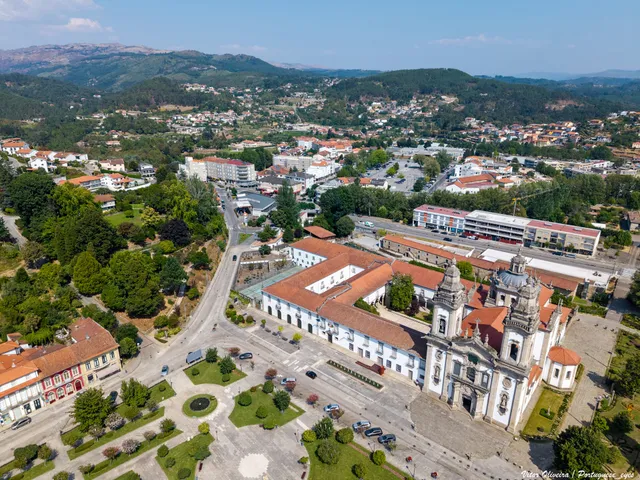
Air view of the Monastery of São Miguel and the Republic Square in Refojos
The Monastery of Refojos and the square, in a current view.© Vitor Oliveira from Torres Vedras, PORTUGALⓘ

Not all stories begin with an exact date.

Explore: A monastery, several stories →
Read here and view sources

The Monastery of Refojos already existed in the early 12th century, but the municipal review does not fix the foundation. It questions the traditional assignments to Hermínio Fafes and Gomes Soeiro.

The source links the medieval patronate to noble families in the region. Separate two questions: when we know the monastery existed and when it was founded. A documented date of existence does not solve the second question by itself.

See Fact sheet: Mosteiro de São Miguel de Refojos
Source and context

Municipality — history and art of Mosteiro de São Miguel de Refojos

Accessed: . Editorial summary; the date of consultation is not the date of the facts.
Refojos · art and architecture

Two organs, one of them mute

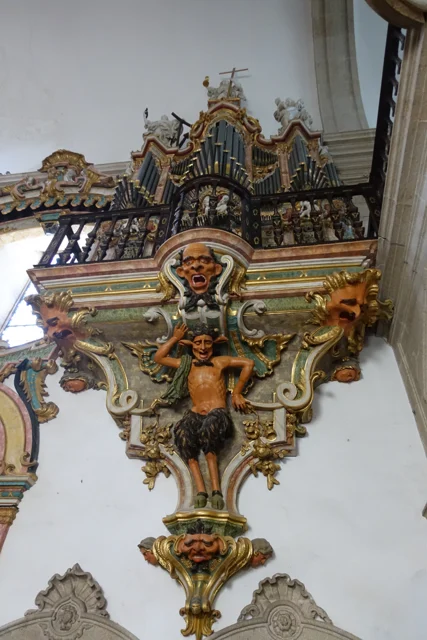
Organ with tubes and golden cut, on carved figures and decorative faces.
View of the organ and the decoration that sustains it, photographed in 2016. The image does not determine which of the two organs is the mute.
Photography: Joseolgon · CC BY-SA 4.0
About this photograph

Date given at source: . Source consulted in 2026-11-07. EXIF orientation, proportional resizing and WebP conversion; no retouching or clipping of the file.

Request removal or correct the photo credit

See more 2 photos and details
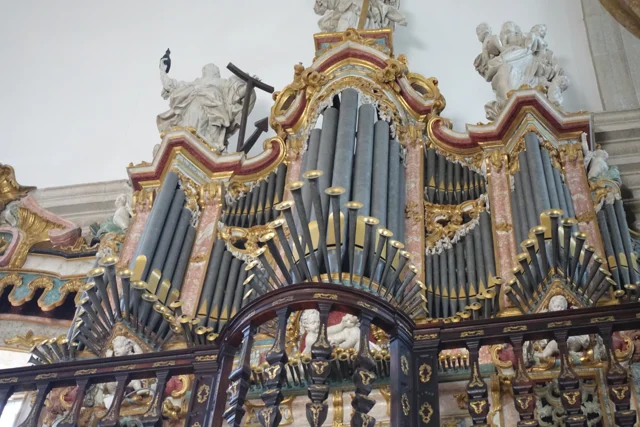
Organ tubes at different heights, surrounded by golden cut and light sculptures.
Details of the tubes, cut and sculptures of the organ in 2016.
Photography: Joseolgon · CC BY-SA 4.0
About this photograph

Date given at source: . Source consulted in 2026-11-07. EXIF orientation, proportional resizing and WebP conversion; no retouching or clipping of the file.

Request removal or correct the photo credit

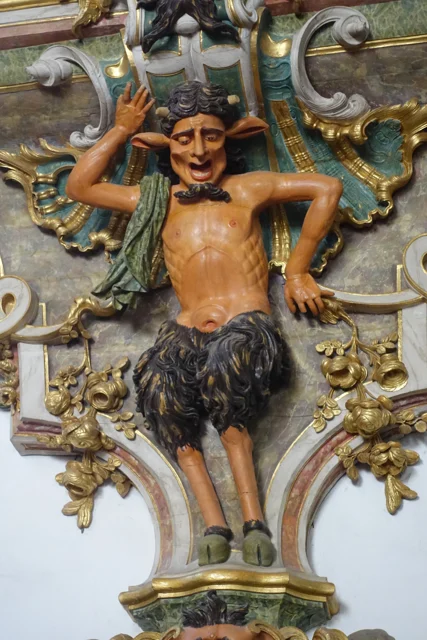
A figure carved with horns, pointed ears and fur-covered legs between golden elements.
Details of a figure carved under the organ in 2016.
Photography: Joseolgon · CC BY-SA 4.0
About this photograph

Date given at source: . Source consulted in 2026-11-07. EXIF orientation, proportional resizing and WebP conversion; no retouching or clipping of the file.

Request removal or correct the photo credit

An invitation to look beyond the facade.

Includes an activity to try →Explore: The pulpits had more than one step. →
Read here and view sources

The municipal description identifies two lateral organs, being a mute. The visual symmetry of the church does not correspond, therefore, to two sound instruments. Next to the entrance appear frowns; later, the wood creates another surprise effect.

The two pulpits are painted brown to imitate marble and partially golden. The fountain places the execution in 1777–1780 and the painting and browning in 1786–1789. Shape, material and finishing count different stages of the same work. This patrimonial description does not confirm the current functioning of the organ.

The choir adds another reading of the wood: the Municipality describes a brown chair, of 1767–1770, organized in two levels and in the shape of U. São 45 seats, with the place of the abbot to the center. The disposition helps imagine a community gathered, instead of looking at each chair separately.

At the top, the circular zimbarium is accompanied by interior and exterior balconies. The description identifies the twelve apostles and, on the top, St. Michael. From furniture to silhouette, they change the scale and the observation point. The photographs of this reading show details of the organ; they do not document all these elements.

Words in this story: see explanations →See Fact sheet: Mosteiro de São Miguel de Refojos
Source and context

Municipality — history and art of Mosteiro de São Miguel de Refojos

Accessed: . Editorial summary; the date of consultation is not the date of the facts.
Bucos · transport in 1758

A small bridge, a long way

Married was in the way of a lot of people.

Includes an activity to try →Explore: Paths that served the life of the village →
Read here and view sources

In Casares, a wooden bridge integrated the real road to Braga and communications with Trás-os-Montes, according to the memory of 1758. Before the movement, the vicar defended building it in stone. It was a request, not the confirmation of a work.

The source distinguishes this passage from small walkways made with a wooden beam, for pedestrians. Different paths responded to different uses.

The passage not only served the village. The vicar describes a public road and very frequented, linking Braga to the term of Basto and Trás-os-Montes. The bridge emerges, as a local point of a larger network. The recommendation to replace it by chanting shows the author to assess a need, besides inventing what existed.

In the same rivers, the water moved mills and was used by farmers in the fields. The crossing, grinding and watering appear in the same portrait of the territory. A bridge can be read by what it allows to do: reach another place, maintain a communication or approximate works separated by water.

Words in this story: see explanations →Getting to know the parish
Source and context

Municipality — Parish memories of Bucos (1758)

Accessed: . Editorial summary; the date of consultation is not the date of the facts.
History of Ponte de Cavez

Five arches, more than a while

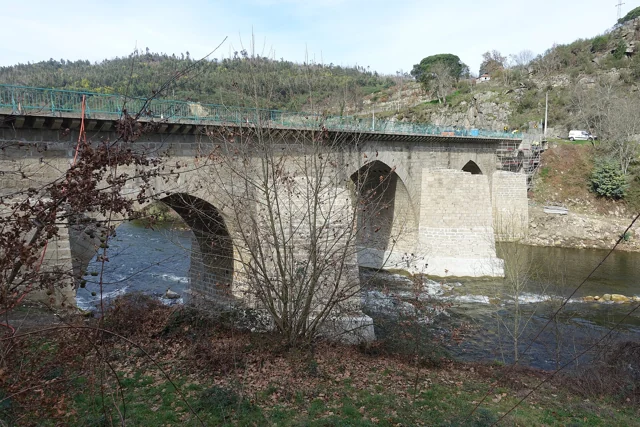
Ponte de Cavez on the river Tâmega, with stone arches, board and wooded banks.
Partial view of the Ponte de Cavez over the Tâmega.© Joseolgonⓘ

An old bridge didn't stop in history.

Includes an activity to try →Explore: A crossing, several seasons →
Read here and view sources

Three broken central arches and two perfect back, next to the banks: the Ponte de Cavez brings together different shapes and times. The Museum located the medieval construction in the second half of the 13th century, at the service of the road between Braga and Vila Pouca de Aguiar.

The source attributes the round arches to the works of Philip II's reign and mentions a landmark of 1599. In the 19th century, the road between Fafe and Vila Pouca de Aguiar brought the enlargement of the board. Watching the bridge is looking for changes to an ancient crossing.

According to the Museum, the stone bridge replaced a previous wooden, then degraded. The construction is attributed to Frei Lourenço Mendes, Dominican who gathered alms for the work; the museological text mentions testimonial legacies as support of this connection. The crossing thus involves materials, paths and ways to finance a collective work.

Words in this story: see explanations →See Fact sheet: Ponte de Cavez
Source and context

Land Museum of Basto — Ponte de Cavez, 27/02/2022

Municipality of Cabeceiras de Basto — Parish memories of 1758: Cavez

Municipality — conclusion of rehabilitation of Ponte de Cavez, 30/04/2019

Accessed: . Editorial summary; the date of consultation is not the date of the facts.

Painzela · patrimonial identification without chronology demonstrated

A bridge, a name and a question

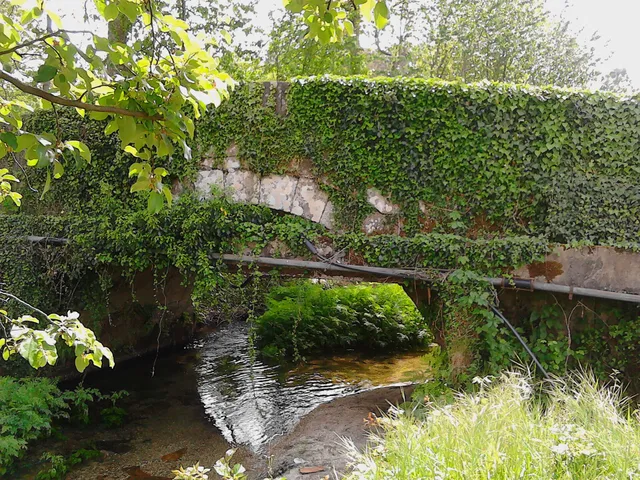
Stone bridge of Painzela on a water line, surrounded by vegetation
Ponte de Painzela, photographed by Tommasoandrea. The image allows observing the arch and the water line; it does not determine the time of construction.© Tommasoandreaⓘ

Calling him Roman doesn't solve your age.

Includes an activity to try →
Read here and view sources

The municipal presentation of Painzela includes a photograph identified as Ponte de Painzela and refers to a Roman Bridge among the heritage of the parish. This designation alone does not demonstrate when the bridge was built. The name allows to find the place; dating would require documentation or study of the construction. It is a good question to lead to a reading of the heritage: what do we know by identification and what we still need to investigate?

See Fact sheet: Ponte de Painzela
Source and context

Municipality — parish presentation of Painzela and bridge identification

Accessed: . Editorial summary; the date of consultation is not the date of the facts.

Gondiães · inventory documented assets without current access verification

Three bridges, three passing stories

The name of a bridge doesn't tell you everything about its construction.

Includes an activity to try →
Read here and view sources

The municipal inventory links the Arame Bridge of Padroselos to the tin exploration. The form Po.27 describes iron, wood and ruin, without filling the date of survey.

The Freixo Bridge, no Torneiro, integrated the path between Cunhas and Torneiro. The record Po.28 records granite and no guards. In Po.29, the Arames Bridge over the Beça appears with a concrete board supported by five pillars. These two chips are 20 March 2008.

There are three different references. The inventory allows to know the memory of the connections, but does not confirm current conditions or propose crossings.

Source and context

Municipality — Inventory of bridges, tokens Po.27–Po.29, PDF pages 28–30; Po.28 and Po.29 raised in 20/03/2008, Po.27 without completed date

Accessed: . Editorial summary; the date of consultation is not the date of the facts.

YOUR LOCAL GUIDE

What would you like to discover?

Take a closer look.