Discover Cabeceiras de BastoFree independent guide
ViveCabeceirasYOUR GUIDE TO CABECEIRAS
ENEnglish
SearchSaved

Stories of Cabeceiras

Choose a story to start with. You can change the subject or fine tune the search.

25 leituras · Todos os temas · Pesquisa: capelas

Time travel

Documents, details and traditions: there is more to discover than a date on a stone.

Escolher uma história · 23
Faia · Parish memories of 1758

Chapels between the hill and the houses

The account of 1758 draws a small religious geography of Faia.

Read here and consult sources

In 1758, the abbot of Faia placed Our Lady of Amparo on a hill and associated her with the captain-in-chief Manuel Baltasar de Abreu de Lima. Saint Anthony of Covilhã was presented as a chapel of the village itself, out of place. Santo António da Ribeira appeared next to the house of Leandro Machado, and Nossa Senhora da Piedade next to the house of Francisco de Moura Coimbra. The account adds that these chapels had no right pilgrimages. More than enumerating buildings, it distinguishes relationships between devotion, families and community. It is a portrait of that year, without indicating property, parties or current access conditions.

Getting to know the parish See Fact sheet: Capela da Senhora do Amparo da Faia
Source and context

Municipality — Parish Memoirs of Faia, 23/05/1758, replies 13 and 14; transcript of José Viriato Chapel (2003)

Accessed: . Editorial summary; the date of consultation is not the date of the facts.
Painzela · 17th century heritage

A chapel helps to read the house

In Cimo de Vila, the domestic heritage meets the religious.

Read here and consult sources

The municipal presentation of Painzela highlights the Casa de Cimo de Vila and its chapel of São Gonçalo, dated 1662. The set adds another time to the discovery of the parish, besides the Casa de Pielas and its garden. The heritage reference does not confirm access to the interior.

The municipal text places the set in a landscape mainly agricultural, in a range of territory that stretches from east to west to the limit with Fafe. In the same presentation arise the matrix, alminhas and the chapel of São Brás: the chapel of São Gonçalo is a piece of a network of places, not the whole religious history of the parish.

The date of 1662 allows a comparison with Pielas, whose house is presented as 19th century and the garden as 19th century. They are references of different times; they do not prove that all the elements visible today are from the same construction campaign.

Getting to know the parish See Fact sheet: Capela de São Gonçalo e cruzeiro de Painzela
Source and context

Municipality — assets of Painzela

Accessed: . Editorial summary; the date of consultation is not the date of the facts.
Bucos · testimony of 1758

A chapel shortened the distance

In Casares, getting to church was a practical matter.

Inclui uma atividade para experimentar →
Read here and consult sources

In the memory of 22 May 1758, the chapel of Santa Maria, in Casares, served to administer the sacraments to the residents, far from the parish church. The distance helped explain the distribution of places of worship.

The vicar António Alves Teixeira also mentions Santa Ana, in Carrazedo, administered by Manuel Gomes Martins. They are references of the document, without confirmation of access or current status.

The parish church was located in the place of Bucos, which the vicar presented as the most populous of the parish. In addition, he named Vila Boa, Carrazedo and Casares. This set of places helps to understand why a single church did not respond in the same way to the needs of all residents.

The document also distinguishes who administered each chapel: in Casares, the commander; in Carrazedo, Father Manuel Gomes Martins. Place, invocation and administration are three different clues. The function of administering sacraments because of the distance is explained to Casares; it should not be automatically attributed to all the chapels mentioned.

Getting to know the parish
Source and context

Municipality — Parish memories of Bucos (1758)

Accessed: . Editorial summary; the date of consultation is not the date of the facts.

Alvite · testimony of 1758

Six chapels, different responsibilities

The estate also had a care organization.

Inclui uma atividade para experimentar →
Read here and consult sources

The memory of Alvite enumerates six chapels in 1758. Saint Antonino belonged to the house and fifth with that name; Good Order was next to the House of Alvimento; the Holy Family, next to the House of the Tower. These three are presented as private.

The others were São Mamede, in Petimão, Santa Catarina, on the homonymous hill, and São Sebastião, in place of the Chão. The text assigns burdens to the customers, but saves St Mamede: there were the convent of Refojos and the abbot of St Clement as midwives. The word factory arises linked to these maintenance responsibilities, not to an industrial installation. These are 1758 bonds, without establishing current property or access.

Palavras desta história: ver explicações →Getting to know the parish See Fact sheet: Casa e Quinta do Alvação See Fact sheet: Casa da Torre de Alvite See Fact sheet: Capela de Santa Catarina de Alvite
Source and context

Basto Land Museum — Parish Memories of 1758: Alvite

Accessed: . Editorial summary; the date of consultation is not the date of the facts.

Saint Nicholas · testimony of 1758

When the chapel shortened the path

The distance from the church also shaped the villages.

Inclui uma atividade para experimentar →Explorar: Três maneiras de aproximar lugares →
Read here and consult sources

The memory of 1758 explains the function of three chapels: Saint Bartholomew, in Celeiró do Monte; Our Lady of Lapa, in Lapela; and Saint Anne, in Busteliberne. They served to administer sacraments to the residents who lived far from the matrix. A small building responded to a daily difficulty.

The dean Domingos Camel de Sousa describes high hills between the places and refers three settlements away half league from the church, in rough terrain. The distance was not only a line on the map: relief was part of the difficulty. The church was to spring, in a place with six neighbors, counting the house of the rector himself.

The three chapels were kept at the expense of the commendator, according to the report. But they were not the only ones: the text lists eleven chapels beyond the matrix, with different administrations and functions. In the Outeiro of Santo António, for example, it marks pilgrimages of neighboring parishes in the feasts of Santo António and Santa Luzia. The set reveals both the cult close to the residents and meetings that attracted people from outside.

Palavras desta história: ver explicações →Getting to know the parish See Fact sheet: Busteliberne See Fact sheet: Igreja de São Nicolau de Cabeceiras
Source and context

Basto Land Museum — St Nicholas Parish Memories (1758)

Accessed: . Editorial summary; the date of consultation is not the date of the facts.

Alvite · heritage and landscape deployment

A chapel leaning against the stone

In Santa Catarina, the construction finds the penedia.

Inclui uma atividade para experimentar →Explorar: Uma capela, três escalas →
Read here and consult sources

The municipal presentation highlights a particularity of the chapel of Santa Catarina de Alvite: it is encrusted in a penedia. The encounter between rock and construction gives a clue to look at the heritage beyond the facade.

The source identifies this relationship with the place, but does not provide here a construction date or a visiting time. The chapel form gathers the available documentary information.

The memory of 1758 already named Santa Catarina in the hill with this name, among six chapels of the parish. The two sources answer different questions: the old document places it in a network of places of worship; the municipal presentation draws attention to the relationship between construction and rock. This presence in the report does not date the external form that the photograph shows.

See Fact sheet: Capela de Santa Catarina de Alvite
Source and context

Municipality — landscape of Alvite e Passos

Basto Land Museum — Parish Memories of 1758: Alvite

Accessed: . Editorial summary; the date of consultation is not the date of the facts.

Rio Douro · places and hermits described in 1758

Fifteen places, a network of chapels

The distance from the church also shaped the lives of the villages.

Inclui uma atividade para experimentar →
Read here and consult sources

In the memory of Rio Douro of 1758, the vicar lists fifteen places and places the church outside the village. He also refers to fifteen hermits, explaining their relationship with religious assistance to people living far from the home.

St. Stephen stayed outside Eiró; other invocations accompanied names of villages, such as Santa Ana in Toninha, São Gonçalo in Vilela and São Frutuoso in Leiradas. The document also distinguishes religious responsibilities from Refojos, private and residents. It is a historical network of places, devotions and care, without confirming the conservation or current access to each building.

Source and context

Municipality — Parish Memoirs of Rio Douro, António Carneiro da Costa, 22/05/1758

Accessed: . Editorial summary; the date of consultation is not the date of the facts.

Cavez · settlement and devotion in 1758

Eight places and six chapels

In Cavez, an ancient list draws relations between villages, residents and monasteries.

Inclui uma atividade para experimentar →
Read here and consult sources

In 25 of May 1758, the vicar Manuel Pacheco da Cunha numbered eight places: Cavez, Vila Franca, Ponte, Arosa, Rabiçais, Moimenta, Revorça and Parada. He located the church in the middle of the parish and described six chapels. Names help to recognize a hammock; they are not a current list of administrative places.

São Gregório, in Vila Franca, São Mamede, in Arosa, and Santa Maria Magdalena, in Moimenta, were attributed to the abbot of Pombeiro, with its maintenance linked to the Benedictine congregation of Tibães. São Bartolomeu, on the Bridge, had as patron João Correia, of Guimarães. In São Caetano, in Raviceis at the passage of the chapels, and Santa Luzia, in Revorça, the charge was for the residents. The transcription itself uses the variants Rabiçais and Raviceais.

The report also describes five altars in the matrix and a brotherhood of the Souls. The parish appears as a space of worship and collective organization, with distinct responsibilities. The pilgrimage of São Bartolomeu is mentioned for 23 and 24 of August; they are dates of historical testimony, without functioning as current agenda.

The parish links went beyond the chapels. The vicar wrote that Cavez did not have their own mail and resorted to Raposeira, which was located to a league. He also indicated the absence of fair in the parish. They are clues to think where news arrived and where services were concentrated at that time; they do not describe the current offer nor allow automatically to convert the league into a road distance.

Getting to know the parish See Fact sheet: Capela de São Bartolomeu de Cavez See Fact sheet: Igreja de São João de Cavez e cruzeiro
Source and context

Municipality of Cabeceiras de Basto — Parish memories of 1758: Cavez

Accessed: . Editorial summary; the date of consultation is not the date of the facts.

Painzela · documentary references of 1656 and 1735

A chapel leaves a trail in the archive

The dates of the documents also tell stories.

Inclui uma atividade para experimentar →Explorar: Três datas, três perguntas →
Read here and consult sources

The references that accompany the memory of Painzela mention an obligation linked to the chapel of Nossa Senhora da Conceição, of 1656. Another, of 1735, refers to the institution of the chapel of São Gonçalo and an obligation to its factory.

These dates belong to documents. The municipal heritage presentation assigns 1662 to the chapel of São Gonçalo da Casa de Cimo de Vila: they are information of a different nature, which should not be merged into a single construction date. The reading of the sources also involves asking what each record is actually dating.

Palavras desta história: ver explicações →
Source and context

Municipality — Parish memories of Painzela (1758)

Municipality — assets of Painzela

Accessed: . Editorial summary; the date of consultation is not the date of the facts.

Built heritage · St Nicholas

Three houses, three details

A chapel, a staircase and a portal to read architecture.

Inclui uma atividade para experimentar →
Read here and consult sources

Three houses, three details to repair. In Casa da Taipa, the municipal presentation highlights the chapel of Nossa Senhora da Conceição, a quintentist moth. In Casa da Breia, it describes the staircase with volutes on the stone rail, maintaining as uncertain the nineteenth century attribution of the building.

In Casal da Fonte, the highlight goes to the portal with coat of arms and baroque decoration of the late 18th century. Compare chapel, staircase and portal helps to discover different ways to compose a solarenga house. These references do not presuppose access to the interior of the properties.

Palavras desta história: ver explicações →Getting to know the parish See Fact sheet: Casa da Breia See Fact sheet: Casa da Taipa e Capela da Senhora da Conceição
Source and context

Municipality — Cabeceiras de Basto (São Nicolau)

Accessed: . Editorial summary; the date of consultation is not the date of the facts.

Documented history · 1514

Two outcasts, seven days

October 1514 left two marks on the territory.

Inclui uma atividade para experimentar →Explorar: Abadim: documentos e marcas no lugar →
Read here and consult sources

Manuel I granted the foral of Cabeceiras in 5 October 1514 and that of Vadym, today Abadim, in 12 October. Seven days separate the documents: the administrative history of the territory goes through more than one place.

But what was the point of reviewing the outsiders? The Tombo Tower exhibition explains the general context: there were complaints about outdated charges, coins and weights and old texts difficult to interpret. Manueline reform sought to review these documents. Local dates of 1514 belong to this broader movement; it does not mean that the settlements began to exist that year.

The work also required registration and preservation. The same exhibition describes the preparation in triplicate: one copy for the chamber, one for the landlord of the rights and another for the Tower of the Tombo. This general explanation helps to understand why an administrative document could have several copies. It does not identify here the whereabouts of each copy of the two local forals.

In 5 October 2024, Casa do Tempo received a tertulia over the 510 years of the foral, with José Viriato Chapel and Porfirio Correia. The municipal news recalls the two documents and their importance for the administrative organization. The celebration is a gateway to history; it does not replace the reading of the forals themselves.

Palavras desta história: ver explicações →
Source and context

Municipality — celebration of fora, published in 07/10/2024

DGLAB / Torre do Tombo and Casa de Bragança Foundation — O Foral Novo: records that tell stories, pp. 2 and 4 PDF

Accessed: . Editorial summary; the date of consultation is not the date of the facts.

Painzela · parish organization in 1758

Painzela was not isolated

A small register reveals a connection between parishes.

Read here and consult sources

The news of Painzela published in the Parish Memories identifies Saint Andrew as a dedication of the matrix and attributes to the Abbot of Santa Senhorinha of Basto the presentation of the parish priest. The register shows an institutional link between two parishes.

The vicar assigns a congruity of 100.000 réis. The value documents the remuneration then indicated; it does not allow a direct comparison with current wages. The municipal transcript updates the spelling and score from the edition of José Viriato Chapel, published in 2003.

Getting to know the parish See Fact sheet: Igreja de Santo André de Painzela
Source and context

Municipality — Parish memories of Painzela (1758)

Accessed: . Editorial summary; the date of consultation is not the date of the facts.

Alvite · Couto organisation in 1758

One land, two skills

In 1758, not all issues were decided by the same power.

Inclui uma atividade para experimentar →Explorar: O território visto por diferentes regras →
Read here and consult sources

The account of St. Pedro of Alvite distinguishes the civil subjects, linked to the Abbot and the convent of Refojos, from the criminals, attributed to the municipality judge of Cabeceiras. The Couto thus had an organization that is not limited to a line on the map. It's a historical description, no correspondence with the current administration. There is an important territorial distinction: the answer places Petimão in the term of Celorico of Basto. The skills of the Couto are described for other places, avoiding reading the entire parish as a single jurisdiction.

Getting to know the parish
Source and context

Basto Land Museum — Parish Memories of 1758: Alvite

Municipality — Alvite Parish Memories, 1758; transcription of José Viriato Chapel (2003)

Accessed: . Editorial summary; the date of consultation is not the date of the facts.

Pedraça · Parish memories of 1758

A Pedraça call to Coimbra

In 1758, the parish priest's choice pointed out to the council.

Inclui uma atividade para experimentar →Explorar: Ler um documento, fazer perguntas →
Read here and consult sources

The parish memory describes the matrix dedicated to Santa Marinha and states that the rector was presented by the rector of the College of São Jerónimo de Coimbra. This historical link shows how a small parish was part of relations that surpassed the lands of Basto.

The same transcript places Pedraça at the end of Cabeceiras de Basto and in the district of Guimarães. It records 96 fires and 322 souls of communion, in addition to a congruity of 50 thousand réis for the rector. They are categories of the document: fires are not people, and souls of communion do not automatically equal the total inhabitants.

The numbers and connection to Coimbra show two plans of parish life: the community described and the organization that framed his parish priest. The municipal version identifies the transcription of José Viriato Chapel, published in 2003, from the Memórias of 1758.

The municipal page also distinguishes the account from the references that accompany it: it refers to the memory 296 of the volume 42 and lists an obligation to the Santa Bárbara hermitage factory, of 1624, and another linked to the Blessed Sacrament, of 1722. They are archive clues. The existence of these references does not mean that the full text of the two documents is reproduced on the page, nor transforms 1624 on a date of construction of the chapel.

Palavras desta história: ver explicações →Getting to know the parish See Fact sheet: Igreja paroquial de Pedraça See Fact sheet: Santa Bárbara de Pedraça — capela e miradouro
Source and context

Municipality — Parish Memories of Pedraça (1758), transcript of José Viriato Chapel (2003)
Accessed:

Municipality — Parish Memories of Pedraça, 1758; transcription of José Viriato Chapel (2003)
Accessed:

Editorial summary; the date of consultation is not the date of the facts.

Painzela · reading a 1758 document

How did you count a parish?

In 1758, the portrait of Painzela used fireworks and sacramental souls.

Inclui uma atividade para experimentar →Explorar: Um documento abre outras perguntas →
Read here and consult sources

The municipal transcription of the Parish Memories records 137 fires and 439 sacramental souls in Painzela. The formulation itself distinguishes domestic units from a religious category of people. Therefore, the 439 should not be presented as a modern census of all inhabitants. The document also allows to know the language used to describe the community.

The same passage identifies Saint Andrew as a dedication of the matrix and connects the presentation of the vicar to the abbot of Santa Senhorinha. The small text therefore gathers population, church and ecclesiastical organization. Instead of reading it as a statistical table, we can ask what the author chose to record about the community.

There is also a layer between the old document and the screen: the municipality informs that the transcript updates the spelling and the score from the edition of José Viriato Chapel, published in 2003. This indication helps to distinguish the date of the testimony, 1758, from the date of the edition used to disseminate it. The references to the chapels appear separately, in the documentary note.

Getting to know the parish
Source and context

Municipality — Parish memories of Painzela (1758)

Accessed: . Editorial summary; the date of consultation is not the date of the facts.

Local legend · Ponte de Cavez

The voice that had built above

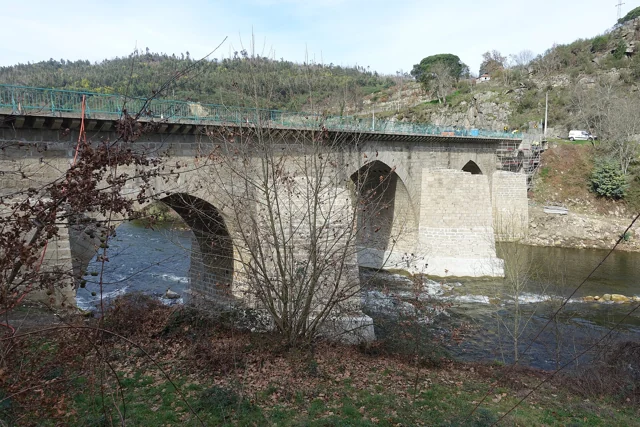
Ponte de Cavez on the river Tâmega, with stone arches, board and wooded banks.
Ponte de Cavez on the Tâmega · the monument to which legend refers.© Joseolgonⓘ

Around the bridge, memory also invented paths.

Inclui uma atividade para experimentar →
Read here and consult sources

The legend published by the Museum makes the masons try to build the bridge in Vila Franca and then by the Poço das Laranjeiras. In both places, a supernatural voice sent up the river. Tradition attributed it to Saint Bartholomew.

On the third attempt, the narrative places the work next to the chapel. It is a story about the memory of the place, not documentary proof of the choice of the site or an itinerary to look for the episodes.

In another passage of the tradition collected by the Museum, the food of the builders gains a miraculous explanation: there are sources of water, wine and olive oil and fish appear in the river. The narrative associates the effort of construction to religious protection. Reading it alongside the history of the works allows to know two different ways of telling the same place.

See Fact sheet: Ponte de Cavez See Fact sheet: Capela de São Bartolomeu de Cavez
Source and context

Land Museum of Basto — Ponte de Cavez, 27/02/2022

Accessed: . Editorial summary; the date of consultation is not the date of the facts.

Holy Lady · memory of 1758

A Church Counted in Images

Before the screens, you looked at the panels.

Inclui uma atividade para experimentar →
Read here and consult sources

In the memory of 1758, the church of Santa Senhorinha had two ships with programs of different images. One presented panels on the Creation of the World; the third Franciscan showed saints of this order.

The abbot also described a vaulted chapel, closed with iron railings. Painting, spaces and architectural elements composed a written portrait of the interior. The source allows to study this description, without ensuring that the pieces or layout are preserved today.

The description continues by the tombs, which the Abbot presents decorated with painting and golden letters, and by a particular chapel dedicated to Our Lady of the Pilar. The interior appears as a set of spaces, images and inscriptions, each with its function in the account.

This allows a layer reading: first the organization of the ships, then the painted themes and, finally, the elements that marked memory and devotion. It is not necessary to imagine a single undifferentiated hall; the document itself distinguishes various environments.

Palavras desta história: ver explicações →See Fact sheet: Igreja de Santa Senhorinha
Source and context

Municipality — Memória de Santa Senhorinha, 23/05/1758; transcript of José Viriato Chapel (2003)

Accessed: . Editorial summary; the date of consultation is not the date of the facts.

Alvite · written memory in 1758

The earthquake has reached the account of Alvite

A local memory of a larger event.

Inclui uma atividade para experimentar →
Read here and consult sources

In reply to the 1758 survey, the vicar of Alvite recalled the earthquake of 1755. He said there had been no ruins, except for the arms of two crosses of the chapel of the House of the Tower, which would have been twisted north. He added that they were already straight.

The report separates the event from the state observed when it was written. It is a local testimony, not a measurement of the intensity of the earthquake nor a confirmation of visible marks today.

Source and context

Municipality — Memory of Alvite, 23/05/1758; transcription of José Viriato Chapel (2003)

Accessed: . Editorial summary; the date of consultation is not the date of the facts.

Faia · settlement described in 1758

A parish told by sixteen places

In 1758, the Faia appears as a network of small places.

Inclui uma atividade para experimentar →Explorar: Uma freguesia distribuída por lugares →
Read here and consult sources

In memory of 23 May 1758, the abbot João de Lima Lobo de Noronha enumerates sixteen places. The enumeration includes Covilhã, Augueiros, Presas, Nogueira, Candedo, Ribeiro, Outeiro, Porcarice, Faia, Togais, Souto, Ribeira, Tuesdays, Breia, Casa Nova and Joio. Situa the church out of place and describes the parish on a northern slope.

The list helps to think of a territory distributed by small cores, and not just around the matrix. Names belong to historical transcription; they are not a current administrative list or allow to draw the boundaries of each place by themselves.

The same testimony presents two counts: 99 neighbors and 418 people. The document separates them; they should not add or read “neighbours” as another total of inhabitants. It also distinguishes scales: when speaking of the municipality, the abbot refers to eighteen parishes, but declares not knowing the number of its neighbors. Knowing what the author did not tell is as useful as knowing the numbers he left.

Ribeiro and Ribeira appear as different entries. Outeiro is here in the list of places of Faia: the coincidence with the name of another parish does not authorize to shift this reference on the map. The complete list allows to compare names, while chapels help to perceive some relations between places and houses.

Source and context

Municipality — Memory of Faia, 23/05/1758; transcript of José Viriato Chapel (2003)

Accessed: . Editorial summary; the date of consultation is not the date of the facts.

Faia · parochial memory 1758

At Faia, the abbot recorded no ruins

The same event left different accounts in the parishes.

Read here and consult sources

In the memory signed in 23 May 1758, the Abbot of Faia declared that there was no ruin caused by the earthquake. It is a counterpoint to the testimony of Alvite, who described damage to the crosses of a chapel. The absence of ruins in the account does not demonstrate that the earthquake was not felt: it shows what was recorded in that answer. Reading the two documents brings the general history of local experiences closer.

It is useful to notice who writes and when: the answer is from João de Lima Lobo de Noronha, abbot of Faia, and arises in a set of questions that also covers places, crops, fairs and mail. The earthquake is one of the subjects of this local portrait. The signature of 1758 dates the testimony, not the event that he recalls.

Source and context

Municipality — transcription of the Parish Memories of Faia, 23/05/1758

Accessed: . Editorial summary; the date of consultation is not the date of the facts.

Faia · religious organization in 1758

A church linked to the Grand Prior of Crato

The history of a parish also goes through distant connections.

Read here and consult sources

In the reply of 1758, the abbot of the Faia writes that his presentation belonged to the infant D. Pedro, as Grand Prior of Crato. He also refers to the intervention of the provisor of the city of Porto in its collation. These details show that the local religious organization involved authorities beyond Cabeceiras. The account describes the form of provision of the office at that time; it does not mean that the Faia belonged to the municipality of Crato or Porto.

The same answer estimated the income of the benefit in 450 réis. This value belongs to the description of the institution and should not be presented as a current salary or converted directly into a price today. Dealing with the altars and chapels, adds a layer to the history: besides the building and the devotions, there was an organization of positions and incomes.

Getting to know the parish
Source and context

Municipality of Cabeceiras de Basto — Parish memories of Faia, 23/05/1758, replies 8, 20 and 21

Accessed: . Editorial summary; the date of consultation is not the date of the facts.

Alvite · church described in 1758

Three altars in one body

The church also fits in a portrait made of words.

Inclui uma atividade para experimentar →Explorar: Da igreja aos lugares de culto →
Read here and consult sources

In 1758, the vicar described the church of Alvite with three altars: the principal, associated with St Pedro, and those of the Name of God and the Lady of the Rosary. He referred to a single body, choir, main chapel and sacristy. It is the provision registered at that time, without confirmation that it remains the same.

The document situates the church in Cacheina, surrounded by residents. It distinguishes the main altar of the two collaterals and mentions a brotherhood associated with the brotherhood of the Blessed Sacrament. The portrait of the building thus includes a community: places of worship, people and religious organization appear in the same response.

A list of spaces is not enough to reconstruct a plant. We can recognize functions and names, but the exact position of each dependency would require other sources. It is a good occasion to compare what a text describes with what an external photograph can show.

Palavras desta história: ver explicações →
Source and context

Municipality — Alvite Parish Memories, 1758; transcription of José Viriato Chapel (2003)

Accessed: . Editorial summary; the date of consultation is not the date of the facts.

Holy Lady · church and manor houses

A “Sé” and houses with memory

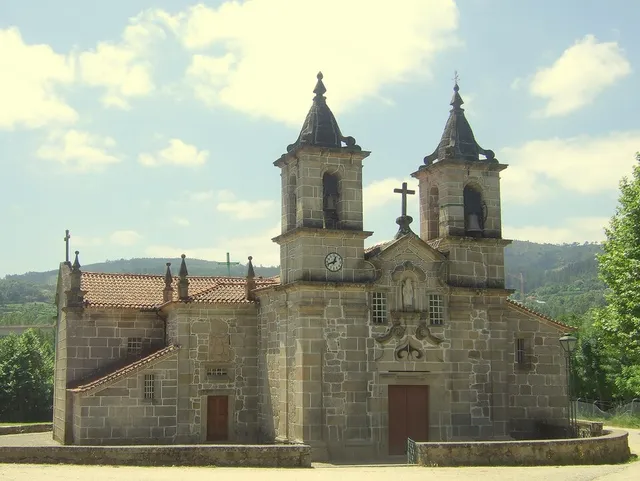
Facade of Igreja de Santa Senhorinha of Basto, with its two towers
Igreja de Santa Senhorinha, popularly known as the Sé of Basto.© Bocacheteⓘ

The names also express the importance of a place.

Read here and consult sources

The municipal presentation records the popular designation Sé of Basto for the church of Santa Senhorinha, associating it with the idea of antiquity. In the manor houses, it highlights buildings from the 17th and 18th centuries, some with coats and chapels. Paço, Castelo, Mozes and Vila Garcia were already mentioned in 1726. This reference helps to read the heritage of the parish, without assuming that the houses are visitable or that all the old elements are preserved today.

The municipal portrait does not end in the four houses mentioned in 1726. It includes Carcavelos, Cainhos, Casa do Oven, Eirões and Olela, extending the look to several places. In religious architecture, mentions the chapel of Calvary, also called Senhora do Ó, in Olela, and that of Santo António. They are references to know the diversity of the heritage, without assigning to all buildings the same date.

The Sé designation of Basto belongs to the popular use described by the Municipality. In this reading, it acts as a clue to the importance attributed to the church; it has not been converted into an affirmation of cathedral status. Compare this name with the memory of the painted panels allows you to look at the building through words of different times and purposes.

Palavras desta história: ver explicações →See Fact sheet: Igreja de Santa Senhorinha See Fact sheet: Casa de Carcavelos See Fact sheet: Casa e Quinta do Forno See Fact sheet: Capela do Calvário / Senhora do Ó
Source and context

Municipality — Basto (Santa Senhorinha): designation of church and manor houses

Accessed: . Editorial summary; the date of consultation is not the date of the facts.

Crafts and memories

In the hands, at the table and in the community: little stories of how one lives and what one transmits.

Escolher uma história · 2
Faia · sacred art, 2025

Roots and light give another life to the chapel

In Lady of Amparo, the materials also tell a story.

Inclui uma atividade para experimentar →Explorar: Material, memória e transformação →
Read here and consult sources

Olive roots shaped the new altar and the ambão of the chapel of Our Lady of Amparo. The news of the Archdiocese of Braga of 6 October 2025 assigns the work to Atelier Amadeus and describes a remodeling centered on the altar. A suspended cross integrates the element called Body of Light.

The parish priest Rui Filipe Marques Araújo explained the symbolism of enlightenment: sets of lights refer to the Trinity, the Evangelists and the Apostles. The publication also highlights the contribution of artists, technicians, workers and community. The intervention shows a heritage that continues to receive new forms and meanings; the account of 2025 does not indicate visiting hours.

The report presents the celebration as a meeting of the Faia with the communities of Arco de Baúlhe e Vila Nune, presided over by José Cordeiro. The choice of roots also receives a religious interpretation: according to the parish priest, the transformation of previously discarded material expresses renewal and redemption. It is the symbolic reading attributed to the responsible in the news, distinct from the description of the materials. To understand the work, we can look at these two layers: how it was made and what meaning it was given.

Getting to know the parish See Fact sheet: Capela da Senhora do Amparo da Faia
Source and context

Archdiocese of Braga — renewal of Lady of Amparo, news of 06/10/2025

Accessed: . Editorial summary; the date of consultation is not the date of the facts.

Heritage · Painzela

One house, two centuries in sight

The building and garden don't count exactly the same time.

Explorar: Painzela por camadas →
Read here and consult sources

The House of Pielas and its garden are not presented as a work of one moment. The municipality attributes to the 18th century the architecture of the house and to the 19th century the garden, whose English influence is indicated as hypothesis.

Separating these layers helps to read the set: a building can receive new spaces and new ways to frame it over time. The reference is patrimonial, without confirming current conditions of visiting private property.

Getting to know the parish See Fact sheet: Casa de Pielas, jardins e anexos
Source and context

Municipality — assets of Painzela

Accessed: . Editorial summary; the date of consultation is not the date of the facts.

YOUR LOCAL GUIDE

What would you like to discover?

Take a closer look.