Discover Cabeceiras de BastoFree independent guide
ViveCabeceirasYOUR GUIDE TO CABECEIRAS
ENEnglish
SearchSaved

Story

Choose a story to start with. You can change the subject or fine tune the search.

20 stories · Travel through time · Search: peça

Travel through time

Documents, details and traditions: there is more to discover than a date on a stone.

Choose a story · 20
Arco de Baúlhe · documentary memory

The station keeps documents too
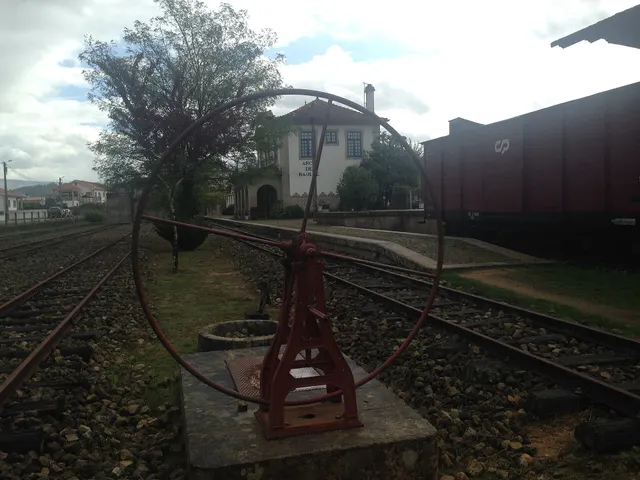
Turntable and tracks at the former Arco de Baúlhe station, with buildings and railway vehicles in the background.
Former Arco de Baúlhe station, where the Basto Land Museum is located.© JP Ribeiroⓘ

Behind the exhibits are books, photographs and archives.

Explore: File gives context to objects →
Read here and view sources

The Museu das Terras de Basto opened to the public on 23 May 2004, based at Arco de Baúlhe station. Its presentation of the Documentation Centre distinguishes two collections: the municipal collection and that of the Railway Museum, owned by the Fundação Museu Nacional Ferroviário and held by the local museum.

Books, periodicals, photographs, maps and archive documents support research into the region. The description recalls the organisation of the collection in 2011; it does not confirm current access arrangements.

In February 2011, the Museum also announced the checking and cataloguing of railway objects, starting from the inventory drawn up by CP technicians and included in the 2000 agreement. Preserving memory meant identifying and recording each object.

See Fact sheet: Núcleo Ferroviário de Arco de Baúlhe
Source and context

Basto Land Museum — Documentation Centre, historical description of the collection

Basto Land Museum — Inventory of collections, 17/02/2011

Accessed: . Editorial summary; the date of consultation is not the date of the facts.
Refojos · provenance of an object kept in Coimbra

A chalice full of figures

A small silver-gilt object preserves a medieval connection to Refojos.

Read here and view sources

The Museu Nacional de Machado de Castro identifies this 12th-century chalice as a gift from Gueda Mendes to the Monastery of São Miguel de Refojos. Its decoration invites a closer look in stages: Christ and the Apostles appear on the cup beneath rounded arches; the base bears the symbols of the four evangelists. The catalogue lists the maker as unknown and places the object in Coimbra. Learning its provenance reveals heritage connected with Cabeceiras that is kept outside the municipality.

See Fact sheet: Mosteiro de São Miguel de Refojos
Source and context

Machado de Castro National Museum — Cup, collection form at Google Arts & Culture

Accessed: . Editorial summary; the date of consultation is not the date of the facts.

Uz · Gondiães and Vilar de Cunhas

Stone walls, thatched roofs

In Uz, materials also tell the mountains’ story.

Includes an activity to try →Explore: From houses to materials →
Read here and view sources

The municipal introduction describes Uz’s stone houses and some thatched roofs. It also recalls the name Casal da Urzeira, connected with the heather of the hills. These offer two ways to read the link between settlement and landscape: in house materials and in the memory of a name. The same description associates the village with farming, livestock and work in linen and wool. The portrait helps connect houses, fields and crafts. This is a heritage introduction, without confirming how many thatched roofs survive today.

See Fact sheet: Uz
Source and context

Municipality — Village Guide of Serra da Cabreira: landscape, work and heritage

Accessed: . Editorial summary; the date of consultation is not the date of the facts.

Painzela · 17th-century heritage

A chapel helps us read a house

In Cimo de Vila, domestic and religious heritage meet.

Read here and view sources

The municipal introduction to Painzela highlights Casa de Cimo de Vila and its chapel of São Gonçalo, dated 1662. The group adds another period to the discovery of the parish, alongside Casa de Pielas and its garden. The heritage reference does not confirm access to the interior.

The municipal text places the group in a mainly farming landscape, in a strip of territory extending east to west towards the boundary with Fafe. The same introduction includes the parish church, roadside devotional shrines and the chapel of São Brás: São Gonçalo’s chapel is one part of a network of places, not the parish’s entire religious history.

The date of 1662 allows a comparison with Pielas, whose house is presented as 18th-century and garden as 19th-century. These are references to distinct periods; they do not prove that all elements visible today belong to the same building campaign.

Getting to know the parish See Fact sheet: Capela de São Gonçalo e cruzeiro de Painzela
Source and context

Municipality — assets of Painzela

Accessed: . Editorial summary; the date of consultation is not the date of the facts.

Arco de Baúlhe · railway memories

A petrol engine on the rails

The collection tells of different ways to get a train moving.

Explore: Who and what was riding the tracks? →
Read here and view sources

Railcar ME5 brought a petrol engine onto the tracks. The museum publication places its construction at the Santa Apolónia workshops in 1948. In the same collection, it describes a steam locomotive built in Germany in 1908.

Forty years separate the dates, allowing two technologies to be compared. They are vehicle construction dates, not dates of arrival at the station. The collection brings together pieces from several origins; being in the museum does not by itself prove where each ran.

The Museu das Terras de Basto identifies the engine as Chevrolet and describes the passenger space: 11 first-class seats, 16 third-class seats and standing room for another 16, as well as toilets. The 27 seats should not be confused with all the available passenger places.

What was this solution for? The Museu Nacional Ferroviário explains that a single self-propelled vehicle aimed to reduce operating costs on lightly used lines, combining functions that required a train formation. The project, led by engineer Vasco Viana, drew on features of road transport. The same record says that petrol proved expensive and led to temporary or exceptional uses.

The inventory adds a link with local history: this ME5 is thought to have run on the Tâmega line. The wording is cautious and remains so here. It is a specific documentary clue, different from deducing operation merely because the vehicle is now in the collection.

Getting to know the parish See Fact sheet: Núcleo Ferroviário de Arco de Baúlhe
Source and context

Municipality — Land Museum of Basto: a journey through the history of the region, pp. 28–29

Basto Land Museum — Heritage with history: Self-propelled ME5, 22/02/2018

National Railway Museum MEf5, FMNF/ARC/ Inventory000203

Accessed: . Editorial summary; the date of consultation is not the date of the facts.

Arco de Baúlhe · railway memories

A seat in third class

A carriage opens a window onto journeys of another time.

Read here and view sources

Visit Cabeceiras highlights a British third-class carriage from 1876 at the railway museum. Its class and date help place the object: it is a 19th-century piece, much older than the railway’s arrival at Arco de Baúlhe. Its presence in the collection does not mean it was built for this station.

The municipal publication identifies it as CEfv 79 and presents it as the oldest carriage in the collection described there. In the same shed, it mentions a passenger carriage built in Belgium in 1908. The comparison reveals a collection of different ages and origins.

The inventory mark distinguishes the object; its class points to its role in passenger transport. Place of manufacture, service history and arrival at the museum are separate questions: these sources do not reconstruct every journey the carriage made.

Getting to know the parish See Fact sheet: Núcleo Ferroviário de Arco de Baúlhe
Source and context

Visit Cabeceiras — Railway core Arco de Baúlhe
Accessed:

Municipality — Land Museum of Basto: a journey through the history of the region, pp. 28–29
Accessed:

Editorial summary; the date of consultation is not the date of the facts.

Refojos · woodcarving and artistic attribution

Three sides to a small sculpture

The high altar’s torch stands deserve a closer look.

Read here and view sources

In the 2014 announcement of the restoration of six large candle stands, the municipality describes pyramidal structures with three decorated faces, gold leaf, floral motifs and angel heads. It proposes a likely attribution to Frei José Vilaça and completion between 1764 and 1767. The source presents that authorship as a hypothesis, distinct from the confirmed attribution of the sacristy furniture.

The report also included the high altar’s cross among the pieces undergoing treatment at Oficinas Santa Bárbara in Porto. A patron funded the intervention. This episode connects heritage conservation with specialist work and support from those who cover its costs.

Getting to know the parish See Fact sheet: Mosteiro de São Miguel de Refojos
Source and context

Municipality — Restoration of tokers and furniture, 14/11/2014

Accessed: . Editorial summary; the date of consultation is not the date of the facts.

Abadim’s heritage

A star on the pillory

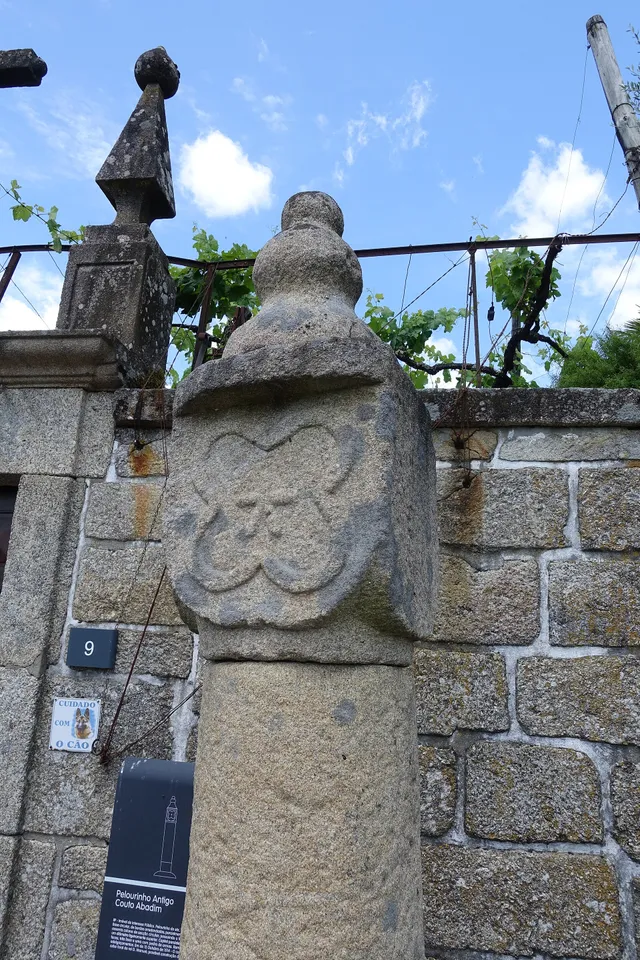
Detail of Abadim’s granite pillory
Details of Pelourinho de Abadim. The star described in the text is not visible on this face.© Joseolgonⓘ

A small monument holds a history of autonomy.

Read here and view sources

Abadim’s pillory looks simple at first: a smooth granite column, a cubic capital and a pear-shaped finial. Yet one face bears a five-pointed star within a four-lobed frame. The Museum connects the monument with the administrative and judicial autonomy of the old couto, abolished in 1836. It places construction near the charter of 1514, but the Cultural Heritage record warns that dating is difficult and the piece may be much later. The star invites a second look at a monument easily overlooked.

The official record describes four faces on the capital: three undecorated and one bearing the star. This explains why a photograph from another side may not show its best-known motif. The record places the monument beside the portal of Casa da Torre do Tronco and documents its designation as a Property of Public Interest in 1933. The protection date is not the construction date.

The charter, the stone’s age and the heritage designation answer distinct questions. Instead of automatically assigning “1514” to the entire monument, compare its described form, proposed dates and the documents that changed its status.

Words in this story: see explanations →See Fact sheet: Pelourinho de Abadim
Source and context

Basto Land Museum / António P. Dinis — Pelourinho de Abadim, 26/01/2018
Accessed:

Cultural heritage — Pelourinho de Abadim, record 341971, historical-artistic note
Accessed:

Editorial summary; the date of consultation is not the date of the facts.

Santa Senhorinha · 1758 account

A church told through images

Before screens, people looked at painted panels.

Includes an activity to try →
Read here and view sources

In the 1758 account, Santa Senhorinha’s church had two naves with different image programmes. One presented panels on the Creation of the World; the nave of the Franciscan Third Order showed saints of that order.

The abbot also described a vaulted chapel closed by iron grilles. Painting, spaces and architectural elements formed a written portrait of the interior. The source allows that description to be studied without guaranteeing that the pieces or arrangement survive today.

The description continues with tombs, presented by the abbot as decorated with painting and gold lettering, and a private chapel dedicated to Nossa Senhora do Pilar. The interior emerges as a group of spaces, images and inscriptions, each with a role in the account.

This allows a layered reading: first the arrangement of the naves, then the painted themes and finally the elements marking memory and devotion. There is no need to imagine a single undifferentiated hall; the document itself distinguishes several settings.

Words in this story: see explanations →See Fact sheet: Igreja de Santa Senhorinha
Source and context

Municipality — Memória de Santa Senhorinha, 23/05/1758; transcript of José Viriato Chapel (2003)

Accessed: . Editorial summary; the date of consultation is not the date of the facts.

Faia · 1758 account

Five altars to read a church

Devotions also organised space.

Read here and view sources

Faia’s abbot recorded five altars in 1758, mentioning the Name of God, Saint Anthony and Our Lady under the invocation of the Rosary, with its confraternity. The document shows different devotions gathered in one church.

The restoration reported in 2022 belongs to another moment. The two descriptions have different purposes and periods: comparing numbers alone cannot determine which pieces remained or disappeared. The church profile continues the discovery of the building while keeping historical memory separate from visiting information.

The enumeration distinguishes the high altar from four side altars. The reference to the Rosary confraternity adds people to the space: the church appears not only as a group of objects but also in connection with a devotional organisation. The text does not, however, describe that confraternity’s membership or activities in detail.

See Fact sheet: Igreja de São Tiago da Faia
Source and context

Municipality — Memory of Faia, 23/05/1758; transcript of José Viriato Chapel (2003)

Archdiocese of Braga — restoration and reopening of the matrix of Faia, 01/09/2022

Accessed: . Editorial summary; the date of consultation is not the date of the facts.

Outeiro’s heritage · account published in 2012

A medieval image found in the earth

Wood can preserve centuries of memory.

Includes an activity to try →Explore: Three moments, different dates →
Read here and view sources

A 2012 municipal report highlights a sculpture of Santa Maria belonging to Outeiro’s church, dated to the 13th or 14th century. The Virgin appears crowned, seated on a throne with the Child on her knees. The account says the piece was found buried at the place known as Mata da Santa and taken to the church by parishioners. The report does not date the discovery. This story traces the image’s journey without confirming where it is currently displayed.

Words in this story: see explanations →See Fact sheet: Igreja de Santa Maria Maior de Outeiro
Source and context

Municipality — Parish of Outeiro exposes acquis No Núcleo de Arte Sacra, 09/10/2012

Accessed: . Editorial summary; the date of consultation is not the date of the facts.

Bucos · heritage described in 1758

Gold and red in the church

The document preserved colours too.

Includes an activity to try →
Read here and view sources

In the church of São João de Bucos described in 1758, the high altar combined gilded reliefs with vermilion backgrounds. The account places Saint John the Baptist and Saint Dominic on opposite sides, with the tabernacle at the centre of the altarpiece. It also mentions altars with Our Lady of the Rosary, Saint Peter and Saint Anthony. This written portrait lets us imagine the arrangement and colours of the old interior without confirming that the pieces or layout survive today.

Words in this story: see explanations →See Fact sheet: Igreja de São João de Bucos
Source and context

Municipality — Parish memories of Bucos (1758)

Accessed: . Editorial summary; the date of consultation is not the date of the facts.

Refojos · object documented in 2011

A dish that crossed the centuries

Heritage can fit in a brass object too.

Read here and view sources

A municipal publication from 2011 presented a brass alms dish then displayed at the Núcleo Museológico do Baixo Tâmega. Its production was tentatively dated to the 15th or 16th century. That uncertainty is part of the object’s history: knowing an object does not always mean being able to give it an exact year. The reference to its display belongs to 2011 and does not confirm that it is currently on public view.

See Fact sheet: Núcleo de Arte Sacra
Source and context

Municipality — publication of 2011, page 14, Offer dish

Accessed: . Editorial summary; the date of consultation is not the date of the facts.

Tâmega Line · object presented by the Museum in June 2024

The last light told a story

A red light showed that the train was complete.

Includes an activity to try →Explore: Two lights, different tasks →
Read here and view sources

The last vehicle of a train carried an important message. The Museum presents a red tail lamp, used at night on the last carriage or wagon to indicate that the train was complete. Its purpose was to signal, not to light the track ahead of the locomotive.

The inscription N.1 E POSTO. DA LIVRAÇÃO links the object to Livração station on the Tâmega Valley line. Reading the object means bringing together three clues: the colour of the light, its position on the train and the inscription connecting it with a place.

This small object shows that railway history also consists of signals and quiet tasks. The Museum’s presentation, published in June 2024, describes its use and the station to which it was assigned; it does not give a manufacturing date.

Words in this story: see explanations →
Source and context

Land Museum of Basto — Taillight “N.1 AND POSTO. FREEDOM”, 2024-06-28

Accessed: . Editorial summary; the date of consultation is not the date of the facts.

Museum collections · railway lighting

A station by lamplight

Before looking at the train, notice the platform’s light.

Includes an activity to try →
Read here and view sources

In February 2024, the Museum described a hexagonal platform lamp intended to light boarding areas. Inside was an oil lamp with a glass chimney and a metal reservoir. The description does not identify the station where this object was used.

The reservoir bore the inscription MD MOVIMENTO. That detail belongs to the object described; it does not, by itself, reveal a station of origin. Compare it with the tail lamp: both produce light, but the platform lamp lights the boarding space while the tail lamp communicates information about the train.

Source and context

Basto Land Museum — Platform lamp, 2024-02-22

Accessed: . Editorial summary; the date of consultation is not the date of the facts.

Arco de Baúlhe · railway memories

Mail travelled by train too

Van DE.FV 506 carried more than goods.

Read here and view sources

Built in Belgium in 1908, van DE.FV 506 is presented by the Museum as a narrow-gauge vehicle for goods, parcels and mail. It had sheet-metal cladding, electric lighting and a toilet for the employee, accessed from outside. Acquisition by the Companhia dos Caminhos de Ferro de Guimarães is suggested as a possibility. The collection description, published in 2011, does not confirm whether the vehicle is currently on display.

The gauge given by the Museum is one metre. Compared with the railcar, the purpose changes: the ME5 carried passengers, while this van combined freight, parcels and mail. Travelling on the same network could mean carrying people, news or goods.

See Fact sheet: Núcleo Ferroviário de Arco de Baúlhe
Source and context

Land Museum of Basto — Van DE.FV 506, 17/07/2011

Basto Land Museum — Heritage with history: Self-propelled ME5, 22/02/2018

Accessed: . Editorial summary; the date of consultation is not the date of the facts.

Faia · restoration documented in 2022

A year of work, a church reopened

Heritage is also made through recent care.

Explore: The church at different times →
Read here and view sources

The church of São Tiago da Faia reopened on 14 August 2022 after being closed for around a year for building work. The Archdiocese of Braga’s report records the restoration of paintings, religious images and three altars, along with the installation of stained glass depicting episodes from the patron saint’s life and mission. This recent intervention differs from the account of five altars left in 1758: the sources come from different periods, not a directly comparable count of surviving objects.

The report also tells who made the work possible. Parish priest Rui Filipe Marques Araújo credited the community’s involvement; the ceremony brought together association representatives, workers and benefactors. Archbishop José Cordeiro presided. Behind the paintings and stained glass restored or installed lies a story of participation.

Reopening does not necessarily mean that every task was finished: the same report records an appeal to continue completing the restoration. The August date marks the celebration and the return of the space to religious use, without establishing by itself when each intervention ended.

See Fact sheet: Igreja de São Tiago da Faia
Source and context

Archdiocese of Braga — restoration and reopening of the matrix of Faia, 01/09/2022

Accessed: . Editorial summary; the date of consultation is not the date of the facts.

Refojos · historical interpretation of a medieval gift

The donor is not necessarily the maker

An inscription can give historians work too.

Read here and view sources

The study published in Portvgalia in 1995 explains an old misunderstanding: Gueda Mendes was taken to be a goldsmith, whereas the inscription should be understood as referring to the person who commissioned the object. The chalice is associated with 1152, but the study does not confirm whether the donor was still alive then or whether the commission fulfilled a provision in his will. The object’s history therefore includes both established facts and open questions.

See Fact sheet: Mosteiro de São Miguel de Refojos
Source and context

Portvgalia, new series, volume XVI (1995) — study of medieval goldsmithry, analysis of the cup of Refojos

Machado de Castro National Museum — Cup, collection form at Google Arts & Culture

Accessed: . Editorial summary; the date of consultation is not the date of the facts.

Refojos and Coimbra · the chalice’s historical journey

From Refojos to Coimbra, a story on the move

Objects also pass through institutional changes.

Includes an activity to try →
Read here and view sources

According to the 1995 study, the chalice remained in Refojos until the mid-16th century, then went to the Colégio de São Bento in Coimbra in the context of Friar Diogo de Murça’s activities. After the dissolution of religious orders in 1834, it passed to the Treasury of Coimbra Cathedral. The Museu Machado de Castro’s catalogue documents its present connection with the collection. This journey adds a material history to the relationship between Refojos and Coimbra.

See Fact sheet: Mosteiro de São Miguel de Refojos
Source and context

Portvgalia, new series, volume XVI (1995) — study of medieval goldsmithry, analysis of the cup of Refojos

Machado de Castro National Museum — Cup, collection form at Google Arts & Culture

Accessed: . Editorial summary; the date of consultation is not the date of the facts.

Abadim · architecture and interpreting inscriptions

Two dates do not tell a house’s whole story

At Casa da Ramada, doors preserve clues from different periods.

Includes an activity to try →
Read here and view sources

In Abadim, António P. Dinis highlights Casa da Ramada, with its armorial gateway, granary, threshing floor and porch. He records 1678 on one lintel and 1828 on another doorway’s lintel. From these marks, he proposes an initial 17th-century structure and improvements in the first half of the 19th century.

An inscription is a clue, not a birth certificate for every wall. The two dates suggest a house that changed over time: living and working spaces may combine elements from several periods. The source does not confirm current access arrangements.

Words in this story: see explanations →Getting to know the parish
Source and context

Basto Land Museum / António P. Dinis — Tower of Abadim, 17/01/2018

Accessed: . Editorial summary; the date of consultation is not the date of the facts.

YOUR LOCAL GUIDE

What would you like to discover?

Take a closer look.