Discover Cabeceiras de BastoFree independent guide
ViveCabeceirasYOUR GUIDE TO CABECEIRAS
ENEnglish
SearchSaved

Stories of Cabeceiras

Choose a story to start with. You can change the subject or fine tune the search.

12 leituras · Todos os temas · Pesquisa: mosteiro

Time travel

Documents, details and traditions: there is more to discover than a date on a stone.

Escolher uma história · 7
Refojos · medieval origins

A monastery older than certainty

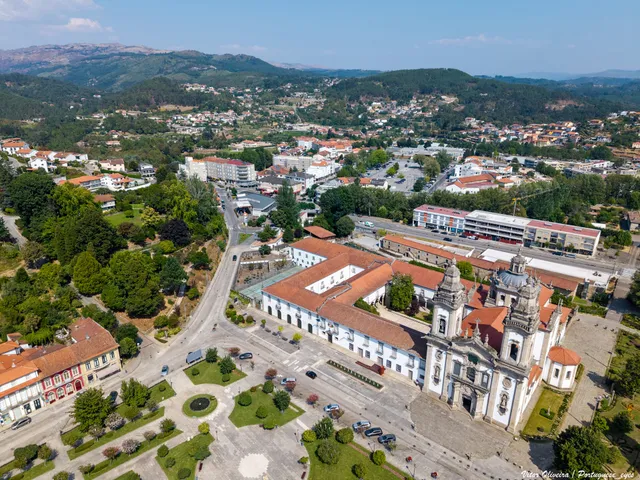
Air view of the Monastery of São Miguel and the Republic Square in Refojos
The Monastery of Refojos and the square, in a current view.© Vitor Oliveira from Torres Vedras, PORTUGALⓘ

Not all stories begin with an exact date.

Explorar: Um mosteiro, várias histórias →
Read here and consult sources

The Monastery of Refojos already existed in the early 12th century, but the municipal review does not fix the foundation. It questions the traditional assignments to Hermínio Fafes and Gomes Soeiro.

The source links the medieval patronate to noble families in the region. Separate two questions: when we know the monastery existed and when it was founded. A documented date of existence does not solve the second question by itself.

See Fact sheet: Mosteiro de São Miguel de Refojos
Source and context

Municipality — history and art of Mosteiro de São Miguel de Refojos

Accessed: . Editorial summary; the date of consultation is not the date of the facts.

Refojos · teaching and monastic life in the 16th century

Between a monastery and a university

Air view of the Monastery of São Miguel and the Republic Square in Refojos
Mosteiro de São Miguel de Refojos: the place connected to the abbot Frei Diogo de Murça. Photograph of the set, not of the reported season.© Vitor Oliveira from Torres Vedras, PORTUGALⓘ

Frei Diogo de Murça links Refojos to the academic life of Coimbra.

Explorar: Um plano reconsiderado →
Read here and consult sources

Abbot of Refojos and rector of the University of Coimbra, Frei Diogo de Murça wanted to apply the rents of the Monastery to the foundation of two colleges in Coimbra: São Bento and São Jerónimo. The plan meant to extinguish the monastery. The municipal documentation reports the opposition of the religious and the subsequent reconsideration of the Abbot himself. This link shows how decisions on Refojos participated in a broader history of teaching and religious institutions.

The municipal review is in 1555 the acceptance of the new request by Paul IV: keep the Monastery with twelve religious and a prior, rather than follow the first plan of extinction. The same source records the death of Frei Diogo in Refojos, in 1570, and his grave in the Monastery.

See Fact sheet: Mosteiro de São Miguel de Refojos
Source and context

Municipality — proposal for a heritage registration of the Monastery, pp. 9 and 11; later uses in p. 11 (candidature document, not a UNESCO classification)

Municipality — History of the Monastery: Frei Diogo de Murça and the colleges of Coimbra

Accessed: . Editorial summary; the date of consultation is not the date of the facts.

Cavez · settlement and devotion in 1758

Eight places and six chapels

In Cavez, an ancient list draws relations between villages, residents and monasteries.

Inclui uma atividade para experimentar →
Read here and consult sources

In 25 of May 1758, the vicar Manuel Pacheco da Cunha numbered eight places: Cavez, Vila Franca, Ponte, Arosa, Rabiçais, Moimenta, Revorça and Parada. He located the church in the middle of the parish and described six chapels. Names help to recognize a hammock; they are not a current list of administrative places.

São Gregório, in Vila Franca, São Mamede, in Arosa, and Santa Maria Magdalena, in Moimenta, were attributed to the abbot of Pombeiro, with its maintenance linked to the Benedictine congregation of Tibães. São Bartolomeu, on the Bridge, had as patron João Correia, of Guimarães. In São Caetano, in Raviceis at the passage of the chapels, and Santa Luzia, in Revorça, the charge was for the residents. The transcription itself uses the variants Rabiçais and Raviceais.

The report also describes five altars in the matrix and a brotherhood of the Souls. The parish appears as a space of worship and collective organization, with distinct responsibilities. The pilgrimage of São Bartolomeu is mentioned for 23 and 24 of August; they are dates of historical testimony, without functioning as current agenda.

The parish links went beyond the chapels. The vicar wrote that Cavez did not have their own mail and resorted to Raposeira, which was located to a league. He also indicated the absence of fair in the parish. They are clues to think where news arrived and where services were concentrated at that time; they do not describe the current offer nor allow automatically to convert the league into a road distance.
Getting to know the parish See Fact sheet: Capela de São Bartolomeu de Cavez See Fact sheet: Igreja de São João de Cavez e cruzeiro
Source and context

Municipality of Cabeceiras de Basto — Parish memories of 1758: Cavez

Accessed: . Editorial summary; the date of consultation is not the date of the facts.

Refojos · 19th and 20th century transformations

After the monks, other lives

Air view of the Monastery of São Miguel and the Republic Square in Refojos
Current view of the Monastery of Refojos and the square; it is not an image of the nineteenth-century uses.© Vitor Oliveira from Torres Vedras, PORTUGALⓘ

Camera and school are also part of the history of the building.

Explorar: O edifício mudou de vida por etapas →
Read here and consult sources

The extinction of religious orders, in 1834, changed the fate of the set of Refojos, keeping the church in the religious function. According to the municipal proposal of patrimonial candidacy, João António Fernandes Basto acquired the Monastery in public haste between 1838 and 1842. In the nineteenth century, the assembly also welcomed municipal services; in 1944, another part received a college with boarding school. Looking at the whole is also to discover how ancient buildings were adapted to administration and teaching.

The document places around 1855 the installation of the city services in the part of the cloisters. For the school area, it registers a new change of ownership in 1959, for the Conciliar Seminary of Braga. The group therefore did not have a single destination after 1834: different parts followed their own stories. The heritage proposal is here a historical source; it does not demonstrate a UNESCO classification nor confirms the current uses of each space.

Palavras desta história: ver explicações →See Fact sheet: Mosteiro de São Miguel de Refojos
Source and context

Municipality — proposal for a heritage registration of the Monastery, pp. 9 and 11; later uses in p. 11 (candidature document, not a UNESCO classification)

Basto Land Museum — The place of the Pereiras of Refojos de Basto, 28/07/2024

Accessed: . Editorial summary; the date of consultation is not the date of the facts.

Refojos · municipal toponymy decision, 2020

A street sign can open a story

The names chosen in 2020 resemble people connected to Refojos.

Read here and consult sources

In June 2020, the Municipality announced the assignment of names to ruins of the village to remember figures of the history of the Monastery. Among them were the Abbot Diogo of Murça, the notchmaker Vilaça and Gueda Mendes, associated with the offer of the medieval chalice. The same decision recovered ancient toponyms from places of Refojos. The toponym thus approximates two memories: people who marked the heritage and names that the inhabitants used to recognize their places.

Source and context

Municipality — deliberations of June 2020 and toponymy of Refojos

Accessed: . Editorial summary; the date of consultation is not the date of the facts.

Pereiras, Refojos · old uses of the House

From jail to music

A building can change paper in the community.

Explorar: As Pereiras para lá de um edifício →
Read here and consult sources

In the Pereiras, the building of the former House of the House continued to serve as a chain until 1972, according to the Museum of Lands of Basto. After recovered, received Casa da Música. A municipal news of July 2010 already included it among the spaces proposed to know the municipality. The Museum article needs the change from the House to the Monastery in 1835 and the inauguration of the Casa da Música in 2003: the building continued to change its function after not receiving the municipal administration.

The story of the building begins before the chain that remained in memory. The article of the Museum assigns the editor João Gil de Abreu Castelo Branco the order to build the House of the House in 1586. It then admits a reconstruction in the 18th century, in place of the previous building.

The two floors shared functions: jail in the first, Chamber and hearings in the second. This organization gathered administration and justice in the same space. When the House left, the prison remained; when it closed, the building did not disappear. The inauguration as Casa da Música, in 2003, added another use to a construction with several chapters.

Source and context

Basto Land Museum — The place of the Pereiras of Refojos de Basto, 28/07/2024

Municipality — visits to see the municipality, news of 29/07/2010

Accessed: . Editorial summary; the date of consultation is not the date of the facts.

Refojos · provenance of a piece preserved in Coimbra

A cup full of characters

A small piece of gold silver holds a medieval connection to Refojos.

Read here and consult sources

The Machado de Castro National Museum identifies this 12th century chalice as an offer by D. Gueda Mendes to Mosteiro de São Miguel de Refojos. The decoration invites to look at parts: in the cup are Christ and the Apostles, under round arches; at the base appear the symbols of the four evangelists. The form indicates unknown authorship and locates the piece in Coimbra. Knowing its provenance allows discovering heritage linked to Cabeceiras which is outside the municipality.

See Fact sheet: Mosteiro de São Miguel de Refojos
Source and context

Museu Nacional de Machado de Castro — Cálice, ficha da coleção no Google Arts & Culture

Accessed: . Editorial summary; the date of consultation is not the date of the facts.

The flavours of Cabeceiras

From the garden to the pot, from the oven to the table.

Escolher uma história · 2
Sweets · contest of 2019

The beans also arrive for dessert

Miguelitos have a history with a date and author.

Read here and consult sources

The Miguelitos de Alice da Conceição de Magalhães Alves won the Sweet Cabeceirense Contest, announced on Casa do Tempo in 18 May 2019. The municipal news describes a preparation wrapped with yellow beans, flour and green wine, stuffed with eggs and honey. The contest was part of the Monastery of Emotions program. In February 2020, the Municipality again highlighted them as dessert of the Gastronomy Weekend, next to the stew as the main dish. The candy thus passed from the competition to the promotion of the head table; the news does not confirm current availability.

Source and context

Municipality — Miguelitos win the Sweet Head Competition, 20/05/2019
Accessed:

Municipality — Gastronomic Weekend announcement, 07/02/2020
Accessed:

Editorial summary; the date of consultation is not the date of the facts.

Refojos · painting of 1703, studied in 2011

A table painted over three centuries ago

Dishes, cutlery and napkins also tell stories.

Inclui uma atividade para experimentar →
Read here and consult sources

The painting Supper of St. Benedict and the Raven, of 1703, is attributed by the Land Museum of Basto to Father Manuel Correia de Sousa and comes from the Monastery of Refojos. In an article of 2011, Isabel Maria Fernandes draws attention to individual dishes, salt shakers, cutlery and napkins represented. The work opens a window for the material culture of the table. However, it is not a record of a concrete meal of the monks of Refojos. The location in the Municipal Session Room is indicated in that publication, without confirmation of current exposure or access.

Source and context

Land Museum of Basto — Isabel Maria Fernandes, eat in conventual context, 21/02/2011

Accessed: . Editorial summary; the date of consultation is not the date of the facts.

Read the landscape through the plants

Trees, forests, vineyards and fields reveal different ways of occupying the territory.

Escolher uma história · 1
Refojos · monastic landscape

Beyond the church, a cultivated land

Air view of the Monastery of São Miguel and the Republic Square in Refojos
View of the Monastery of Refojos and the urban surroundings. It is a context image, not a reconstruction of the cultivated fence.© Vitor Oliveira from Torres Vedras, PORTUGALⓘ

Vegetables, orchards and medicinal plants were part of the fence.

Inclui uma atividade para experimentar →Explorar: A cerca continua noutras histórias →
Read here and consult sources

Hortes, orchards, medicinal plants, fields and forests composed the ancient surrounding monastery of Refojos, according to the municipal description of 2021. The botica supplied other Benedictine monasteries, including Tibães. Beyond the church, there was land to cultivate and medicines to prepare. It is a historical portrait of the fence, not an inventory of the current plants.

The same description situates the riverside of Penoutas next to and in the back of the Monastery, next to buildings of agricultural origin however musealized. Water and work buildings help to broaden the look: the history of the set is also told outside the cult space.

The ancient fence is not read today as a single garden intact. The fountain draws attention to scattered traces. Distinguishing what the document describes from what a photograph allows to see is part of the discovery: a view of the square does not reconstitute missing gardens, orchards or medicinal plants.

Palavras desta história: ver explicações →Getting to know the parish See Fact sheet: Mosteiro de São Miguel de Refojos
Source and context

Municipality — historical gardens, news of 21/05/2021

Accessed: . Editorial summary; the date of consultation is not the date of the facts.

Between rivers and mountains

Water and relief form the municipality. Choose a name and follow the landscape.

Escolher uma história · 1
Refojos · opening in 2013 and urban transformation

A stream in the history of Casa do Tempo

The renovation of the village centre also passed through the water.

Inclui uma atividade para experimentar →Explorar: Memória, edifícios e água →
Read here and consult sources

The Casa do Tempo opened in 2 August 2013 next to the Monastery of Refojos. In the municipal description, the recovery of old housekeeping houses is part of a broader transformation: connecting the Republic Square to the new areas of the village, creating green spaces and treating the banks of the riverside of Penoutas. The interpretive center thus allows to tell two stories together: the memory of Cabeceiras and the change of its urban landscape.

The Municipality describes the acquisition of part of the returned houses and the negotiations that preceded the intervention. Reutilizing the buildings and transforming their surroundings appear as parts of the same project, rather than separate stories.

The multimedia component of the center was presented as a way to know territory, people, nature, uses and customs. Thus, the stream does not appear only as a scenario: it integrates the history of how that village space gained new functions. To plan a visit, the site's file gathers the practical information available.

See Fact sheet: Casa do Tempo
Source and context

Municipality — Casa do Tempo: opening in 2013 and requalification of the surroundings

Accessed: . Editorial summary; the date of consultation is not the date of the facts.

Crafts and memories

In the hands, at the table and in the community: little stories of how one lives and what one transmits.

Escolher uma história · 1
Refojos · devotional memory of unknown date

A little pagela kept a collective concern

Devotion also left marks on paper.

Inclui uma atividade para experimentar →Explorar: O papel, o lugar e quem partiu →
Read here and consult sources

A small devotional image can keep concerns of an entire community. The Land Museum of Basto released a pagela prepared for the feast of São Miguel of Refojos with this message: «S. Miguel protect and defend the soldiers, migrants and people of Cabeceiras.»

The reference to soldiers and emigrants allows to read the object also from the absence: prayer includes those who were far away, along with the population of Cabeceiras. It is a proposal to read the message, without assigning to the piece a war or a vague migration that the source does not identify.

There are two dates that we should not confuse. The Museum published the play in 24 September 2026; declared not having been able to identify the date of the pagela itself. The object belongs to the memory of the party, but the year it was produced remains open.

Source and context

Basto Land Museum — Pagela de S. Miguel Archangel, 24/09/2026

Accessed: . Editorial summary; the date of consultation is not the date of the facts.

YOUR LOCAL GUIDE

What would you like to discover?

Take a closer look.