Discover Cabeceiras de BastoFree independent guide
ViveCabeceirasYOUR GUIDE TO CABECEIRAS
ENEnglish
SearchSaved

Story

Choose a story to start with. You can change the subject or fine tune the search.

5 stories · Time travel · Search: cerca

Time travel

Documents, details and traditions: there is more to discover than a date on a stone.

Choose a story · 5
History of transport · Arco de Baúlhe

One line took forty years to arrive
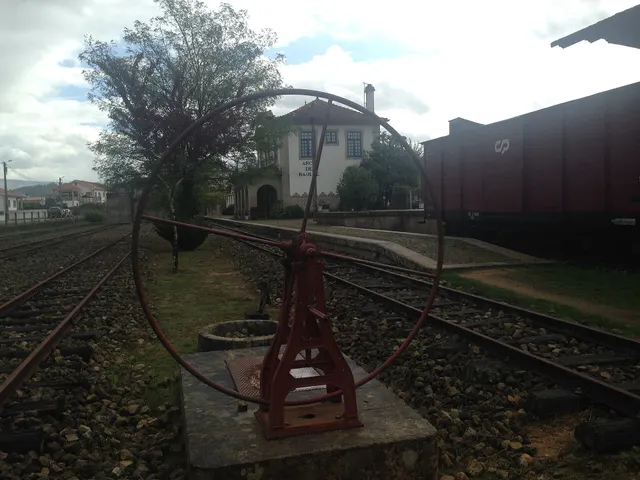
Revolving plate and tracks from the old Arco de Baúlhe station, with buildings and railway equipment at the bottom.
Former station Arco de Baúlhe · railway heritage© JP Ribeiroⓘ

The Arc was the end point of a trip through Tâmega.

Includes an activity to try →
Read here and view sources

The journey began at Livração, where the Line of Tâmega connected to the Douro Line, and ended at Arco de Baúlhe. According to the Municipality, the construction of this narrow track line extended from 1908 to 1949, along about 52 kilometers. The arrival at the Arc was the result of a link built in stages.

The station had functions beyond the shipment of passengers: the old warehouse of dispatches, today used for temporary exhibitions, also recalls the circulation of goods. Visiting the railway core allows you to look for these different lives of the same space: transporting people, receiving cargoes and preserving stories.

Getting to know the parish See Fact sheet: Núcleo Ferroviário de Arco de Baúlhe
Source and context

Municipality — Núcleo Ferroviário de Arco de Baúlhe

Accessed: . Editorial summary; the date of consultation is not the date of the facts.
Regional rail link · Celorico bridge Basto

To get to the Arc, the line needed to cross another valley

The history of the Cabeceiras train also passes through the neighboring municipality.

Includes an activity to try →Explore: A bridge ready, an uncompleted connection →
Read here and view sources

Before reaching Cabeceiras, the line had to cross the valley of the river of Veade. The bridge of Matamá is in the Union of the Freguesies of Veade, Gagos and Molares, in Celorico of Basto. According to the Museum, its six granite arches form a structure about 190 meters long and 52 meters high.

The report distinguishes two moments: the opening of the bridge in 5 June 1936, and the entry into railway use in 15 January 1949, with the opening of the Celorico section of Basto–Arco de Baúlhe. Having the bridge built did not immediately mean having trains arriving at the Arc. This regional history helps to realize the time needed to complete the connection.

The report of the Museum attributes the responsibility of the work to engineers Jorge Vieira Bastian and Manuel Gonçalves Costa. The dimension of the structure helps to realize the challenge of taking the railway through the valley; the chronology allows to separate this work from the entry into service of the complete connection.

Source and context

Basto Land Museum / Pedro T. Gonçalves — Matamá Railway Bridge, 28/07/2026

Municipality — Land Museum of Basto: a journey through the history of the region, pp. 28–29

Accessed: . Editorial summary; the date of consultation is not the date of the facts.

Rio Douro · hypothesis of relationship between archaeological sites

Tombs and village: an uninvestigated connection

At Portela de Asnela, the landscape leaves a question.

Explore: Compare traces, distinguish hypotheses →
Read here and view sources

The municipal inventory describes mamoas in Portela de Asnela, in Rio Douro, and proposes a relationship with the village of Castelo, in Formigueiro, about a kilometer north. Proximity supports a hypothesis; it does not in itself prove that the two sets were used by the same community.

The fiche identifies structures of the anther and cyst type within the funerary assembly. It proposes a dating in the second or first millennium before Christ, supported by ceramic materials and in comparison with similar sets of the Northwest mountains.

There are therefore two distinct questions: when will these monuments have been built and what connection could they have had with the nearby village? A proposal for chronology does not automatically solve the second. The inventory presents this connection as a hypothesis, preserving space for future research.

Words in this story: see explanations →
Source and context

Municipality — archaeological inventory, interpretations and chronologies

Accessed: . Editorial summary; the date of consultation is not the date of the facts.

Faia · restoration documented in 2022

A year of works, a church reopened

The heritage is also a recent care.

Explore: The church at different times →
Read here and view sources

The church of São Tiago of Faia reopened in 14 August 2022, after about a year closed for works. The news of the Archdiocese of Braga records the recovery of paintings, images and three altars, besides the placement of stained glass with episodes of the life and mission of the patron. It is a recent intervention, different from the portrait of five altars left in 1758: they are sources of distinct times, not a directly comparable count of surviving pieces.

The news also tells who made the intervention possible. Pastor Rui Filipe Marques Araújo attributed the realization of the works to the involvement of the community; the ceremony brought together associative representatives, workers and benefactors. Archbishop José Cordeiro presided. Behind the paintings and the recovered or placed stained glass is thus a history of participation.

Reopening does not necessarily mean that all works were completed: the same news records an appeal to continue the completion of the restoration. The August date marks the celebration and return of space to religious use, without allowing the end of each intervention to be established.

See Fact sheet: Igreja de São Tiago da Faia
Source and context

Archdiocese of Braga — restoration and reopening of the matrix of Faia, 01/09/2022

Accessed: . Editorial summary; the date of consultation is not the date of the facts.

Cavez · history of the bridge of Moimenta; current conditions not verified

Two seasons on the same bridge

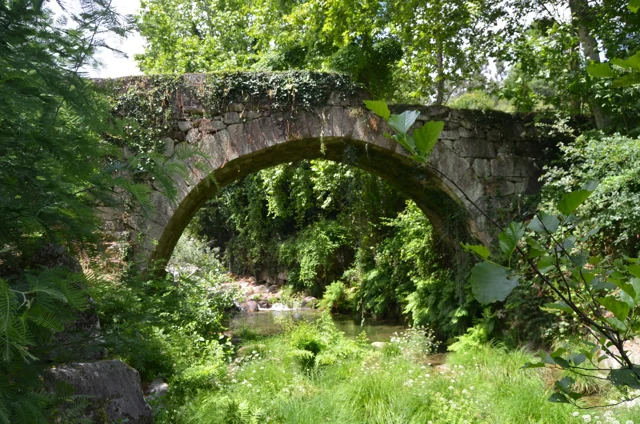
Ponte antiga de Moimenta in Cavez: stone arch over the river, surrounded by vegetation, photographed in June 2020.
Moimenta Bridge, photographed by Pedro at 11 June 2020. A crossing record other than Ponte de Cavez over Tâmega.© Pedroⓘ

In Moimenta, the ancient stone coexists with an intervention of 1990.

Read here and view sources

An ancient bridge can continue to change. The municipality attributes medieval origin to the bridge of Moimenta in Cavez, and describes a single round arch.

In 1990, the passage was extended about one meter: it received a concrete structure on the downstream side and the guards were changed. The photograph allows to begin to observe the crossing; the date of the intervention comes from the documentary description.

Words in this story: see explanations →See Fact sheet: Ponte antiga de Moimenta
Source and context

Municipality — Cultural heritage, bridges of Arco de Baúlhe and Moimenta

Accessed: . Editorial summary; the date of consultation is not the date of the facts.

YOUR LOCAL GUIDE

What would you like to discover?

Take a closer look.