Discover Cabeceiras de BastoFree independent guide
ViveCabeceirasYOUR GUIDE TO CABECEIRAS
ENEnglish
SearchSaved

Stories of Cabeceiras

Choose a story to start with. You can change the subject or fine tune the search.

17 leituras · Todos os temas · Alvite e Passos

The flavours of Cabeceiras

From the garden to the pot, from the oven to the table.

Escolher uma história · 2
Alvite · written memory in 1758

In the fields, there was more than corn

A crop list opens the landscape of 1758.

Inclui uma atividade para experimentar →Explorar: Segue o cereal, muda de fonte →
Read here and consult sources

The million appears as the most abundant cereal in Alvite’s memory of 1758. But the list continues with rye, target corn, millet, wheat and barley. The parish priest adds beans, hanged wine, olive oil, chestnut, land and fruit.

The enumeration shows a diverse agriculture; it does not give quantities of each harvest. Compare it to Bucos, where the report describes another relationship between cereals. The documents allow to recognize differences without turning impressions of the parish priests into modern statistics.

The same report places part of the parish on the slopes of Senhora da Orada and another part in a more flat zone, accompanying a small course of water. The list of products thus gains a scenario: fields distributed by different positions in the relief. The text does not, however, relate each culture with a concrete portion.

There is also a difference between harvest and meal. Knowing that cereals, beans, wine or olive oil were produced does not reveal the recipe served in a given house. To get to the kitchen, other sources, such as family memories and preparations documented on the site, must be added.

Source and context

Municipality — Memory of Alvite, 23/05/1758; transcription of José Viriato Chapel (2003)

Accessed: . Editorial summary; the date of consultation is not the date of the facts.
Alvite · mill inventory in 2008

From Petimão to olive oil mill

One carried energy to Ramil's house.

Read here and consult sources

The municipal survey of 2 of March 2008 describes the mill of Casa do Ramil, in Alvite, fed by Levada do Vale do Moinho, with water removed from the riverside of Petimão. A granite cube led the water to the rotation. The building had two presses and the inventory recorded the deactivation in 2005. This portrait documents the connection between water, construction and transformation of the olive. It is a private property: the historical survey does not confirm public access nor the current state of the equipment.

Compare Covas, in Peio: then the inventory describes a wooden gutter. In both cases, it is important to follow the link between the levada and the mechanism, without imagining that all mills used the same solution.

Source and context

Municipality — inventory of olive oil mills, record L.A.1, withdrawal of 02/03/2008

Accessed: . Editorial summary; the date of consultation is not the date of the facts.

The life you don't always see

Knowing animals begins by perceiving the territory and respecting the distance.

Escolher uma história · 1
Prayer · animals in the testimony of Alvite of 1758

The Orada was also a land of shepherding

A lot can tell animal stories and work.

Read here and consult sources

In the memory of Alvite, the parish priest described weak pastures in the Orada, used throughout the year by oxen, beasts, sheep, and goats. He also mentioned rabbits and partridges in the context of hunting. It is a testimony of 1758, not a current inventory of fauna or indication of hunting sites.

Source and context

Municipality — Alvite Parish Memories, 1758; transcription of José Viriato Chapel (2003)

Accessed: . Editorial summary; the date of consultation is not the date of the facts.

Read the landscape through the plants

Trees, forests, vineyards and fields reveal different ways of occupying the territory.

Escolher uma história · 1
Alvite · written memory in 1758

The Orada changed from high to valley

The same mountain could show different landscapes.

Inclui uma atividade para experimentar →Explorar: O que mudava entre o alto e o vale? →
Read here and consult sources

In the account of 1758, the Orada presents a high boulder, with few trees, described as rough and cold. In the faldas, the scenario changes: chestnut trees, oaks, hanged vine, olive oil and cereals enter the description.

The vicar places the residents in the low areas, next to the valley, and not at the top of the mountain. Altitude, settlement and cultivation help to read the set. It is the written portrait of that year, not a survey of the current vegetation.

Source and context

Municipality — Memory of Alvite, 23/05/1758; transcription of José Viriato Chapel (2003)

Accessed: . Editorial summary; the date of consultation is not the date of the facts.

Between rivers and mountains

Water and relief form the municipality. Choose a name and follow the landscape.

Escolher uma história · 2
Passos · relief and water

A mountains and a river to locate Passos

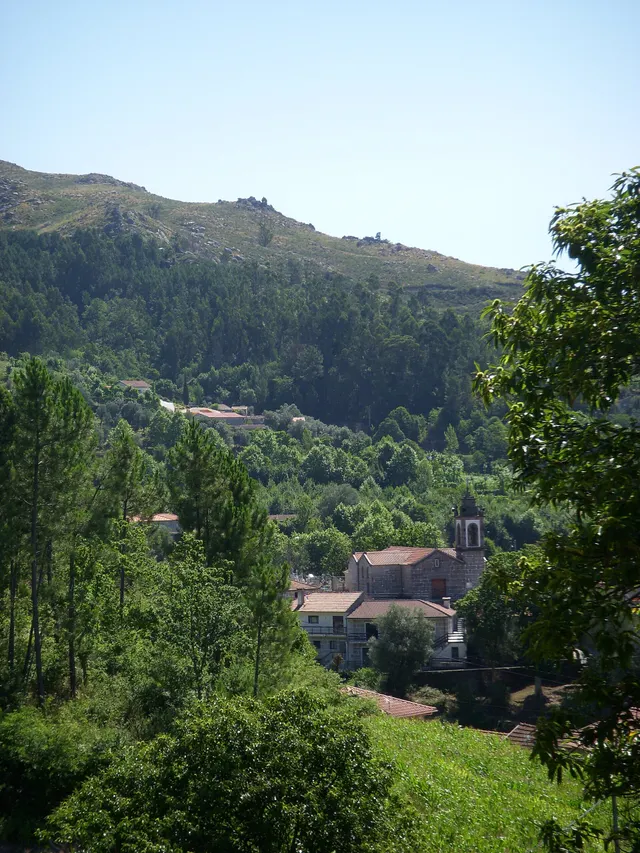
Wooded edge and house in the photograph identified by the author as Passos, Cabeceiras de Basto.
Landscape of Passos · slope and house; the river referred to in the text is not identified in the image.© Elisabeth LEITEⓘ

Two names help you read southwest of the municipality.

Inclui uma atividade para experimentar →Explorar: Da paisagem ao trabalho →
Read here and consult sources

Serra da Orada and the Petimão River help to locate Passos in the southwest of Cabeceiras. The municipal description highlights the rugged relief and agriculture, along with the municipalities of Celorico of Basto and Fafe.

The church of São Sebastião, the cruises and the alminhas add references built to the reading of the landscape. Rio, Serra and patrimony are complementary clues to know this land; they do not make up a pedestrian itinerary here nor confirm accesses.

In the description of Passos, the municipality also refers to the neighborhood of the old parishes of Outeiro, Refojos and Alvite. This proximity scale helps to situate the mountain and river within a shared territory. Administrative boundaries and landscape elements are different ways of reading the same space.

Getting to know the parish See Fact sheet: Passos
Source and context

Municipality — landscape of Alvite e Passos

Accessed: . Editorial summary; the date of consultation is not the date of the facts.

Alvite · testimony of 1758

Store water coming from the hill

Small springs helped water the fields.

Inclui uma atividade para experimentar →
Read here and consult sources

In the ratio of 1758, the vicar of Alvite described little abundant springs in the Serra da Orada. The residents retained these waters in prey to benefit the fields facing the spring. Saving water was a way to cope with its scarcity.

The same document classified the parish as drought, especially in the summer, and referred to the absence of mills and mills. Two olive oil mills worked with oxen and other animals; to grind cereals, many residents sought neighboring parishes. The portrait links natural resources, techniques and displacements, without allowing to conclude that the same uses or structures continue today.

Getting to know the parish
Source and context

Basto Land Museum — Parish Memories of 1758: Alvite

Accessed: . Editorial summary; the date of consultation is not the date of the facts.

Crafts and memories

In the hands, at the table and in the community: little stories of how one lives and what one transmits.

Escolher uma história · 4
Alvite · testimony of 1758

When the winepress walked with the animals

Not all force came from the water.

Explorar: De onde vinha a força? →
Read here and consult sources

In 1758, the vicar João Lobo de Sousa described two olive oil mills powered by oxen and beasts. The parish was particularly dry in the summer and had no mills or pisões. Many residents resorted to neighboring parishes to grind cereal and make olive oil.

The same memory refers to small waters coming from the Orada, held in prey to benefit the fields. Watering and grinding did not necessarily depend on the same solution: here, storing water to cultivate coexisted with resorting to the force of the animals in the mill. It is the portrait of a work organization in 1758, not an inventory of current equipment.

Getting to know the parish
Source and context

Basto Land Museum — Parish Memories of 1758: Alvite

Accessed: . Editorial summary; the date of consultation is not the date of the facts.

Alvite · testimony of 1758

The bulls came from Barroso

A fair linked farmland and buyers.

Read here and consult sources

Alvite's memory of 1758 describes the Saint Antonino fair on September 2, with its eve. Barroso bulls, bought for different destinations, came. Most of the fair was located in Pereiras, in Refojos.

In the same place, the vicar refers to a monthly fair on 2, introduced a few years ago and considered less important. Distinguishing the two avoids confusing the annual meeting with the monthly calendar. The report documents trade and movement at that time, without announcing current fairs.

Getting to know the parish
Source and context

Basto Land Museum — Parish Memories of 1758: Alvite

Accessed: . Editorial summary; the date of consultation is not the date of the facts.

Alvite e Passos · memory of trades

From clog to shoe in Cacheina

Two brothers changed trades to accompany their clients.

Read here and consult sources

In the collection published by Teresa Soeiro in 2017, Luís and Manuel José Ribeiro are presented as the last tamanqueiros of Cacheina, in Alvite. Both passed to shoemakers at a more advanced stage of life. Luís left the clog around 1980. The change shows a knowledge to adapt to the preferences of those who bought, rather than a tradition stopped in time. It is documented history, not an indication of workshops opened today.

Getting to know the parish
Source and context

Teresa Soeiro — Soceiros e Tamanqueiros (2017), p. 64, digital page 66

Accessed: . Editorial summary; the date of consultation is not the date of the facts.

Alvite e Passos · irrigation documented in 2008

The water has changed its way

A lance can disappear in sight and remain in memory.

Inclui uma atividade para experimentar →
Read here and consult sources

The municipal record of Poça do Monte, raised in 14 April 2008, describes a transformation into Alvite: the canal in natural land was channeled by the consorts in 2001. It was about a kilometer and used water from the source of Ribeiro Furado.

The record identifies seven consorts and refers to a steep slope in the initial part. This story helps distinguish the old open channel from pipe conduction. The document does not allow to conclude how the network is today nor presents a path to walk.

Source and context

Municipality — inventory of levadas, L2, survey of 14/04/2008

Accessed: . Editorial summary; the date of consultation is not the date of the facts.

Time travel

Documents, details and traditions: there is more to discover than a date on a stone.

Escolher uma história · 7
Documentary memory · 1758

What was a fire?

Old numbers ask for another way to read.

Inclui uma atividade para experimentar →
Read here and consult sources

A fire corresponded to a household, not to a person. It is the distinction also explained in the notes of editions of the Parish Memories, as published by the Municipality of Ourém. The explanation of the term is general; the numbers of this story come from the memory of Passos.

The memory of Passos of 1758 counts 71 fireworks and 211 sacramental persons. They are categories of the parish register: they do not equal 71 inhabitants or a total population measured as in the current censuses. The source then places Passos in the term of Celorico of Basto. The same summary dedicates the matrix to St. Sebastian and indicates that the vicar was presented by the Abbot of St. Clement of Basto. Population and religious organization appear, thus side by side in the document.

Palavras desta história: ver explicações →Getting to know the parish
Source and context

Municipality — Parish memories of Passos, 1758
Consultations: ,

Municipality of Ourém — Freixianda Parish Memory (1758), note 4: Fires and households
Accessed:

Editorial summary; the date of consultation is not the date of the facts.

Alvite · Couto organisation in 1758

One land, two skills

In 1758, not all issues were decided by the same power.

Inclui uma atividade para experimentar →Explorar: O território visto por diferentes regras →
Read here and consult sources

The account of St. Pedro of Alvite distinguishes the civil subjects, linked to the Abbot and the convent of Refojos, from the criminals, attributed to the municipality judge of Cabeceiras. The Couto thus had an organization that is not limited to a line on the map. It's a historical description, no correspondence with the current administration. There is an important territorial distinction: the answer places Petimão in the term of Celorico of Basto. The skills of the Couto are described for other places, avoiding reading the entire parish as a single jurisdiction.

Getting to know the parish
Source and context

Basto Land Museum — Parish Memories of 1758: Alvite

Municipality — Alvite Parish Memories, 1758; transcription of José Viriato Chapel (2003)

Accessed: . Editorial summary; the date of consultation is not the date of the facts.

Alvite · testimony of 1758

Six chapels, different responsibilities

The estate also had a care organization.

Inclui uma atividade para experimentar →
Read here and consult sources

The memory of Alvite enumerates six chapels in 1758. Saint Antonino belonged to the house and fifth with that name; Good Order was next to the House of Alvimento; the Holy Family, next to the House of the Tower. These three are presented as private.

The others were São Mamede, in Petimão, Santa Catarina, on the homonymous hill, and São Sebastião, in place of the Chão. The text assigns burdens to the customers, but saves St Mamede: there were the convent of Refojos and the abbot of St Clement as midwives. The word factory arises linked to these maintenance responsibilities, not to an industrial installation. These are 1758 bonds, without establishing current property or access.

Palavras desta história: ver explicações →Getting to know the parish See Fact sheet: Casa e Quinta do Alvação See Fact sheet: Casa da Torre de Alvite See Fact sheet: Capela de Santa Catarina de Alvite
Source and context

Basto Land Museum — Parish Memories of 1758: Alvite

Accessed: . Editorial summary; the date of consultation is not the date of the facts.

Alvite · written memory in 1758

The earthquake has reached the account of Alvite

A local memory of a larger event.

Inclui uma atividade para experimentar →
Read here and consult sources

In reply to the 1758 survey, the vicar of Alvite recalled the earthquake of 1755. He said there had been no ruins, except for the arms of two crosses of the chapel of the House of the Tower, which would have been twisted north. He added that they were already straight.

The report separates the event from the state observed when it was written. It is a local testimony, not a measurement of the intensity of the earthquake nor a confirmation of visible marks today.

Source and context

Municipality — Memory of Alvite, 23/05/1758; transcription of José Viriato Chapel (2003)

Accessed: . Editorial summary; the date of consultation is not the date of the facts.

Passos · administrative change in the 19th century

Passos changed municipality

The borders of the map also have history.

Explorar: O mesmo lugar, outra ligação administrativa →
Read here and consult sources

In 1758, the parochial memory was Passos in the term Celoric of Basto. The history published by the Câmara de Celorico explains the change: in the administrative reforms of the decades of 1830 and 1840, Passos passed to Cabeceiras. The source frames the process in this period, without indicating a specific year for this transfer. Compare the two reports helps to understand why ancient documents of the same land may refer to different counties.

The change does not appear isolated in Celorico's account: the same reorganization took other parishes to Amarante, Felgueiras and Mondim. Passos should therefore be read in the context of the liberal reforms of the nineteenth century. Changing the municipality is changing the administrative link; it does not imply that the houses have changed places. When searching for a family or property, the time of the document matters as much as the name of the land.

Getting to know the parish
Source and context

Celorico City Council of Basto — History, administrative changes in the decades of 1830 and 1840
Accessed:

Municipality — Parish memories of Passos, 1758
Accessed:

Editorial summary; the date of consultation is not the date of the facts.

Alvite · church described in 1758

Three altars in one body

The church also fits in a portrait made of words.

Inclui uma atividade para experimentar →Explorar: Da igreja aos lugares de culto →
Read here and consult sources

In 1758, the vicar described the church of Alvite with three altars: the principal, associated with St Pedro, and those of the Name of God and the Lady of the Rosary. He referred to a single body, choir, main chapel and sacristy. It is the provision registered at that time, without confirmation that it remains the same.

The document situates the church in Cacheina, surrounded by residents. It distinguishes the main altar of the two collaterals and mentions a brotherhood associated with the brotherhood of the Blessed Sacrament. The portrait of the building thus includes a community: places of worship, people and religious organization appear in the same response.

A list of spaces is not enough to reconstruct a plant. We can recognize functions and names, but the exact position of each dependency would require other sources. It is a good occasion to compare what a text describes with what an external photograph can show.

Palavras desta história: ver explicações →
Source and context

Municipality — Alvite Parish Memories, 1758; transcription of José Viriato Chapel (2003)

Accessed: . Editorial summary; the date of consultation is not the date of the facts.

Alvite · heritage and landscape deployment

A chapel leaning against the stone

In Santa Catarina, the construction finds the penedia.

Inclui uma atividade para experimentar →Explorar: Uma capela, três escalas →
Read here and consult sources

The municipal presentation highlights a particularity of the chapel of Santa Catarina de Alvite: it is encrusted in a penedia. The encounter between rock and construction gives a clue to look at the heritage beyond the facade.

The source identifies this relationship with the place, but does not provide here a construction date or a visiting time. The chapel form gathers the available documentary information.

The memory of 1758 already named Santa Catarina in the hill with this name, among six chapels of the parish. The two sources answer different questions: the old document places it in a network of places of worship; the municipal presentation draws attention to the relationship between construction and rock. This presence in the report does not date the external form that the photograph shows.

See Fact sheet: Capela de Santa Catarina de Alvite
Source and context

Municipality — landscape of Alvite e Passos

Basto Land Museum — Parish Memories of 1758: Alvite

Accessed: . Editorial summary; the date of consultation is not the date of the facts.

YOUR LOCAL GUIDE

What would you like to discover?

Take a closer look.