Discover Cabeceiras de BastoFree independent guide
ViveCabeceirasYOUR GUIDE TO CABECEIRAS
ENEnglish
SearchSaved

Flavors

Choose a story to start with. You can change the subject or fine tune the search.

12 stories · The flavours of Cabeceiras · Search: vinha

The flavours of Cabeceiras

From the garden to the pot, from the oven to the table.

Choose a story · 12
Moimenta, Cavez · landscape of the vineyard

The vines climb the hillside

Before wine reaches the table, there is a landscape to discover.

Includes an activity to try →Explore: The vineyard has more than one story →
Read here and view sources

In Moimenta, Cavez, vineyards occupy terraces on the slopes of a sheltered valley. The municipal description connects this landscape with Vinho Verde production. Looking at the steps in the terrain is another way to discover wine culture. Visits to estates and tastings depend on each venue’s arrangements.

The municipal guide presents the terraces as a dominant feature of the slopes and also highlights Casa do Valle and Casa da Ponte. The vineyard is not isolated: it belongs to a village with built heritage, farming and livestock. This setting encourages us to look beyond the bottle and recognise the work written into the land.

The landscape alone, however, does not reveal the grape variety in each plot. To explore further, compare the grape names in the other Basto stories with the tools used for harvesting. They offer different clues to wine culture.

Getting to know the parish
Source and context

Municipality — Village Guide of Serra da Cabreira: landscape, work and heritage
Accessed:

Municipality — parish of Cavez and places of Moimenta
Accessed:

Editorial summary; the date of consultation is not the date of the facts.
Area of Basto · traditional names of grape varieties

A toad’s eye, but in the vineyard

One grape variety can have several names.

Read here and view sources

The Comissão de Viticultura da Região dos Vinhos Verdes identifies Bogalhal and Olho-de-sapo as names used in Basto for the red grape variety Borraçal. Other places use different names. This vocabulary brings the vineyard closer to local speech: a name heard in conversation may refer to a variety already known. The reference is regional and does not identify a particular plot or producer in Cabeceiras.

The botanical description gives Borraçal small bunches and berries of unequal size. Compare it with Arinto: it too can have small berries, but its bunches are large. These profiles help us ask questions; one isolated resemblance in a photograph does not identify a grape variety.

Source and context

CVRVV — Vinhos Verdes: Borraçal, Vinhão and regional diversity

Accessed: . Editorial summary; the date of consultation is not the date of the facts.

Cabeceiras · Vine vocabulary

A partridge’s foot, but in the vineyard

The same grape variety can have different names from place to place.

Includes an activity to try →
Read here and view sources

The Vinho Verde wine commission identifies Pé de Perdiz as a name for Arinto in Cabeceiras de Basto. It also mentions Pedernã in the region and Perdigão in Mondim. Knowing these names helps when listening to vineyard stories: a local name does not, by itself, mean a different grape variety.

The CVRVV profile adds large, compact bunches with small berries. The variety is used both in wines made only from Arinto and in blends of white grape varieties. Traditional name, grape appearance and wine composition are three different ways into the same story.

Source and context

Viticulture Commission of the Green Wine Region — Grape varieties, chart Arinto

Accessed: . Editorial summary; the date of consultation is not the date of the facts.

Wine culture · regional context

This Padeiro grows in the vineyard

A familiar word can also be the name of a grape variety.

Read here and view sources

Padeiro de Basto is one of the names of the red grape variety Padeiro, according to the Comissão de Viticultura da Região dos Vinhos Verdes. The same source includes it among the varieties of the Basto sub-region, alongside others such as Espadeiro and Vinhão. Names hold clues to wine culture, but do not establish that a variety exists in only one place. After Pé de Perdiz, here is another name to discover when talking about vineyards and harvests.

Source and context

CVRVV — Castas: Baker / Baker of Basto and sub-region of Basto

Accessed: . Editorial summary; the date of consultation is not the date of the facts.

Regional context · wine sub-region of Basto

Summer helps choose the grapes

In the vineyard, terrain and seasons are part of the story.

Read here and view sources

The wine commission describes Basto as the most inland sub-region of Vinho Verde, sheltered from maritime influence. Cold, rainy winters are followed by hot, dry summers. These conditions favour later-ripening varieties such as Azal, Espadeiro and Rabo-de-Anho. This is a regional account: it does not describe the weather in a particular year or the conditions of every plot in Cabeceiras. It does, however, help us look at a vineyard slope and understand that each crop begins long before the grape harvest.

Source and context

CVRVV — Learn all about the Green Wine Region, sub-region of Basto, PDF sheet 17

Accessed: . Editorial summary; the date of consultation is not the date of the facts.

Green wines · regional diversity

Vinho Verde can be red too

The region’s name is not the colour of the wine.

Explore: Behind the names of the wine →
Read here and view sources

The Vinho Verde region produces white, rosé and red wines. The regional commission highlights Vinhão for its intense colour, sometimes close to violet. The name Vinho Verde therefore does not mean all the wines are white. This is an introduction to regional variety, without assigning characteristics or certification to a particular bottle.

The diversity extends beyond the best-known grapes. CVRVV mentions varieties that have lost ground in vineyards, including Batoca, Amaral and Borraçal, and describes recovery work by researchers and producers. The aims include preserving genetic heritage, diversifying wines and keeping more options available as the climate changes.

A less familiar name can thus open an important story. In Basto, Borraçal is also known as Bogalhal or Olho-de-sapo. These names belong to the same variety, whereas Vinhão is a different one. Distinguishing region, variety and local name helps us read vineyard memories more clearly.

Source and context

CVRVV — Vinhos Verdes: Borraçal, Vinhão and regional diversity

Accessed: . Editorial summary; the date of consultation is not the date of the facts.

Food memory · testimony of 2011

A snack with bread still warm

Sopas de vinho are part of the food memories collected in Cavez and Pedraça.

Read here and view sources

In an account recorded by Maria de Fátima Carvalho in February 2011, Maria da Conceição Gonçalves Mouta remembers a winter snack made with broa, Vinho Verde and sugar. Freshly baked broa was preferred; on other occasions, a slice was warmed over the embers. It is a family memory published by the Museu das Terras de Basto.

The occasion matters as much as the ingredients: the account places the snack in mid-afternoon and associates it with winter. Broa connected the meal with the oven’s rhythm or with making use of the embers. The recipe had been learned from a grandmother in Cavez; the account was recorded with her granddaughter living in Recovos, tracing a family tradition between places.

Source and context

Basto Land Museum — testimony of Maria da Conceição Gonçalves Mouta, collected by Maria de Fátima Carvalho in 2011

Accessed: . Editorial summary; the date of consultation is not the date of the facts.

Pedraça · crop memory

Lunch at nine in the morning?

Meal names also preserve the rhythms of another time.

Read here and view sources

During the ploughing work Maria da Conceição remembered, the first meal was called almoço and arrived at around nine or half past nine. Fried cod with broa was served, followed by chestnut soup.

The account associates this rhythm with April and May, when maize was sown and the land ploughed. Meal names also preserve ways of organising work. This is a memory collected from one family, not a general timetable for the municipality.

In this case, the soup was learned from her mother-in-law, who came from Pedraça. The account thus distinguishes different people in the transmission of recipes. The preparation used dried chestnuts, connecting an autumn harvest with spring work in the fields. The remembered meal brought together preserved food, broa and a specific farming task: ploughing and sowing maize.

Getting to know the parish
Source and context

Basto Land Museum — testimony of Maria da Conceição Gonçalves Mouta, collected by Maria de Fátima Carvalho in 2011

Accessed: . Editorial summary; the date of consultation is not the date of the facts.

Sub-region Basto · vine cultivation

Batoca: a grape variety that likes company

A name particularly associated with the Basto sub-region.

Explore: Compare three varieties of Basto →
Read here and view sources

The wine commission describes Batoca as a grape variety grown mainly in Basto. It produces large bunches, but yields are irregular. It usually appears in white blends with Arinto or Azal and is rarely used on its own. A bottle can therefore bring together different varieties. This regional connection does not identify the varieties planted on a particular estate in Cabeceiras.

The profile describes a large, pale leaf with a reddish area where the veins begin. It gives a medium ripening time; Azal, by contrast, ripens late. Sharing a region does not mean sharing a calendar. That is why knowing several varieties makes the vineyard landscape more interesting than a simple patch of green.

Names travel too: the profile records Alvaraça in the Douro, Espadeiro Branco in Lousada and Sedouro or Sá Douro in the south of the region. These are not additional varieties in the blend, but names for Batoca in different places.

Source and context

CVRVV — Technical data sheets of the varieties Batoca and Azal

Accessed: . Editorial summary; the date of consultation is not the date of the facts.

Sub-region Basto · characteristics of Azal

A ripe grape can still be green

With Azal, colour does not tell the whole story.

Explore: One vineyard, several clues →
Read here and view sources

Azal is a late-ripening white grape variety adapted to dry, well-exposed land in the inland Vinho Verde region, including Basto. The technical profile describes compact bunches that retain a greenish colour even when ripe. Colour alone is not enough to decide whether harvest time has arrived.

The mature leaf is rounded and thick, with regular teeth and plenty of hairs on the underside. The bunch has a side branch described as a wing. These clues show why a variety’s description brings together leaves, bunches and stages of development rather than focusing only on grape colour.

Azal has a long growing cycle: the profile distinguishes early flowering from late ripening. One stage starting early does not mean all the others do too. The variety can be used alone or in blends with Arinto, Batoca and Loureiro; recognising a variety in the landscape and knowing a wine’s composition remain different questions.

Words in this story: see explanations →
Source and context

CVRVV — Technical data sheets of the varieties Batoca and Azal

Accessed: . Editorial summary; the date of consultation is not the date of the facts.

Santa Senhorinha · agricultural production described in 1758

Bread, wine and olive oil in a portrait of the land

The parish account also described what people harvested.

Includes an activity to try →
Read here and view sources

In the 1758 response, the abbot of Santa Senhorinha highlighted bread, wine and olive oil among the most abundant products and praised the variety of fruit. The document connects the table with work in the fields. It does not list grape varieties, grains or fruit varieties here; those details should not be added by assumption.

Draw a small table with three places: bread, wine and olive oil. Beside it, add a field, a vineyard and an olive tree as questions about where food comes from. The document describes production, not a menu or how food was shared among families. That distinction helps us read the past more carefully.

Source and context

Municipality — Memória de Santa Senhorinha, 23/05/1758, replies 15, 19 and 20; transcription of José Viriato Capela (2003)

Accessed: . Editorial summary; the date of consultation is not the date of the facts.

Refojos · kitchen memory collected by the Museum

A recipe learned at celebrations

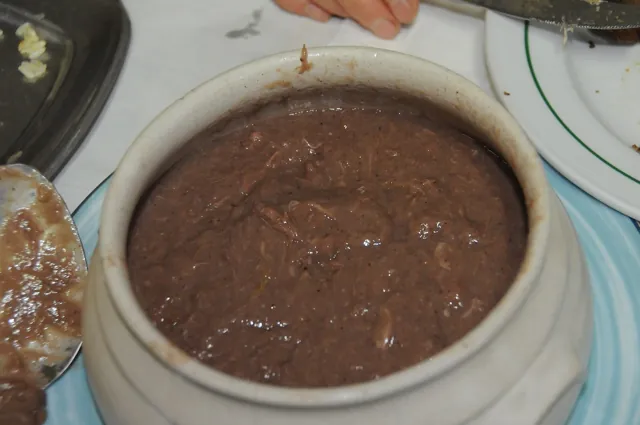
Papas de sarrabulho in a dish. Illustration of the food, not Maria Helena’s recipe.JoseolgonIllustrative photograph

Papas de sarrabulho also tell us how knowledge is passed on.

Includes an activity to try →Explore: The word popes holds differences →View ingredients and preparation →
Read here and view sources

Maria Helena da Mota Lopes da Silva Almeida, who had lived in Refojos since childhood, said she learned to make these papas at the beginning of the twenty-first century. Her teacher was a cook from Porto who came to Cabeceiras to work at baptisms and weddings. Celebrations were also places to learn techniques and recipes.

The version recorded in June 2011 combines different meats, maize flour, cooked pork blood, red wine and cumin. The account places its preparation in winter, up to the end of March. The publication, from July of the same year, documents how knowledge was passed on and the usual season for the dish; it does not describe a menu available today.

The account distinguishes shredding the meats from finely chopping the heart, tongue and liver. Flour, wine and cooked blood form a separate mixture. These details show that a recipe also preserves movements and textures.

To collect a kitchen memory, first ask who taught the recipe and on what occasions it was made. Then ask for a gesture that is difficult to explain in writing. Record the speaker’s words and the conversation date: a family recipe gains context when it preserves the voice passing it on.

Source and context

Basto Land Museum — A recipe learned at parties, publication of 06/07/2011
Consultations: ,

Editorial summary; the date of consultation is not the date of the facts.

YOUR LOCAL GUIDE

What would you like to discover?

Take a closer look.