Discover Cabeceiras de BastoFree independent guide
ViveCabeceirasYOUR GUIDE TO CABECEIRAS
ENEnglish
SearchSaved

Plants

Choose a story to start with. You can change the subject or fine tune the search.

9 stories · Read the landscape through the plants · Search: jardins

Read the landscape through the plants

Trees, forests, vineyards and fields reveal different ways of occupying the territory.

Choose a story · 9
Painzela · gardens and skills

Plants shaped by human hands

Camellias and yews are part of the story of these gardens.

Includes an activity to try →Explore: The garden also holds knowledge →
Read here and view sources

Camellias and yews trimmed into geometric or animal shapes: this is the art of topiary. The Portuguese Historic Gardens Association links this tradition to the school of Manuel Joaquim Alves Soares, continued by his son Joaquim. Casa de Piellas, in Painzela, is part of this history. It is private property; check the visiting conditions in its place profile.

The Rota do Tâmega presentation links this school of gardening to support from the sisters Emília Ermelinda and Justina Praxedes Pinto Basto. In the mid-19th century, they are said to have supported Manuel Joaquim Alves Soares’s training in Porto and England. The story of these plant shapes therefore also involves the sharing of knowledge and its transmission between generations.

Looking at topiary means looking both at a plant and at human skill. Geometric shapes organise lines and volumes; animal shapes evoke living creatures. The association identifies examples of this tradition at several estates in Basto, not just Piellas.

Words in this story: see explanations →Getting to know the parish See Fact sheet: Casa de Pielas, jardins e anexos
Source and context

Portuguese Association of Historical Gardens — Route Tâmega

Portuguese Association of Historical Gardens — Casa de Piellas, Painzela

Accessed: . Editorial summary; the date of consultation is not the date of the facts.
Praça da República · garden memories from 2011

Spring comes to the square too

Camellias and rhododendrons change the town’s colours.

Read here and view sources

In April 2011, the municipality described a seasonal handover in Praça da República: the camellias were losing their flowers as the rhododendrons began to bloom. The news item recorded two pink-flowered plants and linked them to the traditional gardens of Terras de Basto. This dated portrait of the square invites us to notice flowers as well as monuments. A March report from the same year counted 33 camellia plants in the square: 30 added during the redesign joined the three already there. It mentioned pink, white and variegated flowers. These figures belong to the 2011 account, not a current count.

Source and context

Municipality — Rododendros give spark to Republic Square, 01/04/2011
Accessed:

Municipality — Camellias in Republic Square, 18/03/2011
Accessed:

Editorial summary; the date of consultation is not the date of the facts.
Parque Florestal · 2016 planting and species biology

A tree with fan-shaped leaves

The ginkgo’s leaves have a distinctive shape to look for.

Includes an activity to try →Explore: Two trees, two ways to look →
Read here and view sources

Ginkgo biloba leaves open like fans and may have a central division. Gulbenkian describes them turning golden in autumn before falling. The connection to Cabeceiras has a date: the municipal news item of 18 March 2016 records ginkgo and dawn redwood planting in Parque Florestal. The record tells the story of that planting; it does not confirm the trees’ present condition.

The fan shape also appears in the leaf’s veins. Gulbenkian explains that the division into two lobes, when present, gives rise to the name biloba. Leaves do not all need an identical notch to belong to the same species.

Ginkgo has male and female trees. Female trees produce seeds with a fleshy covering that may resemble a plum, but these are not fruits like those of a plum tree. This story invites us to observe shapes and understand reproduction; the municipal news does not identify the sex of the tree planted in Cabeceiras.

Origin and use are part of the story too. Gulbenkian places ginkgo’s origin in south-eastern China and mentions its planting in Portuguese parks, gardens and streets. It prefers sunny places with available water in well-drained soil. A garden can therefore bring together trees from very different origins: being planted in Cabeceiras does not make a species native to the municipality.

Words in this story: see explanations →
Source and context

Municipality — World Tree Day, 18/03/2016

Calouste Gulbenkian Foundation — Ginkgo

Accessed: . Editorial summary; the date of consultation is not the date of the facts.

Town centre · project announced in 2022

Shade is part of the town too

A park can offer more than a place for a walk.

Read here and view sources

The Parque Urbano Florestal rehabilitation project announced in September 2022 proposed work on around 7,500 square metres in the town centre. It included native trees and shrubs and aimed to improve microclimatic comfort by regulating light and sun exposure near buildings. This is the project’s documented intention, not an assessment of completed works: a way to understand the role of trees in urban space.

Source and context

Municipality — Rehabilitation of the Walking Forest Urban Park, 14/09/2022

Accessed: . Editorial summary; the date of consultation is not the date of the facts.

Arco de Baúlhe · railway memories

A station that blossomed too

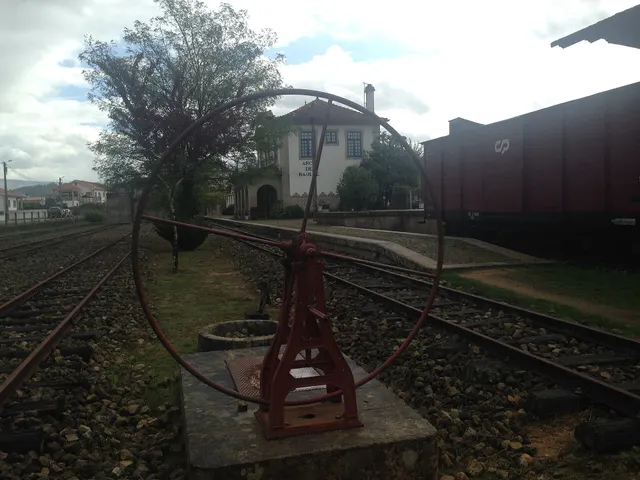
Revolving plate and tracks from the old Arco de Baúlhe station, with buildings and railway equipment at the bottom.
View of the Arco de Baúlhe station and its surroundings. The photograph does not document the distinction of the gardens in 1962.© JP Ribeiroⓘ

Not every memory of the railway is made of metal.

Includes an activity to try →
Read here and view sources

The station also has a memory made of flowers. The museum publication describes its rose gardens and recalls the distinction it received in 1962 as Portugal’s most flower-filled station.

Alongside machines and rails, the garden adds another way to see the place: a station’s landscape includes what grows around it. The award belongs to the history of the site; it is not a current rating of the gardens.

Getting to know the parish See Fact sheet: Núcleo Ferroviário de Arco de Baúlhe
Source and context

Municipality — Land Museum of Basto: a journey through the history of the region, pp. 28–29

Accessed: . Editorial summary; the date of consultation is not the date of the facts.

Landscape ecology of the municipality

A landscape needs connections

The gaps between green spaces matter too.

Includes an activity to try →Explore: Choose a part of the landscape →
Read here and view sources

An isolated green space does not tell the whole story. The municipal report of 2025 explains that fragmentation reduces and separates habitats, interrupting ecological processes. The ecological network aims to connect natural, agricultural and forest spaces, including gardens, tree-lined avenues and watersides in town. This is a proposal for understanding and planning the territory, not confirmation that all those connections already function.

Words in this story: see explanations →
Source and context

Municipality — Environmental Report of the PDM review, February 2025, p. 55
Accessed:

Municipality — Environmental Report, February 2025, pp. 50, 55 and 139
Accessed:

Editorial summary; the date of consultation is not the date of the facts.

Parque Florestal · 2016 planting and general botany

A conifer that sheds its leaves in autumn

Having cones does not mean keeping leaves all year round.

Includes an activity to try →
Read here and view sources

The municipal news of March 2016 records the planting of a dawn redwood in Parque Florestal alongside a ginkgo. This episode opens a window onto Metasequoia glyptostroboides, the living species of the genus described by Cambridge University Botanic Garden. The report provides no detailed botanical identification and does not confirm the tree’s survival today.

In Cambridge’s description, this conifer sheds its leaves and turns coppery in autumn. Leaves, buds and branches are arranged in opposite pairs. Its bark is fissured and the tree can grow large. These are general features, not measurements of a tree in Cabeceiras.

Compare it with ginkgo: both can change colour and lose foliage, but leaf shape and arrangement differ greatly. A tree’s calendar and a leaf’s pattern tell different parts of its story.

The scientific story has a twist: Cambridge reports that dawn redwood was known only from fossils until 1941, when living trees were found in Sichuan, China. Seed collection and distribution later helped establish it in gardens across several countries. The profile distinguishes its limited wild population from widespread cultivation. A park tree and a population in its native habitat tell different stories.

Words in this story: see explanations →
Source and context

Municipality — World Tree Day, 18/03/2016

Cambridge University Botanic Garden — Metasequoia glyptostroboides, deciduous foliage and layout of leaves

Accessed: . Editorial summary; the date of consultation is not the date of the facts.

Refojos · monastic landscape

Beyond the church, cultivated land

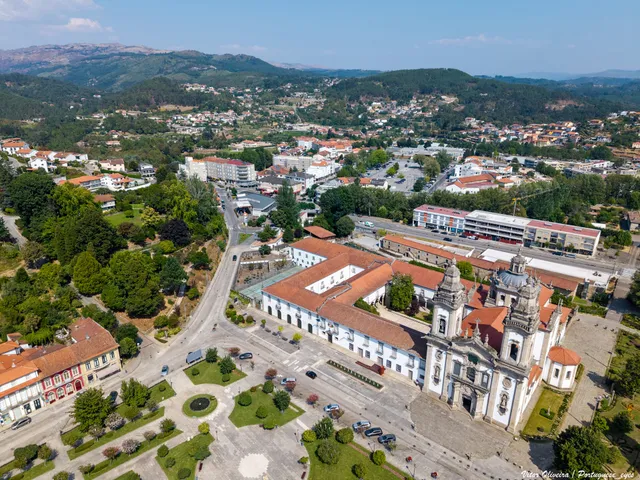
Air view of the Monastery of São Miguel and the Republic Square in Refojos
View of the Monastery of Refojos and the urban surroundings. It is a context image, not a reconstruction of the cultivated fence.© Vitor Oliveira from Torres Vedras, PORTUGALⓘ

Vegetable gardens, orchards and medicinal plants formed part of the monastery grounds.

Includes an activity to try →Explore: The fence continues in other stories →
Read here and view sources

According to the municipal description of 2021, vegetable gardens, orchards, medicinal plants, fields and woods made up the former grounds of Refojos Monastery. Its pharmacy supplied other Benedictine monasteries, including Tibães. Beyond the church, there was land to cultivate and medicine to prepare. This is a historical portrait of the grounds, not an inventory of today’s plants.

The same description places the Penoutas stream beside and behind the monastery, near former agricultural buildings now adapted as museum spaces. Water and working buildings broaden the view: the story of the complex extends beyond worship.

The former grounds can no longer be read as one intact garden. The source draws attention to scattered traces. Distinguishing what the document describes from what a photograph shows is part of the discovery: a view of the square does not reconstruct vanished vegetable gardens, orchards or medicinal plants.

Words in this story: see explanations →Getting to know the parish See Fact sheet: Mosteiro de São Miguel de Refojos
Source and context

Municipality — historical gardens, news of 21/05/2021

Accessed: . Editorial summary; the date of consultation is not the date of the facts.

Gardens · general ecology and seasons

A calendar of flowers

Pollinators need flowers at different times of year.

Includes an activity to try →Explore: A garden, several moments →
Read here and view sources

According to guidance from entomologists Renata Santos and Albano Soares, a green space becomes more valuable to pollinators when it offers flowers at different times, with varied shapes, colours and sizes. Spontaneously growing plants can contribute too. The strawberry tree, which flowers in autumn, is one example mentioned. This is an idea for observing a garden’s cycles, not a guaranteed calendar for every altitude and set of conditions in Cabeceiras.

Source and context

Calouste Gulbenkian Foundation — explanations of entomologists Renata Santos and Albano Soares, 07/06/2022

Accessed: . Editorial summary; the date of consultation is not the date of the facts.

YOUR LOCAL GUIDE

What would you like to discover?

Take a closer look.