Discover Cabeceiras de BastoFree independent guide
ViveCabeceirasYOUR GUIDE TO CABECEIRAS
ENEnglish
SearchSaved

Stories of Cabeceiras

Choose a story to start with. You can change the subject or fine tune the search.

20 stories · All themes · Search: jardins

Read the landscape through the plants

Trees, forests, vineyards and fields reveal different ways of occupying the territory.

Choose a story · 9
Painzela · gardens and skills

Plants shaped by human hands

Camellias and yews are part of the story of these gardens.

Includes an activity to try →Explore: The garden also holds knowledge →
Read here and view sources

Camellias and yews trimmed into geometric or animal shapes: this is the art of topiary. The Portuguese Historic Gardens Association links this tradition to the school of Manuel Joaquim Alves Soares, continued by his son Joaquim. Casa de Piellas, in Painzela, is part of this history. It is private property; check the visiting conditions in its place profile.

The Rota do Tâmega presentation links this school of gardening to support from the sisters Emília Ermelinda and Justina Praxedes Pinto Basto. In the mid-19th century, they are said to have supported Manuel Joaquim Alves Soares’s training in Porto and England. The story of these plant shapes therefore also involves the sharing of knowledge and its transmission between generations.

Looking at topiary means looking both at a plant and at human skill. Geometric shapes organise lines and volumes; animal shapes evoke living creatures. The association identifies examples of this tradition at several estates in Basto, not just Piellas.

Words in this story: see explanations →Getting to know the parish See Fact sheet: Casa de Pielas, jardins e anexos
Source and context

Portuguese Association of Historical Gardens — Route Tâmega

Portuguese Association of Historical Gardens — Casa de Piellas, Painzela

Accessed: . Editorial summary; the date of consultation is not the date of the facts.
Praça da República · garden memories from 2011

Spring comes to the square too

Camellias and rhododendrons change the town’s colours.

Read here and view sources

In April 2011, the municipality described a seasonal handover in Praça da República: the camellias were losing their flowers as the rhododendrons began to bloom. The news item recorded two pink-flowered plants and linked them to the traditional gardens of Terras de Basto. This dated portrait of the square invites us to notice flowers as well as monuments. A March report from the same year counted 33 camellia plants in the square: 30 added during the redesign joined the three already there. It mentioned pink, white and variegated flowers. These figures belong to the 2011 account, not a current count.

Source and context

Municipality — Rododendros give spark to Republic Square, 01/04/2011
Accessed:

Municipality — Camellias in Republic Square, 18/03/2011
Accessed:

Editorial summary; the date of consultation is not the date of the facts.
Parque Florestal · 2016 planting and species biology

A tree with fan-shaped leaves

The ginkgo’s leaves have a distinctive shape to look for.

Includes an activity to try →Explore: Two trees, two ways to look →
Read here and view sources

Ginkgo biloba leaves open like fans and may have a central division. Gulbenkian describes them turning golden in autumn before falling. The connection to Cabeceiras has a date: the municipal news item of 18 March 2016 records ginkgo and dawn redwood planting in Parque Florestal. The record tells the story of that planting; it does not confirm the trees’ present condition.

The fan shape also appears in the leaf’s veins. Gulbenkian explains that the division into two lobes, when present, gives rise to the name biloba. Leaves do not all need an identical notch to belong to the same species.

Ginkgo has male and female trees. Female trees produce seeds with a fleshy covering that may resemble a plum, but these are not fruits like those of a plum tree. This story invites us to observe shapes and understand reproduction; the municipal news does not identify the sex of the tree planted in Cabeceiras.

Origin and use are part of the story too. Gulbenkian places ginkgo’s origin in south-eastern China and mentions its planting in Portuguese parks, gardens and streets. It prefers sunny places with available water in well-drained soil. A garden can therefore bring together trees from very different origins: being planted in Cabeceiras does not make a species native to the municipality.

Words in this story: see explanations →
Source and context

Municipality — World Tree Day, 18/03/2016

Calouste Gulbenkian Foundation — Ginkgo

Accessed: . Editorial summary; the date of consultation is not the date of the facts.
Town centre · project announced in 2022

Shade is part of the town too

A park can offer more than a place for a walk.

Read here and view sources

The Parque Urbano Florestal rehabilitation project announced in September 2022 proposed work on around 7,500 square metres in the town centre. It included native trees and shrubs and aimed to improve microclimatic comfort by regulating light and sun exposure near buildings. This is the project’s documented intention, not an assessment of completed works: a way to understand the role of trees in urban space.

Source and context

Municipality — Rehabilitation of the Walking Forest Urban Park, 14/09/2022

Accessed: . Editorial summary; the date of consultation is not the date of the facts.

Arco de Baúlhe · railway memories

A station that blossomed too

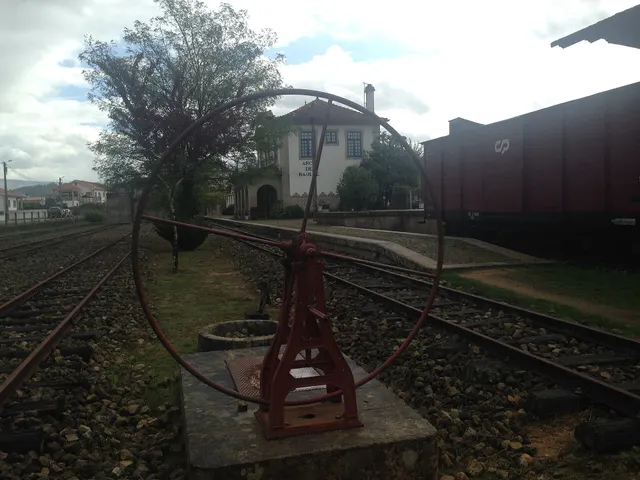
Revolving plate and tracks from the old Arco de Baúlhe station, with buildings and railway equipment at the bottom.
View of the Arco de Baúlhe station and its surroundings. The photograph does not document the distinction of the gardens in 1962.© JP Ribeiroⓘ

Not every memory of the railway is made of metal.

Includes an activity to try →
Read here and view sources

The station also has a memory made of flowers. The museum publication describes its rose gardens and recalls the distinction it received in 1962 as Portugal’s most flower-filled station.

Alongside machines and rails, the garden adds another way to see the place: a station’s landscape includes what grows around it. The award belongs to the history of the site; it is not a current rating of the gardens.

Getting to know the parish See Fact sheet: Núcleo Ferroviário de Arco de Baúlhe
Source and context

Municipality — Land Museum of Basto: a journey through the history of the region, pp. 28–29

Accessed: . Editorial summary; the date of consultation is not the date of the facts.

Landscape ecology of the municipality

A landscape needs connections

The gaps between green spaces matter too.

Includes an activity to try →Explore: Choose a part of the landscape →
Read here and view sources

An isolated green space does not tell the whole story. The municipal report of 2025 explains that fragmentation reduces and separates habitats, interrupting ecological processes. The ecological network aims to connect natural, agricultural and forest spaces, including gardens, tree-lined avenues and watersides in town. This is a proposal for understanding and planning the territory, not confirmation that all those connections already function.

Words in this story: see explanations →
Source and context

Municipality — Environmental Report of the PDM review, February 2025, p. 55
Accessed:

Municipality — Environmental Report, February 2025, pp. 50, 55 and 139
Accessed:

Editorial summary; the date of consultation is not the date of the facts.

Parque Florestal · 2016 planting and general botany

A conifer that sheds its leaves in autumn

Having cones does not mean keeping leaves all year round.

Includes an activity to try →
Read here and view sources

The municipal news of March 2016 records the planting of a dawn redwood in Parque Florestal alongside a ginkgo. This episode opens a window onto Metasequoia glyptostroboides, the living species of the genus described by Cambridge University Botanic Garden. The report provides no detailed botanical identification and does not confirm the tree’s survival today.

In Cambridge’s description, this conifer sheds its leaves and turns coppery in autumn. Leaves, buds and branches are arranged in opposite pairs. Its bark is fissured and the tree can grow large. These are general features, not measurements of a tree in Cabeceiras.

Compare it with ginkgo: both can change colour and lose foliage, but leaf shape and arrangement differ greatly. A tree’s calendar and a leaf’s pattern tell different parts of its story.

The scientific story has a twist: Cambridge reports that dawn redwood was known only from fossils until 1941, when living trees were found in Sichuan, China. Seed collection and distribution later helped establish it in gardens across several countries. The profile distinguishes its limited wild population from widespread cultivation. A park tree and a population in its native habitat tell different stories.

Words in this story: see explanations →
Source and context

Municipality — World Tree Day, 18/03/2016

Cambridge University Botanic Garden — Metasequoia glyptostroboides, deciduous foliage and layout of leaves

Accessed: . Editorial summary; the date of consultation is not the date of the facts.

Refojos · monastic landscape

Beyond the church, cultivated land

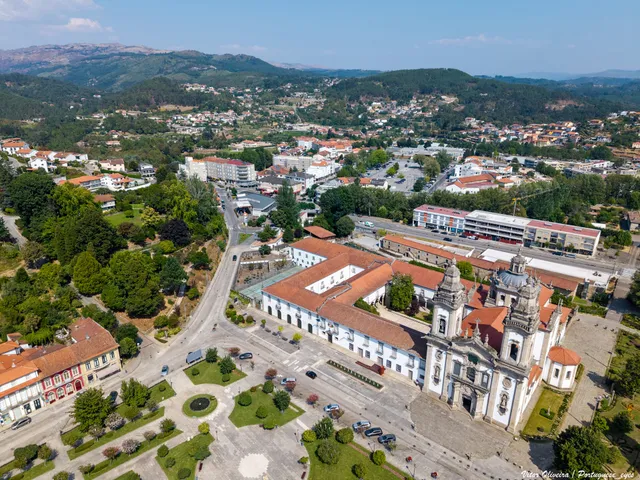
Air view of the Monastery of São Miguel and the Republic Square in Refojos
View of the Monastery of Refojos and the urban surroundings. It is a context image, not a reconstruction of the cultivated fence.© Vitor Oliveira from Torres Vedras, PORTUGALⓘ

Vegetable gardens, orchards and medicinal plants formed part of the monastery grounds.

Includes an activity to try →Explore: The fence continues in other stories →
Read here and view sources

According to the municipal description of 2021, vegetable gardens, orchards, medicinal plants, fields and woods made up the former grounds of Refojos Monastery. Its pharmacy supplied other Benedictine monasteries, including Tibães. Beyond the church, there was land to cultivate and medicine to prepare. This is a historical portrait of the grounds, not an inventory of today’s plants.

The same description places the Penoutas stream beside and behind the monastery, near former agricultural buildings now adapted as museum spaces. Water and working buildings broaden the view: the story of the complex extends beyond worship.

The former grounds can no longer be read as one intact garden. The source draws attention to scattered traces. Distinguishing what the document describes from what a photograph shows is part of the discovery: a view of the square does not reconstruct vanished vegetable gardens, orchards or medicinal plants.

Words in this story: see explanations →Getting to know the parish See Fact sheet: Mosteiro de São Miguel de Refojos
Source and context

Municipality — historical gardens, news of 21/05/2021

Accessed: . Editorial summary; the date of consultation is not the date of the facts.

Gardens · general ecology and seasons

A calendar of flowers

Pollinators need flowers at different times of year.

Includes an activity to try →Explore: A garden, several moments →
Read here and view sources

According to guidance from entomologists Renata Santos and Albano Soares, a green space becomes more valuable to pollinators when it offers flowers at different times, with varied shapes, colours and sizes. Spontaneously growing plants can contribute too. The strawberry tree, which flowers in autumn, is one example mentioned. This is an idea for observing a garden’s cycles, not a guaranteed calendar for every altitude and set of conditions in Cabeceiras.

Source and context

Calouste Gulbenkian Foundation — explanations of entomologists Renata Santos and Albano Soares, 07/06/2022

Accessed: . Editorial summary; the date of consultation is not the date of the facts.

Life you do not always see

Knowing animals begins by perceiving the territory and respecting the distance.

Choose a story · 4
Biology of the species · photograph registered in the municipality

A grasshopper through the winter

The name Egyptian grasshopper does not limit the species to a country.

Includes an activity to try →
Read here and view sources

The name Egyptian grasshopper does not limit Anacridium aegyptium to a country. Gulbenkian’s record refers to its distribution by Europe, North Africa and the Middle East and its presence in mainland Portugal, in orchards, gardens, forests and open forests.

In the Gulbenkian Garden in Lisbon, adults are described to spend the winter and enjoy the sun on trees and bushes on bright days. This observation helps to know the species, but does not automatically transfer to Cabeceiras. The local photographic record was made in September: it shows a meeting on that date, not the behavior during winter in the municipality.

In the description of the Lisbon garden, the observation sites include rosemary hedges, medronhos, olive trees and other trees that preserve leaves. The vegetation enters history as part of the environment used by adults. These references do not indicate where to look for the locust in Cabeceiras; they help to understand why a record can gather insect, season and plants. By comparing the September photograph with the winter report, it always records date and place separately.

Source and context

Calouste Gulbenkian Foundation — Anacridium aegyptium

Accessed: . Editorial summary; the date of consultation is not the date of the facts.

Hedgehog · General biology

Winter is not a sleep after

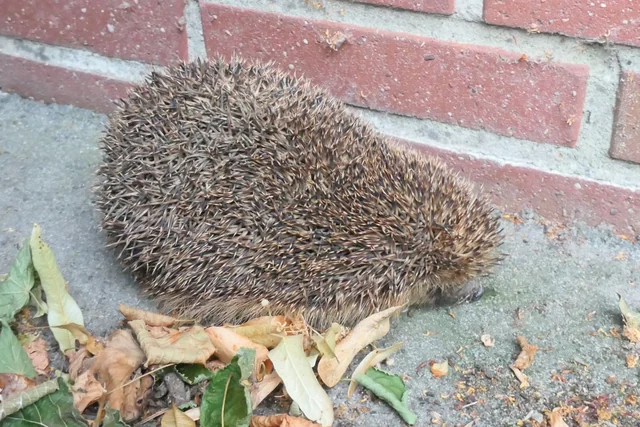
Hedgehog next to a brick wall, with visible thorns and little head exposed.
Goldfish in Kalkar, Germany, in 2025. Illustration of the species; it is not a record of Cabeceiras.
Photography: Pieter Delicaat · CC BY-SA 4.0
About this photograph

Date given at source: . Source consulted in 2026-11-07. EXIF orientation, proportional resizing and WebP conversion of the current version in Commons; no retouching or additional clipping.

Request removal or correct the photo credit

The hedgehog can return to activity when the temperature rises.

Includes an activity to try →
Read here and view sources

According to FCT NOVA, the hibernation of the hedgehog (Erinaceus europaeus) can be interrupted for warmer periods. This nocturnal and solitary mammal eats, among other foods, insects, worms, snails and fruit. Faced with a threat, he curls up and exposes the thorns. Woods, hedges, meadows and gardens are part of their habitats. This is general biology: the source does not confirm a register in the municipality. The short legs have five fingers and there is a small tail under the thorns. FCT NOVA also mentions the ability to climb and move in the water. These are general characteristics of the species, not proposed to test the capabilities of an animal found.

Source and context

FCT NOVA — FCT VIVA: Erinaceus europaeus

Accessed: . Editorial summary; the date of consultation is not the date of the facts.

Birds · General biology in Portugal

An acrobat between the leaves

The blue chapim seeks food even upside down.

Read here and view sources

The barrette and the blue wings, the white faces and the dark line next to the eyes help to recognize Cyanistes caeruleus. The yellow breast completes the contrast. But it is worth looking at the movement: the University of Évora describes this small bird jumping through the branches and hanging upside down while feeding.

The foliage works as a search zone for insects and spiders. In autumn and winter, fruits and seeds can also enter the diet. The food does not fit in an equal list for all seasons: changes what the bird enjoys in the landscape.

The chapim-blue is resident and is distributed across the continental territory. Gulbenkian's chart describes varied wooded environments, from the woods to the galleries near the rivers, orchards, hedges and gardens. A garden and a wooded margin can offer different contexts to know this bird. These sources explain the species in Portugal; they do not document a meeting in a parish of Cabeceiras.

Words in this story: see explanations →
Source and context

University of Évora — Biodiversity of Mitra: Cyanistes caeruleus

Calouste Gulbenkian Foundation / João E. Rabaça — Blue Chapim

Accessed: . Editorial summary; the date of consultation is not the date of the facts.

Bucos · local register and general biology

A red breast, a menu that changes

In winter, the fruits also enter the feed of the pisco.

Read here and view sources

Erithacus rubecula should be part of the scientific name to the stain of the chest: rubecula evokes the reddish color. João E. Rabaça's description for Gulbenkian presents a frequent bird in wooded areas of Portugal, including parks and gardens, especially in winter. It is a good starting point to look at a family bird with another curiosity: what do you look for to eat?

During most of the year, food is essentially insectivorous. In winter, fruits and berries gain weight in the diet. The change connects the bird to plants and seasons: knowing an animal also goes through discovering the food that the landscape offers throughout the year.

Resident and migrant are not always opposite labels for an entire species. In the British example described by the BTO, resident piscos coexist in winter with visitors from northern and eastern Europe. This example helps to understand different movements within the same species; it does not identify the origin of a pisco observed in Cabeceiras.

There is a documented meeting in the municipality: Pedro Mendes published a pisco observation of 3 October 2021. The public point is in Bucos at the intersection with CAOP2025 and community identification had a degree of investigation in the consultation of 7 November 2026. The registration confirms this meeting; it does not identify the migratory origin of the bird. The photograph preserves all rights reserved and can be consulted at the source.

Words in this story: see explanations →
Source and context

Calouste Gulbenkian Foundation / João E. Rabaça — Red-necked pisco

British Trust for Ornithology — BirdFacts: Robin, Erithacus rubecula

iNaturalist — pisco observed by Pedro Mendes in03/10/2021, Bucos; photograph with all rights reserved

Accessed: . Editorial summary; the date of consultation is not the date of the facts.

Between rivers and mountains

Water and relief form the municipality. Choose a name and follow the landscape.

Choose a story · 1
Landscape and garden · Painzela

The water draws the garden of Piellas

Among the carved bushes, there are other ways to go.

Includes an activity to try →Explore: The garden within the landscape →
Read here and view sources

In Piellas, the water helps to connect garden, forest and fields. The description published by Jardins Magazine places a tank in L next to the wall, close to a passage to the forest of Casa do Boal. Another tank, surrounded by bamboos and buxos, opens for a cultivation field surrounded by forest. The water goes to the stream of Painzela.

The article also describes paths shaded by ramadas and an agricultural courtyard associated with the old production of corn and wine. The farm therefore gathers recreational spaces and work spaces: the garden of carved shrubs is part of a wider landscape.

Try to imagine the fifth in layers: the levels, paths, vegetation and the water system. The description allows to relate these elements, but does not provide a complete map of the hydraulic circuit. Piellas is a private property; the visiting conditions should be consulted on the site's chart.

See Fact sheet: Casa de Pielas, jardins e anexos
Source and context

Jardins Magazine — Gardens of Portugal: Route of the Tâmega, section Casa de Piellas

Accessed: . Editorial summary; the date of consultation is not the date of the facts.

A world under the leaves

A first look at the fungi. Continue in the gallery to see the local records already documented.

Choose a story · 6
General knowledge · national guide

Blades, pores and other forms

Not everyone has the same drawing under their hat.

Includes an activity to try →Explore: What shape arouses your curiosity? →
Read here and view sources

The guide distinguishes groups with blades, folds, pores or specks. Naturalis describes white blades in Amanita muscaria and light pores tubes in Gyroporus cyanescens. There are two different ways to organize the surface under the hat. An isolated feature does not allow identifying a mushroom or deciding whether it can be consumed. Not everyone has a foot: some hats grow directly from wood. The guide to Australian botanical gardens also shows shapes of cup and fine coating on wood. When you observe, you can start with three questions: what is the contour, where support grows and what surface can you see without moving?

Words in this story: see explanations →
Source and context

DGADR / ICNF — Mushroom Collector's Guide, June 2013
Accessed:

Naturalis Biodiversity Center — Amanita muscaria
Accessed:

Naturalis Biodiversity Center — Gyroporus cyanescens
Accessed:

Australian National Botanic Gardens / Australian National Herbarium — Types of fungal fruiting bodies, Heino Lepp
Accessed:

Editorial summary; the date of consultation is not the date of the facts.

General biology · growth of fungi

Why do mushrooms grow in a circle?

On the surface appears the drawing of a hidden growth.

Includes an activity to try →Explore: The circle is just the beginning →
Read here and view sources

Some myceliums expand from a point, searching for nutrients in the outer areas. Mushrooms can appear in this margin of growth and form a ring. The visible circle thus accompanies the expansion of the fungus in the substrate. Not all fungi make these drawings; this general explanation does not confirm a circle observed in the municipality.

The net grows by stretching and branching the hyphae. There are also links between the filaments, which allow the distribution of nutrients through the mycelium. Imagine several paths connected: the ring of mushrooms, when it appears, does not show all this underground design.

Growth does not have to draw a perfect circle. The distribution of nutrients and conditions of the environment influence the direction of expansion. The explanation of Australian botanical gardens describes further development in favorable areas; the circle is a way of understanding the process, not a mandatory mold.

Source and context

Australian National Botanic Gardens / Centre for Australian National Biodiversity Research — The mycelium

Accessed: . Editorial summary; the date of consultation is not the date of the facts.

Ecology of fungi · General explanation

There are fungi that live off others

Cooperation and parasitism are different relationships.

Explore: What relationship is this? →
Read here and view sources

The parasitic fungi use resources from living organisms: plants, animals or other fungi. They can cause disease and, in some cases, the death of the host. This explanation of the CCRES helps distinguish ways of life; it does not diagnose trees or animals observed in the municipality.

An example helps to understand the difference between what we see and what happens on the ground. In the British investigation of the Royal Horticultural Society on Armillaria, fungi can feed on roots or buried dead wood. Mushrooms do not always come against the trunk: the link can pass through the roots or cords of mycelium, the rhizomorphs.

The survey brought together 170 suspected cases in British parks and gardens, with photographs in 113. These figures describe the contributions received, not the frequency of the disease in a forest or the situation of Cabeceiras.

Words in this story: see explanations →
Source and context

Silvestrian Resource Competence Centre — General Mycology
Accessed:

Royal Horticultural Society — Honey Fungus Hunt, British survey results and context
Accessed:

Editorial summary; the date of consultation is not the date of the facts.

General biology of fungi · no local occurrence attributed

Look deeper.

The difference starts in the cells.

Explore: From what is done to how you live →
Read here and view sources

The fungi belong to a kingdom of their own. Unlike plants, they have no chlorophyll to perform photosynthesis: they get food from the environment. Their cellular walls contain chitin, a material also present in the outer skeleton of insects. This comparison, explained by Kew's botanical gardens, helps to understand why a mushroom is not a small plant.

The comparison continues in energy reserves: plants store starch, while fungi store glycogen. They also differ in cell wall materials: cellulose in plants, chitin in most fungi. They are not characteristics that confirm themselves by observing a hat on the way.

How does food come then? Many fungi release enzymes that decompose organic matter outside and absorb the products of this transformation. That is why a decomposing trunk, a fallen leaf and a living root open different questions about the feeding and relationships of each fungus.

Source and context

Royal Botanic Gardens, Kew — What in earth? Understanding what fungi really are, Eddie Johnston (07/10/2022)

Accessed: . Editorial summary; the date of consultation is not the date of the facts.

General biology · forms of fungi

♪ Corals that don't live in the sea ♪

The drawing of a fungus may remind branches or folds of gelatin.

Includes an activity to try →Explore: Ways to compare →
Read here and view sources

Australian botanical gardens describe fungi with reproductive structures in the form of small clades or branched corals. They usually appear in the soil and, in some cases, in decomposing wood. Others have a gelatinous appearance and grow on wood to decompose. These names describe shapes, not a single species. A visual comparison helps ask questions, but does not replace identification. The source presents examples of general biology without confirming these forms at a site of Cabeceiras.

Historical illustrations also require critical reading. The source shows drawings of corals published by Robert Kaye Greville in the 19th century: they have historical interest, but represent the production of spores according to an interpretation then used and corrected today. A beautiful drawing can preserve an ancient hypothesis, not just a form.

Source and context

Australian National Botanic Gardens / Australian National Herbarium — Coral and jelly fungi, Heino Lepp

Accessed: . Editorial summary; the date of consultation is not the date of the facts.

Gardens and conservation · general ecology

A garden can also accommodate an invisible world

More habitats, more stories to find out.

Includes an activity to try →Explore: From design to ecological relations →
Read here and view sources

A garden does not need to look the same in the whole area. In the interview published by Jardim Gulbenkian, researcher Susana Gonçalves proposes combining small habitats and varied native plants to favor the diversity of fungi. A meadow, a small forest and an embroidery offer different contexts.

Care remains under the feet: keeping the soil covered helps prevent drying and erosion. Branches and dead wood can sustain decomposers and other organisms. Keeping old trees requires, however, evaluation and monitoring of the risk of falling.

This is a proposal to understand ecological relationships, not a survey of Cabeceiras gardens. Try looking at a green space as a set of environments: what is exposed, what is shaded and where is there plant matter on the ground?

Source and context

Gulbenkian Garden — ecology of fungi, with Susana Gonçalves (17/04/2023)

Accessed: . Editorial summary; the date of consultation is not the date of the facts.

YOUR LOCAL GUIDE

What would you like to discover?

Take a closer look.