Discover Cabeceiras de BastoFree independent guide
ViveCabeceirasYOUR GUIDE TO CABECEIRAS
ENEnglish
SearchSaved

Stories of Cabeceiras

Choose a story to start with. You can change the subject or fine tune the search.

16 stories · All themes · Search: escola

Crafts and memories

Through hands, food and community: small stories of how people lived and what they pass on.

Choose a story · 5
São Nicolau · Celeirô do Monte, reuse reported in 2016

The school brought the village together again

In Celeirô do Monte, a school building found another use.

Includes an activity to try →
Read here and view sources

A municipal report from January 2016 recounts how Celeirô do Monte’s former primary school, closed for about eight years, returned to serving the community in 2015. Made available to the parish council for community activities, it received improvements to the floor and entrance. At the end of that year, the village gathered there to welcome 2016. The story shows a building being reused; it does not confirm its current operation or access.

Source and context

Municipality — Mayor visited parish of Cabeceiras de Basto: former Primary School of Celeirô do Monte, 11/01/2016

Accessed: . Editorial summary; the date of consultation is not the date of the facts.
Pereiras, Refojos · memories of the 1960s

A street holds crafts too

School, trade and work shaped local life.

Includes an activity to try →
Read here and view sources

The Museum recalls that in the 1960s Pereiras had a primary school, a tailor, a blacksmith and a grain warehouse. These examples show a place where learning, shopping and work crossed paths. They are memories of activities at that time, not a list of services still open.

The memory gains another dimension alongside the local fairs. For the first half of the 20th century, the Museum’s article describes the Feira dos Trinta and the Feira das Cebolas, also known as the Feira de Santo Antonino. Trade extended beyond shop doors to regular gatherings, with cattle particularly prominent.

The same place also brought together the old prison and the football ground opened in 1925. Connecting these stories turns the street into more than a row of buildings: learning, work, administration and leisure appear. The references belong to different moments; they are not a snapshot of everything operating on the same day.

Source and context

Basto Land Museum — The place of the Pereiras of Refojos de Basto, 28/07/2024

Accessed: . Editorial summary; the date of consultation is not the date of the facts.
Intangible cultural heritage · Bucos and Abadim

Knowledge passed from hand to hand

In Bucos and Abadim, Jogo do Pau is heritage too.

Read here and view sources

The National Inventory of Intangible Cultural Heritage record identifies the schools of Bucos and Abadim and the associations that support them. It describes the transition from an old defensive practice to a display game, passed between generations and requiring training and skill. Record INPCI_2023_016 helps explain this tradition; it is not a timetable of lessons or demonstrations.

Getting to know the parish
Source and context

MatrixPCI — Cabeceiras de Basto Stick Game, INPCI_2023_016

Accessed: . Editorial summary; the date of consultation is not the date of the facts.

Bucos · testimony collected in 2020

Leaving with memories of the game

Players’ testimonies also speak of emigration.

Includes an activity to try →Explore: A tradition goes from hand to hand →
Read here and view sources

In Vila Boa de Bucos on 23 October 2020, Fernando Lima recounted emigrating after military service. Leaving interrupted his practice of Jogo do Pau, but he still enjoyed watching his cousin and the cousin’s sons. Before emigrating, he met other shepherds in the hills: playing was also a way to socialise and make the day with the flock feel shorter.

The National Inventory record includes another link with emigration: Custódio Bastos of Bucos, who left for France, kept his lodão staff as a memento. His learning had passed through his father, Manuel Henriques Bastos, and Mestre Calado filho.

There are also stories of return. In testimony gathered in October 2020, Fernando Oliveira recalled Ernesto Santos, who worked in Leiria, returned to Bucos after retirement and taught new generations. Leaving, keeping a reminder and returning to teach are different experiences within the same tradition. These are memories collected during research, not an updated picture of participants or training sessions.

Source and context

MatrixPCI — Cabeceiras de Basto Stick Game, INPCI_2023_016

Accessed: . Editorial summary; the date of consultation is not the date of the facts.

Jogo do Pau · historical context

Fairs had a side of conflict too

The game’s past helps explain its transformation.

Includes an activity to try →
Read here and view sources

The inventory recalls confrontations at fairs and pilgrimages, in a rural setting where the staff served as support and defence. It distinguishes that past from the cultural practice of demonstrations. Understanding this change lets us see Jogo do Pau as a tradition that adapted to communities and times.

The record connects the transformation with changes in rural society and transmission between generations. In demonstrations, it highlights training, attention and decision-making. The schools of Abadim and Bucos appear as places of learning in the inventory process. The same object gains a different social setting: knowing its history includes understanding why people practise and how they learn.

Source and context

MatrixPCI — Cabeceiras de Basto Stick Game, INPCI_2023_016

Accessed: . Editorial summary; the date of consultation is not the date of the facts.

Travel through time

Documents, details and traditions: there is more to discover than a date on a stone.

Choose a story · 5
Arco de Baúlhe · remembering Júlio Henriques and the 2013 tribute

A botanist in the school library’s name

In Arco de Baúlhe, science can be found on a sign too.

Read here and view sources

Júlio Augusto Henriques was born in Arco de Baúlhe in 1838 and became a distinguished botanist. In June 2013, the municipality honoured him by naming the library at the Escola Básica do Arco after him. The announcement recalls his departure for Coimbra at sixteen and his dedication to science. Learning about the library’s namesake turns a name on a school door into a link between his birthplace, study and shared memory. This is the school library, distinct from the Biblioteca Municipal Dr. António Teixeira de Carvalho.

Source and context

Municipality — tribute to botanist Júlio Henriques in the school library of Arco de Baúlhe, news of 17/06/2013

Accessed: . Editorial summary; the date of consultation is not the date of the facts.

Refojos · changes in the 19th and 20th centuries

After the monks, new lives

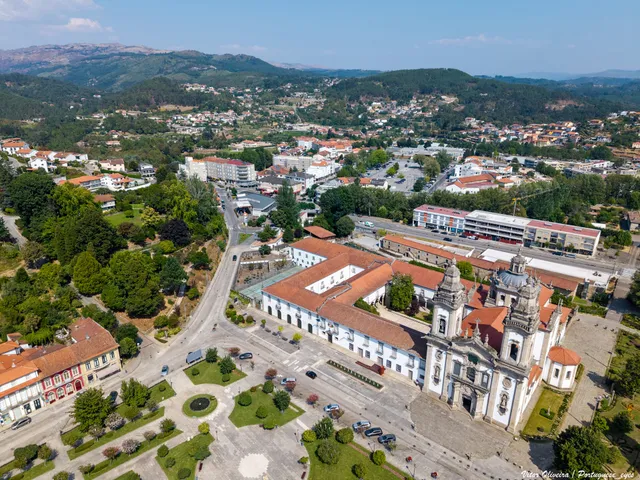
Aerial view of the Monastery of São Miguel and Praça da República in Refojos
Current view of the Monastery of Refojos and the square; it is not an image of the nineteenth-century uses.© Vitor Oliveira from Torres Vedras, PORTUGALⓘ

The town hall and school belong to the building’s history too.

Explore: The building changed its life by stages →
Read here and view sources

The dissolution of religious orders in 1834 changed the future of the Refojos complex, while the church retained its religious role. According to the municipal heritage nomination proposal, João António Fernandes Basto bought the Monastery at public auction between 1838 and 1842. In the 19th century, the complex also housed municipal services; in 1944, another part became a boarding school. Looking at the complex also reveals how old buildings were adapted for administration and education.

The document places the arrival of municipal services in the cloisters around 1855. For the school area, it records another change of ownership in 1959, to the Seminário Conciliar de Braga. The complex therefore did not have a single future after 1834: its different parts followed their own stories. The heritage proposal serves here as a historical source; it does not establish UNESCO designation or confirm the current use of each space.

Words in this story: see explanations →See Fact sheet: Mosteiro de São Miguel de Refojos
Source and context

Municipality — proposal for a heritage registration of the Monastery, pp. 9 and 11; later uses in p. 11 (candidature document, not a UNESCO classification)

Basto Land Museum — The place of the Pereiras of Refojos de Basto, 28/07/2024

Accessed: . Editorial summary; the date of consultation is not the date of the facts.

Arco de Baúlhe · history of the municipal library

In Arco, books found a home in 2005

A library holds encounters and discoveries too.

Read here and view sources

The Biblioteca Municipal Dr. António Teixeira de Carvalho opened in 2005 beside the Escola Básica do Arco de Baúlhe. The municipal presentation describes two reading rooms and an auditorium, along with spaces for work and meetings. It also recalls activities including storytelling, workshops, literary competitions, cinema and exhibitions. The building’s history shows how reading meets other forms of cultural participation. To plan a visit, consult the place listing.

Source and context

Municipality — Biblioteca Municipal Dr. António Teixeira de Carvalho: opening in 2005

Accessed: . Editorial summary; the date of consultation is not the date of the facts.

Pereiras, Refojos · former uses of the town hall

From prison to music

A building can change its role in the community.

Explore: The Pereiras beyond a building →
Read here and view sources

In Pereiras, the former town hall continued to serve as a prison until 1972, according to the Museu das Terras de Basto. After restoration, it became the Casa da Música. A municipal news item from July 2010 already listed it among places to discover in the municipality. The Museum’s article dates the town hall’s move to the Monastery to 1835 and the opening of the Casa da Música to 2003: the building continued changing roles after municipal administration left.

The building’s story begins before the prison preserved in local memory. The Museum’s article attributes the order to build the town hall in 1586 to the magistrate João Gil de Abreu Castelo Branco. It then suggests an 18th-century reconstruction on the site of the earlier building.

Its two storeys divided the functions: prison on the lower level, town council and hearings above. This arrangement brought administration and justice together. When the council left, the prison remained; when the prison closed, the building survived. Opening as the Casa da Música in 2003 added another use to a building with many chapters.

Source and context

Basto Land Museum — The place of the Pereiras of Refojos de Basto, 28/07/2024

Municipality — visits to see the municipality, news of 29/07/2010

Accessed: . Editorial summary; the date of consultation is not the date of the facts.

Pereiras, Refojos · football in the 20th century

When football gained a pitch

Pereiras also belongs to sporting memory.

Includes an activity to try →Explore: The Pereiras had several lives →
Read here and view sources

In Pereiras, the municipality’s memory also includes football. The Museu das Terras de Basto identifies the pitch opened in 1925 as the first in Cabeceiras de Basto. It became home to different sports clubs, linking the place to the game and to gatherings of those who followed it.

In 1982, construction of National Road 311 caused the pitch to move elsewhere. A sports facility can help tell the story of a settlement’s transformation: the space changes, but memory preserves the connection to the former site.

The Museum’s article, published in July 2024, places the pitch in a settlement that had shops, a school and fairs. Its bibliography includes O Jornal de Cabeceiras of 20 September 1925 and Ecos de Cabeceiras of 15 August that year. These are references cited by the Museum; their contents are not reproduced here.

Source and context

Basto Land Museum — The place of the Pereiras of Refojos de Basto, 28/07/2024

Accessed: . Editorial summary; the date of consultation is not the date of the facts.

The flavours of Cabeceiras

From the garden to the pot, from the oven to the table.

Choose a story · 1
Gastronomy in Arco de Baúlhe · 2016 episode

Little potatoes named after a school

A curious name can open up a story at the table.

Read here and view sources

Batatinhas da Escola were among the dishes highlighted at a food promotion dinner held on 17 November 2016 at O Caneiro restaurant in Arco de Baúlhe. The municipal report also mentions oven-roasted octopus and greens with beans. This is a documented episode in the promotion of local flavours; the source neither explains the name’s origin nor confirms the current menu.

The report also reconstructs the end of the meal: Pecado da Avó, cavacas and rosquilhos, followed by liqueurs from Casa de Encosturas and herbal infusions produced in the municipality. Local white and red Vinho Verde accompanied the dishes. Published on 21 November, the account shows how one dinner brought together cooking, producers and promotion of the area. It does not give recipes: a dessert’s name alone does not reveal its ingredients.

Source and context

Municipality — City Hall promotes gastronomy in Premium Dinner, 21/11/2016

Accessed: . Editorial summary; the date of consultation is not the date of the facts.

Read the landscape through the plants

Trees, forests, vineyards and fields reveal different ways of occupying the territory.

Choose a story · 5
Refojos de Basto · history and mission of an educational centre

A green space can teach us too

At Vinha de Mouros, leisure meets environmental education.

Includes an activity to try →Explore: Choose what you want to observe →
Read here and view sources

The Vinha de Mouros Environmental Education Centre opened on 10 August 2001. In the municipal presentation, conserving and promoting local flora and fauna is part of its mission, alongside educational work with schools. The space was designed to bring different audiences closer to the municipality’s natural heritage.

The same presentation brings together different functions: picnic areas, play spaces, minigolf, a fitness circuit and support for the educational programme. A visit can therefore begin with a break and continue with questions about the landscape. The practical profile distinguishes facilities and conditions of use; this story does not announce a scheduled guided activity.

A useful question separates what we see from what we infer. A photograph of the park shows trees and tables, but does not identify every plant or demonstrate that an animal species lives freely there. The following stories help us look at leaves, soil and relationships between living things, without turning examples of general biology into an inventory of Vinha de Mouros.

See Fact sheet: Vinha de Mouros
Source and context

Municipality — Centro de Educação Ambiental of Vinha de Mouros: origin and objectives

Accessed: . Editorial summary; the date of consultation is not the date of the facts.

Painzela · gardens and skills

Plants shaped by human hands

Camellias and yews are part of the story of these gardens.

Includes an activity to try →Explore: The garden also holds knowledge →
Read here and view sources

Camellias and yews trimmed into geometric or animal shapes: this is the art of topiary. The Portuguese Historic Gardens Association links this tradition to the school of Manuel Joaquim Alves Soares, continued by his son Joaquim. Casa de Piellas, in Painzela, is part of this history. It is private property; check the visiting conditions in its place profile.

The Rota do Tâmega presentation links this school of gardening to support from the sisters Emília Ermelinda and Justina Praxedes Pinto Basto. In the mid-19th century, they are said to have supported Manuel Joaquim Alves Soares’s training in Porto and England. The story of these plant shapes therefore also involves the sharing of knowledge and its transmission between generations.

Looking at topiary means looking both at a plant and at human skill. Geometric shapes organise lines and volumes; animal shapes evoke living creatures. The association identifies examples of this tradition at several estates in Basto, not just Piellas.

Words in this story: see explanations →Getting to know the parish See Fact sheet: Casa de Pielas, jardins e anexos
Source and context

Portuguese Association of Historical Gardens — Route Tâmega

Portuguese Association of Historical Gardens — Casa de Piellas, Painzela

Accessed: . Editorial summary; the date of consultation is not the date of the facts.

Local observation · União das freguesias de Arco de Baúlhe e Vila Nune · general botany

Flowers and fruit on the same branch

The strawberry tree’s seasons overlap.

Includes an activity to try →Explore: Fruits with different stories →
Read here and view sources

The strawberry tree, Arbutus unedo, keeps glossy dark-green leaves throughout the year. Small white bell-shaped flowers appear in autumn. Its fruits take about a year to ripen, so ripe fruit can coincide with the next flowering season.

The Lisbon School of Education’s profile distinguishes two encounters with animals: insects, especially bees, take part in pollination, while birds eating the fruits help transport seeds. These are different roles in the plant’s life cycle.

The leaves offer clues beyond their colour: their edges are toothed, and secondary veins branch from a central vein. The plant ranges from a shrub to a small tree. The Lisbon Polytechnic profile mentions tolerance of dry climates and different soils, showing that its fruiting calendar is not its only interesting feature.

Food uses include fresh fruit, jams and jellies. The same source places the tradition of strawberry-tree fruit drinks in the Algarve and other Mediterranean areas; that information does not make them a documented speciality of Cabeceiras.

The photograph by migr, recorded on 2025-08-29, shows this species in União das freguesias de Arco de Baúlhe e Vila Nune. Open the observation to compare visible details with the botanical description. The record documents that encounter; it does not mean the plant will always be visible in the same place.

Words in this story: see explanations →See the plants photographed in the municipality
Source and context

Lisbon Polytechnic — form Arbutus unedo

iNaturalist — Arbutus unedo, migr observation in 2025-08-29

Accessed: . Editorial summary; the date of consultation is not the date of the facts.

Arco de Baúlhe · educational project documented in 2016

A garden bed for learning through the senses

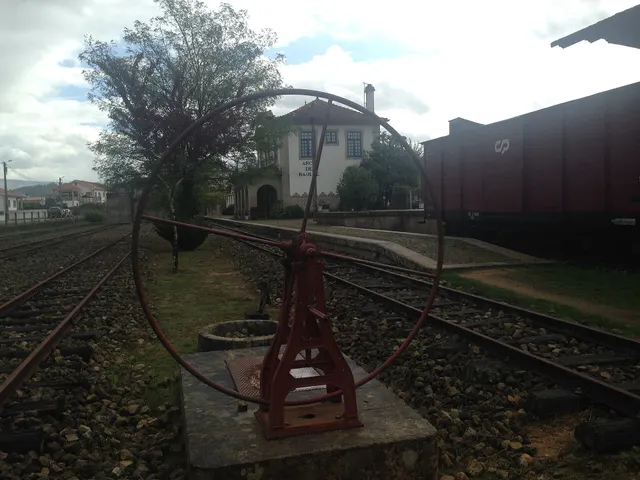
Turntable and tracks at the former Arco de Baúlhe station, with buildings and railway vehicles in the background.
Arco de Baúlhe station and surrounding. This photograph contextualizes the museum; it does not identify the site or plans of the 2016 program.© JP Ribeiroⓘ

Plants are part of the station’s memory too.

Read here and view sources

In a March 2016 announcement, the museum recalled an aromatic-herb project created in 2013 at the Arco de Baúlhe railway museum. For that month it proposed planting new aromatic plants and two fruit trees with children from the school centre and users of the day centre. The garden bed connected the museum with environmental education. The source documents the project and announced programme, without confirming the garden’s current composition.

Bringing children and older people together gives the garden another dimension: a plant can recall a kitchen or garden. Try asking someone which scent they associate with childhood and write down the answer and date. This idea draws on the museum’s announced intergenerational gathering; it is neither botanical identification nor advice about edible plants.

See Fact sheet: Núcleo Ferroviário de Arco de Baúlhe
Source and context

Basto Land Museum — The smells and aromas of our gardens, announcement of 15/03/2016

Accessed: . Editorial summary; the date of consultation is not the date of the facts.

General botany · bay laurel

Bay laurel has more than leaves

A tree familiar from cooking also has flowers.

Explore: What changes a tree? →
Read here and view sources

Bay laurel, Laurus nobilis, keeps foliage throughout the year. The Lisbon School of Education describes small pale-yellow flowers and insect pollination. It is dioecious: male and female flowers occur on different plants. Its leaves are used as a seasoning, but this story is not a guide to identifying plants for consumption. The description is general, with no local observation assigned.

The school’s profile places flowering in Portugal between February and April. The small flowers invite attention to a part of the tree beyond its aromatic leaves. Entomophilous pollination means that insects help transport pollen. This calendar is a general reference, not a prediction for an individual tree in Cabeceiras.

The leaf is simple and has pinnate venation: one main vein forms an axis for lateral veins, in a feather-like pattern. Leaf shape, flowers and reproductive organisation are different clues. A plant can retain its foliage and still change appearance when flowering.

Words in this story: see explanations →
Source and context

Lisbon High School of Education — Laurus nobilis

Accessed: . Editorial summary; the date of consultation is not the date of the facts.

YOUR LOCAL GUIDE

What would you like to discover?

Take a closer look.