Discover Cabeceiras de BastoFree independent guide
ViveCabeceirasYOUR GUIDE TO CABECEIRAS
ENEnglish
SearchSaved

Stories of Cabeceiras

Choose a story to start with. You can change the subject or fine tune the search.

18 stories · All themes · Search: branca

Read the landscape through the plants

Trees, forests, vineyards and fields reveal different ways of occupying the territory.

Choose a story · 6
Species botany · with a local observation

White flowers, small red fruits

Hawthorn changes its appearance through the reproductive cycle.

Includes an activity to try →Explore: A simple leaf or a set of folioli? →
Read here and view sources

Hawthorn, Crataegus monogyna, is a deciduous shrub or small tree. Its leaves are simple, alternate and lobed; its thorns explain the Portuguese name espinheiro-branco. In the description from the University of Porto’s Natural History and Science Museum, the white flowers have five petals.

The small red fruits are pomes, and the profile mentions one seed per fruit. Leaves, flowers and fruits let us compare different stages of the plant. The local photographic record linked to this story documents one observation, not every phase of the cycle or the species’ distribution across the municipality.

The botanical family offers another comparison: hawthorn and bramble both belong to the rose family, despite their different leaves and fruits. A hawthorn’s simple leaf has a blade divided into lobes; a bramble’s compound leaf is divided into leaflets. Belonging to the same family does not mean having the same shape.

The University of Porto collection associates hawthorn with understorey and scrub on well-drained soils. Its stated distribution extends across Europe, Asia and North Africa. This context is broader than the local record: a photograph in Cabeceiras documents an encounter, while the botanical profile describes the species.

Words in this story: see explanations →
Source and context

University of Porto — living botanical collection, Crataegus monogyna

University of Évora — Rubus ulmifolius, leaves and fruits

Accessed: . Editorial summary; the date of consultation is not the date of the facts.
Hillside crops · olive botany

One leaf, two sides

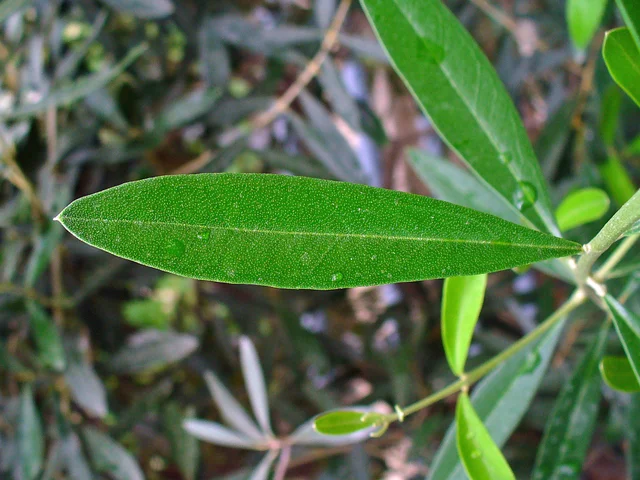
An elongated green olive leaf with a pale central vein and other leaves behind it.
An olive leaf photographed in Stutensee, Germany, in 2011. Botanical illustration, not an observation from Cabeceiras. This view does not show both sides of the same leaf.
Photography: H. Zell · CC BY-SA 3.0
About this photograph

Date given at source: . Source consulted in 2026-11-07. EXIF orientation, proportional resizing and WebP conversion; no retouching or clipping of the file.

Request removal or correct the photo credit

The olive tree’s silvery side also tells a story.

Includes an activity to try →Explore: From leaf to fruit and winepress →
Read here and view sources

The municipality’s landscape description includes olive trees on the hillsides of Cabeceiras. The cultivated olive has leaves that are grey-green above and silvery-grey beneath, where hairs grow. Its small flowers have four white petals joined at the base.

The fruit is the olive, an oil-rich drupe. The University of Évora’s description follows the change from green to reddish and dark shades during ripening, but also mentions forms that remain green when ripe. Colour alone does not tell the fruit’s whole story. The connection from tree to olive oil continues in the story of the Ramil oil mill.

The profile distinguishes the cultivated olive from its wild form, known in Portuguese as zambujeiro. The latter is described as having smaller leaves and fruits and thorny lower branches. This comparison shows why a single feature, such as the silvery underside of a leaf, does not explain every difference.

The olive is evergreen: it retains foliage throughout the year. You can therefore return to the same tree in different seasons and compare leaves, flowers and fruits, without expecting to find them all at once.

Words in this story: see explanations →
Source and context

University of Évora — Virtual Museum of Biodiversity, Olea europaea

Municipality — landscape and vegetation

Accessed: . Editorial summary; the date of consultation is not the date of the facts.

Local observation · União das freguesias de Arco de Baúlhe e Vila Nune · general botany

Flowers and fruit on the same branch

The strawberry tree’s seasons overlap.

Includes an activity to try →Explore: Fruits with different stories →
Read here and view sources

The strawberry tree, Arbutus unedo, keeps glossy dark-green leaves throughout the year. Small white bell-shaped flowers appear in autumn. Its fruits take about a year to ripen, so ripe fruit can coincide with the next flowering season.

The Lisbon School of Education’s profile distinguishes two encounters with animals: insects, especially bees, take part in pollination, while birds eating the fruits help transport seeds. These are different roles in the plant’s life cycle.

The leaves offer clues beyond their colour: their edges are toothed, and secondary veins branch from a central vein. The plant ranges from a shrub to a small tree. The Lisbon Polytechnic profile mentions tolerance of dry climates and different soils, showing that its fruiting calendar is not its only interesting feature.

Food uses include fresh fruit, jams and jellies. The same source places the tradition of strawberry-tree fruit drinks in the Algarve and other Mediterranean areas; that information does not make them a documented speciality of Cabeceiras.

The photograph by migr, recorded on 2025-08-29, shows this species in União das freguesias de Arco de Baúlhe e Vila Nune. Open the observation to compare visible details with the botanical description. The record documents that encounter; it does not mean the plant will always be visible in the same place.

Words in this story: see explanations →See the plants photographed in the municipality
Source and context

Lisbon Polytechnic — form Arbutus unedo

iNaturalist — Arbutus unedo, migr observation in 2025-08-29

Accessed: . Editorial summary; the date of consultation is not the date of the facts.

Local observation · Rio Douro · general botany

Not every leaf is equally prickly

Even on a single holly tree, leaves can differ.

Includes an activity to try →Explore: Look at the whole plant →
Read here and view sources

Mentioned for Cabreira by Visit Cabeceiras, Ilex aquifolium has evergreen leaves. The Gulbenkian profile describes spiny edges, sometimes smooth on older branches or plants. Red fruits appear on female plants and are toxic. Observe them without picking or tasting them. According to Gulbenkian, flowering generally takes place from April to June; fruits ripen in late summer and can remain through winter.

The small white flowers are less conspicuous than the fruits. Holly is dioecious: there are male and female plants. This distinction helps explain why not every plant bears red fruit.

It is a slow-growing shrub that can live for more than a century. Gulbenkian describes it in oak woods and scrub, often on shady, damp slopes with slightly acidic soils rich in organic matter. Observing the plant therefore also means looking at its surroundings, as well as its leaf outlines.

The photograph by DVG, recorded on 2026-04-03, shows this species in Rio Douro. Open the observation to compare visible details with the botanical description. The record documents that encounter; it does not mean the plant will always be visible in the same place.

Words in this story: see explanations →
Source and context

Visit Cabeceiras — natural heritage of Serra da Cabreira
Accessed:

Calouste Gulbenkian Foundation — Ilex aquifolium, characteristics and habitat
Accessed:

iNaturalist — Ilex aquifolium, DVG observation in 2026-04-03
Accessed:

Editorial summary; the date of consultation is not the date of the facts.

General botany · bramble

A blackberry is a small cluster

A bramble’s fruit has more detail than it first appears.

Includes an activity to try →Explore: A blueberry, many small fruits →
Read here and view sources

A blackberry consists of numerous small drupes. Rubus ulmifolius has white or pinkish five-petalled flowers and fruits that turn black when ripe. Its leaf is compound too, divided into three to five leaflets, green above and greyish and hairy beneath.

The arching stems form dense bramble patches. The University of Évora associates the plant with woods, hedges, uncultivated ground and watersides, preferring cool, moist soils. This is a general botanical description; it does not identify a particular bramble patch in the municipality.

A compound leaf may look like a small branch. The distinction helps us read the plant: in the bramble described by the University of Évora, three to five leaflets belong to one leaf and are arranged like fingers spreading from a common base. The greyish underside results from dense hairs, called tomentum.

The description also mentions purple, pruinose shoots, with a waxy-looking surface coating. These details differ from the prickles on the stems. The plant also occurs on ground altered by human activity; a bramble patch alone does not show when or why land stopped being cultivated.

Words in this story: see explanations →
Source and context

University of Évora — Rubus ulmifolius, leaves and fruits

Accessed: . Editorial summary; the date of consultation is not the date of the facts.
Praça da República · garden memories from 2011

Spring comes to the square too

Camellias and rhododendrons change the town’s colours.

Read here and view sources

In April 2011, the municipality described a seasonal handover in Praça da República: the camellias were losing their flowers as the rhododendrons began to bloom. The news item recorded two pink-flowered plants and linked them to the traditional gardens of Terras de Basto. This dated portrait of the square invites us to notice flowers as well as monuments. A March report from the same year counted 33 camellia plants in the square: 30 added during the redesign joined the three already there. It mentioned pink, white and variegated flowers. These figures belong to the 2011 account, not a current count.

Source and context

Municipality — Rododendros give spark to Republic Square, 01/04/2011
Accessed:

Municipality — Camellias in Republic Square, 18/03/2011
Accessed:

Editorial summary; the date of consultation is not the date of the facts.
A world beneath the leaves

A first look at the fungi. Continue in the gallery to see the local records already documented.

Choose a story · 3
General ecology · wood and biodiversity

A log can be a little home

Decaying wood is still full of connections.

Includes an activity to try →Explore: A log opens several stories →
Read here and view sources

A fallen log remains part of woodland life. Fungi break down its wood, which also supports other organisms, including insect larvae. Researcher Susana Gonçalves explains that some tree cavities result from fungal activity and can later shelter animals. A standing tree with cavities and a log on the ground offer different things to observe. In green spaces, retaining veteran trees requires assessment and monitoring of the risk of falling. This ecological explanation does not confirm a connection between the beetle photographed in Cabeceiras and a particular tree.

But wood does not always decay in the same way. In white rot, fungi break down lignin and cellulose; the wood may become pale, fibrous or spongy. In brown rot, decay mainly affects cellulose and hemicellulose, leaving a brownish residue rich in lignin. Wood may become brittle and break into small blocks. The University of California distinguishes these processes by their effects on wood components.

White and brown describe the decay, not the colour of a mushroom cap. They are not species names either. A visible reproductive structure on a trunk reveals only part of the story: decay may extend upwards or downwards and remain hidden. A photograph cannot measure that extent or assess a tree’s stability.

Words in this story: see explanations →See local fungal records
Source and context

Gulbenkian Garden — ecology of fungi, with Susana Gonçalves (17/04/2023)

University of California — Wood Decay Fungi in Landscape Trees (revised August 2019)

Accessed: . Editorial summary; the date of consultation is not the date of the facts.
General knowledge · national guide

Gills, pores and other shapes

Not every cap has the same pattern underneath.

Includes an activity to try →Explore: What shape arouses your curiosity? →
Read here and view sources

The guide distinguishes groups with gills, folds, pores or spines. Naturalis describes white gills in Amanita muscaria and tubes with pale pores in Gyroporus cyanescens. These are two different ways of arranging the surface beneath the cap. One feature alone cannot identify a mushroom or establish whether it is safe to eat. Not all have a stem: some caps grow straight from wood. The Australian botanic gardens’ guide also shows cup-shaped forms and thin coverings on wood. Start observing with three questions: what is its outline, what does it grow on, and which surface can you see without disturbing it?

Words in this story: see explanations →
Source and context

DGADR / ICNF — Mushroom Collector's Guide, June 2013
Accessed:

Naturalis Biodiversity Center — Amanita muscaria
Accessed:

Naturalis Biodiversity Center — Gyroporus cyanescens
Accessed:

Australian National Botanic Gardens / Australian National Herbarium — Types of fungal fruiting bodies, Heino Lepp
Accessed:

Editorial summary; the date of consultation is not the date of the facts.

Abadim · photographed record and general biology

The marks on a cap can change too

A photograph captures only one moment in a mushroom’s life.

Explore: From hat to hidden life →
Read here and view sources

Naturalis describes Amanita muscaria with white spots that can disappear and a cap whose red colour can fade to paler orange or yellow tones. Its appearance is therefore not always the same. The photographed record from Abadim shows pale spots on a red cap; it does not follow the same specimen’s development. These details help explain the species, not identify mushrooms for consumption.

The shape changes too: Naturalis describes a cap that begins globose and expands until flat. The gills are white. Colour, spots and shape belong to a developing organism, so an image should not be treated as an unchanging template for the species.

There is also a story underground. The source states that Amanita muscaria forms ectomycorrhizas, associations with tree roots. It mentions environments with broadleaved trees and conifers on sandy or peaty soils. The Abadim record documents the mushroom photographed; it identifies neither the partner tree nor that underground connection at that point.

Source and context

Naturalis Biodiversity Center — Amanita muscaria

Accessed: . Editorial summary; the date of consultation is not the date of the facts.

The flavours of Cabeceiras

From the garden to the pot, from the oven to the table.

Choose a story · 3
Cabeceiras · Vine vocabulary

A partridge’s foot, but in the vineyard

The same grape variety can have different names from place to place.

Includes an activity to try →
Read here and view sources

The Vinho Verde wine commission identifies Pé de Perdiz as a name for Arinto in Cabeceiras de Basto. It also mentions Pedernã in the region and Perdigão in Mondim. Knowing these names helps when listening to vineyard stories: a local name does not, by itself, mean a different grape variety.

The CVRVV profile adds large, compact bunches with small berries. The variety is used both in wines made only from Arinto and in blends of white grape varieties. Traditional name, grape appearance and wine composition are three different ways into the same story.

Source and context

Viticulture Commission of the Green Wine Region — Grape varieties, chart Arinto

Accessed: . Editorial summary; the date of consultation is not the date of the facts.

Sub-region Basto · characteristics of Azal

A ripe grape can still be green

With Azal, colour does not tell the whole story.

Explore: One vineyard, several clues →
Read here and view sources

Azal is a late-ripening white grape variety adapted to dry, well-exposed land in the inland Vinho Verde region, including Basto. The technical profile describes compact bunches that retain a greenish colour even when ripe. Colour alone is not enough to decide whether harvest time has arrived.

The mature leaf is rounded and thick, with regular teeth and plenty of hairs on the underside. The bunch has a side branch described as a wing. These clues show why a variety’s description brings together leaves, bunches and stages of development rather than focusing only on grape colour.

Azal has a long growing cycle: the profile distinguishes early flowering from late ripening. One stage starting early does not mean all the others do too. The variety can be used alone or in blends with Arinto, Batoca and Loureiro; recognising a variety in the landscape and knowing a wine’s composition remain different questions.

Words in this story: see explanations →
Source and context

CVRVV — Technical data sheets of the varieties Batoca and Azal

Accessed: . Editorial summary; the date of consultation is not the date of the facts.

Green wines · regional diversity

Vinho Verde can be red too

The region’s name is not the colour of the wine.

Explore: Behind the names of the wine →
Read here and view sources

The Vinho Verde region produces white, rosé and red wines. The regional commission highlights Vinhão for its intense colour, sometimes close to violet. The name Vinho Verde therefore does not mean all the wines are white. This is an introduction to regional variety, without assigning characteristics or certification to a particular bottle.

The diversity extends beyond the best-known grapes. CVRVV mentions varieties that have lost ground in vineyards, including Batoca, Amaral and Borraçal, and describes recovery work by researchers and producers. The aims include preserving genetic heritage, diversifying wines and keeping more options available as the climate changes.

A less familiar name can thus open an important story. In Basto, Borraçal is also known as Bogalhal or Olho-de-sapo. These names belong to the same variety, whereas Vinhão is a different one. Distinguishing region, variety and local name helps us read vineyard memories more clearly.

Source and context

CVRVV — Vinhos Verdes: Borraçal, Vinhão and regional diversity

Accessed: . Editorial summary; the date of consultation is not the date of the facts.

Life you do not always see

Knowing animals begins by perceiving the territory and respecting the distance.

Choose a story · 5
Species biology · Portuguese context

Roe deer change their coats

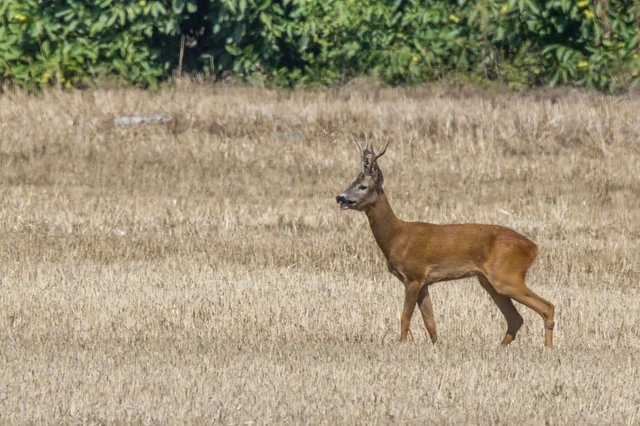
Profile hind in a field, with stems, raised ears and reddish brown coat.
Male hind in Dobruja, Romania, in August 2022. Illustration of the species; it is not a record of Cabeceiras.
Photography: Charles J. Sharp · CC BY-SA 4.0
About this photograph

Date given at source: . Source consulted in 2026-11-07. EXIF orientation, proportional resizing and WebP conversion of the current version in Commons; no retouching or additional clipping.

Request removal or correct the photo credit

One coat for summer, another for winter.

Includes an activity to try →Explore: The same world, different rhythms →
Read here and view sources

The roe deer, Capreolus capreolus, changes from a reddish-brown coat in summer to a grey one in winter. It eats plants and also uses open areas and scrub. This species description does not identify a sighting point in the municipality. Roe deer are small deer: the platform’s description gives a weight of up to 30 kg. Males have antlers; the white rump patch is kidney-shaped in males and heart-shaped in females.

Antlers follow a cycle too: the platform describes annual growth and shedding in roe deer and red deer. They are therefore not a feature that stays the same all year. On the head, the mostly black nose and upper lip contrast with the white lower lip.

Activity patterns add another difference. Although mainly active at dusk and at night, the source presents the roe deer as Portugal’s most daytime-active deer. These are species tendencies, not a guaranteed time to see one. Shape, season and behaviour need to be considered together when learning about an animal.

Words in this story: see explanations →
Source and context

Lobo-Iberico platform in Portugal — wolf prey; registration of Cabreira without date indicated

Accessed: . Editorial summary; the date of consultation is not the date of the facts.

Species biology · trace recorded in Cavez

At dusk, a bird can seem like an insect

Not every bird is discovered by looking up at the sky.

Includes an activity to try →
Read here and view sources

The European nightjar feeds on insects and becomes active at dusk and during the night. Its continuous song can resemble a cicada’s sound. In Portugal it is a summer visitor, associated mainly with the north and the transition between woodland and open spaces. The Cavez record shows a feather attributed to this species by the iNaturalist community. It is a trace: not a photograph of the whole bird or proof of a nest at that point. Curiosity begins with a feather and continues into the soundscape.

Long wings and a long tail may be visible in silhouette, but low light hides details. The Aves de Portugal profile explains that females lack the white wing patches of males; juveniles lack them too. The absence of a mark alone does not determine age and sex.

The source describes a late arrival, with song easier to detect in May and June. This is a Portuguese pattern, not a sightings calendar for Cavez. The recorded feather cannot tell us when the bird sang, where it nested or how long it stayed in the area.

To understand journeys, researchers need another kind of record. The BTO presents tracking studies that located an important wintering area in grassland and shrub landscapes south of the equatorial forest, mainly in the Democratic Republic of the Congo. This information concerns birds tracked in those studies, not a demonstrated destination for the bird associated with the Cavez feather. A feather documents a trace in one place; tracking connects positions over time to study movements.

Source and context

Poultry of Portugal — Caprimulgus europaeus

British Trust for Ornithology — BirdFacts: Nightjar, Caprimulgus europaeus; follow-up and winter studies

Accessed: . Editorial summary; the date of consultation is not the date of the facts.

Badger · general biology

A home beneath the ground

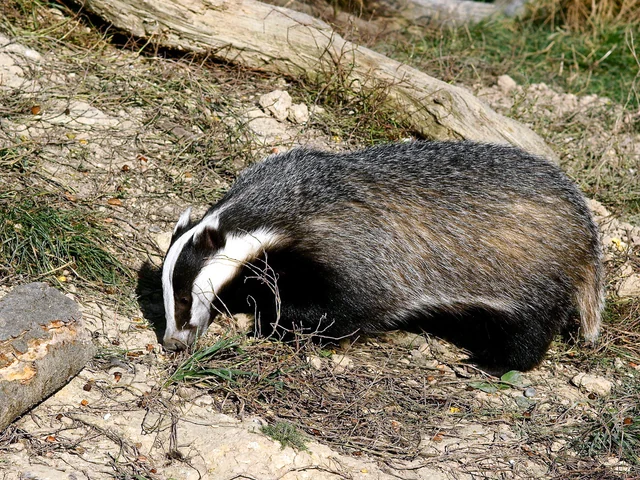
Badger with gray body and head with light and dark bands, next to the ground.
Badger at the British Wildlife Centre in Newchapel, Surrey, UK, in 2011. Animal in fauna park; not a record of Cabeceiras.
Photography: Peter Trimming · CC BY 2.0
About this photograph

Date given at source: . Source consulted in 2026-11-07. EXIF orientation, proportional resizing and WebP conversion of the current version in Commons; no retouching or additional clipping.

Request removal or correct the photo credit

Badgers spend much of their lives out of our sight.

Includes an activity to try →Explore: For the thorns and life in the water →
Read here and view sources

The European badger, Meles meles, is mainly nocturnal and shelters in extensive underground setts. Two dark stripes on a white head are a striking visual clue; its short legs have strong claws. Museu Virtual da Biodiversidade describes its presence in woods, forests and farmland with vegetation. This profile explains the species in mainland Portugal; it does not document an observation in Cabeceiras de Basto. The claws are long and non-retractile: they do not draw back like a cat’s. A short, pale tail provides another contrast with a fox’s long tail. These details help compare descriptions without searching for or disturbing setts.

Source and context

University of Évora — Virtual Museum of Biodiversity: Meles meles

Accessed: . Editorial summary; the date of consultation is not the date of the facts.

Birds · general biology in Portugal

An acrobat among the leaves

The blue tit even searches for food upside down.

Read here and view sources

A blue cap and wings, white cheeks and a dark line beside the eyes help identify Cyanistes caeruleus. Its yellowish breast adds to the contrast. But watch how it moves too: the University of Évora describes this small bird hopping along branches and hanging upside down as it feeds.

Among the leaves, it searches for insects and spiders. In autumn and winter, fruits and seeds may also form part of its diet. Its food is therefore not a fixed list for every season: what it finds in the landscape changes.

The blue tit is resident and occurs across mainland Portugal. The Gulbenkian profile describes a range of wooded habitats, from woods and riverside trees to orchards, hedges and gardens. A garden and a wooded riverbank offer different settings in which to learn about this bird. These sources explain the species in Portugal; they do not document an encounter in a parish of Cabeceiras.

Words in this story: see explanations →
Source and context

University of Évora — Biodiversity of Mitra: Cyanistes caeruleus

Calouste Gulbenkian Foundation / João E. Rabaça — Blue Chapim

Accessed: . Editorial summary; the date of consultation is not the date of the facts.

Refojos de Basto · local record and general biology

A bird of prey with a varied menu

The common buzzard searches for food from the sky and on the ground.

Includes an activity to try →Explore: From perch to landscape →
Read here and view sources

Ecovore’s photograph shows Buteo buteo perched among branches in a record dated 1 July 2025. Comparing the published location with CAOP2025 places it in the parish of Refojos de Basto. The image lets us observe a perched bird; it does not show a hunt.

Also known in Portuguese as águia-d’asa-redonda, this bird of prey can vary greatly in the amount of white and brown in its plumage. The University of Évora describes a species resident in mainland Portugal, joined by wintering birds from northern Europe. Colour alone does not settle every identification.

The BTO describes a diet that makes use of available prey: rabbits and small mammals, but also birds, amphibians, large insects and earthworms. Searching for food can bring the buzzard down to the ground. Compare it with Montagu’s harrier: two birds of prey can share some foods without having the same way of life.

Source and context

University of Évora — Buteo buteo: plumage and distribution

British Trust for Ornithology — BirdFacts: Buzzard

Accessed: . Editorial summary; the date of consultation is not the date of the facts.

Travel through time

Documents, details and traditions: there is more to discover than a date on a stone.

Choose a story · 1
Arco de Baúlhe · railway memories

The tiles arrived before the train

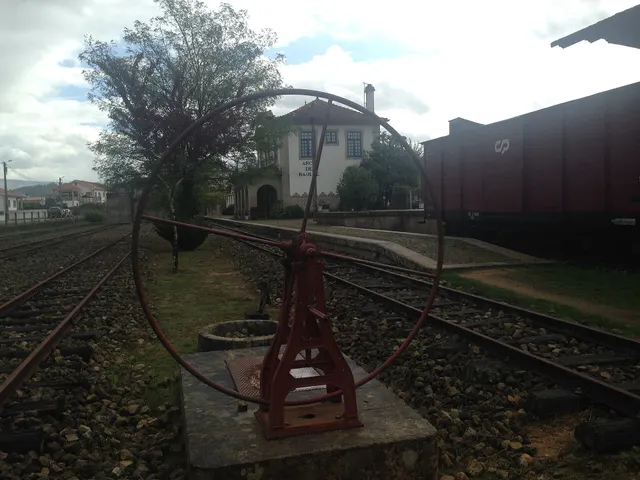
Revolving plate and tracks from the old Arco de Baúlhe station, with buildings and railway equipment at the bottom.
Facade of the station of Arco de Baúlhe, with coating and tile panels visible to the background. View of JP Ribeiro; it is not a detail of the panels of 1940.© JP Ribeiroⓘ

The station can also be read through its walls.

Includes an activity to try →Explore: A station, different spaces →
Read here and view sources

The station’s tile panels were made in 1940 by A. Lopes at the Fábrica de Cerâmica Sant’Anna in Lisbon, according to the publication about the Museu das Terras de Basto. They predate the station’s opening in 1949.

The station comprised spaces with distinct functions. The publication identifies the drivers’ house, staff building, loading and unloading platform and goods warehouse. The two vehicle sheds came to house permanent exhibitions of railway equipment; the warehouse is described as a temporary exhibition space.

Reading the building can begin with these differences: where did people work, where did goods pass and where were vehicles kept? The tiles belong to that built landscape. The description documents the museum arrangement presented in the publication, without confirming each space’s exhibition or access today.

Getting to know the parish See Fact sheet: Núcleo Ferroviário de Arco de Baúlhe
Source and context

Municipality — Land Museum of Basto: a journey through the history of the region, pp. 28–29

Municipality — Núcleo Ferroviário de Arco de Baúlhe

Accessed: . Editorial summary; the date of consultation is not the date of the facts.

YOUR LOCAL GUIDE

What would you like to discover?

Take a closer look.