Discover Cabeceiras de BastoFree independent guide
ViveCabeceirasYOUR GUIDE TO CABECEIRAS
ENEnglish
SearchSaved
8 STORIES · CONTINUOUS READING

Cavez: from bridge to village life

Eight stories to accompany the bridge over the centuries and enter the lives of the villages. Opens the chronology, distinguishes legend and document and discovers chapels, mail, mills and coal. It is a route of reading, without indicating a pedestrian itinerary.

All stories in the order of the route. You can print this page by the browser; sources and credits follow the reading.

Things to try6 activities · 3 interactive explorations · 4 questions
History of Cavez Bridge

Five arches, more than one era
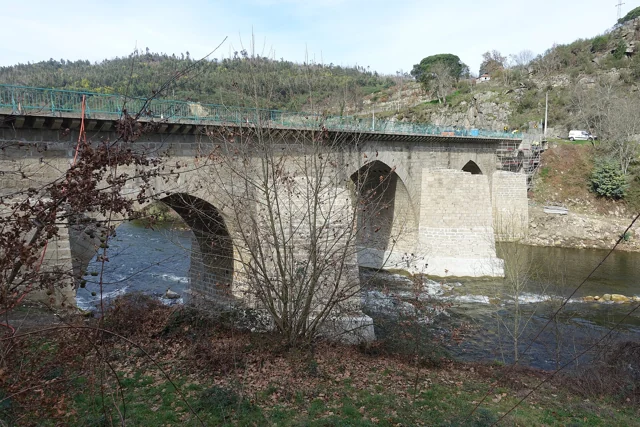
Cavez Bridge over the Tâmega River, with stone arches, a deck and tree-lined banks.
Partial view of the Ponte de Cavez over the Tâmega.© Joseolgonⓘ

An old bridge did not stand still in history.

Three central pointed arches and two round arches beside the banks: the Bridge of Cavez brings together different forms and periods. The Museum dates the medieval construction to the second half of the 13th century, serving the road between Braga and Vila Pouca de Aguiar.

The source attributes the round arches to work during Philip II’s reign and mentions a marker from 1599. In the 19th century, the road between Fafe and Vila Pouca de Aguiar brought a widening of the deck. Looking at the bridge means seeking the changes in an old crossing.

According to the Museum, the stone bridge replaced an earlier wooden one that had deteriorated. Construction is attributed to Frei Lourenço Mendes, a Dominican who collected alms for the work; the museum text mentions testamentary bequests supporting that connection. The crossing thus involves materials, routes and ways to fund a shared undertaking.

A crossing, several seasons

It opens every moment and discovers what the date represents.

  1. Second half of the 13th century · Medieval construction

    The stone bridge serves the link between Braga and Vila Pouca de Aguiar.

  2. 1599 · A milestone

    The Museum associates this milestone with changes in the Filipino period.

  3. 1758 · The look of the vicar

    The parochial memory praises Ponte Grande: it is a historical appreciation.

  4. 19th Century · Extend the passage

    The board is extended with the road from Fafe to Vila Pouca de Aguiar.

  5. 1910 · National Monument

    The bridge receives the classification referred to by the sources.

  6. 2018–2019 · Handle the structure

    Intervention in foundations, board and drainage, completed according to the April news of 2019.

Summary of the Museum, the Parish Memories and the municipal news of 2019. The dates do not attribute to all the elements of the bridge the same age.
See Fact sheet: Ponte de Cavez
Source and context

Land Museum of Basto — Ponte de Cavez, 27/02/2022

Municipality of Cabeceiras de Basto — Parish memories of 1758: Cavez

Municipality — conclusion of rehabilitation of Ponte de Cavez, 30/04/2019

Accessed: . Editorial summary; the date of consultation is not the date of the facts.

Back to index ↑
Local legend · Cavez Bridge

The voice that said to build further upstream

Cavez Bridge over the Tâmega River, with stone arches, a deck and tree-lined banks.
Ponte de Cavez on the Tâmega · the monument to which legend refers.© Joseolgonⓘ

Around the bridge, memory imagined its own paths.

The legend shared by the Museum has masons try to build the bridge at Vila Franca and then beside Poço das Laranjeiras. In both places, a supernatural voice told them to move upstream. Tradition attributed it to Saint Bartholomew.

On the third attempt, the narrative places construction beside the chapel. This is a story about the memory of a place, not documentary proof of site selection or an itinerary for finding the episodes.

In another part of the tradition collected by the Museum, feeding the builders receives a miraculous explanation: springs of water, wine and olive oil emerge, and fish appear in the river. The narrative connects building effort with religious protection. Reading it beside the history of the works reveals two different ways of telling the same place.

See Fact sheet: Ponte de Cavez See Fact sheet: Capela de São Bartolomeu de Cavez
Source and context

Land Museum of Basto — Ponte de Cavez, 27/02/2022

Accessed: . Editorial summary; the date of consultation is not the date of the facts.

Back to index ↑
Cavez · Parish Memories of 1758

A bridge that earned praise

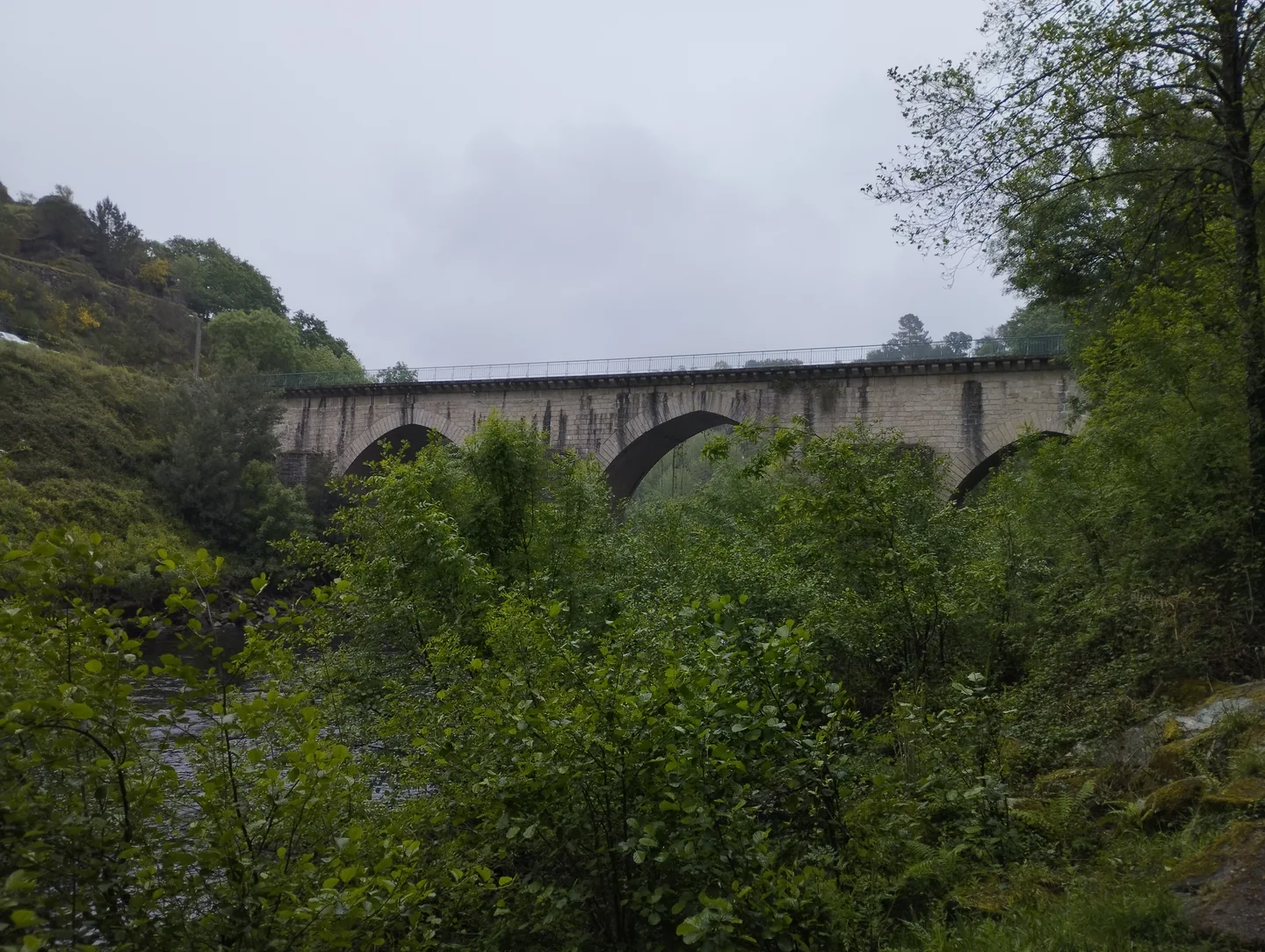
Arches of Ponte de Cavez seen from the riverbed.
ⓘ

Arches of Ponte de Cavez seen from the riverbed.

Source: Museu das Terras de Basto

View source

Photograph date not stated.

Individual photographer and reuse licence not stated by the source.

Request removal or correct the photo credit

In 1758, Cavez’s Ponte Grande impressed the parish priest.

In the parish account, the Tâmega crossing is described as a large, well-worked stone bridge. The author even calls it the best on that river. The praise belongs to the writer’s viewpoint: it reveals the importance he gave the structure, without serving as a technical comparison of bridges.

In the same account, the Tâmega appears as a strong current, especially in winter. The document distinguishes crossing the water from using it: it describes mills and explains that the river ran too deep to irrigate the fields along that stretch. The bridge can be read within these relationships among banks, movement and work.

Notice the difference between observing a structure and judging it. The bridge’s existence is information; calling it the best is an assessment. Both tell us about the past, but answer different questions.

Two shores, several stories

Open an option and choose the story.

  1. Water to move millsA river that moved but did not water →
  2. The look at the shore of AteiThe work was seen on the other margin →
  3. The bridge over timeFive arches, more than one time →
Compares the reports of Cavez and Vila Nune without confusing the locations described.
Getting to know the parish See Fact sheet: Ponte de Cavez
Source and context

Municipality of Cabeceiras de Basto — Parish memories of 1758: Cavez

Accessed: . Editorial summary; the date of consultation is not the date of the facts.

Back to index ↑
Cavez · settlement and devotion in 1758

Eight settlements and six chapels

In Cavez, an old list connects villages, residents and monasteries.

On 25 May 1758, vicar Manuel Pacheco da Cunha listed eight settlements: Cavez, Vila Franca, Ponte, Arosa, Rabiçais, Moimenta, Revoriça and Parada. He placed the church in the middle of the parish and described six chapels. The names help reveal a network of settlement; they are not a current list of administrative places.

São Gregório in Vila Franca, São Mamede in Arosa and Santa Maria Madalena in Moimenta were attributed to the abbot of Pombeiro, with their upkeep linked to the Benedictine congregation of Tibães. São Bartolomeu in Ponte had João Correia of Guimarães as patron. Responsibility for São Caetano, in Raviçais in the chapel passage, and Santa Luzia in Revoriça fell to the residents. The transcription itself uses both Rabiçais and Raviçais.

The account also describes five altars in the parish church and a brotherhood of the Souls. The parish emerges as a place of worship and collective organisation, with distinct responsibilities. The São Bartolomeu pilgrimage is mentioned for 23 and 24 August; these dates belong to the historical testimony, not to a current events calendar.

The parish’s connections went beyond its chapels. The vicar wrote that Cavez had no mail service of its own and used Raposeira’s, which he placed one league away. He also stated that the parish had no fair. These clues invite reflection on where news arrived and services gathered at that time; they neither describe current provision nor allow a league to be converted automatically into a road distance.

Getting to know the parish See Fact sheet: Capela de São Bartolomeu de Cavez See Fact sheet: Igreja de São João de Cavez e cruzeiro
Source and context

Municipality of Cabeceiras de Basto — Parish memories of 1758: Cavez

Accessed: . Editorial summary; the date of consultation is not the date of the facts.

Back to index ↑
Cavez · landscape described in 1758

A river that powered mills but did not irrigate

Nearby water was not always accessible water.

In 1758, the Tâmega at Cavez was described as a river with plentiful water throughout the year and a particularly strong winter current. It had weirs, channels and grain mills. Along its banks, the account noted cultivated areas, olive groves and trees supporting vines.

Despite that presence in farming life, the vicar stated that the river did not irrigate the parish’s fields: it ran too deep to allow irrigation channels. This is an important difference between having water nearby and being able to direct it to a plot. The description shows how relief shaped water use at that time; it does not describe present-day irrigation.

Getting to know the parish
Source and context

Municipality of Cabeceiras de Basto — Parish memories of 1758: Cavez

Accessed: . Editorial summary; the date of consultation is not the date of the facts.

Back to index ↑
Cavez · rural economy in 1758

The mountains supplied charcoal too

Cavez’s 1758 account connects scrubland with fuel.

Cavez’s parish priest mentions carqueja, heather and other woody vegetation in the hills and notes abundant charcoal production. In the same account, he describes maize, rye and vinho verde, from which aguardente was made. Fields and scrubland fed different kinds of work and products.

The account connects vegetation with an economic activity, but does not explain how the charcoal-burning structures were built, where they stood or who worked in them. Nor does it allow production to be calculated. Separating what the text tells us from these open questions makes the picture more faithful: abundance is the assessment of the author writing in 1758.

The landscape had several jobs

Open an option and choose the story.

  1. Look closely at the carquejaIn the carqueja, stems also work →
  2. Getting to know the weedsMedronheiro, carqueja e tojo →
  3. The river and mills of CavezA river that moved but did not water →
It continues from economic memory to botany and other uses of water and wood.
Getting to know the parish
Source and context

Municipality of Cabeceiras de Basto — Parish memories of 1758: Cavez

Accessed: . Editorial summary; the date of consultation is not the date of the facts.

Back to index ↑
Cavez · heritage conservation, 2018–2019

Conserving a bridge also makes history

Cavez Bridge over the Tâmega River, with stone arches, a deck and tree-lined banks.
Ponte de Cavez on Tâmega. Background photography, without attribution to the project of 2018–2019.© Joseolgonⓘ

Not every change to a monument is visible at first glance.

On 30 April 2019, the municipality announced the completion of work on Cavez Bridge, begun in October 2018 by Infraestruturas de Portugal. The intervention strengthened the pier foundations and addressed the deck: paving, waterproofing, parapets and drainage. Classified as a National Monument since 1910, the bridge continued to receive care long after its construction. This account documents that project; it does not assess the structure’s current condition.

The announcement distinguishes two aspects of the work: the bridge’s support, through its pier foundations, and the crossing surface, with paving, waterproofing and drainage. Painting the parapets was only one part of the project. A general photograph shows the bridge in its setting, but cannot alone document the strengthening of its foundations.

Compare this news with the chronology: the 19th-century widening and the 2018–2019 project are separate interventions. Conserving a monument also produces new documentation, which should retain the date and scope of the work described.

See Fact sheet: Ponte de Cavez
Source and context

Municipality — conclusion of rehabilitation of Ponte de Cavez, 30/04/2019

Accessed: . Editorial summary; the date of consultation is not the date of the facts.

Back to index ↑
Cavez · pilgrimage account published in 1886

To the pilgrimage, clogs in hand

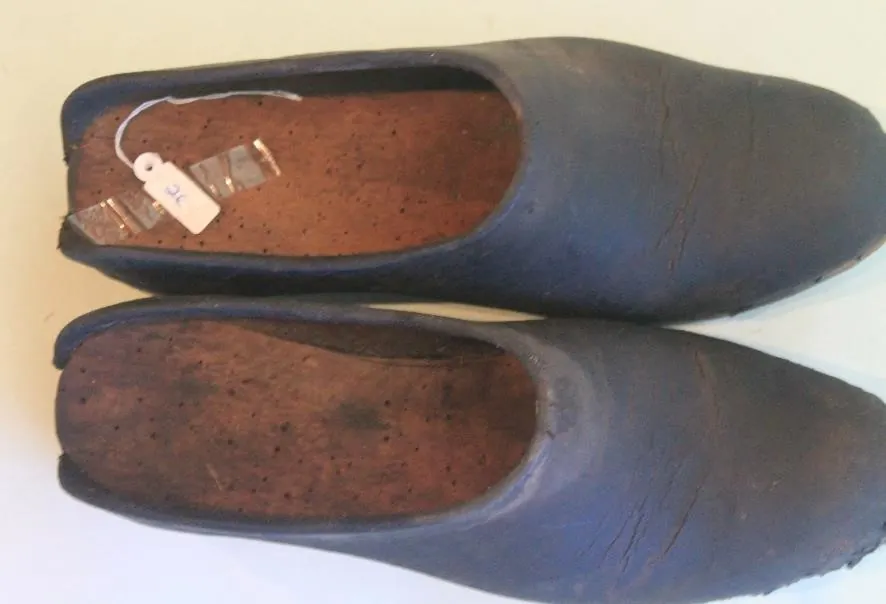
Pair of clogs T26
Pair of clogs T26
ⓘ

Pair of clogs T26

Source: Museu das Terras de Basto

View source

Photograph date not stated.

Individual photographer and reuse licence not stated by the source.

Request removal or correct the photo credit

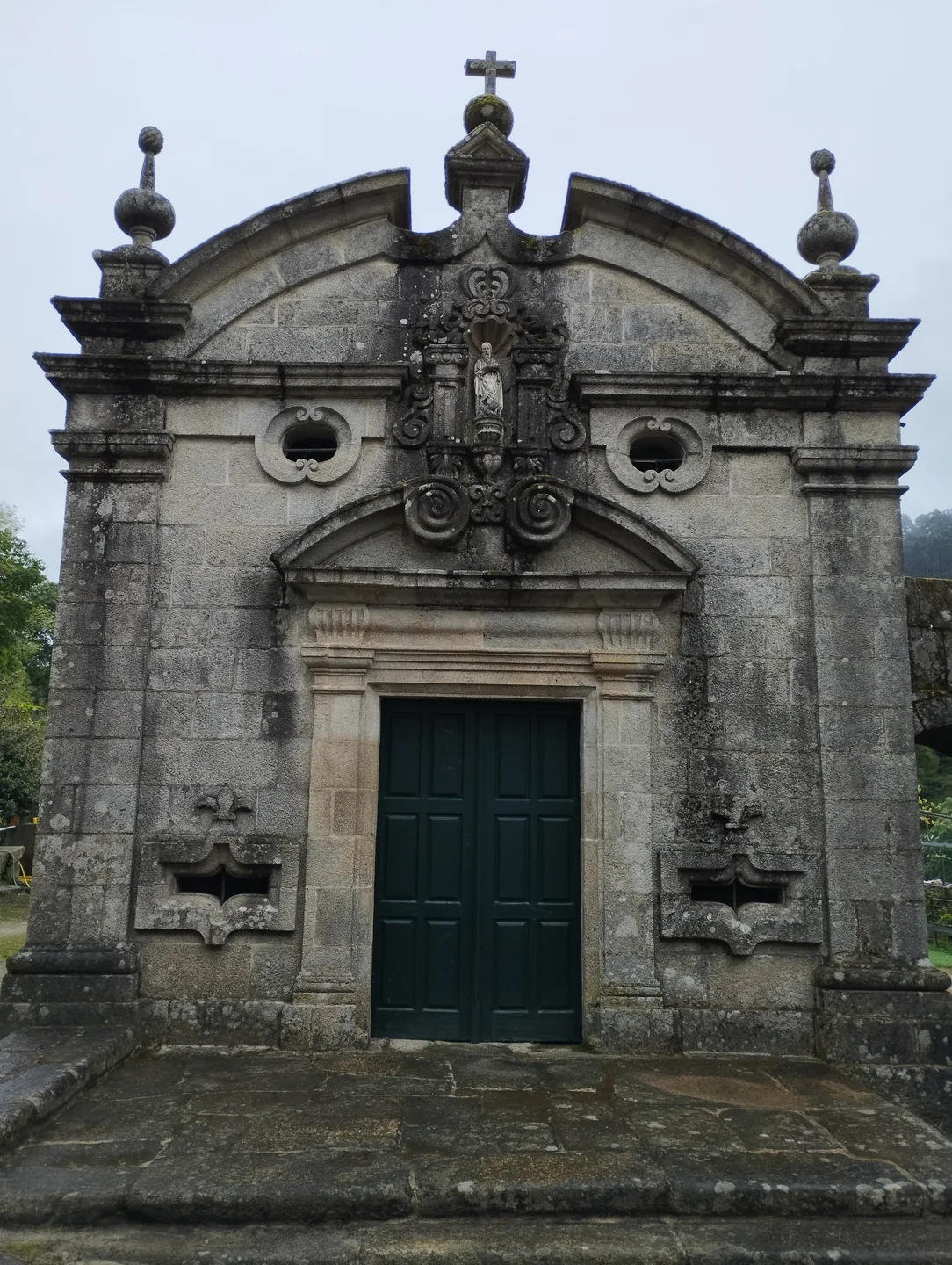
Façade of São Bartolomeu chapel in Cavez.
ⓘ

Façade of São Bartolomeu chapel in Cavez.

Source: Museu das Terras de Basto

View source

Photograph date not stated.

Individual photographer and reuse licence not stated by the source.

Request removal or correct the photo credit

Carrying footwear did not always mean wearing it.

Teresa Soeiro revisits a description by José Augusto Vieira, published in 1886: among pilgrims to São Bartolomeu de Cavez, some women carried their footwear in their hands. The episode adds a human detail to the journey and recalls habits of thrift and comfort. It is historical testimony, not a description of today’s pilgrimage.

In the study’s introduction, Teresa Soeiro connects wooden footwear with rural paths and farming in the north-west. She mentions sole reinforcements made of metal pieces and, more recently, reused tyre rubber. These are solutions described for resisting wear, without identifying the reinforcement used by the pilgrims in the 1886 episode.

The pilgrimage scene reminds us that owning an object does not mean using it throughout a journey. Keeping it for particular moments was also part of its use. To follow the story before the walk, open the reading about alder and clog makers’ tools: footwear begins with choosing and transforming materials.

Getting to know the parish See Fact sheet: Capela de São Bartolomeu de Cavez
Source and context

Land Museum of Basto / Teresa Soeiro — In the country of Tamanco, introduction and inventory T10/T13/T16–T19

Accessed: . Editorial summary; the date of consultation is not the date of the facts.

Back to index ↑
YOUR LOCAL GUIDE

What would you like to discover?

Take a closer look.