Discover Cabeceiras de BastoFree independent guide
ViveCabeceirasYOUR GUIDE TO CABECEIRAS
ENEnglish
SearchSaved

Stories of Cabeceiras

Choose a story to start with. You can change the subject or fine tune the search.

7 stories · All themes · Search: praça

Read the landscape through the plants

Trees, forests, vineyards and fields reveal different ways of occupying the territory.

Choose a story · 4
Praça da República · garden memories from 2011

Spring comes to the square too

Camellias and rhododendrons change the town’s colours.

Read here and view sources

In April 2011, the municipality described a seasonal handover in Praça da República: the camellias were losing their flowers as the rhododendrons began to bloom. The news item recorded two pink-flowered plants and linked them to the traditional gardens of Terras de Basto. This dated portrait of the square invites us to notice flowers as well as monuments. A March report from the same year counted 33 camellia plants in the square: 30 added during the redesign joined the three already there. It mentioned pink, white and variegated flowers. These figures belong to the 2011 account, not a current count.

Source and context

Municipality — Rododendros give spark to Republic Square, 01/04/2011
Accessed:

Municipality — Camellias in Republic Square, 18/03/2011
Accessed:

Editorial summary; the date of consultation is not the date of the facts.
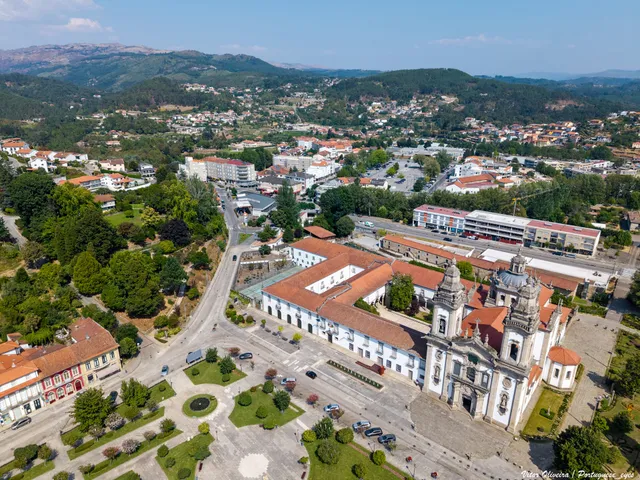
Refojos · monastic landscape

Beyond the church, cultivated land

Air view of the Monastery of São Miguel and the Republic Square in Refojos
View of the Monastery of Refojos and the urban surroundings. It is a context image, not a reconstruction of the cultivated fence.© Vitor Oliveira from Torres Vedras, PORTUGALⓘ

Vegetable gardens, orchards and medicinal plants formed part of the monastery grounds.

Includes an activity to try →Explore: The fence continues in other stories →
Read here and view sources

According to the municipal description of 2021, vegetable gardens, orchards, medicinal plants, fields and woods made up the former grounds of Refojos Monastery. Its pharmacy supplied other Benedictine monasteries, including Tibães. Beyond the church, there was land to cultivate and medicine to prepare. This is a historical portrait of the grounds, not an inventory of today’s plants.

The same description places the Penoutas stream beside and behind the monastery, near former agricultural buildings now adapted as museum spaces. Water and working buildings broaden the view: the story of the complex extends beyond worship.

The former grounds can no longer be read as one intact garden. The source draws attention to scattered traces. Distinguishing what the document describes from what a photograph shows is part of the discovery: a view of the square does not reconstruct vanished vegetable gardens, orchards or medicinal plants.

Words in this story: see explanations →Getting to know the parish See Fact sheet: Mosteiro de São Miguel de Refojos
Source and context

Municipality — historical gardens, news of 21/05/2021

Accessed: . Editorial summary; the date of consultation is not the date of the facts.

Parque Florestal · 2016 planting and species biology

A tree with fan-shaped leaves

The ginkgo’s leaves have a distinctive shape to look for.

Includes an activity to try →Explore: Two trees, two ways to look →
Read here and view sources

Ginkgo biloba leaves open like fans and may have a central division. Gulbenkian describes them turning golden in autumn before falling. The connection to Cabeceiras has a date: the municipal news item of 18 March 2016 records ginkgo and dawn redwood planting in Parque Florestal. The record tells the story of that planting; it does not confirm the trees’ present condition.

The fan shape also appears in the leaf’s veins. Gulbenkian explains that the division into two lobes, when present, gives rise to the name biloba. Leaves do not all need an identical notch to belong to the same species.

Ginkgo has male and female trees. Female trees produce seeds with a fleshy covering that may resemble a plum, but these are not fruits like those of a plum tree. This story invites us to observe shapes and understand reproduction; the municipal news does not identify the sex of the tree planted in Cabeceiras.

Origin and use are part of the story too. Gulbenkian places ginkgo’s origin in south-eastern China and mentions its planting in Portuguese parks, gardens and streets. It prefers sunny places with available water in well-drained soil. A garden can therefore bring together trees from very different origins: being planted in Cabeceiras does not make a species native to the municipality.

Words in this story: see explanations →
Source and context

Municipality — World Tree Day, 18/03/2016

Calouste Gulbenkian Foundation — Ginkgo

Accessed: . Editorial summary; the date of consultation is not the date of the facts.

Gardens · general ecology and seasons

A calendar of flowers

Pollinators need flowers at different times of year.

Includes an activity to try →Explore: A garden, several moments →
Read here and view sources

According to guidance from entomologists Renata Santos and Albano Soares, a green space becomes more valuable to pollinators when it offers flowers at different times, with varied shapes, colours and sizes. Spontaneously growing plants can contribute too. The strawberry tree, which flowers in autumn, is one example mentioned. This is an idea for observing a garden’s cycles, not a guaranteed calendar for every altitude and set of conditions in Cabeceiras.

Source and context

Calouste Gulbenkian Foundation — explanations of entomologists Renata Santos and Albano Soares, 07/06/2022

Accessed: . Editorial summary; the date of consultation is not the date of the facts.

Between rivers and mountains

Water and relief form the municipality. Choose a name and follow the landscape.

Choose a story · 1
Refojos · opening in 2013 and urban transformation

A stream in the history of Casa do Tempo

The renovation of the village centre also passed through the water.

Includes an activity to try →Explore: Memory, buildings and water →
Read here and view sources

The Casa do Tempo opened in 2 August 2013 next to the Monastery of Refojos. In the municipal description, the recovery of old housekeeping houses is part of a broader transformation: connecting the Republic Square to the new areas of the village, creating green spaces and treating the banks of the riverside of Penoutas. The interpretive center thus allows to tell two stories together: the memory of Cabeceiras and the change of its urban landscape.

The Municipality describes the acquisition of part of the returned houses and the negotiations that preceded the intervention. Reutilizing the buildings and transforming their surroundings appear as parts of the same project, rather than separate stories.

The multimedia component of the center was presented as a way to know territory, people, nature, uses and customs. Thus, the stream does not appear only as a scenario: it integrates the history of how that village space gained new functions. To plan a visit, the site's file gathers the practical information available.

See Fact sheet: Casa do Tempo
Source and context

Municipality — Casa do Tempo: opening in 2013 and requalification of the surroundings

Accessed: . Editorial summary; the date of consultation is not the date of the facts.

Crafts and memories

In the hands, at the table and in the community: little stories of how one lives and what one transmits.

Choose a story · 2
Refojos · journalistic report of 1956

The paths filled for the fair

The trip was part of the meeting.

Explore: Come to the fair and follow the stories →
Read here and view sources

The report of 1956 describes people arriving on the roads, on buses and trains. Alameda do Seco and the garden of Praça da República concentrated the movement. Barroso products and blankets joined the fair: the meeting connected territories and transports.

In the excerpts gathered by the Museum, the fair is also an occasion to present animals and debut clothes. The text evokes joints of ox ornamented with flowers on the way to the livestock contest and lists aprons, handkerchiefs, skirts, blouses and slippers. The party gathered work, trade and public presentation.

It is a journalistic description, with expressive language and a proper look at people. It helps to imagine the environment, but it does not measure how many visitors arrived or allows to treat all habits described as universal.

Source and context

Basto Land Museum — St Michael of other times, 26/09/2024; excerpts from The Journal of Cabeceiras of 16/09/1956 and 08/09/1977

Basto Land Museum — archive, page 4: Saint Michael of old, publication of 26/09/2024

Accessed: . Editorial summary; the date of consultation is not the date of the facts.

Refojos · flavours described in 1956

New chestnuts and clay mugs

The memory of the party also has flavors.

Includes an activity to try →
Read here and view sources

In the description of 1956 published by the Museum, the food establishments and tents were filled. Regional wine accompanied new lunches or chestnuts, served in glassy white clay mugs. They are details of a chronicle that brings the fair closer to its daily gestures.

The table appears in the middle of a moving fair. The chronicle evokes groups crossing paths, buses and trains, blankets coming from Barroso and the arrival of people in the Alameda do Seco and the Praça da República. Eating and drinking were part of this meeting, alongside the trade, the religious festival and the livestock contest.

There are two dates to be kept: the quoted text came out in the newspaper in 16 September 1956; the Museum re-disclosed it in 26 September 2024. The excerpt has the expressive language of a chronicle, does not present visitor counts or meals sold. By comparing it with the memory of dried nuts in crops, we discover the same fruit in different occasions and forms of conservation.

Source and context

Basto Land Museum — St Michael of other times, 26/09/2024; excerpts from The Journal of Cabeceiras of 16/09/1956 and 08/09/1977

Accessed: . Editorial summary; the date of consultation is not the date of the facts.

YOUR LOCAL GUIDE

What would you like to discover?

Take a closer look.