Discover Cabeceiras de BastoFree independent guide
ViveCabeceirasYOUR GUIDE TO CABECEIRAS
ENEnglish
SearchSaved

Story

Choose a story to start with. You can change the subject or fine tune the search.

7 stories · Travel through time · Search: pedraça

Travel through time

Documents, details and traditions: there is more to discover than a date on a stone.

Choose a story · 7
Pedraça · medieval documentation

Pedraça once had another written name

The 1258 royal inquiries record it as Pedraços.

Includes an activity to try →
Read here and view sources

The municipal introduction recalls this old form of the name. It opens a small window onto medieval documents: a place we know today may be written differently in the sources. The reference locates Pedraça in the record of 1258 without making that date the settlement’s beginning.

Pedraços and Pedraça are two forms worth placing side by side. A written name is also a clue for finding documents: searching only the current spelling may miss old references. The municipal introduction provides this variant but does not explain here when or why the spelling changed.

The same care applies to house names. At Casa do Paço, the municipal introduction draws attention to place names. A name can open an investigation; alone, it identifies neither a construction date nor the function a building served in every period.

Getting to know the parish
Source and context

Municipality — Pedraça, history and heritage

Accessed: . Editorial summary; the date of consultation is not the date of the facts.
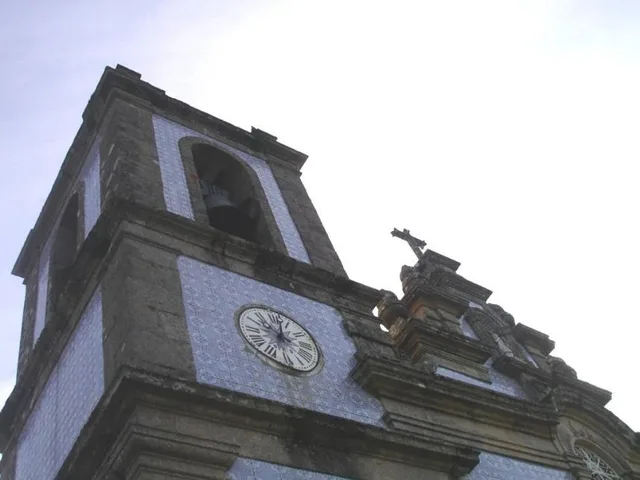
Pedraça · Parish Memories of 1758

A link from Pedraça to Coimbra

Exterior view: Igreja paroquial de Pedraça.
Igreja paroquial de Pedraça · dedication to the Holy Navyⓘ

In 1758, choosing the parish priest involved a connection beyond the municipality.

Includes an activity to try →Explore: Read a document, ask questions →
Read here and view sources

The parish account describes the church as dedicated to Santa Marinha and says its rector was presented by the rector of the Colégio de São Jerónimo in Coimbra. This historical bond shows how a small parish belonged to relationships extending beyond the Terras de Basto.

The same transcription places Pedraça in the jurisdiction of Cabeceiras de Basto and the comarca of Guimarães. It records 96 households and 322 souls admitted to communion, alongside a stipend of 50 thousand réis for the rector. These are the document’s categories: households are not people, and souls of communion do not automatically equal the total population.

The figures and the connection with Coimbra show two aspects of parish life: the community described and the organisation framing its priest. The municipal version identifies José Viriato Capela’s transcription, published in 2003, from the 1758 Memories.

The municipal page also distinguishes the account from its accompanying references: it points to memory 296 in volume 42 and lists an obligation to the fabric fund of the chapel of Santa Bárbara from 1624, and another connected with the Blessed Sacrament from 1722. These are archive clues. Their presence does not mean the two documents’ full texts are reproduced on the page, nor does it make 1624 the chapel’s construction date.

Words in this story: see explanations →Getting to know the parish See Fact sheet: Igreja paroquial de Pedraça See Fact sheet: Santa Bárbara de Pedraça — capela e miradouro
Source and context

Municipality — Parish Memories of Pedraça (1758), transcript of José Viriato Chapel (2003)
Accessed:

Municipality — Parish Memories of Pedraça, 1758; transcription of José Viriato Chapel (2003)
Accessed:

Editorial summary; the date of consultation is not the date of the facts.

Pedraça · residential heritage

Pedraça can be told through its houses too

Beyond the church lies a landscape of homes.

Includes an activity to try →Explore: Houses, persons and work in Pedraça →
Read here and view sources

Pedraça’s history can also be read through its houses. The municipal presentation highlights Casa do Paço, Casa de Parada and the houses of the Baron of Basto and Paço de Vila. It describes Parada as Brazilian in style, while drawing attention to the place name for Casa do Paço. These are different clues: one points to architecture, the other to place naming.

The houses belong to a parish the municipality describes as fertile and rich in water, connected with agriculture and flax growing. Bringing housing together with the working landscape helps us look at heritage beyond religious buildings.

The municipal description gives no construction dates for this group and does not identify who was responsible for each building. The reference to Brazilian taste is also insufficient to reconstruct an owner’s biography. The houses are starting points for learning about the parish; inclusion here does not imply public access.

Words in this story: see explanations →
Source and context

Municipality — parish presentation of Pedraça

Accessed: . Editorial summary; the date of consultation is not the date of the facts.

History of Pedraça

Pedraça: houses, fields and a link to Coimbra

Exterior view: Igreja paroquial de Pedraça.
Igreja paroquial de Pedraça · dedication to the Holy Navyⓘ

Local history has connections extending beyond the valley.

Read here and view sources

Pedraça’s inhabited landscape invites us to look beyond the church. The municipal presentation highlights Casa do Paço, Casa de Parada, and the houses of the baron of Basto and Paço de Vila. It describes Parada as Brazilian in taste: an architectural clue that cannot, by itself, reconstruct an owner’s travels or fortune.

These houses belong to the same parish described as fertile and rich in water, associated with farming and flax. Bringing buildings and fields together helps us see heritage as part of a working landscape. The description does not establish every construction date or person responsible.

In 1758, Saint Marina’s parish church had a connection to Coimbra: its rector was nominated by the rector of São Jerónimo College. The document places Pedraça within Cabeceiras and the district of Guimarães. Local religious life was therefore connected with a distant institution.

There is also a tradition associating a house with the Constable. That memory deserves to be told as tradition, distinguished from what documents demonstrate. Pedraça gains depth when houses, fields, institutions and stories are read together, without turning a heritage reference into an invitation to enter private property.

Source and context

Municipality — parish presentation of Pedraça
Accessed:

Municipality — Parish Memories of Pedraça (1758), transcript of José Viriato Chapel (2003)
Accessed:

Municipality — Parish Memories of Pedraça, 1758; transcription of José Viriato Chapel (2003)
Accessed:

Editorial summary; the date of consultation is not the date of the facts.

Rio Douro · archaeological interpretation

A castle read through the ground

In Eiró, the circular shape and ditch tell a story.

Includes an activity to try →Explore: The land and documents →
Read here and view sources

The municipal inventory interprets the remains as a fortified residence of motte type, dating from the mid-13th century. It connects them with the castle mentioned in the Inquiries of 1258. The circular form stands on a mound of stone and coarse sand, surrounded by a ditch. The municipality highlights its position above the Rio Douro valley, a connection between Refojos and the Barroso plateau. This reading combines terrain and document without reconstructing the vanished building with certainty.

The 1258 document adds a social dimension to the shape of the ground: according to the municipal interpretation, almost all residents of Santo André de Rio Douro had an annual obligation to go to the castle. The reference connects the fortification with community organisation, although it does not clarify all the associated tasks here.

The inventory compares the construction with examples from Brittany. This is a comparison of forms and techniques, not proof of the builders’ origin. Its position halfway up the hillside helps explain the relationship between defence and movement through the valley.

Getting to know the parish
Source and context

Municipality — archaeological inventory, interpretations and chronologies

Accessed: . Editorial summary; the date of consultation is not the date of the facts.

Pedraça · tradition recorded by the municipality

A house between memory and evidence

The Constable’s tradition deserves to be told as tradition.

Includes an activity to try →
Read here and view sources

The municipality presents as tradition the story of a riding ground beside Casa de Pedraça, associated with Nuno Álvares Pereira, and of the time spent there after his marriage to Leonor de Alvim. It is a memory attached to the place; the source’s own wording does not turn it into a proven event. Distinguishing these two levels helps us explore history without erasing local imagination.

See Fact sheet: Casa de Pedraça
Source and context

Municipality — parish presentation of Pedraça

Accessed: . Editorial summary; the date of consultation is not the date of the facts.

History of Rio Douro

Rio Douro: life between settlements divided by hills

Fifteen villages, nearby chapels and gatherings across parish boundaries.

Read here and view sources

The 1758 account presents Rio Douro as a parish among hills, divided by two rivers and spread across fifteen settlements. The church stood outside the settlement; reaching it was not simply crossing a street. Distance helps explain the importance of small chapels.

The priest explains that chapels brought the sacraments to sick people in remote settlements. He names chapels in Eiró, Teixugueira, Magusteiro, Moscoso, Toninha, Formigueiro and elsewhere. Some involved responsibilities linked to Refojos Monastery; others to residents or owners.

Despite separation, there were gathering days. At Santa Eufémia, the account mentions people from Abadim; at São Frutuoso, Cavez and Pedraça; at São João, Arco. These clamores were collective religious observances. Paths connected communities that the terrain might make seem isolated.

The same differences shaped harvests: maize, wine and chestnuts beside rivers; rye on the hills. Rio Douro’s history includes this daily adaptation and the bonds between villages. The celebrations and routes described are historical, not a present-day calendar or itinerary.

Source and context

Municipality — Parish Memoirs of Rio Douro, António Carneiro da Costa, 22/05/1758
Accessed:

Municipality — Old village of Toninha: proposed chronology, parallels and inquiries of 1258
Consultations: ,

Archaeological Letter of Cabeceiras de Basto — Protohistory and Romanization
Accessed:

Editorial summary; the date of consultation is not the date of the facts.

YOUR LOCAL GUIDE

What would you like to discover?

Take a closer look.