Discover Cabeceiras de BastoFree independent guide
ViveCabeceirasYOUR GUIDE TO CABECEIRAS
ENEnglish
SearchSaved

Flavors

Choose a story to start with. You can change the subject or fine tune the search.

4 stories · The flavours of Cabeceiras · Search: papas

The flavours of Cabeceiras

From the garden to the pot, from the oven to the table.

Choose a story · 4
Gondiães · 2012 account

The papas begin before dawn
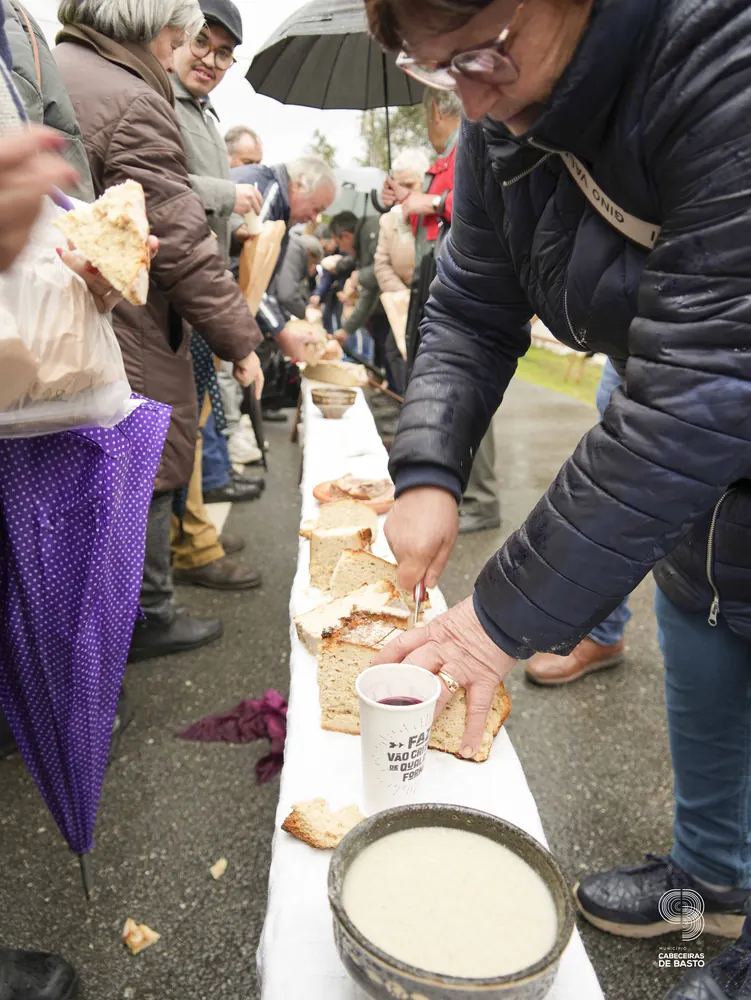
Sharing food at the Festa das Papas in Gondiães, 20 January 2026.
Source: Municipality of Cabeceiras de Basto
About this photograph

Date given at source: . Source consulted on 2026-11-15. EXIF orientation and proportional WebP resizing; no cropping or upscaling.

Individual photographer and reuse licence not stated by the source.

Request removal or correct the photo credit

White maize and pork ribs in a festive kitchen.

Includes an activity to try →Explore: A party made by many hands →
Read here and view sources

In Gondiães, preparations for the celebration begin days before the food reaches the table. During its 2012 visit, the Museu das Terras de Basto found the broa already ready while the papas were being made before dawn. First the pork ribs were cooked; then white maize flour went into their cooking water. Large iron pots gave way to glazed earthenware bowls, set out for the blessing and sharing. This is an account of communal preparation in that year, not a recipe with quantities or papas de sarrabulho.

The account also distinguishes different moments of eating: on the morning of the feast there were hot papas for those arriving with a bowl and spoon; at the communal distribution they were served cold, firm enough to cut into slices. The next day, the gathering was for residents and the papas were served hot again. These are moments from the documented visit, not times for a future edition.

Getting to know the parish
Source and context

Basto Land Museum — Visit to the Feast of Popes, published in 22/01/2012

Accessed: . Editorial summary; the date of consultation is not the date of the facts.
Refojos · kitchen memory collected by the Museum

A recipe learned at celebrations

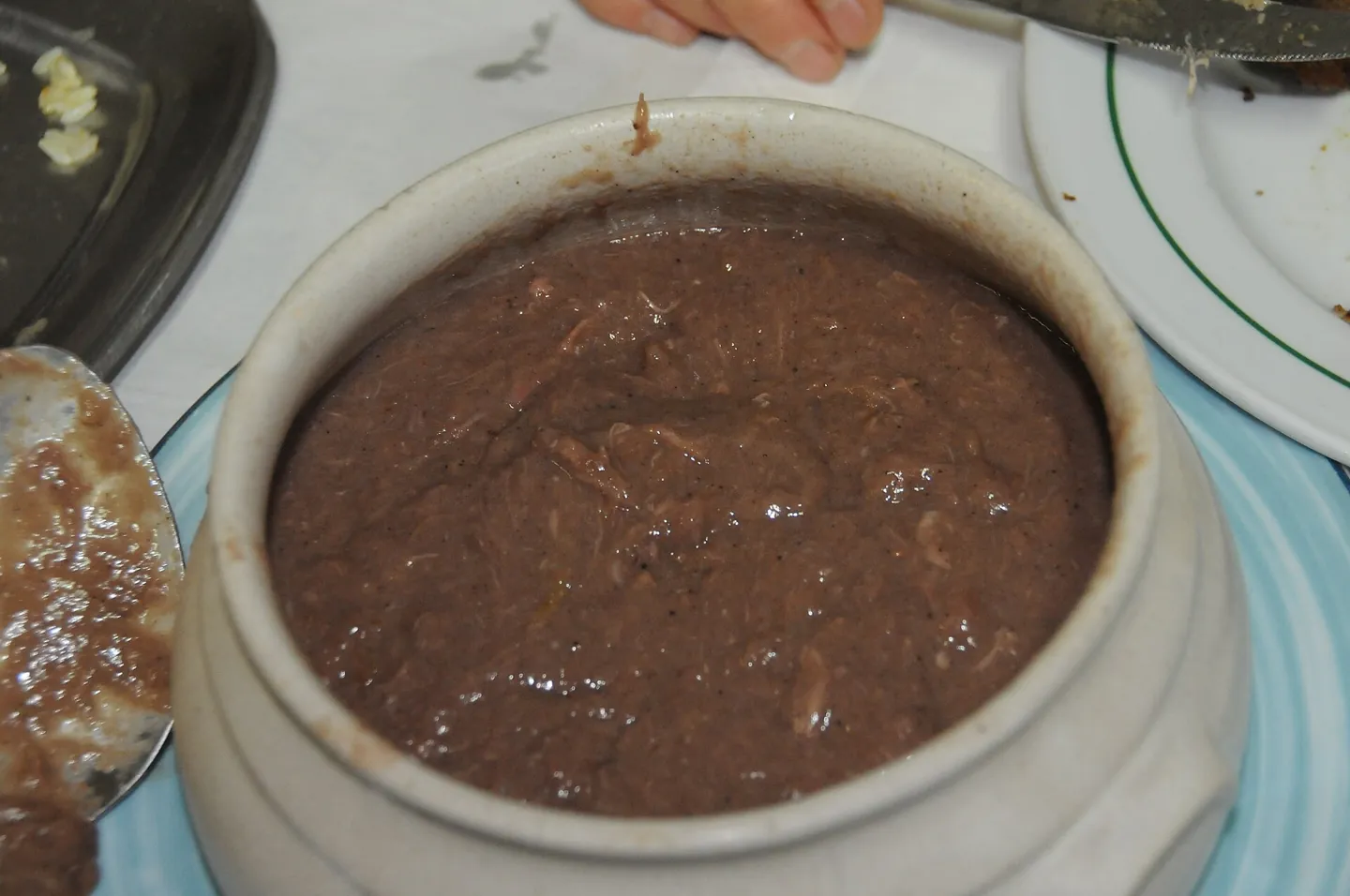
Papas de sarrabulho in a dish. Illustration of the food, not Maria Helena’s recipe.
Photography: Joseolgon · CC BY-SA 4.0
About this photograph

Date given at source: . Source consulted on 2026-11-15. Orientação EXIF e redimensionamento proporcional WebP; sem recorte.

Request removal or correct the photo credit

See more 1 photos and details
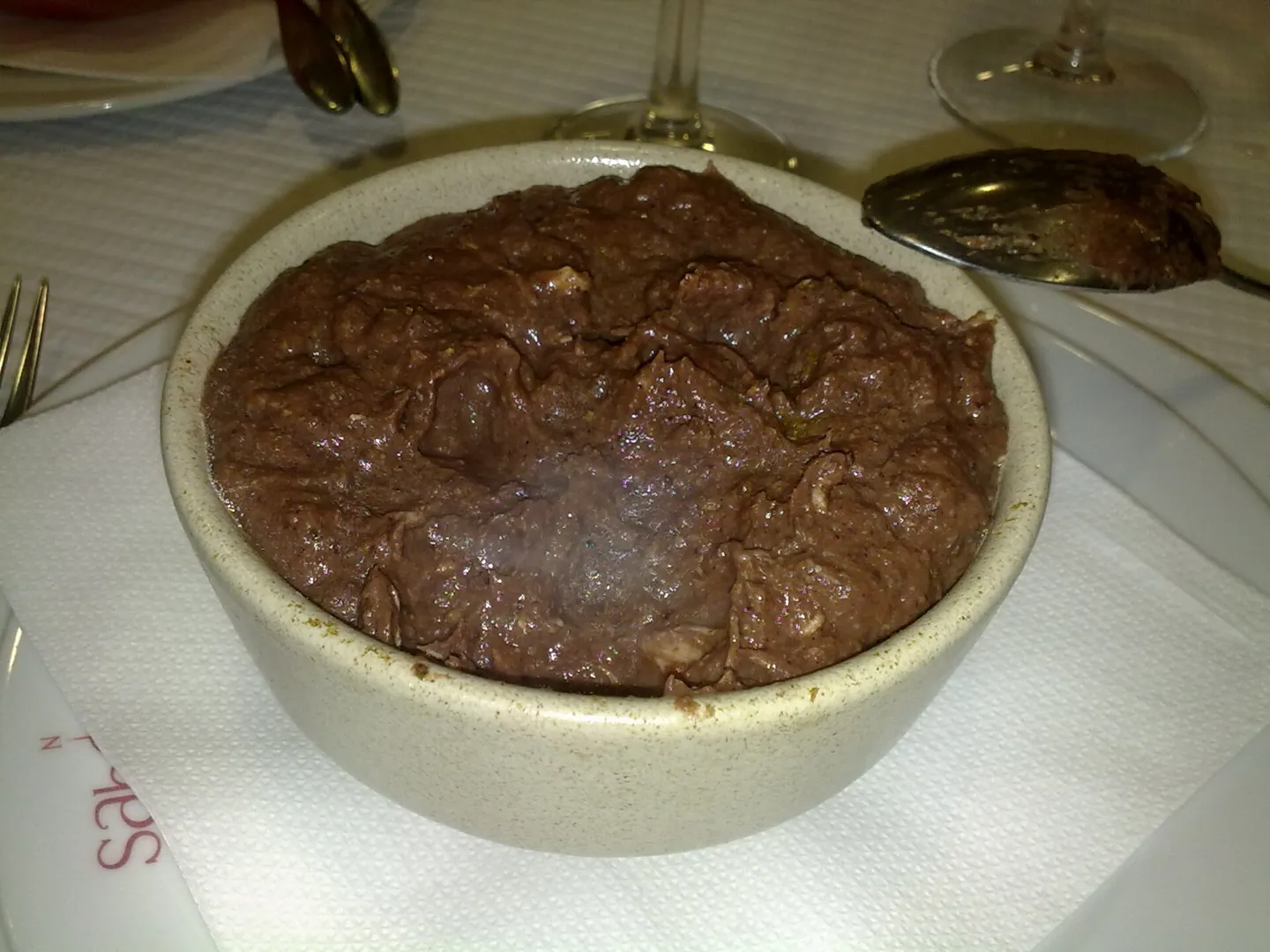
Papas de sarrabulho photographed near Porto. Comparison image, not a meal in Cabeceiras.
Photography: Adriao · CC BY3.0
About this photograph

Date given at source: . Source consulted on 2026-11-15. Orientação EXIF e redimensionamento proporcional WebP; sem recorte.

Request removal or correct the photo credit

Papas de sarrabulho also tell us how knowledge is passed on.

Includes an activity to try →Explore: The word popes holds differences →View ingredients and preparation →
Read here and view sources

Maria Helena da Mota Lopes da Silva Almeida, who had lived in Refojos since childhood, said she learned to make these papas at the beginning of the twenty-first century. Her teacher was a cook from Porto who came to Cabeceiras to work at baptisms and weddings. Celebrations were also places to learn techniques and recipes.

The version recorded in June 2011 combines different meats, maize flour, cooked pork blood, red wine and cumin. The account places its preparation in winter, up to the end of March. The publication, from July of the same year, documents how knowledge was passed on and the usual season for the dish; it does not describe a menu available today.

The account distinguishes shredding the meats from finely chopping the heart, tongue and liver. Flour, wine and cooked blood form a separate mixture. These details show that a recipe also preserves movements and textures.

To collect a kitchen memory, first ask who taught the recipe and on what occasions it was made. Then ask for a gesture that is difficult to explain in writing. Record the speaker’s words and the conversation date: a family recipe gains context when it preserves the voice passing it on.

Source and context

Basto Land Museum — A recipe learned at parties, publication of 06/07/2011
Consultations: ,

Editorial summary; the date of consultation is not the date of the facts.
Local and regional cuisine

A table with a taste of Minho

Veal, rojões, cod and papas de sarrabulho.

Explore: Before choosing the dish →
Read here and view sources

These specialities appear in the municipal description of local food, alongside the wines of the Vinho Verde region. Cabrito das Terras Altas do Minho and Barrosã and Maronesa beef are also part of this regional repertoire. Ask about the house speciality and what is available that day.

Source and context

Municipality — gastronomy

Accessed: . Editorial summary; the date of consultation is not the date of the facts.

Cabeceiras and neighboring municipalities · food memory

Maize the size of rice

Mílheros tell a story of rural food.

Includes an activity to try →Explore: A cereal, different transformations →View ingredients and preparation →
Read here and view sources

The Museum describes mílheros as maize crushed in a mill into small grains. In everyday meals, beans, cabbage shoots or cod bones could be added for flavour. Pork appeared on festive days or in households with more resources. This explains the distinction between “rich” and “poor” mílheros. The 2019 publication places this tradition in Cabeceiras and neighbouring municipalities.

In the Museum’s recipe for mílheros ricos, pork ribs, morcela, salpicão and linguiça accompany the grain. The difference between versions also helps us understand living conditions and occasions for eating them. The same ingredient could sustain a simple meal or form part of a more abundant table.

Words in this story: see explanations →
Source and context

Land Museum of Basto — Millions (2019)

Accessed: . Editorial summary; the date of consultation is not the date of the facts.

YOUR LOCAL GUIDE

What would you like to discover?

Take a closer look.