Discover Cabeceiras de BastoFree independent guide
ViveCabeceirasYOUR GUIDE TO CABECEIRAS
ENEnglish
SearchSaved

Flavors

Choose a story to start with. You can change the subject or fine tune the search.

11 stories · The flavours of Cabeceiras · Search: mel

The flavours of Cabeceiras

From the garden to the pot, from the oven to the table.

Choose a story · 11
Cabeceiras · regional production area

The landscape reaches the honey too

Heather connects the hills with the flavours on the table.

Includes an activity to try →Explore: From flower to sweet →
Read here and view sources

Cabeceiras de Basto lies within the production area of Mel das Terras Altas do Minho DOP described by the PTPT portal. Heather flowers connect mountain vegetation with this dark honey, which can be liquid or crystallised. The story does not end at the hive: the profile describes collection, extraction, settling and packing within the production region. Plants, bees and human work all lie on the path to the jar. The municipality’s inclusion in that area does not mean every honey sold here is certified.

The name also has criteria in the profile consulted. The portal distinguishes the product’s pollen composition and the names “Mel de Urze” and “Mel de Queiró”, associated with more than 35% pollen from the heather family. This information cannot be obtained simply by looking at the jar’s colour.

Presentation can vary: the profile includes centrifuged honey, liquid or crystallised, and honeycomb. For a particular product, read the origin and identification on the label. A landscape photograph or sale at a local market does not, by itself, demonstrate DOP certification.

Words in this story: see explanations →
Source and context

PTPT — Highland honey of Minho: product, know-how and production area

Accessed: . Editorial summary; the date of consultation is not the date of the facts.
Cabeceiras · gastronomic promotion of March 2012

Honey sweetens rabanadas too

A dessert helps tell the story of how local flavours were promoted.

Includes an activity to try →Explore: A bread, different desserts →View ingredients and preparation →
Read here and view sources

In the food programme of 23–25 March 2012, Cabeceiras presented roast kid as its speciality and rabanadas with honey as a regional sweet. The municipal announcement also links the table to Vinho Verde, meat and honey. This combination shows how food promotion brings products and preparations together. It is the historical programme of that edition, not a current menu or a claim that rabanadas originated exclusively in the municipality.

The 2015 guide adds a preparation with milk and honey. Compare it with Dídia Teixeira’s wine version: the same name can hold different recipes.

Source and context

Municipality — Gastronomic Weekends, 23–25/03/2012

Porto and North Tourism — Gastronomic Weekends 2014/2015, Cabeceiras de Basto, pp. 60–61 (PDF sheet 32), Municipal copy of Mondim Basto

Accessed: . Editorial summary; the date of consultation is not the date of the facts.
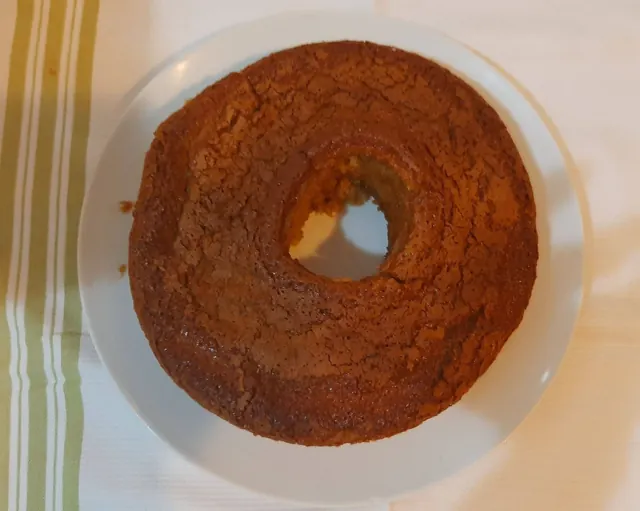
Refojos · February 2016 collection

Honey meets cinnamon and aniseed

Honey cake in the Terras de Basto Museum’s publication.
Source: Museu das Terras de Basto
About this photograph

Photograph date not stated. Source consulted on 2026-11-15. EXIF orientation and proportional WebP resizing; no cropping or upscaling.

Individual photographer and reuse licence not stated by the source.

Request removal or correct the photo credit

A recipe has ingredients, and it also has a voice.

Explore: A memory, lots of sweets →View ingredients and preparation →
Read here and view sources

Alcina Teixeira, who lived in Refojos, shared this cake in 2016. She remembered finding it in a magazine by Maria Odette Cortes Valente around 1966, when she was living in Mozambique.

Honey, cinnamon and aniseed meet in this family memory. The age recalled by the interviewee does not establish a proven date of origin.

The account identifies a family practice: Alcina made cakes for celebrations and looked for recipes in magazines. The cake combines honey with sugar and includes olive oil, milk, walnuts and spices. The ring tin belongs to the preparation as recorded. These details help identify this version without presenting it as the only way of making honey cake in Cabeceiras.

Source and context

Basto Land Museum — Honey cake Cabeceiras de Basto (2016)

Accessed: . Editorial summary; the date of consultation is not the date of the facts.
Products referred to by the Municipality

Bread, smoked meats and honey

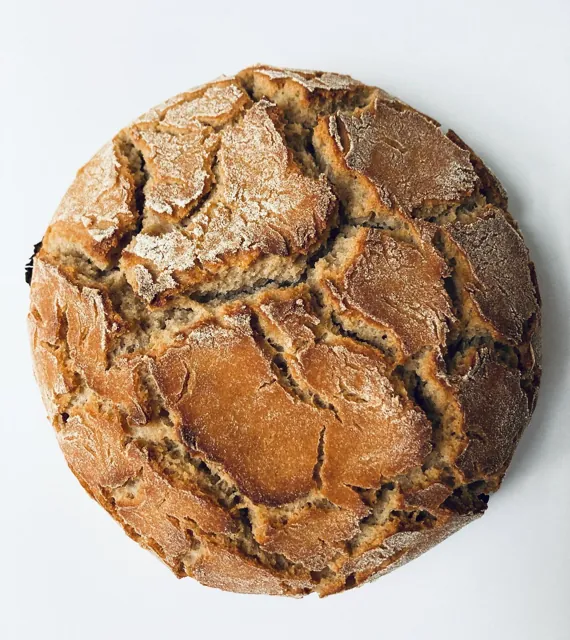
Corn bread crust. Illustrative photograph; not a documented local recipe or batch.
Photography: María Alabau · CC BY-SA 4.0
About this photograph

Date given at source: . Source consulted on 2026-11-15. Orientação EXIF e redimensionamento proporcional WebP; sem recorte.

Request removal or correct the photo credit

Flavours that invite you to discover what the land produces.

Explore: Pick a flavor and follow your story →
Read here and view sources

The municipal food guide highlights broa, smoked meats, Mel de Basto and the region’s wines. They offer starting points for discovering the relationship between farming, food preservation and the cuisine of Minho. Their inclusion in this selection does not mean every restaurant serves them every day.

Source and context

Municipality — gastronomy

Accessed: . Editorial summary; the date of consultation is not the date of the facts.
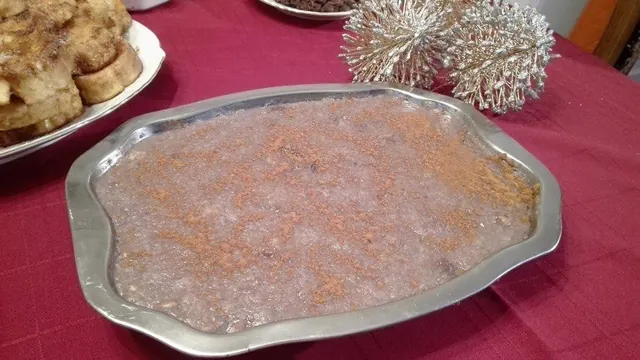
Pedraça · testimony collected in 2011

Bread joined the celebration too

Mexidos: photograph accompanying the recipe recorded in Pedraça and published by the Museum.
Source: Museu das Terras de Basto
About this photograph

Photograph date not stated. Source consulted on 2026-11-15. EXIF orientation and proportional WebP resizing; no cropping or upscaling.

Individual photographer and reuse licence not stated by the source.

Request removal or correct the photo credit

With mexidos, dessert takes shape in the cooking pot.

Includes an activity to try →Explore: Three Ways to Bring Bread to the Feast →View ingredients and preparation →
Read here and view sources

A bread dessert for Christmas and New Year, with honey, nuts, dried fruit and Port wine.

Fátima Magalhães recorded this version in 2011 from Maria da Conceição Gonçalves Mouta, who was born in Cavez and lived in Pedraça. The Museum published it in 2016.

The order of preparation gives bread the leading role: added in small pieces after the nuts and dried fruit, it thickens the mixture as it is stirred. Lemon peel and a cinnamon stick join the water and honey at the beginning; ground cinnamon finishes the dessert on the serving dish.

This version keeps different kinds of measurements: litres, a small glass and quantities left to the cook’s taste. The recipe preserves that distinction. The account gives no serving numbers or weights for every ingredient, so those gaps have been retained instead of guessing precise measurements.

Source and context

Land Museum of Basto — Scrambled (2016; collection of 2011)

Accessed: . Editorial summary; the date of consultation is not the date of the facts.
Sweets · 2019 competition

Beans make it to dessert too

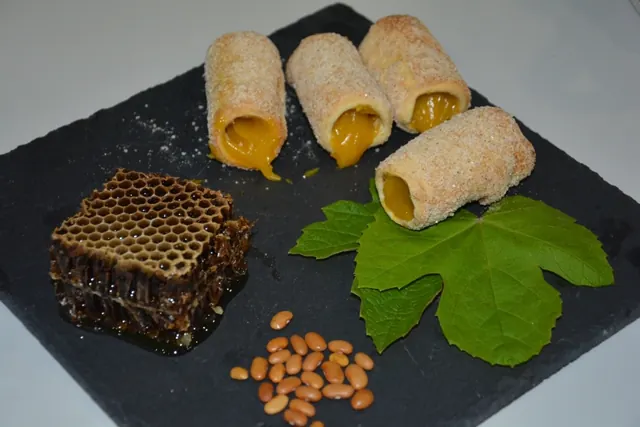
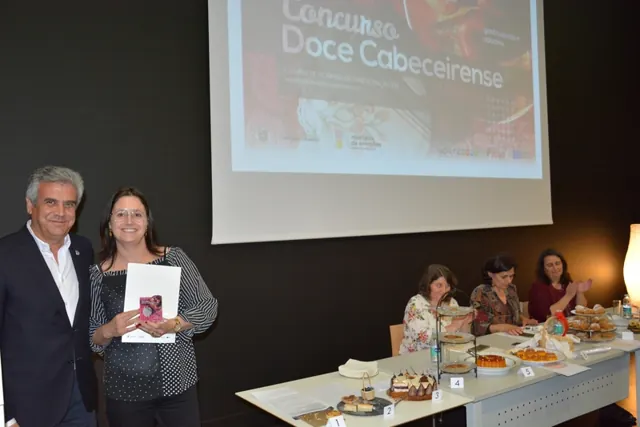
Alice Alves’s Miguelitos, winners of the 2019 Doce Cabeceirense competition.
Source: Municipality of Cabeceiras de Basto
About this photograph

Photograph date not stated. Source consulted on 2026-11-15. EXIF orientation and proportional WebP resizing; no cropping or upscaling.

Individual photographer and reuse licence not stated by the source.

Request removal or correct the photo credit

See more 1 photos and details
Miguelitos prize presentation at the 2019 Doce Cabeceirense competition.
Source: Municipality of Cabeceiras de Basto
About this photograph

Photograph date not stated. Source consulted on 2026-11-15. EXIF orientation and proportional WebP resizing; no cropping or upscaling.

Individual photographer and reuse licence not stated by the source.

Request removal or correct the photo credit

The story of Miguelitos has a date and a named creator.

Read here and view sources

Alice da Conceição de Magalhães Alves’s Miguelitos won the Concurso Doce Cabeceirense, whose result was announced at the Casa do Tempo on 18 May 2019. The municipal report describes a rolled preparation made with yellow beans, flour and Vinho Verde, filled with eggs and honey. The competition was part of the Mosteiro de Emoções programme. In February 2020, the municipality highlighted them again as the dessert for the Fim de Semana Gastronómico, alongside cozido as the main course. The sweet thus moved from the competition to the promotion of local food; the report does not confirm current availability.

Source and context

Municipality — Miguelitos win the Sweet Head Competition, 20/05/2019
Accessed:

Municipality — Gastronomic Weekend announcement, 07/02/2020
Accessed:

Editorial summary; the date of consultation is not the date of the facts.
Pedraça · 2011 food memory

Bread joined the greens too

Couves com migas made use of spring’s tender leaves.

Explore: A kitchen throughout the year →View ingredients and preparation →
Read here and view sources

Maria da Conceição added broa, beans and salpicão to the greens. The account recorded in February 2011 associates the dish with April and May. It is a family recollection, distinct from couves com feijões. After draining, the preparation was mixed with broa, garlic and olive oil in a large bowl, the alguidar. The same bowl went to the table.

The dish follows the vegetable garden’s calendar: in Maria da Conceição’s memory, April and May brought young, tender greens. The recipe also preserves techniques — cutting finely, draining and folding together — and a serving vessel, the alguidar. Ingredients, season and utensils tell different parts of the same memory.

The bowl connects preparation and serving. In the account, the ingredients are mixed in that vessel and brought to the table in it. Look for a similar object in a family photograph: who used it, and on what occasion? An object can start a conversation as rich as the recipe.

Getting to know the parish
Source and context

Basto Land Museum — testimony of Maria da Conceição Gonçalves Mouta, collected by Maria de Fátima Carvalho in 2011

Accessed: . Editorial summary; the date of consultation is not the date of the facts.
Pedraça · testimony collected in March 2011

This broa blends rye and wheat

Not every memory of broa begins with maize.

Explore: The batch continues in other stories →View ingredients and preparation →
Read here and view sources

In the recipe recorded by the Museu das Terras de Basto in March 2011, Maria da Conceição Gonçalves Mouta, who lived in Recovos, Pedraça, combined light rye, dark rye and wheat. The account distinguishes the maize broa she learned from her grandmother from the mixed-grain broa she began making later. Tradition changes even within one kitchen. In the same account, she says she no longer baked weekly: she made bread for celebrations and when she missed homemade broa. She also prepared it for Santa Marinha and for Christmas and maize-husking events at the Associação D. Nuno Álvares in Pedraça. Bread connected the kitchen with community gatherings.

The rhythm of baking also changed the leavening. When bread was baked frequently, dough was kept from the previous batch; in the preparation described in 2011, she used baker’s yeast prepared the day before. The change in ingredients accompanied a change in the calendar, from weekly bread to bread for gatherings.

Source and context

Basto Land Museum — testimony of Maria da Conceição Gonçalves Mouta, collected by Maria de Fátima Carvalho in 2011

Accessed: . Editorial summary; the date of consultation is not the date of the facts.

Refojos · family memory published in 2020

A recipe that crossed continents

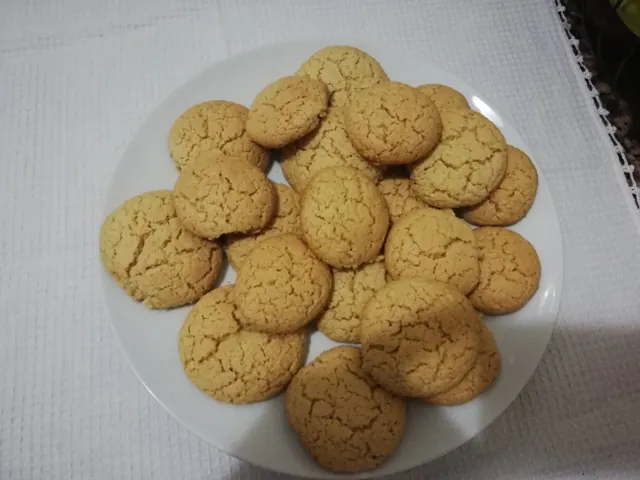
The lemon biscuits arrived with a family story.

Includes an activity to try →Explore: Three sweets, a family memory →View ingredients and preparation →
Read here and view sources

Alcina Teixeira found recipes from Cabeceiras in a Portuguese magazine during her years in Mozambique. The biscuits reached the Museum through her son Mário, who lived in Refojos, and were published in 2020.

The family also kept the recipes for honey cake and cassianos. Comparing them lets us follow knowledge on its journey from a magazine to a family kitchen and then to the wider public.

Source and context

Basto Land Museum — Lemon biscuits Cabeceiras (2020)

Accessed: . Editorial summary; the date of consultation is not the date of the facts.

Outeiro · 2013 collection

Red wine reached dessert too

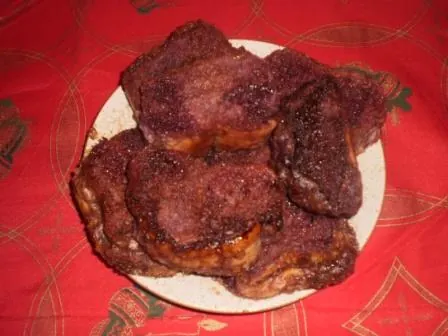
Wine-soaked rabanadas accompanying the recipe published by the Museum in 2014.
Source: Museu das Terras de Basto
About this photograph

Photograph date not stated. Source consulted on 2026-11-15. EXIF orientation and proportional WebP resizing; no cropping or upscaling.

Individual photographer and reuse licence not stated by the source.

Request removal or correct the photo credit

A version of rabanadas preserved in Outeiro.

Explore: The bread also arrives for dessert →View ingredients and preparation →
Read here and view sources

In Dídia Teixeira’s version from Paneladas, the bread is dipped in red Vinho Verde and egg before being fried. Sugar and cinnamon accompany the layers on the serving dish.

Fátima Magalhães recorded the recipe in 2013; the Museum published it in 2014, associating it with Christmas and New Year. This version is identified with the person who shared it, without being presented as the recipe of every household in Outeiro.

Source and context

Basto Land Museum — Wine French toast (2014; 2013)

Accessed: . Editorial summary; the date of consultation is not the date of the facts.

Refojos · family memory published in 2020

Cassianos: small shapes, a long journey

Cassianos from Cabeceiras in the Museum’s December 2020 publication.
Source: Museu das Terras de Basto
About this photograph

Photograph date not stated. Source consulted on 2026-11-15. EXIF orientation and proportional WebP resizing; no cropping or upscaling.

Individual photographer and reuse licence not stated by the source.

Request removal or correct the photo credit

Another sweet from Cabeceiras preserved in Alcina’s memories.

Includes an activity to try →Explore: A recipe crosses places and generations →View ingredients and preparation →
Read here and view sources

Alcina Teixeira shared these small cakes through Mário Teixeira, who lived in Refojos. The Museum’s 2020 publication connects them with recipes she found in a Portuguese magazine during her years in Mozambique.

Cassianos belong to the same collection of memories as the lemon biscuits and honey cake. The source describes their shape as small balls, but does not explain the origin of the name.

The account traces a family journey: Alcina, born in Penafiel, moved to Vila de Manica in Mozambique at fifteen. There she met Alexandre Teixeira from Cavez, who worked on the railways. Alcina ran a maize mill and a shop, and made cakes for family celebrations. The magazine in which she found the recipes connected her with flavours from Cabeceiras before the family moved to the municipality. The story follows the recipe’s transmission; it does not establish who created it.

Source and context

Basto Land Museum — Cassians Cabeceiras, 11/12/2020

Accessed: . Editorial summary; the date of consultation is not the date of the facts.

YOUR LOCAL GUIDE

What would you like to discover?

Take a closer look.