Discover Cabeceiras de BastoFree independent guide
ViveCabeceirasYOUR GUIDE TO CABECEIRAS
ENEnglish
SearchSaved

Stories of Cabeceiras

Choose a story to start with. You can change the subject or fine tune the search.

14 leituras · Todos os temas · Pesquisa: comboio

Time travel

Documents, details and traditions: there is more to discover than a date on a stone.

Escolher uma história · 10
Arco de Baúlhe · Railway memory

Before the train, the tiles arrived
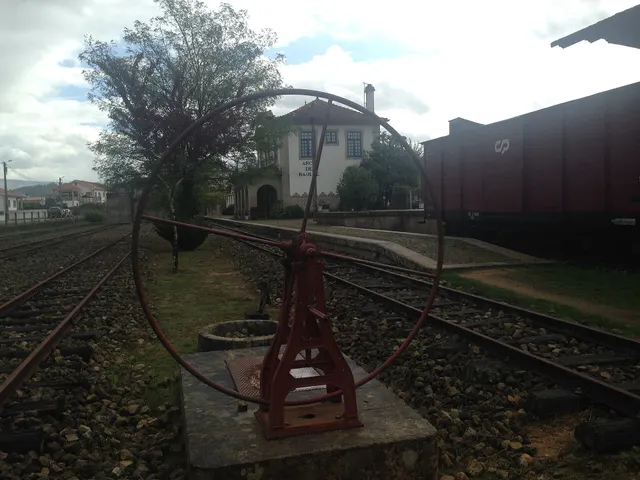
Revolving plate and tracks from the old Arco de Baúlhe station, with buildings and railway equipment at the bottom.
Facade of the station of Arco de Baúlhe, with coating and tile panels visible to the background. View of JP Ribeiro; it is not a detail of the panels of 1940.© JP Ribeiroⓘ

The station also reads on the walls.

Inclui uma atividade para experimentar →Explorar: Uma estação, diferentes espaços →
Read here and consult sources

The station panels were executed in 1940 by A. Lopes, at the Sant’Anna Ceramic Factory in Lisbon, according to the publication of the Basto Land Museum. They are prior to the opening of the station in 1949.

The station was a set of spaces with different functions. The publication identifies the driver's house, the staff building, the loading and unloading dock and the dispatch warehouse. The two stalls started to host permanent exhibitions of railway equipment; the warehouse is described as temporary exhibition space.

Reading the building can begin with these differences: where were they working, where were goods passing and where were they stored? The tiles are part of this built landscape. The description documents the museological organization presented in the publication, without confirming the exhibition or access of each space today.

Getting to know the parish See Fact sheet: Núcleo Ferroviário de Arco de Baúlhe
Source and context

Municipality — Land Museum of Basto: a journey through the history of the region, pp. 28–29

Municipality — Núcleo Ferroviário de Arco de Baúlhe

Accessed: . Editorial summary; the date of consultation is not the date of the facts.
Arco de Baúlhe · Railway memory

The mail also traveled by train

The van DE.FV 506 carried more than goods.

Read here and consult sources

Built in Belgium in 1908, the van DE.FV 506 is presented by the Museum as a narrow-track vehicle for goods, parcels and postal mail. It had plate coating, electric lighting and a toilet for the employee, accessible from the outside. The acquisition by the Company of Guimarães Railways appears as hypothesis. The description of the collection, published in 2011, does not confirm the current exhibition of the piece.

The gauge indicated by the Museum is one meter. In comparison with the car, the function changes: ME5 was intended for passengers, while this van gathered cargo, parcels and mail. Traveling on the same network could mean transporting people, news or goods.

See Fact sheet: Núcleo Ferroviário de Arco de Baúlhe
Source and context

Land Museum of Basto — Van DE.FV 506, 17/07/2011

Basto Land Museum — Heritage with history: Self-propelled ME5, 22/02/2018

Accessed: . Editorial summary; the date of consultation is not the date of the facts.

Arco de Baúlhe · Railway memory

The train stopped, the memory stayed

Revolving plate and tracks from the old Arco de Baúlhe station, with buildings and railway equipment at the bottom.
Arco de Baúlhe station and railway equipment. Context photography, not of the closing day.© JP Ribeiroⓘ

The station gained another function after closing the line.

Explorar: Da última viagem à memória preservada →
Read here and consult sources

According to the retrospective of the Museum, the Arc station ceased to operate in January 1990, with the closure of the section between Amarante and Arco de Baúlhe. In 8 January 2000, a protocol between REFER and the Municipality opened the way for the provision of facilities and the museological dynamics. The opening of the Museum, in 23 May 2004, belongs to this new life of space.

The compromise brought responsibilities: the Municipality was responsible for preserving, maintaining and managing the section, in collaboration with the National Railway Museum Foundation. The news of the Museum of April 2025 also reports the municipal decision of February 14 of that year to classify the whole. The change of use involved, therefore, agreements and continued work, in addition to the opening of doors to the public.

See Fact sheet: Núcleo Ferroviário de Arco de Baúlhe
Source and context

Basto Land Museum — Railway Station Arco de Baúlhe classified as Municipal Interest Set, 02/04/2025

Accessed: . Editorial summary; the date of consultation is not the date of the facts.

Arco de Baúlhe · Railway memory

A gas engine on the rails

The collection counts different ways to get a train moving.

Explorar: Quem e o que viajava nos carris? →
Read here and consult sources

The ME5 motor vehicle carried a petrol engine to the rails. The publication on the museum located its construction in the Santa Apolónia workshops in 1948. In the same collection, it describes a steam locomotive manufactured in Germany in 1908.

The dates are forty years and allow comparing two technologies. They are dates of construction of vehicles, not of arrival at the station. The collection gathers pieces from various origins; being in the museum does not show, by itself, where each one circulated.

The Basto Land Museum identifies the engine as Chevrolet and describes the passenger space: 11 first-class seats, 16 third-class and other 16 standing, as well as sanitary facilities. The 27 seating positions shall not be confused with all available positions.

The National Railway Museum explains that a single motor vehicle sought to reduce the costs of operation in lines of low traffic, bringing together functions that required a composition. The project, directed by the engineer Vasco Viana, took advantage of characteristics of road transport. The same record says that the use of gasoline proved costly and led to temporary or extraordinary uses.

The inventory adds a link to the local history: this ME5 will have circulated in the Line of Tâmega. The formulation is prudent and so remains. It is a specific documentary track, different from deducing the circulation just because the vehicle is in the collection today.

Getting to know the parish See Fact sheet: Núcleo Ferroviário de Arco de Baúlhe
Source and context

Municipality — Land Museum of Basto: a journey through the history of the region, pp. 28–29

Basto Land Museum — Heritage with history: Self-propelled ME5, 22/02/2018

National Railway Museum MEf5, FMNF/ARC/ Inventory000203

Accessed: . Editorial summary; the date of consultation is not the date of the facts.

Regional rail link · Celorico bridge Basto

To get to the Arc, the line needed to cross another valley

The history of the Cabeceiras train also passes through the neighboring municipality.

Inclui uma atividade para experimentar →Explorar: Uma ponte pronta, uma ligação por completar →
Read here and consult sources

Before reaching Cabeceiras, the line had to cross the valley of the river of Veade. The bridge of Matamá is in the Union of the Freguesies of Veade, Gagos and Molares, in Celorico of Basto. According to the Museum, its six granite arches form a structure about 190 meters long and 52 meters high.

The report distinguishes two moments: the opening of the bridge in 5 June 1936, and the entry into railway use in 15 January 1949, with the opening of the Celorico section of Basto–Arco de Baúlhe. Having the bridge built did not immediately mean having trains arriving at the Arc. This regional history helps to realize the time needed to complete the connection.

The report of the Museum attributes the responsibility of the work to engineers Jorge Vieira Bastian and Manuel Gonçalves Costa. The dimension of the structure helps to realize the challenge of taking the railway through the valley; the chronology allows to separate this work from the entry into service of the complete connection.

Source and context

Basto Land Museum / Pedro T. Gonçalves — Matamá Railway Bridge, 28/07/2026

Municipality — Land Museum of Basto: a journey through the history of the region, pp. 28–29

Accessed: . Editorial summary; the date of consultation is not the date of the facts.

Line of Tâmega · object presented by the Museum in June 2024

The last light told a story

A red light signaled that the train was going full.

Inclui uma atividade para experimentar →Explorar: Duas luzes, diferentes tarefas →
Read here and consult sources

The last vehicle of the train carried important information. The Museum features a red-light taillight, used at night in the last carriage or wagon to indicate that the composition was complete. Its function was to signal, not to illuminate the path ahead of the locomotive.

The registration N.1 AND POST. OF THE BOOK connects the object to the station of Livração, in the line of the Valley of Tâmega. Reading the piece implies joining three clues: the color of the light, the position on the train and the inscription associating it to a place.

This small object shows that the railway history is also made of discrete signs and tasks. The presentation of the Museum, published in June 2024, describes the use and station to which the lighthouse was affected; it does not indicate a date of manufacture for the piece.

Palavras desta história: ver explicações →
Source and context

Land Museum of Basto — Taillight “N.1 AND POSTO. FREEDOM”, 2024-06-28

Accessed: . Editorial summary; the date of consultation is not the date of the facts.

Museum Collections · Railway Lighting

A station in the light of oil

Before you look at the train, notice the light from the pier.

Inclui uma atividade para experimentar →
Read here and consult sources

In February 2024, the Museum described a hexagonal platform lamp, intended to light docks. Inside it had an oil lamp, with glass chimney and metallic reservoir. The description does not identify the station where this piece was used.

The reservoir had the inscription MD MOVING. This detail belongs to the object described; it does not provide, alone, a station of origin. Compare it to the taillight: both produce light, but the lamp illuminates the embarkation space and the lighthouse communicates information about the composition.

Source and context

Basto Land Museum — Platform lamp, 2024-02-22

Accessed: . Editorial summary; the date of consultation is not the date of the facts.

Arco de Baúlhe e Vila Nune · line memory and path transformation

The line has gained new steps

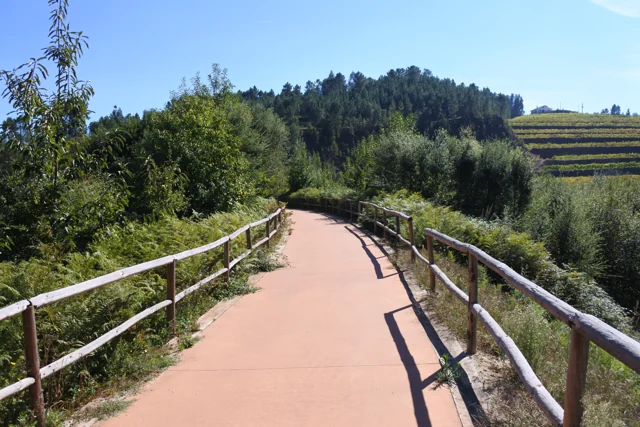
Tâmega Ecopist in Arco de Baúlhe e Vila Nune, with reddish pavement and wooden guards, photographed in October 2016.
The former railway channel converted to Ecopista in Arco de Baúlhe e Vila Nune. Photo by FF Mira, October 6, 2016; does not document the inauguration of 2013 or the current conditions of the entire route.© FF Miraⓘ

The old train path began to receive hikers and bicycles.

Explorar: Três maneiras de guardar a ferrovia →
Read here and consult sources

The Tâmega Line channel retained a connecting function after trains. In 20 of April 2013 was inaugurated the section of the Ecopista in the municipality, between the Railway Center of Arco de Baúlhe and Dead Woman, in Vila Nune. The municipal record indicates 5,4 kilometers in this section, within the most extensive link to Amarante.

The relief of the route holds the railway origin: the municipal description relates the old channel with a maximum inclination of 3%. It is a published feature of the layout, not a current check of each entry or obstacle. To prepare an exit, see the practical form and the on-site indications.

The old station and the villager of Vila Nune tell different parts of this story. The municipality identifies the camper among the heritage of Vila Nune; in the Arc, the station passed the museological core. A path can change its use without losing the references that help to recognize its past.

See Fact sheet: Ecopista do Tâmega — troço de Cabeceiras See Fact sheet: Antigo apeadeiro de Vila Nune
Source and context

Municipality — Ecopist of Tâmega: reuse of channel and inauguration of 2013

Municipality — Arco de Baúlhe e Vila Nune: former tenant

Basto Land Museum — Railway Station Arco de Baúlhe classified as Municipal Interest Set, 02/04/2025

Accessed: . Editorial summary; the date of consultation is not the date of the facts.

History of transport · Arco de Baúlhe

One line took forty years to arrive

Revolving plate and tracks from the old Arco de Baúlhe station, with buildings and railway equipment at the bottom.
Former station Arco de Baúlhe · railway heritage© JP Ribeiroⓘ

The Arc was the end point of a trip through Tâmega.

Inclui uma atividade para experimentar →
Read here and consult sources

The journey began at Livração, where the Line of Tâmega connected to the Douro Line, and ended at Arco de Baúlhe. According to the Municipality, the construction of this narrow track line extended from 1908 to 1949, along about 52 kilometers. The arrival at the Arc was the result of a link built in stages.

The station had functions beyond the shipment of passengers: the old warehouse of dispatches, today used for temporary exhibitions, also recalls the circulation of goods. Visiting the railway core allows you to look for these different lives of the same space: transporting people, receiving cargoes and preserving stories.

Getting to know the parish See Fact sheet: Núcleo Ferroviário de Arco de Baúlhe
Source and context

Municipality — Núcleo Ferroviário de Arco de Baúlhe

Accessed: . Editorial summary; the date of consultation is not the date of the facts.

Arco de Baúlhe · Railway memory

A place in the third class

A carriage opens a window for the journeys of other times.

Read here and consult sources

The Visit Cabeceiras portal highlights a third-class British carriage of 1876 at the Railway Nucleus. The class number and date help to locate the object: it is a 19th-century piece, long before the line arrived at Arco de Baúlhe. The presence in the collection does not mean that it was built for this station.

The municipal publication identifies this piece as Cefv 79 and presents it as the oldest carriage in the collection described there. In the same stall, it refers to a passenger carriage built in Belgium in 1908.

The inventory mark helps distinguish the object; the class refers to its function in passenger transport. The origin of manufacture, service provided and arrival at the museum are separate questions: these sources do not reconstitute all carriage trips.

Getting to know the parish See Fact sheet: Núcleo Ferroviário de Arco de Baúlhe
Source and context

Visit Cabeceiras — Railway core Arco de Baúlhe
Accessed:

Municipality — Land Museum of Basto: a journey through the history of the region, pp. 28–29
Accessed:

Editorial summary; the date of consultation is not the date of the facts.

Crafts and memories

In the hands, at the table and in the community: little stories of how one lives and what one transmits.

Escolher uma história · 3
Arco de Baúlhe · railway collection

A little tin would help take care of the train.

The railroad also depended on discreet objects.

Inclui uma atividade para experimentar →
Read here and consult sources

A locomotive needed maintenance, and the inventory of the museum conserves a clue of this work: the AB 295C rail station, of the Railway Center of Arco de Baúlhe. It was made of zinc plate, stored three liters of oil and was intended for lubrication of parts of the locomotive.

The chart records 34,5 cm in height and 18 in diameter. These measures help imagine the scale of the container next to the large machines. The inventory identifies the function and the object, but not the concrete locomotive in which it was used nor its current exposure.

See Fact sheet: Núcleo Ferroviário de Arco de Baúlhe
Source and context

Basto Land Museum — Latoaria: MTB251 and AB295C inventory

Accessed: . Editorial summary; the date of consultation is not the date of the facts.

Refojos · journalistic report of 1956

The paths filled for the fair

The trip was part of the meeting.

Explorar: Chegar à feira e seguir as histórias →
Read here and consult sources

The report of 1956 describes people arriving on the roads, on buses and trains. Alameda do Seco and the garden of Praça da República concentrated the movement. Barroso products and blankets joined the fair: the meeting connected territories and transports.

In the excerpts gathered by the Museum, the fair is also an occasion to present animals and debut clothes. The text evokes joints of ox ornamented with flowers on the way to the livestock contest and lists aprons, handkerchiefs, skirts, blouses and slippers. The party gathered work, trade and public presentation.

It is a journalistic description, with expressive language and a proper look at people. It helps to imagine the environment, but it does not measure how many visitors arrived or allows to treat all habits described as universal.

Source and context

Basto Land Museum — St Michael of other times, 26/09/2024; excerpts from The Journal of Cabeceiras of 16/09/1956 and 08/09/1977

Basto Land Museum — archive, page 4: Saint Michael of old, publication of 26/09/2024

Accessed: . Editorial summary; the date of consultation is not the date of the facts.

Refojos · flavours described in 1956

New chestnuts and clay mugs

The memory of the party also has flavors.

Inclui uma atividade para experimentar →
Read here and consult sources

In the description of 1956 published by the Museum, the food establishments and tents were filled. Regional wine accompanied new lunches or chestnuts, served in glassy white clay mugs. They are details of a chronicle that brings the fair closer to its daily gestures.

The table appears in the middle of a moving fair. The chronicle evokes groups crossing paths, buses and trains, blankets coming from Barroso and the arrival of people in the Alameda do Seco and the Praça da República. Eating and drinking were part of this meeting, alongside the trade, the religious festival and the livestock contest.

There are two dates to be kept: the quoted text came out in the newspaper in 16 September 1956; the Museum re-disclosed it in 26 September 2024. The excerpt has the expressive language of a chronicle, does not present visitor counts or meals sold. By comparing it with the memory of dried nuts in crops, we discover the same fruit in different occasions and forms of conservation.

Source and context

Basto Land Museum — St Michael of other times, 26/09/2024; excerpts from The Journal of Cabeceiras of 16/09/1956 and 08/09/1977

Accessed: . Editorial summary; the date of consultation is not the date of the facts.

Read the landscape through the plants

Trees, forests, vineyards and fields reveal different ways of occupying the territory.

Escolher uma história · 1
Arco de Baúlhe · Railway memory

A season that also flourished

Revolving plate and tracks from the old Arco de Baúlhe station, with buildings and railway equipment at the bottom.
View of the Arco de Baúlhe station and its surroundings. The photograph does not document the distinction of the gardens in 1962.© JP Ribeiroⓘ

Not everything that was kept from the railroad is made of metal.

Inclui uma atividade para experimentar →
Read here and consult sources

The station also has a memory made of flowers. The publication of the museum describes the gardens of roses and recalls the distinction received in 1962 as the most florida season in Portugal.

Next to the machines and rails, the garden adds another way of looking at the place: the landscape of a season includes what grows around it. The prize belongs to the history of space; it is not a current classification of the gardens.

Getting to know the parish See Fact sheet: Núcleo Ferroviário de Arco de Baúlhe
Source and context

Municipality — Land Museum of Basto: a journey through the history of the region, pp. 28–29

Accessed: . Editorial summary; the date of consultation is not the date of the facts.

YOUR LOCAL GUIDE

What would you like to discover?

Take a closer look.