Discover Cabeceiras de BastoFree independent guide
ViveCabeceirasYOUR GUIDE TO CABECEIRAS
ENEnglish
SearchSaved

Plants

Choose a story to start with. You can change the subject or fine tune the search.

5 stories · Read the landscape through the plants · Search: cerca

Read the landscape through the plants

Trees, forests, vineyards and fields reveal different ways of occupying the territory.

Choose a story · 5
Refojos · monastic landscape

Beyond the church, cultivated land
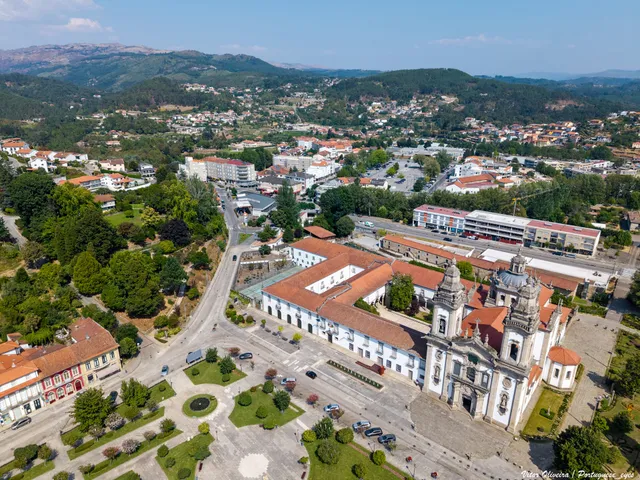
Air view of the Monastery of São Miguel and the Republic Square in Refojos
View of the Monastery of Refojos and the urban surroundings. It is a context image, not a reconstruction of the cultivated fence.© Vitor Oliveira from Torres Vedras, PORTUGALⓘ

Vegetable gardens, orchards and medicinal plants formed part of the monastery grounds.

Includes an activity to try →Explore: The fence continues in other stories →
Read here and view sources

According to the municipal description of 2021, vegetable gardens, orchards, medicinal plants, fields and woods made up the former grounds of Refojos Monastery. Its pharmacy supplied other Benedictine monasteries, including Tibães. Beyond the church, there was land to cultivate and medicine to prepare. This is a historical portrait of the grounds, not an inventory of today’s plants.

The same description places the Penoutas stream beside and behind the monastery, near former agricultural buildings now adapted as museum spaces. Water and working buildings broaden the view: the story of the complex extends beyond worship.

The former grounds can no longer be read as one intact garden. The source draws attention to scattered traces. Distinguishing what the document describes from what a photograph shows is part of the discovery: a view of the square does not reconstruct vanished vegetable gardens, orchards or medicinal plants.

Words in this story: see explanations →Getting to know the parish See Fact sheet: Mosteiro de São Miguel de Refojos
Source and context

Municipality — historical gardens, news of 21/05/2021

Accessed: . Editorial summary; the date of consultation is not the date of the facts.

Local observation · União das freguesias de Arco de Baúlhe e Vila Nune · general botany

Flowers and fruit on the same branch

The strawberry tree’s seasons overlap.

Includes an activity to try →Explore: Fruits with different stories →
Read here and view sources

The strawberry tree, Arbutus unedo, keeps glossy dark-green leaves throughout the year. Small white bell-shaped flowers appear in autumn. Its fruits take about a year to ripen, so ripe fruit can coincide with the next flowering season.

The Lisbon School of Education’s profile distinguishes two encounters with animals: insects, especially bees, take part in pollination, while birds eating the fruits help transport seeds. These are different roles in the plant’s life cycle.

The leaves offer clues beyond their colour: their edges are toothed, and secondary veins branch from a central vein. The plant ranges from a shrub to a small tree. The Lisbon Polytechnic profile mentions tolerance of dry climates and different soils, showing that its fruiting calendar is not its only interesting feature.

Food uses include fresh fruit, jams and jellies. The same source places the tradition of strawberry-tree fruit drinks in the Algarve and other Mediterranean areas; that information does not make them a documented speciality of Cabeceiras.

The photograph by migr, recorded on 2025-08-29, shows this species in União das freguesias de Arco de Baúlhe e Vila Nune. Open the observation to compare visible details with the botanical description. The record documents that encounter; it does not mean the plant will always be visible in the same place.

Words in this story: see explanations →See the plants photographed in the municipality
Source and context

Lisbon Polytechnic — form Arbutus unedo

iNaturalist — Arbutus unedo, migr observation in 2025-08-29

Accessed: . Editorial summary; the date of consultation is not the date of the facts.

Local observation · União das freguesias de Gondiães e Vilar de Cunhas · general botany

Carqueja stems work too

Leaves do not do all the photosynthesis.

Includes an activity to try →
Read here and view sources

Carqueja appears in the municipality’s description of mountain vegetation. In the Castelo Branco Polytechnic profile, Pterospartum tridentatum has greatly reduced leaves and winged stems that carry out photosynthesis. Its flowers are yellow and its fruit is a pod. These details invite you to look at branch shapes, beyond flower colour.

The profile describes a woody, rigid shrub that may grow upright or closer to the ground and reach around one metre. Flowers appear in small, tight groups. The flattened pod generally contains two to five seeds. Stem, flower and fruit offer different clues: yellow alone is not enough to recognise the plant.

The same document mentions rural uses such as animal bedding and incorporation into cultivated soil alongside other scrub plants. These are general uses of the species. For a local historical reference, follow the Cavez story: the account of 1758 mentions carqueja and other fuelwood in the landscape of charcoal production, without giving a manufacturing recipe.

The photograph by João Lima, recorded on 2025-07-15, shows this species in União das freguesias de Gondiães e Vilar de Cunhas. Open the observation to compare visible details with the botanical description. The record documents that encounter; it does not mean the plant will always be visible in the same place.

Words in this story: see explanations →
Source and context

Polytechnic Institute of Castelo Branco — Pterospartum tridentatum, characteristics

Municipality — landscape and vegetation

iNaturalist — Genista tridentata, João Lima observation in 2025-07-15

Accessed: . Editorial summary; the date of consultation is not the date of the facts.

Town centre · project announced in 2022

Shade is part of the town too

A park can offer more than a place for a walk.

Read here and view sources

The Parque Urbano Florestal rehabilitation project announced in September 2022 proposed work on around 7,500 square metres in the town centre. It included native trees and shrubs and aimed to improve microclimatic comfort by regulating light and sun exposure near buildings. This is the project’s documented intention, not an assessment of completed works: a way to understand the role of trees in urban space.

Source and context

Municipality — Rehabilitation of the Walking Forest Urban Park, 14/09/2022

Accessed: . Editorial summary; the date of consultation is not the date of the facts.

Cork oak · general ecology and local context

Cork oaks do not grow all the way up the mountain

Altitude also changes the conditions a tree faces.

Read here and view sources

The University of Évora describes cork oak as sensitive to winter minimum temperatures and generally absent above roughly one thousand metres. The municipal reference places cork oaks on the hillsides of Cabeceiras. Together these descriptions help explain why we should not imagine identical vegetation from valley to summit. The approximate limit is a general characteristic, not a survey of each local slope.

Cold is only part of the picture. The profile describes a preference for light- to medium-textured soils with an acidic or neutral reaction, avoiding limestone soils; it also mentions cool, sheltered places. Altitude on a map is therefore not enough to predict where a cork oak grows.

Its firm, evergreen leaves and cork-covered trunk help us observe the tree closely. Try changing scale in the landscape: first notice the tree, then the hillside’s position and shelter around it. The species name tells part of the story; the environment tells another.

Source and context

University of Évora — Quercus suber, botanical description

Municipality — landscape and vegetation

Accessed: . Editorial summary; the date of consultation is not the date of the facts.

YOUR LOCAL GUIDE

What would you like to discover?

Take a closer look.