Discover Cabeceiras de BastoFree independent guide
ViveCabeceirasYOUR GUIDE TO CABECEIRAS
ENEnglish
SearchSaved

Story

Choose a story to start with. You can change the subject or fine tune the search.

4 stories · Travel through time · Search: alves

Travel through time

Documents, details and traditions: there is more to discover than a date on a stone.

Choose a story · 4
Religious tradition · Santa Senhorinha

The story of the frogs that fell silent
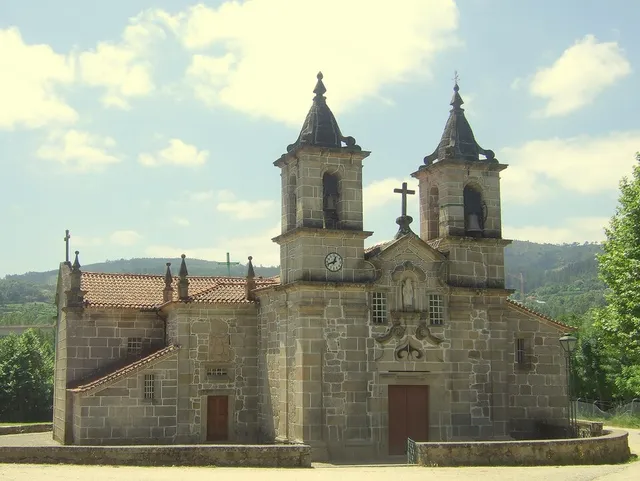
Façade of the Church of Santa Senhorinha de Basto, with its two towers
Igreja de Santa Senhorinha · place of worship, not representation of the episode© Bocacheteⓘ

A small scene passed through centuries of devotion.

Read here and view sources

In the religious narrative studied by Odília Alves Gameiro, croaking frogs disturbed the nuns as they prepared for a religious office. Senhorinha is said to have silenced the noise. The municipality includes this episode among miracles attributed to the saint. It is a story from devotional tradition, told to explore the imagery surrounding her cult, without presenting it as a demonstrated event.

Getting to know the parish
Source and context

Odília Alves Gameiro — The nobiliary appropriation of a rural cult, pp. 563–564

Municipality — Basto (Santa Senhorinha)

Accessed: . Editorial summary; the date of consultation is not the date of the facts.

Bucos · 1758 account

A chapel shortened the distance

In Casares, reaching church was a practical matter.

Includes an activity to try →
Read here and view sources

In the account of 22 May 1758, the chapel of Santa Maria at Casares served to administer the sacraments to residents living far from the parish church. Distance helped explain the distribution of places of worship.

Vicar António Alves Teixeira also mentions Santa Ana at Carrazedo, administered by Manuel Gomes Martins. These are references in the document, without confirmation of current access or condition.

The parish church stood in Bucos, which the vicar presented as the parish’s most populous settlement. He also named Vila Boa, Carrazedo and Casares. This group of places helps explain why a single church did not meet every resident’s needs in the same way.

The document also distinguishes who administered each chapel: at Casares, the commander; at Carrazedo, priest Manuel Gomes Martins. Place, dedication and administration are three different clues. Administering sacraments because of distance is explicitly stated for Casares; that function should not automatically be attributed to every chapel mentioned.

Getting to know the parish
Source and context

Municipality — Parish memories of Bucos (1758)

Accessed: . Editorial summary; the date of consultation is not the date of the facts.

Santa Senhorinha · transmission of religious accounts

A story that reached us in copies

Texts have their own journey through time.

Explore: Three ways to get to know Saint Lady →
Read here and view sources

Odília Alves Gameiro studies three texts on the life and miracles of Saint Senhorinha, preserved in 16th-century copies: two in Latin and one in Portuguese. Their similarities suggest a medieval original, according to the researcher. Reading these versions allows the construction of memory and devotion to be studied. The date of a copy is not necessarily the date of the story it tells.

The two Latin accounts studied come from Coimbra: one from the Colégio da Graça and the other from Santa Cruz. This provenance shows that the memory of a saint connected with Basto travelled beyond the place of worship. Each copy is also an object with a history of preservation and transmission.

Three periods must be distinguished: the life being narrated, the composition of the account and the surviving copy. The research places Senhorinha in the second half of the 10th century, but does not turn the 16th-century texts into accounts written by people who knew her. Similarities and differences between versions are themselves part of the historian’s work.

The study also reads the accounts in the context of a rural community: harvests, food and journeys appear among the concerns represented. Beyond recounting wonders, hagiography offers insight into that imagination and the values the text seeks to convey.

Words in this story: see explanations →
Source and context

Odília Alves Gameiro — The nobiliarchic appropriation of a rural cult: the hagiography of Santa Senhorinha of Basto, Archipelago · History, 2001, pp. 561–562 and 571–572

Accessed: . Editorial summary; the date of consultation is not the date of the facts.

Santa Senhorinha · a historical reading of hagiography

Bread tells a story of devotion too

In Saint Senhorinha’s accounts, food reveals rural concerns.

Includes an activity to try →
Read here and view sources

Odília Alves Gameiro identifies wheat fields and vineyards in the narratives, fears of losing harvests in a storm, and episodes of insufficient food for the community. She relates the reference to white bread to the nuns’ social position.

Reading these passages reveals themes and values in religious texts: sustenance, dependence on natural cycles and social differences. It does not amount to proving the miracles described or reconstructing a menu. To compare with another kind of source, follow the crops described by the abbot in 1758.

Source and context

Odília Alves Gameiro — The nobiliary appropriation of a rural cult, 2001, pp. 562–563

Accessed: . Editorial summary; the date of consultation is not the date of the facts.

YOUR LOCAL GUIDE

What would you like to discover?

Take a closer look.