Discover Cabeceiras de BastoFree independent guide
ViveCabeceirasYOUR GUIDE TO CABECEIRAS
ENEnglish
SearchSaved
8 STORIES · CONTINUOUS READING

Plants with tricks up their sleeves

Eight stories for a closer look: protected seeds, winged fruits, trap leaves, photosynthetic stems and ferns without flowers. Open the diagrams, compare local photographs and draw the parts that distinguish these plants.

All stories in the order of the route. You can print this page by the browser; sources and credits follow the reading.

Things to try6 activities · 5 interactive explorations · 8 questions
Forest landscape · maritime pine botany

A pine cone has little homes for seeds

The woody scales hide a detail worth noticing.

In maritime pine, Pinus pinaster, the cone contains two seeds per scale, according to the University of Évora description. The trunk has thick, reddish-brown, deeply cracked bark. After recognising the paired needles, these other shapes deserve attention. The municipality mentions maritime pine in the mountain landscape; these features help explain the species without constituting an inventory of local pine woods.

Different male and female reproductive structures occur on the same tree: the species is monoecious. The profile describes the male structures as yellowish clusters and the female ones as scaly structures that form cones. Looking only at a mature cone therefore leaves part of the cycle undiscovered.

The environment matters too. The University of Évora associates maritime pine with sunny places and acidic, often sandy soils, also mentioning inland occurrences on schist substrates. It can form pine woods or be part of mixed forests. This describes general preferences and occurrence; it does not turn every hillside with these conditions into a pine wood.

A tree, several clues

Open an option and choose the story.

  1. Start with needlesNeedles come in pairs →
  2. Water-related seedSeeds that travel through water →
  3. Fruits with a wingA fruit with wing →
  4. Flowers and fruits of different yearsFlowers and fruits in the same branch →
Comparing leaves, reproductive structures and forms of dispersion.
Source and context

University of Évora — Virtual Museum of Biodiversity, Pinus pinaster

Municipality — landscape and vegetation

Accessed: . Editorial summary; the date of consultation is not the date of the facts.

Back to index ↑
Species botany · with a local observation

A fruit with a wing

For ash, shape helps fruit travel.

The ash fruit has a wing and is called a samara. There is another detail to discover: the leaf is divided into several narrow leaflets. Do not confuse each leaflet with a whole leaf.

Fraxinus angustifolia can grow in riverside woods and on slopes. The local photograph documents a tree in Gondiães e Vilar de Cunhas; it does not show a fruit travelling or describe the species’ entire habitat.

The Gulbenkian profile describes leaves with three to eleven leaflets and serrated edges. The name angustifolia refers to this narrow shape. On the fruit, the wing extends beyond the seed-bearing part: fruit and seed are not the same structure. The tree loses its leaves seasonally; branches, leaves and fruits offer different clues throughout the year.

Ash connects this leaf shape with water availability. The Gulbenkian profile mentions tolerance of a range of temperatures but sensitivity to dryness, and a preference for deep soils. It also describes a tall, irregular crown and a dark, deeply cracked trunk. Leaves are not the only helpful feature: bark, crown and surroundings complete the observation, without any single characteristic being enough to identify a tree.

Three Ways to Continue the Trip

Open an option and choose the story.

  1. Seeds that travel by waterSeeds that travel through water →
  2. Seeds protected in a pine coneA pine cone has small seed houses →
  3. A tree inside a forestThe river also has a forest →
Compare the ash fruit’s wing with other forms of dispersal and with life along riverbanks.
Return to observation proposal ↑
Source and context

University of Évora — BioMontado, chips Fraxinus angustifolia and Hedera hibernica

Portuguese Society of Botany — Flora-On, Fraxinus angustifolia: ecology

Calouste Gulbenkian Foundation — Straits leaves, fruit and habitat

Accessed: . Editorial summary; the date of consultation is not the date of the facts.

Back to index ↑
General botany · alder

Seeds that travel by water

Alder has a close relationship with rivers.

In the University of Évora profile published under the name Alnus glutinosa, alder seeds have air-containing tissues that aid dispersal by water. The tree tolerates long periods with submerged roots. Woods dominated by alder are known in Portuguese as amiais.

Its connection with water thus extends from growing along banks to the journey of its seeds. There is also a naming change to understand: Flora-On uses Alnus lusitanica for native Portuguese alders, citing a 2017 study. Here each name remains linked to its source; the story does not identify a particular tree in the municipality.

The profile published as Alnus glutinosa describes a deciduous tree, which loses foliage for part of the year. The leaves are alternate with doubly toothed edges; the bark, smooth when young, becomes darker and cracked. These features concern different plant parts and different stages of its life.

That source gives December to February as the flowering period. Male flowers appear in elongated groups called catkins, while female groups have a different shape. Winter can therefore reveal details hidden on a visit when the crown is full of leaves. This calendar belongs to the consulted description and may vary with local conditions; it does not announce flowering for a particular tree in Cabeceiras.

The tree, the river and the craft

Open an option and choose the story.

  1. A tree in a margin forestThe river also has a forest →
  2. What happens next to the rootsThe alder has partners in the roots →
  3. The wood in the history of punchesBefore the punch, a piece of alder →
It continues through three different relationships of the alder: ecology of the margins, roots and use of wood.
Source and context

University of Évora — Alnus glutinous, breeding and habitat

Portuguese Society of Botany — Flora-On, Alnus: ecology, symbiosis and taxonomic note

Accessed: . Editorial summary; the date of consultation is not the date of the facts.

Back to index ↑
Serra da Cabreira · regional reference and general botany

It looks like dew, but it is a trap

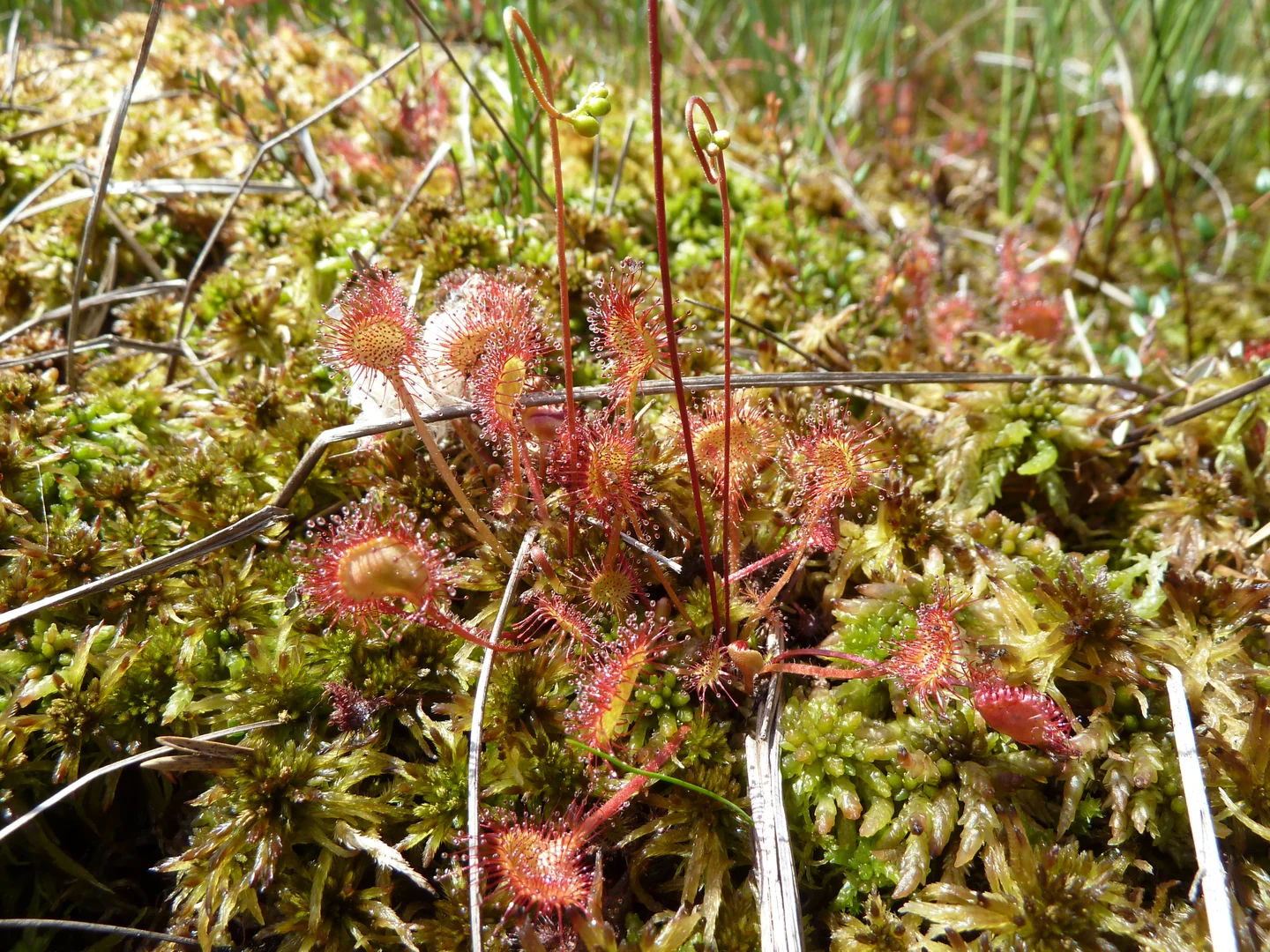
Rounded sundew leaves with reddish hairs and shining droplets among mosses.
Sundew in the Swamp natural monument near Máchovo jezero, Czechia, in 2013. Species illustration, not an observation from Cabreira.Illustrative photograph · outside the municipality
Stanislav Rada
ⓘ

Sundew in the Swamp natural monument near Máchovo jezero, Czechia, in 2013. Species illustration, not an observation from Cabreira.

Photography: Stanislav Rada · CC BY-SA 3.0

View source

Date given at source: .

Request removal or correct the photo credit

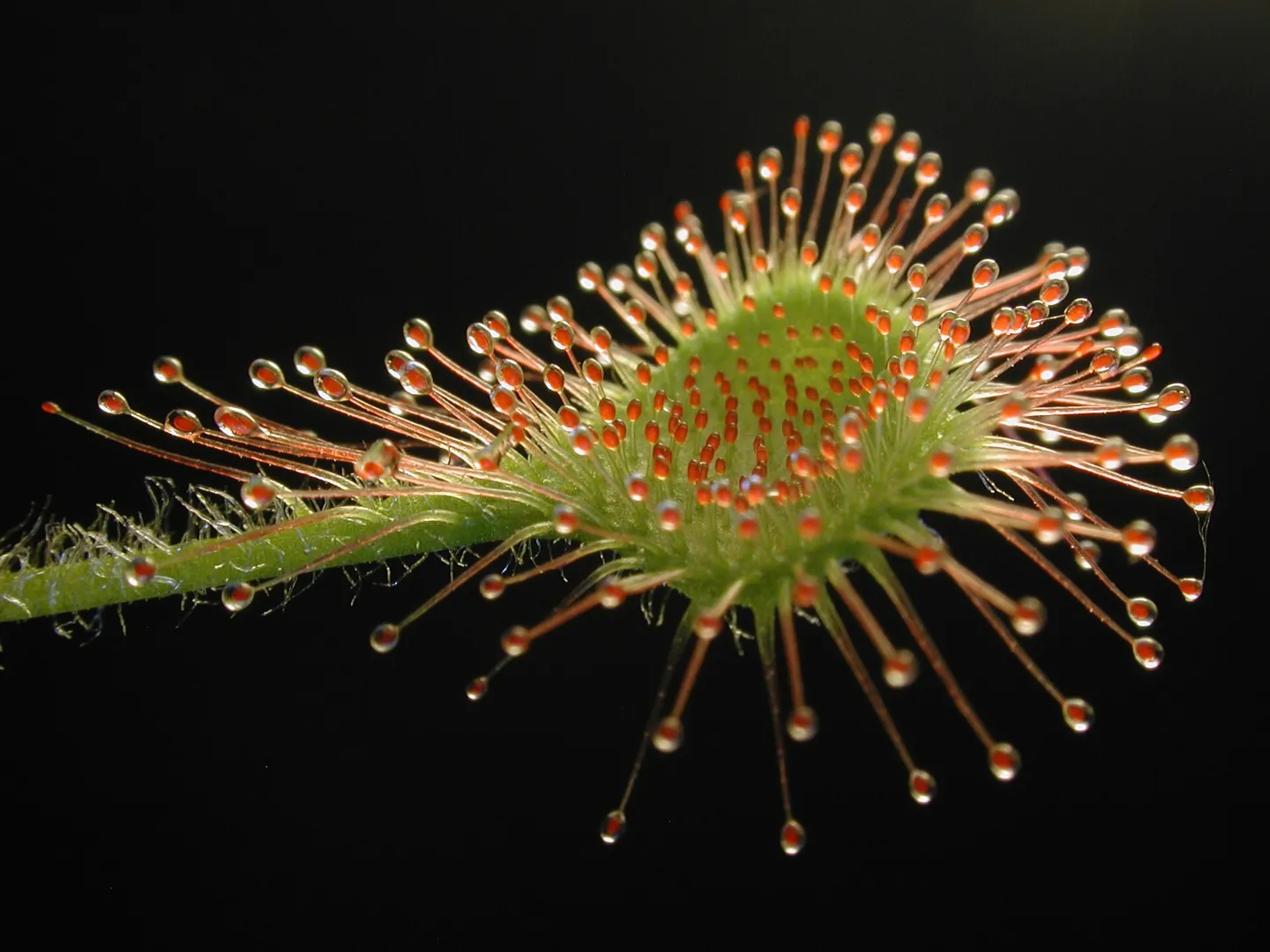
Drosera rotundifolia leaf with tentacles and droplets. Species photograph, not located in the Cabreira.
Petr Dlouhý
ⓘ

Drosera rotundifolia leaf with tentacles and droplets. Species photograph, not located in the Cabreira.

Photography: Petr Dlouhý · CC BY-SA 3.0

View source

Photograph date not stated.

Request removal or correct the photo credit

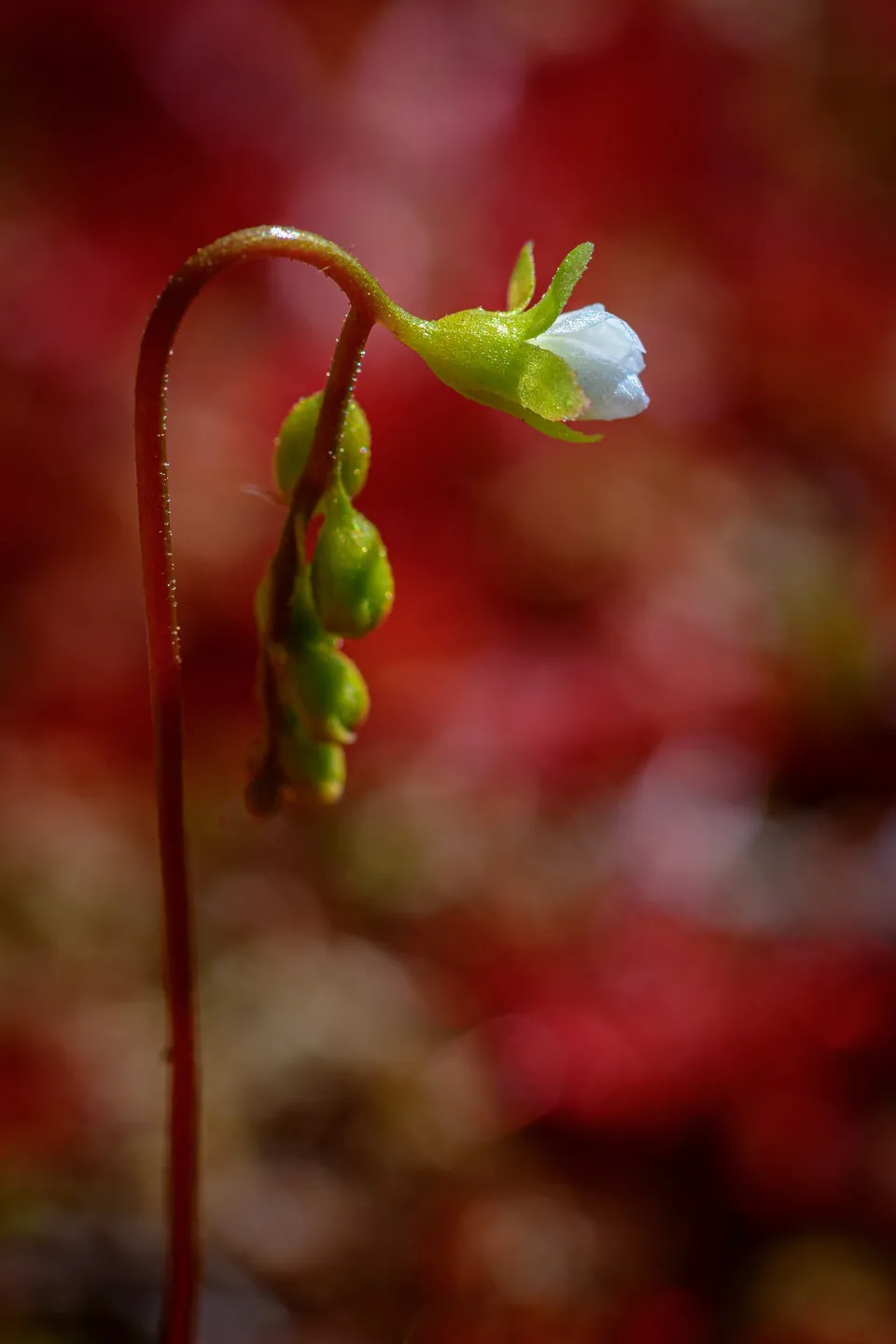
Drosera rotundifolia flower. Species illustration, not a local observation.
Stephan Sprinz
ⓘ

Drosera rotundifolia flower. Species illustration, not a local observation.

Photography: Stephan Sprinz · CC BY 4.0

View source

Date given at source: .

Request removal or correct the photo credit

Sundew leaves also catch food.

Drosera rotundifolia leaves have small glandular hairs with a sticky secretion. When an insect becomes trapped, enzymes help break it down and the plant absorbs nutrients through its leaves. This strategy can be particularly useful in nutrient-poor soils. Visit Cabeceiras mentions the species for Cabreira; the mechanism described by the US Forest Service is general biology, not an observation made in these mountains.

The trap is not the flower. Leaves form a rosette near the base; flowers grow on a stalk and fruits are capsules containing many tiny seeds. The photograph lets us compare leaves and stalks, but does not show digestion. In the USDA description, the leaf can bend around its prey: a sequence over time that one image cannot demonstrate.

Source and context

USDA Forest Service — Robin F. Matthews, Drosera rotundifolia, February review, 1994
Accessed:

Visit Cabeceiras — natural heritage of Serra da Cabreira
Accessed:

Editorial summary; the date of consultation is not the date of the facts.

Back to index ↑
General botany · getting to know gorse

A shrub with well-defended branches

Spines are part of the gorse’s silhouette.

Common gorse, Ulex europaeus subsp. europaeus, is a strongly spined shrub that can reach two metres. The Barcelos Arboretum profile associates it with heathland, hedges and scrub edges and mentions winter flowering. Scrub landscapes can therefore have flowers outside spring.

The same source records uses as fodder, cattle bedding and fuel. These uses belong to the general plant description; they do not document a specific practice in Cabeceiras. The municipality mentions gorse in the mountain landscape without identifying the species in each place.

The Arboretum describes leaves transformed into spines and branching that may be open or compact. The outward shape becomes more interesting when we ask which plant part each structure comes from. For gorse, the profile mentions modified leaves; in butcher’s broom, what looks like a leaf is a flattened stem. In carqueja, green stems also take part in photosynthesis. Comparing these stories helps us look beyond the silhouette.

From the bush to the seasons and cattle

Open an option and choose the story.

  1. Flowers at different timesA flower calendar →
  2. The landscape behind the honeyThe landscape also reaches the honey →
  3. The shepherding in the memory of the PrayerThe Orada was also a land of shepherding →
  4. When a branch looks like a leafIt looks like a leaf, but it is a branch →
  5. Caules that do photosynthesisIn the carqueja, stems also work →
Three paths of reading: general botany, land products and a local historical memory.
Source and context

Arboreto de Barcelos — Ulex europaeus subsp. europaeus

Municipality — landscape and vegetation

Accessed: . Editorial summary; the date of consultation is not the date of the facts.

Back to index ↑
General botany · bramble

A blackberry is a small cluster

A bramble’s fruit has more detail than it first appears.

A blackberry consists of numerous small drupes. Rubus ulmifolius has white or pinkish five-petalled flowers and fruits that turn black when ripe. Its leaf is compound too, divided into three to five leaflets, green above and greyish and hairy beneath.

The arching stems form dense bramble patches. The University of Évora associates the plant with woods, hedges, uncultivated ground and watersides, preferring cool, moist soils. This is a general botanical description; it does not identify a particular bramble patch in the municipality.

A compound leaf may look like a small branch. The distinction helps us read the plant: in the bramble described by the University of Évora, three to five leaflets belong to one leaf and are arranged like fingers spreading from a common base. The greyish underside results from dense hairs, called tomentum.

The description also mentions purple, pruinose shoots, with a waxy-looking surface coating. These details differ from the prickles on the stems. The plant also occurs on ground altered by human activity; a bramble patch alone does not show when or why land stopped being cultivated.

A JOINT PARTIES

Open each level and compare fruit and leaf.

  1. 1 · Whole blueberry

    What we call blueberry is a set of numerous small drupes.

  2. 2 · Each small unit

    It's not a seed exposed on the surface of the blueberry.

    Another drupa: olive →
  3. 3 · What about the parts of the sheet?

    The leaf of silva is divided into three to five folioli. These parts belong to the leaf, not to the fruit.

    Know the word foliolo →
Comparison of structures described by the University of Évora for Rubus ulmifolius; no scale.
Source and context

University of Évora — Rubus ulmifolius, leaves and fruits

Accessed: . Editorial summary; the date of consultation is not the date of the facts.

Back to index ↑
Local observation · União das freguesias de Gondiães e Vilar de Cunhas · general botany

Carqueja stems work too

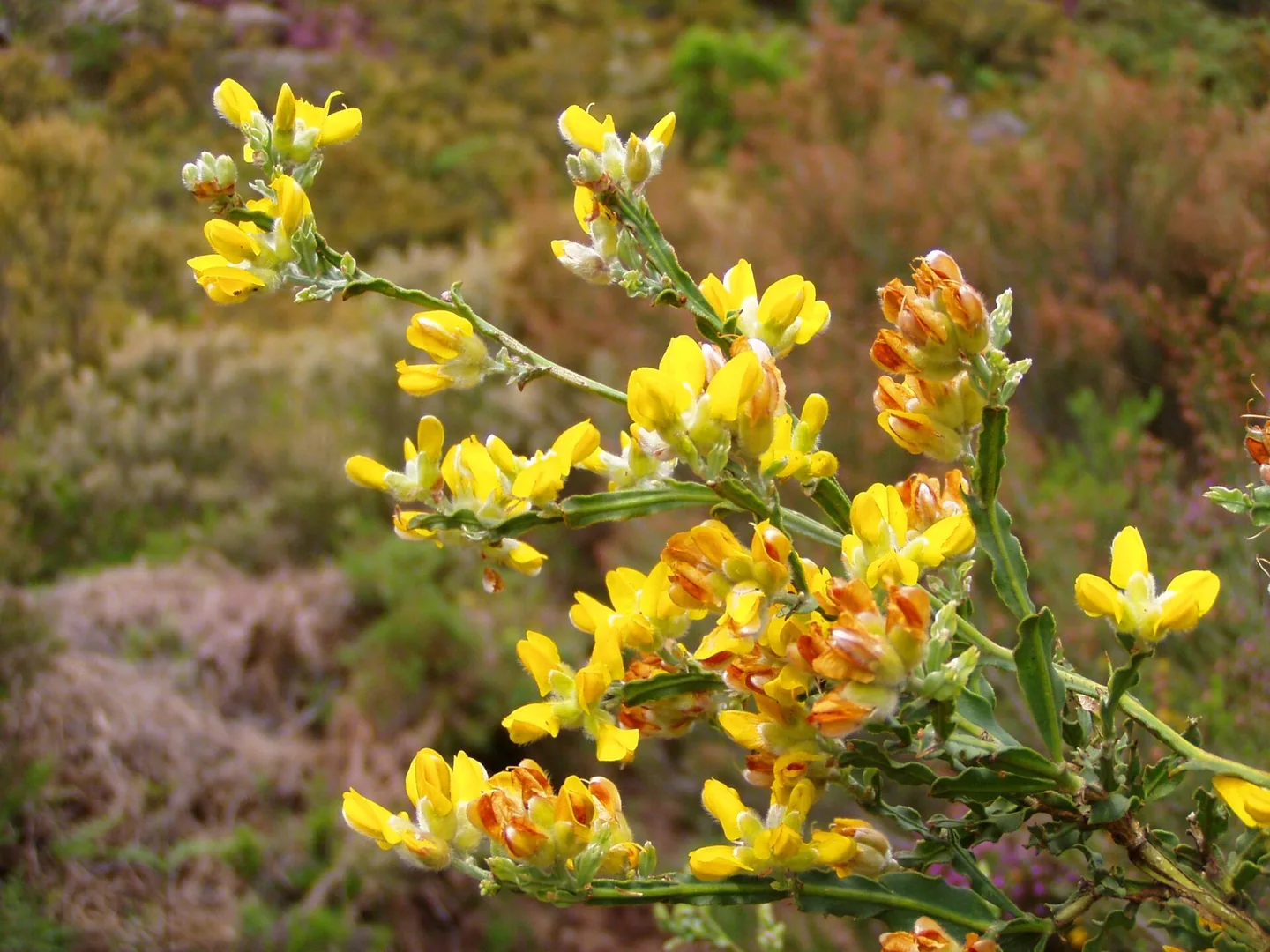
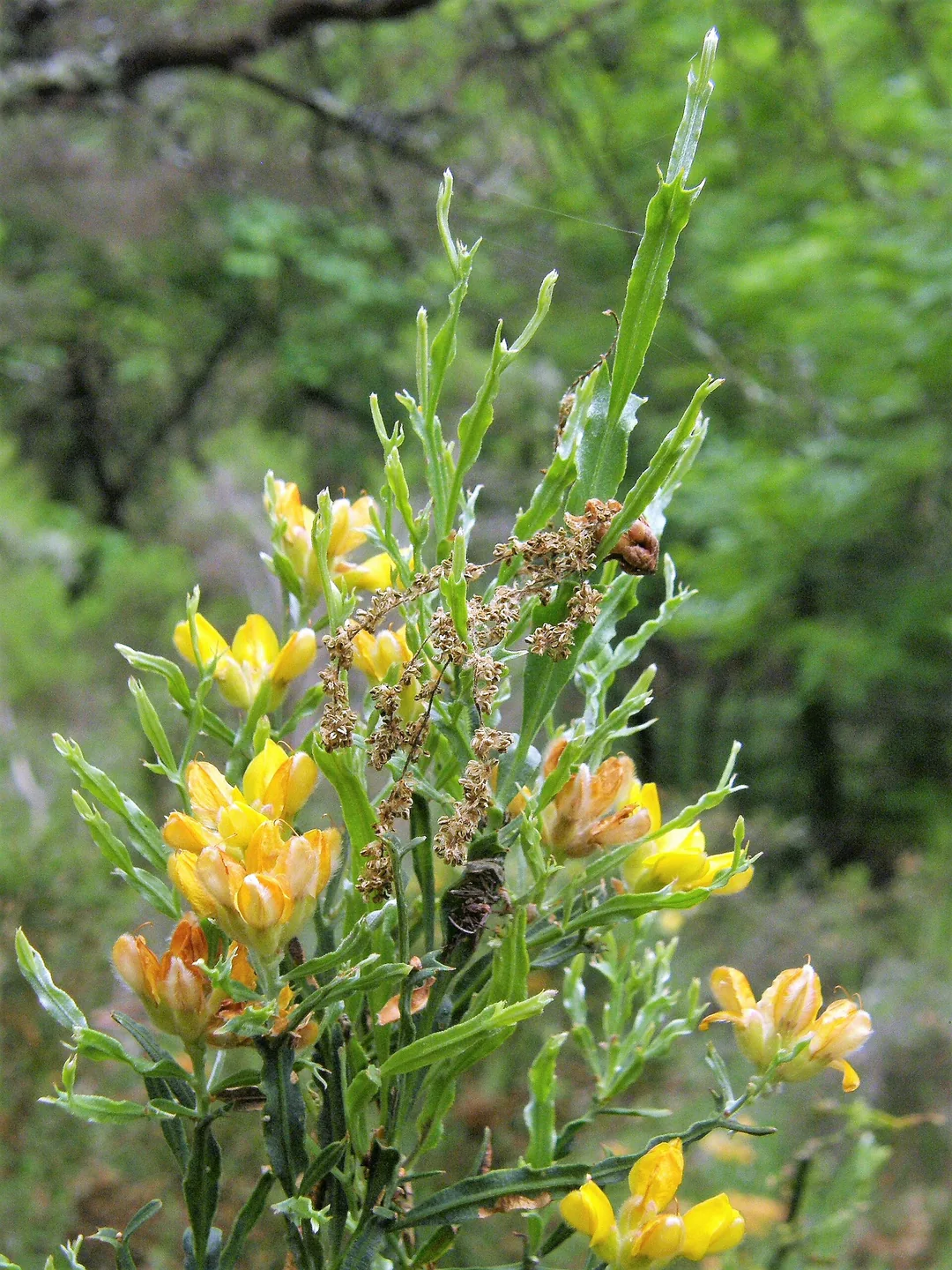
Yellow flowers of Pterospartum tridentatum.
Yellow flowers of Pterospartum tridentatum.Illustrative photograph
Júlio Reis
ⓘ

Yellow flowers of Pterospartum tridentatum.

Photography: Júlio Reis · CC BY-SA 3.0

View source

Date given at source: .

Request removal or correct the photo credit

Flowering stems of Pterospartum tridentatum.
Flowering stems of Pterospartum tridentatum.Illustrative photograph
SABENCIA Guillermo César Ruiz
ⓘ

Flowering stems of Pterospartum tridentatum.

Photography: SABENCIA Guillermo César Ruiz · CC BY-SA 4.0

View source

Date given at source: .

Request removal or correct the photo credit

Leaves do not do all the photosynthesis.

Carqueja appears in the municipality’s description of mountain vegetation. In the Castelo Branco Polytechnic profile, Pterospartum tridentatum has greatly reduced leaves and winged stems that carry out photosynthesis. Its flowers are yellow and its fruit is a pod. These details invite you to look at branch shapes, beyond flower colour.

The profile describes a woody, rigid shrub that may grow upright or closer to the ground and reach around one metre. Flowers appear in small, tight groups. The flattened pod generally contains two to five seeds. Stem, flower and fruit offer different clues: yellow alone is not enough to recognise the plant.

The same document mentions rural uses such as animal bedding and incorporation into cultivated soil alongside other scrub plants. These are general uses of the species. For a local historical reference, follow the Cavez story: the account of 1758 mentions carqueja and other fuelwood in the landscape of charcoal production, without giving a manufacturing recipe.

The photograph by João Lima, recorded on 2025-07-15, shows this species in União das freguesias de Gondiães e Vilar de Cunhas. Open the observation to compare visible details with the botanical description. The record documents that encounter; it does not mean the plant will always be visible in the same place.

Return to observation proposal ↑
Source and context

Polytechnic Institute of Castelo Branco — Pterospartum tridentatum, characteristics

Municipality — landscape and vegetation

iNaturalist — Genista tridentata, João Lima observation in 2025-07-15

Accessed: . Editorial summary; the date of consultation is not the date of the facts.

Back to index ↑
Botany · species recorded in the municipality

A plant does not need flowers

Ferns tell a different story of reproduction.

Ferns reproduce through spores, without flowers. The University of Évora describes the sori and spores of Asplenium onopteris, associated with damp, shady places including cracks in rocks and walls. Its fronds are evergreen. The local observation shows the plant’s appearance; the explanation of reproduction comes from the botanical profile.

A fern leaf is called a frond. For this species, the profile describes evergreen fronds between ten and fifty centimetres long, with a blade cut into successive divisions. The dark stalk that joins the blade to the base can be as long as the blade itself. These are general botanical features, not measurements taken from the local photograph.

Sori are groups of spore-producing structures. In Asplenium onopteris they are described as elongated or linear, with a covering called an indusium. This differs from a flower or fruit: finding no flowers on a fern does not mean it is not reproducing. The available photograph may not show these details either.

Return to observation proposal ↑
Source and context

University of Évora — Asplenium onopteris

Accessed: . Editorial summary; the date of consultation is not the date of the facts.

Back to index ↑
YOUR LOCAL GUIDE

What would you like to discover?

Take a closer look.