Discover Cabeceiras de BastoFree independent guide
ViveCabeceirasYOUR GUIDE TO CABECEIRAS
ENEnglish
SearchSaved
7 STORIES · CONTINUOUS READING

At the table, each flavor has a history

Who taught the recipe? Who shared the sweets? From family memory to Arosa’s reception, seven readings link the kitchen to people, animal husbandry and field work. It includes a proposal to save the story of your recipe.

All stories in the order of the route. You can print this page by the browser; sources and credits follow the reading.

Things to try5 activities · 3 interactive explorations · 4 questions
Cavez and Pedraça · transmission of recipe, 2011

Every recipe has someone who passes it on

Cooking connects people, generations and parishes.

In the Museum’s accounts, Maria da Conceição Gonçalves Mouta, born in Cavez and living in Recovos, Pedraça, identifies who passed each dish on to her. Couves com migas came from her grandmother in Cavez; chestnut soup from her mother-in-law in Pedraça. Maria de Fátima Carvalho recorded these accounts in February 2011. The names help us understand that these memories belong to a particular family experience.

Who brought this recipe?

Open an option and choose the story.

  1. Grandmother's in CavezThe broa also entered the cabbages →
  2. Of the mother-in-law, PedraçaChestnuts in spring? →
  3. From a magazine in MozambiqueHoney meets cinnamon and fennel →
  4. A Memory Between ContinentsA recipe that has crossed continents →
The recipes have different paths: family education, reading or sharing. Opens a story to know the person and the context of the collection.
Source and context

Basto Land Museum — food and food: collections of February and March 2011

Accessed: . Editorial summary; the date of consultation is not the date of the facts.

Back to index ↑
Cavez · tasting in 2013

Cavacas and rosquilhos, made by someone who knows

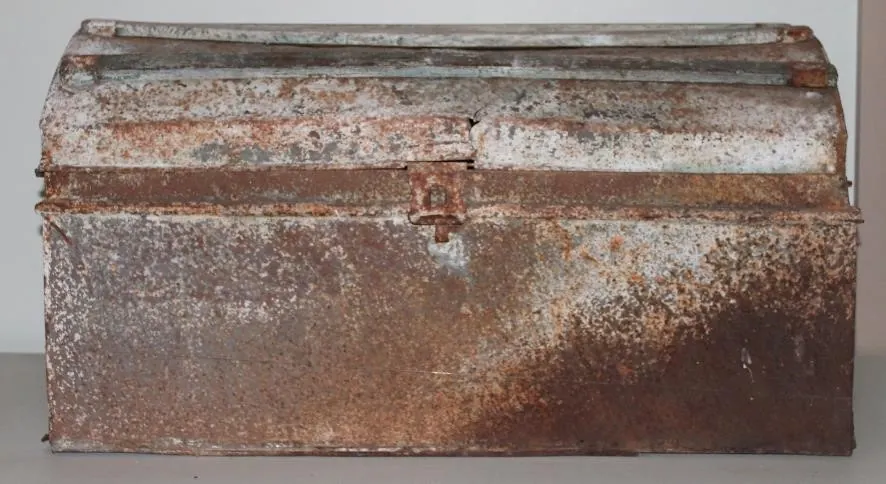
Sweet transport box L 104
ⓘ

Sweet transport box L 104

Source: Museu das Terras de Basto

View source

Photograph date not stated.

Individual photographer and reuse licence not stated by the source.

Request removal or correct the photo credit

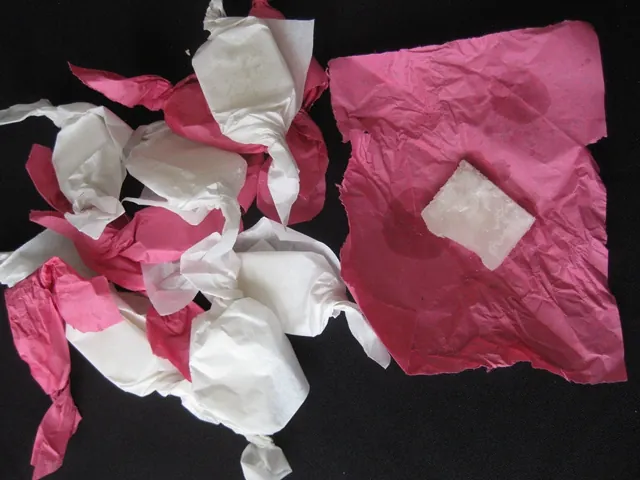
Nazaré Oliveira’s sweets from Cavez, documented in May 2012.
ⓘ

Nazaré Oliveira’s sweets from Cavez, documented in May 2012.

Source: Saberes cruzados

View source

Photograph date not stated.

Individual photographer and reuse licence not stated by the source.

Request removal or correct the photo credit

Nazaré Oliveira showed how she made her sweets at a local history gathering.

In May 2013, the Museu das Terras de Basto took participants in the Memórias do Território gathering to discover local heritage and skills. In Arosa, Nazaré Oliveira, a sweet-maker from Cavez, demonstrated how she made her cavacas and rosquilhos, which visitors could taste. The account preserves the name of the person making them and sharing her knowledge. It documents that demonstration; it does not announce a current workshop or shop.

Source and context

Basto Land Museum — Memoirs of the Territory: 3st Local History Meeting, news of 24/05/2013

Accessed: . Editorial summary; the date of consultation is not the date of the facts.

Back to index ↑
Arosa, Cavez · May meeting 2013

After the dancing, a table of welcome

Hospitality also left its mark on Arosa’s recorded memories.

The local history gathering of May 2013 ended at the headquarters of Rancho Folclórico Os Camponeses de Arosa. According to the Museum, both the folk group’s members and the visitors danced. The welcome included homemade broa, cured ham, olives, salted onion and aletria. This episode shows a table connected with sociability beyond recipes: it records a particular occasion without defining a permanent menu.

Source and context

Basto Land Museum — Memoirs of the Territory: 3st Local History Meeting, news of 24/05/2013

Accessed: . Editorial summary; the date of consultation is not the date of the facts.

Back to index ↑
Oral memory · Pedraça

Chestnuts in spring?

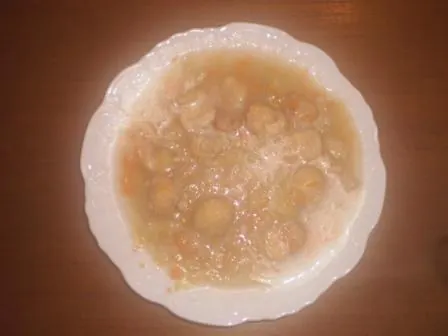
Chestnut soup from the account published by the Terras de Basto Museum in 2011.
ⓘ

Chestnut soup from the account published by the Terras de Basto Museum in 2011.

Source: Museu das Terras de Basto

View source

Photograph date not stated.

Individual photographer and reuse licence not stated by the source.

Request removal or correct the photo credit

Cooking followed the calendar of work.

Chestnuts in April and May? In Maria da Conceição Gonçalves Mouta’s memories, dried chestnuts reached the table during ploughing and maize-sowing time. The soup, with beans, cabbage and potatoes, ended the first meal at around nine or half past nine in the morning, after fried cod with broa.

Maria de Fátima Carvalho recorded the account in Pedraça in February 2011. Maria da Conceição had learned the preparation from her mother-in-law. The chestnuts were dried and aired beforehand; the cooked potato was mashed and returned to the pot. Preservation, texture and working hours meet in this family memory.

Two calendars come together here: that of the fruit and that of the meal. Stored dried chestnuts brought to the spring table a food associated with another season’s harvest. The account describes more than ingredients: it explains how household stores accompanied ploughing and sowing. The timing of “almoço” may also surprise people who now use that Portuguese word for the midday meal.

This is a story with a voice and a place, not a rule for every household in Cabeceiras. When talking about a family recipe, it is worth preserving those differences: who taught it, when it was prepared and what changed between hearth and cooker. In this way, an ingredient list becomes a short story of work, learning and domestic life.

Follow three moments to understand this table: harvesting, storing and eating. They need not happen in the same season. Dried chestnuts connect those moments and explain the surprising title. The dish offers a simple way to discuss food reserves, field work and changing mealtimes.

From tree to working day

Open an option and choose the story.

  1. First, meet the chestnutWhat is hidden in the hedgehog? →
  2. Then, to realize the time of the tableLunch at nine in the morning? →
  3. Look also at the cropsFrom the valley to the hill, the harvest changed →
Three ways to continue: knowing the fruit, perceiving the meal time and reading the harvest history.
Source and context

Basto Land Museum — testimony of Maria da Conceição Gonçalves Mouta, collected by Maria de Fátima Carvalho in 2011

Accessed: . Editorial summary; the date of consultation is not the date of the facts.

Back to index ↑
Oral memory · March 2011

The bread kept the next batch alive

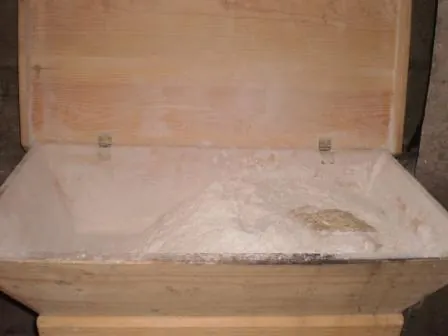
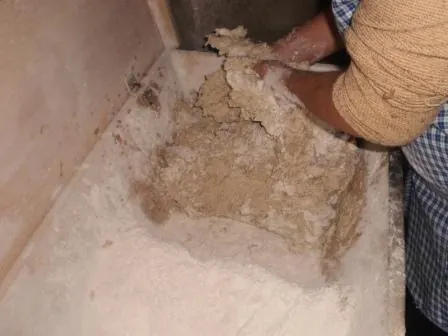
Flour and a portion of dough in the kneading trough — mixed-grain bread sequence documented by the Museum in Recovos, Pedraça.
ⓘ

Flour and a portion of dough in the kneading trough — mixed-grain bread sequence documented by the Museum in Recovos, Pedraça.

Source: Museu das Terras de Basto

View source

Photograph date not stated.

Individual photographer and reuse licence not stated by the source.

Request removal or correct the photo credit

Working the dough by hand — mixed-grain bread sequence documented by the Museum in Recovos, Pedraça.
ⓘ

Working the dough by hand — mixed-grain bread sequence documented by the Museum in Recovos, Pedraça.

Source: Museu das Terras de Basto

View source

Photograph date not stated.

Individual photographer and reuse licence not stated by the source.

Request removal or correct the photo credit

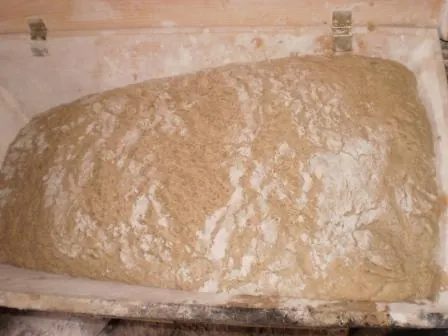
Dough in the trough before baking — mixed-grain bread sequence documented by the Museum in Recovos, Pedraça.
ⓘ

Dough in the trough before baking — mixed-grain bread sequence documented by the Museum in Recovos, Pedraça.

Source: Museu das Terras de Basto

View source

Photograph date not stated.

Individual photographer and reuse licence not stated by the source.

Request removal or correct the photo credit

A small piece of dough linked one batch to the next.

In an account recorded in March 2011, Maria da Conceição remembered bread being baked every eight days. A piece of dough from the previous batch was kept in a bowl with a little salt, inside the wooden kneading trough. On the eve of the next baking day, warm water and flour were added. The account from Recovos, Pedraça, also describes an adaptation: when baking became less frequent, yeast bought from the bakery was used.

This change is part of a family history. Maria da Conceição was born in Cavez and had learned to make maize broa from her grandmother. When she was interviewed, at the age of 69, she also made mixed-grain broa. The account does not present an unchanging tradition: it shows learning, choices and an adapting routine.

The baking calendar extended to the community too. In the 2011 account, batches of bread were associated with annual celebrations, a longing for homemade bread, the feast of Santa Marinha and Christmas and maize-husking events organised by the Associação D. Nuno Álvares in Pedraça. Keeping dough for the following week made sense in a weekly routine; occasional baking created different needs. These are practices remembered in that account, not a current programme of festivities.

The kneading trough, bowl and piece of dough form a small chain between two batches. In this memory, keeping something meant more than storing finished bread: it meant saving the start of the next loaf. A household object reveals its full function when we understand the home’s routine.

Three ways to look at the same dough

Open an option and choose the story.

  1. Realize why mass growsThere are fungi that do not have hat →
  2. Know the collection ingredientsThis bread mixture rye and wheat →
  3. Follow the signs to the ovenThe oven gave a sign →
Oral memory, biological explanation and documented preparation are completed, maintaining the scope of each source.
Source and context

Museum — Mixed-grain bread, published 12/05/2011; fieldwork in March 2011 in Recovos, Pedraça
Accessed:

Basto Land Museum — food and food: collections of February and March 2011
Accessed:

Editorial summary; the date of consultation is not the date of the facts.

Back to index ↑
Highlands of Minho · regional product and head table

Before the roast, a story of livestock farming

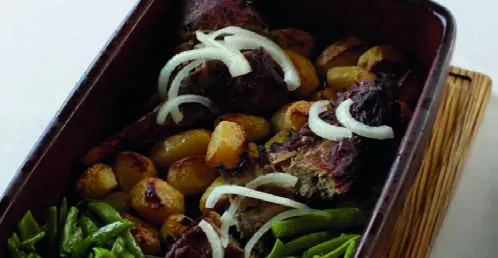
Roast kid in the Cabeceiras presentation in the 2023 gastronomic guide.
ⓘ

Roast kid in the Cabeceiras presentation in the 2023 gastronomic guide.

Source: Turismo do Porto e Norte de Portugal

View source

Photograph date not stated.

Individual photographer and reuse licence not stated by the source.

Request removal or correct the photo credit

Bravia and Serrana are the breeds behind Cabrito das Terras Altas do Minho.

Bravia and Serrana, including their crosses, are the breeds associated with Cabrito das Terras Altas do Minho IGP in the PTPT portal’s profile. Cabeceiras lies within the production area described. Adult animals use naturally growing vegetation; the kids feed on their mothers’ milk. Grazing may be organised individually or bring the village’s herds together in a vezeira. This relationship between mountain, livestock and mutual help comes before the dish. Cabeceiras’s food promotion in March 2016 highlighted this product; that does not establish certification for all kid goat meat served in the municipality today.

The PTPT description of local know-how follows the herds’ daily rhythm. The goats go out to pasture, while the kids are nursed in the morning before departure and in the afternoon on return. The goat shelter and the hills therefore have different roles in rearing the animals.

Bravia is associated with the mountains of Alto Minho and north-western Trás-os-Montes; Serrana with Serra da Estrela. The product brings these breeds and their crosses together within its own production area. It is more than an oven recipe: it is also a connection between animals, milk, vegetation and the shepherd’s work.

Source and context

PTT — Highland goat of Minho: breeds and grazing

Municipality — Promotion of the Goat of the Highlands of Minho, March 2016

Accessed: . Editorial summary; the date of consultation is not the date of the facts.

Back to index ↑
Cabeceiras · regional product framework

Barrosã: a name tied to its origins

The link to the land can be documented too.

Barrosã connects the table with mountain farming. CAPOLIB describes cattle making use of meadows, damp grasslands and common land, with feed that may include grass, hay, straw and maize. It also distinguishes the breed from the certified product: Carne Barrosã depends on production rules and animals entered in the herd book, with traceability through to the consumer. Cabeceiras is part of the area described by the cooperative. Behind the name are breeders, fields and records; simply naming the breed on a menu does not confirm certification of the meat served.

The farming role was not limited to feeding the animals. The cooperative describes a dual-purpose breed used for draught work and meat: it helped work small plots, made use of available natural resources and returned manure to the fields. The animal formed part of a cycle of grazing, cultivation and fertilisation.

The horns are another feature highlighted by CAPOLIB: they project upwards in a shape resembling a lyre. The name refers to the Barroso plateau, but the breed’s history also includes its spread through Minho. Understanding its origins therefore calls for a regional view beyond the borders of one municipality.

Source and context

CAPOLIB — Barrosan breed, historical area and designation of origin

Accessed: . Editorial summary; the date of consultation is not the date of the facts.

Back to index ↑
YOUR LOCAL GUIDE

What would you like to discover?

Take a closer look.