Discover Cabeceiras de BastoFree independent guide
ViveCabeceirasYOUR GUIDE TO CABECEIRAS
ENEnglish
SearchSaved
9 STORIES · CONTINUOUS READING

Trees: from leaves to fruits

Nine readings to find out how trees grow, bear fruit and enter people's lives. Compare leaves, cork and wood, open the schemes of the chestnut and the cranberry and observe the layers of a forest. In the end, it can continue to the table of Pedraça.

All stories in the order of the route. You can print this page by the browser; sources and credits follow the reading.

Things to try7 activities · 9 interactive explorations · 8 questions
Vegetation described for the area

The forest has a history too
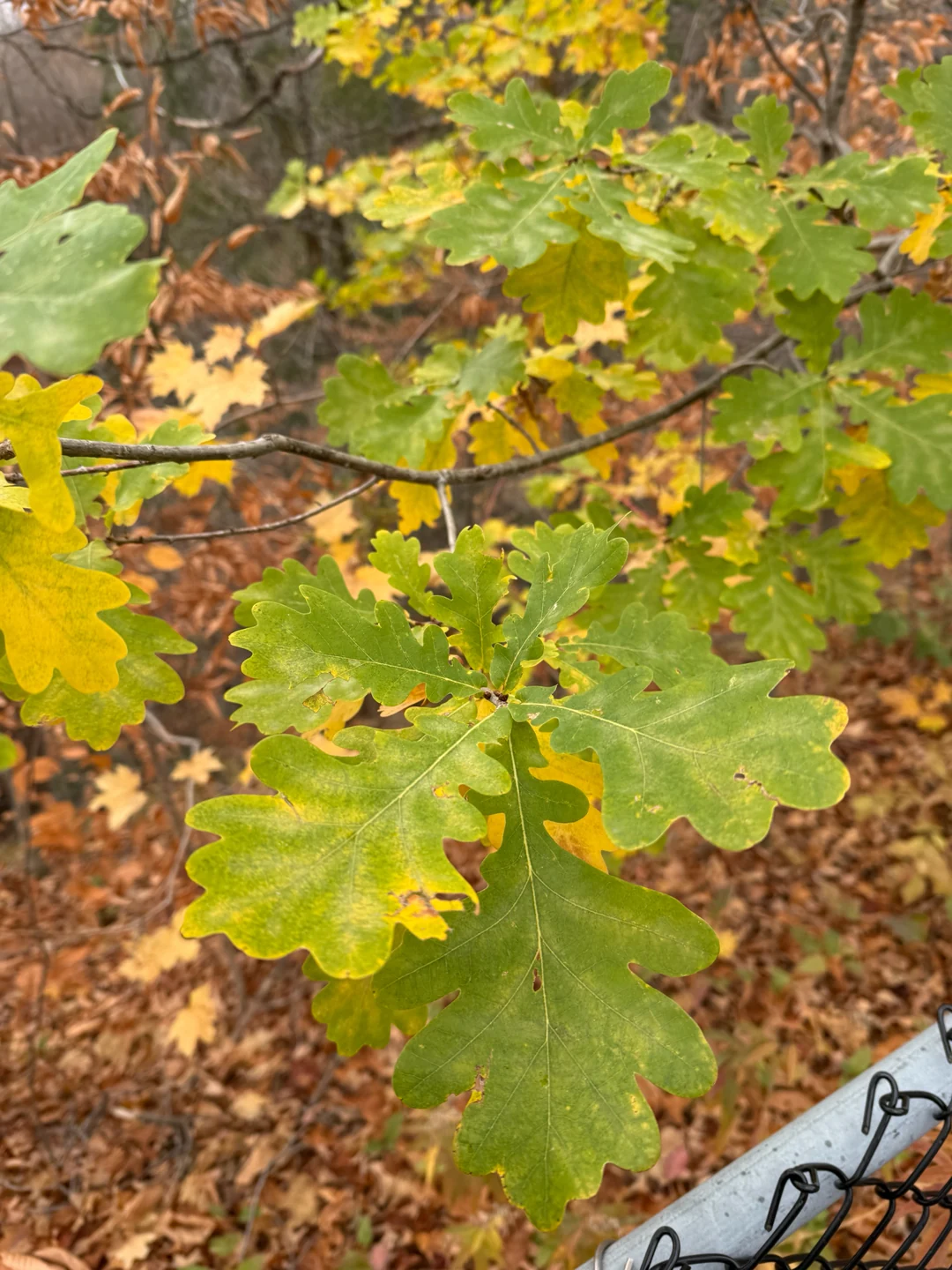
Pedunculate oak leaves, Quercus robur.
Pedunculate oak leaves, Quercus robur.Illustrative photograph
Patrice Dupont
ⓘ

Pedunculate oak leaves, Quercus robur.

Photography: Patrice Dupont · CC BY 4.0

View source

Date given at source: .

Request removal or correct the photo credit

Names that belong to the memory of the mountains.

Oaks and chestnuts form part of the mountain vegetation described by the municipality. The same source describes the partial replacement of that vegetation by maritime pine. A wooded hillside therefore also records planting choices and changes in land use. Looking only at the greenery is not enough: notice the species, the patches and the spaces between trees. This municipal description is not a current survey of every wood.

The same tree species can create different working landscapes. The publication Florestas do Alto Minho distinguishes chestnut orchards, managed for fruit, from chestnut coppices, managed for poles. These are uses of the chestnut tree, not two tree species. This regional comparison helps us ask questions about the landscape of Cabeceiras; it does not identify the purpose of any particular local plot.

There is also a forest beneath the canopy. The understorey consists of plants growing under the trees; dead wood can support wood-feeding insects and fungi too. A forest landscape is therefore more than a count of living trunks. Look for different layers — canopy, low vegetation and fallen wood — without assuming that species mentioned for another region occur in that spot.

Read a tree per part

Open an option and choose the story.

  1. The drawing of a sheet

    Wolves, ribs and petiole are different clues in the description of an oak leaf.

    A leaf drawn in waves →
  2. Inside a chestnut burr

    It follows the relationship between the coating of the fruit and the chestnut we know at the table.

    What is hidden in the hedgehog? →
  3. The scales of a pine cone

    The scales of a pine cone help to find out how to lodge and release seeds.

    A pine cone has small seed houses →
  4. A fruit with a wing

    A winged structure changes the way we look at the fruit; there is local photography to compare.

    A fruit with wing →
  5. Seeds and water

    The alder connects seed dispersion to water and offers another flowering calendar.

    Seeds that travel through water →
Start with the canopy or draw the look of a detail. These clues open stories about trees without replacing the identification of a copy.
Source and context

Municipality — landscape and vegetation

High CIM Minho — High Forests Minho, sours and candlesticks (habitat 9260)

Accessed: . Editorial summary; the date of consultation is not the date of the facts.

Back to index ↑
Botany · general features

A leaf with a wavy outline

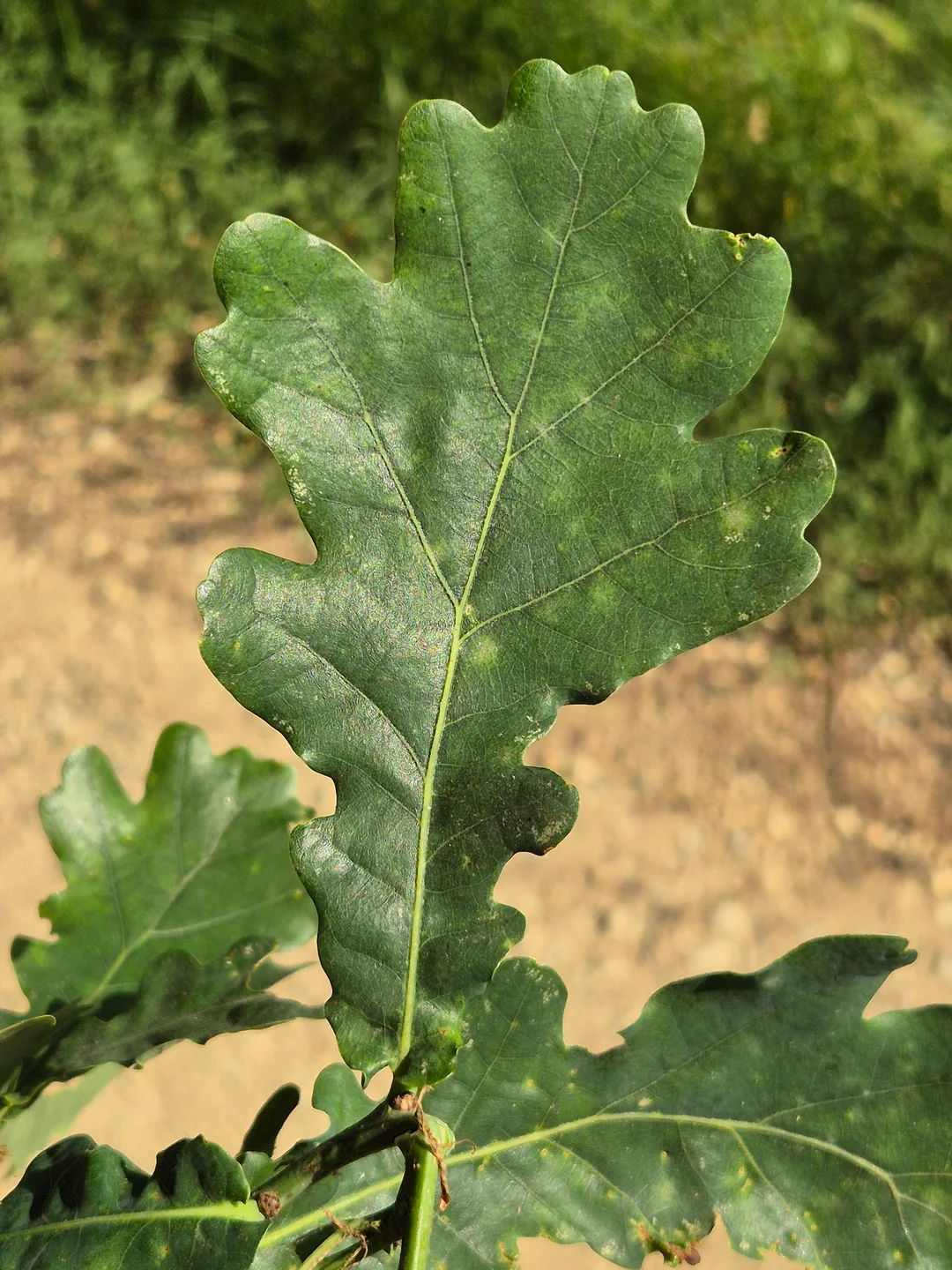
A green oak leaf with lobed edges and visible veins, still attached to the branch.
A Quercus robur leaf photographed near Hollenstein in the Hollabrunn forest, Austria, in 2025. Species illustration; not an observation from Cabeceiras and not an…Illustrative photograph · outside the municipality
Stefan.lefnaer
ⓘ

A Quercus robur leaf photographed near Hollenstein in the Hollabrunn forest, Austria, in 2025. Species illustration; not an observation from Cabeceiras and not an identification of subsp. broteroana.

Photography: Stefan.lefnaer · CC BY-SA 4.0

View source

Date given at source: .

Request removal or correct the photo credit

Look at the leaf’s outline and stalk on a pedunculate oak.

The leaf’s outline has broad, uneven lobes: curves resembling small waves. The University of Évora description adds a short leaf stalk, less than five millimetres long, and curved secondary veins that are not parallel. Rather than looking only at the silhouette, compare the outline, veins and attachment to the branch.

The fruits are carried on stalks and have a cup of brownish scales. The source uses the name Quercus robur subsp. broteroana. These features help explain the botanical description; they do not identify the subspecies in this guide’s photographs or places.

The description presents leaves as deciduous to marcescent. Deciduous leaves fall seasonally; marcescent leaves can remain attached for a while after drying out. A brown leaf on a branch is therefore not necessarily alive.

The profile associates this oak with moist environments and mentions intolerance of summer drought. A leaf’s outline describes a structure; humidity and the response to drought describe relationships with the environment. They are complementary clues for reading a plant and its landscape.

The acorn between the tree and the story

Open an option and choose the story.

  1. The cork oak also gives acornsCork begins in the tree →
  2. Distinguish hedgehog, chestnut and seedWhat is hidden in the hedgehog? →
  3. Oak cakes in a memory of 1758In the same parish, the harvest changed →
It compares fruits and toppings, and continues by a historical reference to the crops of Abadim.
See the plants photographed in the municipality
Source and context

University of Évora — Quercus robur subsp. broteroana, description by Carlos Vila-Viçosa

Accessed: . Editorial summary; the date of consultation is not the date of the facts.

Back to index ↑
Botany · general features

What is hidden inside a chestnut burr?

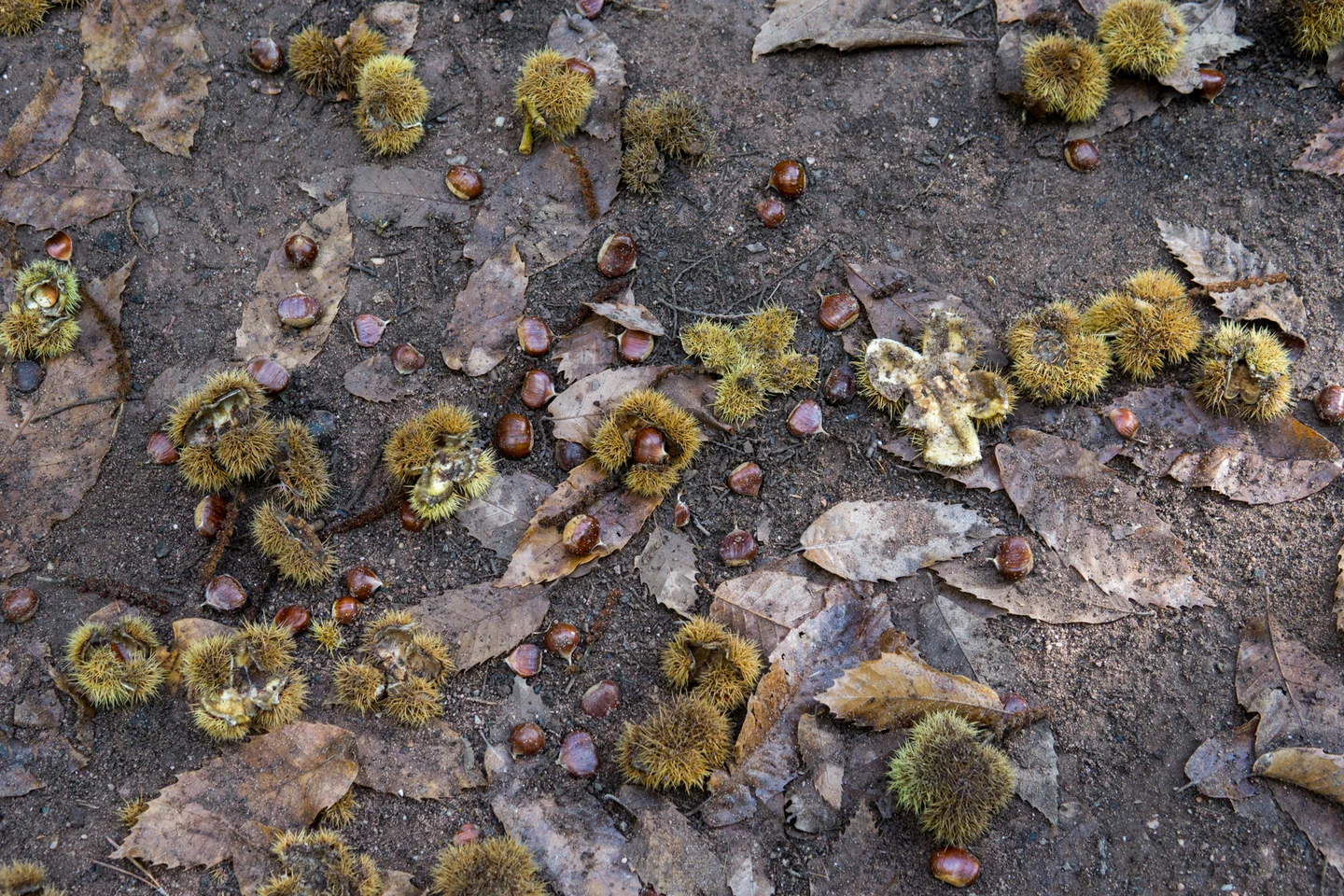
Open chestnut burrs and shiny brown chestnuts among fallen leaves.
Chestnuts and burrs on the ground at Guirbaden, Mollkirch, France, in 2020. Botanical illustration, not an observation from Cabeceiras.Illustrative photograph · outside the municipality
AudreyMuratet
ⓘ

Chestnuts and burrs on the ground at Guirbaden, Mollkirch, France, in 2020. Botanical illustration, not an observation from Cabeceiras.

Photography: AudreyMuratet · CC BY-SA 4.0

View source

Date given at source: .

Request removal or correct the photo credit

The chestnut is the fruit; the burr encloses the cluster.

Castanea sativa sheds its leaves in the unfavourable season and can grow into a large tree. The Castelo Branco Polytechnic profile describes narrow yellow flowers in long hanging spikes. Later, chestnuts develop together inside a prickly burr: the chestnut is the fruit, while the burr encloses the cluster.

Notice the layers: the shiny brown covering belongs to the fruit; inside there is usually one seed, with a yellowish skin. The tree also had a place in workshops: the source mentions wood used in carpentry, cabinetmaking, basketry and woodturning. These are general characteristics and uses, without attributing a workshop or individual tree to the municipality.

Flowers come before the burr. UTAD’s Digital Flora gives May and June as the species’ flowering period. This is a general botanical reference, not a prediction for a tree in Cabeceiras: compare photographs of the same tree on different dates to learn its rhythm. A tree without chestnuts on a spring visit tells a different story from an open burr in autumn.

Chestnut belongs to the Fagaceae family, the same broad botanical family as oaks. Comparing their fruits shows that kinship does not mean identical appearance: return to the oak story and look for what surrounds the acorn, then revisit the chestnut’s layers.

From Gold to Seed

Opens each layer to realize what involves what.

  1. 1 · The hedgehog

    It is the structure that involves the set of chestnuts.

  2. 2 · Chestnut

    It's the fruit.

  3. 3 · The seed

    There is usually one in each chestnut, with a yellowish film.

    From tree to memory of meals →
Scheme of structures described in the IPCB botanical form, without scale.
See the plants photographed in the municipality
Source and context

Polytechnic Institute of Castelo Branco — botanical record of Castanea sativa

UTAD Botanical Garden — Castanea sativa, Flora Digital de Portugal

Accessed: . Editorial summary; the date of consultation is not the date of the facts.

Back to index ↑
Cork oak · botany and local landscape

Cork begins on a tree

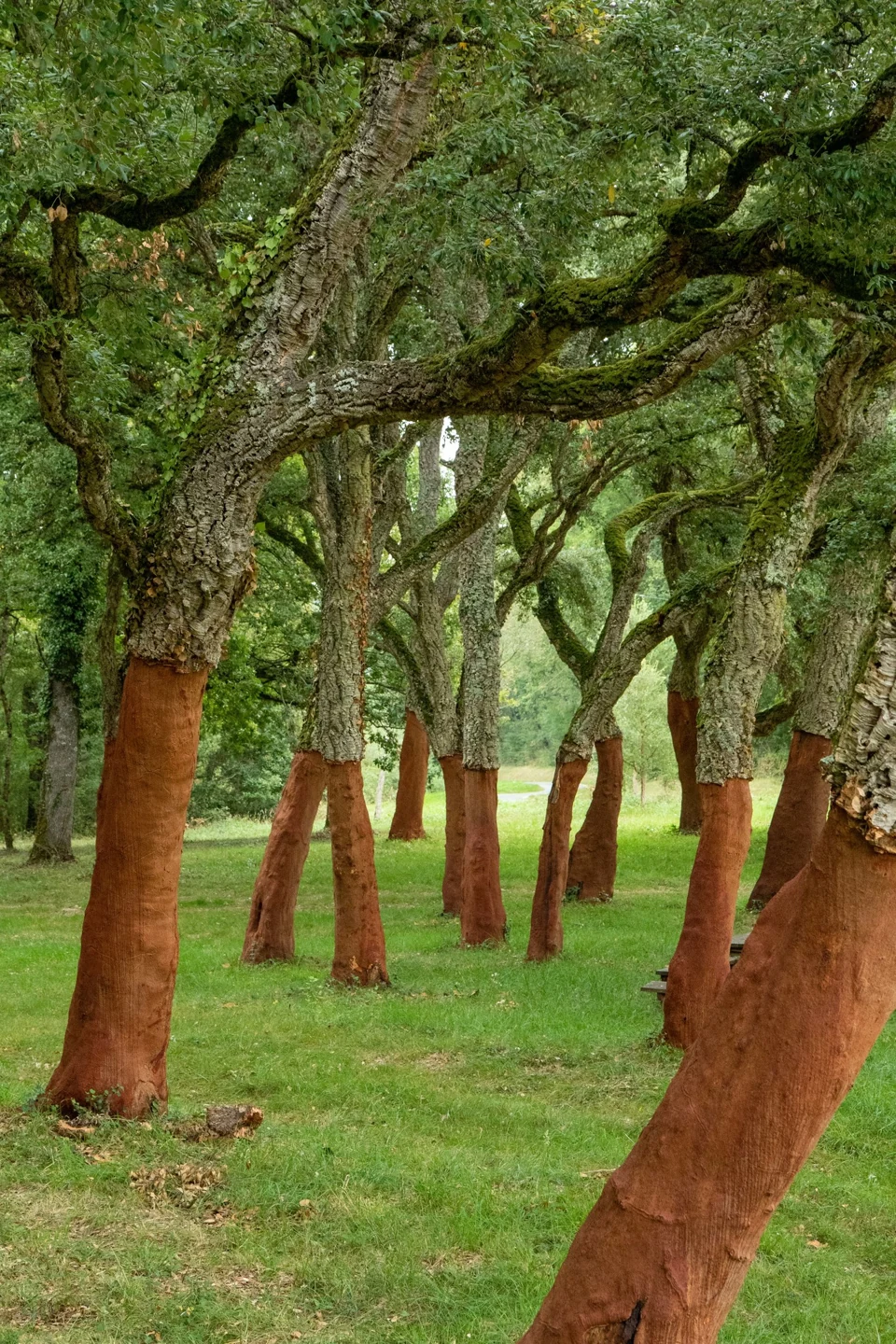
Cork oaks with parts of their trunks stripped of cork.
Cork oaks with parts of their trunks stripped of cork.Illustrative photograph
Thibaud Aronson
ⓘ

Cork oaks with parts of their trunks stripped of cork.

Photography: Thibaud Aronson · CC BY-SA 4.0

View source

Date given at source: .

Request removal or correct the photo credit

A cork oak’s bark is one of the first clues.

Quercus suber has thick, elastic, deeply cracked bark: cork. The municipal description includes cork oaks on the hillsides of Cabeceiras. Leaves remain for more than one season; the University of Évora mentions up to three years. Evergreen foliage does not mean that every leaf lasts forever.

The fruits are acorns. The profile describes their cups as having long, velvety scales. Bark, leaves and fruits offer different clues for observing the tree, without removing cork or breaking off branches. The local reference documents the landscape; the botanical description explains general features of the species.

Inside, cork consists of microscopic cells containing gas similar to air. APCOR relates this structure to its lightness, compressibility and ability to regain its shape. Suberin in the cell walls helps impede the passage of liquids and gases. A stopper looks simple, but the material’s behaviour begins at a scale our eyes cannot see.

The association also describes turning used stoppers into granules for new products, such as floor coverings and soles. This is a general example of reuse, not an industrial activity confirmed in Cabeceiras. Compare it with the wooden clogs of Outeiro and the containers of Faia: other stories of tree-derived materials, with different uses and working methods.

A tree, different materials

Open an option and choose the story.

  1. Wood for foot supportBefore the punch, a piece of alder →
  2. Parts forming a containerThe wood also stores the wine →
  3. Return to tree and environmentThe cork oak does not climb the whole mountains →
Compare cork with wood of two crafts. The presence of corks in the municipality does not prove local production of all these objects.
Source and context

University of Évora — Quercus suber, botanical description

Municipality — landscape and vegetation

APCOR — Cork, cellular structure, properties and reuse (page consulted in the staging subdomain)

Accessed: . Editorial summary; the date of consultation is not the date of the facts.

Back to index ↑
Forest landscape · species botany

Needles come in pairs

A small detail to spot on maritime pine.

The municipality mentions maritime pine in the transformation of the mountain forest landscape. In the University of Évora description, Pinus pinaster has stiff, pointed, evergreen needle leaves. They grow in pairs on a very short shoot and can reach 25 centimetres. A pair of needles is a starting point for noticing more than the tree’s crown.

Male and female reproductive structures occur on the same plant. The male structures form yellowish clusters; the female structures develop into cones with woody scales. Look at the trunk too: the bark is thick, reddish-brown and deeply cracked. These are general features of the species, not a survey of local pine woods.

The environment offers another clue. The University of Évora associates maritime pine with sunny places and acidic, often sandy soils; inland it also mentions schist substrates. It can form pine woods or join mixed forests with other pines and oaks.

When looking at a hillside, distinguish two scales: the tree with its needles and cones, and the plants around it. The botanical description provides context, but appearance alone cannot reveal a stand’s origin or age.

A tree inside the forest

Open an option and choose the story.

  1. Explore pine cone and seedsA pine cone has small seed houses →
  2. The forest also changes with peopleThe forest also has a history →
  3. Compare with a deciduous leaf treeA tree of light bark →
It connects the form of the leaves, the reproduction and the history of the landscape.
Source and context

University of Évora — Virtual Museum of Biodiversity, Pinus pinaster

Municipality — landscape and vegetation

Accessed: . Editorial summary; the date of consultation is not the date of the facts.

Back to index ↑
Forest landscape · maritime pine botany

A pine cone has little homes for seeds

The woody scales hide a detail worth noticing.

In maritime pine, Pinus pinaster, the cone contains two seeds per scale, according to the University of Évora description. The trunk has thick, reddish-brown, deeply cracked bark. After recognising the paired needles, these other shapes deserve attention. The municipality mentions maritime pine in the mountain landscape; these features help explain the species without constituting an inventory of local pine woods.

Different male and female reproductive structures occur on the same tree: the species is monoecious. The profile describes the male structures as yellowish clusters and the female ones as scaly structures that form cones. Looking only at a mature cone therefore leaves part of the cycle undiscovered.

The environment matters too. The University of Évora associates maritime pine with sunny places and acidic, often sandy soils, also mentioning inland occurrences on schist substrates. It can form pine woods or be part of mixed forests. This describes general preferences and occurrence; it does not turn every hillside with these conditions into a pine wood.

A tree, several clues

Open an option and choose the story.

  1. Start with needlesNeedles come in pairs →
  2. Water-related seedSeeds that travel through water →
  3. Fruits with a wingA fruit with wing →
  4. Flowers and fruits of different yearsFlowers and fruits in the same branch →
Comparing leaves, reproductive structures and forms of dispersion.
Source and context

University of Évora — Virtual Museum of Biodiversity, Pinus pinaster

Municipality — landscape and vegetation

Accessed: . Editorial summary; the date of consultation is not the date of the facts.

Back to index ↑
General botany · bramble

A blackberry is a small cluster

A bramble’s fruit has more detail than it first appears.

A blackberry consists of numerous small drupes. Rubus ulmifolius has white or pinkish five-petalled flowers and fruits that turn black when ripe. Its leaf is compound too, divided into three to five leaflets, green above and greyish and hairy beneath.

The arching stems form dense bramble patches. The University of Évora associates the plant with woods, hedges, uncultivated ground and watersides, preferring cool, moist soils. This is a general botanical description; it does not identify a particular bramble patch in the municipality.

A compound leaf may look like a small branch. The distinction helps us read the plant: in the bramble described by the University of Évora, three to five leaflets belong to one leaf and are arranged like fingers spreading from a common base. The greyish underside results from dense hairs, called tomentum.

The description also mentions purple, pruinose shoots, with a waxy-looking surface coating. These details differ from the prickles on the stems. The plant also occurs on ground altered by human activity; a bramble patch alone does not show when or why land stopped being cultivated.

A JOINT PARTIES

Open each level and compare fruit and leaf.

  1. 1 · Whole blueberry

    What we call blueberry is a set of numerous small drupes.

  2. 2 · Each small unit

    It's not a seed exposed on the surface of the blueberry.

    Another drupa: olive →
  3. 3 · What about the parts of the sheet?

    The leaf of silva is divided into three to five folioli. These parts belong to the leaf, not to the fruit.

    Know the word foliolo →
Comparison of structures described by the University of Évora for Rubus ulmifolius; no scale.
Source and context

University of Évora — Rubus ulmifolius, leaves and fruits

Accessed: . Editorial summary; the date of consultation is not the date of the facts.

Back to index ↑
Species botany · with a local observation

A fruit with a wing

For ash, shape helps fruit travel.

The ash fruit has a wing and is called a samara. There is another detail to discover: the leaf is divided into several narrow leaflets. Do not confuse each leaflet with a whole leaf.

Fraxinus angustifolia can grow in riverside woods and on slopes. The local photograph documents a tree in Gondiães e Vilar de Cunhas; it does not show a fruit travelling or describe the species’ entire habitat.

The Gulbenkian profile describes leaves with three to eleven leaflets and serrated edges. The name angustifolia refers to this narrow shape. On the fruit, the wing extends beyond the seed-bearing part: fruit and seed are not the same structure. The tree loses its leaves seasonally; branches, leaves and fruits offer different clues throughout the year.

Ash connects this leaf shape with water availability. The Gulbenkian profile mentions tolerance of a range of temperatures but sensitivity to dryness, and a preference for deep soils. It also describes a tall, irregular crown and a dark, deeply cracked trunk. Leaves are not the only helpful feature: bark, crown and surroundings complete the observation, without any single characteristic being enough to identify a tree.

Three Ways to Continue the Trip

Open an option and choose the story.

  1. Seeds that travel by waterSeeds that travel through water →
  2. Seeds protected in a pine coneA pine cone has small seed houses →
  3. A tree inside a forestThe river also has a forest →
Compare the ash fruit’s wing with other forms of dispersal and with life along riverbanks.
Return to observation proposal ↑
Source and context

University of Évora — BioMontado, chips Fraxinus angustifolia and Hedera hibernica

Portuguese Society of Botany — Flora-On, Fraxinus angustifolia: ecology

Calouste Gulbenkian Foundation — Straits leaves, fruit and habitat

Accessed: . Editorial summary; the date of consultation is not the date of the facts.

Back to index ↑
Observation · general activity through the seasons

One tree, several visits

Returning to the same place is another way to read the seasons.

The book A Vegetação em Portugal distinguishes leaves that remain functional through the unfavourable season from marcescent leaves, already dry but still hanging in the crown. Observing the same tree at different times helps reveal change. Record what you see before naming the species: green leaves, attached dry leaves, bare branches and new shoots do not all tell the same story.

To compare visits, choose a specific part of the tree: a branch visible from the same spot or the entire crown. Keep the date and record green leaves, attached dry leaves, flowers and fruits separately. If you cannot see something, write “not observed”; that differs from saying it does not exist on the tree.

The ginkgo and dawn redwood stories let you begin comparing on screen: both lose their leaves, but their shapes differ. Ash adds another question: are you looking at a whole leaf or one of its leaflets? Repeated observations and carefully chosen comparisons reveal more than immediately guessing a species name.

Choose a way to look

Open an option and choose the story.

  1. A whole leaf in fan

    The ginkgo leaf is simple; the division into lobes does not transform it into a composite leaf.

    A tree with fan leaves →
  2. A leaf with several folioli

    In the ash, several narrow parts belong to the same composite sheet.

    A fruit with wing →
  3. A conifer loses her foliage

    The metasequoia has leaves, buds and branches in opposite pairs and deciduous foliage.

    A conifer who undresses in autumn →
  4. Dried leaves that get stuck

    He knows marcescence and compares it to the persistence of green leaves.

    An oak can store dried leaves →
Botany descriptions, a photographic record, and a crop story have different range.
Source and context

National Press — Vegetation in Portugal, semi-ducifolia and marcescent leaves

Calouste Gulbenkian Foundation — Ginkgo

Cambridge University Botanic Garden — Metasequoia glyptostroboides, deciduous foliage and layout of leaves

Calouste Gulbenkian Foundation — Straits leaves, fruit and habitat

Accessed: . Editorial summary; the date of consultation is not the date of the facts.

Back to index ↑
YOUR LOCAL GUIDE

What would you like to discover?

Take a closer look.