The town grew beyond the monastery
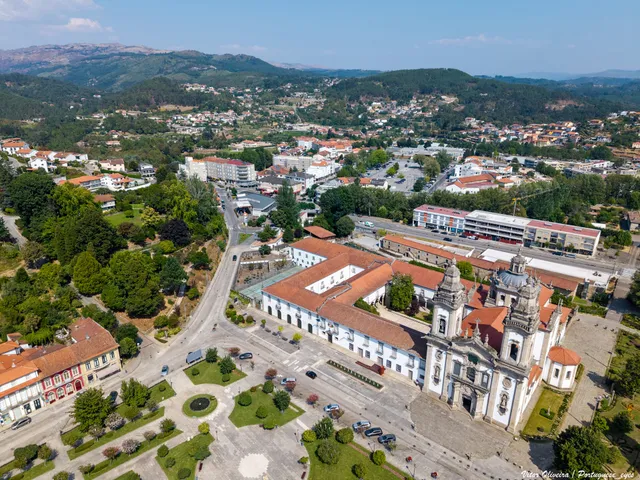

Campo do Seco and new streets tell another century of Cabeceiras.
Reading options
Your choice is saved only in this browser.
The monastery dominates the view, but the town acquired other spaces and functions. The municipal urban regeneration study from 2016 recalls the acquisition of Campo do Seco in 1923. Public facilities, including a school and fire station, were subsequently established there. Buying the land and installing those facilities were separate stages, not works all completed in 1923.
Praça da República holds another connection with the wider world. The same study links the architecture of its nineteenth-century ensemble with returning brasileiros, emigrants connected with Brazil. Houses help show how experiences and resources from elsewhere could leave marks on the town. This interpretation of the ensemble does not identify every owner’s biography.
In the late 1970s, Avenida Francisco Sá Carneiro opened a route behind the monastery. Later, the detailed plan of 1998 addressed the eastern part of the former estate. Looking at the town means following overlapping periods: monastery, square, public facilities and streets that changed how people moved.
Explore further: words and activities
Explore this story
Source and context
Município — PARU, abril de 2016, pp. 9–12: praça, Campo do Seco e expansão urbana
Accessed: . Editorial summary; the date of consultation is not the date of the facts.