Discover Cabeceiras de BastoFree independent guide
ViveCabeceirasYOUR GUIDE TO CABECEIRAS
ENEnglish
SearchSaved

Stories of Cabeceiras

Choose a story to start with. You can change the subject or fine tune the search.

17 leituras · Todos os temas · Painzela

The life you don't always see

Knowing animals begins by perceiving the territory and respecting the distance.

Escolher uma história · 1
Painzela · local register and general biology

Similar name, different kinship

A swallow is not a small swallow.

Inclui uma atividade para experimentar →Explorar: Como queres descobrir as aves? →
Read here and consult sources

Swallows and swallows catch insects in flight, but they belong to different orders. The first are Passeriformes, such as blackbirds and chapins; the second are Apodiformes, such as colibris. The similar name hides distinct kinships.

The shelters also tell stories: the Gulbenkian guide describes mud nests and small herbs of the beiral swallow next to the roofs. Black and pale swallows take advantage of recesses between tiles and chimneys. They are national examples, without locating nests in the municipality.

In Painzela, a photograph of birdlovers records a chimney swallow in 8 August 2025. Hirundo rustica builds bowl-shaped mud nests and captures small insects in flight, according to the University of Évora. The photograph shows a pause on a wire, not the nest or feeding. It is a local link to one of the species of this family, without converting the point into a guaranteed spot of observation.

Source and context

Calouste Gulbenkian Foundation / Wilder — Essential guide for swallows and swallows, 09/05/2024

University of Évora — Hirundo rustica

Accessed: . Editorial summary; the date of consultation is not the date of the facts.
Read the landscape through the plants

Trees, forests, vineyards and fields reveal different ways of occupying the territory.

Escolher uma história · 1
Painzela · gardens and knowledge

Plants that take shape

Cameleiras and teixos are also part of the history of the gardens.

Inclui uma atividade para experimentar →Explorar: O jardim também guarda saberes →
Read here and consult sources

Cameleiras e teixos worked on geometric or animal figures: it is the art of the topiaria. The Portuguese Association of Historical Gardens links this tradition to the school of Manuel Joaquim Alves Soares, continued by the son Joaquim. Casa de Piellas, in Painzela, is part of this story. It is a private property; consult the conditions of visit in the form.

The presentation of the Route of Tâmega associates this garden school with the support of the sisters Emilia Ermelinda and Justina Praxedes Pinto Basto. In the mid-19th century, they will have promoted the learning of Manuel Joaquim Alves Soares in Porto and England. The history of plant forms thus includes the circulation of knowledge and transmission between generations.

Looking at a topiary figure is looking at a plant and a human knowledge. Geometric shapes organize lines and volumes; zoomorphs evoke animals. The association places examples of this tradition in several houses of Basto, not only in Piellas.

Palavras desta história: ver explicações →Getting to know the parish See Fact sheet: Casa de Pielas, jardins e anexos
Source and context

Portuguese Association of Historical Gardens — Route Tâmega

Portuguese Association of Historical Gardens — Casa de Piellas, Painzela

Accessed: . Editorial summary; the date of consultation is not the date of the facts.

Between rivers and mountains

Water and relief form the municipality. Choose a name and follow the landscape.

Escolher uma história · 3
Landscape and garden · Painzela

The water draws the garden of Piellas

Among the carved bushes, there are other ways to go.

Inclui uma atividade para experimentar →Explorar: O jardim dentro da paisagem →
Read here and consult sources

In Piellas, the water helps to connect garden, forest and fields. The description published by Jardins Magazine places a tank in L next to the wall, close to a passage to the forest of Casa do Boal. Another tank, surrounded by bamboos and buxos, opens for a cultivation field surrounded by forest. The water goes to the stream of Painzela.

The article also describes paths shaded by ramadas and an agricultural courtyard associated with the old production of corn and wine. The farm therefore gathers recreational spaces and work spaces: the garden of carved shrubs is part of a wider landscape.

Try to imagine the fifth in layers: the levels, paths, vegetation and the water system. The description allows to relate these elements, but does not provide a complete map of the hydraulic circuit. Piellas is a private property; the visiting conditions should be consulted on the site's chart.

See Fact sheet: Casa de Pielas, jardins e anexos
Source and context

Jardins Magazine — Gardens of Portugal: Route of the Tâmega, section Casa de Piellas

Accessed: . Editorial summary; the date of consultation is not the date of the facts.

St Nicholas and Painzela · hydrography in the testimony of 1758

Two rivers, a meeting in the Ranha

A document allows following water between parishes.

Explorar: Seguir a água no documento →
Read here and consult sources

The report of São Nicolau of 1758 places in Ponte da Ranha the encounter of the river that crosses the parish with what comes from Painzela. It then describes the joint current on the way to Tâmega, next to the bridge of Cavez. It is a historical reading of the water network that connects the territory, not a proposal for walking along the banks.

Before this meeting, the parish priest accompanied the river of St. Nicholas from the hill called Víbora. It describes a modest spring that receives other streams and a reinforced flow at the Bridge of the Cattle by two arms coming from Bucos. It refers to water throughout the year and a particularly caudal winter.

The text also follows the direction changes: to the south, then to the spring and again to the south. It is a way of counting the landscape through the movement of the water. Nascents, tributaries and confluence explain different stages; the names used by the author belong to the testimony signed in 22 May 1758.

Note the following encounters: the arms of Bucos first strengthen the current of St. Nicholas; in the Ranha the water coming from Painzela is joined; the common destination is Tâmega. Drawing these junctions helps to distinguish the path of a river from the network of contributions that feeds it.

Palavras desta história: ver explicações →
Source and context

Basto Land Museum — St Nicholas Parish Memories (1758)

Accessed: . Editorial summary; the date of consultation is not the date of the facts.

Saint Nicholas and Painzela · testimony of 1758

A bridge for loaded cars

Three springs and a crossing connected two parishes.

Inclui uma atividade para experimentar →Explorar: Passar, regar e moer →
Read here and consult sources

In 1758, the parish priest describes a small river born from three sources in the hills of Lapela and Celeiró. It entered in Painzela by Vilarinho, where a wooden bridge supported loaded cars. The testimony does not identify a visitable crossing today.

The same river also moved mills and provided water to one taken to the fields of Casal. The author recalls two other derivations linked to the Taipa farm, one of them already ruined at the time of the report.

This description combines transport, grinding and watering. A bridge allowed to pass; a levada diverted part of the water to another use. They were not equivalent functions, although they participated in the same work landscape. The reference to a ruined structure also shows that the document records changes and losses, in addition to what was in operation.

Palavras desta história: ver explicações →
Source and context

Basto Land Museum — St Nicholas Parish Memories, 22 May 1758

Accessed: . Editorial summary; the date of consultation is not the date of the facts.

Crafts and memories

In the hands, at the table and in the community: little stories of how one lives and what one transmits.

Escolher uma história · 6
Heritage · Painzela

One house, two centuries in sight

The building and garden don't count exactly the same time.

Explorar: Painzela por camadas →
Read here and consult sources

The House of Pielas and its garden are not presented as a work of one moment. The municipality attributes to the 18th century the architecture of the house and to the 19th century the garden, whose English influence is indicated as hypothesis.

Separating these layers helps to read the set: a building can receive new spaces and new ways to frame it over time. The reference is patrimonial, without confirming current conditions of visiting private property.

Getting to know the parish See Fact sheet: Casa de Pielas, jardins e anexos
Source and context

Municipality — assets of Painzela

Accessed: . Editorial summary; the date of consultation is not the date of the facts.

Painzela · trades and traditions

Yarn and parties in memory of Painzela

In addition to manors, there are knowledge and celebrations.

Explorar: Uma terra também se faz de pessoas →
Read here and consult sources

The Municipality associates the handicrafts of Painzela to the weaving and highlights Santo André and São Sebastião between the festivals and pilgrimages. The dedication to Santo André also appears in the description of the matrix in 1758. They are clues to know the cultural life of the parish, without assuming workshops open to the public or a current calendar of celebrations.

Source and context

Municipality — Freguesia of Painzela: trades and traditions

Municipality — Parish memories of Painzela (1758)

Accessed: . Editorial summary; the date of consultation is not the date of the facts.

Painzela · irrigation documented in 2008

Seven consorts shared the levada

In Terreiros, the watering left a memory on the ground.

Inclui uma atividade para experimentar →Explorar: A água tinha diferentes trabalhos →
Read here and consult sources

The inventory of 3 of May 2008 describes the Levada da Rebouta, in Terreiros, Painzela, as a channel on natural land. It received water from a small tributary of the Ribeira of Painzela, from the Granja, and belonged collectively to seven consorts. The record recorded deactivation in the decade of 1990. This trace helps to read the irrigation organization in the past, without assuming that the channel remains usable or accessible.

Source and context

Municipality — inventory of levadas, Rebouta, fiche L39 (03/05/2008)

Accessed: . Editorial summary; the date of consultation is not the date of the facts.

Painzela · mill documented in 2008

The stream had the mill working

The Lord's Lagar turned on water and olive processing.

Explorar: Do curso de água à transformação →
Read here and consult sources

In Lagar Velho, in Painzela, the survey of 6 of May 2008 identified the Lagar do Lord as a construction of granite moved by water. A levada of its own led it from the Ribeira do Arejal. The record placed the deactivation in the decade of 1970 and then described the building in ruin, with few elements of grinding. It is documentation about a private property equipment, not a confirmation of the current conditions of visit.

Source and context

Municipality — inventory of mills, Lagar do Senhor (Old), record LA12 (06/05/2008)

Accessed: . Editorial summary; the date of consultation is not the date of the facts.

Painzela · associative history in the municipal presentation

A parish is also playing and singing

The Eagles of Painzela add associative life to local history.

Read here and consult sources

The municipal presentation is located in 1996 the foundation of the Eagles of Painzela. Among the activities it describes are football tournaments, Swedish and crocheted, in addition to a group of singing dedicated to regional popular music. The portrait connects sport, conviviality and musical transmission. It is a memory of the collective presented by the Municipality, without confirming a current schedule of rehearsals or meetings.

Source and context

Municipality of Cabeceiras de Basto — Associativism: Culture and Entertainment, presentations by the Eagles of Painzela and the Folkloric Group of St. Nicholas

Accessed: . Editorial summary; the date of consultation is not the date of the facts.

Painzela · transformation of mills in the 20th century

When the mill changed energy

In Painzela, the story continued beyond the levada.

Inclui uma atividade para experimentar →
Read here and consult sources

The municipal inventory of 2008 describes the Lagar do Senhor Novo, in place of the Church, as successor of the Lagar Velho. Built in 1971, it used electric motorization. It was recovered in 2001 and deactivated shortly thereafter.

The change allows us to compare two ways of moving a mill in the same parish. The survey is historical and does not confirm the operation or current visits.

Source and context

Municipality — Lagares inventory, LA13, survey of 06/05/2008

Accessed: . Editorial summary; the date of consultation is not the date of the facts.

Time travel

Documents, details and traditions: there is more to discover than a date on a stone.

Escolher uma história · 6
Painzela · parish organization in 1758

Painzela was not isolated

A small register reveals a connection between parishes.

Read here and consult sources

The news of Painzela published in the Parish Memories identifies Saint Andrew as a dedication of the matrix and attributes to the Abbot of Santa Senhorinha of Basto the presentation of the parish priest. The register shows an institutional link between two parishes.

The vicar assigns a congruity of 100.000 réis. The value documents the remuneration then indicated; it does not allow a direct comparison with current wages. The municipal transcript updates the spelling and score from the edition of José Viriato Chapel, published in 2003.

Getting to know the parish See Fact sheet: Igreja de Santo André de Painzela
Source and context

Municipality — Parish memories of Painzela (1758)

Accessed: . Editorial summary; the date of consultation is not the date of the facts.

Painzela · 17th century heritage

A chapel helps to read the house

In Cimo de Vila, the domestic heritage meets the religious.

Read here and consult sources

The municipal presentation of Painzela highlights the Casa de Cimo de Vila and its chapel of São Gonçalo, dated 1662. The set adds another time to the discovery of the parish, besides the Casa de Pielas and its garden. The heritage reference does not confirm access to the interior.

The municipal text places the set in a landscape mainly agricultural, in a range of territory that stretches from east to west to the limit with Fafe. In the same presentation arise the matrix, alminhas and the chapel of São Brás: the chapel of São Gonçalo is a piece of a network of places, not the whole religious history of the parish.

The date of 1662 allows a comparison with Pielas, whose house is presented as 19th century and the garden as 19th century. They are references of different times; they do not prove that all the elements visible today are from the same construction campaign.

Getting to know the parish See Fact sheet: Capela de São Gonçalo e cruzeiro de Painzela
Source and context

Municipality — assets of Painzela

Accessed: . Editorial summary; the date of consultation is not the date of the facts.

Painzela · reading a 1758 document

How did you count a parish?

In 1758, the portrait of Painzela used fireworks and sacramental souls.

Inclui uma atividade para experimentar →Explorar: Um documento abre outras perguntas →
Read here and consult sources

The municipal transcription of the Parish Memories records 137 fires and 439 sacramental souls in Painzela. The formulation itself distinguishes domestic units from a religious category of people. Therefore, the 439 should not be presented as a modern census of all inhabitants. The document also allows to know the language used to describe the community.

The same passage identifies Saint Andrew as a dedication of the matrix and connects the presentation of the vicar to the abbot of Santa Senhorinha. The small text therefore gathers population, church and ecclesiastical organization. Instead of reading it as a statistical table, we can ask what the author chose to record about the community.

There is also a layer between the old document and the screen: the municipality informs that the transcript updates the spelling and the score from the edition of José Viriato Chapel, published in 2003. This indication helps to distinguish the date of the testimony, 1758, from the date of the edition used to disseminate it. The references to the chapels appear separately, in the documentary note.

Getting to know the parish
Source and context

Municipality — Parish memories of Painzela (1758)

Accessed: . Editorial summary; the date of consultation is not the date of the facts.

Painzela · documentary references of 1656 and 1735

A chapel leaves a trail in the archive

The dates of the documents also tell stories.

Inclui uma atividade para experimentar →Explorar: Três datas, três perguntas →
Read here and consult sources

The references that accompany the memory of Painzela mention an obligation linked to the chapel of Nossa Senhora da Conceição, of 1656. Another, of 1735, refers to the institution of the chapel of São Gonçalo and an obligation to its factory.

These dates belong to documents. The municipal heritage presentation assigns 1662 to the chapel of São Gonçalo da Casa de Cimo de Vila: they are information of a different nature, which should not be merged into a single construction date. The reading of the sources also involves asking what each record is actually dating.

Palavras desta história: ver explicações →
Source and context

Municipality — Parish memories of Painzela (1758)

Municipality — assets of Painzela

Accessed: . Editorial summary; the date of consultation is not the date of the facts.

Painzela · origin and route of Baltazar Castro

From Painzela to the direction of monuments

Baltazar Castro took his training to the heritage.

Explorar: Uma vida entre formação e património →
Read here and consult sources

Born in Painzela, where he was born in 1 May 1891, Baltazar da Silva Castro studied in Porto and began his career in Public Works in 1919. The University of Porto documents his passage through the services of monuments of the North and the move to Lisbon in 1936, to take over the direction of the Monuments. This connection of Painzela to the history of the restoration accompanies a professional life; it does not attribute to the architect the authorship of the buildings of the parish.

His training brought together engineering, architecture, construction and design. In 1930 he took on the direction of the Northern Monuments. Study trips were also part of the work: the University refers to a trip to Spain in 1934, dedicated to Visigothic architecture, and another to Europe in 1938, centered on military architecture.

Not only did he work in the restoration. With Rogério de Azevedo, he designed the Garagem do Jornal O Comércio do Porto and the expansion and reform of the Faculty of Medicine of the University of Porto. They are works in Porto; the link to Painzela is in its origin, not in the location of these projects.

Source and context

University of Porto — Distinguished Students: Baltazar Castro, newsletter Common House No 232, 09/06/2025

Accessed: . Editorial summary; the date of consultation is not the date of the facts.

Painzela · patrimonial identification without chronology demonstrated

A bridge, a name and a question

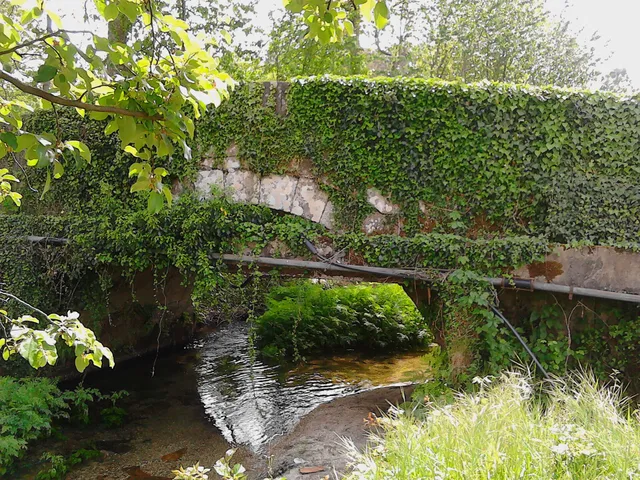
Stone bridge of Painzela on a water line, surrounded by vegetation
Ponte de Painzela, photographed by Tommasoandrea. The image allows observing the arch and the water line; it does not determine the time of construction.© Tommasoandreaⓘ

Calling him Roman doesn't solve your age.

Inclui uma atividade para experimentar →
Read here and consult sources

The municipal presentation of Painzela includes a photograph identified as Ponte de Painzela and refers to a Roman Bridge among the heritage of the parish. This designation alone does not demonstrate when the bridge was built. The name allows to find the place; dating would require documentation or study of the construction. It is a good question to lead to a reading of the heritage: what do we know by identification and what we still need to investigate?

See Fact sheet: Ponte de Painzela
Source and context

Municipality — parish presentation of Painzela and bridge identification

Accessed: . Editorial summary; the date of consultation is not the date of the facts.

YOUR LOCAL GUIDE

What would you like to discover?

Take a closer look.