Culture and crafts
Espigueiro de Carrazedo
The tree of the House of Fundevilla preserves the memory of the corn culture in Carrazedo.
BucosLook at a wall, a roof or a thorn. Architecture brings materials, work and life closer to the villages.
Summary: about 3 min. Open the readings to deepen each chapter at its pace.
Vilela · architecture and landscape of Rio Douro
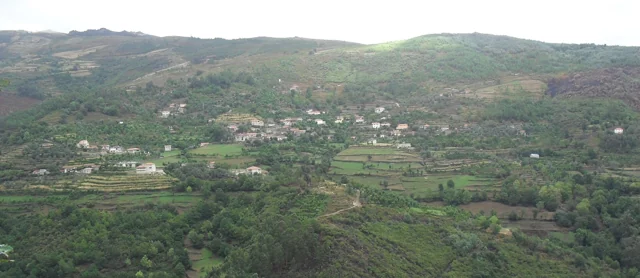
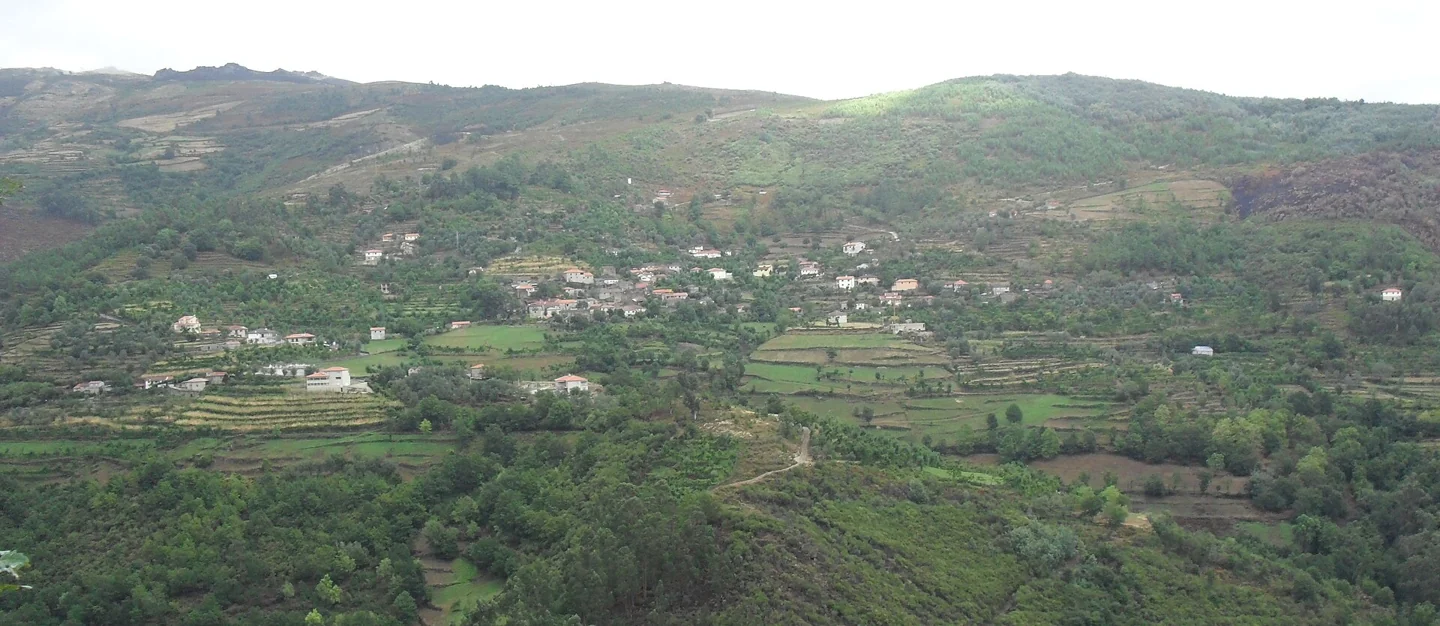
Vilela, Rio DouroⓘIn Vilela, the municipal presentation draws attention to the granite masonry of the old streets. At Uz, it describes stone houses and some stalk covers. Compare walls and roofs: they are different parts of the construction and can ask for different materials and knowledge. The descriptions help to recognize the connection between settlement and landscape, but a distant photograph does not always allow identifying a cover. Note first what is visible; then add what you have learned at the source. The name of a material does not in itself give the age of a house, and the patrimonial reference to the stalk is not a count of the coverages that exist today.
Saving the harvest also required building. The canasters of Carrazedo make visible the importance of maize; in Casa de Chouzas, the municipal description brings together the dwelling and three granaries. Looking at the support constructions changes the reading of a set: beyond the main facade, there are functions linked to agricultural work. Compare what each source allows to state. In Carrazedo, the indicated capacity does not correspond to a currently measured harvest. In Chouzas, the granaries are attributed to the 19th century, while the dating of the house is presented with uncertainty. The photo of the gate doesn't show these three buildings. Knowing a heritage reference also does not mean having access to its interior.
A house gains another reading when observing its position in the landscape. The presentation of Moscoso relates the core of rustic houses to the valley of the riverside of Cavez: buildings and relief are part of the same description. In Faia, the municipal monograph reads to Casa da Tojeira through transformations of various times, including balcony, staircase and relationship with the road.
Try alternating the scales: first the village set, then a façade and finally a detail. The image shows shapes; documentation helps to understand changes over time. A current view does not allow dating all parts nor shows that a building has remained the same since its origin.
Open each form to consult contacts and visiting conditions. This selection is not an itinerary.
The tree of the House of Fundevilla preserves the memory of the corn culture in Carrazedo.
BucosA village referred to by popular architecture in the municipal description of the serrano route.
Rio DouroCasario and fields on the slopes of Rio Douro. Vilela is one of the places mentioned in the municipal presentation of the parish.
Rio DouroA manor house and three nineteenth-century granaries in the history of Vilar de Cunhas.
Gondiães e Vilar de CunhasOne of the villages of the historical territory of Vilar de Cunhas.
Gondiães e Vilar de CunhasThese plans include places mentioned in the guide. Open the chips to confirm access and conditions; they are not calculated routes.
Freguesias associated with source readings. This list does not define a visit path.