Discover Cabeceiras de BastoFree independent guide
ViveCabeceirasYOUR GUIDE TO CABECEIRAS
ENEnglish
SearchSaved

Stories of Cabeceiras

Choose a story to start with. You can change the subject or fine tune the search.

2 stories · All themes · Search: leveduras

The flavours of Cabeceiras

From the garden to the pot, from the oven to the table.

Choose a story · 1
Food memory · rituals documented by the Museum

Words went into the bread too
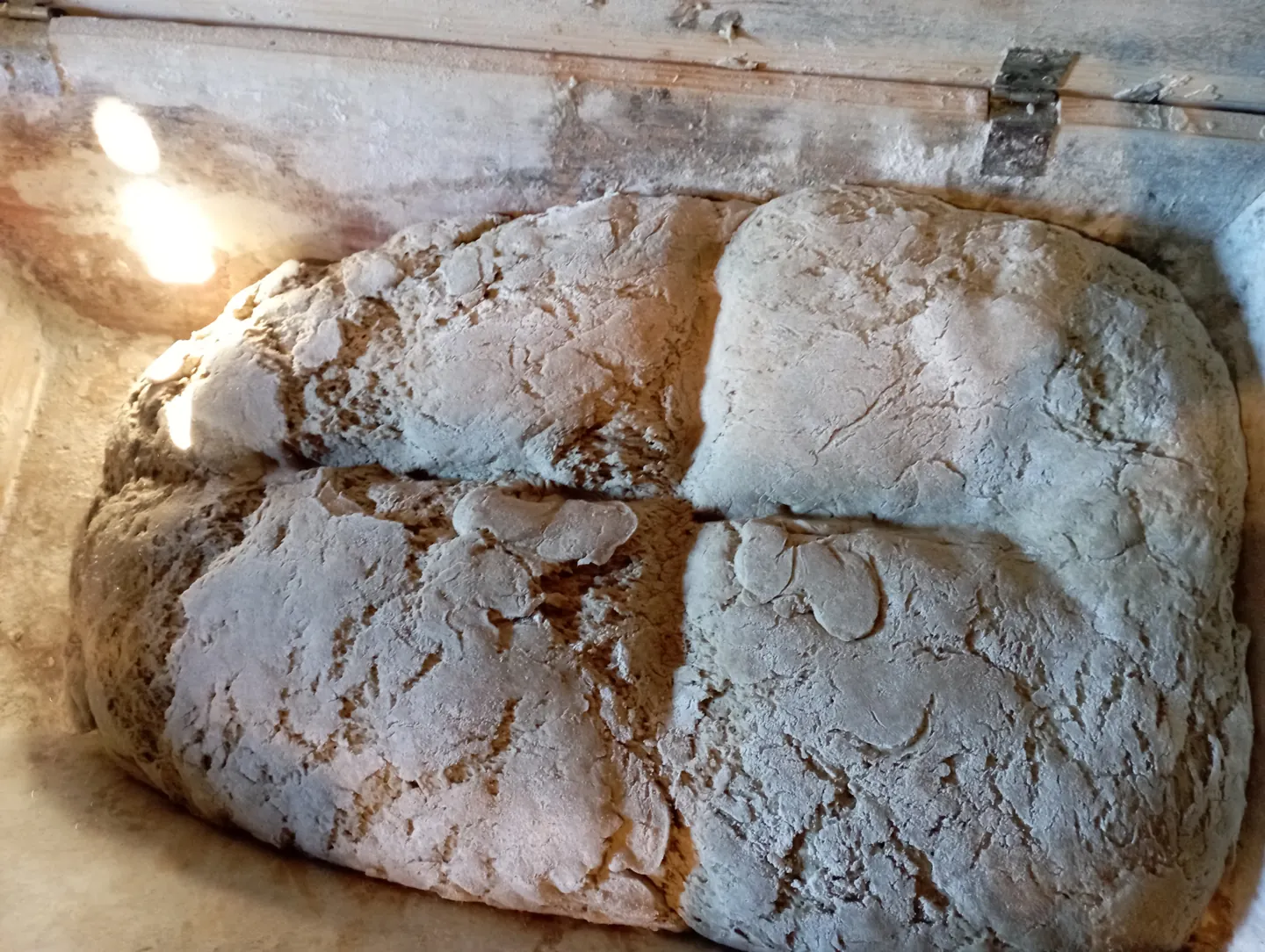
Bread dough in the Terras de Basto Museum’s publication about the bread prayer.
Source: Museu das Terras de Basto
About this photograph

Photograph date not stated. Source consulted on 2026-11-15. EXIF orientation and proportional WebP resizing; no cropping or upscaling.

Individual photographer and reuse licence not stated by the source.

Request removal or correct the photo credit

Kneading, waiting, baking: each moment could have its own ritual.

Read here and view sources

In a record published in January 2024, the Museum describes religious gestures connected with bread: tracing a cross in the dough, praying and covering the kneading trough while the dough rose. There were also words for putting bread into the oven and finishing the baking. Three small taps on the broa were explained as a way to wake it up. These are practices and beliefs presented by the source, not a scientific explanation of baking or a tradition attributed to every family or a particular parish.

The record organises the gestures into three moments: kneaded dough waiting in the trough, loaves entering the oven and bread just taken out. Utensil and word accompany the food’s transformation. Linking this story with the Recovos recipe and the explanation of yeasts offers three perspectives: the maker’s memory, the preparation sequence and the biological process. None replaces the others.

Source and context

Basto Land Museum — Bread Prayer, 24/01/2024

Accessed: . Editorial summary; the date of consultation is not the date of the facts.

A world beneath the leaves

A first look at the fungi. Continue in the gallery to see the local records already documented.

Choose a story · 1
General biology · yeasts

Some fungi have no cap

From woodland to fermentation, fungi exist on many scales.

Explore: From cell to batch →
Read here and view sources

Yeasts are fungi too, but many live as a single cell. CCRES gives the example of Saccharomyces cerevisiae and its ability to carry out alcoholic fermentation. Mushrooms are only one of the most visible forms of a group that also includes microscopic organisms. In bread dough, yeasts consume sugars and produce carbon dioxide. The gas is trapped in small pockets and helps the dough rise. This is a general explanation of fermentation, not an identification of the microorganisms in Cabeceiras’s traditional starters. Many yeasts multiply by budding or division: they may form a new cell from a small outgrowth or split into two. They do not depend on producing a mushroom.

Words in this story: see explanations →
Source and context

Silvestrian Resource Competence Centre — General Mycology
Accessed:

Institute of Food Science & Technology — Raising agents: biological (fermentation)
Accessed:

American Phytopathological Society — Introduction to Fungi: reproduction and growth
Accessed:

Editorial summary; the date of consultation is not the date of the facts.

YOUR LOCAL GUIDE

What would you like to discover?

Take a closer look.